10 Best Dog Breeds for First-Time Owners That Get Along Well With Cats
Picture this. You’ve just brought your new puppy home. Your cat is frozen on top of the bookshelf, ears back, tail puffed to twice its size.
That moment is stressful for everyone in the house — including you.
I’m Thomas Cutter, and I’ve spent years researching dog breeds and talking with owners who’ve built peaceful, multi-pet homes. The good news? You don’t need luck. You need the right breed and a smart introduction plan.
This guide walks through the 10 best dog breeds for first-time owners with cats, what makes each one a good match, and exactly how to bring them together safely.
- Low-prey-drive, easygoing breeds like Cavaliers, Beagles, and Golden Retrievers tend to do best with cats.
- Breed group matters. Toy and Sporting breeds usually do better than Terriers or Sighthounds.
- Temperament and early socialization matter more than breed alone — every dog is an individual.
- A slow, structured introduction makes the biggest difference in long-term success.


What Makes a Dog Breed “Cat-Friendly”?
A cat-friendly dog breed is one with low prey drive, a calm temperament, and a history of getting along with smaller animals. These dogs are curious about cats rather than fixated on chasing them. Breed group plays a big role here. Toy and Sporting Group dogs were bred as companions, not hunters, so they tend to settle in around cats more easily than Terriers or Sighthounds.
Here’s the thing — no breed is a guarantee. Temperament and early socialization matter more than breed labels. A well-socialized Beagle can live happily with a cat, while a poorly socialized “cat-friendly” breed might not. So if you’re choosing a breed, think of it as stacking the odds in your favor, not buying a guarantee.
You might be thinking: doesn’t every dog just chase cats? Here’s why that’s not quite right — most dogs and cats can learn to coexist peacefully when the dog is socialized early and the introduction is handled with care.
The 10 Best Dog Breeds for First-Time Owners With Cats — Ranked and Reviewed
Each of these 10 breeds shows up again and again in expert breed guides as a strong match for cat households. They’re also known for being beginner-friendly, so you won’t be juggling a steep training curve and a delicate pet introduction at the same time.
Cavalier King Charles Spaniel — “The Lap Dog Who Loves Everyone”
 Save
Save| Weight | 13–18 lbs |
| Height | 12–13 inches |
| Lifespan | 12–15 years |
| Energy Level | Moderate |
| Grooming Need | Moderate — weekly brushing |
| Shedding | Moderate, year-round |
The Cavalier King Charles Spaniel is a small, affectionate Toy breed known for getting along with nearly every species in the house. They weigh about 13 to 18 pounds, so they’re close to cat-sized. Their gentle, eager-to-please nature makes them a top pick for cat owners and total beginners alike.
Cavaliers have a silky, feathered coat and warm, round eyes that give them an almost permanently friendly expression. Their soft ears and gentle build make them look as approachable as they act.
You’d expect a lap dog to be lazy. Cavaliers are also surprisingly playful and trainable. The genuinely surprising part? Many Cavaliers will follow a cat around hoping to be friends, not chase them.
- Low prey drive, very social
- Great with kids and other pets
- Easy to train for beginners
- Prone to separation anxiety
- Needs weekly coat brushing
- Can have heart health issues
Best for: apartment dwellers · families with cats · owners who want a lap dog
Beagle — “The Pack-Minded Pal Who Adopts Your Cat as a Friend”
| Weight | 20–30 lbs |
| Height | 13–15 inches |
| Lifespan | 12–15 years |
| Energy Level | Moderate to high |
| Grooming Need | Low |
| Shedding | Moderate |
The Beagle is a medium-sized hound bred to hunt in packs, which gives them a deeply social nature around other animals. Despite a hunting background, Beagles typically see cats as part of the pack rather than prey. Their friendly, food-driven personality makes training simple for new owners.
Beagles have soft, floppy ears and a sturdy, compact build. Their expressive eyes make it easy to read their mood at a glance.
You’d assume a hound chases small animals on instinct. Beagles are the exception — most treat cats as fellow pack members. The surprising twist? Beagles often follow cats around the house just to keep them company.
- Pack mentality suits multi-pet homes
- Low grooming needs
- Food motivation makes training easy
- Loud, frequent baying and barking
- Strong nose can lead to wandering
- Prone to weight gain
Best for: active households · multi-pet families · owners who don’t mind a vocal dog
Basset Hound — “The Low-Key Roommate Your Cat Won’t Mind”
| Weight | 40–65 lbs |
| Height | Up to 15 inches |
| Lifespan | 12–13 years |
| Energy Level | Low to moderate |
| Grooming Need | Low |
| Shedding | Moderate |
The Basset Hound is a slow-moving, patient hound with a calm, easygoing temperament that rarely bothers cats. Their low energy and tolerant nature make them one of the gentlest breeds toward other pets. First-time owners like Bassets for their mellow, low-drama personality.
Bassets have long, droopy ears and short legs that give them a famously soulful, low-slung look. Their loose, wrinkled skin adds to that easygoing charm.
You’d expect a hound to chase. Bassets would rather nap. The unexpected part? Many Bassets are too laid-back to even notice a cat strolling past them.
- Very low energy, calm around cats
- Patient with kids and other pets
- Minimal grooming routine
- Stubborn streak slows training
- Prone to ear infections
- Heavier breed, prone to joint issues
Best for: calm households · owners who want a low-energy dog · homes with older cats
Golden Retriever — “The Friend Who Never Met a Stranger”
| Weight | 55–75 lbs |
| Height | 21–24 inches |
| Lifespan | 10–12 years |
| Energy Level | High |
| Grooming Need | Moderate to high |
| Shedding | Heavy, seasonal |
The Golden Retriever is a large Sporting breed known for an outgoing, affectionate temperament toward people and animals alike. Their high intelligence makes them simple to train, even for first-time owners. Goldens are often described as gentle giants who treat cats as part of the family.
Goldens have a thick, golden double coat and a broad, friendly face that always seems to be smiling. Their feathered tail wags almost constantly.
You’d think a 70-pound dog would intimidate a cat. Most Goldens move with surprising gentleness around small animals. The genuinely surprising part? Many Goldens will let a cat walk right past their food bowl without reacting.
- Extremely trainable and gentle
- Great with kids and other pets
- Loyal, affectionate family dog
- Needs 60+ minutes of exercise daily
- Heavy seasonal shedding
- Large size can knock over small cats
Best for: active families · homes with yards · owners who want a classic family dog
Labrador Retriever — “The Easygoing Crowd-Pleaser”
 Save
Save| Weight | 55–80 lbs |
| Height | 21–24 inches |
| Lifespan | 10–12 years |
| Energy Level | High |
| Grooming Need | Low to moderate |
| Shedding | Heavy, year-round |
The Labrador Retriever is one of the most popular dog breeds in the U.S., known for an outgoing, kind temperament toward people and animals. Labs get along with nearly everyone they meet, regardless of species. Their easy trainability makes them a reliable choice for new owners with cats.
Labs have a short, dense, water-resistant coat and a broad, friendly face. Their thick “otter tail” wags constantly when they’re happy.
You’d expect a retriever bred for hunting to chase small animals. Most Labs are far more interested in their next meal than the cat. The surprising part? Many Labs treat the household cat as a fellow family member to protect, not chase.
- Friendly with nearly all animals
- Highly trainable, beginner-friendly
- Low grooming maintenance
- Needs daily exercise to stay calm
- Heavy year-round shedding
- Prone to overeating and weight gain
Best for: first-time owners · families with cats · active households
Poodle — “The Smart, Hypoallergenic Problem-Solver”
| Weight | 4–70 lbs (varies by size) |
| Height | Under 10 to over 15 inches |
| Lifespan | 12–15 years |
| Energy Level | Moderate to high |
| Grooming Need | High |
| Shedding | Minimal |
The Poodle is an exceptionally smart breed that comes in Toy, Miniature, and Standard sizes, so you can match one to your home. Their sharp intelligence makes training fast, and their calm, people-focused nature suits cat households well. Poodles also shed very little, a bonus for allergy-prone owners.
Poodles have a dense, curly coat that comes in solid colors and never sheds the way most breeds do. Their alert, expressive eyes track everything in the room.
You’d assume a smart dog gets bored and restless around cats. Poodles actually use that intelligence to read a cat’s body language fast. The surprising part? Many Poodles learn to respect a cat’s space almost on their own, with minimal training.
- Highly trainable, very intelligent
- Minimal shedding, good for allergies
- Comes in 3 sizes to fit any home
- Needs frequent professional grooming
- High-energy as a puppy
- Can be sensitive to routine changes
Best for: allergy-prone owners · apartment or house living · owners who enjoy training
Bichon Frise — “The Cheerful Lapdog Who Befriends Everyone”
| Weight | 12–18 lbs |
| Height | 9.5–11.5 inches |
| Lifespan | 14–15 years |
| Energy Level | Moderate |
| Grooming Need | High |
| Shedding | Minimal |
The Bichon Frise is a small, cheerful breed with a playful, affectionate nature that wins over nearly everyone it meets. Their lack of hunting instinct makes them a relaxed companion for cats. Bichons are also considered easier to train than many small breeds, which helps first-time owners.
Bichons have a fluffy, powder-puff white coat that curls softly around their face. Their dark, round eyes give them a constantly cheerful expression.
You’d expect a fluffy lapdog to be all bark and no substance. Bichons actually adapt fast to new housemates of any species. The surprising part? Many Bichons treat a cat’s tail flick or ear twitch as an invitation to play, not a warning.
- Friendly, social temperament
- Hypoallergenic-friendly coat
- Easier to train than most toy breeds
- Needs frequent brushing and trims
- Can develop separation anxiety
- Prone to barking at noises
Best for: apartment living · allergy-prone households · owners new to dog training
Pug — “The Pint-Sized Companion Who Matches Your Cat’s Energy”
| Weight | 14–18 lbs |
| Height | 10–13 inches |
| Lifespan | 13–15 years |
| Energy Level | Low to moderate |
| Grooming Need | Low |
| Shedding | Moderate to heavy |
The Pug is a small, sturdy companion breed close to the size of most house cats. Their friendly nature and near-total lack of hunting instinct make them an easy fit for cat households. Pugs love attention and often form close bonds with the other pets around them.
Pugs have a flat, wrinkled face and large, round eyes that give them a constant, curious expression. Their compact, muscular body moves with a confident little waddle.
You’d think a small dog might feel threatened by a cat. Pugs are tough enough to hold their ground, but rarely confrontational. The surprising part? Many Pugs and cats end up napping in the same sunny spot within weeks.
- Cat-sized, low intimidation factor
- Low exercise needs
- Affectionate, people-focused nature
- Breathing issues in heat
- Prone to weight gain
- Snores and wheezes often
Best for: apartment dwellers · low-activity households · owners who want a small dog
Maltese — “The Gentle Toy Dog Without a Hunting Bone in Its Body”
| Weight | Under 7 lbs |
| Height | 7–9 inches |
| Lifespan | 12–15 years |
| Energy Level | Moderate |
| Grooming Need | High |
| Shedding | Minimal |
The Maltese is a tiny Toy breed weighing under 7 pounds, small enough that most cats won’t feel physically threatened. They have little to no hunting instinct, which makes them naturally laid-back around smaller animals. Maltese dogs bond closely with their owners and adapt well to calm, indoor homes.
The Maltese has a long, silky white coat that flows almost to the floor. Their small, dark eyes peek out from under soft, hanging ears.
You’d expect a tiny dog to be jumpy and reactive. Maltese dogs are usually the opposite — calm, steady, and home-focused. The surprising part? Many Maltese will let a cat groom their ears without flinching.
- Tiny size, low intimidation factor
- Minimal shedding
- Calm, relaxed indoor temperament
- Coat needs daily brushing
- Can be territorial over owners
- Fragile — not ideal with rough kids
Best for: apartment living · single owners · quiet, calm households
Papillon — “The Tiny, Alert Friend Who Reads the Room”
 Save
Save| Weight | 5–10 lbs |
| Height | 8–11 inches |
| Lifespan | 14–16 years |
| Energy Level | Moderate to high |
| Grooming Need | Moderate |
| Shedding | Moderate |
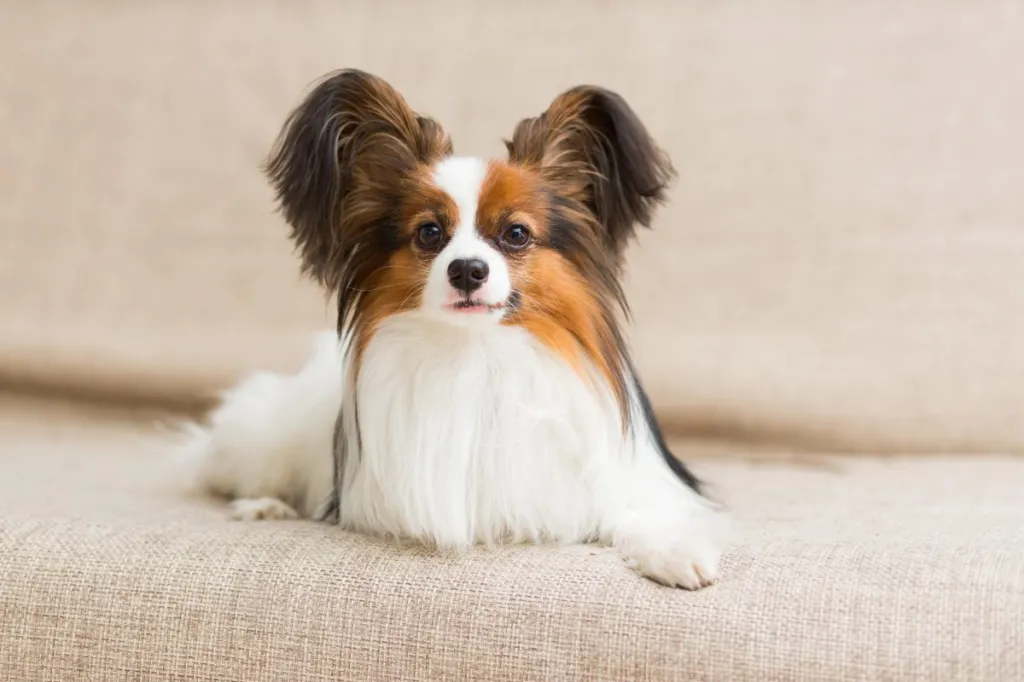
The Papillon is a small, fine-boned Toy breed known for being alert, friendly, and far from shy. They’re highly intelligent, which helps them quickly learn to respect a cat’s boundaries. Papillons adapt well to apartments, houses, and nearly any living situation.
Papillons get their name from their large, fringed ears that resemble butterfly wings. Their delicate frame moves with quick, light steps.
You’d expect a tiny, energetic dog to pester a cat constantly. Papillons are smart enough to back off once a cat sets a boundary. The surprising part? Many Papillons treat a cat’s hiss as a clear lesson, learned after just one encounter.
- Highly intelligent, fast learner
- Adapts to small living spaces
- Friendly, not shy or aggressive
- Fragile around rough play
- Can bark at strangers
- Needs daily mental stimulation
Best for: apartment dwellers · owners who enjoy training · quiet, attentive households
How Do These 10 Cat-Friendly Dog Breeds Compare?
Among these breeds, the Pug, Maltese, and Papillon are smallest and least likely to overwhelm a cat physically, while Beagles and Basset Hounds bring pack instincts that help them treat a cat as family. Golden and Labrador Retrievers offer trainable, gentle temperaments but need more daily exercise. Poodles and Bichons suit allergy-prone homes.
| Breed | Size | Energy | Grooming |
|---|---|---|---|
| Cavalier King Charles Spaniel | Small | Moderate | Moderate |
| Beagle | Medium | Mod-high | Low |
| Basset Hound | Medium-large | Low | Low |
| Golden Retriever | Large | High | Mod-high |
| Labrador Retriever | Large | High | Low-mod |
| Poodle | Varies | Mod-high | High |
| Bichon Frise | Small | Moderate | High |
| Pug | Small | Low-mod | Low |
| Maltese | Tiny | Moderate | High |
| Papillon | Tiny | Mod-high | Moderate |
Which Cat-Friendly Dog Breed Is Right for You?
The right breed depends on your home, your cat’s personality, and your own energy level. A calm cat in a small apartment pairs well with a Maltese or Pug, while an active household with space for exercise suits a Labrador or Golden Retriever. Match the dog’s energy to your lifestyle, not just its reputation with cats.
If you’re in a small apartment with a shy or older cat → a Maltese, Pug, or Papillon will likely cause the least disruption.
If you’re in an active household with space to roam → a Golden Retriever or Labrador Retriever can match that energy while staying gentle.
If you want low grooming and a relaxed pace → a Basset Hound or Beagle fits well, especially with a confident, established cat.
If allergies are a concern in your home → a Poodle or Bichon Frise sheds the least of any breed on this list.
What Most People Get Wrong About Cat-Friendly Dog Breeds
Many new owners assume that picking a “cat-friendly” breed guarantees a peaceful household from day one. That’s not how it works. Breed only shapes general tendencies — individual temperament, age, and the introduction process matter just as much, sometimes more, than the breed label itself.
So what does that mean for you? Even a textbook cat-friendly breed like a Cavalier can struggle with a fearful or aggressive cat. And a “risky” breed raised alongside cats from puppyhood can turn out completely trustworthy.
You might be thinking your research is wasted if breed isn’t a guarantee. Here’s why that’s not true — breed still stacks the odds heavily in your favor before you even bring the dog home.
How Do I Safely Introduce a New Dog to My Cat?
Safely introducing a dog and cat takes a slow, scent-first approach over one to several weeks. Keep them fully separated at first, swap bedding so they learn each other’s scent, then progress to supervised meetings through a barrier before allowing direct contact on a leash.
- Give your cat a dog-free “safe space” with food, water, and a litter box.
- Swap scents by trading bedding or toys between the two animals.
- Feed both pets near a closed door, then gradually closer to it.
- Use a baby gate or screen door for the first visual introduction.
- Hold a short, leashed, same-room meeting, letting the cat roam free.
- Repeat short sessions daily, extending time as both pets stay calm.
You might be thinking this process sounds slow. Here’s why that’s worth it — rushing the introduction is the single most common reason these relationships fail.
Never force a face-to-face meeting or hold either pet during an introduction. If a fight breaks out, separate them calmly and go back a step.
When I researched households that successfully blended dogs and cats, one pattern kept showing up. The owners who waited the extra week before removing the leash had far fewer setbacks. That taught me that patience beats speed every time in a pet introduction.
Mistakes First-Time Owners Make With Dogs and Cats
The most common mistake is introducing pets too fast, before either animal has time to adjust to scent and sound. Other frequent errors include skipping the cat’s “safe space,” leaving pets unsupervised too soon, and assuming a friendly breed needs no training around the cat at all.
Reward calm behavior with treats during every introduction. This builds a positive link between “cat nearby” and “good things happen.”
So if you’re tempted to skip steps because your dog seems calm, slow down anyway. One bad first encounter can set the relationship back by weeks.
Frequently Asked Questions
What is the best first dog for someone who already has a cat?
The Cavalier King Charles Spaniel and Labrador Retriever are widely considered top choices. Both breeds are easy to train, low in prey drive, and known for getting along with cats when introduced properly.
Are small dogs always safer for cats than large dogs?
Not always. Size matters less than temperament and prey drive. A calm, well-trained Labrador can be safer around a cat than a high-energy small terrier with a strong chase instinct.
How long does it take for a dog and cat to get along?
Most pairs need a few weeks of supervised introductions before they’re comfortable together. Some bond within days, while others take a month or more, depending on personality.
Can any dog breed learn to live with a cat?
Most breeds can coexist with cats if socialized early and introduced slowly. Breeds with very high prey drive, like Sighthounds or some Terriers, are the exceptions and need extra caution.
Should I get a puppy or an adult dog if I have a cat?
An adult dog with a known, calm history around cats is often the safer first choice. With puppies, you won’t know their adult temperament yet, so training and supervision matter even more.
Your Next Step
Choosing a cat-friendly breed gets you most of the way there. The rest comes down to a slow, structured introduction and a little patience in those first few weeks.
If you’re ready to move forward, start today by setting up your cat’s dog-free safe space before your new dog ever comes home. I’m Thomas Cutter, and that one step alone prevents most of the early stress new owners run into.

Thomas Cutter is a lifelong dog owner and the founder of FindOutAboutDogs.com. With over 10 years of hands-on experience owning multiple breeds, Thomas created this site to provide honest, research-based dog advice that real owners can actually trust.
