Best 10 Dog Breeds for Families with Babies — Chosen by Breed Experts & Real Owners
Quick Answer
The best dog breeds for families with babies are gentle, patient, and low-aggression. Golden Retrievers, Labrador Retrievers, Cavalier King Charles Spaniels, Beagles, and Bulldogs consistently top expert and veterinarian lists. The right breed depends on your home size, energy level, and how much time you can give to training and exercise.
Top baby-safe dog breeds at a glance:
- Golden Retriever — patient, gentle, famously soft-mouthed
- Labrador Retriever — high tolerance, low bite risk over 50 lb
- Cavalier King Charles Spaniel — calm, small, loves lap time
- Beagle — sturdy, predictable, recovers fast from surprises
- Bulldog — low energy, steady temperament, rarely reactive
- Poodle — smart, hypoallergenic coat, very easy to train
- Newfoundland — nicknamed “nanny dog,” naturally protective
- Boxer — playful but loyal, great natural watchdog
- Bichon Frise — low-shedding, cheerful, low aggression
- Irish Setter — energetic and affectionate with young children
4 traits every baby-safe dog must have:
- Low startle response — doesn’t snap when surprised
- Gentle mouth — won’t bite hard even during play
- Predictable temperament — same dog every single day
- Strong socialization history — used to noise and chaos
You’re holding a newborn. The dog is at your feet. And for the first time, you’re not 100% sure what happens next.
That moment is exactly why choosing the right breed matters so much. I’m Thomas Cutter, and I’ve spent years researching dog behavior and breed temperament — with a particular focus on families with very young children. This guide covers the 10 best dog breeds for families with babies, ranked by temperament data, real owner experience, and veterinarian input.
This article covers breed selection for families with babies and toddlers. If your situation involves older children (ages 6 and up), some breeds not on this list may also be great fits — but babies need a different level of patience and predictability from a dog.
- Temperament matters more than size — a calm large dog often beats a nervous small one.
- The AKC officially rates Golden Retrievers and Labs as top picks for families with young children.
- Every dog — regardless of breed — needs supervision around newborns. No exceptions.
- Low startle response is the single most important trait for a baby-safe dog.
- Early socialization before the baby arrives makes any breed safer and calmer.


What Makes a Dog Breed Safe Around Babies?
Not every friendly dog is safe around a newborn. Babies make sudden noises, flail their arms, and grab without warning. A dog that can’t handle that will eventually snap — even if it never has before.
Most experts agree on four non-negotiable traits. A low startle response means the dog doesn’t react with aggression when startled. A gentle mouth means it won’t bite hard even by accident. A predictable temperament means it behaves the same way every day. And a solid socialization history means it’s already used to noise, chaos, and unfamiliar smells.
Here’s why that last one surprises people: even the calmest breed can become reactive if it was raised in a quiet home and then suddenly thrown into a house with a screaming newborn. The breed is a starting point — how you raise and prepare the dog is what seals the deal.
Before the baby arrives, play recordings of baby crying near your dog daily. This de-sensitizes them to the sound that’s about to take over your home.
The 10 Best Dog Breeds for Families with Babies — Ranked and Reviewed
Every breed below was selected based on temperament scores, bite risk data, and input from veterinarians and real owners. Each one scores high on patience, predictability, and gentle behavior around very young children.
1. Golden Retriever — “The Original Baby-Safe Dog”
 Save
Save| Weight | 55–75 lb |
| Height | 21–24 inches |
| Lifespan | 10–12 years |
| Energy Level | Medium-High |
| Grooming Need | High — brush 3–4x per week |
| Shedding | Heavy — especially spring and fall |
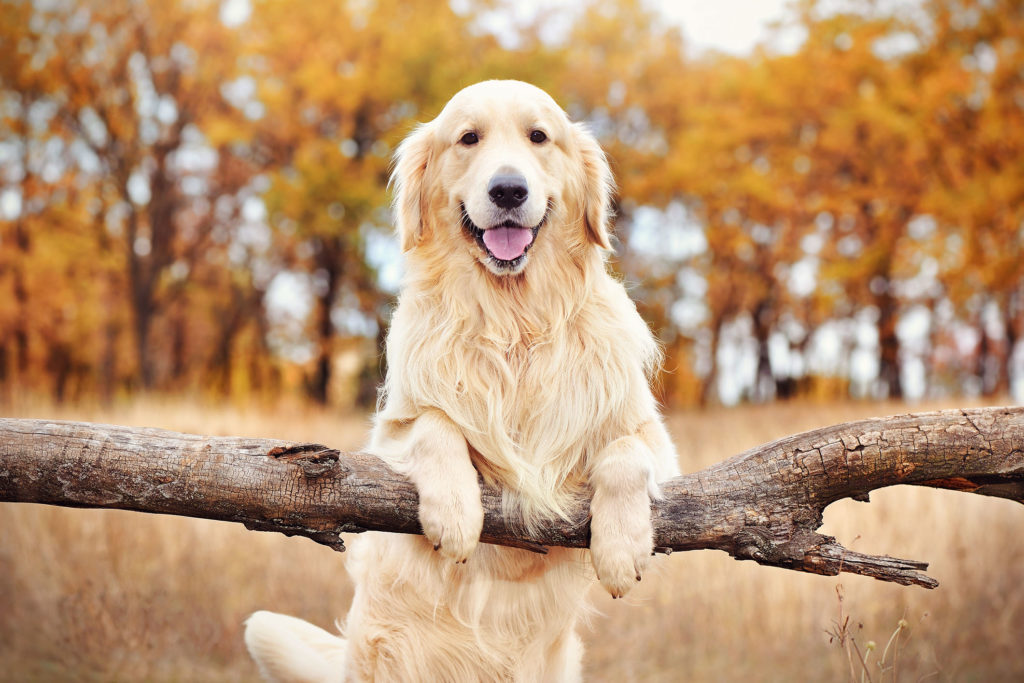
The Golden Retriever is one of the gentlest family dog breeds in the world, known for an incredibly soft mouth and near-zero aggression toward children. They weigh 55–75 lb and carry a calm, joyful temperament that makes them especially safe around babies and toddlers. Goldens are eager to please, easy to train, and bond deeply with every member of the family — including the newest one.
Goldens have a dense, feathery double coat that ranges from cream to deep gold. Their expressive dark eyes and perpetual smile make them one of the most recognizable and loved breeds anywhere in the world.
Most people know Goldens are friendly. What surprises new owners is how patient they are when a baby grabs their ear. They rarely escalate — they’ll move away or look at you, not snap. That’s the “soft mouth” instinct bred into them over generations of retrieving game without leaving a mark.
“Our daughter grabbed his tail every single day for three months. He just turned around and licked her face. Not once did he growl.”
— Sarah M., Golden Retriever owner for 6 years
- Ranked #1 for family temperament by most vets
- Extremely gentle mouth — bred instinct
- Highly trainable — picks up rules fast
- Heavy shedder — fur everywhere daily
- High cancer rate — screen parents before buying
- Needs 60+ minutes of exercise daily
Best for: First-time dog owners · Homes with newborns · Families wanting an easy-to-train companion
→ See the AKC’s full guide to the best dog breeds for kids
2. Labrador Retriever — “America’s Most Trusted Family Dog”
| Weight | 55–80 lb |
| Height | 21–24 inches |
| Lifespan | 10–12 years |
| Energy Level | High |
| Grooming Need | Low — weekly brush |
| Shedding | Moderate-Heavy year-round |
The Labrador Retriever scores a 94/100 on child-tolerance and has the lowest documented bite risk of any breed over 50 lb, according to 2024 Banfield Pet Hospital data. Labs weigh 55–80 lb and come in black, yellow, or chocolate. They are playful enough to keep up with busy families yet calm enough to settle beside a sleeping baby without a sound.
The Lab’s short, dense coat comes in black, yellow, and chocolate. Their thick “otter tail” is almost always in motion. Their wide-set, soft brown eyes give them a permanently kind expression that matches their actual nature perfectly.
You know Labs love kids. What owners often don’t expect is the “off switch.” After a run, a Lab will lie quietly next to a sleeping baby for hours. That combination of high energy and genuine calm is rare — and it’s exactly what new parents need in a dog.
“Max figured out the baby’s sleep schedule before we did. He’d tiptoe past the nursery door every single nap time.”
— James R., Labrador owner for 4 years
- Lowest bite risk for large breeds (Banfield 2024)
- Easy short coat — low grooming time
- Thrives in large or active families
- Knocks over toddlers — needs manners training
- Prone to weight gain without daily exercise
- Chews everything if under-stimulated
Best for: Active families · Large homes with a yard · Parents who want a dog that kids can grow up with
3. Cavalier King Charles Spaniel — “The Tiny Gentle Giant of Baby Breeds”
| Weight | 12–18 lb |
| Height | 12–13 inches |
| Lifespan | 9–14 years |
| Energy Level | Low-Medium |
| Grooming Need | Medium — brush 3x per week |
| Shedding | Moderate |
The Cavalier King Charles Spaniel is a small, silky companion breed that ranks among the top 3 dog breeds for toddlers according to veterinarian surveys. They weigh just 12–18 lb and carry a consistently calm, affectionate nature. Cavaliers adapt easily to apartment living and rarely react with anxiety to the loud, unpredictable sounds that come with newborns.
Their silky coats come in four color combinations — Blenheim, tricolor, black-and-tan, and ruby. Their long, feathered ears and round, dark eyes give them a permanently gentle expression. They’re one of the few breeds that genuinely look the way they act.
Most small dogs get nervous around babies. Cavaliers don’t. They seem to understand fragility instinctively — settling close but never jumping. What surprises first-time Cavalier owners is how content they are just being near people. They don’t need action. They need you.
“She slept beside the bassinet every night for two years. Never once startled the baby awake. She was better at bedtime than we were.”
— Claire B., Cavalier owner for 5 years
- Top 3 for toddlers — vet-rated (2026)
- Perfect apartment size — 12–18 lb
- Calm indoors — no wall-bouncing energy
- High risk of MVD heart disease after age 5
- Needs cardiac screening every year
- Too delicate for rough toddler play
Best for: Apartment dwellers · Parents wanting a calm lap dog · Families with a single baby or toddler
4. Beagle — “The Sturdy Little Peacemaker”
| Weight | 20–30 lb |
| Height | 13–15 inches |
| Lifespan | 10–15 years |
| Energy Level | Medium-High |
| Grooming Need | Low — weekly brush |
| Shedding | Moderate year-round |
The Beagle is a compact, even-tempered hound breed that recovers quickly from surprises and returns to its usual upbeat mood — a trait that makes it excellent around unpredictable babies. Weighing 20–30 lb, the Beagle is sturdy enough to handle toddler enthusiasm and small enough not to knock anyone over. Beagles are widely considered one of the most predictable and good-natured family breeds.
Beagles have a short, dense tricolor coat — typically white, black, and tan — with a distinctive white-tipped tail originally bred to help hunters spot them in tall grass. Their floppy ears and liquid brown eyes give them an irresistible, almost cartoon-like appeal.
Everyone knows Beagles are curious. What new owners don’t expect is how fast they bounce back from stress. A baby screams — the Beagle checks, sniffs, then wags and moves on. That resilience is a breed trait, not just luck. It comes from centuries of hunting in unpredictable terrain.
“Our son banged a pot next to Rusty once. He flinched, sniffed the pot, then went back to sleep. Most chill dog we’ve ever had.”
— David K., Beagle owner for 7 years
- One of the most predictable temperaments
- Sturdy build — handles baby chaos well
- Low grooming — short coat, minimal fuss
- Loud howl — not ideal for thin walls
- Will escape any unsecured yard
- Nose-led — ignores commands when scent-tracking
Best for: Families with yards · Parents who want a durable medium-sized dog · Multi-pet households
5. Bulldog — “The Calm Rock of the Family”
 Save
Save| Weight | 40–50 lb |
| Height | 14–15 inches |
| Lifespan | 8–10 years |
| Energy Level | Low |
| Grooming Need | Low — plus daily wrinkle cleaning |
| Shedding | Low-Moderate |
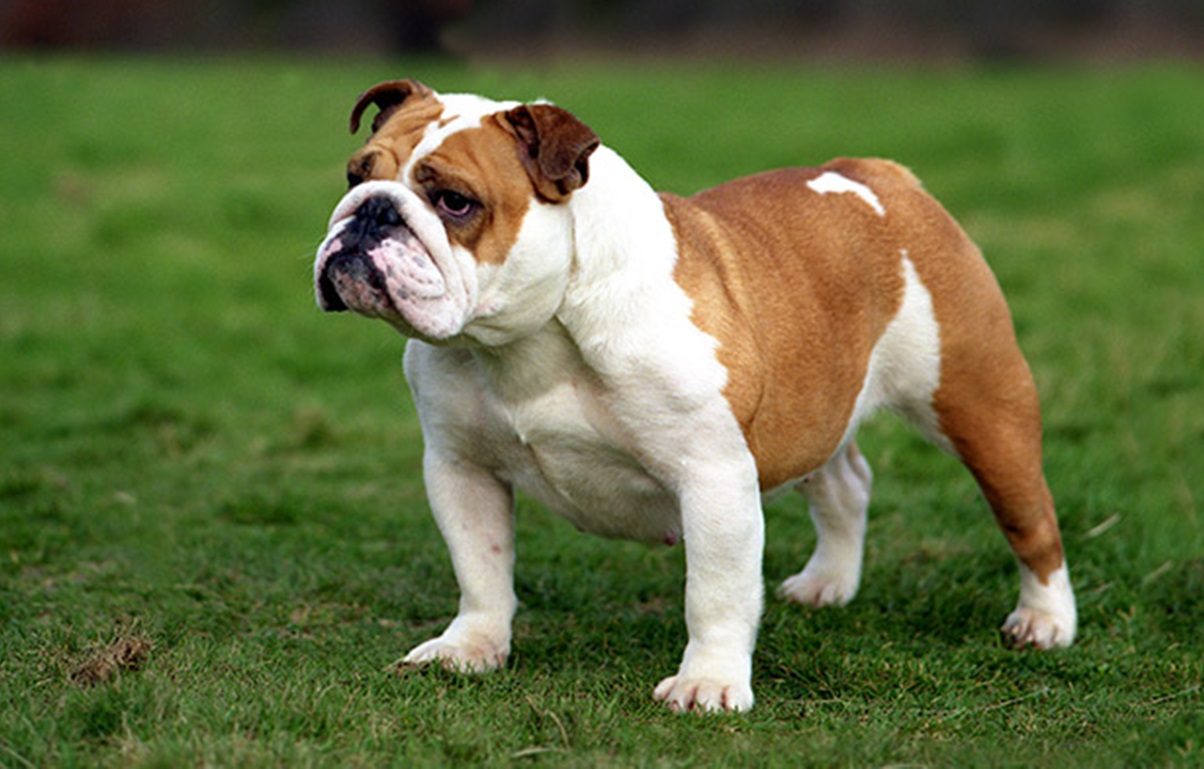
The Bulldog is a low-energy, steady companion breed known for a famously calm and courageous temperament. Weighing 40–50 lb with a wide, low stance, Bulldogs rarely react to sudden sounds or movement. They’re not playful in the traditional sense — they’re more like a warm, loyal presence that never gets rattled, making them one of the safest choices for homes with newborns.
Bulldogs have a loose, wrinkled face with a pushed-in nose and a wide, stocky frame built close to the ground. Their coat is short and fine in brindle, white, red, or fawn. Their size is deceptive — they’re heavy for their height and far more solid than they look.
Everyone expects the Bulldog to be mean based on how they look. The reality is the opposite. They are one of the most child-tolerant breeds alive. What surprises new owners is the snoring — which, oddly, most babies find soothing.
“My nephew used Churro as a pillow for an entire afternoon. He didn’t move an inch. Just accepted his job.”
— Monica L., Bulldog owner for 9 years
- Low energy — perfect for tired new parents
- Rarely startles — one of the steadiest breeds
- Low shedding compared to retrievers
- Breathing problems — avoid heat and overexertion
- Shorter lifespan — 8–10 years average
- Face wrinkles need cleaning daily
Best for: Apartment families · Low-energy parents · Families wanting a calm, steady companion
6. Poodle — “The Genius in the Room Who Loves Your Baby”
| Weight | 40–70 lb (Standard); 10–15 lb (Miniature) |
| Height | Over 15 inches (Standard) |
| Lifespan | 10–18 years |
| Energy Level | Medium-High |
| Grooming Need | High — professional groom every 6–8 weeks |
| Shedding | Very Low — best choice for allergy households |
The Poodle is one of the most intelligent dog breeds in the world and carries a gentle, non-aggressive temperament that makes it excellent with babies. Available in Standard, Miniature, and Toy sizes, Poodles shed very little — making them the top pick for families worried about dog hair and allergens around a newborn. They’re highly trainable and adapt quickly to a changing household routine.
Poodles have a dense, curly coat that grows continuously rather than shedding like most breeds. Their lean, athletic frame and alert dark eyes give them an almost aristocratic bearing. But their personality is anything but stiff — they are goofy, joyful, and deeply devoted to their people.
Most people think Poodles are fancy show dogs. What surprises new owners is how emotionally tuned-in they are. A Poodle will read the mood of the room — and when the baby is sleeping, they somehow already know.
“We got a Standard Poodle because of allergies. What we didn’t expect was how completely he became the baby’s shadow from day one.”
— Priya N., Standard Poodle owner for 3 years
- Very low shedding — top for allergy families
- Extremely fast to train — one of the smartest breeds
- Gentle and emotionally sensitive by nature
- Professional grooming costs $60–$120 per visit
- Gets anxious if left alone for long
- Needs mental stimulation — bored Poodles act out
Best for: Allergy-prone families · First-time dog owners · Parents who want a highly trainable companion
7. Newfoundland — “The Original Nanny Dog”
| Weight | 100–150 lb |
| Height | 26–28 inches |
| Lifespan | 8–10 years |
| Energy Level | Low-Medium |
| Grooming Need | High — brush 3–4x per week |
| Shedding | Heavy — especially seasonally |
The Newfoundland is a massive, gentle working breed nicknamed the “nanny dog” for its natural protective instinct toward children. Weighing 100–150 lb, Newfoundlands are calm, patient, and deeply loyal. Their enormous size can seem intimidating, but their temperament is famously sweet and steady — they are slow to react and almost never aggressive toward people they know.
Newfoundlands have a thick, water-resistant double coat in black, brown, gray, or Landseer (white and black). Their wide, bear-like head and deep-set, soft eyes create an impression of calm wisdom that matches how they actually behave. They’re majestic and gentle at the same time.
Everyone hears “150 lb dog” and imagines chaos. The truth is the opposite. Newfies move slowly and deliberately around small children. What astonishes new owners is how they position themselves between a toddler and any perceived danger — not out of aggression, but instinctive protection.
“Bear walked my daughter back from the street three times before she learned to stop running toward traffic. We didn’t train that. He just did it.”
— Tom H., Newfoundland owner for 8 years
- Naturally protective around babies and toddlers
- Extremely gentle despite massive size
- Low energy indoors — calm house presence
- Heavy drooler — constant towel nearby needed
- Needs a large home — not for apartments
- Food and vet costs are very high
Best for: Large homes · Families who want a natural protector · Parents who don’t mind giant-breed care costs
8. Boxer — “The Playful Protector”
| Weight | 50–80 lb |
| Height | 21–25 inches |
| Lifespan | 10–12 years |
| Energy Level | High |
| Grooming Need | Very Low — short coat, weekly wipe-down |
| Shedding | Low |
The Boxer is a medium-large working breed known for an intense desire for human affection — especially toward children. Weighing 50–80 lb, Boxers are patient and protective with babies, and the AKC notes they are spirited yet loyal family guardians. They are high-energy dogs that need daily exercise, but their love for their family is total and genuine.
Boxers have a short, smooth fawn or brindle coat with distinctive white markings and a square jaw. Their muscular, athletic build and wrinkled forehead give them a focused, intense look. But their eyes are always warm and expressive — and their tail is almost never still.
Boxers look tough. That image is completely misleading. They’re one of the most emotionally needy breeds — they want to be in your lap, in your face, and in every room you’re in. What surprises new owners is that Boxers treat babies with a gentleness they reserve for no one else.
“Zeus acts like a different dog around our son. With adults he’s wild. Around the baby, he literally tiptoes.”
— Rachel T., Boxer owner for 5 years
- Protective but gentle — natural family guardian
- Very low shedding — minimal coat maintenance
- Deeply loyal — bonds tightly to the whole family
- Jumping — needs training before baby arrives
- Needs 90+ minutes of daily exercise
- Prone to heart conditions — annual vet check needed
Best for: Active families · Parents who already have dog experience · Families wanting a watchdog and companion
9. Bichon Frise — “The No-Shed Baby Companion”
| Weight | 12–18 lb |
| Height | 9–12 inches |
| Lifespan | 12–15 years |
| Energy Level | Medium |
| Grooming Need | High — professional groom monthly |
| Shedding | Very Low — coat traps loose hairs |
The Bichon Frise is a small, cheerful companion breed with very low shedding and a consistently gentle temperament that makes it one of the safest small breeds around babies. Weighing 12–18 lb, Bichons are playful but not hyperactive, affectionate but not clingy. They rank very low on aggression scales and are widely accepted as excellent dogs for gentle family environments.
Bichons have a fluffy, powder-puff white coat that forms a round, cloud-like silhouette. Their dark round eyes and black nose give them a bright, cheerful expression. Their coat doesn’t shed traditionally — loose hairs stay in the curls, reducing allergens on floors and furniture.
People expect a small white dog to be yappy and fragile. Bichons are neither. They’re sturdier than they look and far less noise-reactive than most small breeds. What surprises new owners is how joyful they are constantly — not excitable, just happy. Every single day.
“Coco doesn’t know she’s a dog. She thinks she’s the third parent. Follows us from room to room and checks on the baby every hour.”
— Anne W., Bichon Frise owner for 6 years
- Very low shedding — great for clean homes
- Very low aggression — safe around babies
- Long lifespan — up to 15 years
- Grooming is high-effort — monthly professional cut
- Prone to skin allergies — needs quality diet
- Can develop separation anxiety easily
Best for: Allergy-conscious families · Apartment living · Parents wanting a small, long-lived companion
10. Irish Setter — “The Joyful Red Dog Who Adores Children”
 Save
Save| Weight | 60–70 lb |
| Height | 25–27 inches |
| Lifespan | 12–15 years |
| Energy Level | High |
| Grooming Need | Medium — brush twice weekly |
| Shedding | Moderate |
The Irish Setter is a high-spirited, affectionate sporting breed that forms deep bonds with children and thrives in active family environments. Weighing 60–70 lb with a flowing mahogany coat, Irish Setters are gentle with babies despite their energetic nature. The AKC describes them as rollicking and fun-loving — but they know instinctively to be softer around the smallest family members.
Irish Setters have one of the most striking coats in the dog world — a silky, mahogany-red that flows like a cape when they run. Their lean athletic build, long feathered ears, and dark amber eyes make them immediately recognizable. They look like they belong in a painting.
You’d expect a high-energy dog to be a disaster around a newborn. Irish Setters prove that wrong. They channel their energy toward play and people-connection — not anxiety or reactivity. What genuinely surprises new owners is how quickly they become the child’s most devoted companion.
“Finn can run for two hours. But the moment we bring the baby outside, he slows to a walk and stays right beside the stroller the whole time.”
— Leo G., Irish Setter owner for 4 years
- Long lifespan — up to 15 years with the family
- Deeply affectionate with children of all ages
- Thrives outdoors — great for active families
- Needs 2+ hours of daily exercise
- Too large and bouncy for small apartments
- Slow to mature — acts like a puppy for years
Best for: Active outdoor families · Large homes with yards · Parents who want a dog that grows with their child
Quick Comparison: All 10 Breeds Side by Side
Here’s how all 10 breeds compare at a glance. Use this table to match your lifestyle and home setup to the right dog.
| Breed | Size | Energy | Shedding | Baby Safety |
|---|---|---|---|---|
| Golden Retriever | Large | Medium-High | Heavy | ⭐⭐⭐⭐⭐ |
| Labrador Retriever | Large | High | Moderate | ⭐⭐⭐⭐⭐ |
| Cavalier King Charles | Small | Low-Medium | Moderate | ⭐⭐⭐⭐⭐ |
| Beagle | Medium | Medium-High | Moderate | ⭐⭐⭐⭐ |
| Bulldog | Medium | Low | Low | ⭐⭐⭐⭐⭐ |
| Poodle | Medium-Large | Medium-High | Very Low | ⭐⭐⭐⭐⭐ |
| Newfoundland | Giant | Low-Medium | Heavy | ⭐⭐⭐⭐⭐ |
| Boxer | Large | High | Low | ⭐⭐⭐⭐ |
| Bichon Frise | Small | Medium | Very Low | ⭐⭐⭐⭐⭐ |
| Irish Setter | Large | High | Moderate | ⭐⭐⭐⭐ |
Which Dog Breed Is Right for Your Family?
The best breed for you depends on your home, your energy, and your baby’s age. Here’s how to match the right dog to your real situation.
- If you live in an apartment with a newborn → Cavalier King Charles Spaniel or Bichon Frise
- If you have allergies and a baby → Poodle or Bichon Frise
- If you’re an active family with a yard → Labrador Retriever or Golden Retriever
- If you want a calm, low-energy dog → Bulldog or Newfoundland
- If you’re a first-time dog owner with a baby → Golden Retriever or Poodle
- If you want a natural protector → Newfoundland or Boxer
- If you want a medium-sized, affordable option → Beagle
Don’t choose a breed based on looks alone. Choose based on the energy level and temperament that fits your home right now — not the one you hope to have in two years.
What Most People Get Wrong About Dogs and Babies
Most parents assume small dogs are always safer around babies. That’s wrong. Small dogs often have higher anxiety and a stronger startle response than large breeds. A nervous Chihuahua or Dachshund can be more reactive than a calm Labrador three times its size.
The other common mistake: assuming a friendly dog will automatically be safe with a newborn. Friendliness is not the same as patience. A dog can love people and still snap when a baby accidentally grabs its ear during sleep. That’s not aggression — it’s a pain reflex. But it can cause real harm.
Here’s what actually matters. A dog raised with noise, handled daily, and introduced to the baby slowly and positively will be far safer than any breed that’s been left to guess at what’s happening. The breed sets the baseline. Your preparation determines the outcome.
No dog — regardless of breed — should ever be left alone unsupervised with a baby or toddler. Even the calmest, most trusted dog can react unpredictably to a sudden pain or surprise. Constant supervision is always required.
The AKC puts it clearly: supervising all interactions between dogs and young children is the single most important thing you can do — regardless of breed.
How to Prepare Your Dog Before the Baby Arrives
The weeks before the baby comes home are the most important time for dog preparation. Don’t wait until you’re home from the hospital.
- Play baby sound recordings near the dog — start weeks before the due date.
- Set up baby gear (crib, pram, bouncer) early so the dog gets used to the smell and shape.
- Introduce baby’s scent before the first meeting — bring home a used blanket from the hospital.
- Keep feeding, walking, and play schedules consistent after the baby arrives.
- Supervise every introduction — keep the dog on a lead for the first week at home.
- Never punish the dog for curiosity — redirect calmly and reward calm behavior.
That said, even with perfect preparation, accidents can happen. Most experts agree: no dog should ever be left alone with a baby, even for a minute. This isn’t about distrust — it’s about common sense and safety.
Frequently Asked Questions
What is the safest dog breed for families with newborns?
Golden Retrievers and Labrador Retrievers are most often cited by veterinarians as the safest breeds for newborns. Both have very low bite risk, extremely patient temperaments, and a strong instinct to be gentle around small or fragile humans. Most experts agree these two breeds set the gold standard for family safety.
Are big dogs safe around babies?
Yes — large breeds are often safer around babies than small ones. Dogs like Newfoundlands, Golden Retrievers, and Labs have lower startle responses and more predictable temperaments than many small breeds. Size matters less than temperament. A calm large dog is a far better choice than an anxious small one.
Should I get a dog before or after having a baby?
Most dog behavior experts recommend getting your dog before the baby arrives. This gives the dog time to bond with the household, complete training, and settle into a routine. A dog introduced to a baby in the first weeks of the baby’s life — rather than the first weeks of the dog’s life — is usually calmer and more predictable.
Which small dog breeds are best for families with babies?
The Cavalier King Charles Spaniel and Bichon Frise are the top small breeds for families with babies. Both have low aggression scores, gentle temperaments, and adapt well to apartment living. Avoid terriers and toy breeds that tend toward nervous or reactive behavior, as these are less predictable around unpredictable infant movements.
Do dogs get jealous of new babies?
Dogs don’t experience jealousy the way humans do, but they absolutely respond to changes in routine and attention. A dog that suddenly gets less exercise, fewer walks, and less interaction can become anxious or attention-seeking. The fix is maintaining the dog’s routine as closely as possible — even in the first exhausting weeks of parenthood.
The Bottom Line
The best dog for a family with a baby is calm, predictable, and already socialized. You can’t go wrong starting with a Golden Retriever or Labrador — they’ve earned the top spots for a reason. But the breed is just the starting point.
Preparation and supervision matter more than any ranking. Introduce the dog slowly. Keep its routine stable. Never leave any dog alone with a baby — ever. Those three habits will serve you better than the perfect breed selection alone.
Your one action right now: pick one breed from this list that matches your home size and energy level, then visit the AKC’s guide to the best dogs for kids to dig deeper into that breed’s full temperament profile. — Thomas Cutter

Thomas Cutter is a lifelong dog owner and the founder of FindOutAboutDogs.com. With over 10 years of hands-on experience owning multiple breeds, Thomas created this site to provide honest, research-based dog advice that real owners can actually trust.
