10 Best Dog Breeds for Single Women (And How to Pick the Right One)
Quick Answer
The best dog breeds for single women are usually calm, loyal, and easy to manage alone. Top picks include the Cavalier King Charles Spaniel, Boston Terrier, French Bulldog, Labrador Retriever, and Boxer. Your right choice depends on your home size, activity level, and whether you want a lap dog or a protector.
What to weigh before you choose:
- Apartment or house with a yard
- How many hours you’re away each day
- Whether personal safety is a priority
- Your grooming and exercise budget
Fastest way to narrow it down:
- Small space → pick a compact, low-energy breed
- Active lifestyle → pick a sporty, trainable breed
- Living alone at night → pick an alert, protective breed
You come home to a quiet apartment. The door locks behind you and the silence sets in. A dog changes that in one second flat — a wagging tail, a warm nose, a reason to talk out loud again.
I’m a longtime dog owner and breed researcher, and I get asked this question constantly: which breed actually fits a woman living alone? Not every “family favorite” breed does. Some need a yard and a second person around. Others are too much dog for a first-time owner.
This guide covers 10 breeds that consistently work well for single women — for companionship, for safety, and for daily life that doesn’t leave room for a full-time dog trainer. By the end, you’ll know exactly which one fits your life.
- Small, affectionate breeds like the Cavalier and Boston Terrier suit apartments best.
- Active women do better with a Labrador, Beagle, or Vizsla.
- If safety is a top concern, a Boxer or German Shepherd offers real protection.
- Grooming needs vary a lot — factor in time and cost before you fall for a look.
- No breed replaces basic home security. A dog adds a layer, not a full solution.


What Makes a Dog Breed a Good Fit for a Single Woman?
A good fit means the breed matches your space, your schedule, and your energy — not just your Instagram feed. The best breeds for single women share a few traits: manageable size, low to moderate exercise needs unless you’re highly active yourself, a temperament that bonds closely with one person, and a grooming routine you can actually keep up with solo. Some also add a layer of home security through natural alertness.
Here’s the thing — a lot of general “best breed” lists are written for families with a yard, two incomes, and a stay-at-home parent. That’s not most single women’s reality. This list filters for breeds that thrive with one dedicated owner, whether you live in a studio downtown or a house with a small yard.
You might be thinking a bigger dog always means better protection. That’s not quite right — a well-bred, well-socialized medium dog like a Boston Terrier can be just as alert as a large one, without the extra food, space, and vet costs.
The 10 Best Dog Breeds for Single Women — Ranked and Reviewed
Every breed below was chosen for temperament with a solo owner, manageable care needs, and a track record of adapting well to apartment or single-person households. Sizes, exercise needs, and personalities vary — read the full entry before you decide, not just the headline.
1. Cavalier King Charles Spaniel — “The Velcro Dog Who Never
Leaves Your Side”
 Save
Save| Weight | 13 to 18 lbs |
| Height | 12 to 13 inches |
| Lifespan | 12 to 15 years |
| Energy Level | Low to moderate |
| Grooming Need | Moderate — weekly brushing |
| Shedding | Moderate, year-round |
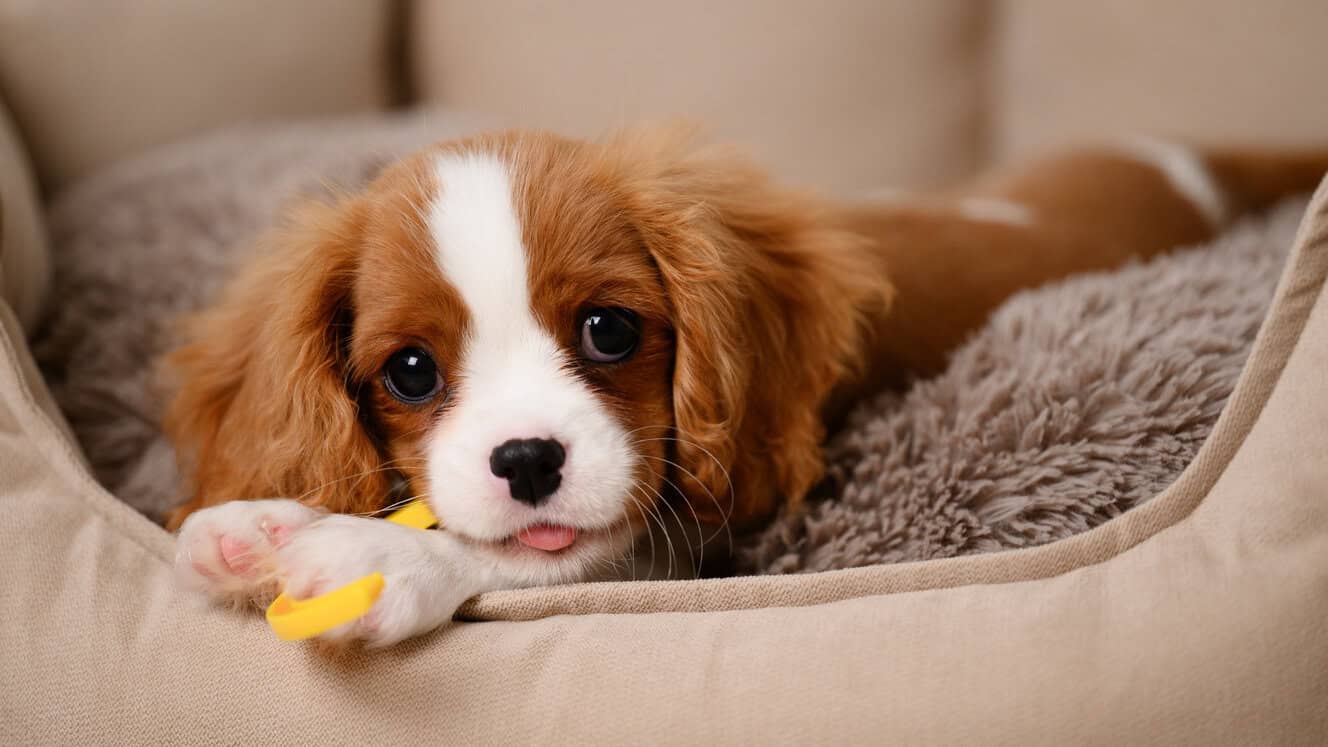
The Cavalier King Charles Spaniel is a small companion breed known for its gentle, people-focused nature. Weighing 13 to 18 lbs, it fits easily into apartments and small homes. It’s affectionate, easygoing, and rarely aggressive. This breed suits women who want a devoted lap dog and a calm daily routine.
Their large, dark eyes and silky, feathered ears give them an almost storybook look. That soft coat needs regular brushing to stay tangle-free.
Cavaliers are famously affectionate — most people expect that. What surprises new owners is how badly they handle being left alone for long stretches. This breed can develop real separation anxiety if you work long hours without a plan for daytime company.
Many Cavalier owners describe their dog as a shadow — following them room to room, curling up on their lap the second they sit down, and greeting every stranger like a long-lost friend.
- Gentle with strangers and other pets
- Easy to carry and travel with
- Adapts well to apartment living
- Prone to separation anxiety
- Needs regular ear cleaning
- Prone to heart issues later in life
Best for: Apartment dwellers · Women who work from home · First-time owners
2. Boston Terrier — “The Tuxedo-Wearing Comedian”
| Weight | 12 to 25 lbs |
| Height | 15 to 17 inches |
| Lifespan | 11 to 13 years |
| Energy Level | Moderate |
| Grooming Need | Low — weekly wipe-down |
| Shedding | Low |
The Boston Terrier is a small, muscular breed known for its black-and-white coat and alert, expressive face. Weighing 12 to 25 lbs, it’s sturdy enough for city walks yet small enough for apartments. It’s playful, smart, and bonds tightly with one person. This breed suits women who want a low-shedding, entertaining companion.
Their short coat and compact, square build make grooming simple. Those large, round eyes give them a permanently curious expression.
Most people know Bostons as friendly and social. What they don’t expect is how stubborn this breed gets during training — Bostons think for themselves and test limits early. That said, once trained, they’re remarkably tuned in to their owner’s mood.
So if you want a dog that reads a bad day and curls up quietly instead of demanding a walk, this breed often delivers exactly that.
- Low grooming and low shedding
- Good with kids and other pets
- Compact but sturdy for city life
- Struggles in extreme heat
- Can be stubborn to train
- Prone to eye injuries
Best for: City living · Low-grooming preference · Women who want a playful companion
3. French Bulldog — “The Low-Energy Roommate”
| Weight | 16 to 28 lbs |
| Height | 11 to 13 inches |
| Lifespan | 10 to 12 years |
| Energy Level | Low |
| Grooming Need | Low, but needs wrinkle care |
| Shedding | Low to moderate |
The French Bulldog is a compact, muscular breed known for its bat-like ears and easygoing nature. Weighing 16 to 28 lbs, it needs only short walks to stay happy. It’s affectionate, quiet, and content with indoor life. This breed suits women in apartments who want a calm, low-exercise companion.
Their short, smooth coat comes in fawn, brindle, and pied patterns. Those signature bat ears make them instantly recognizable on any street.
Everyone knows Frenchies are calm indoors. Fewer people realize how vocal they can get — grunts, snorts, and the occasional dramatic sigh are part of daily life with this breed. It’s part of the charm once you’re used to it.
You might be thinking a low-energy dog means a lazy, boring pet. In practice, Frenchies are playful in short bursts — they just don’t need an hour-long run to burn it off.
- Minimal exercise needs
- Quiet and calm indoors
- Great for small apartments
- Breathing issues in heat
- Higher vet costs on average
- Cannot swim due to body shape
Best for: Small apartments · Low-activity lifestyles · Women who want a quiet indoor dog
4. Labrador Retriever — “The Ride-or-Die Adventure Buddy”
| Weight | 55 to 80 lbs |
| Height | 21 to 24 inches |
| Lifespan | 10 to 12 years |
| Energy Level | High |
| Grooming Need | Low to moderate |
| Shedding | Heavy, twice yearly |
The Labrador Retriever is a medium-to-large breed known for its friendly, eager-to-please nature. Weighing 55 to 80 lbs, it needs daily exercise and space to move. It’s loyal, trainable, and rarely aggressive. This breed suits active women with a yard or easy access to trails and parks.
Their short, dense double coat comes in yellow, black, or chocolate. That thick “otter tail” helps them swim with real power.
Labs have a reputation as the ultimate friendly family dog — that part’s true. What surprises new owners is how long the puppy phase lasts. Labs can act like giant puppies well into their second or third year.
When I’ve fostered high-energy retrievers before, a tired Lab was always a well-behaved Lab. That taught me exercise isn’t optional with this breed — it’s the whole management plan.
- Extremely trainable and loyal
- Great with strangers and kids
- Sturdy enough for hiking and travel
- Needs 60+ minutes of exercise daily
- Heavy shedder twice a year
- Prone to weight gain if under-exercised
Best for: Active women · Homes with yards · Hiking and outdoor lifestyles
5. Boxer — “The Loyal Bodyguard With a Goofy Streak”
 Save
Save| Weight | 50 to 80 lbs |
| Height | 21 to 25 inches |
| Lifespan | 10 to 12 years |
| Energy Level | High |
| Grooming Need | Low |
| Shedding | Low to moderate |
The Boxer is a muscular, medium-to-large breed known for its alertness and strong protective instinct. Weighing 50 to 80 lbs, it’s naturally watchful without being aggressive toward its owner. It’s playful, loyal, and bonds deeply with one person. This breed suits women who want both companionship and a real sense of security at home.
Their short coat and square jaw give them a strong, athletic look. That expressive face and wiggly stub tail make them hard to mistake for standoffish.
Most people expect a Boxer to be tough and intimidating. What they don’t expect is how silly and affectionate this breed is at home — Boxers are known for “kidney bean” wiggles of pure joy when their owner walks in.
So if you want visible, natural alertness at the door plus a dog that turns into a total goofball on the couch, the Boxer usually delivers both.
- Naturally alert and protective
- Deeply loyal to one owner
- Low grooming despite large size
- Needs daily vigorous exercise
- Can be too strong for small owners untrained
- Prone to certain heart conditions
Best for: Safety-conscious women · Houses with yards · Women who want an active companion
6. Beagle — “The Nose-Led Explorer”
| Weight | 20 to 30 lbs |
| Height | 13 to 15 inches |
| Lifespan | 10 to 15 years |
| Energy Level | Moderate to high |
| Grooming Need | Low |
| Shedding | Moderate |
The Beagle is a small-to-medium hound known for its powerful nose and cheerful personality. Weighing 20 to 30 lbs, it’s compact enough for apartments but needs daily walks. It’s friendly, curious, and rarely shy around people. This breed suits women who want a social, easygoing dog for city life.
Their tricolor coat and long, floppy ears give them a classic, storybook hound look. Those big brown eyes make it hard to say no to a second walk.
Everyone expects a Beagle to be friendly — they are. Fewer people expect the howl. Beagles are famous for a loud, distinctive bay that can surprise apartment neighbors fast.
Even better, that same nose that gets them into trouble also makes them fantastic at scent games and puzzle toys, which helps burn off energy indoors on rainy days.
- Compact and easy to travel with
- Very social with people and dogs
- Low grooming needs
- Loud howl and bark
- Will follow its nose and wander off
- Prone to overeating
Best for: City walkers · Social households · Women who want a playful, food-motivated dog
7. Shih Tzu — “The Pint-Sized Palace Dog”
| Weight | 9 to 16 lbs |
| Height | 9 to 10.5 inches |
| Lifespan | 10 to 16 years |
| Energy Level | Low |
| Grooming Need | High — daily brushing |
| Shedding | Very low |
The Shih Tzu is a tiny companion breed known for its long, flowing coat and calm nature. Weighing 9 to 16 lbs, it needs little exercise and thrives indoors. It’s affectionate, low-shedding, and easy to carry along. This breed suits women who want a devoted lap dog with minimal outdoor demands.
Their long, silky coat can grow floor-length if left untrimmed. Many owners keep it in a short “puppy cut” to cut down on daily brushing.
People expect this breed to be delicate and quiet. What they may not know is how confident and even a little stubborn Shih Tzus can be — they were bred as palace companions, not shy lapdogs.
That low-shedding coat is a big draw for allergy-sensitive owners, but it comes at a cost: skipping brushing for even a few days leads to painful mats.
- Minimal exercise requirements
- Low-shedding, allergy-friendlier coat
- Great lap companion for small spaces
- Needs daily coat brushing
- Sensitive to heat due to flat face
- Frequent professional grooming costs
Best for: Tiny apartments · Low-exercise lifestyles · Allergy-conscious owners
8. Miniature Schnauzer — “The Alert Little Watchdog”
| Weight | 11 to 20 lbs |
| Height | 12 to 14 inches |
| Lifespan | 12 to 15 years |
| Energy Level | Moderate |
| Grooming Need | High — clipping every 6-8 weeks |
| Shedding | Very low |
The Miniature Schnauzer is a small, wiry-coated breed known for its sharp alertness and loyalty. Weighing 11 to 20 lbs, it’s small enough for apartments but bold enough to guard the door. It’s smart, low-shedding, and highly trainable. This breed suits women who want a compact dog with real watchdog instincts.
Their signature bushy eyebrows and beard give them an almost professorial look. That wiry coat sheds very little, which many owners count as a major plus.
People expect small dogs to be purely decorative. This breed proves that wrong fast — Miniature Schnauzers were originally bred as farm ratters and still carry a strong prey drive and a genuinely loud bark.
You might be thinking a small dog can’t offer real security. In practice, this breed’s sharp hearing and readiness to bark make it an excellent early-warning system at the door.
- Alert and quick to bark at strangers
- Low-shedding, allergy-friendlier coat
- Highly trainable and food-motivated
- Regular professional grooming needed
- Can bark excessively if bored
- Strong prey drive around small pets
Best for: Apartment security-seekers · Allergy-conscious owners · Women who enjoy training
9. Vizsla — “The Athletic Shadow”
| Weight | 44 to 60 lbs |
| Height | 21 to 24 inches |
| Lifespan | 12 to 14 years |
| Energy Level | Very high |
| Grooming Need | Very low |
| Shedding | Low |
The Vizsla is a lean, athletic breed known for its rust-colored coat and intense loyalty. Weighing 44 to 60 lbs, it needs serious daily exercise to stay balanced. It’s affectionate, sensitive, and forms an extremely tight bond with its owner. This breed suits highly active women who run, hike, or bike often.
Their short, rust-gold coat and lean, muscled build give them a sleek, athletic silhouette. Those soft brown eyes carry a permanently earnest, hopeful look.
Most people know Vizslas as running partners. What catches new owners off guard is how clingy this breed gets — Vizslas are nicknamed “Velcro dogs” for a reason and don’t do well left alone for long.
When exercised properly, a Vizsla is calm, quiet, and deeply devoted. Skip the daily run, though, and that same energy turns into destructive habits fast.
- Extremely low shedding and grooming
- Deeply bonded, affectionate companion
- Great for runners and hikers
- Needs 90+ minutes of exercise daily
- Poor choice for long work hours
- Sensitive to cold due to thin coat
Best for: Runners and hikers · Very active women · Homes with flexible schedules
10. Pomeranian — “The Fluffy Cloud With Big-Dog Confidence”
:max_bytes(150000):strip_icc()/pomeranian-beach-1190837479-2000-c77ef52b4c7f495e971de9873c8bdea2.jpg) Save
Save| Weight | 3 to 7 lbs |
| Height | 6 to 7 inches |
| Lifespan | 12 to 16 years |
| Energy Level | Moderate |
| Grooming Need | High — brushing 2-3x weekly |
| Shedding | Moderate, year-round |
The Pomeranian is a tiny toy breed known for its thick double coat and bold personality. Weighing just 3 to 7 lbs, it’s ideal for apartment living. Despite its size, it’s confident, alert, and highly vocal. This breed suits women who want a small, spirited dog with real personality.
Their fluffy double coat forms a lion-like ruff around the neck and chest. That fox-like face and perky ears give them a permanently alert expression.
Everyone expects a Pomeranian to be cute and dainty. What surprises people is the attitude — Poms genuinely believe they’re much bigger than they are and will bark at dogs ten times their size.
So if you want a dog that acts as a tiny alarm system while curling up in your lap the rest of the time, this breed usually fits that role well.
- Ideal size for small apartments
- Alert and quick to bark at noise
- Long lifespan, low exercise needs
- Frequent brushing required
- Barks often if not trained early
- Fragile around rough handling
Best for: Tiny apartments · Women who want an alert lap dog · Low-exercise lifestyles
How Do These 10 Breeds Compare Side by Side?
Here’s the full lineup at a glance. Use it to shortlist two or three breeds before you read the details again. Weight, energy, and grooming are the three factors that most often decide whether a breed fits a single-person household long term.
| Breed | Weight | Energy | Grooming | Best Trait |
|---|---|---|---|---|
| Cavalier King Charles Spaniel | 13-18 lbs | Low-Mod | Moderate | Devoted lap dog |
| Boston Terrier | 12-25 lbs | Moderate | Low | Low shedding |
| French Bulldog | 16-28 lbs | Low | Low | Minimal exercise |
| Labrador Retriever | 55-80 lbs | High | Low-Mod | Trainable and loyal |
| Boxer | 50-80 lbs | High | Low | Natural protector |
| Beagle | 20-30 lbs | Mod-High | Low | Social and playful |
| Shih Tzu | 9-16 lbs | Low | High | Tiny and calm |
| Miniature Schnauzer | 11-20 lbs | Moderate | High | Alert watchdog |
| Vizsla | 44-60 lbs | Very High | Very Low | Athletic companion |
| Pomeranian | 3-7 lbs | Moderate | High | Tiny and bold |
Now let’s turn this table into a real decision — because a spec sheet alone won’t tell you which dog fits your actual routine.
Which Dog Breed Is Right for You?
The right breed for you depends on three things: your living space, your daily schedule, and why you want a dog in the first place. A calm companion, an active partner, and a home guardian call for very different breeds. Match your real life to the dog, not the other way around.
Is this breed right for me?
If you live in a small apartment and want a quiet companion → the French Bulldog or Shih Tzu fits best.
If you’re active and want a workout partner → the Labrador Retriever or Vizsla will serve you better.
If personal safety is your top concern → the Boxer or Miniature Schnauzer gives you real alertness.
If you want a classic lap dog with a big personality → consider the Pomeranian or Cavalier first.
You might be thinking bigger always means safer. A Chihuahua can bark just as loud as a Boxer — but a Boxer’s size and bark together carry far more deterrent weight at your door. So if home security matters to you specifically, size does factor in.
What Do New Single Owners Usually Get Wrong About Choosing a Breed?
Most new owners get wrong the idea that looks should drive the decision. A dog you find adorable in photos can be completely mismatched to your schedule, home size, or energy level. The most common mistake is picking a high-energy breed like a Vizsla or Labrador without a realistic plan for daily exercise.
Here’s the thing — a bored, under-exercised dog doesn’t get “calmer” over time. It usually gets worse: more barking, more chewing, more anxiety. That’s not a breed problem. That’s a mismatch problem.
Another common misread is assuming small dogs are automatically low-maintenance. Breeds like the Shih Tzu and Pomeranian need more grooming time than a Labrador does, just in a different form. So what does that mean for you? Match the breed’s actual daily needs to your actual daily schedule, not just its size.
Mini Dog Care Essentials Every New Owner Should Know
Every new dog owner needs a plan for four basics: food, exercise, grooming, and vet care. Get these right from week one and almost any breed on this list will settle in fast. Skip them, and even the calmest breed can develop behavior problems.
Book a vet visit in your dog’s first week home, even if nothing seems wrong. It sets a baseline for future checkups.
Set a consistent feeding schedule — twice daily for most adult dogs works well. Budget daily exercise based on the breed’s energy level, not your own preference. Brush according to the breed’s coat type, and schedule professional grooming every 6 to 8 weeks for high-maintenance coats like the Schnauzer or Shih Tzu.
Never leave a high-energy breed like a Vizsla or Lab alone for 8+ hours without a midday walk or dog walker. It leads to destructive habits fast.
What Mistakes Do New Single Dog Owners Make Most Often?
The most common mistake new single owners make is underestimating how much a dog changes their daily freedom. Spontaneous weekend trips, long workdays, and late nights out all need a plan once a dog depends on you. The second most common mistake is skipping training in the first few months, which is exactly when habits form fastest.
- Choosing a breed based on looks instead of lifestyle fit
- Skipping basic obedience training in the first 6 months
- Underestimating daily exercise needs for active breeds
- Not budgeting for grooming costs on high-maintenance coats
- Leaving a dog alone too long without a walker or plan
Even better, most of these mistakes are avoidable with a little planning before you bring your dog home — not after.
Honest Scope of This Guide
This guide covers general breed traits based on widely accepted temperament and care standards from sources like the American Kennel Club and veterinary guidance. If you’re considering a rescue dog of mixed or unknown breed, individual temperament testing at the shelter matters more than breed generalizations. And if personal safety is a major driver of your decision, treat a dog as one layer of protection — not a replacement for locks, alarms, or other security measures.
Frequently Asked Questions
What is the best dog breed for a single woman living in an apartment?
The French Bulldog and Shih Tzu are top picks for apartments. Both need minimal exercise and adapt well to small spaces. Their calm indoor energy makes them easy to manage solo.
What is the best guard dog for a woman living alone?
The Boxer is one of the best choices for natural alertness and protection. It’s loyal, watchful, and strong enough to be a real deterrent. A well-trained Miniature Schnauzer also offers strong alert-barking in a smaller package.
Are small dogs a good choice for single women?
Yes, small dogs like the Pomeranian and Cavalier work well for many single women. They’re easier to manage physically and often need less space and exercise. Just budget time for grooming, since many small breeds need frequent brushing.
How much exercise does a single working woman’s dog need?
It depends entirely on the breed you choose. Low-energy breeds like the French Bulldog need 20 to 30 minutes daily. High-energy breeds like the Labrador or Vizsla need 60 to 90 minutes daily, rain or shine.
Is it hard to own a large dog like a Labrador alone?
It’s manageable with the right routine, but it takes real commitment. Labs need daily exercise, training, and space to stay balanced. Most single owners do best pairing a Lab with a regular walking schedule or dog park routine.
Final Thoughts
The right dog for you isn’t the trendiest breed — it’s the one that matches your actual daily life. A calm apartment dog like the French Bulldog solves a different problem than an alert protector like the Boxer. Be honest about your schedule, your space, and what you truly want a dog to add to your life.
One thing to do right now: Pick your top two breeds from this list, then visit a local shelter or breed-specific rescue this week to meet a dog in person before you decide.

Thomas Cutter is a lifelong dog owner and the founder of FindOutAboutDogs.com. With over 10 years of hands-on experience owning multiple breeds, Thomas created this site to provide honest, research-based dog advice that real owners can actually trust.
