What Brush Is Best for Silky Dog Hair? A Gentle Grooming Guide
Quick Answer
The best brush for silky dog hair is usually a gentle pin brush with smooth, rounded metal pins and a flexible cushion. It keeps long, fine hair smooth with less pulling. Pair it with a stainless-steel comb to find hidden tangles and a soft slicker brush for small knots. The AKC dog brush guide also explains why brush choice should match coat type.
What works best for silky coats
- Gentle pin brush: Best for daily care of long, flowing hair.
- Soft slicker brush: Helps loosen small tangles without heavy pulling.
- Stainless-steel comb: Finds knots that a brush may miss near the skin.
- Smooth pin tips: Help the brush move without scratching or catching hair.
- Light brushing pressure: Protects delicate strands and sensitive skin.
My simple recommendation
- For everyday care: Use a pin brush, then check the coat with a metal comb.
- For small tangles: Add a soft slicker brush and work slowly.
- For tight mats: Stop brushing and ask a professional groomer for help.
Silky dog hair looks lovely, but it can tangle around the ears, legs, and collar. I’ve found that choosing a brush makes more sense when you focus on the coat instead of the brand.
I’ll explain which tools suit silky hair, how to compare them, and how to brush without causing discomfort. You’ll also learn what to do when the coat starts forming knots.


Why Does Silky Dog Hair Need a Special Brush?
Silky dog hair is fine, smooth hair that often lies flat or falls in soft, flowing sections. It needs gentle grooming because long strands can catch, twist, and form tangles.
Some silky-coated breeds have a single coat, while others have an undercoat beneath longer hair. That difference affects which brush will work best.
Which Dog Breeds Have Silky Hair?
Yorkshire Terriers and Maltese are familiar examples of dogs with fine, flowing coats. Several spaniels and toy breeds also have silky hair, though their coat thickness may differ.
- Yorkshire Terrier: Fine, straight hair that needs regular gentle detangling.
- Maltese: Soft, long hair that can form knots around the legs and ears.
- Silky Terrier: A smooth coat that benefits from careful brushing.
- Cavalier King Charles Spaniel: Silky feathering around the ears, chest, legs, and tail.
- Papillon: Fine, flowing hair with feathered ears and a soft tail.
- Cocker Spaniel: Silky feathering with coat density that varies between dogs.
The coat’s length matters as much as its texture. A Maltese with a short trim may need a different brush size than one with floor-length hair.
Why Does Silky Hair Tangle So Easily?
Long, fine strands move against each other as a dog walks, sleeps, and plays. Friction can twist those strands together, particularly where a collar or harness rubs.
- Behind the ears: Fine hair moves and rubs during normal activity.
- Under the legs: Repeated movement can create hidden knots.
- Around the collar: Fabric and straps may increase friction.
- Along the belly: Longer hair can collect dirt and debris.
- Near the tail: Long strands may twist or catch while moving.
My first priority is checking these areas before brushing the easier parts of the coat. A smooth-looking back doesn’t mean the hair underneath is free of tangles.
What Type of Brush Is Best for Silky Dog Hair?
A pin brush is my first choice for maintaining most long, silky coats. However, a soft slicker brush and metal comb are useful when the hair begins to tangle.
1. Pin Brush for Daily Grooming
A pin brush has widely spaced metal pins attached to a cushioned base. It helps separate flowing hair and smooth the coat during routine grooming.
I prefer a brush with polished pin ends and a flexible cushion. Both features help make brushing more comfortable when used with light pressure.
- Best for: Long, straight, silky coats that are already fairly free of tangles.
- Main benefit: Smooths and separates hair with controlled strokes.
- Look for: Smooth pins, flexible padding, and a comfortable handle.
- Watch out for: Rough pin ends, damaged tips, and excessive pulling.
Pin length should match the coat. A long coat may benefit from 27 mm or 35 mm pins, while shorter areas may need a smaller brush.
Those measurements are examples, not fixed rules for every dog. I would choose the shortest pin length that comfortably reaches through the hair.
2. Soft Slicker Brush for Small Tangles
A slicker brush uses closely spaced, fine metal pins to separate hair. A soft version can help remove small tangles before they develop into larger mats.
I see it as a useful second tool rather than a reason to brush harder. Gentle, short strokes usually offer better control than repeated firm passes.
- Best for: Small knots and areas where hair collects.
- Main benefit: Separates light tangles more effectively than a pin brush alone.
- Look for: Flexible or soft pins and a small head for toy breeds.
- Watch out for: Skin irritation caused by pressure or repeated strokes.
The American Society for the Prevention of Cruelty to Animals recommends regular grooming for long, silky coats. Its dog grooming advice also discusses using slicker and bristle brushes for daily care.
3. Stainless-Steel Comb for Hidden Knots
A grooming comb is not technically a brush, but I consider it essential for long, silky hair. It helps reveal tangles that a larger brush can glide over.
A comb with wide and narrow tooth spacing is especially practical. Start with the wider side, then use the finer side where appropriate.
- Best for: Checking the coat after brushing.
- Main benefit: Finds small knots close to the skin.
- Look for: Smooth metal teeth with both coarse and fine spacing.
- Watch out for: Pulling the comb through resistance.
My favorite finishing check is simple. If the comb catches, I stop and inspect the area instead of pulling harder.
4. Bristle Brush for a Smooth Finish
A soft bristle brush can smooth the surface of an already untangled coat. It may also help distribute the coat’s natural oils.
However, bristle brushes often cannot reach hidden knots in long hair. I would use one for finishing, not as the only grooming tool.
Pin Brush vs. Slicker Brush vs. Comb: Which Is Better?
A pin brush suits routine maintenance, while a soft slicker handles small tangles. A metal comb checks whether the hair is truly free of knots.
I wouldn’t choose one tool for every grooming task. Each works best when used for a specific purpose.
| Tool | Best Use | Key Feature | Main Limitation |
|---|---|---|---|
| Pin brush | Daily coat care | Smooth, widely spaced pins | May miss hidden mats |
| Soft slicker | Light tangles | Fine, closely spaced pins | Can irritate skin if pressed |
| Steel comb | Final tangle check | Coarse and fine teeth | Slow for large coat areas |
| Bristle brush | Surface finishing | Soft natural or synthetic bristles | Poor deep detangling |
For a well-maintained silky coat, I would buy a pin brush and metal comb first. A soft slicker becomes more valuable when small tangles appear often.
How Do You Brush Silky Dog Hair Without Damaging It?
 Save
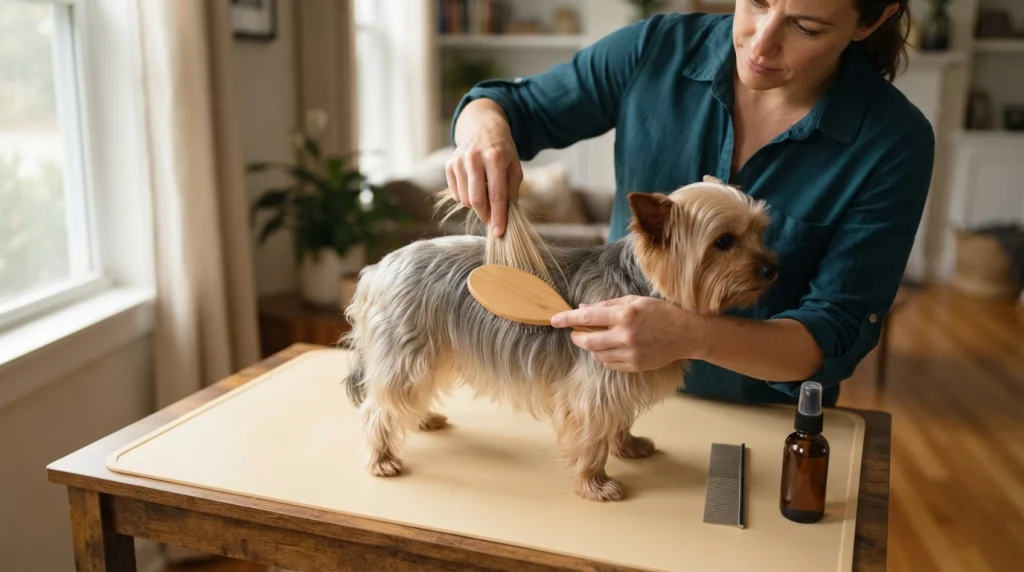
SaveBrush silky hair in small sections, using gentle strokes and checking for knots as you go. The aim is to separate strands without pulling the skin.
I find a calm, repeatable routine easier to manage than a long grooming session. Here’s the order I recommend.
Step 1: Check the Coat Before Brushing
Run your hands lightly through the coat and look for tangled areas. Pay special attention to the ears, armpits, belly, and collar line.
- Look for tight knots or trapped debris.
- Check for redness, sores, or tender skin.
- Notice whether your dog pulls away from certain areas.
- Stop if you find a painful or tightly matted patch.
Step 2: Use a Light Detangling Mist if Needed
A small amount of dog-safe conditioning or detangling spray may help the brush move more smoothly. Choose a product suitable for your dog’s coat and skin.
Use only enough to lightly dampen the hair, following the label directions. Avoid spraying directly into your dog’s eyes, ears, or nose.
Step 3: Brush in Small Sections
Lift a narrow layer of hair so you can reach the strands underneath. Use your pin brush gently in the direction the hair grows.
- Choose a small section near a leg or along the body.
- Support the hair with your free hand.
- Start gently near the ends if the section has tangles.
- Work closer to the base as the hair becomes free.
- Brush the full section with light, controlled strokes.
- Move to the next section and repeat.
This section-by-section method is often called line brushing. It helps prevent surface-only grooming that leaves knots underneath.
Step 4: Work Through Minor Tangles Carefully
If the brush catches, stop immediately and examine the hair. Hold the coat near its base to reduce pulling on the skin.
Use your fingers to loosen a small knot, starting at its outer edge. A soft slicker or wide-tooth comb may help when the tangle is loose enough.
- Never pull a knot straight out.
- Don’t scrape the same skin area repeatedly.
- Take short breaks if your dog becomes restless.
- Leave tight, painful mats to a professional groomer.
Step 5: Finish With a Metal Comb
After brushing, pass the coarse side of a metal comb gently through each finished section. Use the finer teeth only where they can move without resistance.
If the comb catches, inspect that section again. A coat that looks smooth can still contain small knots underneath.
Step 6: Reward Your Dog
Finish with praise, a small treat, or a favorite activity. Keep early sessions short if your dog is still learning to enjoy grooming.
I would rather finish a few comfortable sections than force a dog through the entire routine. Good brushing should become easier with practice.
How Often Should You Brush a Silky-Haired Dog?
Most dogs with long, silky coats benefit from daily brushing, especially when their hair tangles easily. Shorter trims may need less frequent care, depending on coat texture and activity.
As of 2026, regular gentle maintenance remains the practical approach recommended across established grooming guidance. The exact schedule should suit the individual dog.
| Coat Condition | Suggested Routine | Main Tool |
|---|---|---|
| Long, flowing hair | Daily | Pin brush and comb |
| Short silky trim | Several times weekly, as needed | Small pin or soft brush |
| Frequent small tangles | Daily inspection and gentle brushing | Soft slicker and comb |
| After outdoor play | Check affected areas promptly | Comb or pin brush |
I prefer brief sessions that keep the coat manageable. If brushing becomes difficult every day, the coat may need professional attention or a shorter trim.
Can the Wrong Brush Damage Silky Dog Hair?
Yes. A brush with rough pins, excessive pressure, or an unsuitable design can pull hair and irritate skin.
The problem isn’t always the brush itself. Even a good grooming tool can cause discomfort when used too aggressively.
Which Grooming Tools Should You Avoid?
Be cautious with tools that are designed for a different coat type. A fine, single-coated Yorkie does not need the same equipment as a heavily shedding Husky.
- Sharp metal pins: May scratch delicate skin.
- Damaged pin tips: Can catch strands and cause pulling.
- Harsh de-shedding blades: May be unsuitable for fine, single coats.
- Undercoat rakes: Usually unnecessary when a dog has no undercoat.
- Very stiff slickers: Can cause discomfort if pressed against sensitive skin.
- Surface-only bristle brushes: May leave deeper tangles untouched.
Don’t assume a brush is safe just because it removes a lot of hair. I look for comfort, coat condition, and how easily the tool moves.
What Should You Do if Silky Dog Hair Is Already Matted?
 Save
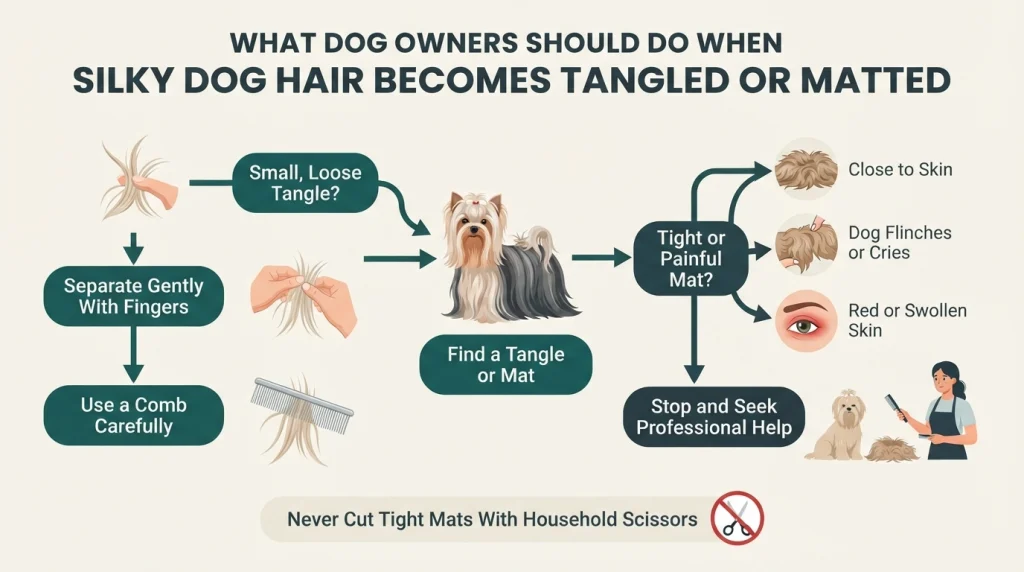
SaveSmall, loose tangles may respond to gentle finger separation and careful combing. Tight, painful mats need professional grooming because pulling them can injure the skin.
The veterinary guidance from VCA Animal Hospitals recommends professional help for severe matting. It also warns against using scissors to cut mats near the skin.
When Is a Mat Too Serious for Home Brushing?
Some mats feel like dense lumps rather than separate strands. These can pull on the skin each time your dog moves.
- The knot sits tightly against the skin.
- Your dog cries, flinches, or tries to escape.
- The skin looks red, sore, or swollen.
- Several mats have joined into a larger patch.
- You cannot separate the outer strands gently.
Recent veterinary guidance on matted fur also explains that mats can trap dirt and moisture. They aren’t always just a cosmetic problem.
Never cut a tight mat with household scissors. A groomer can assess whether safe detangling or clipping is the kinder solution.
How Can You Keep Silky Dog Hair Smooth Between Grooming Sessions?
Consistent coat care is easier than removing large tangles later. I focus on preventing friction, keeping hair clean, and checking hidden areas.
- Check collars and harnesses: Watch for friction where straps touch longer hair.
- Brush before bathing: Remove manageable tangles before getting the coat wet.
- Use dog-safe shampoo: Choose a gentle formula suited to your dog’s skin.
- Dry the coat carefully: Avoid leaving damp, tangled sections beneath long hair.
- Clean grooming tools: Remove trapped hair and check for bent pins.
- Maintain an easy haircut: Consider a shorter trim if daily grooming is difficult.
I also pay attention to coat changes rather than assuming every problem comes from brushing. Sudden hair loss, persistent itching, or inflamed skin deserves veterinary advice.
Best Brushes and Grooming Tools for Silky Dog Hair
 Save
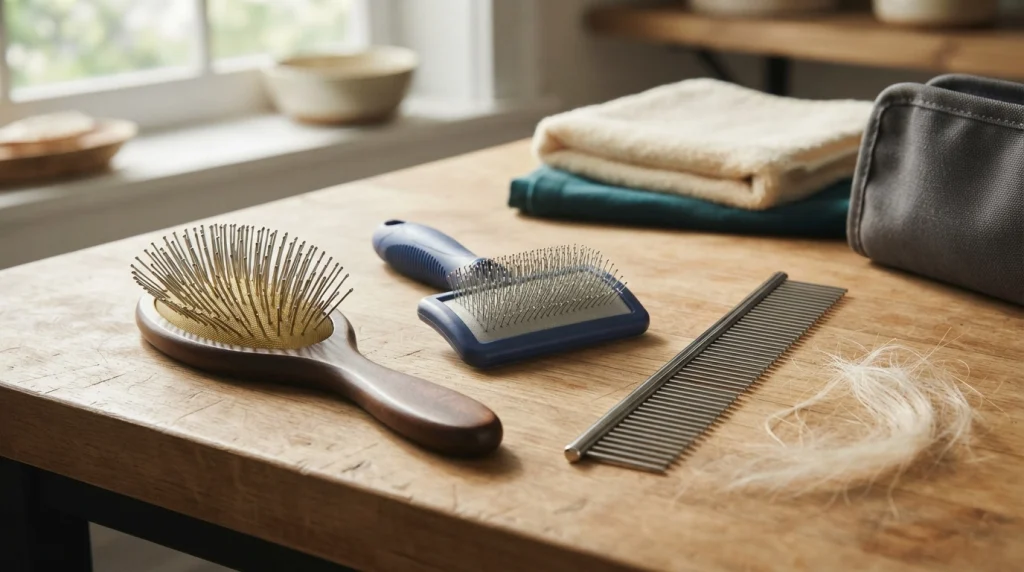
SaveIf I were building a simple grooming kit for silky hair, I would start with three tools that do different jobs. These are real products with features suited to delicate grooming.
The ratings below reflect my assessment of their suitability for this task, not customer review averages or claims of hands-on product testing.
🏆 Best for Daily Brushing
Chris Christensen Gold Series Oval Pin Brush
★★★★★
Suitability rating: 4.7/5
This brush has polished, gold-plated metal pins and a flexible cushion. The 27 mm version is worth considering for longer drop coats, while other lengths suit different areas.
I would choose it for a well-maintained Maltese or Yorkie coat where gentle daily brushing matters more than heavy detangling. Its higher price is the main drawback.
🐾 Best for Light Tangles
Safari by Coastal Dog Soft Slicker Brush
★★★★☆
Suitability rating: 4.4/5
This brush uses stainless-steel pins with coated tips and a non-slip grip. It comes in different sizes, making the smaller version useful for toy breeds.
I would keep it nearby for small tangles around the legs and chest. It still needs a light touch because repeated pressure can irritate the skin.
✨ Best Finishing Tool
Andis 7-1/2 Inch Steel Comb
★★★★★
Suitability rating: 4.6/5
This 7.5-inch steel grooming comb has coarse and fine tooth spacing. Its design helps check for tangles, lift loose hair, and tidy small areas.
I consider a steel comb one of the most useful additions to a pin brush. It helps confirm that the coat is smooth below the visible surface.
Frequently Asked Questions About Silky Dog Hair Brushes
Is a slicker brush or pin brush better for silky dog hair?
A pin brush is usually the better everyday choice for long, silky hair that is already free of serious tangles. A soft slicker brush is useful for gently separating small knots. Both can help, but a metal comb should follow to check for hidden tangles.
Can I use a human hairbrush on my silky-haired dog?
A human hairbrush may smooth the surface, but it isn’t always designed for a dog’s coat or skin. I prefer a properly sized dog grooming brush with smooth pins. This makes it easier to choose a tool suited to the dog’s hair length and texture.
Should I brush my Maltese or Yorkie every day?
Daily brushing is a sensible routine for Maltese and Yorkies with long coats. Their fine hair can tangle around the ears, legs, and collar. Dogs with shorter trims may need less frequent brushing, but regular checks help catch knots before they tighten.
Is it better to brush silky dog hair wet or dry?
For routine grooming, lightly dampened hair can be easier to manage than hair with static or friction. A dog-safe detangling spray may help, but avoid soaking the coat. Remove manageable tangles before bathing, and never pull a brush through wet, tight mats.
What brush is best for a silky-haired puppy?
A small, soft brush with smooth tips is a good starting point for a silky-haired puppy. Begin with short sessions and gentle handling. Let the puppy sniff the brush, reward calm behavior, and stop before grooming becomes stressful. Increase brushing time as your puppy becomes comfortable.
The Best Choice for a Healthy Silky Coat
For most dogs with long, silky hair, I recommend a gentle pin brush paired with a stainless-steel comb. Add a soft slicker brush when you need help with small, loose tangles.
The most important part isn’t buying an expensive brush. It’s choosing smooth pins, using light pressure, and keeping the coat free of painful knots.
Start with a short grooming session today. Check behind the ears, brush one section at a time, and finish with a comb to make sure the hair moves freely.

Thomas Cutter is a lifelong dog owner and the founder of FindOutAboutDogs.com. With over 10 years of hands-on experience owning multiple breeds, Thomas created this site to provide honest, research-based dog advice that real owners can actually trust.
