10 Best Rated Dog Brushes for 2026: Match Your Dog’s Coat
The best rated dog brush for routine medium-coat grooming is the Hertzko Self-Cleaning Slicker Brush, thanks to its retractable cleaning pins. We evaluated 10 grooming tools by comparing documented coat compatibility, skin gentleness, and cleaning convenience. Similar-looking brushes behave differently on smooth, curly, and double coats. Whether you need a slicker, a shedding tool, or a bath brush, this guide identifies a sensible match.


Quick Comparison: All 10 Dog Brushes and Grooming Tools
Ratings below are our subjective editorial coat-fit scores, not Amazon customer ratings, laboratory results, or veterinary endorsements.
| # | Product | Best For | Editorial Rating | Badge | |
|---|---|---|---|---|---|
| 1 | Hertzko Self-Cleaning Slicker Brush (Original) | Routine detangling on medium-to-long coats | 4.6/5 | Best Overall | View → |
| 2 | Hartz Groomer’s Best Combo Brush for Dogs | Owners wanting a pin and bristle brush together | 4.4/5 | Best Value | View → |
| 3 | Chris Christensen Big G Slicker Brush (Large) | Dense curly and longer cottony coats | 4.5/5 | Best for Doodles | View → |
| 4 | FURminator Undercoat deShedding Tool (Medium Dog, Long Hair) | Medium dogs with long shedding double coats | 4.4/5 | Best for Shedding | View → |
| 5 | KONG ZoomGroom Dog Brush (Adult) | Short smooth coats and bath-time massage | 4.5/5 | Best for Short Hair | View → |
| 6 | Safari by Coastal Self-Cleaning Slicker Dog Brush | Everyday grooming with size choices | 4.3/5 | Best Easy Clean | View → |
| 7 | The ORIGINAL by SleekEZ Grooming Tool (Medium) | Loose coat on short-to-medium shedding dogs | 4.2/5 | Best Blade Tool | View → |
| 8 | HandsOn Animal Grooming Gloves (Pair) | Dogs that tolerate petting better than brushes | 4.3/5 | Best for Nervous Dogs | View → |
| 9 | Maxpower Planet Original Pet Grooming Rake | Long, thick double coats with loose undercoat | 4.2/5 | Best Undercoat Rake | View → |
| 10 | Bodhi Dog Bath Brush with Loop Handle | Gentle shampooing on sensitive smooth coats | 4.3/5 | Best for Bathing | View → |
How We Chose These Dog Brushes
This is a research-based editorial comparison, not a hands-on trial. We did not weigh shed hair, run timed tests, consult a named expert, or verify live Amazon star averages.
What we examined
Ten named tools; manufacturer features, coat guidance, cleaning systems, and foreseeable limitations.
Our three criteria
Coat suitability, skin gentleness when correctly used, and cleaning convenience; each scored 1–5 editorially.
Guidance consulted
American Kennel Club grooming guidance, relevant product manufacturers, and product-type recommendations. No vet consultation claimed.
What we excluded
Unverifiable performance percentages, invented tests, made-up customer review totals, and products without a useful coat-specific role.
General care references: AKC brush types and AKC home grooming safety.
What to Look for When Buying a Dog Brush
The right tool depends less on a star score than on the kind of hair your dog grows. Choose the brush style before comparing handles, self-cleaning mechanisms, or brand reputation.
1. Coat Type: Smooth, Curly, Long, or Double
A short smooth coat usually benefits from a rubber curry or soft bristle brush; curls and longer coats often need a slicker and follow-up comb. Dogs with shedding undercoats may need a separate rake or deshedder after gentle detangling. Our more focused guide covers short-haired dog brush choices.
2. Pin Shape, Tooth Spacing, and Gentle Pressure
Long pins can reach through fluffy coats but must be moved in short, light strokes. Wide rake teeth have a different role from densely packed slicker pins, and a rubber curry is designed for surface work rather than detangling. See these related undercoat brush options for dogs before selecting a deep-reaching tool.
3. Cleanup and Handle Comfort
Retractable slicker pins help release fur without scraping your fingers between wires. A loop-handled bath brush stays easier to manage with soapy hands, while a glove gives more direct control around legs and shoulders. Select a handle that you can control with light pressure rather than one with the most aggressive-looking teeth.
4. Dog Size and Regular Maintenance
A large slicker head can cover an adult body efficiently but be difficult around a small dog’s ears or legs. Match the brush head to the area, check pin wear, clean after each session, and dry stored tools. Regular short sessions are usually easier to tolerate than one forceful attempt to clear weeks of tangles.

Hertzko Self-Cleaning Slicker Brush (Original)
Best for: Routine detangling on medium-to-long coats
For an owner who wants one straightforward brush for ordinary upkeep, a push-button slicker removes the biggest nuisance: picking trapped hair out of wire pins. The original Hertzko uses angled fine bristles and a retractable cleaning mechanism, making it suited to loose fur and manageable tangles on compatible coats.
Its brush head works best when you lift hair in sections and use gentle strokes rather than scraping the skin. This is a practical first purchase for a medium-coated dog, but it is not a substitute for professional removal of tight mats or a specialist tool for heavy double-coat shedding.
What We Loved
- Retractable pins simplify cleaning
- Angled bristles reach manageable tangles
- Comfort-grip handle for repeat sessions
What Could Be Better
- Firm pressure can irritate sensitive skin
- Not built to remove tightly felted mats
Quick Specs
4.6/5
4.2/5
4.9/5

Hartz Groomer’s Best Combo Brush for Dogs
Best for: Owners wanting a pin and bristle brush together
When a household needs both basic detangling and a smooth finish, buying two separate brushes is not always necessary. The Hartz Groomer’s Best Combo Brush puts coated stainless-steel pins on one side and dense nylon bristles on the reverse.
Begin with the pin side to lift loose hair and work through minor snags, then turn it over to smooth the outer coat. Its ergonomic handle makes switching sides convenient in a short grooming routine. The compromise is specialization: neither side penetrates a packed undercoat like a dedicated rake, and the bristle side does not untangle curly coats.
What We Loved
- Two grooming surfaces in one tool
- Coated pins for initial detangling
- Nylon bristles finish the surface coat
What Could Be Better
- Neither side deeply clears packed undercoat
- Wide head awkward near small facial areas
Quick Specs
4.3/5
4.3/5
4.5/5

Chris Christensen Big G Slicker Brush (Large)
Best for: Dense curly and longer cottony coats
A dense Poodle or doodle coat can hide tangles beneath a tidy-looking surface, so short-pin brushes may not reach far enough. The large Chris Christensen Big G uses long 27 mm stainless-steel pins set in a flexible cushion pad, with a curved back and ergonomic handle intended for deliberate line brushing.
The manufacturer identifies the large head as a body brush and offers smaller variants for tighter areas. It suits owners prepared to brush in sections and follow with a comb check. The trade-off is that those long pins are unnecessary for close, smooth coats, and pressure still matters.
What We Loved
- Verified 27 mm stainless-steel pins
- Flexible cushioned pin pad
- Large body head covers dense coats
What Could Be Better
- Long pins excessive for smooth coats
- Requires careful section-by-section technique
Quick Specs
4.8/5
4.0/5
4.0/5

FURminator Undercoat deShedding Tool (Medium Dog, Long Hair)
Best for: Medium dogs with long shedding double coats
Seasonal undercoat release is a different problem from tangles on the top layer. This medium-dog long-hair FURminator variant uses a stainless-steel deshedding edge to collect loose undercoat beneath the topcoat, plus a curved Skin Guard and thumb-operated FURejector button. Its manufacturer specifies use on an appropriate dry coat and distinguishes deshedding from regular brushing.
For a medium-sized dog with a genuine shedding undercoat, it can complement a gentler daily brush. Skip it for coats without an undercoat, areas with irritated skin, or dogs whose knots need detangling first. Avoid repeated heavy passes over one area.
What We Loved
- Purpose-built for loose undercoat
- FURejector releases collected fur
- Curved Skin Guard around metal edge
What Could Be Better
- Wrong choice for non-shedding curly coats
- Overuse can irritate skin and coat
Quick Specs
4.7/5
3.7/5
4.8/5

KONG ZoomGroom Dog Brush (Adult)
Best for: Short smooth coats and bath-time massage
Short-coated dogs often need a softer approach than rows of metal pins. The adult KONG ZoomGroom uses wide, flexible rubber fingers to help collect loose surface hair while gently massaging the coat. It is also designed for use while shampooing, so one simple grooming tool can move from dry brushing to bath time.
Smooth-coated dogs and owners introducing an animal to handling are the natural audience. It does not untangle long curls, lift a compacted undercoat, or remove mats. Keep it out of reach between sessions because its rubber form can resemble a chew toy.
What We Loved
- Flexible rubber fingers suit smooth coats
- Works during shampooing and dry brushing
- Easy to rinse after a bath
What Could Be Better
- Cannot detangle mats or dense curls
- Rubber can attract chewing if left out
Quick Specs
3.9/5
4.9/5
4.6/5

Safari by Coastal Self-Cleaning Slicker Dog Brush
Best for: Everyday grooming with size choices
Cleaning a regular slicker can take longer than the brushing itself when loose fur packs between its pins. Safari by Coastal answers that nuisance with retractable stainless-steel pins and a button for pushing the collected coat away.
The manufacturer offers small, medium, and large sizes, useful when a brush head should match the dog rather than forcing a large head around small legs. It is a sensible alternative to the Hertzko for owners who prefer a specific head size. As with any metal slicker, keep strokes light, check for discomfort, and avoid forcing the pins through firmly matted hair.
What We Loved
- Retractable pins aid hair release
- Small, medium, large sizes available
- Textured comfort-grip handle
What Could Be Better
- Metal pins demand a light touch
- Self-cleaning mechanism adds moving parts
Quick Specs
4.3/5
4.2/5
4.7/5

The ORIGINAL by SleekEZ Grooming Tool (Medium)
Best for: Loose coat on short-to-medium shedding dogs
A conventional bristle brush may leave plenty of loose short hair behind on a shedding dog. The medium SleekEZ uses a distinct wave-tooth blade mounted in a handheld wood block, offering a different way to lift loose coat instead of relying on wire pins.
Its manufacturer also sells small and large formats, so the medium is a middle-ground choice rather than a one-size-fits-all solution. The design works best on a coat where it can glide without catching, not on a tangled or very curly coat. It also has no button for ejecting collected hair, which means cleanup is manual.
What We Loved
- Wave-tooth metal grooming edge
- Medium size plus smaller and larger options
- No wire-pin pad to clog
What Could Be Better
- Not a knot-removal brush
- Wood handle needs sensible drying care
Quick Specs
4.2/5
4.1/5
4.2/5

HandsOn Animal Grooming Gloves (Pair)
Best for: Dogs that tolerate petting better than brushes
Some dogs accept a familiar hand on their coat but become wary when a stiff brush approaches. HandsOn grooming gloves replace the handle with fitted gloves carrying flexible textured nodules on the fingers and palms.
They let an owner stroke around legs, shoulders, and awkward curves while removing loose surface hair, and the manufacturer markets them for wet or dry use. Five sizes, from Junior through X-Large, make fit a real consideration rather than an afterthought. They are particularly useful for gentle introductions, although they cannot replace a long-pin slicker or steel comb for checking deep tangles.
What We Loved
- Finger control around awkward body contours
- Five glove sizes from Junior to XL
- Suitable for wet and dry grooming
What Could Be Better
- Not enough for deep coat detangling
- Must choose correct hand size
Quick Specs
3.9/5
4.9/5
4.0/5
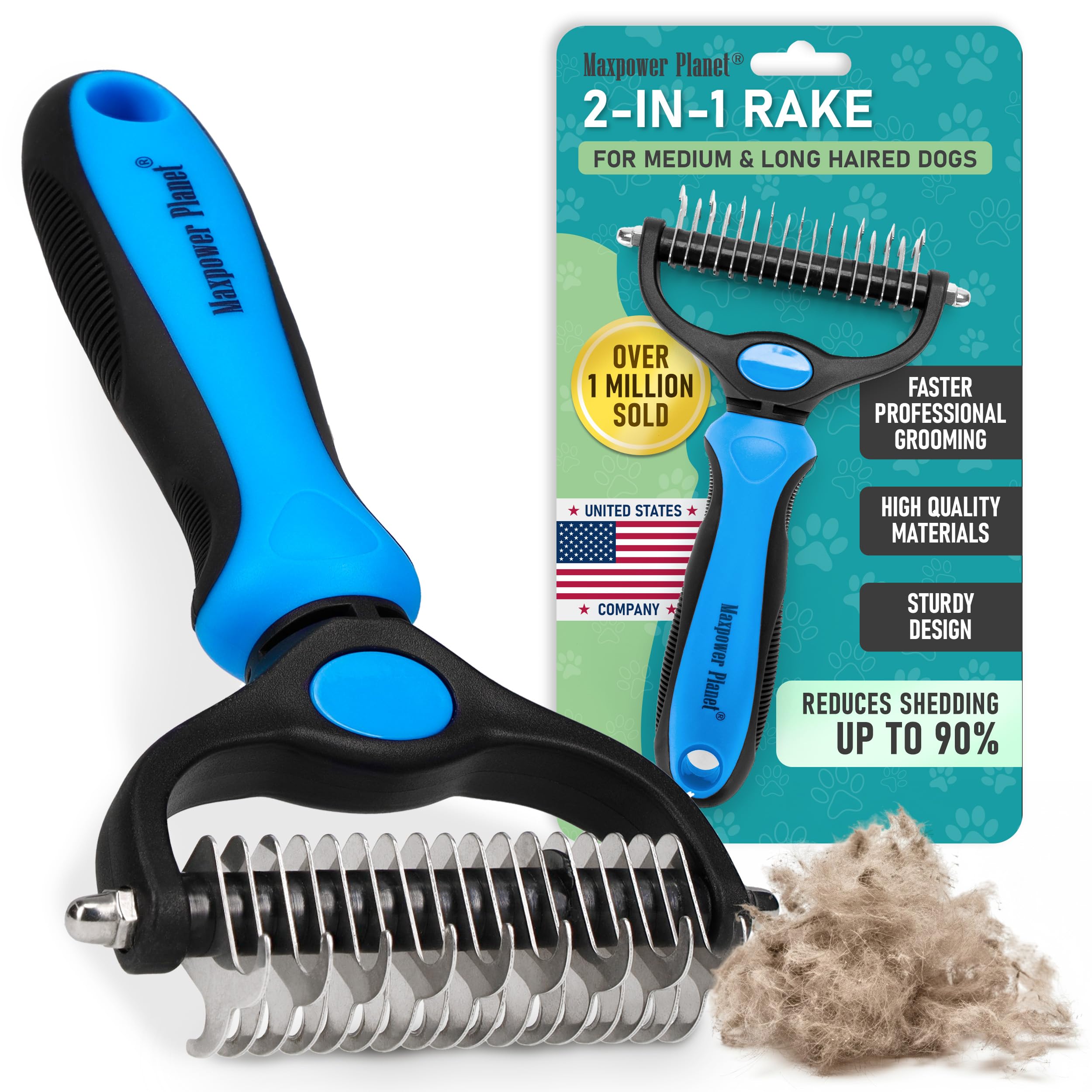
Maxpower Planet Original Pet Grooming Rake
Best for: Long, thick double coats with loose undercoat
A thick double coat can hold loose hair well below what a standard surface brush reaches. The Maxpower Planet Original Rake uses two tooth spacings: nine wider teeth for working through manageable tangles and seventeen closer teeth for removing loose undercoat.
Its non-slip handle and extra-wide head make it most relevant to larger areas on long or dense coats. Owners should use short, gentle strokes rather than pulling against resistance; this is not a tool to attack tight painful mats. The manufacturer explicitly positions it for double, long, or wiry coats, so do not choose it for a short smooth-coated dog.
What We Loved
- Nine-tooth and seventeen-tooth sides
- Targets loose undercoat in dense coats
- Non-slip handle for controlled strokes
What Could Be Better
- Not suitable for short smooth coats
- Can pull painfully on tight mats
Quick Specs
4.7/5
3.6/5
4.0/5

Bodhi Dog Bath Brush with Loop Handle
Best for: Gentle shampooing on sensitive smooth coats
Bath time often creates a grip problem: shampoo makes smooth grooming tools hard to hold. The Bodhi Dog Bath Brush uses an integrated loop handle and soft natural-rubber bristles so it stays easier to control while you massage shampoo through the coat.
The brand lists a compact 3.5-by-5.125-inch body and says the brush can be used wet or dry. It is a sensible addition for short-haired dogs and for owners who want a softer contact surface. This is a cleanser and surface-hair brush, not an answer for hidden undercoat, curled tangles, or established mats.
What We Loved
- Loop handle helps maintain wet grip
- Soft rubber contact surface
- Brand lists compact measured dimensions
What Could Be Better
- Weak option for deep undercoat
- Cannot work through established mats
Quick Specs
3.8/5
4.8/5
4.6/5
Top 3 Head-to-Head: Hertzko vs. Hartz vs. Big G
These three cover the most common final choice: easy slicker cleanup, basic two-sided brushing, or serious long-pin grooming for curls. None should be treated as a universal answer for every dog.
| Factor | Hertzko | Hartz Combo | Big G |
|---|---|---|---|
| Tool | Self-cleaning slicker | Pin and bristle combo | 27 mm long-pin slicker |
| Best role | Routine tangles | Everyday 2-in-1 brushing | Dense curly coat |
| Main strength | Easy hair release | Two surfaces | Long pin reach |
| Main drawback | Metal pin pressure | Shallow undercoat reach | Too aggressive for short coats |
| Editorial rating | 4.6/5 | 4.4/5 | 4.5/5 |
Who These Dog Brushes Are NOT For
No home brush is an appropriate substitute for veterinary care or professional dematting when a dog has painful skin or tight felted mats.
Likewise, a deshedding blade is not a sensible default for every Poodle, and a soft rubber curry cannot replace thorough detangling on a long curly coat. Choose for the actual coat and the dog’s tolerance, not just an overall ranking.
Common Mistakes to Avoid
Most brushing problems begin with selecting the wrong tool or trying to compensate by brushing harder.
Frequently Asked Questions
What kind of brush is best for my dog?
The best brush is the type suited to your dog’s coat. A rubber curry or bristle brush often suits a short smooth coat, while a slicker helps with manageable tangles in medium, long, or curly coats. Undercoat rakes and deshedding tools have a more specialized role for suitable double coats. Ask a groomer if the coat type is unclear.
Is a slicker brush good for a dog that sheds?
A slicker brush can remove loose surface hair and help prevent tangles, especially on medium and longer coats. It may not be enough for a thick shedding undercoat, where a correctly chosen rake or deshedding tool can be useful. Use gentle strokes, part the coat as needed, and stop if the dog appears uncomfortable.
How often should I brush my dog?
Brushing frequency depends on coat length, shedding, and the likelihood of tangling. Short smooth coats may need a weekly session, while long or curly coats often need more frequent attention, sometimes daily. Short, calm sessions help you check the skin and prevent small tangles from becoming tight mats. Follow breed-specific advice from your groomer or veterinarian.
Can I use a FURminator on every dog?
No. An undercoat deshedding tool should be used only on the coat types and dog sizes indicated by the manufacturer. It is not a universal brush for all short or curly coats. Before using one, confirm that the dog has a suitable shedding undercoat, follow the directions, and avoid irritated skin or repeated hard passes.
What brush is best for a dog with short hair?
For many short smooth coats, a soft rubber curry brush such as the KONG ZoomGroom can remove surface hair without the long metal pins designed for fluffy coats. Some short-haired breeds also have dense undercoats and may need a different grooming routine. Choose based on coat structure, not hair length alone, and compare brushes for seasonal dog shedding.
How do I clean a dog slicker brush?
Remove trapped hair after brushing, then follow the manufacturer’s cleaning and drying instructions. Self-cleaning slickers typically retract their pins so a collected sheet of fur can be removed more easily. Avoid storing a damp brush, and inspect its pins periodically for bends, sharp ends, or damage that could make the next session uncomfortable.
Should I brush out tight mats at home?
Do not pull forcefully on tight mats or cut mats close to the skin with household scissors. Matted hair can conceal tender or damaged skin, and accidental cuts are a serious risk. A professional groomer or veterinarian can assess whether careful detangling or clipping is safer. Keep future sessions gentle and regular to help prevent recurrence.
Our Final Verdict
For everyday maintenance of medium-to-long coats, the Hertzko Self-Cleaning Slicker is the most convenient general starting point in this selection. But coat type matters more than a single overall score: long curls suit the Big G, shedding undercoats require correctly matched tools, and smooth short coats often respond better to soft rubber.

Thomas Cutter is a lifelong dog owner and the founder of FindOutAboutDogs.com. With over 10 years of hands-on experience owning multiple breeds, Thomas created this site to provide honest, research-based dog advice that real owners can actually trust.
