Can Every Dog Use the Same Brush? Coat Types & Sharing Rules
Quick Answer
No, every dog cannot use the same brush because canine coats vary dramatically in length, thickness, and undercoat density. According to grooming standards from the American Kennel Club, using the wrong brush style can either scratch sensitive skin or leave deep tangles untouched.
How to Match the Brush to the Dog
- Short single coats: Use a soft rubber curry brush or natural boar bristle brush to lift loose hair without scraping bare skin.
- Thick double coats: Pair an undercoat rake with a slicker brush to pull trapped dead fur from the insulating base layer.
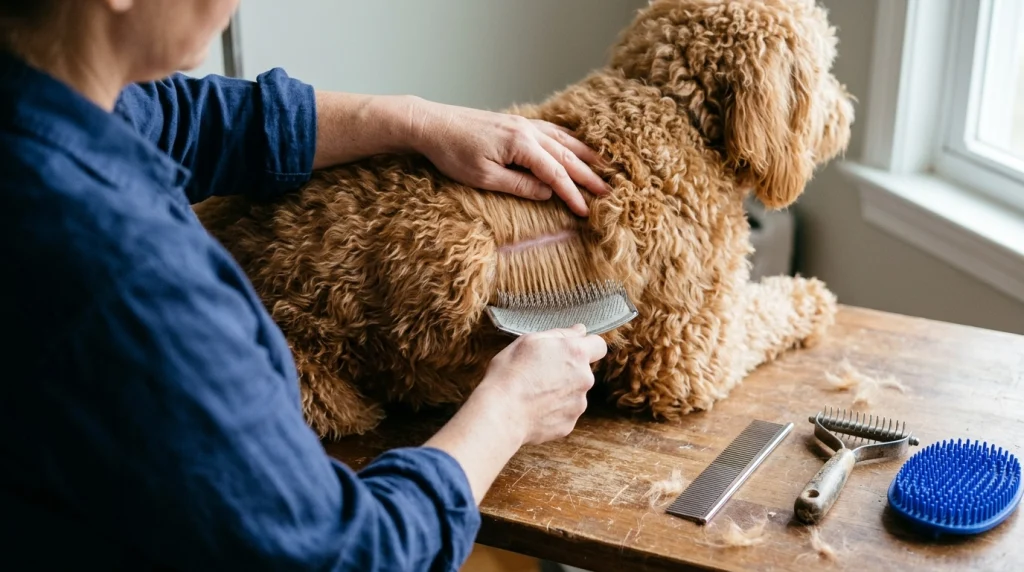
- Curly and doodle coats: Choose a long-pinned curved slicker brush and a stainless steel comb to prevent painful mats near the skin.
- Long silky coats: Reach for a cushioned pin brush with polished tips to glide through delicate drop coats without snapping hair shafts.
- Multi-dog households: Two healthy dogs with the same coat type can share one physical brush if you clean it weekly, but dogs with skin infections need separate tools.
Quick Coat Check Tip
- Part the fur first: Spread the hair along your dog’s lower back with your fingers to check for a dense, woolly second layer before buying a brush.
Standing in the pet store aisle, it is tempting to grab one all-purpose dog brush and call it a day. I made that exact mistake years ago when I brought home a short-haired Boxer mix while already owning a heavy-shedding Golden Retriever mix.
Within five minutes, my trusty wire slicker brush left red marks on my Boxer’s belly. Below, I’ll show you how to match the right brush to your dog’s coat and when two dogs in one house can safely share the same tool.


Why Can’t Every Dog Use the Same Type of Brush?
Every dog cannot use the same brush type because metal pins designed for thick undercoats will gouge thin, single-layered skin. Conversely, soft bristles meant for short coats slide right over dense fur without removing trapped mats.
A dog brush is a specialized grooming tool engineered to detangle fur, distribute natural skin oils called sebum, and pull out dead hair without scratching the epidermis. Because dogs have been bred for everything from icy water retrieval to desert sprinting, their coats function like completely different fabrics.
The Forearm Pressure Test: Before using any new brush on a short-haired dog, rake it firmly across the inside of your bare forearm. If the pins leave white or red scratch lines on your skin, they are too sharp for a single-coated breed.
When I groom my Golden mix, Barnaby, I have to work through two inches of waterproof guard hairs and dense, cotton-like fluff. My Boxer mix, Mabel, has stiff quarter-inch hairs growing straight out of thin skin with zero padding underneath.
Four physical factors dictate which brush geometry your dog needs:
- Coat architecture: Double-coated dogs grow a soft insulating undercoat beneath tough guard hairs, while single-coated dogs carry only one layer of hair.
- Hair shaft diameter: Coarse wire hair handles stiff metal teeth, whereas fine, silky hair snaps easily under tension.
- Curl pattern: Tight Poodle and Doodle curls trap shed hairs inside the spirals rather than letting them fall to the floor.
- Skin thickness and oiliness: Breeds with thin skin or heavy skin folds bruise and scrape when brushed with unbuffered wire bristles.
Ignoring these traits turns a relaxing grooming session into a painful chore. Your dog doesn’t hate being brushed; they hate being poked with the wrong tool.
Which Dog Brush Matches Each Coat Type?
 Save
Matching a dog brush to a coat type comes down to pin length, bristle stiffness, and spacing. Dense or curly coats require long, angled metal pins to reach the skin, while short coats need flexible rubber nubs or soft natural fibers.
As of 2026, professional groomers categorize domestic dogs into six functional coat groups. Use the comparison table below to see which tool fits your dog’s fur and which brushes you should keep out of reach.
| Coat Type | Example Breeds | Primary Brush Needed | Optimal Pin / Bristle Spec | Brushes to Avoid |
|---|---|---|---|---|
| Smooth / Short Single | Boxer, Greyhound, Viszla, Dachshund | Rubber curry brush & boar bristle brush | 8–12 mm soft rubber cones; densely packed natural bristles | Wire slicker brushes, sharp undercoat rakes |
| Short Dense Double | Labrador, Beagle, Pug, Cardigan Corgi | Rubber curry & short-tooth deshedding tool | Stiff rubber nubs + 10–15 mm rounded stainless teeth | Long-pin slickers with exposed sharp wire tips |
| Long / Heavy Double | Golden Retriever, Husky, German Shepherd, Chow | Undercoat rake & firm slicker brush | 20–25 mm rotating metal teeth; 45-degree angled wire pins | Soft bristle brushes (only polish the top layer) |
| Curly / Wool / Doodle | Poodle, Goldendoodle, Bichon Frise, Lagotto | Long-pin curved slicker & stainless steel comb | 22–27 mm bent wire pins on a flexible cushion pad | Bladed deshedding tools (shred healthy curls) |
| Long Silky Drop Coat | Yorkshire Terrier, Maltese, Afghan Hound, Shih Tzu | Oval pin brush (no plastic balls) & fine comb | 20–22 mm polished stainless steel pins in pneumatic pad | Stiff undercoat rakes, harsh bladed tools |
| Wire / Broken Coat | Schnauzer, Border Terrier, Airedale, Wire Dachshund | Medium slicker brush & stripping comb | 15–18 mm firm wire bristles; fine steel teeth | Soft nylon bristle brushes |
Smooth and Short Single Coats
Short-coated dogs like Boxers, Greyhounds, and Dobermans have no wooly undercoat to cushion a metal brush. Their tiny hairs still shed year-round, often embedding like splinters into your couch cushions.
You get the best results on smooth coats with two gentle tools:
- Rubber curry brushes: Move the rubber fingers in tight circles to create static attraction that pulls dead hairs out of the follicles.
- Boar bristle brushes: Follow up with long, sweeping strokes from neck to tail to spread skin oils and create a glossy sheen.
- Grooming mitts: Use a silicone glove on bony legs and chests where flat brush heads bounce off joints.
Never press a wire slicker or bladed deshedder onto a Greyhound or Whippet. Their skin is paper-thin and tears under metal teeth.
Dense Double Coats and Heavy Shedders
Huskies, Golden Retrievers, and German Shepherds wear a weather-resistant outer coat over a thick thermal base layer. Twice a year, these breeds blow their undercoat in massive clumps.
If you want a deeper breakdown of tools built specifically for heavy shedders, check out our guide on choosing the best brush for double-coated dogs. You cannot clear that dead fluff with a surface brush.
Use this three-part toolkit to keep a double coat breathable:
- Wide-tooth undercoat rake: Glide the rounded metal pins parallel to the skin to pull out compacted clumps of dead fluff.
- Firm slicker brush: Brush outward in small sections to catch loose guard hairs and break up feathering tangles behind the ears.
- Greyhound steel comb: Run the comb through the coat afterward to verify no hidden knots remain near the skin.
Skip bladed deshedding tools on long double coats if your dog has fine feathering on the tail and legs. Blades can slice healthy guard hairs and leave the coat looking patchy.
Curly, Wavy, and Doodle Coats
Poodles, Bichons, and mixed Doodles grow hair that curls back on itself. When a hair sheds, it stays trapped inside the surrounding curls instead of falling to the ground.
Within days, friction from a collar or harness twists those loose hairs into tight felted mats. Once a mat tightens against the skin, a standard pin brush bounces right over the top of it.
To keep curly coats tangle-free, use a long-pinned slicker brush with the line-brushing technique:
- Part the coat horizontally: Use your non-dominant hand to hold the hair up on your dog’s leg or side until you see a clear line of pink skin.
- Brush down from the part: Place the angled slicker pins just below the skin line and flick the wrist outward to stretch the curl.
- Drop down one inch: Release a thin layer of hair above your part and repeat the motion until you reach the top of the back.
- Check with a metal comb: Comb from root to tip; if the comb snags, check our step-by-step instructions on how to get mats out of dog hair safely.
Long, Silky Coats and Wire Coats
Silky-coated breeds like Maltese, Yorkshire Terriers, and Shih Tzus lack a wooly undercoat. Their hair grows continuously like human hair and splits easily when raked with sharp wire.
For these delicate coats, pick a cushioned pin brush with smooth, polished stainless steel pins. Avoid cheap pin brushes topped with little plastic balls on the tips.
Why Groomers Hate Coated Pin Tips: Those tiny plastic balls on budget pin brushes create static friction and snag inside tiny tangles, ripping healthy hair right out of the root. Smooth, polished metal pins glide through silky coats without catching.
Wire-coated terriers sit at the opposite end of the spectrum. Their stiff, bristly jackets need a firm slicker brush for daily debris removal and a stripping knife to pluck dead hairs by hand.
What Happens If You Use the Wrong Brush on a Dog?
Using the wrong brush on a dog causes two distinct problems: painful mechanical skin trauma or hidden matting beneath the surface. Both issues can lead to veterinary visits for skin infections.
When you drag a stiff wire slicker brush across a thin-skinned dog, the pins create microscopic cuts in the epidermis. Groomers call this condition brush burn.
Watch for these four warning signs that your brush is damaging your dog’s skin or coat:
- Red streaks or pinpoint scabs: The skin along the spine, belly, or inner thighs flushes red within ten minutes of grooming.
- Skin twitching and flinching: Your dog ripples their back muscles, tucks their tail, or walks away the moment the bristles touch them.
- Frizzy, snapped guard hairs: The topcoat looks dull, uneven, and split at the ends from bladed tools cutting healthy hair.
- Dull, greasy buildup: The brush slides over the top layer while sticky dander cakes against the skin underneath.
Using a brush that is too soft creates a sneaky hazard on thick-coated dogs. Many Doodle and Husky owners brush their dogs daily with a soft bristle or basic pin brush and assume the coat is clean.
In reality, short bristles only smooth down the top quarter-inch of fur. Underneath that shiny canopy, the unbrushed undercoat compacts into a tight felt sheet called a pelt.
According to veterinary guidance from the American Veterinary Medical Association, tightly matted fur traps moisture, blocks airflow, and breeds painful bacterial hot spots. When a pelted dog finally reaches the grooming table, the only humane option is shaving the coat down to the skin.
Can Two Dogs in the Same House Share One Physical Brush?
 Save
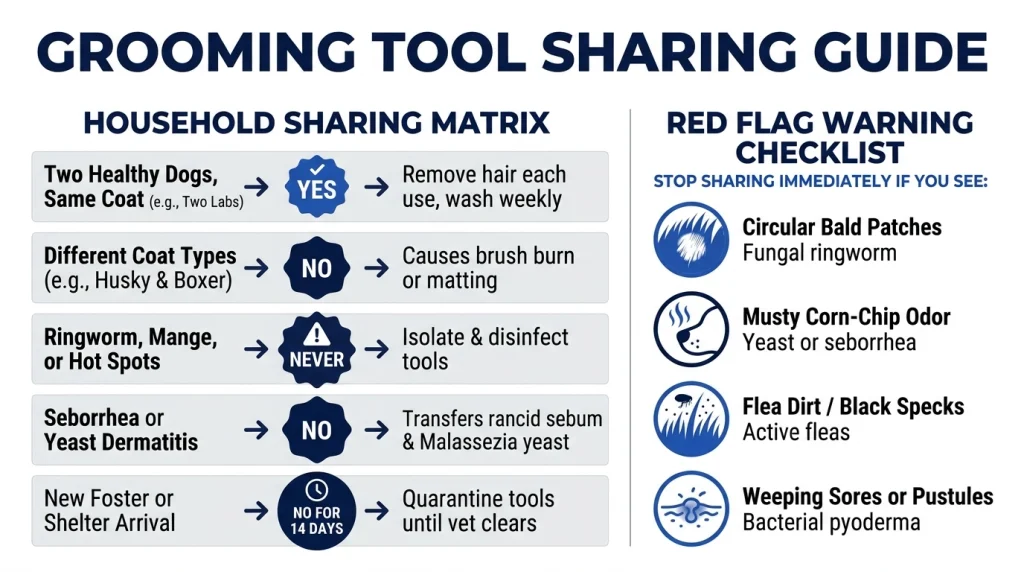
Two dogs in the same household can share the exact same physical brush only if they have matching coat types and completely healthy skin. If one dog has allergies, fleas, or a skin infection, sharing a brush will pass pathogens directly to your other dog.
Many pet parents ask “can every dog use the same brush” because they own two or three dogs and want a tidy grooming bin. Even when two dogs share the same breed, hygiene dictates when you can pass a tool from one dog to the next.
| Household Scenario | Can They Share One Brush? | Primary Risk | Recommended Protocol |
|---|---|---|---|
| Two healthy dogs with identical coat types (e.g., two Labs) | Yes | Minor buildup of shared skin oils and dander | Remove hair after each use; wash brush with soap weekly |
| Two dogs with different coat types (e.g., Husky & Boxer) | No | Brush burn on the short coat or matting on the thick coat | Keep separate coat-specific brushes for each dog |
| One dog has ringworm, mange, or hot spots | Never | Immediate transmission of fungal spores or mites | Isolate grooming tools and disinfect in bleach or fungicidal dip |
| One dog has seborrhea or yeast dermatitis | No | Transfer of rancid sebum, odor, and Malassezia yeast | Assign a dedicated, washable rubber brush to the affected dog |
| New foster dog or recent shelter arrival | No (for 14 days) | Unspotted flea eggs, lice, or incubating skin fungus | Use a dedicated comb and brush until vet quarantine clears |
Brush bristles act like Velcro for microscopic hitchhikers. Every stroke picks up dead skin cells, waxy sebum, pollen, and whatever bacteria or fungi live on your dog’s coat.
Public health guidance from the Centers for Disease Control and Prevention notes that ringworm fungi can survive on unwashed combs, brushes, and bedding for months. If you brush a dog carrying ringworm spores and then brush your second dog, the bristles press those spores straight into healthy hair follicles.
Never share a physical dog brush if either pet shows these dermatological symptoms:
- Circular bald patches: Crusty, expanding rings of hair loss often point to contagious fungal ringworm.
- Musty, corn-chip odor: Greasy yellow flakes and smelly skin signal a yeast overgrowth or seborrhea.
- Flea dirt or black specks: Tiny dark granules that turn red when wet mean fleas are active in the coat.
- Weeping sores or pustules: Pimples and oozing scabs indicate bacterial pyoderma, as documented in the Merck Veterinary Manual.
Even if your dogs are healthy, coat oil differences matter. When I used Barnaby’s slicker brush on a friend’s Poodle, the golden retriever oils coated the Poodle’s clean curls and weighed them down.
How Do Combination Pin-and-Bristle Brushes Perform Across Breeds?
Combination pin-and-bristle brushes work well for light daily touch-ups on short-to-medium coats, but they cannot replace dedicated tools on thick double coats or tight curls. Think of a combo brush as a Swiss Army knife rather than a heavy-duty specialist tool.
You have seen these two-sided brushes in every pet aisle, such as the popular Safari Combo Pin and Bristle Dog Brush. One side holds widely spaced wire pins, while the flip side features dense nylon bristles.
Here is where a dual-sided combo brush succeeds and where it falls short:
- Great for Spaniels and Setters: The pin side loosens mild feathering tangles on the ears and legs, while the bristle side smooths the short back hair.
- Handy for puppy training: The soft bristle side introduces young puppies to the sensation of brushing without poking them.
- Too weak for Huskies and Shepherds: The straight pins lack the grip and density needed to pull dead wool out of a shedding undercoat.
- Useless on tight Doodle mats: Plastic-tipped pins bounce over knotted curls instead of separating the fibers.
If you own a medium-coated mutt with light shedding, a dual-sided brush can handle 80 percent of your routine. Pairing the right brush with the right schedule is half the battle, so read our guide on how often you should brush your dog to match your breed’s coat cycle.
How Should You Clean and Sanitize a Shared Dog Brush?
 Save
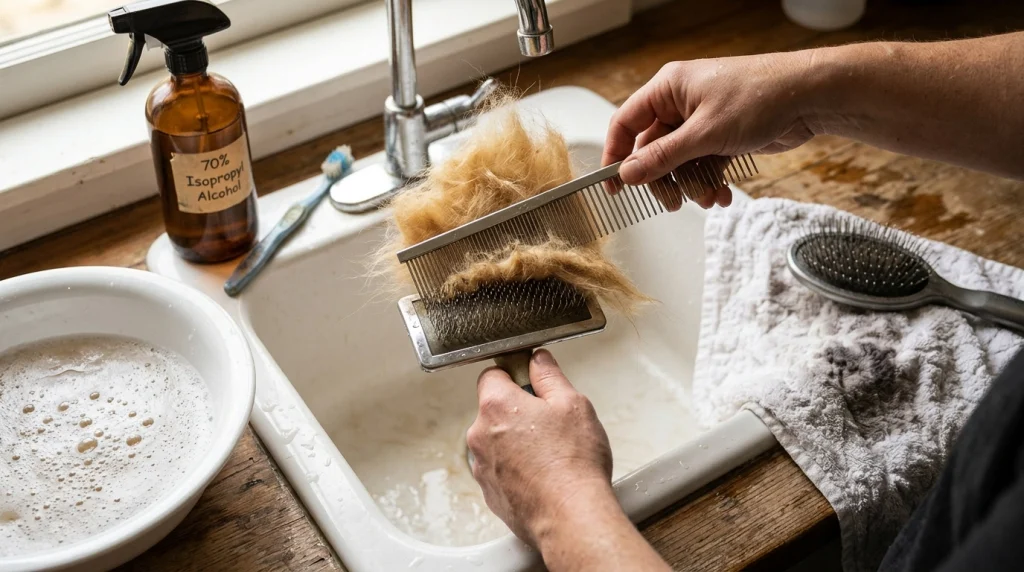
You should pull trapped hair out of your dog’s brush after every session and wash it in warm, soapy water every one to two weeks. If two healthy dogs share the brush, sanitize the bristles between dogs to prevent transferring dander and skin oils.
A brush clogged with old fur loses half its depth and turns into a sponge for stale skin grease. Brushing a clean dog with a dirty brush just rubs old dander back into their coat.
Follow these five steps to deep-clean and sanitize your dog brushes at home:
- Rake out trapped fur: Slide a metal Greyhound comb underneath the base of the pins and lift upward to peel away the mat of hair in one sheet.
- Swish in warm suds: Fill a basin with warm water and a teaspoon of dish soap or dog shampoo, then scrub the bristles with an old toothbrush for sixty seconds.
- Disinfect the pins: Mist metal pins and rubber curry brushes with a veterinary disinfectant spray or a 70 percent isopropyl alcohol solution, letting it sit for five minutes.
- Rinse with cool water: Hold the bristles pointing downward under running water so moisture does not pool inside the brush cushion.
- Dry bristle-side down: Lay the brush face-down on a clean towel overnight so trapped water drains out of the air hole in the rubber pad.
Protect Your Brush Cushion: Never submerge a wooden-handled slicker or pin brush under water for more than a minute. Water enters the tiny breather hole in the rubber pad, trapping moisture that rots the glue and grows mold inside the head.
Keeping your brushes clean also helps cut down on airborne dander around the house. For more ways to keep loose fur off your floors, browse our practical dog shedding tips for year-round coat control.
Best Dog Brushes by Coat Type (Tested Picks )
Since no single brush works for every coat, building a reliable grooming kit means choosing the right tool for your dog’s specific fur structure. If you’re ready to pick the right tool for your dog’s coat, here are the three brushes I recommend from my own grooming kit:
🏆 Best for Curly & Long Coats
Chris Christensen Big G Dog Slicker Brush
★★★★★
Features extra-long 27 mm bent stainless steel pins mounted on a flexible cushion pad with an ergonomic curved handle. I use the large coral model on thick Golden Retriever feathering and Doodle curls because it reaches the skin in half the strokes of a drugstore slicker.
💰 Best Budget for Short Coats
Kong ZoomGroom Rubber Dog Brush
★★★★★
Molded from single-piece flexible natural rubber with three-quarter-inch conical fingers that massage the skin and attract loose hair. This is the only brush my Boxer mix Mabel lets me use anywhere near her ribs, and it doubles as a lathering scrub brush in the bath.
🐕 Best for Heavy Double Coats
Maxpower Planet Double-Sided Undercoat Rake
★★★★☆
Combines a 9-tooth dematting side with a 17-tooth deshedding rake featuring rounded outer edges to protect the skin. I reach for this rake every spring when Barnaby blows his winter coat because it clears impacted hip fluff without yanking live hair.
Frequently Asked Questions
Can I use a slicker brush on a short-haired dog?
No, you should not use a wire slicker brush on a short-haired, single-coated dog like a Boxer, Pit Bull, or Greyhound. The fine metal pins penetrate their sparse hair and scrape bare skin, causing red scratches and brush burn; use a soft rubber curry brush or boar bristle brush instead.
Can I use a human hairbrush on my dog?
A human boar bristle brush or wide-tooth wet brush works in a pinch on silky single-coated dogs like Yorkies or Shih Tzus. However, human brushes have plastic ball tips and short bristles that snag in thick undercoats and fail to reach the skin on double-coated or curly dogs.
Do I need separate brushes for my two dogs?
You need separate brushes if your two dogs have different coat types, such as a Husky and a Beagle, or if one dog has a skin condition. If both dogs share the same coat type and have healthy, parasite-free skin, they can safely share one brush that you wash weekly.
What is the most versatile dog brush for a multi-dog home?
A rubber curry brush is the safest multi-dog tool for short and medium coats because it cannot scratch the skin and rinses clean in seconds. For homes with long-haired or double-coated dogs, a medium cushion slicker brush combined with a stainless steel Greyhound comb covers the widest range of grooming tasks.
Can dogs catch skin infections from a shared grooming brush?
Yes, dogs can catch fungal ringworm, sarcoptic mange mites, fleas, and bacterial skin infections from a shared brush. Pathogens cling to trapped hair and waxy skin oils on the bristles, so always quarantine and disinfect grooming tools if one pet develops itchy or balding spots.
Final Verdict: Choosing the Right Brush for Every Dog in Your Home
So, can every dog use the same brush? Coat biology makes a universal one-size-fits-all dog brush impossible, because a tool tough enough to clear a Husky’s undercoat will hurt a Boxer’s skin.
Take two minutes today to audit your grooming basket with these three quick checks:
- Match the pins to the coat: Pair rubber and natural bristles with short coats, undercoat rakes with double coats, and long-pinned slickers with curly coats.
- Color-code for hygiene: Assign dedicated brushes by handle color if one dog in your home struggles with allergies, yeast, or sensitive skin.
- Retire damaged tools: Toss any slicker or pin brush with bent wire teeth or rusted cushions before they scratch your dog on the next stroke.
Give your dog the brush built for their coat, and you’ll turn grooming time from a wrestling match into their favorite ten minutes of the week.

Thomas Cutter is a lifelong dog owner and the founder of FindOutAboutDogs.com. With over 10 years of hands-on experience owning multiple breeds, Thomas created this site to provide honest, research-based dog advice that real owners can actually trust.
