How Often Should You Brush a Dog Before Bathing?
Quick Answer
Brush your dog before every bath, ideally during the same grooming session before the coat gets wet. Regular brushing between baths depends on coat type: long, curly, and mat-prone coats may need daily attention, while many short coats do well with weekly brushing. The American Kennel Club’s grooming guidance also recommends removing dead hair and mats before bathing.
Before Every Bath
- Brush first: Remove loose hair, dirt, and small tangles before adding water.
- Check for mats: Pay close attention behind the ears, under the legs, and around the collar area.
- Match the coat: Use a brush designed for your dog’s coat length and density.
- Keep it gentle: Stop if brushing pulls the skin or makes your dog uncomfortable.
- Comb to confirm: On longer coats, a comb should move through without repeatedly catching.
When to Get Help
- If a mat is tight against the skin, avoid forceful brushing and ask a professional groomer or veterinarian for help.
You may brush your dog regularly and still wonder whether another brushing is needed before bath time. In most cases, the answer is yes.
The pre-bath brush serves a different purpose. It lets you find loose coat, tangles, debris, and hidden mats before water makes the job harder.


Should You Brush Your Dog Every Time Before a Bath?
 Save
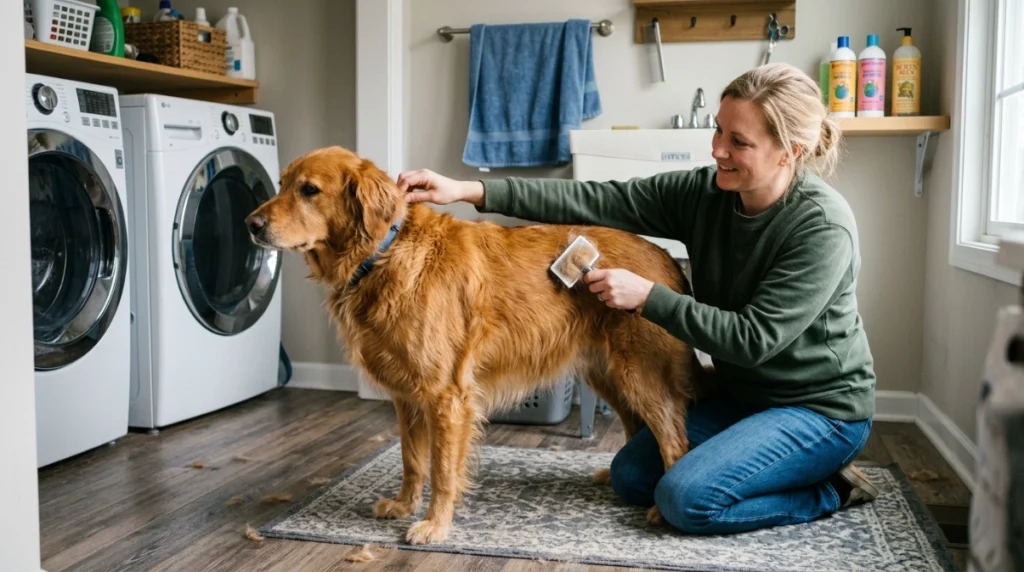
SaveYes. I recommend checking and brushing the coat before every normal bath, even when your dog was brushed recently.
You don’t need to keep brushing a perfectly smooth coat. The goal is to make sure there are no troublesome tangles, packed undercoat, or debris before wetting it.
Pre-bath brushing means grooming the dry coat before shampooing so loose hair, dirt, and tangles can be removed while they are easier to see and handle.
- Recently brushed dog: Do a quick coat check and light brush before bathing.
- Heavy shedder: Spend more time removing loose undercoat first.
- Long or curly coat: Check the coat section by section for hidden tangles.
- Muddy dog: Let thick mud dry when practical, then remove loose debris gently before the bath.
How Often Should You Brush a Dog Based on Coat Type?
Your dog’s regular brushing schedule matters because pre-bath grooming is much easier when mats never get a chance to develop. The ASPCA’s dog grooming guidance also separates brushing needs by coat type.
Use the table below as a practical starting point. Increase brushing when shedding, outdoor activity, coat length, or tangling increases.
| Coat Type | Regular Brushing | Before a Bath | Useful Tool |
|---|---|---|---|
| Short, smooth coat | About once weekly | Light brush every bath | Rubber curry or bristle brush |
| Short, dense coat | At least weekly | Remove loose coat thoroughly | Slicker plus suitable de-shedding tool |
| Medium coat | Several times weekly as needed | Check friction areas carefully | Pin or slicker brush |
| Long, silky, or curly coat | Often daily | Brush and comb completely | Slicker plus metal comb |
| Double coat | At least weekly; more during shedding | Remove loose undercoat first | Slicker, rake, or appropriate de-shedding tool |
My rule is simple: brush the coat you have, not the calendar. A Golden Retriever blowing undercoat in spring needs a different routine from a smooth-coated Boxer.
How Long Before a Bath Should You Brush a Dog?
You don’t need a special waiting period between brushing and bathing. Brushing immediately before you prepare the bath is usually the simplest routine.
If the coat stays clean and tangle-free, brushing earlier the same day is also fine. Check trouble spots again before the dog gets wet.
What areas should you check twice?
Friction areas can hide tangles even when the dog’s back looks perfect. I check those places before deciding the coat is bath-ready.
- Behind and underneath the ears
- Under the collar or harness
- Armpits and inside the front legs
- Back of the thighs
- Tail and feathering
- Belly and groin on longer-coated dogs
Why Is Brushing Before Bathing Important?
Brushing removes loose hair, dead skin, surface debris, and tangles before shampoo enters the coat. VCA’s coat-care guidance notes that regular brushing also helps keep coats free of debris and distributes natural skin oils.
The biggest pre-bath concern is matting. Water can make an existing tangled area more difficult to manage as hairs tighten together.
- Less loose fur: More dead coat ends up in the brush instead of the tub or drain.
- Better inspection: You can notice irritation, burrs, ticks, lumps, or sore spots before shampooing.
- Easier washing: Shampoo and rinse water can move through a prepared coat more evenly.
- Fewer hidden tangles: Small knots can be handled before they become wet, compacted problem areas.
What Should You Do If Your Dog Has Mats Before Bathing?
 Save
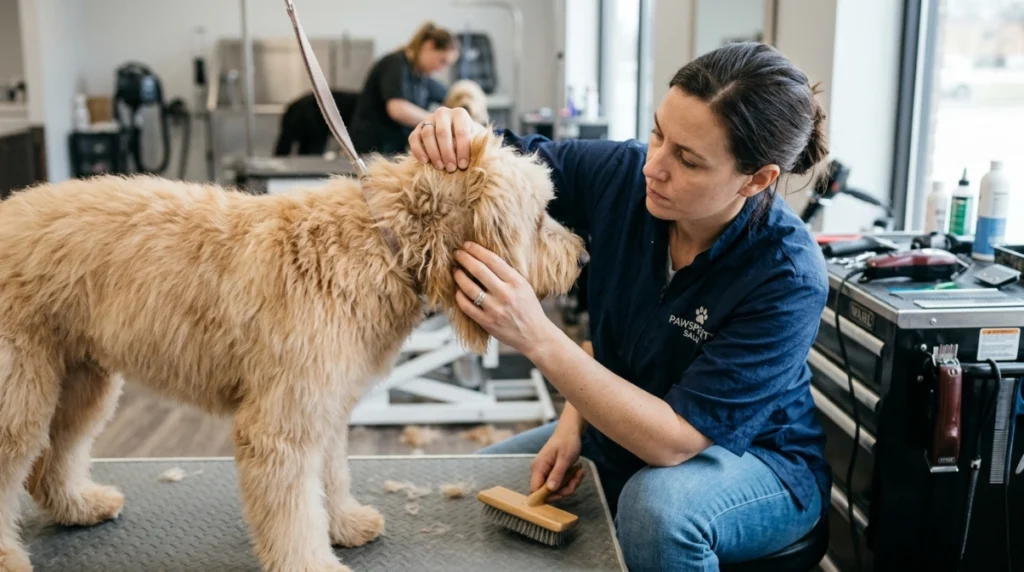
SaveDon’t soak a tightly matted coat and hope shampoo will loosen it. Deal with the mat first or get professional help.
Small, loose tangles may respond to careful brushing with an appropriate tool. A dense mat sitting close to the skin is different.
- Don’t yank repeatedly at a mat.
- Don’t pull the skin tight with the brush.
- Don’t blindly cut close mats with household scissors.
- Stop if the skin becomes red or your dog shows pain.
- Ask a groomer about clipping severe mats safely.
Skin can become trapped inside a tight mat, making scissors especially risky. Severe matting can also hide irritation that deserves closer inspection.
Do Double-Coated Dogs Need More Brushing Before a Bath?
Often, yes. Double-coated dogs can hold a surprising amount of loose undercoat, especially during seasonal shedding periods.
Dogs such as Golden Retrievers, German Shepherd Dogs, Huskies, and many spitz breeds benefit from coat-specific tools. You still want to avoid scraping the same area aggressively.
- Start with gentle surface brushing.
- Work through the coat in manageable sections.
- Remove loose undercoat without repeatedly digging into the skin.
- Increase brushing during obvious shedding periods.
- Stop when the tool begins pulling healthy, attached coat rather than loose hair.
What Brush Should You Use Before Bathing a Dog?
The right brush depends more on coat structure than dog size. One brush rarely handles every coat equally well.
| Tool | Best Use | Watch For |
|---|---|---|
| Rubber curry brush | Short, smooth coats and loose surface hair | Not designed to remove deep mats |
| Slicker brush | Long, curly, dense, or tangle-prone coats | Avoid excessive pressure on skin |
| Metal comb | Checking longer coats after brushing | Don’t force it through a tight knot |
| Undercoat tool | Loose undercoat on suitable shedding breeds | Overuse can irritate skin or coat |
How Do You Brush a Dog Before Bathing Step by Step?
 Save
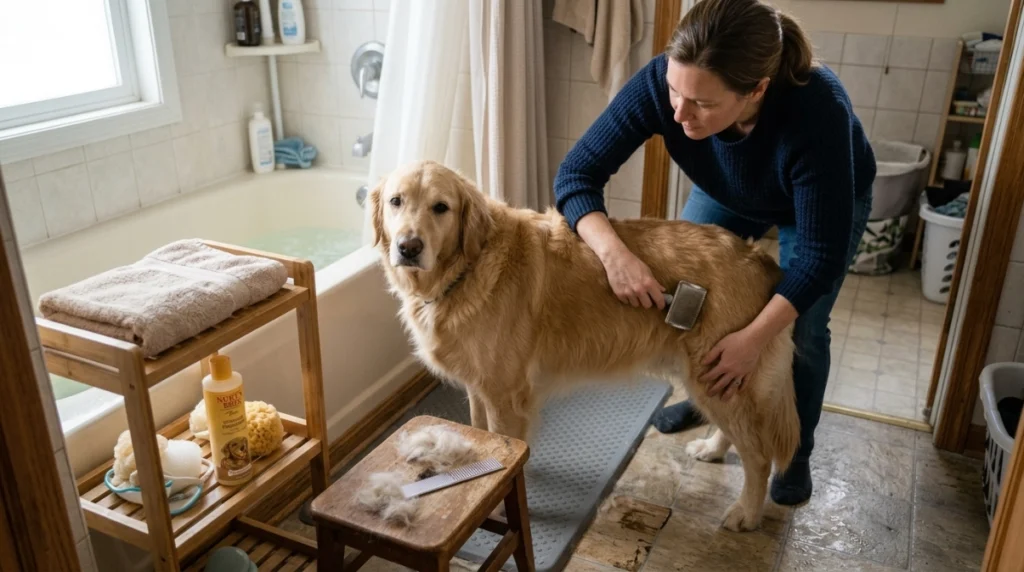
SaveA calm routine works better than trying to finish the whole dog as fast as possible. PetMD’s bathing guidance likewise recommends brushing before turning on the water.
- Let your dog settle. Choose a non-slip area with good lighting.
- Inspect the coat with your hands. Feel for tangles, burrs, sore spots, or unusual lumps.
- Start with easy areas. Brush the back and sides using light strokes in the direction of coat growth.
- Work through friction zones. Check ears, armpits, collar areas, legs, tail, and belly.
- Use the correct secondary tool. A comb can check long coats, while a suitable undercoat tool may help shedding breeds.
- Remove loose hair from the brush. This keeps the tool working efficiently.
- Check the coat again. Your fingers and comb should move through without repeatedly catching.
- Begin the bath. Use lukewarm water and a shampoo formulated for dogs.
How Can You Tell Your Dog Is Ready for the Bath?
A bath-ready coat should feel loose and manageable rather than packed or tightly tangled. You should also be able to inspect the skin in several areas without fighting through knots.
- The brush moves through without repeated pulling.
- Long coats pass a gentle comb check.
- Loose seasonal undercoat has been reduced.
- No tight mats are sitting against the skin.
- Burrs, twigs, and obvious debris have been removed.
- Your dog remains comfortable enough to continue grooming.
Don’t chase perfection. The goal is a coat that can be washed safely and rinsed thoroughly.
Dog Brushes I Recommend for Pre-Bath Grooming
If you’re building a simple home grooming kit, choose tools by coat type rather than buying every brush available. These three cover distinctly different grooming jobs.
🏆 Best for Long and Curly Coats
Chris Christensen Big G Slicker Brush
★★★★★ Editorial fit: 4.8/5
Its long, dense pins are designed for dense, curly, and cottony coats. I like this style for dogs where surface brushing can miss tangles deeper in the coat.
🐕 Best for Loose Undercoat
FURminator Undercoat deShedding Tool
★★★★☆ Editorial fit: 4.6/5
The stainless-steel de-shedding edge is designed to reach loose undercoat beneath the topcoat when used correctly. It’s most useful for suitable shedding coats rather than as an all-purpose daily brush.
💧 Best for Short Coats
KONG ZoomGroom Dog Brush
★★★★☆ Editorial fit: 4.5/5
Its flexible rubber fingers help collect loose hair and can also be used during shampooing. I prefer this brush style for smooth-coated dogs that don’t need deep detangling.
Frequently Asked Questions
Should I brush my dog before or after a bath?
Brush your dog before bathing to remove loose hair, debris, and tangles. Once the coat is completely dry, you can brush again if the coat type benefits from it.
Can I bathe my dog if the coat is slightly tangled?
Small, loose tangles should be handled before bathing when possible. Tight mats should not be soaked and aggressively brushed afterward because they can become harder and more uncomfortable to manage.
How often should I brush a short-haired dog?
Many smooth, short-haired dogs do well with brushing about once a week. Brush again before every bath, especially if the dog has been outdoors, is shedding, or has visible dirt in the coat.
How often should I brush a long-haired dog?
Long, silky, curly, and mat-prone dogs often need brushing daily or close to daily. Regular maintenance is more important than doing one long, uncomfortable brushing session before bath day.
Should I brush a dog while the coat is wet?
That depends on coat type and grooming method, but don’t use wet brushing as a substitute for removing problematic mats before bathing. For routine home grooming, prepare the dry coat first and follow your groomer’s advice for any post-bath brushing.
The Bottom Line
Brush your dog before every bath, then maintain a regular schedule based on the coat. Short coats may need weekly brushing, while long, curly, dense, or heavily shedding coats need more frequent attention.
The most useful test isn’t the calendar. If the coat is free of tight mats, loose debris, and packed undercoat, you’re ready to move on to bath time.

Thomas Cutter is a lifelong dog owner and the founder of FindOutAboutDogs.com. With over 10 years of hands-on experience owning multiple breeds, Thomas created this site to provide honest, research-based dog advice that real owners can actually trust.
