How to Know When a Dog Needs Professional Grooming: 9 Clear Signs
Quick Answer
Your dog probably needs professional grooming when brushing no longer keeps the coat comfortable, mats are tight against the skin, nails are overgrown, or the coat needs skilled clipping. A professional groomer is also the safer choice when your dog becomes difficult to handle during grooming or when you lack the right tools for the coat type. The American Kennel Club’s dog grooming guidance also recommends professional help for grooming tasks owners cannot safely perform.
Signs it’s time to book a groomer
- Tight mats: Knots sit close to the skin and won’t release with gentle brushing.
- Overgrown nails: Nails click heavily, curve, or make normal walking awkward.
- Coat overgrowth: Hair covers the eyes, paws, sanitary areas, or changes the dog’s normal outline.
- Constant tangling: New knots return almost immediately after home brushing.
- Difficult handling: Your dog struggles, snaps, panics, or cannot stay safely positioned.
- Heavy coat buildup: Loose undercoat remains packed despite regular brushing.
One important exception
- Redness, sores, discharge, sudden hair loss, strong persistent odor, or obvious pain should be checked by a veterinarian rather than treated as a routine grooming problem.
Knowing how to tell when a dog needs professional grooming can save you from turning a small tangle into a painful coat problem.
A good dog brush handles plenty of everyday maintenance. The trick is recognizing the point where brushing at home stops being enough.


What Does Professional Dog Grooming Actually Include?
 Save
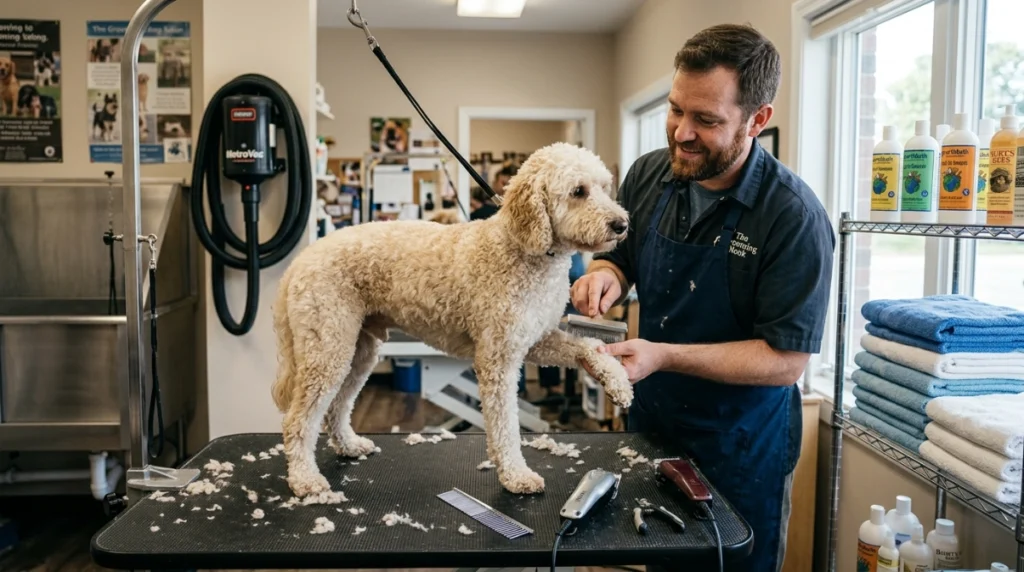
SaveProfessional dog grooming is more than giving a dog a bath and making the coat look neat. It combines coat maintenance, trimming, nail care, drying, brushing, and other hygiene tasks using equipment designed for different coat types.
Definition: Professional dog grooming is coat and hygiene care performed by a trained groomer using specialized tools and handling techniques that may be difficult or unsafe to reproduce at home.
A full grooming appointment can vary by breed and salon. Most services center around coat preparation and safe maintenance.
- Brushing and combing to remove loose coat and manageable tangles
- Bathing and drying with dog-appropriate products and equipment
- Hair trimming or clipping when the coat requires shaping or shortening
- Nail trimming to maintain a comfortable length
- Paw and sanitary trimming when excess hair collects debris
- Basic ear-area cleaning when appropriate and safe
Some dogs only need professional help occasionally. Others have continuously growing, curly, silky, or easily matted coats that require much more skilled maintenance.
What Are the Signs a Dog Needs Professional Grooming?
The biggest signs are mats you cannot gently brush out, excessive coat growth, packed undercoat, overgrown nails, and grooming sessions that have become unsafe. Changes in comfort matter more than whether your dog simply looks untidy.
Here are the signs I would pay attention to first.
1. Mats Stay in the Coat After Gentle Brushing
A small surface tangle may loosen with a suitable dog brush and comb. A tight mat near the skin is a different problem.
Severe mats can pull continuously on the skin. Trying to cut them with household scissors can also injure a dog because skin may become drawn into the mat.
The ASPCA advises seeking professional help when mats cannot be easily brushed out rather than trying to cut them out with scissors.
2. You Cannot Get a Comb Through the Coat
A coat can look fluffy on top while being tangled underneath. This commonly happens behind the ears, under the legs, around collars, and where the legs meet the body.
After brushing, carefully test the coat with an appropriate comb. If the comb repeatedly stops close to the skin, the coat may need a more thorough professional groom.
3. Your Dog’s Nails Have Become Too Long
Long nails may click loudly on hard floors, curve downward, or change how a dog places its feet. Nail trimming becomes harder when owners cannot confidently identify where it is safe to cut.
If your dog has dark nails, becomes highly anxious, or jerks the paws away, a groomer or veterinary team may be safer than forcing the trim at home.
4. Hair Is Blocking the Eyes or Collecting Around the Paws
Some dogs grow hair continuously around the face, feet, and body. Once that hair affects visibility or collects dirt around the paws, trimming becomes functional rather than cosmetic.
Face and paw work requires control because these areas move quickly. That’s one reason skilled grooming matters for breeds with continuously growing coats.
5. The Undercoat Feels Packed or Comes Out in Clumps
Double-coated dogs can release large amounts of undercoat during seasonal shedding. A regular brush may remove the loose surface hair without reaching enough of the coat underneath.
A professional bath, controlled drying, brushing, and deshedding session can help when the undercoat is heavily packed.
6. Your Dog Smells Again Soon After Basic Cleaning
A dirty coat can smell, but repeated or unusual odor deserves closer attention. Grooming may help when the cause is trapped dirt, oily coat buildup, or debris.
A strong persistent odor combined with redness, discharge, scratching, or discomfort is different. Those signs should prompt a veterinary check because grooming cannot diagnose or treat a medical condition.
7. Your Dog’s Coat Needs a Real Haircut
A bath and dog brush cannot replace clipping on a coat that keeps growing. Poodles, Bichons, Shih Tzus, and similar coat types commonly need regular trimming to stay manageable.
Clippers also require technique. Sensitive areas around the face, feet, armpits, and sanitary region are poor places to learn by trial and error.
8. Home Grooming Has Become a Struggle
Stop treating grooming as a simple DIY job when every session becomes a wrestling match. Fear increases the risk of accidental cuts, nail injuries, and stressful handling.
My simple rule is this: if you cannot control the tool and keep your dog comfortable at the same time, move the job to someone with better handling equipment and experience.
9. Your Normal Dog Brush Is No Longer Keeping Up
A brush should make routine coat care easier. If you brush regularly yet knots, packed hair, or debris keep building faster than you can manage them, the problem has moved beyond ordinary maintenance.
That doesn’t mean the brush is useless. It usually means your dog needs a professional reset followed by better home maintenance between appointments.
When Are Dog Mats Too Bad to Remove at Home?
Dog mats are too severe for normal home brushing when they sit tightly against the skin, cover a large area, cause pain, or cannot be separated without strong pulling. Extensive matting is a professional grooming or veterinary issue.
VCA Animal Hospitals recommends professional care for severe or extensive tangles. It also advises veterinary treatment when matting has already caused skin irritation.
- Stop if your dog cries, flinches, growls, or repeatedly tries to escape.
- Stop if you cannot see where the skin begins beneath the mat.
- Do not slide household scissors beneath a tight mat.
- Do not repeatedly yank a slicker brush through painful tangles.
- Contact a veterinarian if you discover sores, bleeding, swelling, or moist irritated skin.
Also remember that bathing a badly tangled coat can make some knots tighter. Check and brush the coat before routine bathing whenever possible.
How Often Should a Dog See a Professional Groomer?
 Save
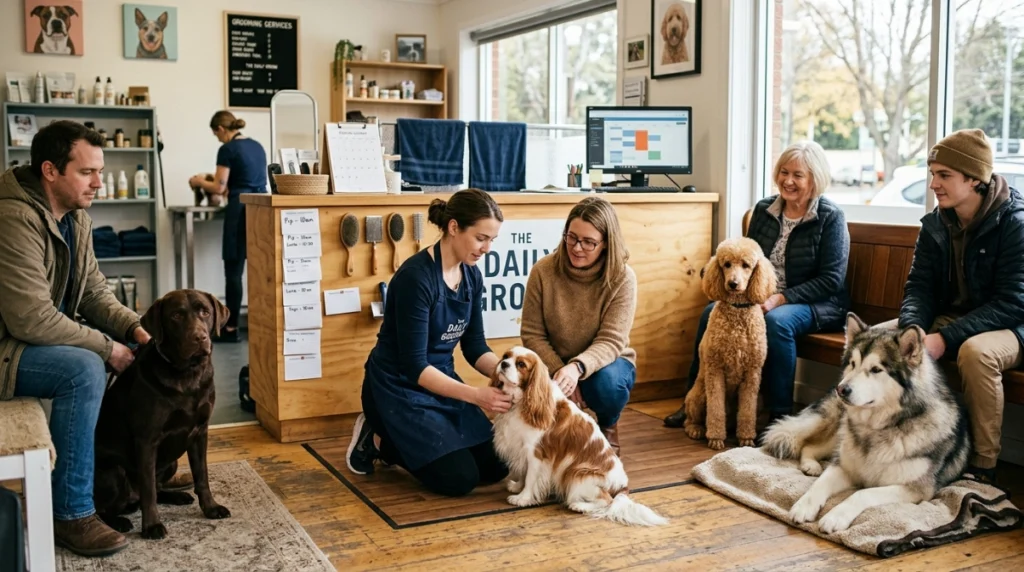
SaveThere is no single grooming interval for every dog. Coat type, coat length, activity, brushing frequency, shedding, and the haircut you prefer all change the schedule.
As of 2026, veterinary and breed-care guidance still focuses on coat type rather than one universal number. Long, curly, and silky coats usually need more frequent attention than smooth short coats.
| Coat type | Typical home brushing baseline | When professional grooming becomes useful |
|---|---|---|
| Smooth, short coat | About weekly for many dogs | Nail care, bathing, heavy shedding, or handling help |
| Short, dense coat | Weekly, with extra work during shedding | Packed undercoat or difficult seasonal shedding |
| Long or silky coat | Often daily or near-daily | Recurring tangles, trimming, or coat shaping |
| Curly or continuously growing coat | Frequent thorough brushing and combing | Regular clipping plus coat maintenance |
| Heavy double coat | Several sessions weekly; more during coat blows | Heavy undercoat buildup or difficult deshedding |
The ASPCA’s dog grooming tips recommend weekly brushing for many short-coated dogs and daily attention for long coats.
VCA notes that dogs with long, silky, or curly coats may need daily brushing. Some non-shedding dogs may also need bathing around every six to eight weeks, depending on health and lifestyle.
Dog Brush vs Professional Groomer: What Can You Handle at Home?
A dog brush is best for prevention. A professional groomer becomes more valuable once you are dealing with established mats, coat shaping, clipping, difficult nails, or a dog you cannot safely handle.
| Grooming problem | Home dog brush | Professional groomer |
|---|---|---|
| Loose surface hair | Usually ideal | Optional |
| Small loose tangles | Often manageable gently | Useful if they keep returning |
| Tight skin-level mats | Poor choice | Recommended |
| Haircut or breed trim | Cannot provide it | Best choice |
| Packed seasonal undercoat | Helpful for maintenance | Useful for a major reset |
| Skin sores or painful irritation | Stop brushing the area | Veterinarian first |
The best routine combines both approaches. Use the right brush often enough to prevent problems, then use a groomer for the work that requires more skill or equipment.
Which Dog Grooming Problems Need a Vet Instead?
A groomer handles coat and hygiene maintenance, but a veterinarian handles illness, injury, and painful skin problems. Don’t ask a grooming appointment to solve something that looks medical.
Contact your veterinary team when you notice any of these signs.
- Open sores, bleeding, or moist skin beneath the coat
- Severe redness, swelling, or obvious tenderness
- Strong ear odor with discharge or persistent head shaking
- Sudden bald spots or unexplained coat loss
- Persistent itching or chewing at the skin
- Lumps, wounds, or foreign material lodged in sensitive areas
- A sudden grooming aversion that appears linked to pain
The VCA coat-care guide notes that regular grooming helps owners notice lumps, parasites, sensitivity, and other changes earlier.
That is one of the hidden benefits of brushing. You’re not only removing hair; you’re getting a close look at the skin underneath.
How Can You Make Professional Grooming Easier for Your Dog?
Start with calm handling at home before the first major appointment. Dogs usually cope better when paws, ears, legs, and the coat are already familiar touch zones.
- Brush in short sessions. End before your dog becomes frustrated.
- Handle the paws gently. Briefly touch individual toes without immediately clipping nails.
- Reward calm behavior. Use small treats and quiet praise rather than wrestling.
- Keep appointments consistent. Waiting for severe matting can make the next visit harder.
- Tell the groomer about sensitivity. Mention fear, previous injuries, medical conditions, or areas your dog dislikes being touched.
Regular home brushing also reduces the amount of difficult coat work needed during each appointment. That can make grooming less stressful for both the dog and the groomer.
What Dog Brushes Help Between Professional Grooming Visits?
The best dog brush depends on the coat in front of you. Slicker brushes suit many curly and medium-to-long coats, while deshedding tools are designed for loose undercoat rather than haircuts or tight mats.
If you’re ready to improve the maintenance between professional visits, these are three practical tools I would compare first.
Affiliate disclosure: FindOutAboutDogs.com may earn a commission from qualifying Amazon purchases made through the links below, at no extra cost to you.
🏆 Best for dense coats
Chris Christensen Big G Slicker Brush
★★★★☆ Tool-fit rating
This professional-style slicker uses closely spaced pins to work through dense and curly coats. I like this type of brush when surface brushing isn’t reaching enough coat, but it should still be used gently rather than forced through tight mats.
💰 Easy-clean pick
Hertzko Self-Cleaning Slicker Brush
★★★★☆ Tool-fit rating
The retractable-pin design makes collected hair easier to remove after brushing. It is a practical everyday option for loose hair and small tangles when you want a simple brush between grooming appointments.
🐕 Best for loose undercoat
FURminator Undercoat deShedding Tool
★★★★☆ Tool-fit rating
The stainless-steel deshedding edge is designed to remove loose undercoat from shedding dogs. I would use this for appropriate double coats, not as a replacement for a slicker brush, comb, or professional mat removal.
Frequently Asked Questions
How do I know if my dog needs a groomer or just brushing?
Your dog probably only needs brushing when loose hair and minor tangles come out gently with the correct tool. Book a groomer when mats stay tight, the coat needs clipping, nails are difficult to trim, or you cannot groom your dog safely.
Can I remove severe mats from my dog at home?
Severe or skin-tight mats are better handled professionally. Pulling can hurt, and scissors can cut skin hidden inside the mat. If you find sores, bleeding, moisture, or painful irritation beneath matting, contact your veterinarian instead of continuing at home.
How often should I brush my dog between grooming appointments?
Frequency depends on coat type. Many smooth or short-coated dogs do well with weekly brushing, while long, silky, or curly coats may need daily attention. Increase brushing during heavy shedding or whenever tangles begin forming faster than usual.
Does every dog need professional grooming?
No. Some short-coated dogs can receive most routine coat care at home if their owner is comfortable with brushing, bathing, and nail maintenance. Dogs with continuously growing coats, severe matting, difficult nail care, or complex trimming needs benefit much more from professional grooming.
Should I take my dog to a groomer for a bad smell?
A groomer can help when normal dirt or coat buildup causes the odor. A persistent strong smell accompanied by itching, redness, ear discharge, sores, or discomfort should be assessed by a veterinarian because the underlying problem may require medical treatment.
The Bottom Line
If you’re wondering how to know when a dog needs professional grooming, focus on comfort and safety rather than appearance. Tight mats, excessive coat growth, difficult nails, packed undercoat, and unsafe home grooming are the clearest signals.
Keep using the right dog brush between appointments because prevention is easier than fixing a neglected coat. When brushing stops being gentle, effective, or safe, book professional help before the problem gets worse.

Thomas Cutter is a lifelong dog owner and the founder of FindOutAboutDogs.com. With over 10 years of hands-on experience owning multiple breeds, Thomas created this site to provide honest, research-based dog advice that real owners can actually trust.
