How to Remove Burrs From Dog Fur Safely
Quick Answer
To remove burrs from dog fur, start with the loosest burrs, separate the surrounding hair with your fingers, then gently work them out with a wide-tooth metal comb. A small amount of cooking oil or dog-safe detangler can help stubborn burrs slide free, but never pull hard or use scissors against your dog’s skin. The American Kennel Club’s burr-removal guidance also recommends clippers rather than scissors when tangled hair must be removed.
Quick Burr-Removal Steps
- Inspect first: Check whether the burr is loose in the coat or pressed into irritated skin.
- Start easy: Remove the least tangled burrs before tackling dense clumps.
- Separate hair: Hold the fur close to the skin so combing doesn’t tug the skin.
- Add lubrication: Use a small amount of cooking oil or dog-safe detangler when needed.
- Comb gently: Work a few hairs at a time instead of trying to pull the whole burr free.
- Stop if painful: Get veterinary or professional grooming help for embedded, painful, or badly matted burrs.
Check These Areas Carefully
- Look between the toes, behind and under the ears, beneath the legs, around the groin, and under the tail after outdoor walks.
Burrs can turn a normal walk into a frustrating grooming job fast. They hook into individual hairs, then tighten as your dog moves, scratches, or chews at the area.
I prefer to treat burr removal as detangling, not pulling. The goal is to free the hair from the burr while keeping your dog’s skin as still and comfortable as possible.
As of 2026, that basic approach remains consistent across veterinary and professional grooming guidance. The biggest safety issue is knowing when a seed is only tangled in fur and when it may be embedded in skin.


What Are Burrs in Dog Fur?
 Save
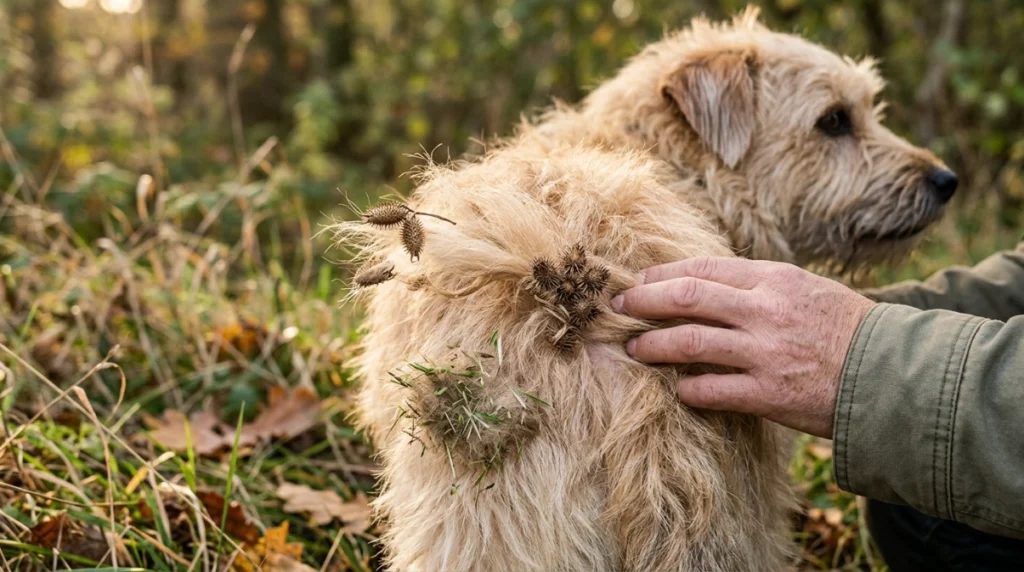
SaveA burr is a dry seed pod or plant structure with hooks, spines, or rough surfaces that catch onto fur. Dogs often collect them while running through weeds, fields, brush, woodland edges, or overgrown yards.
Long, curly, feathered, and dense coats give burrs more hair to grab. Burrs can still attach to short-coated dogs, especially around paws and ears.
- Loose burr: Caught near the ends of the coat and moves without pulling skin.
- Tangled burr: Wrapped in several strands of hair and difficult to slide out.
- Matted burr: Buried inside a tight clump of compressed hair.
- Embedded seed or awn: Piercing or entering skin, paws, eyes, ears, or another body opening.
That last category needs more caution. A foxtail or grass awn is not simply an annoying tangle.
Important: Barbed foxtails can penetrate tissue and travel deeper instead of working themselves back out. UC Davis recommends veterinary attention when a foxtail appears embedded or causes symptoms such as swelling, limping, persistent sneezing, head shaking, or eye irritation.
How Do You Remove Burrs From Dog Fur Step by Step?
Remove burrs by loosening the surrounding coat first, then separating small groups of hair from the seed. Don’t make pulling harder just because the burr looks small.
Here’s the method I recommend for a burr that’s tangled in fur but not embedded in skin.
- Keep your dog still and comfortable. Work somewhere well lit. A second person can offer treats and gently steady a nervous dog.
- Wear gloves if the burr is sharp. Some seed pods can prick your fingers while you’re trying to hold them.
- Inspect the skin before pulling. Look for redness, swelling, blood, moisture, or a seed point disappearing into the skin.
- Start with the easiest burr. Removing loose pieces first gives you more working space around heavily tangled areas.
- Hold the coat near the skin. This absorbs some of the pulling force instead of transferring every tug directly to your dog.
- Break apart a large burr if necessary. A large, dry burr may sometimes be carefully crushed with pliers before individual pieces are teased from the coat. Keep the tool well away from skin.
- Add a little lubrication. A small amount of plain cooking oil or a dog-safe detangling product can make tightly wrapped strands easier to separate.
- Use a wide-tooth metal comb. Work through small amounts of hair at a time and move outward instead of yanking from the root.
- Recheck the skin. Make sure no sharp fragments remain and look for scratches or tenderness.
My simple rule is this: if the skin moves every time the burr moves, reduce the pulling force. Separate more hair before trying again.
Which Brush or Comb Works Best for Removing Burrs?
 Save
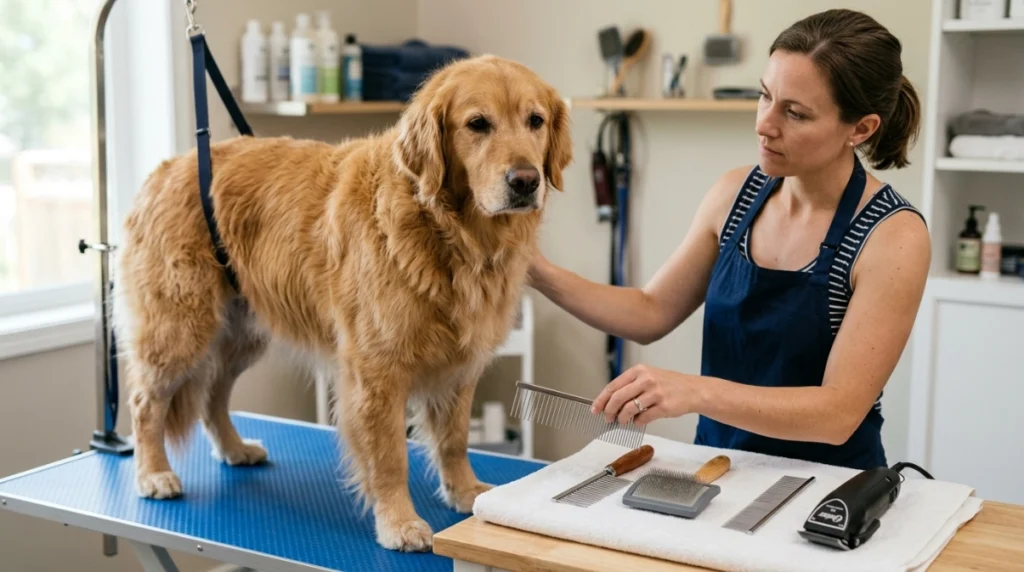
SaveA wide-tooth metal comb is usually my first tool for a stubborn burr because it gives precise control around individual tangles. A slicker brush works better after the worst debris has been loosened.
Brush choice also depends on coat type. AKC guidance on dog brushes recommends matching the grooming tool to coat length, density, and texture.
| Tool | Useful Specification | Best Use | Main Caution |
|---|---|---|---|
| Andis Steel Comb | 10-inch steel comb | Separating tangles and loose debris | Don’t force teeth through a tight mat |
| Chris Christensen Big G Slicker | 27 mm stainless-steel pins | Long and dense coats after large burrs are loosened | Use a light touch near skin |
| Pet clippers | Blade trims hair instead of pulling it | Removing hair from a tight burr mat | Stop if you can’t identify the skin position |
| Scissors | No safe advantage close to skin | Best avoided around tight mats | High risk of accidentally cutting skin |
A slicker brush can catch and loosen smaller debris after the main burr is gone. Keep pressure light because pressing wire pins hard against skin can make grooming uncomfortable.
Should You Use Oil or Detangler on Burrs?
A small amount of lubricant can help when dry hair is wrapped tightly around a burr. The aim is to make strands slide apart, not saturate your dog’s whole coat.
AKC veterinary guidance specifically mentions cooking spray or cooking oil as an option for dense coats. Apply it to the affected fur instead of spraying toward your dog’s face.
- Use a small amount: Coat only the tangled strands.
- Massage gently: Work the lubricant between the burr and surrounding hair.
- Wait briefly: Give the coated hairs a chance to loosen before combing.
- Comb in sections: Free a few strands at a time.
- Clean afterward: Wipe excess oil from the coat once the burr is gone.
Don’t apply unknown human detanglers, solvents, adhesives removers, or harsh grooming chemicals. Products made for people aren’t automatically appropriate for canine skin or licking.
Can You Cut Burrs Out of a Dog’s Fur?
 Save
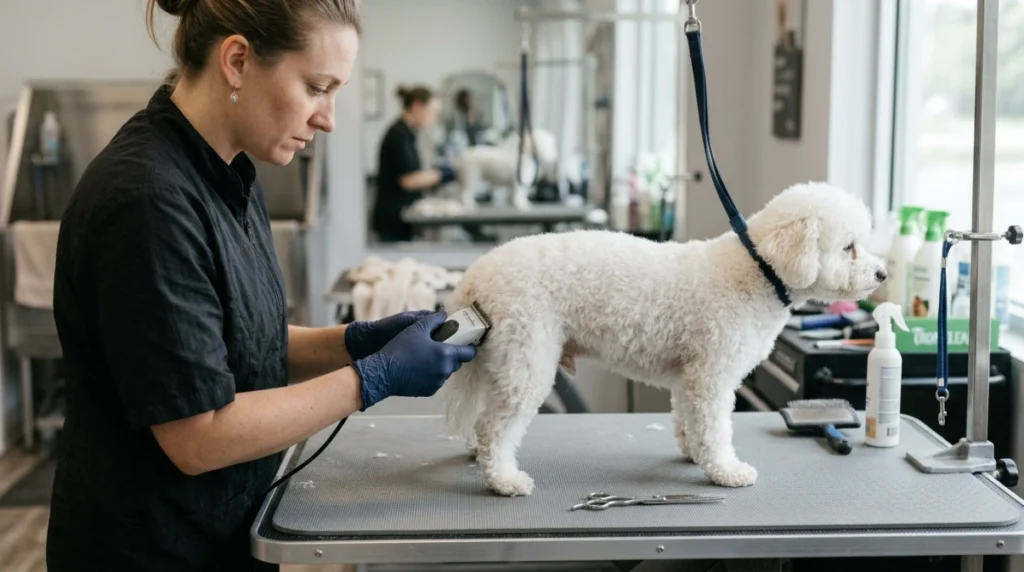
SaveSometimes tangled hair has to be removed, but clippers are safer than scissors when the mat sits close to skin. Dog skin can fold upward into a mat where you can’t see it.
VCA’s dog coat and grooming guidance specifically advises using clippers rather than scissors for mats.
Safer choice: If you cannot clearly separate the burr and matted hair from the skin, don’t turn it into a cutting experiment. A groomer or veterinarian has better lighting, restraint, tools, and experience.
If your dog is frightened by clipper noise or vibration, don’t force the session. A sudden twist can make a delicate job unsafe.
Should You Bathe a Dog Before Removing Burrs?
Remove burrs and major tangles before bathing whenever possible. Water can tighten tangled hair and make an existing mat harder to work apart.
Brush first, remove plant material, then bathe if the coat still needs cleaning. This order also lets you inspect skin that was hidden under the debris.
When Does a Burr Need a Veterinarian?
Home grooming is appropriate for plant material that’s clearly sitting in the fur and can be removed without significant pain. Anything embedded, inflamed, or lodged in a body opening deserves more caution.
Seek veterinary care when you notice any of these signs:
- Persistent limping: Especially after walking through dry grass or brush.
- Repeated paw licking: A seed may be trapped between the toes or entering the skin.
- Sudden head shaking: This may indicate plant material inside an ear.
- Persistent sneezing: A grass awn can enter the nose.
- Squinting or eye swelling: Don’t attempt to remove material from the eye yourself.
- Red or swollen skin: Irritation may mean the seed has scratched or penetrated the skin.
- Bleeding or drainage: These signs warrant veterinary assessment.
- Severe pain or snapping: Stop the grooming attempt when touching the area clearly hurts.
UC Davis veterinary guidance on foxtails explains that barbed grass awns can migrate into tissues and may cause infections or abscesses. Early removal is much easier than finding a seed after it has moved deeper.
How Can You Prevent Burrs From Getting Tangled Again?
The fastest burr removal is prevention plus an immediate coat check. Burrs are much easier to remove before your dog scratches, rolls, sleeps, or mats them deeper into the coat.
I make the post-walk inspection systematic instead of random. Start at one end of your dog and check the same high-risk areas every time.
- Paws: Look between every toe and around the pads.
- Ears: Check the outer earflap and long feathering without probing the ear canal.
- Armpits: Friction makes tangles form quickly here.
- Chest and belly: These areas often contact tall grass first.
- Groin: Check gently for plant debris and irritation.
- Tail: Long feathering can hide multiple burrs.
Regular brushing matters too. A well-maintained coat gives burrs fewer existing tangles to lock into.
If foxtails grow in your area, avoid tall dry grasses when possible. Keep yard weeds controlled and inspect outdoor dogs after every trip through high-risk vegetation.
Dog Grooming Tools I Would Keep for Burr Removal
You don’t need a cabinet full of grooming equipment for occasional burrs. A dependable metal comb, a coat-appropriate brush, and safe clippers cover most situations that are reasonable to handle at home.
Affiliate note: I may earn a commission from qualifying purchases at no extra cost to you.
Best for Precise Detangling
Andis 10-Inch Steel Comb
★★★★★
This professional steel comb has a 10-inch body and is designed for tangles, dirt, loose hair, and coat finishing. I like a metal comb for burr work because it gives more control over small sections than broad brushing.
Best for Long Dense Coats
Chris Christensen Big G Slicker Brush
★★★★☆
The Big G uses 27 mm stainless-steel pins designed to penetrate longer, dense coats. It is a premium option, so I see it as most useful for owners who regularly maintain curly, fluffy, or heavy coats rather than occasional burr cleanup.
Best for Small Trim Jobs
Andis Easy Clip Mini II Pet Clipper/Trimmer
★★★★☆
This compact trimmer is designed for light-duty work around paws, ears, faces, and smaller areas. It makes more sense than scissors when a small patch of tangled coat truly needs trimming, although painful mats still belong with a groomer or veterinarian.
Frequently Asked Questions
What is the easiest way to get burrs out of dog fur?
The easiest method is to hold the fur near the skin, loosen the hairs around the burr with your fingers, then use a wide-tooth metal comb. For stubborn tangles, a small amount of cooking oil or dog-safe detangler can reduce friction and make the strands easier to separate.
Can I just pull a burr out of my dog’s fur?
You can remove a very loose burr with your fingers if it slides without pulling the skin. Don’t yank a tightly tangled burr because the trapped hair can tug painfully and may turn a small tangle into a tighter mat.
Can I use scissors to cut burrs out of dog hair?
Avoid scissors when the burr or mat is close to your dog’s skin. Dog skin can be pulled into the tangle where you cannot see it, so veterinary guidance favors clippers or professional grooming for tight mats.
What if a burr is stuck between my dog’s toes?
Check whether the seed is sitting freely in the fur or appears embedded. If the paw is swollen, painful, red, or your dog is limping or licking repeatedly, stop digging at it and contact your veterinarian because grass awns can penetrate paw tissue.
Will bathing loosen burrs in dog fur?
Bathing isn’t the best first step for a tangled burr. Remove plant debris and comb out tangles while the coat is dry because wetting an existing mat can make it tighter and harder to remove.
Final Takeaway
Learning how to remove burrs from dog fur is mostly about patience. Hold the coat close to the skin, separate small sections, add lubrication when needed, and let a metal comb do more of the work than your pulling hand.
Most loose burrs are a grooming problem, not an emergency. The moment you see swelling, pain, persistent licking, sneezing, head shaking, eye trouble, or an embedded seed, switch from home grooming to veterinary help.
After your next outdoor walk, spend two minutes checking paws, ears, armpits, belly, groin, and tail. Catching one burr early can save you from dealing with a painful mat later.

Thomas Cutter is a lifelong dog owner and the founder of FindOutAboutDogs.com. With over 10 years of hands-on experience owning multiple breeds, Thomas created this site to provide honest, research-based dog advice that real owners can actually trust.
