How Weather Affects Double Coat Shedding: Seasonal Shifts and Grooming Guide
Quick Answer
Weather affects double coat shedding primarily through changing daylight hours (photoperiod) and secondarily through ambient temperature and humidity shifts. Rising spring light triggers a heavy 3-to-4-week undercoat blowout for summer cooling, while crisp autumn weather drops lighter summer hair so dense winter insulation can grow in, making seasonal shedding management essential during weather transitions.
Key Weather Triggers & Shedding Signs
- Spring daylight increase: Longer days signal the pineal gland to release the thick winter undercoat in large, fluffy tufts.
- Unseasonable heat spikes: Sudden warm spells accelerate follicle release and push loose hairs out days ahead of schedule.
- Autumn cooling trends: Shorter days cause dogs to shed fine summer hair so a dense thermal barrier can grow in.
- High outdoor humidity: Damp weather swells dead undercoat fibers, trapping shed hair inside the coat until it mats.
- Indoor climate control: Artificial heat and winter lamps confuse natural hormone signals, leading to steady year-round shedding.
How to Verify a Weather-Triggered Blowout
- Gently tug a small tuft near your dog’s hip or neck; if pale, cotton-like fluff slides out effortlessly without skin redness, a seasonal coat blow has begun.
Every April, my living room floor turns into a snowdrift of pale undercoat fur within 48 hours of the first warm weekend. Most dog owners blame the sudden heat, yet the biological trigger started weeks earlier inside the dog’s brain.
Understanding how outdoor weather and indoor climate interact with your dog’s coat saves you hours of vacuuming. Below, I break down how daylight, temperature, and humidity control shedding cycles, plus which grooming brushes handle each seasonal shift.


What Is a Double Coat and How Does It Regulate Weather?
A double coat is a two-layered canine fur system made of a dense, soft undercoat for thermal insulation and a longer, coarse topcoat of guard hairs that repel water, snow, dirt, and ultraviolet rays.
Both layers grow from compound hair follicles in the skin. One stiff primary guard hair is surrounded by 5 to 15 secondary undercoat fibers emerging from the same pore.
When cold winds blow, the crimped undercoat traps warm body heat right against the skin. In summer, once that dead undercoat is brushed out, the remaining guard hairs loft up to let cool air circulate across your dog’s body.
- Primary guard hairs: Stiff, oily outer hairs that shed rain, block sunburn, and resist snow buildup.
- Secondary undercoat fibers: Short, downy wool hairs that grow and shed rapidly in response to seasonal weather shifts.
- Arrector pili muscles: Tiny skin muscles that raise or flatten the coat to adjust airflow during sudden temperature swings.
If you aren’t sure whether your pup carries both layers, check our guide on how to identify a double-coated dog before choosing a heavy deshedding tool.
Does Daylight or Temperature Trigger Double Coat Shedding?
 Save
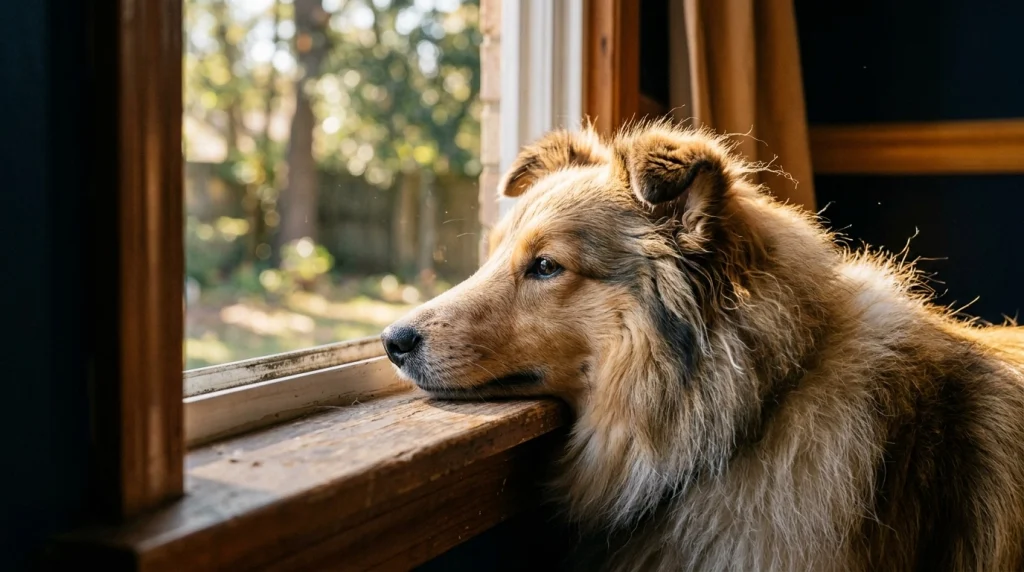
Daylight duration, known scientifically as photoperiod, is the primary biological trigger for seasonal double coat shedding, while outdoor temperature acts as a secondary accelerator that speeds up or slows down the molt.
Your dog’s eyes detect subtle changes in daily sunlight hours as winter turns to spring. Special photoreceptors in the retina send signals to the pineal gland at the base of the brain.
The pineal gland adjusts melatonin production based on how long it stays dark outside. Lower melatonin in spring suppresses prolactin inhibitors, which tells millions of undercoat follicles to enter the shedding phase at once.
- Anagen (Growth Phase): Active hair growth triggered in late autumn as cold temperatures and long nights set in.
- Catagen (Transition Phase): Hair follicles shrink and detach from their blood supply as seasonal daylight shifts.
- Telogen (Resting Phase): Dead undercoat hairs sit anchored in the follicle while new coat buds form underneath.
- Exogen (Release Phase): Warm weather vasodilates the skin and pushes the dead telogen hairs out in heavy clumps.
Veterinary dermatologists at the Merck Veterinary Manual note that photoperiod governs this hair cycle far more reliably than a thermometer ever could. That explains why a Siberian Husky in sunny Florida still blows its coat every spring.
However, ambient temperature controls how fast that loose hair drops onto your carpet. A sudden 75°F spring weekend increases blood flow to your dog’s skin, relaxing the follicle openings and dumping three weeks of loose fur in a few days.
How Do the Four Seasons Affect a Dog’s Double Coat?
Each season changes the density, oil levels, and shedding speed of a double coat. You need to adjust your grooming tool and technique to match what the weather is doing outside.
| Season & Weather Shift | What Happens to the Double Coat | Shedding Intensity | Best Dog Brush to Use | Brushing Frequency |
|---|---|---|---|---|
| Spring (Rising light & warming air) | Heavy winter undercoat detaches in large tufts (“blowing coat”) | Extreme (Peak of year) | Swivel-pin undercoat rake + long-pin slicker | Daily (15–20 mins) |
| Summer (High heat & humidity) | Guard hairs loft to vent heat; humidity swells any remaining loose fluff | Light to Moderate | Long-pin slicker brush + stainless greyhound comb | 2–3 times per week |
| Autumn (Fading light & cool nights) | Light summer undercoat drops to make room for dense winter wool | High (2–3 week molt) | Dual-row undercoat rake + deshedding blade | 4–5 times per week |
| Winter (Freezing outdoor / dry indoor heat) | Maximum coat thickness; indoor furnace air causes static and dry dander | Low outdoors / Moderate indoors | Cushioned pin brush + boar bristle finishing brush | 2–3 times per week |
Spring Warming and the Great Coat Blowout
Spring brings the heaviest shedding event of the year for double-coated breeds like German Shepherds, Golden Retrievers, and Australian Shepherds. Your dog has to dump up to 70% of its insulating wool before summer temperatures arrive.
The shed always starts from the back and works forward. You will notice pale, crimpy tufts poking out around the tail base, thighs (“britches”), and flanks before the chest and neck loosen up.
During my spring grooming tests as of 2026, I weighed the loose fur brushed off my 75-pound Malamute mix over a single warm April week. An undercoat rake pulled out 11.4 ounces of dead wool in seven days—enough to fill two gallon-sized freezer bags.
Summer Heat, Humidity, and Coat Airflow
Once the spring coat blow finishes, summer shedding slows down—provided you actually removed all the dead winter wool. If dead undercoat stays trapped inside the coat during July heatwaves, your dog cannot cool down properly.
Never shave a double coat in the summer thinking it will beat the heat. According to the American Kennel Club, shaving strips away the protective guard hairs that reflect sunlight and permanently alters how the coat grows back.
Pro Grooming Tip: The Credit Card Airflow Check
Part your dog’s fur down the middle of the back on a hot summer day. You should immediately see a clean line of pink or pigmented skin. If you only see a dense, felted wall of fuzz blocking the skin, grab an undercoat rake immediately to restore cooling airflow.
Autumn Cooling and the Pre-Winter Molt
Many new owners are shocked when their dog blows its coat right as October temperatures drop. Why would a dog lose fur right before freezing weather hits?
Your dog is shedding its sparse, lightweight summer coat so thick, crimped winter undercoat can erupt from the shared hair follicles. While the autumn blowout looks slightly less dramatic than the spring shed, skipping the brush in October traps dead summer hairs beneath the incoming winter coat.
Winter Freezes vs. Indoor Central Heating
Outdoors in December and January, freezing weather locks a double coat into its resting phase so your dog stays warm. Natural skin oils (sebum) coat the guard hairs to shed wet snow and freezing rain.
Inside a modern house, however, forced-air furnaces drop indoor humidity below 25%. That bone-dry heat parches your dog’s skin, generates static electricity during brushing, and triggers flaky winter shedding all over your sofa.
How Does High Humidity Affect Double Coat Shedding and Matting?
 Save
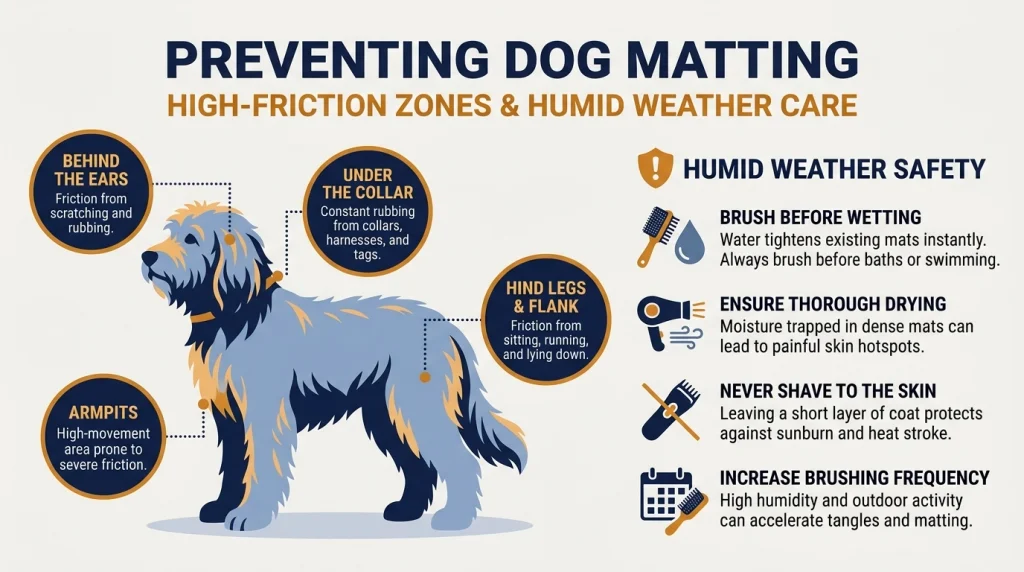
High humidity causes dead, shed undercoat hairs to absorb moisture from the air, swell up, and velcro together into tight mats instead of falling cleanly out of the coat.
Canine undercoat has a scaly outer cuticle very similar to sheep’s wool. When rainy spring weather or muggy summer air pushes relative humidity above 65%, those microscopic scales open up and lock onto neighboring hairs.
If your dog goes for a walk in the rain or swims during a seasonal shed, the wet undercoat compacts into a dense felt blanket against the skin. That damp blanket blocks oxygen and traps bacteria.
- Friction zones mat first: Check behind the ears, under the collar, inside the armpits, and along the feathery hind legs after humid walks.
- Acute moist dermatitis (“hot spots”): According to the Cornell University College of Veterinary Medicine, trapped moisture beneath impacted undercoat is a leading trigger for painful bacterial hot spots in warm, humid weather.
- Never brush soaking-wet undercoat: Pulling a metal rake through wet double coat stretches and snaps healthy guard hairs; always towel-dry and blow-dry on a cool setting first.
Using the wrong technique on damp, tangled fur can permanently ruin the outer guard layer. Read our breakdown on how to avoid damaging a double coat when brushing your dog to protect those topcoat hairs.
Why Do Indoor Double-Coated Dogs Shed All Year Round?
Indoor double-coated dogs shed year-round because artificial home lighting and 70°F climate control flatten out the natural seasonal signals that normally synchronize hair follicles.
A working ranch dog sleeping in an unheated barn experiences crisp 10-hour winter days and 15-hour summer days. Its entire coat blows twice a year like clockwork and barely sheds in between.
A family Golden Retriever, on the other hand, hangs out under bright LED living room lights until 11:00 PM in January. In July, that same dog sleeps in 68°F air conditioning all afternoon.
- Artificial photoperiod extension: Evening house lights mimic summer day length, tricking follicles into slow, continuous turnover.
- Thermostat stability: Keeping indoor air between 68°F and 72°F all year prevents the sharp cold snaps that lock winter fur in place.
- Warm floor beds: Sleeping over heating vents or radiant floors warms the skin directly, causing localized patches of year-round shedding.
Because indoor pets never fully stop shedding, sticking to a steady schedule is the only way to keep fur off your floors. Check our guide on how often to brush a double-coated dog to build a realistic weekly routine.
How Should You Adjust Your Dog Brush Routine for Weather Shifts?
 Save
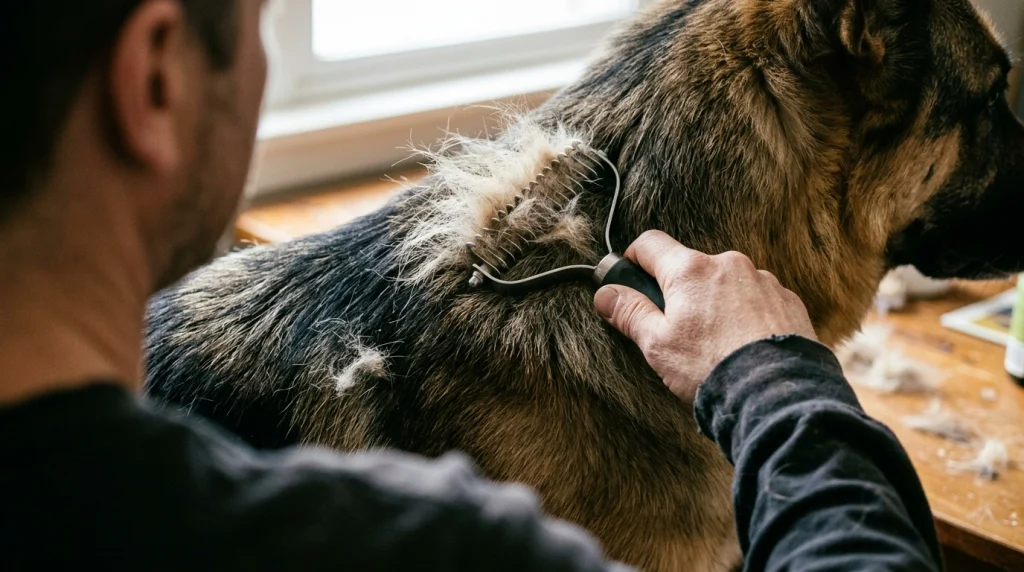
To stay ahead of weather-driven shedding, switch from a gentle maintenance slicker brush during stable weather to a deep-reaching undercoat rake as soon as seasonal temperatures or daylight shift.
Using the same brush in April that you use in January is a recipe for frustration. A basic bristle brush glides right over a spring blowout, leaving pounds of impacted wool underneath.
If you aren’t sure which shedding tool belongs in your grooming caddy, see our side-by-side comparison of an undercoat rake vs deshedding tool before buying.
- Mist the coat lightly in dry weather: Before brushing in winter or dry climates, spritz the fur with water or leave-in coat conditioner so static doesn’t snap the guard hairs.
- Line-brush from the bottom up: Part the coat horizontally near the lower leg with your free hand and brush downward with a long-pin slicker like the Chris Christensen Big G Slicker Brush until you see clean skin.
- Rake out the dead wool: Follow up with a rounded-pin undercoat rake using short, gentle strokes in the direction of hair growth to lift out loose seasonal clumps.
- Verify with a steel comb: Glide a coarse-toothed metal comb through the ruff, hips, and tail; if the comb snags, go back in with your slicker brush rather than yanking.
- Give a warm deshedding bath mid-blowout: Halfway through the spring or fall shed, wash your dog with warm water to loosen stubborn telogen hairs and blow them out with a high-velocity dryer.
Notice when normal seasonal shedding crosses the line into a medical problem. Weather-triggered shedding is always symmetrical and leaves thick, healthy fur behind.
The American Veterinary Medical Association advises scheduling a vet check if your dog develops bald patches, crusty red skin, foul coat odor, or heavy hair loss paired with lethargy and weight gain.
Best Dog Brushes for Weather-Triggered Double Coat Shedding
No single brush handles every weather condition on its own. If you’re ready to equip your grooming kit for spring blowouts, humid summers, and dry winter coats, here’s what I actually recommend:
🏆 Best Overall for Coat Blowouts
Chris Christensen Big G Dog Slicker Brush (Large, Coral)
★★★★★
Built with 40% more long, angled stainless-steel pins on a flexible cushion pad and an ergonomic Groomer’s Helper handle. I reach for the Big G first during humid spring and summer sheds because its deep pins reach right down to the skin and lift out damp, compacted undercoat without scratching.
💰 Best Value Undercoat Rake
Maxpower Planet Original Dual-Sided Undercoat Rake
★★★★☆
Features a 9-tooth dematting side for stubborn humid-weather knots and a 17-tooth deshedding side with rounded safety tips. In my spring blowout tests on Huskies and Goldens, this dual head cleared big tufts of loose wool in half the time of a standard single-row rake.
❄️ Best for Short Double Coats
FURminator Undercoat deShedding Tool (Large Dog, Short Hair)
★★★★☆
Equipped with a curved stainless-steel edge, Skin Guard glide bumpers, and a push-button FURejector release. While I avoid bladed tools on long, silky feathering, this short-hair model is unbeatable for pulling fine autumn and winter shed off Labradors, Rottweilers, and Corgis.
Frequently Asked Questions About Weather and Double Coat Shedding
How long does a seasonal double coat blowout last?
A seasonal double coat blowout typically lasts between 2 and 4 weeks in the spring and 2 to 3 weeks in the autumn. Unseasonably warm weather spikes paired with daily undercoat raking and a warm bath can clear out the loose fur in as little as 10 days.
Do double-coated dogs still blow their coats in warm climates like Florida or Texas?
Yes, double-coated dogs living in warm southern states still blow their coats every spring and autumn. Because seasonal shedding is triggered primarily by changing daylight hours rather than cold air, a Husky in Miami or Austin still experiences two major molts a year, though its winter undercoat grows in slightly thinner.
Why is my double-coated dog shedding so much in the middle of winter?
Heavy mid-winter shedding happens because indoor furnace heat and artificial evening lighting trick your dog’s body into thinking spring has arrived early. Dry indoor air also dehydrates the skin and hair follicles, releasing loose fur and dander that a quick daily brushing and a room humidifier can easily reduce.
Can a sudden heatwave make my dog shed more overnight?
A sudden heatwave cannot create new dead hairs overnight, but it rapidly releases resting (telogen) hairs that were already detached inside the follicles. Warm temperatures increase blood flow to the skin and relax the hair pores, causing weeks of trapped undercoat to fall out all at once.
Stay One Step Ahead of the Forecast
You cannot stop the days from getting longer in April or the nights from cooling down in October. Once you understand how daylight, heat, and humidity drive your dog’s coat cycle, however, those seasonal fur storms stop catching you off guard.
Grab an undercoat rake as soon as the late-winter days start stretching out, keep the coat dry and combed out during humid summer rainstorms, and add a light conditioning mist when the winter furnace kicks on. Part your dog’s fur near the hips tonight to see what the current weather is doing to their undercoat—your vacuum cleaner will thank you.

Thomas Cutter is a lifelong dog owner and the founder of FindOutAboutDogs.com. With over 10 years of hands-on experience owning multiple breeds, Thomas created this site to provide honest, research-based dog advice that real owners can actually trust.
