What Brush Is Best for a Golden Retriever? A Practical 2026 Guide
Quick Answer
For routine Golden Retriever grooming, a quality pin brush is the best starting tool because it moves through the long outer coat without aggressively stripping it. Add a slicker brush for tangles and an undercoat or deshedding tool during heavy shedding periods. The AKC Golden Retriever grooming guide also recommends regular pin-brush grooming for this thick double coat.
What to look for
- Long pins: They need enough reach to move through a Golden’s outer coat instead of skimming the surface.
- Rounded tips: Smooth, polished pins reduce scratching and snagging during regular grooming.
- Cushioned base: A flexible pad lets the pins move with the coat instead of dragging through it.
- Large head: A wider brush makes the back, sides, and chest faster to cover.
- Comfortable handle: Goldens have plenty of coat, so grip comfort matters during longer sessions.
My simple setup
- Use a pin brush for routine grooming, a slicker for stubborn tangles, and a shedding tool only when loose undercoat builds up.
Golden Retrievers make brush shopping look more complicated than it needs to be. Their feathering, thick undercoat, and longer outer hairs simply need different tools for different jobs.
I wouldn’t try to make one aggressive brush do everything. A gentle daily or weekly brush plus a specialized shedding tool gives you much more control.


Why Does a Golden Retriever Need a Different Kind of Brush?
A Golden Retriever has a double coat, meaning there is a softer insulating undercoat beneath a longer protective outer coat. That structure is why a brush that works beautifully on a short-haired dog may barely reach loose hair on a Golden.
The Golden Retriever Club of America describes the breed as having a dense, water-repellent coat with a good undercoat. That coat needs grooming without unnecessarily damaging the protective outer hairs.
Definition: A Golden Retriever brush is not one specific product. It is a grooming tool whose pin length, shape, and function match the breed’s medium-length double coat.
- Outer coat: Longer guard hairs protect the skin and give the Golden its smooth appearance.
- Undercoat: Softer, denser hair sits below the outer coat and becomes especially noticeable during shedding.
- Feathering: Longer hair around the chest, legs, ears, belly, and tail can develop tangles faster.
The Golden Retriever Club of America’s grooming tutorial includes both a slicker brush and steel comb among useful grooming tools. That makes sense once you stop expecting a single brush to handle every part of the coat.
Is a Pin Brush or Slicker Brush Better for a Golden Retriever?
 Save
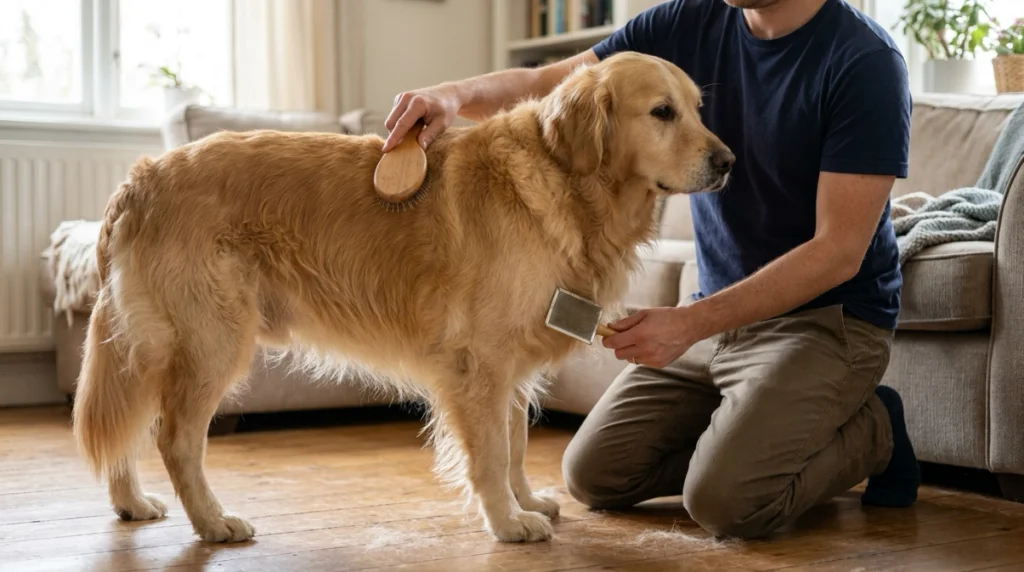
SaveA pin brush is my first choice for routine whole-coat grooming, while a slicker is better as a targeted detangling tool. Most Golden owners will benefit from owning both.
A pin brush has longer, widely spaced metal pins set into a cushioned base. It can move through the coat while disturbing the natural outer hairs less aggressively.
A slicker uses many finer, angled wire pins. Those pins are especially useful around areas where loose hair and tangles collect.
| Brush Type | Best Golden Retriever Job | When I Would Use It | Main Caution |
|---|---|---|---|
| Pin brush | Routine full-body brushing | Weekly normally; more often during shedding | Pins that are too short may only skim the topcoat |
| Slicker brush | Tangles, feathering, loose surface hair | As needed on problem areas | Heavy pressure can irritate skin |
| Undercoat rake | Loose seasonal undercoat | During heavier coat blow | Choose teeth long enough for the coat |
| Deshedding tool | Removing accumulated loose undercoat | Occasionally during heavy shedding | Avoid repeated hard passes over one area |
| Bristle brush | Finishing and smoothing | After deeper brushing | Usually won’t reach enough undercoat alone |
The AKC guide to dog brush types makes the same important point: brush choice should follow coat type rather than marketing claims.
What Size Pin Brush Is Best for a Golden Retriever?
Choose a medium-to-large oval pin brush with pins long enough to reach through the Golden’s coat. For many adult Goldens, roughly 27 mm pins are a practical starting point.
Some dogs have a heavier, longer coat and benefit from longer pins. Chris Christensen, for example, lists 27 mm pins for medium-to-long coats and 35 mm pins for long, thick, full coats.
- 27 mm pins: A useful general choice for many medium-to-long Golden coats.
- 35 mm pins: Worth considering for especially full or heavily feathered coats.
- Oval head: Covers large areas such as the back and sides efficiently.
- Polished tips: Help pins travel through hair without sharp scraping.
- Flexible cushion: Gives the brush some movement when you hit resistance.
I care more about pin reach and smoothness than flashy features. If the pins cannot move through the coat, the brush may make the surface look neat while leaving loose hair underneath.
Should You Use an Undercoat Rake on a Golden Retriever?
Yes, an undercoat rake can help during heavy shedding, but it should support your regular brush rather than replace it. Its job is to reach loose undercoat that a basic surface brush may miss.
Golden Retrievers can shed throughout the year and become much heavier shedders during coat changes. Both AKC and Golden Retriever Club of America guidance recommend increasing brushing when shedding becomes heavy.
- Start with a pin brush to loosen the coat.
- Work an appropriate rake gently through areas holding loose undercoat.
- Use short strokes instead of digging toward the skin.
- Stop if the tool catches repeatedly or your dog shows discomfort.
- Finish with the pin brush to smooth the coat again.
I prefer several light passes over one forceful pass. You should be removing hair that is ready to come out, not fighting firmly attached coat.
Is a FURminator Good for Golden Retrievers?
A FURminator-style deshedding tool can be useful for a Golden Retriever during heavy shedding, but I wouldn’t make it the everyday brush. A pin brush gives you a gentler routine tool.
The large long-hair FURminator is designed for dogs around 51–90 pounds and uses a stainless-steel deshedding edge to reach loose undercoat. That size range overlaps with many adult Golden Retrievers.
Think of it as a seasonal tool. Use it according to its directions and avoid repeatedly scraping the same patch of coat.
- Good use: Removing accumulated loose undercoat during a coat blow.
- Less useful: Everyday smoothing or gently maintaining feathering.
- Wrong approach: Applying more pressure because hair is not coming out quickly.
How Often Should You Brush a Golden Retriever?
Weekly brushing is a sensible minimum during ordinary shedding, while daily brushing may be needed when your Golden is blowing coat heavily. The exact schedule depends on coat density and how much loose hair you’re seeing.
AKC Golden-specific guidance recommends weekly brushing during regular shedding and daily brushing during heavy shedding. The Golden Retriever Club of America gives similar advice for major shedding periods.
- Normal weeks: Give the entire coat a thorough brushing at least weekly.
- Heavy shedding: Short daily sessions can keep loose undercoat manageable.
- After outdoor trips: Check the ears, legs, belly, tail, and feathering for debris.
- Before bathing: Brush out loose hair and tangles first.
- Between full sessions: Quickly inspect common tangle areas with your fingers or a comb.
Veterinary guidance from VCA Animal Hospitals on coat care also recommends regular inspection for tangles, debris, parasites, and skin changes.
How Do You Brush a Golden Retriever Without Hurting Them?
 Save
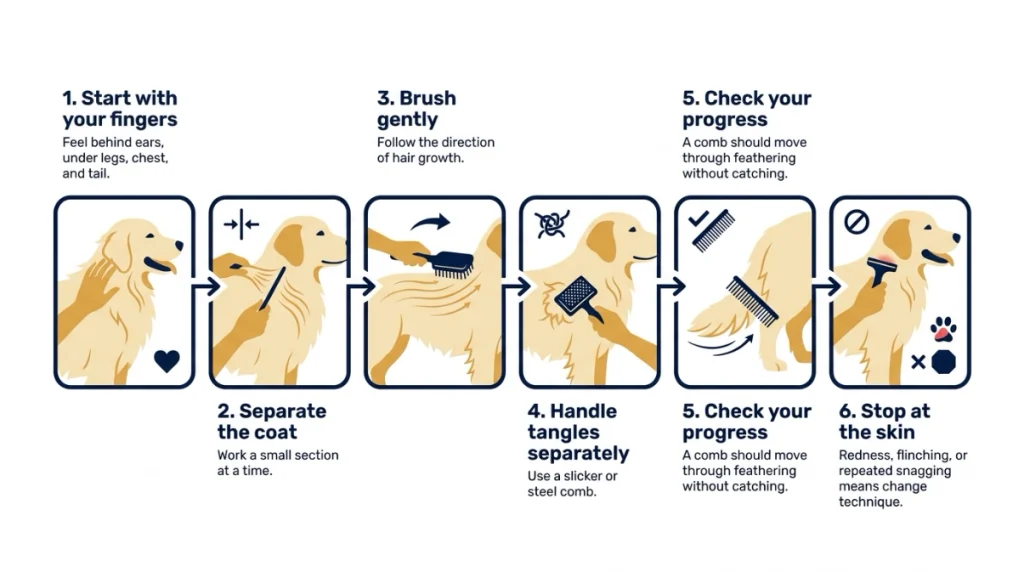
SaveBrush in small sections, support the coat with your free hand, and let the tool do the work. Pulling harder rarely solves a tangle faster.
- Start with your fingers. Feel behind the ears, under the legs, along the chest, and around the tail.
- Separate the coat. Work a small section instead of dragging the brush through the whole depth at once.
- Brush gently. Follow the direction of hair growth with controlled strokes.
- Handle tangles separately. Use a slicker or steel comb rather than repeatedly pulling with the main brush.
- Check your progress. A comb should move through feathering without repeatedly catching.
- Stop at the skin. Redness, flinching, or repeated snagging means you need to change technique.
This section-by-section method takes a little longer at first. It becomes much faster once you prevent tangles instead of waiting for them to become mats.
Which Areas of a Golden Retriever Tangle the Most?
Pay extra attention behind the ears and around the feathering. These softer areas experience friction and can tangle before the broad back coat looks messy.
- Behind and below the ears
- Chest feathering
- Armpits and front-leg feathering
- Back of the thighs
- Belly and groin area
- Tail feathering
A steel comb is useful after brushing these spots. If the comb still catches, you probably have a small tangle hiding below the surface.
What Brush Should You Avoid Using as the Only Golden Retriever Brush?
I wouldn’t rely on a soft bristle brush as your only tool. It can smooth the outer coat, but it may not penetrate a thick Golden Retriever coat effectively.
AKC Golden-specific grooming guidance explicitly notes that a bristle brush does not get through the thick coat well enough for the main shedding job.
- Very short pins: They may groom only the surface.
- Sharp or damaged pins: Replace the brush instead of risking scratches.
- Aggressive blades for daily use: Save specialized shedding tools for the job they were designed to do.
- Tiny brush heads: They turn a large-dog grooming session into unnecessary work.
If a mat sits tightly against the skin, don’t keep pulling at it. A professional groomer or veterinary team can help you choose the safest removal method.
My Ideal Golden Retriever Brush Kit
 Save
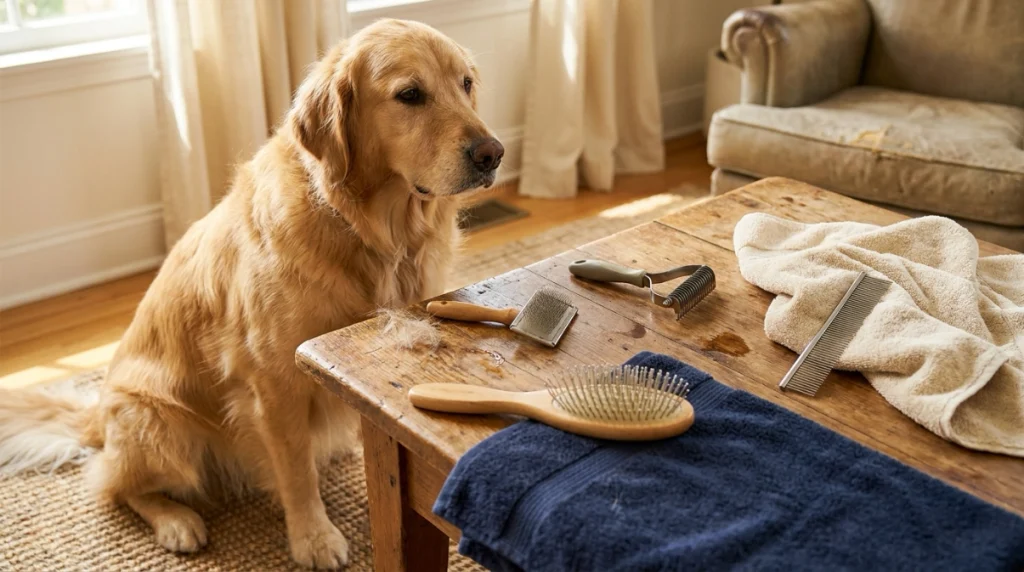
SaveYou don’t need a drawer full of tools. Three well-chosen grooming tools cover nearly everything a pet Golden Retriever needs.
- Primary pin brush: Whole-body routine grooming.
- Slicker brush: Feathering, tangles, and detail work.
- Undercoat or deshedding tool: Heavy seasonal shedding.
- Optional steel comb: Final tangle check behind ears and through feathering.
The biggest mistake is buying the most aggressive tool first. I would rather build a routine around a comfortable pin brush and bring out stronger tools only when the coat calls for them.
If you’re ready to pick one, here’s what I’d actually recommend:
🏆 Best Overall
Chris Christensen Original Series Oval Pin Brush
★★★★★ 4.8/5 editorial score
The 8.5-inch oval brush is offered with polished stainless-steel pins, including 27 mm and 35 mm options for longer coats. I like it as the main brush because the cushioned pin design fits routine Golden Retriever grooming rather than only heavy shedding.
✨ Best for Tangles
Safari Self-Cleaning Slicker Brush
★★★★☆ 4.6/5 editorial score
Retractable stainless-steel pins make collected hair easier to remove, while the non-slip grip helps with longer sessions. I would keep this beside the pin brush for feathering and small tangles rather than use hard pressure across the whole coat.
🍂 Best for Heavy Shedding
FURminator Undercoat deShedding Tool — Large Long Hair
★★★★☆ 4.5/5 editorial score
This version is made for long-haired dogs around 51–90 pounds and uses a stainless-steel edge to remove loose undercoat. I consider it a seasonal helper for coat-blow periods, not a replacement for a gentle everyday pin brush.
Frequently Asked Questions
Can I use a human hairbrush on a Golden Retriever?
A human brush usually isn’t the best choice because its pin length and spacing were not designed for a Golden Retriever’s dense double coat. A proper dog pin brush gives you better reach, control, and durability without depending on aggressive pressure.
Should I brush my Golden Retriever every day?
You don’t necessarily need daily full-coat brushing all year. Weekly grooming is often enough during ordinary shedding, but daily brushing can be useful when your Golden is releasing large amounts of undercoat during a heavy shedding period.
Is a slicker brush safe for Golden Retrievers?
Yes, a slicker can be useful for Golden Retrievers when used with light pressure. It works particularly well on loose hair and tangled feathering, but pushing fine wire pins hard against the skin can cause discomfort or irritation.
Do Golden Retrievers need an undercoat rake?
Not every Golden needs an undercoat rake at every grooming session. It becomes most useful when loose undercoat builds up during heavier shedding, while a pin brush remains the more versatile choice for ordinary coat maintenance.
What is the best brush for a Golden Retriever puppy?
Start a Golden Retriever puppy with a gentle pin brush or soft slicker and short sessions. The goal is partly grooming and partly teaching the puppy that handling, brushing, paws, ears, and tail inspections are normal and comfortable.
The Bottom Line
The best brush for most Golden Retrievers is a well-made pin brush with long, smooth pins. It handles routine whole-coat grooming without turning every brushing session into an aggressive deshedding job.
Add a slicker for tangles and an undercoat tool for seasonal shedding. With those tools and a gentle routine, Golden Retriever coat care becomes much simpler.
Choose the brush your dog will comfortably let you use every week. Consistent grooming beats an expensive tool that sits untouched in a drawer.

Thomas Cutter is a lifelong dog owner and the founder of FindOutAboutDogs.com. With over 10 years of hands-on experience owning multiple breeds, Thomas created this site to provide honest, research-based dog advice that real owners can actually trust.
