What Brush Should You Use on a Siberian Husky? The Best Tools for a Double Coat
Quick Answer
The best brush for a Siberian Husky is an undercoat rake with rounded teeth, paired with a slicker or pin brush for the outer coat. Huskies have a dense double coat, so a short bristle or rubber brush alone usually cannot reach the loose undercoat. The AKC dog brush guide also recommends undercoat rakes for double-coated breeds.
Best Brushes for a Siberian Husky
- Undercoat rake: Best first choice for removing loose, soft undercoat during normal grooming and seasonal shedding.
- Slicker brush: Helps collect loose surface fur and gently work through small tangles.
- Pin brush: Useful for finishing the coat without aggressively stripping fur.
- Steel comb: A good final check for hidden tangles behind the ears, legs, and tail area.
- Skip short rubber brushes: They usually cannot penetrate a Husky’s thick double coat well enough to be your main tool.
My Simple Rule
- Brush with the coat, use light pressure, and stop if the tool starts pulling instead of gliding.
Siberian Huskies can make brushing look deceptively simple. Their coat feels fluffy on top, but most of the shedding trouble sits underneath.
That is why I wouldn’t choose a Husky brush based only on how much hair it grabs in one pass. The right tool should reach loose undercoat without scraping the skin or unnecessarily cutting healthy guard hairs.


Why Do Siberian Huskies Need a Special Type of Brush?
A Siberian Husky has a double coat, meaning it has two distinct layers of hair. The softer undercoat sits beneath longer protective guard hairs.
The American Kennel Club’s Siberian Husky guidance notes that the breed sheds heavily and benefits from regular brushing.
- Outer coat: Longer guard hairs help protect the skin and coat from weather and debris.
- Undercoat: Soft, dense hair provides insulation and produces much of the loose fluff during shedding.
- Seasonal shedding: Huskies commonly release large amounts of undercoat during heavier shedding periods.
- Routine shedding: Loose hair can still appear between major coat changes.
A brush that only skims the top can make the coat look neat while leaving packed loose hair underneath. That’s why coat penetration matters more than aggressive scraping.
What Is the Best Brush for a Siberian Husky?
 Save
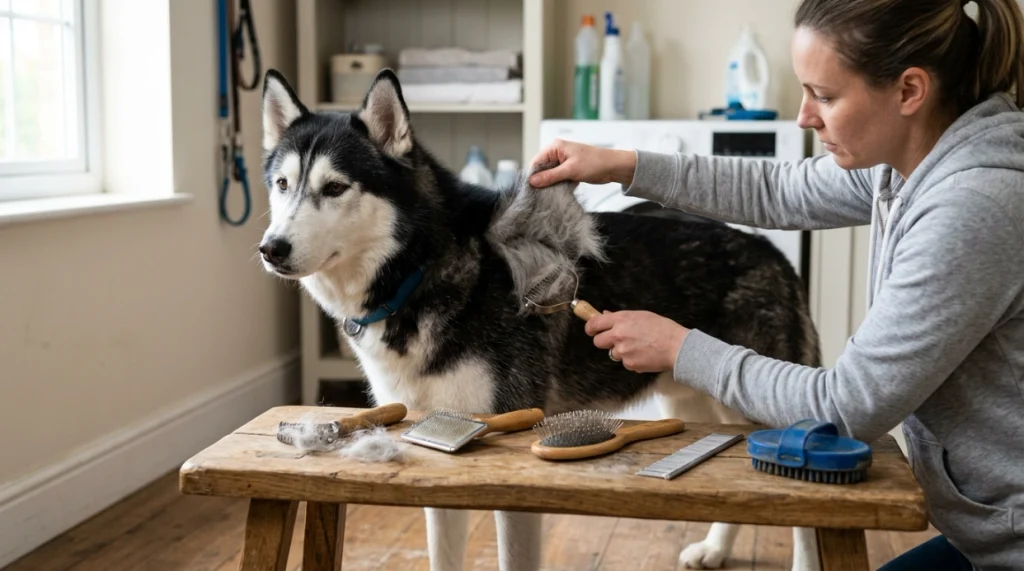
SaveIf I could choose only one grooming tool for most adult Huskies, I would start with a rounded-tooth undercoat rake. It is designed to reach the dense inner coat and lift loose hair.
For a complete routine, I prefer using more than one tool. Each brush handles a different part of the job.
| Tool | Best Use | Coat Layer | My Verdict |
|---|---|---|---|
| Undercoat rake | Removing loose seasonal undercoat | Undercoat | Best overall choice |
| Slicker brush | Loose surface fur and light tangles | Outer and upper undercoat | Excellent second tool |
| Pin brush | Finishing and fluffing | Outer coat | Gentle finishing option |
| Steel comb | Finding remaining tangles | Both layers in small areas | Best checking tool |
| Rubber curry brush | Mostly short-coated dogs | Surface | Not my primary Husky brush |
The AKC’s double-coat grooming guidance recommends tools such as grooming rakes, steel combs, and slickers for managing dense double coats.
Should You Use an Undercoat Rake on a Husky?
Yes. An undercoat rake is one of the most useful tools for a Siberian Husky because it can reach loose hair beneath the guard coat.
Choose one with smooth, rounded teeth and enough tooth length for your dog’s coat. You should not need heavy pressure.
- Start gently: Make short strokes in the direction the hair grows.
- Work in sections: Separate thick fur with your free hand so you can see what the rake is doing.
- Check the skin: Stop if you see redness or your Husky repeatedly flinches.
- Clear the rake: Remove collected hair frequently during a heavy coat blow.
- Don’t keep scraping: Once little loose hair is coming out, move to another section.
My rule is simple: the rake should do the work. If I feel that I need force, I change the angle or stop instead of pulling harder.
Can You Use a Slicker Brush on a Siberian Husky?
Yes, a slicker brush can work well on a Husky when you use it gently. I see it as a companion to an undercoat rake rather than a complete replacement.
Slickers have fine wire pins that can collect loose fur and work through light tangles. The pins can also irritate skin when someone presses too hard.
- Use light wrist pressure instead of pushing the brush into the skin.
- Brush small sections rather than dragging through the entire coat.
- Pay extra attention to the neck, rear legs, tail base, and fluffy areas.
- Avoid repeatedly brushing the same spot once loose hair stops coming out.
The PetMD Siberian Husky grooming guide also describes using a rake-style brush to manage the breed’s loose undercoat and shedding.
How Should You Brush a Siberian Husky?
 Save
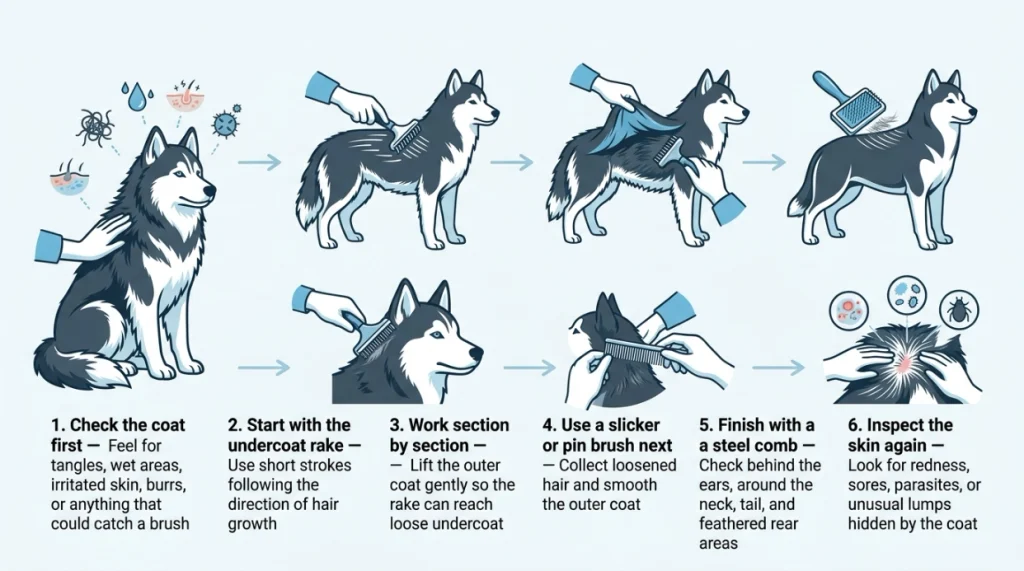
SaveA good Husky brushing session should be methodical rather than aggressive. I like to start with the areas that tolerate brushing easily before moving toward more sensitive spots.
- Check the coat first. Feel for tangles, wet areas, irritated skin, burrs, or anything that could catch a brush.
- Start with the undercoat rake. Use short strokes following the direction of hair growth.
- Work section by section. Lift the outer coat gently so the rake can reach loose undercoat.
- Use a slicker or pin brush next. This collects loosened hair and smooths the outer coat.
- Finish with a steel comb. Check behind the ears, around the neck, tail, and feathered rear areas for remaining tangles.
- Inspect the skin again. Look for redness, sores, parasites, or unusual lumps that were hidden by the coat.
Don’t rush the process just because your Husky is shedding heavily. Several calm, shorter sessions are often easier on the dog than one marathon grooming session.
How Often Should You Brush a Siberian Husky?
For routine maintenance, brushing at least weekly is a sensible starting point. During heavier shedding, your Husky may benefit from more frequent grooming sessions.
The VCA coat-care guidance describes Huskies as dogs with thick outer coats and fine undercoats that undergo significant seasonal shedding.
- Normal weeks: Aim for a thorough brushing about once a week.
- Heavy shedding: Check the coat several times during the week and remove loose undercoat as needed.
- After outdoor adventures: Check for debris, seeds, burrs, and tangles.
- Before bathing: Remove as much loose coat as practical so wet fur does not compact into dense clumps.
Don’t judge frequency by the calendar alone. A Husky living in a warmer indoor environment may shed differently from one living in a cold seasonal climate.
What Should You Avoid When Brushing a Husky?
Most grooming problems come from using too much force or choosing a tool that removes hair too aggressively. More hair in the brush does not automatically mean better grooming.
- Don’t scrape the skin: Undercoat tools should move through hair rather than drag against skin.
- Don’t yank mats: Hold the hair near the skin and work small tangles gradually.
- Don’t over-brush: Repeated passes on the same clean area can cause irritation.
- Don’t use cutting tools casually: Blade-style dematting tools require more care than a traditional rounded-pin rake.
- Don’t rely on one surface brush: A dense Husky undercoat can remain packed beneath a neat-looking outer coat.
- Don’t shave a healthy double coat just to stop shedding: Regular coat removal is the safer routine for normal seasonal shedding.
If you find tight matting close to the skin, sores, or painful areas, a professional groomer or veterinarian is a better choice than forcing a brush through the coat.
Undercoat Rake vs. Deshedding Tool: Which Is Better?
I generally prefer a traditional rounded-tooth undercoat rake for routine Husky grooming. It gives me more control over how much loose undercoat I remove.
Some deshedding tools use edges or closely spaced teeth that work more aggressively. Those tools can be useful, but technique matters even more.
| Feature | Undercoat Rake | Aggressive Deshedding Tool |
|---|---|---|
| Main job | Lift loose undercoat | Remove large amounts of loose hair quickly |
| Control | High with gentle technique | Varies by design |
| Best use | Routine and seasonal grooming | Careful, occasional deshedding |
| Main caution | Avoid excessive pressure | Avoid overworking healthy coat |
As of 2026, there are dozens of tools marketed specifically for heavy shedders. I would still choose based on tooth design, comfort, and control rather than the biggest shedding claim on the package.
Do You Need to Shave a Siberian Husky During Summer?
 Save
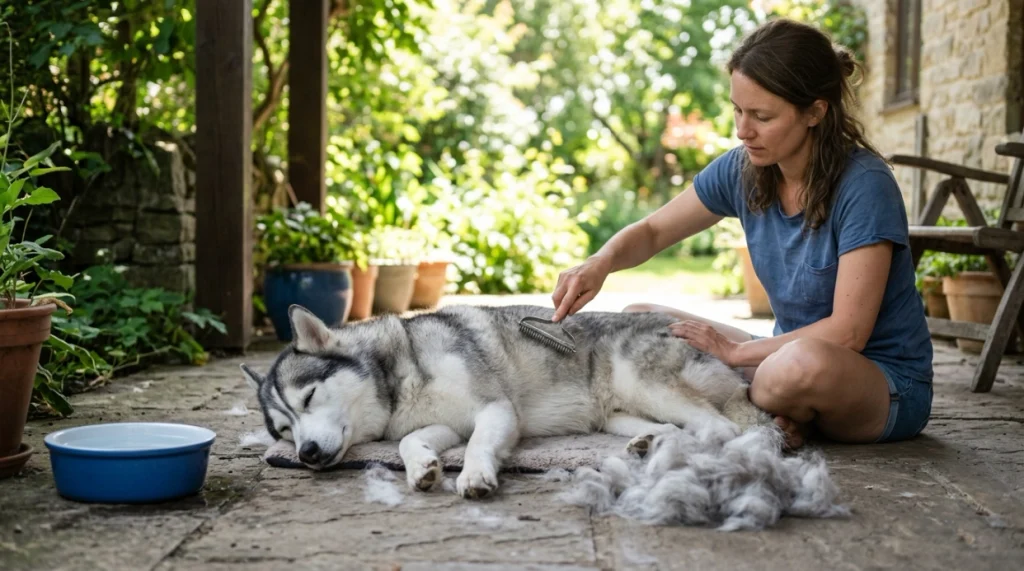
SaveNormally, no. Siberian Huskies are double-coated dogs, and routine shaving can interfere with the protective coat structure.
Instead, focus on removing loose undercoat, providing shade and water, and avoiding strenuous activity during dangerous heat. A veterinarian or experienced groomer should handle unusual medical or severe matting situations.
Helpful distinction: Removing dead, loose undercoat is not the same as shaving the coat. Good brushing removes hair that is already releasing while leaving healthy guard hairs in place.
This matters because the Husky’s coat is functional, not just decorative. Proper grooming aims to maintain that coat while controlling loose fur.
Which Husky Grooming Tools Would I Choose?
If you’re ready to build a simple Husky grooming kit, these are the types of tools I’d prioritize. You do not need a drawer full of brushes to maintain one double coat well.
🏆 Best Overall
Safari Double Row Undercoat Rake
★★★★☆ 4.6/5
The double-row design is made for reaching loose hair in thicker coats. I like this style as a main Husky tool because you can work gradually instead of trying to strip the coat in one pass.
💰 Best Easy-Clean Slicker
Hertzko Self-Cleaning Slicker Brush
★★★★☆ 4.3/5
Fine bent wire pins help collect loose surface fur, while the retractable-pin design makes packed hair easier to remove from the brush. I would use it after an undercoat rake, with light pressure around sensitive areas.
🔎 Best Finishing Tool
Andis Steel Pet Comb
★★★★★ 4.7/5
The steel teeth make this useful for finding tangles that the main brush missed. I like a comb as the final check around the neck, ears, tail, and other spots where loose undercoat can hide.
Frequently Asked Questions
What kind of brush is best for a Siberian Husky?
A rounded-tooth undercoat rake is my first choice for a Siberian Husky because it reaches loose undercoat beneath the guard hairs. Pair it with a slicker or pin brush for surface fur and a steel comb for final checks.
Can I brush my Husky every day?
You can do light grooming frequently during heavy shedding, but daily aggressive raking is unnecessary. Watch the skin and stop once the tool is no longer collecting significant loose undercoat.
Is a Furminator-style deshedding tool safe for Huskies?
Deshedding tools can remove loose hair, but they should be used carefully and without repeated aggressive passes. For routine grooming, I prefer a conventional rounded-tooth undercoat rake because it gives better control over a dense Husky coat.
Should I brush a Husky before or after a bath?
Removing loose undercoat before bathing can make the washing and drying process easier. Once the coat is fully dry, a gentle second brushing can remove fur loosened during bathing and drying.
Why is my Husky still shedding after brushing?
Brushing reduces loose hair, but it cannot stop normal shedding. Huskies naturally release undercoat, especially during seasonal coat changes, so you may need several grooming sessions as the coat continues to loosen.
The Bottom Line
If you’re wondering what brush you should use on a Siberian Husky, start with a good undercoat rake. Add a slicker or pin brush for the outer coat and a steel comb for checking your work.
Keep your pressure light and let the tools remove hair that is already loose. A calm, consistent grooming routine will usually serve your Husky better than trying to remove every loose hair in one long session.

Thomas Cutter is a lifelong dog owner and the founder of FindOutAboutDogs.com. With over 10 years of hands-on experience owning multiple breeds, Thomas created this site to provide honest, research-based dog advice that real owners can actually trust.
