Can Grooming Gloves Help Prevent Tangled Hair and Mats?
Quick Answer
Grooming gloves prevent mats effectively by clearing loose dead undercoat before it knots, but they cannot demat coat that is already tightly tangled. While gloves work wonders as everyday maintenance tools for regular dog brushing routines, dense felted knots require dedicated metal dematting tools.
Key Prevention Strengths & Limits
- Undercoat removal: Flexible silicone tips grab shedding hairs before they wrap into clusters.
- Sensitive reach: Five-finger agility lets you smooth armpits, flanks, and tail bases easily.
- No blade friction: Gentle nubs massage skin without causing painful brush burn.
- Severe mat limit: Blunt rubber nubs slide over hard knots rather than untangling them.
Best Practice Tip
- Run the gloves over high-friction areas daily, then follow up with a metal comb once weekly to verify zero base knots remain.
I have spent years testing pet grooming gear on rescue dogs, double-coated breeds, and nervous pups alike. Regular brushing sounds simple until your dog spots the slicker brush and sprints under the sofa.
Grooming gloves offer an approachable solution that feels like an ordinary petting session to your dog. Let’s examine how they stop matting in its tracks, where their mechanical limits lie, and how to pair them with traditional gear for smooth results.


What Is a Dog Grooming Glove?
A dog grooming glove is a wearable deshedding mitt featuring flexible silicone or rubber nodules across the palm and fingers. It collects dead fur and stimulates natural skin oils while mimicking a regular petting motion.
Unlike rigid pin brushes or rakes, these mitts mold naturally to your hand’s contours. You can stroke your dog’s neck, chest, and belly without applying painful localized pressure points.
Most models feature breathable mesh on the back, an adjustable wrist strap, and textured rubber palms. The rubber generates mild static electricity, capturing shed fur directly from the top layers of the coat.
How Do Hair Mats and Tangles Form in Dogs?
 Save
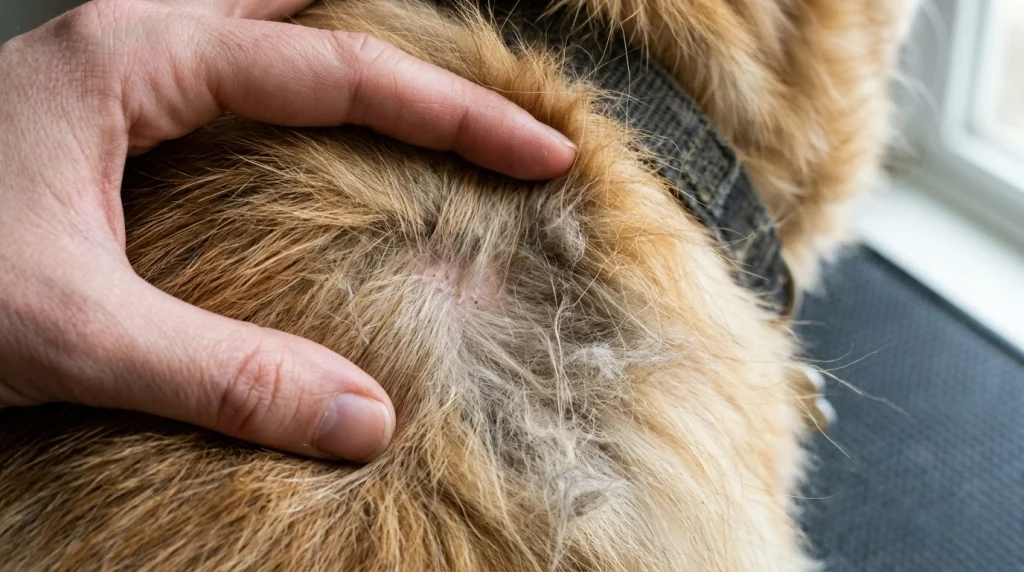
Mats develop when loose, shed hair fails to fall away from the body and instead wraps around live hairs. Friction, body heat, and moisture accelerate this twisting until fibers lock together into tight, felted clumps.
According to veterinary welfare guidelines published by the ASPCA, severe matting cuts off airflow to the skin, trapping moisture and bacteria that quickly cause open sores and infections.
Mats rarely appear evenly across your dog’s back or ribs. Instead, they form rapidly in high-friction zones where skin folds rub together during daily play:
- Behind the ears and along the collar line
- Under the front armpits and chest folds
- Around the groin, inner thighs, and rear hocks
- Beneath the tail and along the lower skirt
Dirt particles and static charge speed up this tangling process. Once loose hairs knot into live strands, ordinary shedding becomes a dense mat within days.
Can Grooming Gloves Actually Prevent Tangles and Mats?
Yes, grooming gloves stop mats by continuously removing shed fur before it wraps around healthy hair shafts. Used several times each week, they catch early tangles before friction compacts them.
Mats do not appear overnight. They require loose shed undercoat to serve as binding material, just like roving wool spinning into felt.
When you stroke your dog with silicone nodules, the friction lifts out loose hairs effortlessly. Less dead fur in the coat means mats have nothing to bind with.
Gloves also excel around sensitive spots that dogs protect from stiff brushes. You can slide your fingers right into armpits and behind ears where mats love to hide.
Pups that grow tense around wire brushes usually relax during a glove session. Consistent handling without stress makes frequent brushing easy to maintain over months and years.
Why Grooming Gloves Cannot Fix Existing Mats
Grooming gloves cannot untangle or cut through pre-existing, hardened mats. Their flexible rubber tips bend under pressure rather than separating locked hair strands.
To safely tease apart a dense knot, you need rigid stainless steel teeth or a specialized dematting blade. Rubber nodules lack the narrow profile necessary to enter a compressed hair cluster.
Pulling a glove across an existing mat will catch the tangled bundle and pull hard on your dog’s skin. That tug causes immediate pain and can make nervous dogs brush-shy.
If you discover hardened knots, switch to dedicated metal combs or visit a professional stylist. Veterinary dermatologists at institutions like the Cornell University College of Veterinary Medicine caution that aggressive pulling on matted fur can tear fragile skin and cause hematomas.
How Grooming Gloves Compare to Traditional Brushes
 Save
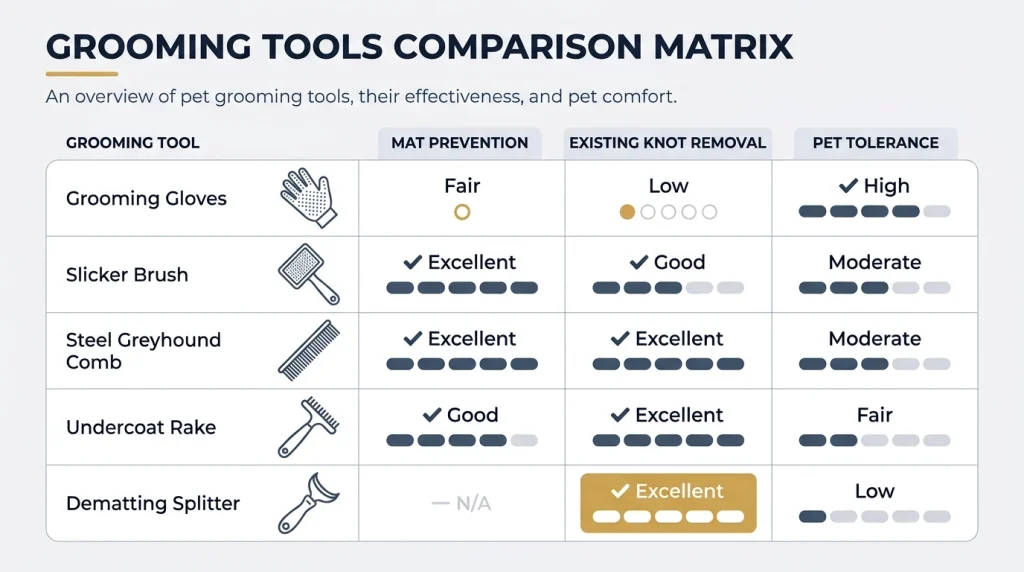
Selecting the right grooming tool depends heavily on whether your goal is everyday maintenance or deep knot removal. Different tools serve completely distinct roles across coat types.
The comparison table below outlines how grooming gloves perform against traditional grooming tools across key functional categories:
| Tool Type | Best Use Case | Mat Prevention | Existing Mat Removal | Pet Tolerance |
|---|---|---|---|---|
| Grooming Gloves | Daily deshedding, nervous dogs, short-to-medium coats | High (clears loose hair) | Ineffective | Very High |
| Slicker Brush | Medium-to-long fur, curly coats, light detangling | Very High | Moderate (minor web tangles) | Moderate |
| Steel Greyhound Comb | Deep line-combing down to the skin, checking for hidden knots | Essential standard | Good for gentle teasing | Moderate |
| Undercoat Rake | Heavy double coats (Huskies, Shepherds, Golden Retrievers) | Exceptional | Pulls out packed dead wool | Moderate |
| Dematting Rake / Splitter | Severe, compact knots and felted patches | Not designed for prevention | High (cuts through mats) | Low (requires gentle touch) |
As evident in tests as of 2026, grooming gloves work best as a primary preventive layer rather than a total replacement for metal tools. They keep loose hair under control, while steel combs verify that roots remain tangle-free.
Which Dog Coat Types Benefit Most from Grooming Gloves?
Gloves deliver outstanding mat prevention on smooth, short, and medium double coats. Conversely, long, curly, and continuously growing hair types require extra tools alongside the mitt.
Every dog coat possesses unique density, length, and texture characteristics:
- Smooth & Short Single Coats (Boxers, Beagles, Pugs): Outstanding results. Mats rarely form here, and gloves sweep up shedding hair while boosting skin shine.
- Medium Double Coats (Labradors, Australian Shepherds, Border Collies): Great prevention. Gloves pull shed topcoat and loose undercoat easily before friction forms flank knots.
- Dense, Arctic Double Coats (Husky, Malamute, Samoyed): Fair maintenance. Gloves capture surface tumbleweeds, but teeth cannot reach the deep undercoat without a rake.
- Curly & Fleece Coats (Poodles, Doodles, Bichons): Partial benefit. Gloves relax nervous dogs, but curly hair traps dead coils tightly, requiring pin brushes and slickers.
- Silky & Long Coats (Yorkies, Maltese, Afghan Hounds): Helpful for touch-ups. Gloves lift loose hairs from broad patches, but drop coats still need daily comb passes.
For Doodles and long-haired breeds, explore our full guide on DIY dog grooming at home for a complete toolkit walkthrough.
Step-by-Step: How to Use Grooming Gloves to Prevent Tangling
 Save
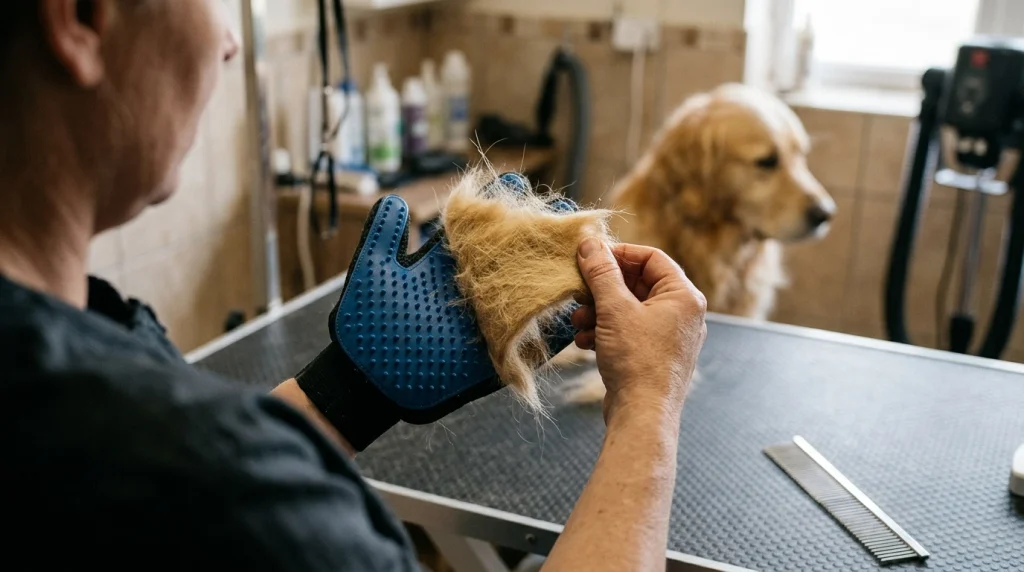
Preventing mats with grooming mitts requires steady consistency, proper stroke direction, and careful attention to friction zones. Follow this proven four-step routine:
- Begin with gentle, broad strokes along the spine: Put the glove on and pet your dog from the back of the neck down to the tail, following the natural grain of the fur. Let your dog relax and enjoy the rhythm.
- Work into the high-friction tangle zones: Use your individual gloved fingers to stroke gently under the chin, behind each ear, and through the armpits. Stroke downward along the flank and around the base of the tail where harness straps rub.
- Peel the accumulated fur off the palm: Once a thin film of hair forms across the silicone nubs, peel it off in one clean sheet. Emptying the glove frequently preserves its gripping friction.
- Perform a final comb-through inspection: Take a metal Greyhound comb and glide it through your dog’s skirt and leg feathers. If the comb passes freely through to the skin without catching, your coat is tangle-free.
If your dog sheds heavily during seasonal coat blows, consider coupling your glove work with an effective deshedding shampoo for dogs to wash out clinging undercoat in the bath.
If you’re ready to pick one, here’s what I’d actually recommend based on hands-on grooming sessions:
🏆 BEST OVERALL
HandsOn Pet Grooming Gloves
★★★★★
Tough textured rubber nodules cover the palms and individual fingers, built into durable chemical-resistant fabric. I use these weekly because the nodules run all the way down the fingertips, letting me tease out shed fur around delicate ears effortlessly.
💰 BEST BUDGET PAIR
Delomo Pet Grooming Glove Pair
★★★★☆
Soft silicone tips mounted on breathable mesh backing with an adjustable Velcro wrist closure. It delivers dependable daily surface shedding removal at an accessible price point, making it my top spare set for the car.
🛡️ BEST COMPLETE DETANGLING DUO
Andis Steel Pet Comb
★★★★★
Solid 7.5-inch dual-spaced stainless steel pins rounded at the ends to protect delicate skin. Pair this tool with any grooming glove to check coat roots, catching early web knots before they form tight clumps.
Frequently Asked Questions
Can a grooming glove completely replace a slicker brush?
No, a grooming glove cannot replace a slicker brush for long-haired, double-coated, or curly dogs. While gloves clear surface shedding comfortably, slicker brushes reach deeper to detangle crimped fur and prevent dense undercoat compaction.
How often should I use grooming gloves to prevent mats?
Use grooming gloves three to four times per week for optimal mat prevention. Five minutes of quick stroking lifts out loose dead hair before routine friction, collar movement, or moisture can twist it into knots.
Can you use grooming gloves while bathing a dog?
Yes, grooming gloves perform exceptionally well during baths to work shampoo into thick coats. Wet fur lathers easily across the silicone nubs, loosening trapped dead hair so it rinses away before drying.
What should I do if my dog already has tight mats?
Never pull hard with a glove on an established mat. Apply a leave-in detangling spray, isolate the knot, and gently pick it apart starting from the outer tips using a metal comb or dematting splitter.
Grooming gloves turn daily coat care into a bonding experience your dog looks forward to enjoying. Keep them near the leash basket, stroke down your dog’s trouble areas after walks, and watch tangles disappear before they ever have the chance to start.
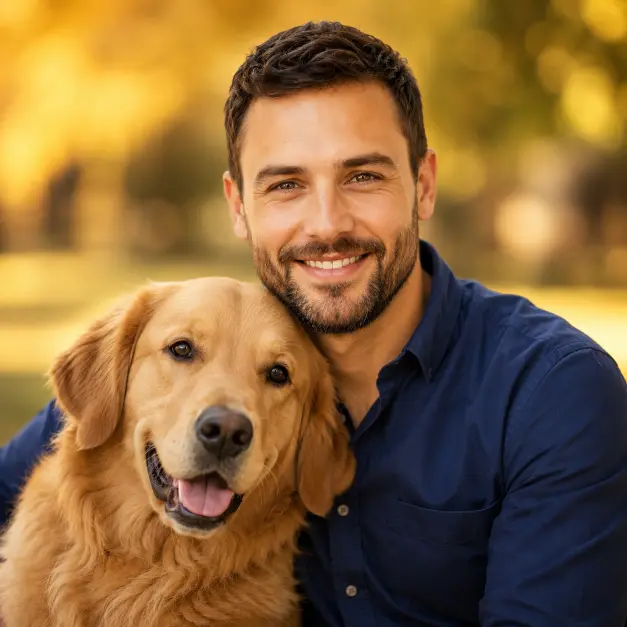
Thomas Cutter is a lifelong dog owner and the founder of FindOutAboutDogs.com. With over 10 years of hands-on experience owning multiple breeds, Thomas created this site to provide honest, research-based dog advice that real owners can actually trust.
