Are Grooming Gloves Suitable for Short-Haired Dogs?
Quick Answer
Yes, grooming gloves are one of the most effective and gentle de-shedding tools available for short-coated breeds. Their flexible silicone nubs lift stubborn, stiff hairs directly from the skin while stimulating healthy blood flow, making regular pet care feel like an enjoyable massage according to guidelines on canine coat health.
Why Gloves Excel on Short Coats
- Zero skin abrasion: Soft silicone replaces sharp wire pins that easily scratch thin, short coats.
- Contour navigation: Finger dexterity allows you to safely groom sensitive legs, elbows, and faces.
- Natural sebum distribution: Sweeping strokes pull beneficial oils across the hair shaft to boost shine.
- Stress-free desensitization: Anxious rescue dogs view the glove as affectionate petting rather than an invasive tool.
Pro Tip for Clean Removal
- Lightly mist the rubber palm with water before stroking to help short needle-like hairs stick together in a peelable sheet.
If you live with a short-coated breed, you already know the needle-hair struggle. Short canine coats shed stiff hairs that weave relentlessly into car seats, clothing, and woven rugs.
After testing dozens of shedding solutions on thin-coated dogs over the years, I have found that traditional metal tools frequently do more harm than good on tight fur. This hands-on guide examines why grooming gloves work exceptionally well on short coats, how they protect sensitive skin, and the exact strokes needed to trap dead hair fast.


What Makes Grooming Gloves Effective for Short-Haired Dogs?
 Save
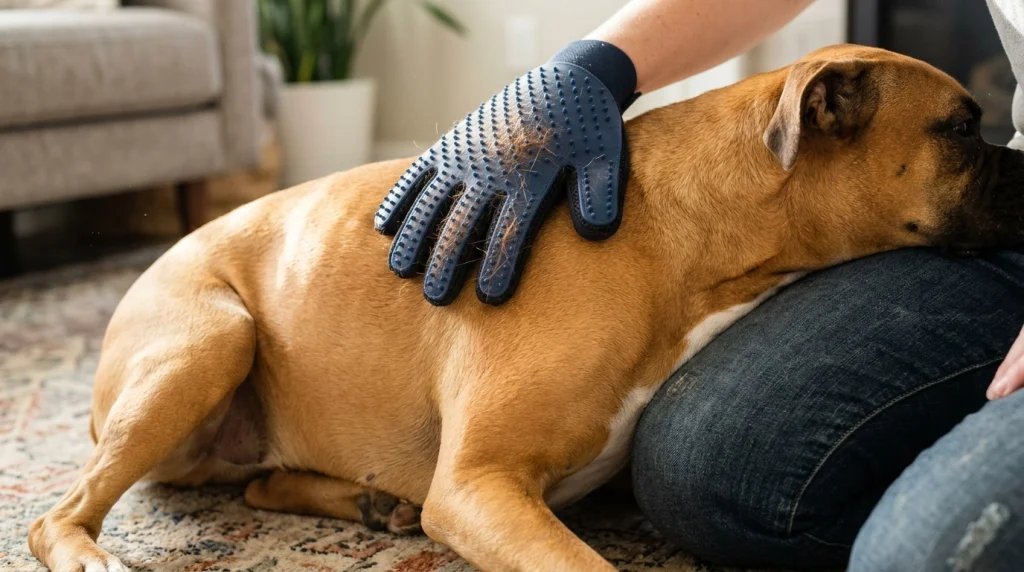
A grooming glove is an ergonomic slip-on mitt fitted with textured silicone or rubber nodules across the palm and fingers designed to trap loose dander and shedding fur. Unlike traditional rakes designed for thick undercoats, grooming mitts rely on friction and electrostatic grip to gather shed fur right at the skin line.
Short-coated breeds possess hair shafts that sit flat and close to the dermis. Because there is little undercoat depth to buffer contact, rigid steel pins on slicker brushes often rake across bony shoulders and hips.
The soft rubber construction acts as a flexible barrier that absorbs downward pressure. It contours across joints, rib cages, and tail bases without pinching or bruising.
- Elastic friction: Medical-grade rubber creates a static charge that pulls dislodged hairs outward.
- Direct tactile feedback: Your palm feels lumps, ticks, or dry patches immediately during a routine brushing session.
- Gentle touch: The broad surface spreads force evenly across sensitive skin surfaces.
My own Boxer used to bolt whenever she saw a metal slicker brush emerge from the closet. The first evening I switched to a silicone de-shedding mitt, she simply leaned her full weight against my legs and purred with contentment.
That immediate behavioral shift showed me how much mechanical discomfort standard brushes can cause on lean bodies. When grooming mirrors regular petting, compliance skyrockets.
Short Hair vs. Double Coats: Why Bristles and Slickers Fail
 Save
Short coats have distinct anatomical needs that determine which tools work safely. A single-coated Doberman or French Bulldog requires a completely different approach than a double-coated German Shepherd or Husky.
The veterinary specialists at the American Veterinary Medical Association note that maintaining a healthy dermal barrier is essential to prevent secondary bacterial infections. Scraping that outer surface with rigid wire pins causes micro-abrasions, redness, and follicle inflammation.
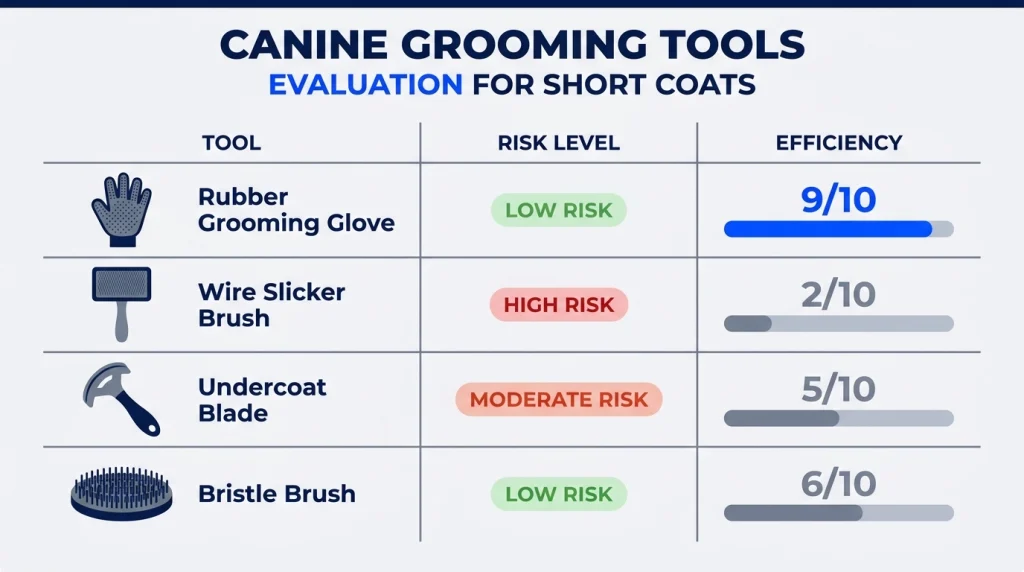
| Tool Type | Ideal Coat Texture | Skin Abrasion Risk | Short-Hair Efficiency |
|---|---|---|---|
| Rubber Grooming Glove | Smooth, short, and wire coats | Extremely Low | Excellent (9/10) |
| Wire Slicker Brush | Dense, long, curly, or heavy undercoats | High on thin skin | Poor (2/10) |
| Undercoat De-shedding Blade | Dense undercoats (Labs, Huskies) | Moderate to High | Fair (5/10) |
| Bristle Brush | All coats for finishing shine | Low | Moderate (6/10) |
Short hairs also dislodge differently than long strands. Long hairs tangle into clumps, whereas short hairs eject individually like tiny splinters.
Rigid brushes let these stiff hairs slip right between wide tines. Grooming mitts capture them across a dense grid of hundreds of individual rubber nips.
Can Grooming Gloves Damage a Short Dog’s Skin?
When used properly, grooming gloves cannot cut, pierce, or irritate healthy skin. Their broad surface distributing hand pressure prevents localized bruising or hot spots.
However, excessive rubbing in circular motions against the natural grain of the coat can provoke folliculitis. The American Kennel Club advises owners to always guide grooming strokes in the direction of natural hair growth to safeguard follicle health.
Friction burns are also possible if you scrub dry fur aggressively in one spot for several minutes. Keep your hand moving continuously along the body contours to distribute friction evenly.
- Stroke direction: Work from neck to tail, following the downward slope of the rib cage.
- Pressure level: Use the same moderate pressure you apply when petting your dog normally.
- Skin checks: Pause immediately if you notice localized pinkness on light-skinned or hairless bellies.
Dogs diagnosed with atopic dermatitis or active seasonal allergies require a gentle hand. The flexible nodules help remove surface allergens like pollen grains without aggravating sensitized skin.
Research published in the UC Davis School of Veterinary Medicine veterinary archives demonstrates that consistent removal of environmental contact allergens significantly reduces canine itch cycles. Grooming gloves excel at lifting these invisible irritants out of smooth coats after outdoor walks.
How to Use a De-Shedding Glove on Short Coats for Maximum Hair Removal
Achieving a clean peel of shed fur from a glove requires deliberate technique. Because short hairs lack the length to interlock naturally, they need extra static tension to bind together.
Follow these field-tested steps to pull maximum shed fur in minimal time:
- Prep the surface: Lightly mist the silicone tips with a spray bottle of water or leave-in conditioner to boost static capture.
- Broad sweep: Begin at the nape of the neck and pull long, continuous strokes toward the base of the spine.
- Target problem areas: Use individual gloved fingers to work gently around the armpits, chest, and hocks where loose fur collects.
- Reverse-roll the fur: Once a fine layer covers the palm, sweep your other hand firmly from wrist to fingertips to roll the hair into a neat, disposable ball.
Bathtime provides an ideal setting for grooming gloves. Slipping the mitts on while working canine shampoo through a wet coat lifts stubborn dirt directly from the skin level.
The textured surface lathers shampoo efficiently while dislodging hairs ready to shed during the rinse cycle. This prevents wet, stiff hairs from clogging your bathroom drain.
Explore our companion breakdown on the best dog grooming table setups to keep energetic dogs safely elevated during full wash sessions.
Which Short-Haired Breeds Benefit Most?
 Save
Every smooth-coated breed sheds differently based on follicle density and undercoat presence. The benefits of rubber mitts span both single-coated hounds and dense double-coated working breeds.
Here is how specific coat varieties respond to glove grooming:
- Smooth single coats (Boxers, Boston Terriers, Pit Bulls): These breeds have minimal natural padding over their ribs. Gloves protect sensitive skin while pulling fine, glossy hairs efficiently.
- Dense double coats (Pugs, Labradors, Beagles): These dogs drop surprising amounts of soft undercoat year-round. The rubber tips penetrate dense top layers to extract dead under-fuzz.
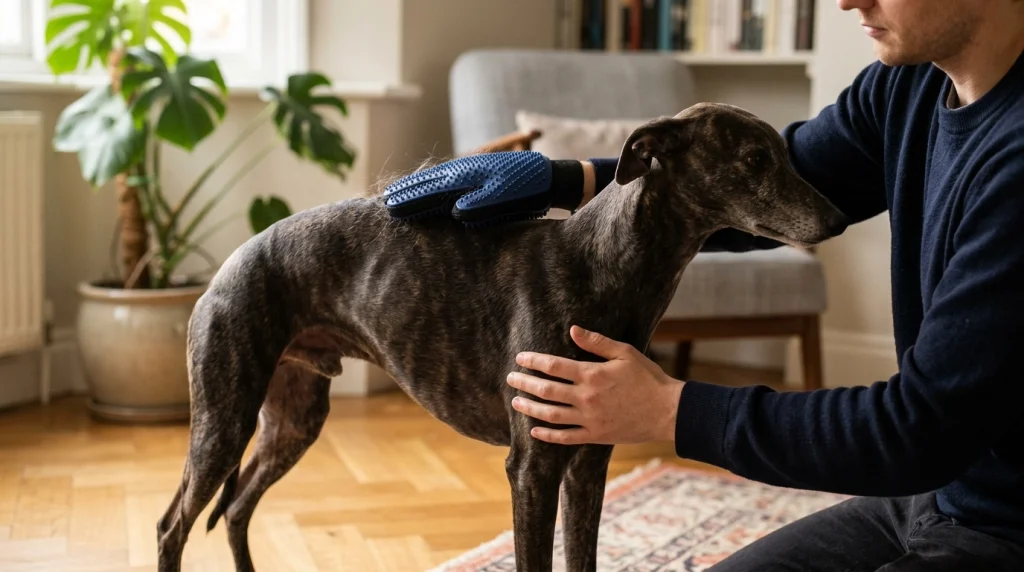
- Bony, thin-skinned sighthounds (Whippets, Greyhounds): Sighthounds have delicate skin and prominent bones. The flexibility of a wearable glove prevents painful impacts over protruding joints.
If your pet sheds constantly throughout the spring and autumn coat blow cycles, read our detailed guide to managing high-shed dog coats for full-season grooming strategies.
If you’re ready to pick one, here’s what I’d actually recommend based on real-world durability and grooming results:
🏆 BEST OVERALL
HandsOn Pet Grooming Gloves
★★★★★
Features durable hypoallergenic rubber nodules across all fingers and palms, secured by an adjustable wrist strap. This is my top pick because the molded nodules extend to the fingertips for precise work around ears and paws.
💰 BEST BUDGET PAIR
Delomo Pet Grooming Glove Pair
★★★★☆
Provides 255 silicone tips mounted on breathable mesh fabric with an elastic cuff closure. It offers outstanding value for daily maintenance, though the mesh backing takes longer to dry after bath sessions.
🛁 BEST FOR BATHING & SENSITIVE SKIN
Bodhi Dog Bath & De-shedding Mitt
★★★★☆
Built from thick natural rubber with extra-soft rounded conical tips designed for gentle lathering. It feels heavenly on ultra-thin coats, though it holds slightly less loose fur per pass than textured mitts.
Frequently Asked Questions
How often should you use grooming gloves on a short-haired dog?
Using a grooming glove two to three times a week keeps shedding under control. Each session only needs to last five to ten minutes. Daily use is entirely safe during heavy spring coat blows thanks to the gentle rubber tips.
Do grooming gloves work on wet dog fur?
Yes, grooming gloves work effectively during baths. The rubber nubs massage shampoo down to the dermis and lift loose hair before it washes down the drain. They rinse clean with warm running water immediately afterward.
How do you get stubborn short dog hair off the glove?
Lightly mist the rubber palm with water before brushing your pet. The moisture binds individual hair shafts together into a solid layer. You can then peel the hair off the silicone surface in one clean, easy sheet.
Can grooming gloves replace traditional de-shedding blades?
For smooth-coated breeds like Boxers, French Bulldogs, and Great Danes, grooming gloves replace blades completely. Thick double-coated breeds like Labradors may still need occasional deep undercoat raking during seasonal shedding peaks.
Keeping a short-coated dog sleek and shiny does not require a tackle box full of sharp metal tools. Grab a comfortable pair of silicone gloves, sit down on the living room rug, and turn your next de-shedding session into a relaxing bonding massage that leaves your furniture free of stiff needle hairs.

Thomas Cutter is a lifelong dog owner and the founder of FindOutAboutDogs.com. With over 10 years of hands-on experience owning multiple breeds, Thomas created this site to provide honest, research-based dog advice that real owners can actually trust.
