How Does a Dog Grooming Glove Work? A Complete Guide
Quick Answer
A dog grooming glove works by using flexible rubber or silicone tips to loosen and collect shedding hair as you pet your dog. Gentle friction lifts loose fur and surface debris while the glove follows your dog’s body contours. It’s particularly useful for short, smooth coats, although thicker coats may need additional tools. The VCA dog grooming guide explains why different coat types need different brushes.
How to Use a Dog Grooming Glove
- Choose a comfortable fit: Secure the glove around your wrist without restricting movement.
- Start with gentle strokes: Pet your dog in the direction of hair growth.
- Cover the coat: Work gradually across the back, sides, chest, and legs.
- Collect loose hair: Remove accumulated fur from the silicone tips.
- Finish and clean: Reward your dog, wash the glove if needed, and let it dry.
Important Safety Tips
- Use light pressure: Never scrub irritated skin or pull through tangled fur.
- Watch your dog: Stop if your dog shows discomfort, pain, or anxiety.
- Match the coat: Use a suitable comb or undercoat tool when a glove cannot reach deeper fur.
A dog grooming glove looks simple, but understanding how it works can make your grooming routine much easier. Instead of fighting with a traditional brush, you can remove loose hair through familiar petting motions.
I like the idea of making grooming feel less like a chore and more like everyday interaction. In this guide, I’ll explain the mechanism, proper technique, advantages, limitations, and ways to choose the right glove.


What Is a Dog Grooming Glove?
A dog grooming glove is a wearable grooming tool with flexible rubber or silicone projections covering its palm and sometimes its fingers. These projections help separate loose hair from the coat while you stroke your dog.
Unlike a conventional brush, the glove moves naturally with your hand. This flexibility makes it useful around curved areas such as the shoulders, chest, and legs.
Most grooming gloves have several recognizable components:
- Silicone or rubber tips: Flexible projections that loosen and collect shedding hair.
- Breathable fabric: Mesh or textile material that makes the glove more comfortable to wear.
- Adjustable wrist closure: Helps prevent slipping during grooming.
- Flexible fingers: Allow greater control around body contours.
- Washable materials: Make removing dirt, fur, and residue easier.
Some products come as a single glove, while others include a pair. Certain models also work during bathing, provided the manufacturer approves wet use.
How Does a Dog Grooming Glove Actually Work?
A dog grooming glove works through a combination of gentle friction, flexible projections, and hair collection. Its tips move through the outer coat and catch hairs that are already loose.
The process doesn’t require sharp teeth or aggressive pulling. Several small mechanical actions work together.
1. Rubber Tips Loosen Shedding Hair
When you move the glove across your dog’s coat, the rubber tips contact individual hairs. Their flexible surfaces help separate loose strands from surrounding fur.
Hair that is ready to shed can move away from the coat during these strokes. Healthy, firmly attached hair should not need forceful pulling.
2. Friction Collects Loose Fur
The textured surface creates enough friction to catch some loosened hairs. As more fur collects, it can form a visible layer over the glove.
This accumulated fur is often easier to peel away than individual hairs. Collection efficiency varies with the glove design, coat texture, and amount of shedding.
3. Flexible Materials Follow Body Contours
A rigid brush maintains its shape, but grooming gloves bend with your fingers. That flexibility helps maintain comfortable contact across uneven surfaces.
For example, you can gently stroke a dog’s shoulder or upper leg without positioning a large brush head. Keep pressure especially light around bony or sensitive areas.
4. Grooming Helps Maintain the Coat
Repeated gentle strokes can move natural skin oils along the hair shafts. This can help the coat look smoother while removing surface debris.
Regular grooming also creates opportunities to notice skin changes. The American Kennel Club’s shedding guidance explains how grooming tools help manage loose hair.
How Do You Use a Dog Grooming Glove Step by Step?
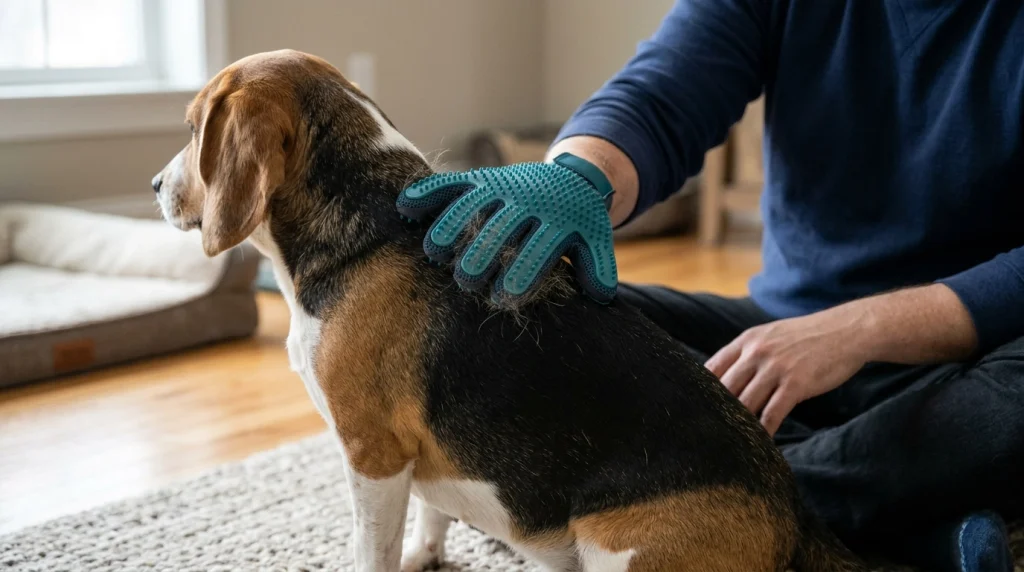 Save
Start with a calm dog, a suitable glove, and a comfortable grooming location. Short, positive sessions are better than forcing a nervous dog through a long brushing routine.
Step 1: Introduce the Glove Slowly
Let your dog see and investigate the glove before putting it to work. Offer praise or a small treat when your dog approaches calmly.
Next, touch the shoulder gently with the gloved hand. If your dog remains comfortable, begin with a few ordinary petting motions.
Step 2: Adjust the Fit
Put on the glove and secure its wrist strap. Your fingers should move freely without the glove sliding around.
A loose glove may fold or shift during grooming. An overly tight glove can reduce your control and comfort.
Step 3: Groom in the Direction of Hair Growth
Begin at the shoulders or back and move toward the tail. Use smooth strokes following the natural direction of the coat.
On some short-coated dogs, gentle circular motions can help loosen additional hair. Return to directional strokes afterward to collect it.
Step 4: Work Around the Body Carefully
Move gradually to the sides, chest, and upper legs. Avoid excessive pressure around the face, ears, belly, joints, and other sensitive areas.
Don’t force the glove through knots. Use an appropriate detangling tool or seek professional help for tight mats.
Step 5: Remove the Collected Hair
Check the rubber surface as fur accumulates. Peel away collected hair when enough has gathered to form a removable layer.
Some short hairs may remain between the tips. A gentle rinse can remove this residue after grooming.
Step 6: End on a Positive Note
Finish before your dog becomes restless or uncomfortable. Praise calm behavior and offer a reward your dog enjoys.
For a dog unfamiliar with grooming, even one or two comfortable minutes can be a useful starting point. Increase the duration gradually as the dog becomes more relaxed.
What Are the Benefits of Using a Dog Grooming Glove?
The biggest advantage is convenience. A grooming glove combines familiar handling with basic loose-hair removal.
- Loose-fur collection: Captures some shedding hair before it falls onto furniture or clothing.
- Gentle contact: Flexible tips can feel less intimidating than rigid grooming tools.
- Better hand control: Fingers can follow body curves more naturally.
- Coat maintenance: Helps remove surface debris and distribute natural oils.
- Bathing support: Wet-use models can spread dog shampoo through the coat.
- Simple cleanup: Collected hair can often be peeled from the rubber surface.
For dogs that dislike conventional brushes, the petting-style movement may improve acceptance. However, every dog responds differently, and gradual introduction still matters.
I consider grooming gloves most useful as maintenance tools rather than replacements for every brush. Their convenience is valuable, but coat requirements should determine your complete grooming routine.
Dog Grooming Glove vs. Traditional Dog Brush: Which Is Better?
Neither tool is universally better. A grooming glove excels at gentle surface grooming, while conventional brushes can offer deeper coat penetration or more effective detangling.
The right choice depends on your dog’s coat length, density, and grooming needs.
| Feature | Grooming Glove | Slicker Brush | Undercoat Rake |
|---|---|---|---|
| Primary purpose | Surface fur removal | Loose hair and minor tangles | Loose undercoat removal |
| Working surface | Flexible rubber or silicone | Fine metal pins | Longer-spaced teeth |
| Short smooth coats | Excellent everyday fit | Often unnecessary | Usually unnecessary |
| Thick double coats | Supplementary tool | Useful for outer coat | Useful for loose undercoat |
| Detangling | Poor | Good for minor tangles | Limited; design-dependent |
| Handling style | Petting motion | Controlled brushing | Careful undercoat strokes |
My recommendation: Choose a grooming glove for routine maintenance on short-coated dogs. Add a coat-appropriate brush or comb when your dog needs deeper grooming.
Do Dog Grooming Gloves Work on All Coat Types?
Grooming gloves can be used on many dogs, but their effectiveness varies significantly. Short, smooth coats usually provide the best match for the glove’s relatively shallow tips.
Short-Haired Dogs
Dogs such as Boxers, Beagles, and many short-coated terriers are strong candidates. Their loose hairs are generally easier for flexible rubber tips to reach.
A glove may provide much of the routine surface grooming these dogs need. Regular skin checks remain important.
Medium-Length Coats
Dogs with medium coats may benefit from a glove between more thorough brushing sessions. The glove can collect surface hair without deeply penetrating the coat.
Use a suitable brush or comb for deeper tangles and trapped loose hair. Don’t rely on the glove alone if the coat becomes compacted.
Long-Haired Dogs
Long-haired dogs often need tools designed to separate and detangle longer strands. A grooming glove generally cannot reach every hidden knot.
It may still be useful for a gentle finishing stroke. However, regular combing remains important for preventing mats.
Double-Coated Dogs
Dogs such as Huskies and German Shepherds have a protective outer coat and a denser undercoat. A grooming glove usually removes some surface shedding but may leave much of the loose undercoat behind.
Choose an appropriate undercoat tool for deeper grooming, using a gentle technique. Avoid aggressive raking that irritates the skin or damages healthy hair.
Can You Use a Dog Grooming Glove During Bath Time?
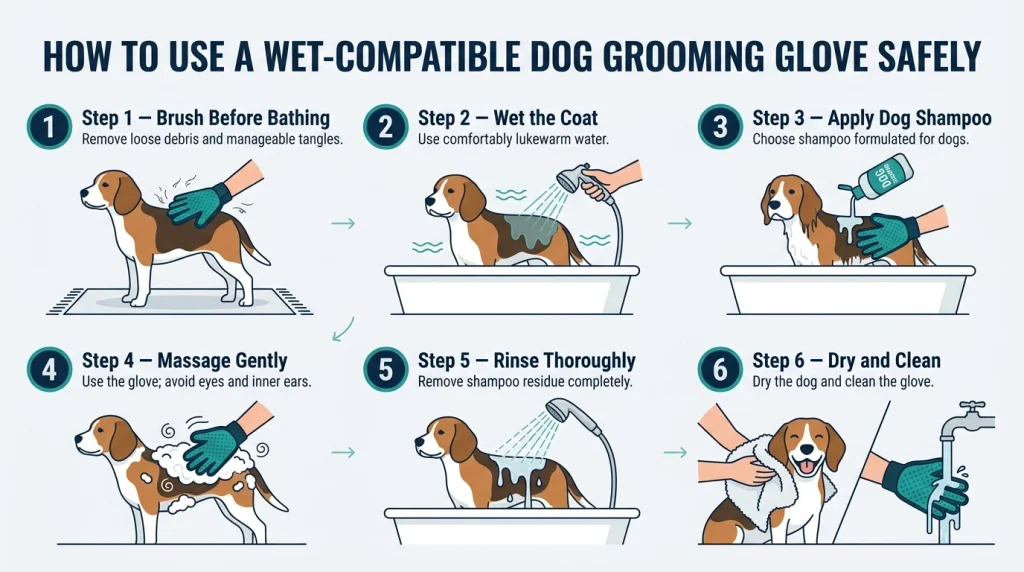 Save
Yes, provided your grooming glove is designed for wet use. Rubber or silicone tips can help spread dog shampoo and loosen surface dirt during bathing.
However, shampooing technique and thorough rinsing remain essential. The glove is an accessory rather than a replacement for proper bathing.
- Brush out loose debris and manageable tangles before bathing.
- Wet your dog using comfortably lukewarm water.
- Apply shampoo formulated specifically for dogs.
- Massage gently with the grooming glove, avoiding the eyes and inner ears.
- Rinse thoroughly until shampoo residue is removed.
- Dry your dog appropriately and clean the glove afterward.
The ASPCA’s dog grooming recommendations emphasize brushing before bathing and protecting sensitive areas. They also recommend using shampoos formulated for pets.
Remember that wet hair can tighten existing tangles. Remove manageable knots before bathing, and seek help for severe matting.
How Often Should You Use a Dog Grooming Glove?
Grooming frequency depends on coat type, shedding, skin condition, and tolerance. A glove doesn’t need to be used for a long session every day to provide value.
For many short-coated dogs, a few brief sessions per week provide a reasonable starting point. Some dogs benefit from more frequent grooming during heavy shedding.
- Short smooth coats: Start with one to three gentle sessions weekly, adjusting as needed.
- Seasonal heavy shedding: Consider more frequent short sessions if the skin remains comfortable.
- Long or curly coats: Follow a daily or regular detangling routine with appropriate brushes and combs.
- Dogs new to grooming: Begin with one or two minutes of positive handling.
- Sensitive or unhealthy skin: Ask a veterinarian before continuing routine grooming.
These are starting guidelines, not fixed veterinary schedules. Your veterinarian or professional groomer can recommend a routine for your dog’s individual coat.
What Mistakes Should You Avoid When Using a Grooming Glove?
Most problems come from excessive pressure, poor coat matching, or grooming for too long. Correcting these mistakes can improve comfort and effectiveness.
- Pressing too hard: Gentle friction should collect fur without scraping the skin.
- Rubbing irritated areas: Avoid wounds, inflamed patches, and painful skin.
- Ignoring mats: A glove cannot safely remove tight tangles or severe matting.
- Grooming against resistance: Stop when your dog pulls away, freezes, growls, or shows distress.
- Using the wrong tool: Thick undercoats and curly coats often need specialized brushes.
- Skipping cleaning: Remove accumulated fur and residue after every session.
Here’s an important example: a double-coated dog may look clean after glove grooming while loose undercoat remains trapped underneath. The visible surface doesn’t always reveal the coat’s full condition.
That’s why I recommend checking the coat with your fingers and an appropriate comb. Never assume a smooth-looking finish means deeper grooming is complete.
How Do You Clean and Maintain a Dog Grooming Glove?
Cleaning is usually straightforward because most grooming gloves have washable rubber surfaces. Always follow the instructions for your specific product.
- Peel off collected fur while the glove is dry, when possible.
- Remove remaining hair from between the rubber tips.
- Rinse the glove using lukewarm water if the manufacturer permits.
- Use mild soap when needed, then rinse thoroughly.
- Allow the glove to air-dry completely before storage.
Check the rubber tips and wrist fastening periodically for wear. Replace the glove if projections break, fabric tears, or damaged areas could scratch your dog.
When Is a Grooming Glove Not Enough?
A grooming glove cannot solve every shedding, skin, or coat problem. Its main role is to remove accessible loose hair and support regular maintenance.
Some conditions require different tools or professional attention.
- Severe matting: Tight mats may require professional removal.
- Heavy undercoat buildup: A suitable undercoat rake or comb may work more effectively.
- Curly coats: Slicker brushes and metal combs are often needed for detangling.
- Skin irritation: Redness, sores, or painful patches require caution and veterinary advice.
- Unusual hair loss: Bald patches or sudden changes in shedding deserve veterinary evaluation.
Never cut tight mats using household scissors. The skin can be hidden inside the tangled hair and injured accidentally.
For further safety guidance, read this veterinarian-reviewed guide to pet matting. It explains when professional grooming or veterinary treatment may be needed.
What Should You Look for When Buying a Dog Grooming Glove?
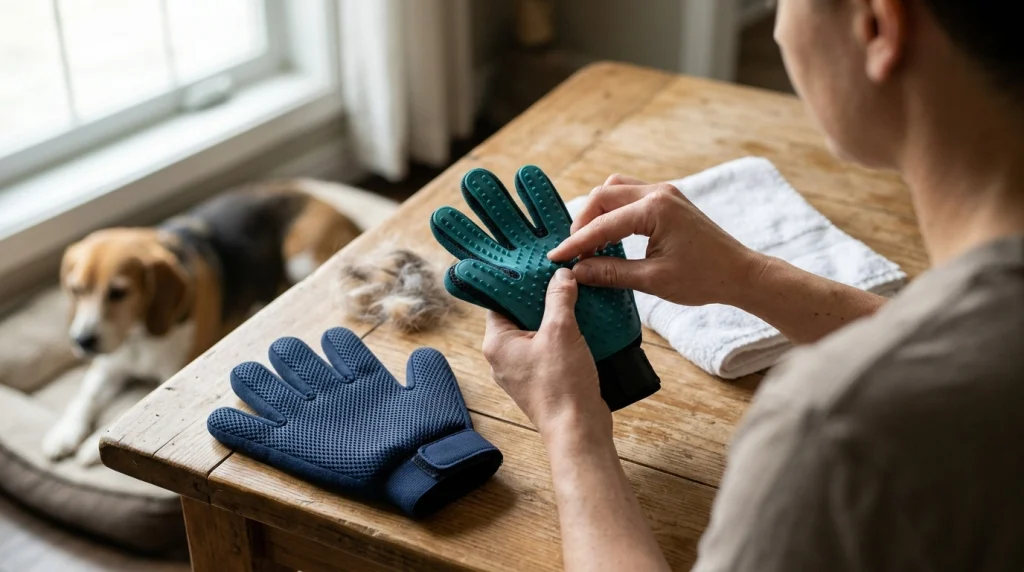 Save
Focus on the glove’s texture, fit, durability, and suitability for your dog. Extra features matter less than comfortable, controlled grooming.
- Flexible tips: Choose soft rubber or silicone projections without sharp edges.
- Secure sizing: Look for a wrist closure and finger fit that prevent slipping.
- Breathability: Mesh-backed designs can make longer sessions more comfortable.
- Cleaning convenience: Select materials that release trapped fur easily.
- Wet-use compatibility: Check whether the manufacturer approves bathing.
- Coat suitability: Prioritize the tool’s actual effectiveness for your dog’s coat.
I would prioritize a comfortable fit over a large number of silicone tips. Even a textured glove is inconvenient if it twists or slips with every stroke.
Recommended Dog Grooming Gloves
If you’re ready to choose a glove, these two products offer different advantages. Their recommendations are based on published design features and intended use, not claimed hands-on testing.
The star scores below are subjective editorial suitability assessments, not verified customer-review averages.
🏆 Best for Everyday Loose-Fur Removal
DELOMO Zoe Pet Grooming Gloves
★★★★½ 4.5/5 editorial fit
These gloves feature 255 soft silicone tips designed to collect loose fur while providing gentle contact. Their flexible design makes them an appealing option for routine surface grooming.
I’d consider this model first for a short-coated dog needing simple, regular maintenance. It isn’t intended to replace a proper detangling brush.
🚿 Best for Grooming and Bathing
HandsOn Animal Grooming Gloves
★★★★½ 4.5/5 editorial fit
HandsOn gloves use flexible rubber nodules across the fingers and palms. They’re designed for both wet and dry grooming, with multiple sizes available for improved fit.
I’d choose this pair when bathing convenience matters as much as shedding control. The fitted, two-handed design can make washing and handling grooming supplies more practical.
Affiliate disclosure: This article contains affiliate links. If you purchase through them, we may earn a commission at no additional cost to you. Product availability and prices may change.
Frequently Asked Questions
Do dog grooming gloves really remove shedding hair?
Yes. Dog grooming gloves remove accessible loose hair through flexible rubber tips and gentle friction. They’re particularly useful on short, smooth coats, but they cannot always reach the dense undercoat of double-coated breeds. Regular use can reduce loose fur around your home without stopping normal shedding.
Can a grooming glove replace a dog brush?
A grooming glove may handle much of the routine grooming needed by some short-coated dogs. However, it generally cannot replace slicker brushes, detangling combs, or undercoat tools for dogs with long, curly, thick, or easily matted coats. Choose tools according to coat requirements rather than convenience alone.
Are grooming gloves safe for puppies?
Soft grooming gloves can be suitable for puppies when used gently and introduced gradually. Begin with brief, positive contact and reward calm behavior. Avoid irritated skin, sensitive areas, and excessive pressure. If the puppy seems frightened or uncomfortable, stop and try a slower introduction.
Should I use a grooming glove on wet or dry fur?
Both methods can work if the glove’s manufacturer approves wet use. Dry grooming helps collect loose hair during routine maintenance, while wet grooming can distribute dog shampoo during bathing. Always remove significant tangles before washing and dry the glove properly afterward.
Can a grooming glove stop my dog from shedding?
No. Shedding is a normal biological process, and grooming gloves cannot stop hair growth cycles or prevent healthy dogs from shedding. They help collect loose hair before it spreads through your home. Sudden excessive shedding, bald patches, or irritated skin should be assessed by a veterinarian.
Final Thoughts: Is a Dog Grooming Glove Worth Using?
A dog grooming glove is a practical tool for removing loose surface hair through gentle, petting-like motions. It can make coat maintenance more convenient, especially for short-haired dogs and pets that dislike traditional brushes.
Its biggest limitation is shallow grooming depth. Thick undercoats, stubborn tangles, and severe mats usually require different equipment or professional attention.
My takeaway: Start with a soft, well-fitting glove, use gentle strokes, and watch how your dog responds. Pair it with the right coat-specific tools, and you’ll have a more comfortable, effective grooming routine.
Thomas Cutter is a lifelong dog owner and the founder of FindOutAboutDogs.com. With over 10 years of hands-on experience owning multiple breeds, Thomas created this site to provide honest, research-based dog advice that real owners can actually trust.
