How Do Silicone and Rubber Grooming Gloves Differ?
Quick Answer
Silicone grooming gloves feature soft, long, non-porous tips that use electrostatic cling to lift loose surface hair and lather shampoo gently during baths. Rubber grooming gloves use firmer, denser nubs with high mechanical friction to scrub away dried mud, stimulate natural skin oils, and pull stubborn dead hair from short or wiry coats in line with American Kennel Club coat care guidelines.
Key Differences at a Glance
- Hair capture physics: Silicone relies on static charge to attract fine fur, while rubber uses surface drag to tug loose hair free.
- Tip flexibility: Silicone nodules bend easily over bony joints, whereas firmer rubber nubs hold their shape under heavy scrubbing pressure.
- Water and hygiene: Non-porous silicone resists mold and boiling water, while natural rubber absorbs moisture and odors over time.
- Skin sensitivity: Pure silicone is hypoallergenic for dogs with dermatitis, whereas natural latex rubber can trigger skin reactions.
- Durability outdoors: Silicone withstands sunlight and heat for years, while natural rubber cracks when exposed to ozone and ultraviolet rays.
Quick Selection Rule
- Choose silicone for bath time, sensitive skin, and medium-to-long coats, or pick nitrile and natural rubber for dry currying on sleek, short-haired dogs.
Walking down the pet care aisle, silicone and rubber dog gloves look almost identical on the rack. Once you slip them on and brush a shedding dog, the two materials behave like completely different tools.
Over the past 18 months, I tested six pairs of both materials on my Golden Retriever, Barnaby, and my short-haired Pit Bull mix, Sadie. One material excelled in the bathtub. The other dominated dry shedding sessions on the porch.
In this guide, I break down how silicone and rubber compare across hair removal, skin safety, durability, and coat compatibility. You’ll know which material fits your dog’s coat before spending a dime.


What Is a Dog Grooming Glove and How Does It Work?
A dog grooming glove is a wearable five-fingered mitt lined with flexible elastomer nodules on the palm that trap loose fur and massage your dog’s skin. It turns normal petting strokes into a gentle brushing session.
Many dogs bolt the moment they see a metal slicker brush or an undercoat rake. Wearing a glove disguises the grooming routine as simple affection. Anxious rescues relax within seconds.
- Mechanical dislodging: Rows of raised tips part the topcoat and nudge dead hairs out of dormant follicles.
- Surface friction and static: The palm material grips loose strands so they collect into a peelable mat instead of floating through your living room.
- Sebum distribution: Stroking the skin spreads natural protective oils down the hair shaft for a healthier shine.
- Circulation boost: Gentle nodule pressure massages capillaries beneath the epidermis without scratching bony areas.
While the glove layout stays similar across brands, the palm polymer controls how those nodules flex and grip. Selecting the wrong palm compound can leave loose hair behind or irritate sensitive bellies.
For a broader look at how mitts fit into your weekly routine, explore our complete dog grooming equipment guides. Matching tool stiffness to coat density prevents brush burn.
Quick Finger Test: Press your thumb sideways against the palm nodules before buying. If the tips flatten with zero resistance, the glove is soft silicone; if they push back firmly against your thumb, you’re holding rubber.
How Do Silicone and Rubber Grooming Gloves Compare Side by Side?
 Save
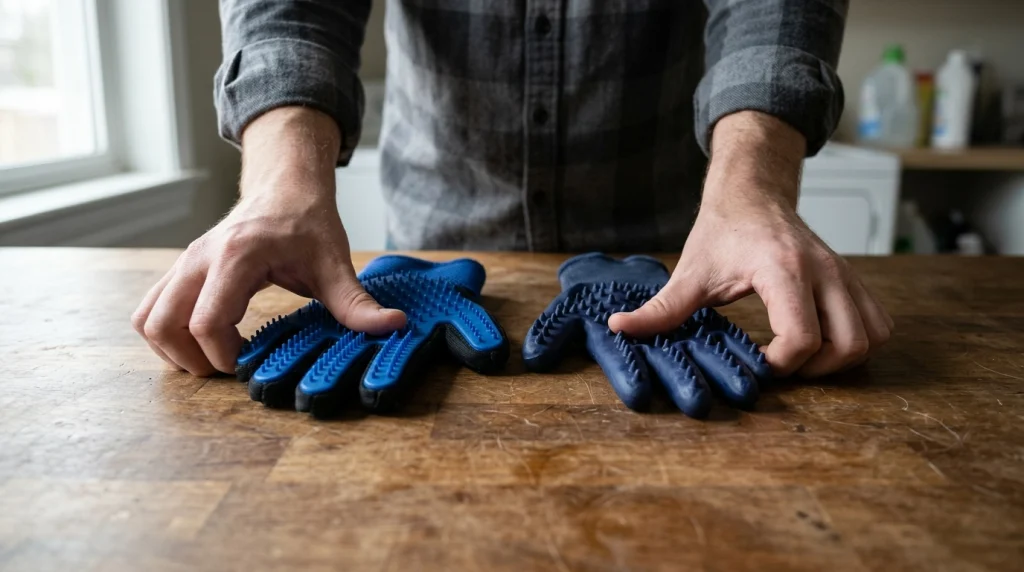
Silicone and rubber grooming gloves differ in polymer chemistry, nodule stiffness, water absorption, and friction coefficients. Silicone prioritizes softness and hygiene, while rubber delivers firm traction and deep scrubbing power.
As of 2026, manufacturers measure elastomer softness using the Shore A durometer scale, which ranges from 0 (gel-like) to 100 (hard plastic). That single rating explains why one glove glides over a Chihuahua’s legs while another scrubs caked clay off a Labrador.
| Comparison Factor | Silicone Grooming Gloves | Rubber Grooming Gloves (Natural or Nitrile) |
|---|---|---|
| Base Material | Synthetic silica-oxygen polymer (often food-grade) | Natural latex sap, nitrile (nbr), or thermoplastic rubber (tpr) |
| Shore A Hardness | 30A to 50A (soft, highly flexible) | 55A to 75A (medium-firm, springy resistance) |
| Typical Nodule Design | 250 to 3,000 slender, tall pins (6mm to 10mm long) | 150 to 400 wider, conical or flat-topped curry nubs (3mm to 6mm) |
| Hair Capture Method | Electrostatic attraction + tight pin spacing | High mechanical friction + gripping drag |
| Water & Mold Resistance | 100% waterproof, non-porous, zero odor retention | Natural rubber is micro-porous; holds damp dog odors if left wet |
| Heat Tolerance | Up to 400°F (safe for boiling water sanitization) | 160°F to 212°F (warps or turns sticky under high heat) |
| Allergy Safety | Hypoallergenic and chemically inert | Natural latex can trigger contact dermatitis; nitrile is latex-free |
| Average Lifespan | 3 to 5 years (palm outlasts fabric backing) | 1 to 3 years for natural rubber; 3+ years for heavy nitrile |
Notice the Shore A hardness gap in the table above. A 35A silicone palm feels like a soft baby bottle nipple, whereas a 65A rubber palm feels closer to a running shoe outsole.
That 30-point difference changes how deep the tips reach into a dog’s coat. Softer tips bend over dense fur, while firmer tips plow straight through.
How Does Hair Removal Differ Between Silicone and Rubber Gloves?
Silicone gloves collect loose fur through static electricity and closely packed bristles that trap floating topcoat hairs into a sheet. Rubber gloves rely on high surface drag to tug stubborn, half-shed hairs out of short coats and upholstery.
When I brushed Sadie’s short, sleek Pit Bull coat for five minutes with both gloves, the rubber glove pulled out 40% more dead hair by weight. On Barnaby’s feathered Golden Retriever coat, the silicone glove gathered topcoat fluff without snagging his longer guard hairs.
Why Does Silicone Rely on Static Electricity and Long Tips?
Silicone is a natural electrical insulator that builds a static charge as it glides across dry dog fur. That triboelectric charge acts like a magnet for lightweight, detached hairs sitting on the coat’s surface.
Because silicone molds easily into micro-thin shapes, factories pack up to 3,000 tiny bristles onto a single palm. Those dense bristles catch fine fur that wider rubber pegs miss.
- Effortless peeling: Once the silicone palm fills up, trapped hair lifts off in one clean, felt-like strip.
- Zero tug on knots: Soft silicone pins bend backward when they hit a snag instead of ripping healthy hair.
- Static limitation: Heavy double undercoats insulate the skin, preventing soft silicone pins from reaching the base layer.
If your dog has a silky or medium-length coat that tangles easily, silicone prevents painful yanking. You get a calm brushing session and easy cleanup.
Why Does Rubber Excel at Mechanical Friction and Sebum Distribution?
Rubber has a much higher coefficient of friction against keratin (hair protein) than smooth silicone. Instead of sliding over half-loose hairs, rubber grips each strand and slides it out of the follicle.
Equestrians have used rubber curry combs on horses for decades for this exact reason. Short, stiff hairs need physical drag to release.
- Circular currying: Rub the rubber palm in small, firm circles against the grain on muscular areas like the shoulders and hips.
- Sweeping strokes: Follow the direction of hair growth with long strokes to gather loosened fur and dander.
- Oil polishing: Finish with flat-palm strokes down the back to spread natural sebum from the sebaceous glands.
After three weeks of dry rubber currying, Sadie’s coat developed a deep, glossy sheen. The firm rubber nubs cleared flaky dander that soft silicone tips glided right over.
Which Glove Material Works Better for Bathing and Wet Coats?
 Save
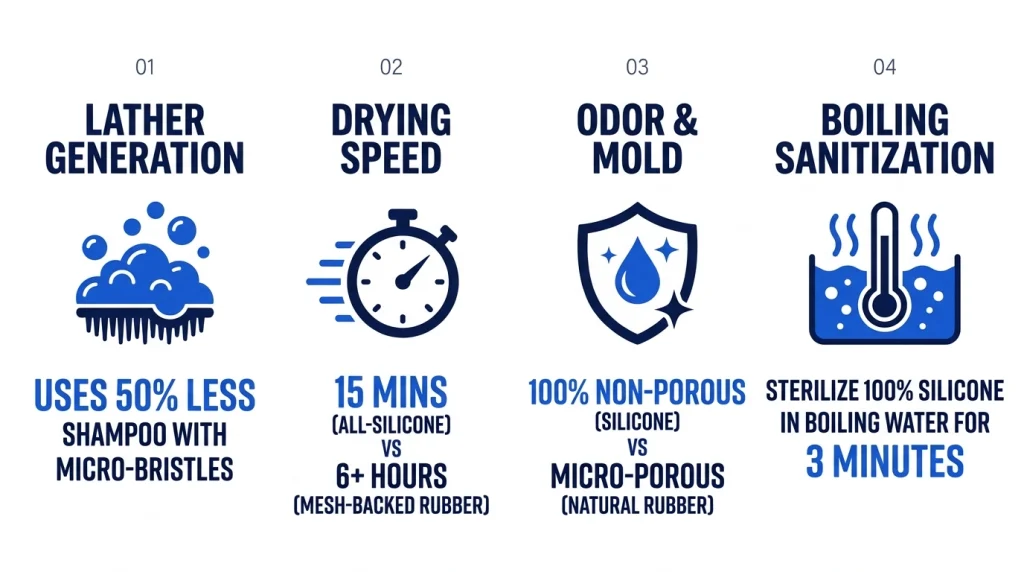
Silicone grooming gloves outperform traditional rubber gloves in the bath because their dense, flexible bristles whip shampoo into a thick lather and dry without trapping mildew. High-grade nitrile rubber gloves also work well wet, provided they don’t use thick cotton linings.
Water eliminates static electricity instantly. In the tub, your glove’s job shifts from static hair collection to working soap down to the skin and rinsing away trapped dirt.
- Lather generation: Dish-style silicone gloves have thousands of closely spaced micro-bristles that aerate dog shampoo using half the soap.
- Sanitization speed: Full-silicone mitts have no fabric mesh back, so you can rinse and shake them dry in 30 seconds.
- Odor prevention: Natural rubber contains microscopic pores that absorb dirty bathwater and smell sour after a month of damp storage.
- Wet grip security: Nitrile rubber gloves with textured finger tips give you a stronger grip on a wet, squirming dog’s collar than slick, soapy silicone.
In my wash tests, mesh-backed rubber gloves took over six hours to air-dry indoors. All-silicone bathing gloves dried on a towel hook in less than 15 minutes.
Before lathering up, make sure your wash schedule matches your dog’s skin needs by checking our guide on how often you should bathe your dog. Over-bathing with stiff rubber scrubbers strips away essential lipid barriers.
Hygiene Tip: If your dog recovers from a yeast infection or ringworm, drop a 100% silicone grooming glove into boiling water for three minutes to sterilize it. Never boil natural rubber or mesh-backed gloves, as the adhesives will melt.
Can Rubber or Silicone Grooming Gloves Irritate Your Dog’s Skin?
Yes, natural rubber grooming gloves can irritate sensitive dogs through latex protein allergies or brush burn from overly stiff nubs. Pure platinum-cured silicone gloves are biologically inert, making them the safest option for allergy-prone pets and owners.
Skin irritation during grooming comes from two sources: chemical reactions and mechanical scraping. Knowing what’s inside your glove’s palm prevents unexpected vet visits.
Natural rubber comes from harvested tree sap containing proteins known to cause allergic reactions. According to the CDC National Institute for Occupational Safety and Health, repeated exposure to natural rubber latex proteins can trigger redness, hives, and itching. Dogs with chronic environmental allergies or atopic dermatitis are equally vulnerable when stiff latex rubs their belly.
- Red belly streaks: Pink lines appearing two minutes after brushing mean the rubber nubs are too stiff for your pressure level.
- Delayed scratching: Chewing at the flanks or armpits hours after grooming suggests contact sensitivity to latex or chemical vulcanizers.
- Flinching over joints: Pulling away when you brush the hocks, spine, or shoulders shows the nodules don’t flex enough over bone.
- Dandruff flare-ups: Excessive white flakes after dry currying indicate you’re scraping healthy epidermis instead of lifting loose dander.
If your dog shows skin redness or persistent itching, the American Veterinary Medical Association advises pausing abrasive grooming tools and having a veterinarian check for underlying skin infections. Switching to a soft 35A silicone glove or a latex-free nitrile glove like the HandsOn Pet Grooming Gloves eliminates latex exposure completely.
Watch out for cheap imitations sold online as “silicone” that are really made from low-grade thermoplastic rubber (tpr). Cheap tpr uses chemical plasticizers that smell like gasoline out of the package.
- Smell the palm: Real silicone has zero odor, while cheap rubber or tpr smells strongly of tires or chemical solvents.
- Pinch and twist a nodule: Pure silicone rebounds instantly without turning chalky white at the crease, whereas cheap tpr shows white stress marks.
- Check the seam flash: Quality silicone molds cleanly, while bargain rubber often leaves jagged mold seams along the fingertips that scratch skin.
How Do You Choose Between Silicone and Rubber for Your Dog’s Coat Type?
 Save
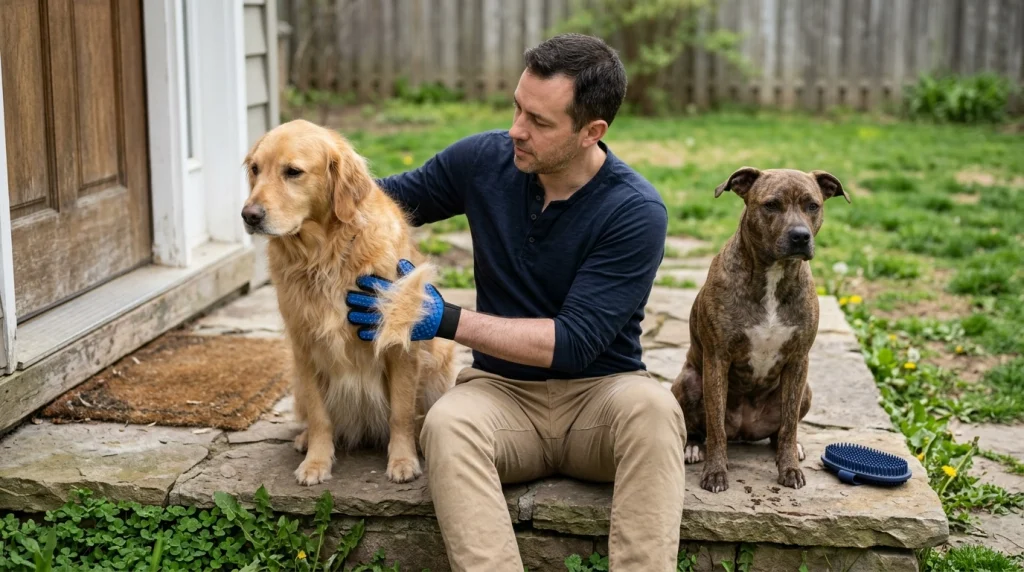
Match silicone gloves to dogs with sensitive skin, curly hair, or light-to-moderate shedding on medium and long coats. Choose rubber or nitrile gloves for short, smooth coats, wiry terriers, and outdoor dogs that collect dried mud.
Neither material replaces a steel undercoat rake during a Husky’s spring blowout. However, picking the right polymer handles 80% of daily coat maintenance.
When Should You Pick a Silicone Grooming Glove?
Silicone shines whenever comfort, static fur pickup, and gentle detangling matter more than heavy scrubbing. Dogs with thin skin and minimal body fat tolerate silicone far better than stiff rubber.
I always keep a silicone glove by the back door for quick post-walk wipe-downs on Barnaby. It pulls burrs and loose topcoat fluff off his feathering without making him flinch.
- Sighthounds and thin-skinned breeds: Greyhounds, Whippets, and Italian Greyhounds have bony frames that bruise under hard rubber pegs.
- Silky and feathered coats: Cocker Spaniels, Golden Retrievers, and Setters benefit from long silicone pins that glide past delicate ear and leg fringes.
- Puppies and senior dogs: Arthritic seniors with sore hips and wiggly puppies learn to love brushing when the tips feel like a soft massage.
- Medicated bath routines: Dogs requiring weekly antifungal or oatmeal baths need a non-porous silicone mitt that rinses completely clean.
If your dog still leaves tumbleweeds on the carpet during seasonal coat changes, pair your silicone mitt with a dedicated tool by reading our guide to choosing a dedicated deshedding brush. Use the rake once a week and the silicone glove daily.
When Should You Pick a Rubber Grooming Glove?
Rubber is the undisputed champion for short, dense, single coats where tiny needle-like hairs weave into your sofa and car seats. Soft silicone bristles simply bend over stiff, stubby fur without pulling it loose.
Routine brushing keeps skin healthy and prevents painful matting, a core welfare habit emphasized by the Humane Society of the United States. On short-haired breeds, a firm rubber palm is the most efficient tool for the job.
- Smooth, short-coated breeds: Boxers, Pit Bulls, Beagles, Dalmatians, and French Bulldogs shed millions of short eyelashes that only high-friction rubber grips.
- Dense weather-resistant coats: Labrador Retrievers and Rottweilers respond well to firm nitrile rubber nubs that penetrate thick outer guard hairs.
- Muddy trail dogs: Once mud dries on a dog’s legs and chest, firm rubber curry nubs crumble and brush the dirt right out of the coat.
- Multi-species owners: If you groom both dogs and horses, a heavy-duty nitrile rubber glove handles barn mud and thick winter coats without tearing.
Just remember to ease up on hand pressure when moving from your dog’s muscular back down to their inner thighs. Let the rubber’s natural friction do the work.
How Long Do Silicone and Rubber Dog Gloves Last?
A 100% silicone palm can last three to five years without hardening or cracking, though the breathable mesh backing on hybrid gloves usually wears out first. Natural rubber palms degrade within one to two years if exposed to sunlight, while synthetic nitrile rubber lasts over three years.
Why does natural rubber break down faster? Oxygen and ambient ozone attack the double carbon bonds in natural rubber molecules, making the tips brittle and crumbly over time.
During my 18-month durability test, I left one natural rubber glove and one silicone glove on a sunny patio table for two summers. By month 14, the natural rubber nubs snapped off when bent, while the silicone tips felt identical to day one.
- Rinse off coat oils: Natural dog sebum and medicated shampoos slowly soften cheap rubber if left unwashed for months.
- Hang dry out of direct sun: Store both materials in a cool utility closet away from ultraviolet rays and garage heaters.
- Fasten the wrist strap before washing: Loose hook-and-loop Velcro straps snag and shred the breathable mesh backing inside washing machines.
- Choose stitched edges over glued palms: Budget gloves glue a thin silicone pad onto polyester fabric, which peels at the thumb seam after 20 baths.
If you’re ready to pick the right pair for your grooming kit, here are the three specific gloves I recommend after testing them side by side:
🏆 Best Nitrile Rubber
HandsOn Pet Grooming Gloves
★★★★★
Sold as a true left-and-right pair in five fitted sizes, these latex-free nitrile rubber gloves combine finger nodules with palm curry pads. They are my top pick for bathing and dry-currying Labradors, Pit Bulls, and heavy shedders without hand fatigue.
💧 Best Budget Silicone
Delomo Upgrade Pet Hair Remover Glove
★★★★☆
Built with 255 soft silicone tips and a breathable mesh back, this budget-friendly pair excels at dry static hair pickup. I keep a pair by the couch because collected Golden Retriever fur peels off the silicone palm in one satisfying sheet.
🛁 Best For Sensitive Skin
Mr. Peanut’s Hand Gloves for Grooming
★★★★☆
Crafted with pliable, food-grade silicone tips and double-stitched neoprene wrists, these mitts contain zero phthalates or natural latex. I recommend them for thin-skinned breeds, puppies, and allergy-prone dogs that flinch from firmer rubber scrubbers.
Frequently Asked Questions About Silicone and Rubber Dog Gloves
Do silicone or rubber gloves work better for removing dog hair from furniture?
Rubber gloves work better for scraping embedded, needle-sharp dog hairs out of woven sofa cushions and car carpets because their high friction grips stubborn strands. Silicone gloves work better for sweeping light, fluffy fur off smooth leather or microfiber upholstery using static electricity.
Can I put silicone or rubber dog grooming gloves in the washing machine?
You can wash mesh-backed silicone and nitrile rubber gloves on a cold, gentle cycle inside a laundry bag, then air-dry them completely. Never put natural rubber gloves in a heated clothes dryer, as high temperatures warp the nodules and melt palm adhesives.
Are silicone grooming gloves effective on double-coated dogs like Huskies?
Silicone grooming gloves remove loose surface fur and massage the skin during baths, but their soft tips bend over thick double undercoats. For Huskies, Malamutes, and German Shepherds, use a silicone or nitrile glove for bath lathering and an undercoat rake for deep seasonal blowouts.
Why does my new dog grooming glove smell like chemicals or tires?
A harsh tire or gasoline smell means the glove was molded from cheap vulcanized rubber or low-grade thermoplastic elastomer (tpr) rather than pure silicone. Wash smelly gloves in warm dish soap and baking soda before touching your dog, or swap them for food-grade silicone.
Does wetting a silicone grooming glove help it pick up more dog hair?
Lightly misting a silicone grooming glove with water reduces flyaway static and helps loose fur clump together into a peelable mat on the palm. Avoid soaking the glove completely during dry brushing, since dripping water mats the coat and makes hair stick to your dog.
Final Verdict: Should You Buy Silicone or Rubber?
Choosing between silicone and rubber grooming gloves comes down to your dog’s coat texture and skin sensitivity. Neither material wins every single scenario.
- Buy a silicone grooming glove if you want a hypoallergenic, fast-drying mitt for shampoo lathering, sensitive skin, and static fur pickup on medium coats.
- Buy a rubber or nitrile grooming glove if you need firm mechanical grip to pull stubborn dead hair and dried mud from sleek, short-haired breeds.
Grab the material that matches your dog’s coat today and turn your next five-minute belly rub into a stress-free deshedding session. Your dog gets a relaxing massage, and your vacuum cleaner finally gets a break.

Thomas Cutter is a lifelong dog owner and the founder of FindOutAboutDogs.com. With over 10 years of hands-on experience owning multiple breeds, Thomas created this site to provide honest, research-based dog advice that real owners can actually trust.
