What Are Grooming Glove Bristles and Tips Designed For?
Quick Answer
Grooming glove bristles and tips are designed to lift loose fur, loosen surface dirt, massage a dog’s skin, and help spread shampoo during bathing. Their soft, flexible rubber or silicone nubs make grooming feel more like petting than brushing. They work especially well on smooth coats, but they cannot replace a detangling comb or undercoat rake; see this guide to brushes for short-haired dogs for complementary tools.
What the tips actually do
- Catch loose hair: Flexible nubs lift shedding strands from the outer coat.
- Loosen light dirt: Gentle friction shifts dust and surface debris.
- Massage gently: Rounded tips move across the skin without rigid metal teeth.
- Assist bathing: Wet-use gloves work shampoo through accessible coat layers.
- Build tolerance: A petting motion may feel less intimidating to brush-sensitive dogs.
Quick suitability check
- Check the coat: If you can feel tight knots or dense trapped undercoat, add a suitable comb or brush instead of pressing harder.
A grooming glove looks simple, but the shape of its little tips determines what it can do. I find it more useful to match those tips to a dog’s coat than to count how many the packaging promises.
Below, I’ll explain the design, the limits, and a gentle routine you can follow. You’ll also see how three real glove styles compare.


What Are Grooming Glove Bristles and Tips?
Grooming glove bristles are small projections attached to the palm or fingers of a wearable pet-grooming glove. Manufacturers also call them silicone tips, rubber nubs, teeth, or massage nodules.
Unlike a metal slicker brush, most grooming gloves use flexible, rounded contact points. The purpose is to create mild friction as you stroke your dog.
- Tips or nubs: The raised contact points that touch the fur.
- Base pad: The flexible surface holding those tips in place.
- Glove liner: The fabric or synthetic material that fits over your hand.
- Wrist closure: A strap or elastic cuff that keeps the glove secure.
Some designs cover only the palm. Others extend the textured surface along individual fingers for better control around the shoulders and legs.
For me, tip flexibility matters more than a dramatic bristle count. A glove must grip loose hair while moving comfortably over the dog’s body.
What Are the Main Purposes of Grooming Glove Tips?
These tips are multipurpose grooming surfaces, not miniature blades. Their strongest jobs are collecting loose surface hair, loosening debris, and making light coat care comfortable.
1. Removing Loose Fur Before It Falls Around the Home
When flexible nubs pass through a coat, they catch some already-loose hairs and bring them toward the surface. You can then peel the hair away or rinse it off the glove.
This is useful for smooth-coated breeds, including Boxers and Beagles. A thick double coat usually needs an additional tool to reach trapped undercoat.
- Use long, light strokes in the direction of hair growth.
- Collect lifted fur after a few passes rather than rubbing repeatedly.
- During heavier shedding, pair the glove with an appropriate dog shedding brush.
2. Loosening Surface Dirt and Dander
The tips gently disturb dust, dry debris, and loose skin flakes sitting near the coat surface. This can improve a routine brush-out, particularly after a walk.
A glove is not a treatment for dandruff or skin disease. Persistent flaking, itching, redness, or bald spots call for veterinary advice.
3. Providing a Gentle Massage
Rounded tips apply light, distributed pressure as your hand moves. Many dogs seem to prefer that familiar stroking action to a stiff grooming brush.
I would never judge a glove by how deeply it presses into the skin. A relaxed dog and easy, smooth movement are much better signs.
- Good response: Relaxed posture, normal breathing, and choosing to stay nearby.
- Warning response: Flinching, skin twitching, moving away, freezing, or growling.
- Correct action: Reduce pressure or stop, especially around sore or thinly coated areas.
4. Helping Shampoo Reach the Coat During Baths
Many grooming gloves also work on wet fur. Their raised tips help move diluted, dog-safe shampoo across the coat while you gently scrub.
They can make a bath easier, but don’t mistake extra foam for a deeper clean. Rinse thoroughly and follow the shampoo’s instructions.
How Do Tip Shape, Length, and Material Change Performance?
 Save
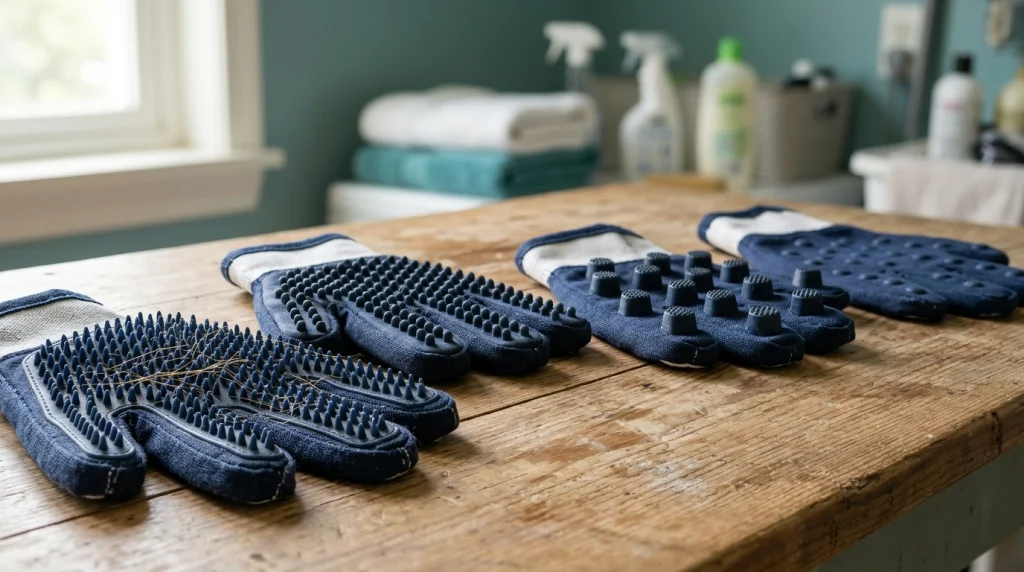
Not all grooming gloves behave alike. A broad rounded nub and a slim flexible tip contact hair differently, even when both are made from silicone.
The comparisons below describe typical designs rather than universal rules. Actual firmness and shape vary by manufacturer.
| Tip style | Best use | Main limitation |
|---|---|---|
| Short, rounded rubber nubs | Short coats, gentle massage | Limited reach through dense fur |
| Numerous flexible silicone tips | Collecting loose topcoat hair | Cannot remove tight mats |
| Firm, spaced scrubbing nodules | Wet grooming and muddy coats | May feel too strong with pressure |
| Soft, low-profile silicone knobs | Light grooming and handling | Less effective for heavy shedding |
Silicone vs. Rubber: Is One Better?
Both materials can flex, create friction, and offer rounded contact points. Quality depends on the actual formulation, tip geometry, and whether edges feel smooth.
Don’t assume all rubber gloves are softer or all silicone gloves are stronger. Check the specific glove, especially if your dog dislikes pressure.
Does a Higher Tip Count Remove More Hair?
No fixed tip count guarantees better grooming. More contact points may cover a wider area, but they still need the right flexibility and spacing.
For example, DELOMO advertises 255 soft silicone tips on its Zoe gloves. That is a genuine model feature, not proof it outperforms every glove with fewer tips.
Which Dog Coat Types Benefit Most From Grooming Gloves?
Grooming gloves generally perform best on short, smooth coats. Long, curly, and dense coats often need combs or brushes that reach beyond the surface.
This matches the VCA Animal Hospitals coat-care guidance, which recommends flexible gloves or short-bristled brushes for smooth-coated dogs.
| Coat type | Glove’s role | Add another tool? |
|---|---|---|
| Short and smooth, such as Boxer | Primary light grooming tool | Sometimes a soft bristle brush |
| Short, dense double coat, such as Labrador | Surface cleanup and bathing | Usually an undercoat tool |
| Long, silky coat, such as Yorkshire Terrier | Finishing and gentle contact | Yes, a suitable comb and brush |
| Curly coat, such as Poodle | Optional surface massage | Yes, a slicker and comb |
A glove may collect visible hair from a Labrador and still leave loose undercoat behind. For thicker coats, consult this guide to undercoat brushes before choosing your complete routine.
Can Grooming Gloves Remove Mats and Tangles?
No, grooming gloves are not effective dematting tools. Their rounded, flexible tips lack the reach and separation needed for tight knots near the skin.
Pressing harder can pull hair and irritate skin without freeing a mat. A glove should never become a substitute for safe detangling.
- Loose surface hair: A grooming glove can help.
- Small, accessible tangles: Use an appropriate comb or brush with care.
- Tight or painful mats: Seek a trained groomer or veterinarian.
- Red or broken skin: Stop grooming that area and seek veterinary guidance.
The RSPCA’s dog grooming advice also cautions that massage mitts usually cannot remove knots and mats on their own.
How Should You Use Grooming Gloves Safely?
 Save
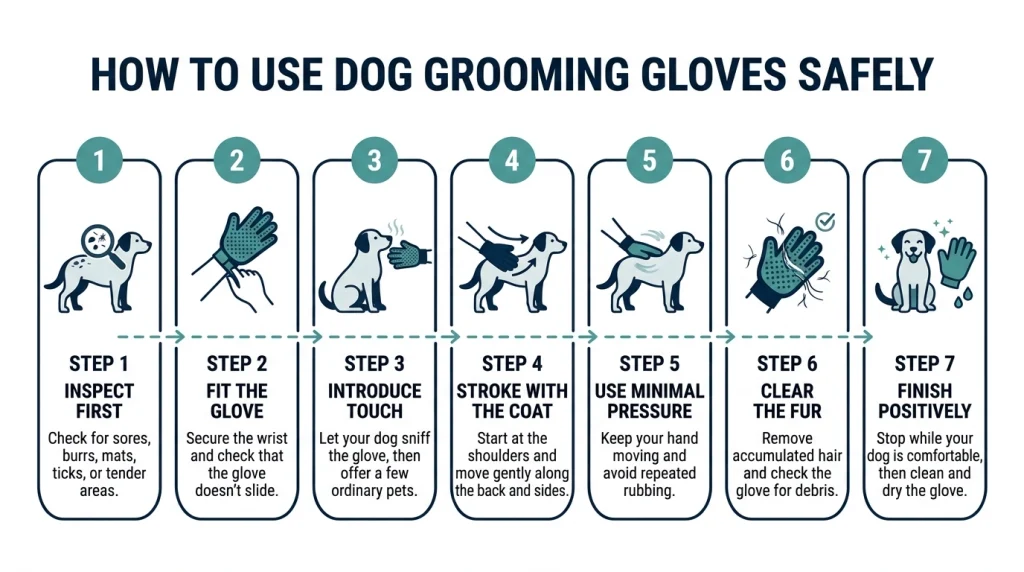
Start on a comfortable, dry coat and use light, even strokes. A short, calm session is more helpful than prolonged scrubbing.
- Inspect first. Check for sores, burrs, mats, ticks, or tender areas.
- Fit the glove. Secure the wrist and make sure the palm doesn’t slide.
- Introduce touch. Let your dog sniff the glove, then offer a few ordinary pets.
- Stroke with the coat. Start at the shoulders and move gently along the back and sides.
- Use minimal pressure. Keep your hand moving and avoid rubbing one place repeatedly.
- Clear the fur. Remove accumulated hair and check the glove for debris.
- Finish positively. Stop while your dog remains comfortable, then clean and dry the glove.
Be especially careful near ears, eyes, joints, and areas with little fur. The glove does not make those sensitive spots immune to irritation.
If your dog resists, don’t restrain them just to finish the job. Try a shorter session or ask a veterinary professional about discomfort.
How Do You Use the Tips During Bath Time?
First, confirm the manufacturer allows wet use. Then wet the coat, apply a dog-safe shampoo as directed, and gently move the tips over the body.
- Use small motions on the body, without aggressive scrubbing.
- Avoid eyes, ear canals, and broken skin.
- Rinse until no shampoo residue remains.
- Wash the glove afterward and dry it according to its care instructions.
The ASPCA grooming guide explains why regular brushing and coat-specific techniques matter. Bathing should support that routine, not replace it.
What Mistakes Make Grooming Glove Tips Less Effective?
Most problems come from expecting a soft glove to do the work of several specialized tools. A better result often comes from changing technique, not buying a rougher glove.
- Pressing too hard: Raises the risk of soreness and skin irritation.
- Scrubbing a mat: Tightens discomfort without separating tangled hair.
- Ignoring coat depth: Leaves buried undercoat untouched.
- Using a loose fit: Makes controlled strokes harder.
- Skipping cleaning: Allows old hair and debris to build up between tips.
- Expecting zero shedding: Loose-hair removal reduces mess; it does not stop normal hair growth cycles.
Here’s a simple example: a short-haired dog may look smoother after a two-minute glove session. A curly-coated dog might look equally smooth while still hiding knots beneath the surface.
That’s why I focus on what the tool reaches, not just what the coat looks like afterward. For delicate coats, compare approaches in this soft-fur brush guide.
What Should You Check When Buying a Grooming Glove?
 Save
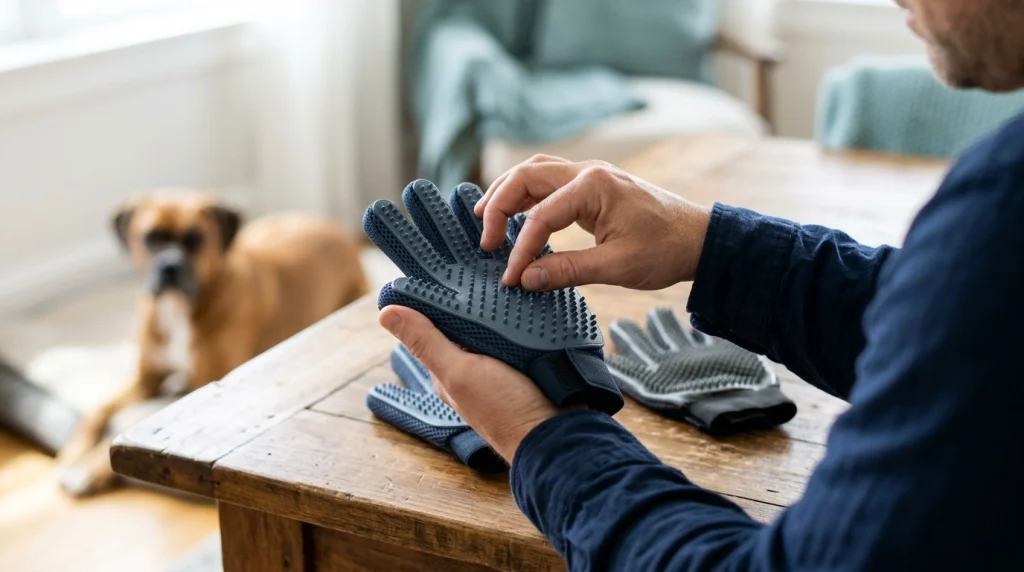
A useful glove should fit your hand and suit your dog’s coat. Features that seem impressive online matter less than comfortable contact and easy cleanup.
- Rounded ends: Tips should feel smooth, without sharp seams.
- Flexible texture: Enough give to follow body contours.
- Appropriate tip layout: Short coats often suit broad, soft contact points.
- Secure sizing: A glove that twists can snag or slip.
- Wet-use rating: Confirm bath compatibility before adding shampoo.
- Care instructions: Check whether hand washing or machine washing is permitted.
As of 2026, manufacturers still use different names for similar tip designs. Read the actual product description rather than assuming every “deshedding glove” reaches the undercoat.
Grooming Gloves Worth Comparing
If you’re shopping for one, these three models illustrate different design priorities. The star displays below are editorial feature-fit estimates, not customer ratings or hands-on test results.
🏆 Best for wet-and-dry grooming
HandsOn Animal Gloves
★★★★☆ 4.6/5 feature fit
Textured nodules cover the palms and fingers, and the maker specifies wet or dry use. I’d prioritize this design for an owner who wants one tool for daily stroking and baths, while checking fit carefully.
💰 Best for flexible tip coverage
DELOMO Zoe Pet Grooming Gloves
★★★★☆ 4.4/5 feature fit
DELOMO lists 255 soft silicone tips designed to lift loose fur during petting motions. I’d shortlist this for light maintenance on an accessible coat, not as a replacement for a rake.
🛡️ Best for added hand and arm coverage
PetFusion Multipurpose Grooming Glove
★★★★☆ 4.1/5 feature fit
Soft silicone knobs combine with extended hand-and-arm coverage, according to Petmate. I’d consider this for gentle handling and light grooming, not for aggressive deshedding or bite protection.
Affiliate disclosure: As an Amazon Associate, this site may earn from qualifying purchases. Product features and availability should be checked on the retailer page before ordering.
Frequently Asked Questions
Do grooming glove tips hurt dogs?
Soft, rounded tips are intended for gentle contact, but any grooming tool can cause discomfort when used too firmly. Apply light pressure, avoid sores or sensitive skin, and watch your dog’s reaction. Stop if your dog flinches, pulls away, or shows signs of pain.
Are silicone tips better than metal bristles for shedding?
Silicone tips are often more comfortable for short, smooth coats and relaxed daily grooming. Metal slicker pins or specialized undercoat tools serve different purposes, such as reaching thick fur and light tangles. Neither material is universally better; the right choice depends on coat structure and technique.
Can I use a grooming glove on a puppy?
Many puppies can be introduced to soft grooming gloves through brief, gentle petting sessions. Choose a smooth, flexible design and avoid sensitive areas. Keep sessions positive, allow the puppy to move away, and ask your veterinarian if there is skin irritation or unusual sensitivity.
How often should I use a dog grooming glove?
Frequency depends on the dog’s coat, shedding level, and comfort. Short, smooth coats often need only light weekly grooming, while some shedding dogs benefit from more frequent sessions. Gentle contact can be frequent, but repeated rubbing should never leave skin pink or sore.
Why does my glove collect little fur?
Your dog may not be shedding much, the tips may be too short for the coat, or loose hair may sit deeper in the undercoat. Check the fit and use gentle strokes. If thick fur is the issue, choose an appropriate brush rather than pressing harder.
The Takeaway: Let the Tips Do Their Intended Job
Grooming glove bristles and tips are best understood as gentle surface-grooming tools. They remove some loose hair, shift dirt, assist bathing, and make routine coat care feel more like touch.
Choose rounded tips and a comfortable fit, then match the glove to your dog’s actual coat. If you discover knots, skin problems, or a dense undercoat, add the right tool or seek professional help instead of scrubbing harder.

Thomas Cutter is a lifelong dog owner and the founder of FindOutAboutDogs.com. With over 10 years of hands-on experience owning multiple breeds, Thomas created this site to provide honest, research-based dog advice that real owners can actually trust.
