Best 10 Dog Breeds for Boats (Ranked & Reviewed)
Quick Answer
The best dog breeds for boats are Labrador Retrievers, Portuguese Water Dogs, Newfoundlands, Golden Retrievers, Chesapeake Bay Retrievers, Standard Poodles, Nova Scotia Duck Tolling Retrievers, American Water Spaniels, Boykin Spaniels, and Schipperkes. These breeds share webbed feet, water-resistant coats, and calm, agile temperaments. Your best pick depends on boat size, climate, and how much grooming you want to do.
Choosing a boat dog comes down to:
- Boat size — small boats need small, low dogs with good balance
- Coat type — water-resistant coats dry fast and resist “wet dog” smell
- Temperament — calm, biddable dogs handle tight spaces better
Before you pick a breed:
- Test your dog's swimming before any open water trip
- Always fit your dog with a canine life jacket
- Pick a size that matches your boat’s deck space
The dock creaks under your feet. Your dog paces at the edge, tail low, unsure about the gap between the pier and the deck. You’ve seen it before — a great dog on land who turns into a nervous wreck the moment the boat starts moving.
I’m a longtime dog researcher and boat owner, and I’ve spent years watching which breeds settle into boat life fast and which ones fight it every trip. Some dogs were built for this. Others were built for the couch.
This guide covers the 10 dog breeds that handle boats best, why each one works, and how to match a breed to your exact setup — kayak, sailboat, or cabin cruiser. By the end, you’ll know exactly which breed fits your life on the water.
- Water-bred dogs like Labs and Portuguese Water Dogs handle boats best.
- Boat size matters as much as breed — small boats need compact dogs.
- A canine life jacket is non-negotiable, even for strong swimmers.
- Coat type affects both comfort and cleanup after every swim.
- Temperament beats size — a calm big dog beats a jumpy small one.


What Makes a Dog Breed Good for Boats?
A good boat dog is calm, agile, and comfortable in water. The best boat dogs come from working “water dog” lines, bred over centuries to swim, retrieve, and stay steady on unstable footing. They typically have webbed feet, oily or curly coats that shed water fast, and a low-key temperament that doesn’t panic when the deck tilts.
Size matters too, but it’s secondary. A 90-pound Newfoundland can be a perfect fit on a large yacht, while the same dog would be a poor match for a 16-foot bass boat. What matters most is whether the dog was bred to work near water and how well it’s been trained to stay calm in a moving space.
You might be thinking any dog can learn to love a boat with enough exposure. That’s partly true — but breeds without a swimming background often need far more training, and some never fully relax on open water.
So what does that mean for you? If you’re boating with kids or guests aboard, pick a breed that’s naturally steady. If you’re a solo sailor with a small cockpit, prioritize a compact size over raw water skill.
The 10 Best Dog Breeds for Boats — Ranked and Reviewed
Here’s the full list, starting with the most popular all-around choice and moving through breeds suited for smaller boats, colder water, and specific lifestyles.
1. Labrador Retriever — “The Original First Mate”
 Save
Save| Weight | 55 to 80 lbs |
| Height | 21 to 24 inches |
| Lifespan | 10 to 12 years |
| Energy Level | High |
| Grooming Need | Low to moderate |
| Shedding | Heavy, twice yearly |
The Labrador Retriever is America’s most popular breed and a natural boat dog, built to retrieve waterfowl from cold rivers. Labs weigh 55 to 80 lbs and have webbed toes, an otter-like tail, and a waterproof double coat. Friendly and eager to please, Labs suit families, first-time boaters, and anyone who wants a steady, water-loving companion.
Their coat sheds water on contact, so a Lab rarely stays soaked or cold after a swim. Their thick “otter tail” doubles as a rudder in open water.
You’d expect a Lab to enjoy swimming. What you might not know is Labs will happily jump off a moving boat to retrieve a thrown toy, then wait patiently to be pulled back aboard.
Boat owners often describe their Labs as the crew member who never complains — happy to nap on deck for hours, then just as happy to leap in after a fish that got away.
- Excellent swimmer with a waterproof coat
- Calm, steady temperament around guests
- Easy to train for boat commands
- Too large for very small boats
- Heavy shedder twice a year
- Needs daily exercise beyond the boat
Best for: Families · First-time boaters · Mid-size to large boats
2. Portuguese Water Dog — “The Fisherman’s Original Deckhand”
| Weight | 35 to 60 lbs |
| Height | 17 to 23 inches |
| Lifespan | 11 to 14 years |
| Energy Level | Very high |
| Grooming Need | High |
| Shedding | Very low |
The Portuguese Water Dog was bred in Portugal to herd fish into nets and carry messages between boats. Weighing 35 to 60 lbs, this medium-sized, curly-coated breed is athletic, intelligent, and nearly non-shedding. It suits boaters who want a hardworking swimmer without hair floating around the cabin.
Its dense, curly coat sheds water the way a wetsuit does. Underneath the curls sits a lean, muscular build made for hours of swimming.
You’d expect any water breed to enjoy a swim. The surprising part is how this breed reads hand signals underwater almost like a search-and-rescue dog, a skill it still uses in real water rescue training today.
- Low-shedding, cabin-friendly coat
- Built for hours of swimming
- Compact size fits mid-size boats
- Needs brushing several times a week
- Very high energy, gets bored fast
- Can be pricey and hard to find
Best for: Sailors with allergies · Active boaters · Mid-size sailboats
3. Newfoundland — “The Gentle Giant of the Deck”
| Weight | 100 to 150 lbs |
| Height | 26 to 28 inches |
| Lifespan | 9 to 10 years |
| Energy Level | Low to moderate |
| Grooming Need | High |
| Shedding | Heavy |
The Newfoundland is a giant working breed developed to pull fishing nets and rescue people from icy Canadian waters. Weighing up to 150 lbs, it has webbed feet, a water-resistant double coat, and calm, patient nature. This breed fits large yachts and families who want a watchful, gentle presence on board.
Its huge lung capacity and paddle-like paws let it swim for long distances without tiring. Despite its size, the Newfoundland moves carefully around people.
Most people expect a giant breed to be clumsy on a boat. The surprise is how gently a Newfoundland moves around children and smaller pets, almost as if it senses its own size.
- Powerful, long-distance swimmer
- Calm around kids and guests
- Trained for real water rescue work
- Too large for small or mid-size boats
- Drools heavily, especially near water
- Struggles in hot climates
Best for: Large yacht owners · Cold-water boaters · Families wanting a calm giant
4. Golden Retriever — “The Crowd-Pleaser on Deck”
| Weight | 55 to 75 lbs |
| Height | 21 to 24 inches |
| Lifespan | 10 to 12 years |
| Energy Level | High |
| Grooming Need | Moderate to high |
| Shedding | Heavy, year-round |
The Golden Retriever was bred to retrieve waterfowl from Scottish lochs and takes naturally to boats. Weighing 55 to 75 lbs, it has a water-repellent double coat and a famously friendly, easygoing temperament. Goldens suit family boaters who want a social, low-drama dog that gets along with every guest aboard.
Their feathered coat sheds water quickly, though the long fur on the legs and tail needs regular rinsing after saltwater trips.
Most owners expect a Golden to love swimming. What surprises many is how hard it can be to get a Golden out of the water once it starts playing fetch off the swim platform.
- Extremely friendly with strangers and pets
- Strong, confident swimmer
- Easy to train for boat routines
- Sheds heavily on deck and cushions
- Feathered coat tangles after saltwater
- Too big for kayaks or canoes
Best for: Families with guests · Pontoon and cruiser owners · Social boating groups
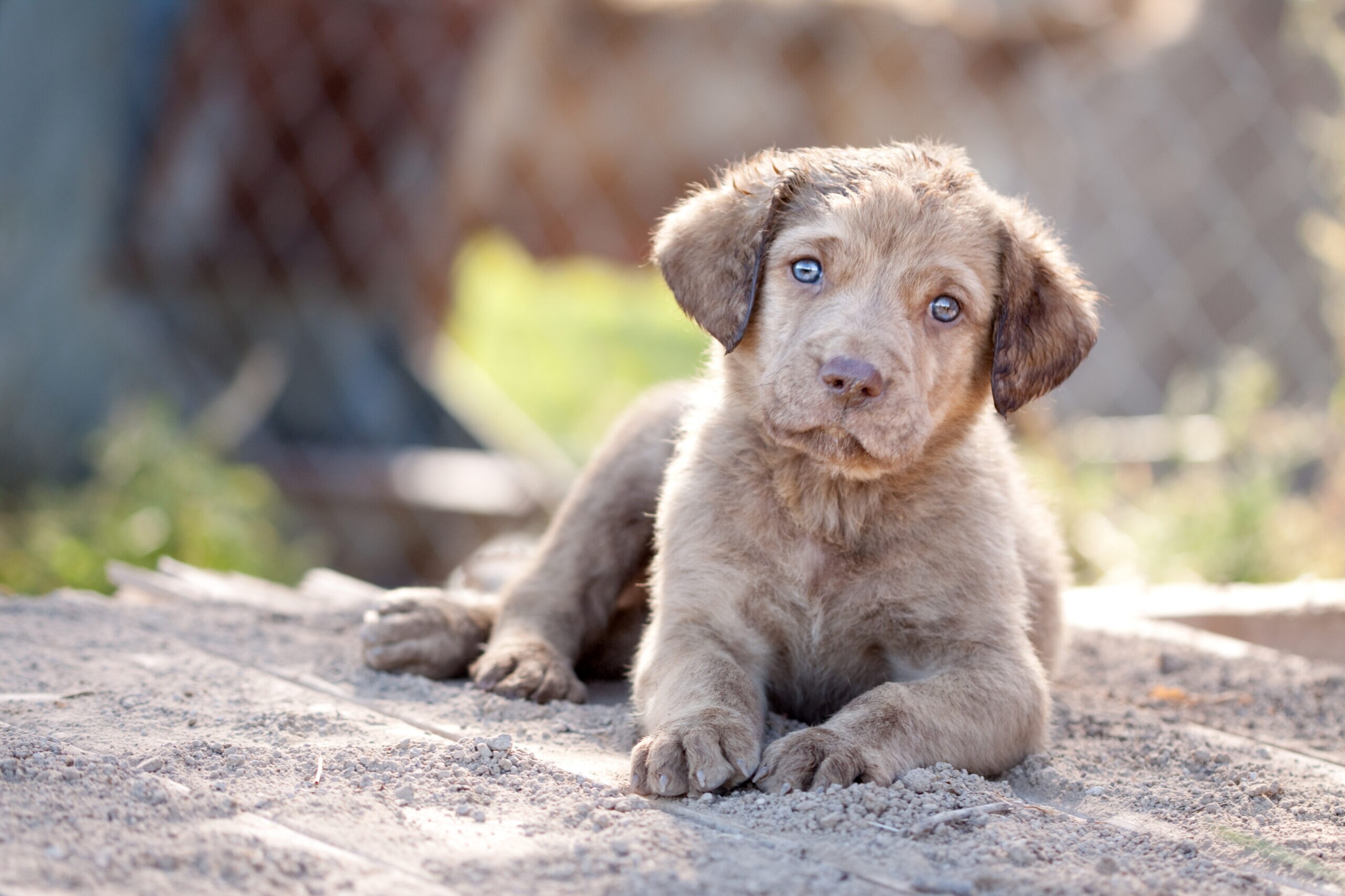
5. Chesapeake Bay Retriever — “The Cold-Water Workhorse”
 Save
Save| Weight | 55 to 80 lbs |
| Height | 21 to 26 inches |
| Lifespan | 10 to 13 years |
| Energy Level | High |
| Grooming Need | Low |
| Shedding | Moderate |
The Chesapeake Bay Retriever was bred along the Chesapeake Bay to retrieve waterfowl in icy currents. Weighing 55 to 80 lbs, it has an oily, wavy coat built for freezing water and a stocky, powerful frame. This breed suits boaters who fish in cold conditions and want a tireless working partner.
Its coat has a natural, waxy oil that beads water off almost instantly, so the dog dries faster than most retrievers after a swim.
People expect retrievers to shake off water like any dog. The surprise with this breed is how little cold seems to bother it, even after long swims in near-freezing bays.
- Handles cold water better than most breeds
- Low grooming needs for a retriever
- Great stamina for long fishing days
- Can be aloof with strangers
- Needs firm, consistent training
- Not ideal for small, crowded decks
Best for: Cold-climate fishing boats · Experienced dog owners · Working boaters
6. Standard Poodle — “The Sharp-Dressed Swimmer”
| Weight | 45 to 70 lbs |
| Height | Over 15 inches |
| Lifespan | 12 to 15 years |
| Energy Level | High |
| Grooming Need | High |
| Shedding | Very low |
The Standard Poodle started as a German water retriever, and its name comes from “pudel,” meaning to splash. Weighing 45 to 70 lbs, it has a curly, low-shedding coat and sharp intelligence. This breed suits boaters who want a hypoallergenic swimmer that also learns commands almost instantly.
Its signature trim, with poufs left over the joints, was originally designed to protect its knees and chest in cold water while keeping the rest of the body lighter for swimming.
Most people know Poodles as a show breed. Fewer know this same breed once dove into freezing lakes to retrieve ducks for hours at a time.
- Low-shedding, allergy-friendly coat
- Learns boat rules extremely fast
- Strong, confident swimmer
- Needs professional grooming often
- Bored easily without mental work
- Coat mats fast if left wet
Best for: Owners with allergies · Sailors who want a trainable dog · Mid-size to large boats
7. Nova Scotia Duck Tolling Retriever — “The Clever Lure Dog”
| Weight | 35 to 50 lbs |
| Height | 17 to 21 inches |
| Lifespan | 12 to 14 years |
| Energy Level | High |
| Grooming Need | Moderate |
| Shedding | Moderate, seasonal |
The Nova Scotia Duck Tolling Retriever, or “Toller,” was bred to lure ducks toward shore before retrieving them from the water. Weighing 35 to 50 lbs, it’s compact, muscular, and highly intelligent. This mid-size breed suits smaller boats and boaters who enjoy an active, working-style partner.
Its bushy, fox-like tail and reddish coat make it easy to spot from a distance, and its medium size fits easily into a canoe or a small cabin cruiser.
Most retrievers fetch on command. The Toller does something few other breeds do: it plays and dances at the water’s edge on purpose, to trick ducks into swimming closer.
- Compact size fits smaller boats
- Very intelligent and eager to work
- Strong, tireless swimmer
- Can be independent, slower to recall
- Needs daily mental stimulation
- Less common, harder to find
Best for: Small to mid-size boats · Active duos · Experienced dog handlers
8. American Water Spaniel — “The Canoe-Sized Swimmer”
| Weight | 25 to 45 lbs |
| Height | 15 to 18 inches |
| Lifespan | 10 to 14 years |
| Energy Level | High |
| Grooming Need | Moderate |
| Shedding | Low to moderate |
The American Water Spaniel is Wisconsin’s state dog, bred to retrieve waterfowl from small skiffs and canoes. Weighing 25 to 45 lbs, it has a curly, waterproof coat and webbed feet. Its compact size makes it one of the best boat dogs for kayaks, canoes, and tight-deck sailboats.
Its liver-brown curls shed water fast, and its small frame lets it move around a crowded cockpit without knocking anything over.
Most people assume small dogs make poor swimmers. This breed proves otherwise — it can jump in and out of a rocking canoe without tipping it, a skill few large dogs ever master.
- Fits kayaks and canoes with ease
- Skilled at boarding small boats calmly
- Water-resistant, quick-drying coat
- Rare breed, few reputable breeders
- Needs regular exercise and play
- Curly coat needs weekly brushing
Best for: Kayaks and canoes · Solo paddlers · Small-cabin sailboats
9. Boykin Spaniel — “The Little Dog That Doesn’t Rock the Boat”
| Weight | 25 to 40 lbs |
| Height | 14 to 18 inches |
| Lifespan | 10 to 15 years |
| Energy Level | Moderate to high |
| Grooming Need | Moderate |
| Shedding | Low to moderate |
The Boykin Spaniel is South Carolina’s state dog, bred to hunt waterfowl from small swamp boats. Weighing 25 to 40 lbs, it has a curly, chocolate-brown coat and a compact, low-slung build. Nicknamed “the little dog who doesn’t rock the boat,” it’s ideal for small, tight boats.
Its dense, water-repelling curls dry fast, and its short legs keep its center of gravity low on unsteady decks.
Most spaniels are known for being high-strung. This breed’s nickname says it all — it was chosen specifically because it stays balanced and calm, even in a small, tippy boat.
- Low center of gravity for stability
- Compact size for small boats
- Naturally calm on moving decks
- Prone to ear infections after swimming
- Needs regular coat maintenance
- Can be reserved with strangers
Best for: Small fishing boats · Swamp and marsh boating · Solo anglers
10. Schipperke — “The Fearless Little Watchdog”
 Save
Save| Weight | 10 to 18 lbs |
| Height | 10 to 13 inches |
| Lifespan | 13 to 15 years |
| Energy Level | High |
| Grooming Need | Low |
| Shedding | Moderate, seasonal |
The Schipperke hails from Belgium, where legend says it guarded canal barges as a small watchdog. Weighing just 10 to 18 lbs, it’s alert, agile, and fits into the tightest spaces on any boat. This breed suits boaters who want a tiny, low-maintenance companion rather than a serious swimmer.
Its thick black double coat and fox-like face make it easy to recognize, and its small size means it takes up almost no deck room.
Most people assume this breed swims like other water dogs. In fact, its history is as a working watchdog on barges, not a retriever, so training and supervision around open water matter more here than with the other breeds on this list.
- Tiny footprint on crowded decks
- Alert watchdog instincts
- Low grooming, weekly brushing is enough
- Not a natural swimmer, needs a jacket
- Can bark at every passing boat
- Small size risks injury on rough water
Best for: Small sailboats · Canal and marina living · Apartment-style cabin cruisers
How Do These 10 Boat Dog Breeds Compare?
Here’s a side-by-side view of all 10 breeds, so you can scan the specs that matter most before choosing.
| Breed | Weight | Best Boat Size | Grooming |
|---|---|---|---|
| Labrador Retriever | 55 to 80 lbs | Mid to large | Low |
| Portuguese Water Dog | 35 to 60 lbs | Mid-size | High |
| Newfoundland | 100 to 150 lbs | Large yacht | High |
| Golden Retriever | 55 to 75 lbs | Mid to large | Moderate |
| Chesapeake Bay Retriever | 55 to 80 lbs | Mid-size | Low |
| Standard Poodle | 45 to 70 lbs | Mid to large | High |
| Nova Scotia Duck Tolling Retriever | 35 to 50 lbs | Small to mid | Moderate |
| American Water Spaniel | 25 to 45 lbs | Canoe, kayak | Moderate |
| Boykin Spaniel | 25 to 40 lbs | Small boat | Moderate |
| Schipperke | 10 to 18 lbs | Small sailboat | Low |
Which Boat Dog Breed Is Right for You?
Picking the right breed is about matching the dog to your specific boat and lifestyle, not just picking the “best” breed on paper.
- If you own a small kayak or canoe → the American Water Spaniel or Boykin Spaniel fits best.
- If you have a mid-size sailboat and want low shedding → the Portuguese Water Dog or Standard Poodle is ideal.
- If you run a large yacht and want a calm giant → the Newfoundland will feel right at home.
- If you’re a first-time boater with a family → the Labrador Retriever or Golden Retriever is the safest bet.
- If you fish in cold water often → the Chesapeake Bay Retriever handles it best.
This article covers the breeds best suited to life on the water. If your situation involves a dog with severe anxiety, a heart or joint condition, or a puppy under six months old, talk to your vet before any boat trip, since those factors matter more than breed alone.
What Do New Boat Dog Owners Need to Know About Care?
New boat dog owners need to focus on three things: a properly fitted life jacket, fresh water rinses after every swim, and slow, positive exposure to the moving deck. Skipping any of these three steps is the most common reason a dog struggles to enjoy boating.
Let your dog explore the docked boat for short sessions before the first trip on open water.
Saltwater and chlorine both dry out a dog’s skin and coat fast. Rinse your dog with fresh water after every swim, then dry the ears well to prevent infections.
You might be thinking any strong swimmer doesn’t need a life jacket. Here’s why that’s risky: fatigue, cold water, and strong currents can overwhelm even the best swimmers within minutes.
A snug, brightly colored canine life jacket with a top handle is considered the industry standard for boating with dogs. Most experts agree it’s the single most important piece of gear you’ll buy.
What Mistakes Do New Boat Dog Owners Make?
The most common mistakes are skipping the life jacket, assuming every dog can swim, and rushing the first trip. New owners often expect instant comfort on the water, when most dogs actually need several short, calm sessions before they relax.
Never assume a breed on this list can swim without practice — always test in calm, shallow water first.
Another mistake is skipping ID tags or a microchip. A startled dog can jump overboard near a crowded dock in seconds.
So what does that mean for your first trip? Keep it short, keep it calm, and reward your dog the moment it settles on deck.
What Most People Get Wrong About Boat Dogs
Many people assume any water-loving breed will automatically be a great boat dog. That’s a myth. Loving water and staying calm on an unstable, moving deck are two different skills, and a dog needs both.
Some owners also believe small dogs can’t handle boats at all. In reality, breeds like the Boykin Spaniel and American Water Spaniel were bred specifically for tight boats and often outperform larger dogs in cramped spaces.
The real deciding factor isn’t size or coat — it’s how a breed’s original working history matches the way you use your boat today.
Frequently Asked Questions
What is the best dog breed for a small boat?
The Boykin Spaniel and American Water Spaniel are the best choices for small boats. Both were bred to work from tight canoes and skiffs, so they stay low, balanced, and calm even on rocking decks.
Can any dog learn to enjoy boating?
Most dogs can learn to tolerate boating with slow, positive training, but not all will enjoy it. Breeds without a water-dog background, like Schipperkes or terriers, often need a life jacket and closer supervision the whole trip.
Do all boat dog breeds need a life jacket?
Yes, every dog needs a properly fitted life jacket on a boat, even strong swimmers. Cold water, fatigue, and rough currents can overwhelm any breed, so this is considered a non-negotiable safety step by most experts.
Which boat dog breed sheds the least?
The Portuguese Water Dog and Standard Poodle shed the least among boat-friendly breeds. Both have curly, low-shedding coats, making them a solid choice for boaters who don’t want fur on every cushion.
Is a Labrador Retriever a good first boat dog?
Yes, the Labrador Retriever is one of the best first boat dogs. It’s friendly, easy to train, and built for water, making it a forgiving choice for boaters new to bringing a dog aboard.
Choosing the right breed comes down to matching size and temperament to your boat, not chasing the “best” dog on paper. Start with a short trip at the dock, fit a life jacket from day one, and build up slowly from there. That’s the one thing to do right now before your next trip on the water.

Thomas Cutter is a lifelong dog owner and the founder of FindOutAboutDogs.com. With over 10 years of hands-on experience owning multiple breeds, Thomas created this site to provide honest, research-based dog advice that real owners can actually trust.
