Best 10 Dog Breeds for Young Families — Gentle, Safe, and Real-World Friendly
Quick Answer
The best 10 dog breeds for young families are gentle, sturdy, social breeds. Golden Retrievers, Labradors, Cavaliers, Beagles, Poodles, Collies, Boxers, Bichons, Newfoundlands, and Bernese Mountain Dogs stand out. The right choice depends on your child’s age, home size, energy level, and grooming budget.
| Family Need | Best Breed Fit |
|---|---|
| First dog with young kids | Golden Retriever |
| Small home or calm child | Cavalier King Charles Spaniel |
| Active outdoor family | Labrador Retriever |
Choose a young-family dog if:
- You can train daily for 10 minutes.
- Your child can learn dog manners.
- Your home fits the dog’s size.
- You can afford grooming and vet care.
The house is loud. Toys cover the floor. Your child wants a dog more than anything.
But here’s the thing. A young family needs more than a cute puppy. You need patience, size match, safe habits, and a breed that can handle real family life.
I’m Thomas Cutter, a lifelong dog owner and founder of FindOutAboutDogs.com. If you want a wider child-focused list, start with our guide to family dog breeds for kids.
This guide covers dog breeds for young families. If your child has severe allergies or special medical needs, ask your doctor and vet first.
- Golden Retrievers are the best all-round choice.
- Cavaliers suit calm homes and small spaces.
- Large gentle breeds still need space and training.
- No breed replaces adult supervision around kids.
- Match the dog’s daily needs to your real life.


What Makes a Dog Breed Good for Young Families?
A good dog breed for young families is calm, sturdy, trainable, and safe around noise. The dog should enjoy people, recover fast from stress, and handle daily family motion. Most experts agree breed matters, but training and supervision matter more. The American Kennel Club lists many child-friendly breeds, while the American Veterinary Medical Association advises families to match pets to home, cost, time, and care needs. So if you have toddlers, babies, or young school-age kids, choose a dog that fits your routine first. Looks should come last. A sweet face can hide high exercise needs, heavy shedding, or poor fit for small children.
You already know family dogs should be nice. What many new owners miss is body strength.
Young kids move fast and fall often. So a very fragile toy breed may feel stressed.
Here’s why that matters. The best young-family dog can stay steady during noise and touch.
When I see families choose by looks, the hard part comes later. That taught me to match life before breed.
You might be thinking breed lists solve the choice. Here’s why they only start the choice.
A breed gives a pattern. Training, breeder choice, health, and daily care shape the dog you live with.
For a trusted breed filter, the AKC guide to dogs for kids is a helpful starting point.
Now let’s compare the breeds that fit young family life best.
The 10 Best Dog Breeds for Young Families
The best 10 dog breeds for young families are Golden Retriever, Labrador Retriever, Cavalier King Charles Spaniel, Beagle, Standard Poodle, Collie, Boxer, Bichon Frise, Newfoundland, and Bernese Mountain Dog. Each breed brings a different strength. Some are patient and soft. Some are playful and sturdy. Some fit apartments better. Others need yards and long walks. The best pick depends on your child’s age, your home size, and your daily energy. A young family should choose a dog that feels easy to guide, not one that needs expert handling every day. That choice protects both the child and the dog.
Now let’s look at each breed in plain English. Each profile gives size, care, pros, cons, and best fit.
Golden Retriever — Best Dog Breed for Young Families Who Want a Gentle All-Rounder
 Save
Save| Weight | 55-75 pounds |
| Height | 21.5-24 inches |
| Lifespan | 10-12 years |
| Energy Level | High |
| Grooming Need | Moderate |
| Shedding | Heavy seasonal shedding |
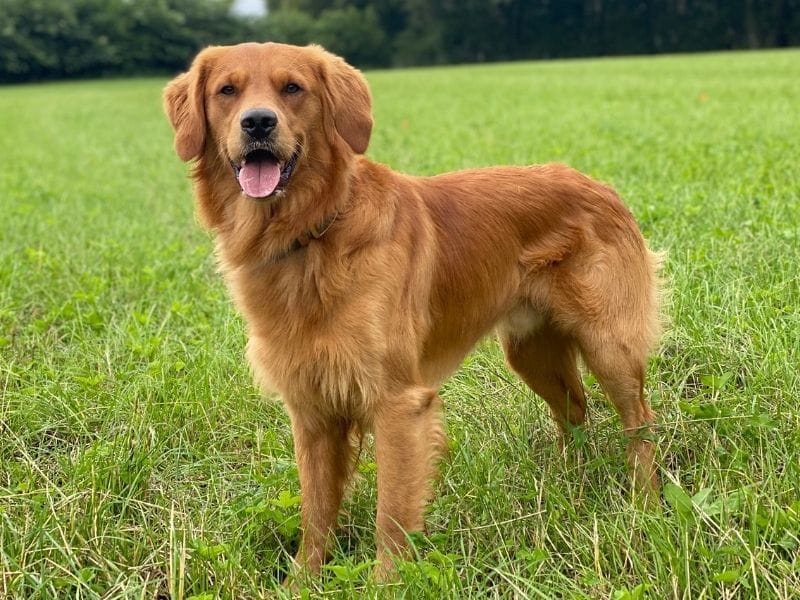
The Golden Retriever is a large family dog breed known for patience, warmth, and easy training. It weighs 55-75 pounds and has a soft, dense coat. Goldens enjoy play but usually stay gentle with children. They suit young families who want a friendly first dog.
The Golden Retriever has a broad face and warm eyes. Its coat can range from pale cream to deep gold.
Goldens love people and games. But their real gift is how often they soften around children.
“Our Golden lies flat when the kids build blocks near him. He joins the fun without taking over.”
— Rachel M., composite Golden Retriever owner note
- Patient with busy children
- Learns family rules fast
- Great first large dog
- Sheds on floors daily
- Needs steady exercise
- Puppy chewing can shock
Best for: First-time owners · Yard homes · Gentle active kids
Labrador Retriever — Best Dog Breed for Active Young Families
| Weight | 55-80 pounds |
| Height | 21.5-24.5 inches |
| Lifespan | 10-12 years |
| Energy Level | High |
| Grooming Need | Low to moderate |
| Shedding | Moderate to heavy |
The Labrador Retriever is a sturdy family dog breed known for play, patience, and trust. It weighs 55-80 pounds and has a short coat. Labs love fetch, water, and busy homes. They suit young families that enjoy outdoor time and can guide puppy energy.
The Labrador has a strong body and kind face. Its short coat comes in black, yellow, and chocolate.
Labs are famous for play. What surprises many parents is their strong wish to stay near kids.
“Our Lab waits beside the stroller before walks. He acts like he has a job.”
— Marcus D., composite Labrador owner note
- Strong and child-tolerant
- Great outdoor playmate
- Easy to train early
- Rowdy puppy phase
- Chews toys hard
- Gains weight easily
Best for: Active parents · Outdoor kids · Homes with yards
Cavalier King Charles Spaniel — Best Small Dog Breed for Calm Young Families
| Weight | 13-18 pounds |
| Height | 12-13 inches |
| Lifespan | 12-15 years |
| Energy Level | Low to medium |
| Grooming Need | Moderate |
| Shedding | Moderate |
The Cavalier King Charles Spaniel is a small family dog breed known for softness, calm, and close bonding. It weighs 13-18 pounds and has a silky coat. Cavaliers enjoy laps, gentle play, and quiet homes. They suit young families with kind, closely guided children.
The Cavalier has round eyes and long, feathered ears. Its face often looks soft and trusting.
Cavaliers love touch and closeness. But they are still small, so children need gentle hands.
“Our Cavalier moves to the quiet room when play gets wild. Then she returns for cuddles.”
— Priya S., composite Cavalier owner note
- Calm inside the home
- Fits small spaces well
- Loves gentle children
- Too small for rough play
- Needs ear care
- Dislikes long alone time
Best for: Apartment families · Calm kids · First small dog
→ Best dog breeds for families with babies
Beagle — Best Dog Breed for Curious Young Families
| Weight | 20-30 pounds |
| Height | 13-15 inches |
| Lifespan | 10-15 years |
| Energy Level | Medium to high |
| Grooming Need | Low |
| Shedding | Moderate |
The Beagle is a small-to-medium family dog breed known for cheer, scent work, and pack spirit. It weighs 20-30 pounds and has a short coat. Beagles enjoy children, walks, and play. They suit young families with secure fences and patient training habits.
The Beagle has soft ears and a bright hound face. Its white tail tip helps you spot it outside.
Beagles are happy and social. What surprises parents is their loud musical bay when excited.
“Our Beagle checks every backpack after school. He thinks snacks are a family duty.”
— Dana L., composite Beagle owner note
- Sturdy medium-small size
- Social with family life
- Low grooming cost
- Loud bay carries far
- Follows scents outside
- Needs fenced play
Best for: Active kids · Secure yards · Scent-game homes
Standard Poodle — Best Dog Breed for Smart Young Families
 Save
Save| Weight | 40-70 pounds |
| Height | Over 15 inches |
| Lifespan | 10-18 years |
| Energy Level | Medium to high |
| Grooming Need | High |
| Shedding | Low |
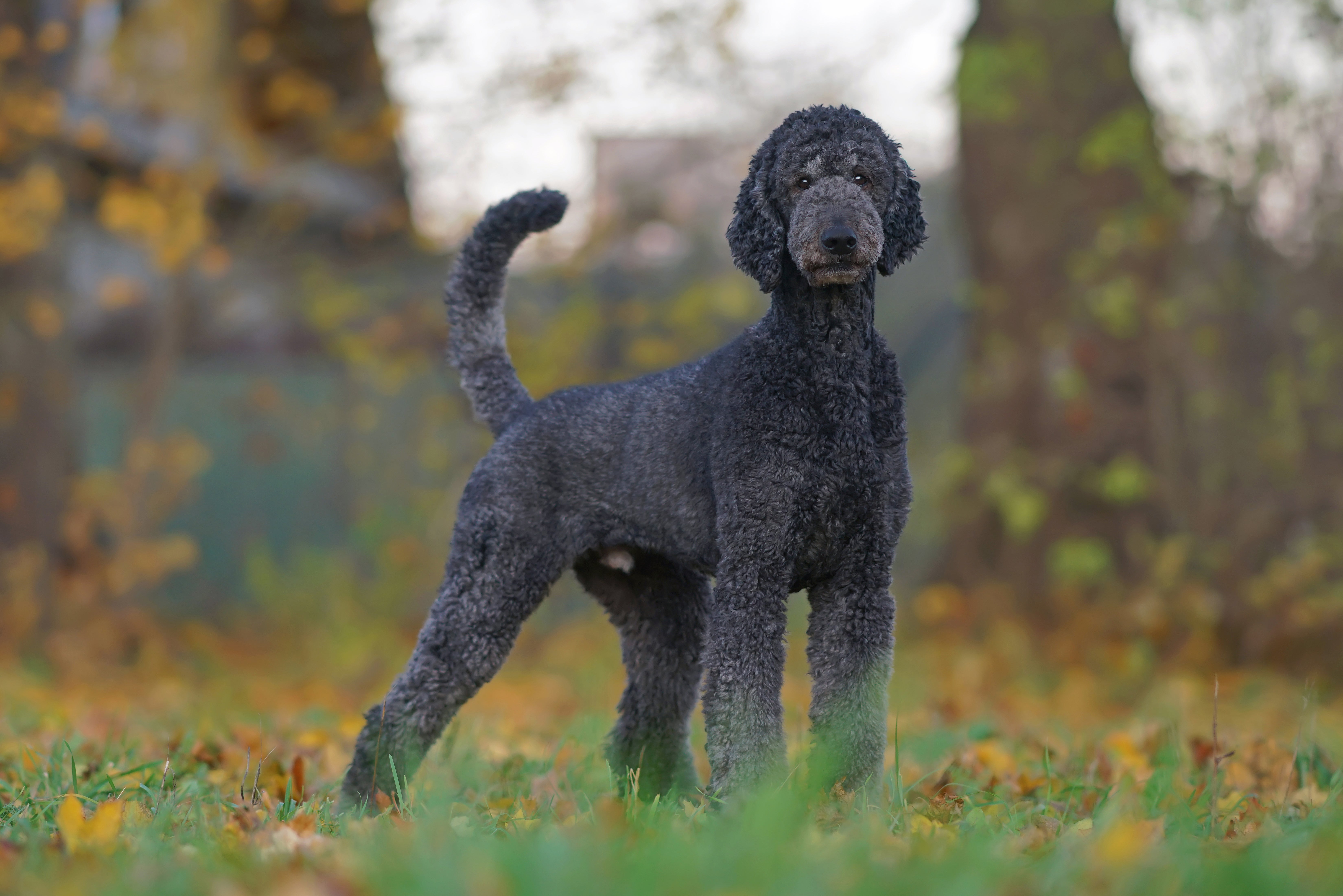
The Standard Poodle is a smart family dog breed known for low shedding, quick learning, and athletic play. It weighs 40-70 pounds and has a curly coat. Standard Poodles need grooming and brain work. They suit young families that want a bright, trainable dog.
The Standard Poodle has tight curls and a proud frame. A short clip keeps the coat simple.
Poodles learn rules fast. Even better, they often read house moods with sharp care.
“Our Poodle learned the baby gate rule before our toddler did. He waits every time.”
— Megan R., composite Poodle owner note
- Low shedding indoors
- Very quick learner
- Good sturdy size
- Grooming bills add up
- Needs brain work
- Bored dogs invent trouble
Best for: Allergy-aware homes · Smart kids · Training-focused parents
→ Best dog breeds for families with allergies
Collie — Best Dog Breed for Young Families Who Want a Watchful Helper
| Weight | 50-75 pounds |
| Height | 22-26 inches |
| Lifespan | 12-14 years |
| Energy Level | Medium |
| Grooming Need | Moderate to high |
| Shedding | Seasonal heavy shedding |
The Collie is a graceful family dog breed known for watchful care, soft manners, and trainable herding sense. It weighs 50-75 pounds and comes in rough or smooth coats. Collies often notice children closely. They suit young families that want a calm, alert companion.
The rough Collie has a long flowing coat. The smooth Collie has a cleaner short coat.
Collies often watch family movement. The wow part is how gently they can guide space.
“Our Collie stands between the toddler and stairs. Nobody trained that exact move.”
— Helen B., composite Collie owner note
- Watchful around children
- Responds well to training
- Moderate daily exercise
- Long coat needs brushing
- May herd running kids
- Sensitive to harsh voices
Best for: Gentle homes · School-age kids · Calm training style
Boxer — Best Dog Breed for Playful Young Families
| Weight | 50-80 pounds |
| Height | 21.5-25 inches |
| Lifespan | 10-12 years |
| Energy Level | High |
| Grooming Need | Low |
| Shedding | Low to moderate |
The Boxer is a strong family dog breed known for clownish play, loyalty, and watchful energy. It weighs 50-80 pounds and has a short coat. Boxers love games and close family life. They suit young families with active kids and firm early training.
The Boxer has a square jaw and athletic body. Its short coat is easy to keep clean.
Boxers play with bounce and joy. What surprises owners is how often they slow near kids.
“Our Boxer races to the yard, then stops short near our daughter. It’s like a brake.”
— Brian H., composite Boxer owner note
- Playful with older kids
- Short easy-care coat
- Natural watchful nature
- Too bouncy for babies
- Heat affects breathing
- Needs firm manners early
Best for: Active kids · Playful homes · Confident parents
→ Best dog breeds for families with toddlers
Bichon Frise — Best Dog Breed for Small Young Families
| Weight | 12-18 pounds |
| Height | 9.5-11.5 inches |
| Lifespan | 14-15 years |
| Energy Level | Medium |
| Grooming Need | High |
| Shedding | Low |
The Bichon Frise is a small family dog breed known for cheer, low shedding, and a soft white coat. It weighs 12-18 pounds and fits small homes well. Bichons love people and light play. They suit young families with gentle children and grooming plans.
The Bichon looks like a white powder puff. Its dark eyes make the face bright.
Bichons are social and funny. But they can bark when left alone too long.
“Our Bichon joins story time every night. He picks the same blanket spot.”
— Olivia K., composite Bichon owner note
- Low loose hair spread
- Bright cheerful nature
- Great apartment size
- Coat mats fast
- Can bark when lonely
- Needs careful handling
Best for: Small homes · Gentle kids · Allergy-aware families
Newfoundland — Best Gentle Giant Dog Breed for Young Families
| Weight | 100-150 pounds |
| Height | 26-28 inches |
| Lifespan | 9-10 years |
| Energy Level | Medium |
| Grooming Need | High |
| Shedding | Heavy |
The Newfoundland is a giant family dog breed known for calm, patience, and deep gentleness. It weighs 100-150 pounds and has a thick coat. Newfoundlands are sweet with children but need space. They suit young families ready for size, drool, and grooming.
The Newfoundland has a huge frame and bear-like coat. Its heavy head gives a calm look.
Newfies move slower than many big dogs. The surprise is how softly they act indoors.
“Our Newfie lies beside the play mat like a wall. He barely moves during toy storms.”
— Carla J., composite Newfoundland owner note
- Deeply gentle with kids
- Calm inside the home
- Great steady presence
- Huge size needs space
- Drool is constant
- Heavy grooming workload
Best for: Spacious homes · Calm children · Giant-dog lovers
Bernese Mountain Dog — Best Dog Breed for Patient Young Families With Space
 Save
Save| Weight | 70-115 pounds |
| Height | 23-27.5 inches |
| Lifespan | 7-10 years |
| Energy Level | Medium |
| Grooming Need | High |
| Shedding | Heavy |
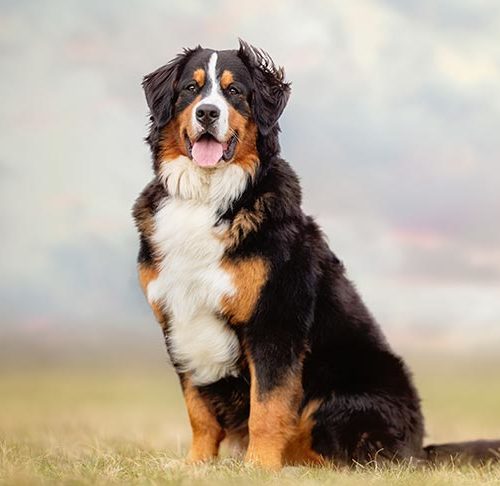
The Bernese Mountain Dog is a large family dog breed known for patience, sweetness, and steady manners. It weighs 70-115 pounds and has a thick tri-color coat. Berners move gently around children. They suit young families with space, time, and grooming patience.
The Berner has a black, white, and rust coat. Its broad body feels strong but soft.
Berners often stay calm in busy rooms. But their short lifespan is an honest concern.
“Our Berner lets the kids brush him after dinner. He treats it like family time.”
— Simon T., composite Bernese owner note
- Patient with gentle children
- Calm family presence
- Strong but sweet
- Shorter average lifespan
- Heavy coat shedding
- Needs cool weather care
Best for: Spacious homes · Gentle kids · Patient owners
How Do the Best Dog Breeds for Young Families Compare?
The best way to compare dog breeds for young families is by size, energy, grooming, shedding, and child fit. A Golden Retriever is the best safe all-rounder. A Labrador is best for active homes. A Cavalier or Bichon suits smaller spaces. A Poodle suits families that want low shedding and smart training. A Collie adds gentle watchfulness. A Boxer suits playful older kids. Newfoundlands and Bernese Mountain Dogs offer calm, giant patience but need more space and care. Use this table as your first filter. Then meet the breed in real life before you decide.
So what does that mean? A good table saves time, but it cannot test your home.
| Breed | Size | Energy | Best Young Family Fit |
|---|---|---|---|
| Golden Retriever | Large | High | Best first family dog |
| Labrador Retriever | Large | High | Active outdoor homes |
| Cavalier | Small | Low-medium | Calm apartments |
| Beagle | Small-medium | Medium-high | Curious kids |
| Standard Poodle | Medium-large | Medium-high | Low-shed homes |
| Collie | Large | Medium | Watchful gentle homes |
| Boxer | Large | High | Older active kids |
| Bichon Frise | Small | Medium | Small homes |
| Newfoundland | Giant | Medium | Spacious calm homes |
| Bernese Mountain Dog | Large | Medium | Patient roomy homes |
Meet adult dogs of the breed before you choose a puppy.
When families compare only puppy photos, they miss adult size. That taught me to picture the full-grown dog at breakfast time.
Next, let’s turn this table into a clear choice.
Which Dog Breed Is Right for Your Young Family?
The right dog breed for your young family is the breed whose needs fit your real week. If you work long hours, choose a calmer companion breed. If your kids play outside daily, choose a retriever. If you live in an apartment, choose a smaller dog with moderate energy. If you have allergies, meet low-shedding breeds first. The best choice is not the most popular breed. The best choice is the dog your family can train, groom, exercise, and safely guide every day. This removes stress from the dog and guilt from the parents.
Here’s the thing. Young families need fewer surprises, not more options.
If you have babies or toddlers, choose calm and sturdy first. If you have school-age kids, you can handle more energy. If you hate grooming bills, skip heavy-coated and curly-coated breeds.
- If you are a first-time young family, choose a Golden Retriever.
- If you are active every day, choose a Labrador Retriever.
- If you live small, choose a Cavalier or Bichon.
- If allergies worry you, start with a Standard Poodle.
- If you want a gentle giant, consider a Newfoundland first.
You might be thinking a calm breed needs no training. Here’s why that fails.
Even calm dogs need child rules and house rules. Young kids also need dog rules.
The AVMA pet selection guide reminds families to consider food, housing, exercise, grooming, and vet care.
→ Best dog breeds for families with cats
Now let’s protect the choice with daily care rules.
What Care Rules Matter Most for Young Families With Dogs?
The most important care rules for young families are supervision, training, exercise, grooming, and safe rest space. No dog should manage children alone. Most experts agree that even trusted family pets need adult watch around young kids. Give the dog a quiet bed, teach children not to bother eating or sleeping dogs, and practice short daily training. Match exercise to the breed. Brush coats before mats form. Book routine vet care before small issues grow. So if your home feels busy, simple routines matter more than perfect gear.
You already know children need rules. Dogs need them too.
- Give the dog a quiet rest zone.
- Teach kids to leave food bowls alone.
- Train sit, stay, come, and drop.
- Walk or play before wild indoor time.
- Brush the coat on a fixed schedule.
When a dog has no quiet space, stress builds fast. That taught me one rule.
A safe dog bed is not a luxury. It is a family safety tool.
You might be thinking your dog loves the kids. Here’s why breaks still matter.
Love does not remove stress. A tired dog needs space before signs grow loud.
The AVMA dog bite prevention guidance stresses that children should not be left unsupervised with dogs.
Next, let’s fix the myths that cause bad matches.
What Do Most People Get Wrong About Dog Breeds for Young Families?
Most people get 3 things wrong about dog breeds for young families. First, they think friendly means child-safe. Second, they think small dogs are always easier. Third, they think breed replaces training. In real life, a friendly dog can still jump, guard food, or fear rough touch. A small dog can feel fragile around toddlers. A great breed still needs clear rules, safe handling, and daily practice. Most experts agree temperament comes from breed pattern, early care, training, health, and home life together. So choose the breed, then build the dog.
The common mistake is easy to understand. Puppy photos make every breed look perfect.
But here’s the thing. Family fit shows up on tired weekdays, not photo days.
- Myth 1: The cutest puppy makes the best family dog.
- Myth 2: Small dogs are always safer for kids.
- Myth 3: Big dogs are always too risky.
- Myth 4: A good breed trains itself.
When families skip the adult-dog visit, they miss real size. That taught me to meet mature dogs first.
You might be thinking you can fix any mismatch later. Here’s why that is risky.
Training helps a lot, but it cannot erase all breed needs. Energy, coat care, and size stay real.
Never leave a baby or toddler alone with any dog.
Now let’s cover the mistakes that cause the most stress.
What Mistakes Should Young Families Avoid When Choosing a Dog?
Young families should avoid choosing by looks, ignoring adult size, skipping health checks, underestimating grooming, and buying from weak breeders. A dog becomes part of your daily rhythm. So the wrong energy level can affect sleep, stress, cleaning, and child safety. Ask about health testing. Meet the parents when possible. Check how the puppy reacts to sound and handling. Plan training before the dog arrives. Most experts agree early socialization and calm routines set the tone. The goal is not a perfect dog. The goal is a safe match you can care for well.
Here’s why that matters. Most dog problems start before the dog comes home.
- Do not choose a breed your home cannot exercise.
- Do not pick a fragile dog for rough toddlers.
- Do not ignore grooming cost.
- Do not skip puppy socialization.
- Do not allow children to climb on dogs.
When families plan training after problems begin, progress feels slower. That taught me to start first.
You might be thinking love will be enough. Here’s why structure matters more.
Love starts the bond. Rules protect that bond when life gets loud.
Choose a dog for your real home, not your dream home. Match size, energy, grooming, and child age first. Then train early, supervise closely, and give the dog a quiet place.
Now you have a clear path to choose well.
Conclusion
The best dog breed for a young family is calm, sturdy, trainable, and realistic.
For most homes, start with a Golden Retriever or Labrador. For smaller homes, consider a Cavalier, Bichon, or Standard Poodle.
One thing to do right now: write your child’s age, home size, and daily walk time on paper.
I’m Thomas Cutter, and that 2-minute check will narrow your best breed fast.
Frequently Asked Questions
What is the best dog breed for a young family?
The best dog breed for most young families is the Golden Retriever. It is gentle, sturdy, social, and easy to train. Labradors are also strong choices for active homes. The best final choice depends on your child’s age and your daily routine.
Are small dogs better for young families?
Small dogs are not always better for young families. Some small breeds are fragile and may fear rough toddler play. Cavaliers and Bichons can work well with gentle children. Always match the dog’s body size to your child’s behavior.
Which dog breed is safest around toddlers?
No breed is fully safe without adult supervision. Still, calm and patient breeds often fit toddlers better. Golden Retrievers, Cavaliers, Newfoundlands, and Bernese Mountain Dogs can be good matches. Teach toddlers not to grab ears, tails, food, or sleeping dogs.
Should young families get a puppy or adult dog?
An adult dog can be easier for many young families. You can see size, energy, and temperament right away. Puppies are cute, but they bite, chew, jump, and wake at night. Choose a puppy only if you can train daily.
What dog breed should young families avoid?
Young families should avoid breeds they cannot train, exercise, or handle safely. High-drive working breeds can overwhelm new owners. Very fragile toy breeds may struggle with toddlers. The issue is not bad breeds. It is the wrong match for your home.

Thomas Cutter is a lifelong dog owner and the founder of FindOutAboutDogs.com. With over 10 years of hands-on experience owning multiple breeds, Thomas created this site to provide honest, research-based dog advice that real owners can actually trust.
