10 Best Two Color Dog Breeds for 2026: Pick by Lifestyle
Quick Answer
The 10 best two color dog breeds include Border Collies, Boston Terriers, Siberian Huskies, Dalmatians, English Springer Spaniels, French Bulldogs, Papillons, Japanese Chins, Shih Tzus, and Beagles. Your best choice depends on energy, size, grooming, and home space.
| Need | Top Pick | Why |
|---|---|---|
| Active training home | Border Collie | Smart and highly driven |
| Small city home | Boston Terrier | Compact with simple coat care |
| Small companion | Japanese Chin | Quiet and easy to handle |
Choose your two color dog this way:
- Choose Border Collies for serious daily training.
- Choose Boston Terriers for compact city life.
- Choose Springers for active family adventures.
- Choose Japanese Chins for quiet companionship.
A sharp black-and-white coat catches your eye across a park. Bold patches make some dogs almost impossible to forget.
But looks alone can’t tell you how that dog lives. I’m Thomas Cutter, and I focus on matching breed traits with real homes.
Color can help narrow your shortlist. Your daily routine should make the final choice.
- Two color coats include patches, spots, points, and white markings.
- Coat color doesn’t predict personality or trainability.
- Border Collies suit active trainers, not quiet homes.
- Boston Terriers and Japanese Chins fit smaller homes.
- Choose energy and care needs before choosing color.


What Makes a Dog Breed Two Color?
A two color dog shows two clear coat colors on the same dog. Breeders may call this bicolor, parti-color, pied, patched, or spotted. The exact term depends on the breed. Black and white is common, but red-white, lemon-white, and liver-white also appear. Two color describes appearance, not behavior.
Genes control which pigments form and where those pigments appear. White areas often result from pigment distribution, not a different personality trait. The American Kennel Club breed guide lists accepted colors by breed. So if you love a certain coat, check the breed standard first. When I compare color lists, I also check energy and size. That step often changes the shortlist fast.
A two color dog may also belong to another color group. A Beagle can be bicolor or tricolor, for example.
For dogs with 3 or more shades, compare our best multi color dog breeds.
What Are the 10 Best Two Color Dog Breeds?
The best two color dog breeds combine striking coats with clear lifestyle strengths. Border Collies lead for training and sport. Boston Terriers offer compact city companionship. Huskies suit athletic owners. Dalmatians reward active homes. Springers fit outdoor families. Smaller choices include French Bulldogs, Papillons, Japanese Chins, and Shih Tzus.
Beagles complete the list with classic red-white or lemon-white options. These breeds don’t share one energy level or coat type. Their needs range from intense daily work to short walks. That difference matters far more than color. When I compare breeds, I remove poor lifestyle matches first. Then I look at coat preference. You might think the prettiest dog should rank first. Yet the best-looking mismatch quickly becomes hard work. Start with the dog whose normal week resembles yours.
Note: The owner-style examples below are illustrative scenarios. They are not verified customer testimonials.
1. Border Collie — Two Color Dog Breed for Serious Trainers
Dog sports · Active owners · Training-focused homes
| Weight | 30–55 lbs |
| Height | 18–22 inches |
| Lifespan | 12–15 years |
| Energy Level | Very high |
| Grooming Need | Brush 2–3 times weekly |
| Shedding | Moderate to heavy |
The Border Collie is an athletic two color dog breed famous for black-white coats. Adults weigh 30 to 55 pounds. They learn fast and crave work. This breed suits active owners who enjoy training, agility, hiking, fetch, or daily skill games.
Black often covers the back, ears, and eye area. Bright white marks the chest, neck, legs, and face.
Most people know Border Collies are smart. Few expect how quickly boredom creates unwanted jobs.
“Picture a dog learning fetch rules before the family agrees on them.”
— Illustrative owner scenario
- Learns complex skills quickly
- Excels in dog sports
- Iconic black-white coat
- Needs intense daily mental work
- May herd moving children
- Poor fit for quiet homes
2. Boston Terrier — Tuxedo Two Color Dog for City Homes
Apartments · Smaller families · Low-grooming homes
| Weight | 12–25 lbs |
| Height | 10–12 inches |
| Lifespan | 11–13 years |
| Energy Level | Moderate |
| Grooming Need | Weekly brushing |
| Shedding | Low to moderate |
The Boston Terrier is a compact two color companion with famous tuxedo markings. Adults weigh 12 to 25 pounds. They are lively, people-focused, and easier to exercise than large working breeds. Boston Terriers suit smaller homes wanting personality without heavy grooming.
The short coat pairs white with black, seal, or brindle. A white chest creates the famous formal look.
Bostons enjoy play but also value couch time. Their comic facial expressions often steal the room.
“Imagine a tiny tuxedo shadow following you between the kitchen and sofa.”
— Illustrative owner scenario
- Compact size suits apartments
- Short coat needs little work
- Moderate exercise fits busy homes
- Heat limits hard outdoor play
- Can become clingy
- Short muzzle needs thoughtful care
→ Compare more striking black color dog breeds
3. Siberian Husky — Two Color Dog With Arctic Drama
Runners · Cool climates · Secure active homes
| Weight | 35–60 lbs |
| Height | 20–23.5 inches |
| Lifespan | 12–14 years |
| Energy Level | High |
| Grooming Need | Brush 2–3 times weekly |
| Shedding | Heavy seasonal shedding |
The Siberian Husky is a bold two color working dog often seen black-white. Adults weigh 35 to 60 pounds. Huskies have endurance, social energy, and independent minds. They fit active owners who can provide exercise, secure fencing, and patient training.
A thick double coat frames a sharp facial mask. White legs and chests make dark markings look dramatic.
Huskies enjoy people, yet they don’t live to obey. That independent streak surprises many new owners.
“Picture finishing a long walk while your Husky still looks ready for round two.”
— Illustrative owner scenario
- Striking facial color patterns
- Excellent endurance for active owners
- Often social with people
- Sheds huge amounts seasonally
- Needs strong escape control
- Independent training style challenges beginners
4. Dalmatian — Iconic Spotted Two Color Dog
Runners · Active families · Experienced owners
| Weight | 45–70 lbs |
| Height | 19–24 inches |
| Lifespan | 11–13 years |
| Energy Level | High |
| Grooming Need | Weekly brushing |
| Shedding | Moderate to heavy |
The Dalmatian is an athletic two color dog famous for black or liver spots. Adults weigh 45 to 70 pounds. They are alert, active, and built for endurance. Dalmatians suit owners who enjoy long walks, running, training, and structured daily activity.
The white coat creates a clean background for rounded spots. Puppies develop their famous spots after birth.
Dalmatians look elegant, but they’re working athletes. Their stamina can surprise owners expecting a calm showpiece.
“Imagine your morning jog becoming the warm-up before your dog’s afternoon game.”
— Illustrative owner scenario
- One-of-a-kind spotted appearance
- Strong partner for active owners
- Short coat brushes easily
- Needs substantial daily exercise
- Short hairs cling everywhere
- Careful health screening matters
5. English Springer Spaniel — Feathered Liver-White Family Athlete
Outdoor families · Fetch lovers · Weekend hikers
| Weight | 40–50 lbs |
| Height | 19–20 inches |
| Lifespan | 12–14 years |
| Energy Level | High |
| Grooming Need | Brush 2–3 times weekly |
| Shedding | Moderate |
The English Springer Spaniel is a lively two color sporting breed. Black-white and liver-white coats are classic choices. Adults weigh 40 to 50 pounds. Springers are eager, people-focused, and energetic. They suit outdoor families willing to train, brush, and play every day.
Large colored patches sit against bright white fur. Feathered ears and legs soften the athletic body.
Springers often bring toys directly to people. Their hunting roots make scent games extra rewarding.
“Picture a dog finding the lost tennis ball before anyone finishes searching.”
— Illustrative owner scenario
- Beautiful liver-white coat option
- Strong people-focused work style
- Excellent fetch companion
- Feathering collects mud easily
- Needs active daily play
- Ears need routine checks
6. French Bulldog — Pied Two Color Dog for Smaller Spaces
Apartments · Short walks · Companion-focused homes
| Weight | Under 28 lbs |
| Height | 11–13 inches |
| Lifespan | 10–12 years |
| Energy Level | Low to moderate |
| Grooming Need | Weekly brushing |
| Shedding | Moderate |
The French Bulldog is a sturdy small companion with several two color patterns. Pied coats can mix white with darker patches. Adults stay under 28 pounds. Frenchies suit smaller homes wanting a playful companion without the exercise load of working breeds.
Large bat ears sit over a wide, compact head. Pied markings can create bold patches across white fur.
Frenchies enjoy short bursts of play. Hard exercise and hot weather demand more care.
“Imagine ten playful minutes followed by a serious claim on your favorite cushion.”
— Illustrative owner scenario
- Compact apartment-friendly size
- Needs modest daily exercise
- Short coat brushes quickly
- Heat needs careful management
- Health screening deserves close attention
- Can dislike long alone periods
7. Papillon — Tiny Two Color Dog With a Big Brain
Small homes · Trick training · Active toy-dog fans
| Weight | 5–10 lbs |
| Height | 8–11 inches |
| Lifespan | 14–16 years |
| Energy Level | Moderate to high |
| Grooming Need | Brush 2–3 times weekly |
| Shedding | Low to moderate |
The Papillon is a tiny two color toy dog built around a white base. Colored patches frame the head and ears. Adults weigh only 5 to 10 pounds. Papillons are alert, agile, and surprisingly trainable. They suit owners wanting small size without a sleepy personality.
Long ear fringe creates the famous butterfly look. White fur makes the darker head patches stand out.
The dainty body can fool new owners. Papillons often enjoy training and movement more than expected.
“Picture a five-pound dog treating a trick session like serious professional work.”
— Illustrative owner scenario
- Highly trainable for tiny size
- Fits small living spaces
- Long average lifespan
- Small body needs gentle handling
- May bark at new sounds
- Ear fringe needs brushing
→ Explore more beautiful white color dog breeds
8. Japanese Chin — Quiet Two Color Lap Companion
Apartments · Quiet adults · Gentle households
| Weight | 7–11 lbs |
| Height | 8–11 inches |
| Lifespan | 10–12 years |
| Energy Level | Low to moderate |
| Grooming Need | Brush twice weekly |
| Shedding | Moderate |
The Japanese Chin is a small two color companion known for silky coats. Black-white and red-white are classic patterns. Adults weigh 7 to 11 pounds. Chins are graceful, quiet, and people-focused. They suit calm homes where gentle companionship matters more than hard exercise.
The face often shows balanced color around both eyes. A white blaze can split the markings neatly.
Japanese Chins can seem almost catlike indoors. Many enjoy high resting spots and quiet observation.
“Imagine your dog choosing the sofa back instead of the sofa seat.”
— Illustrative owner scenario
- Fits small homes easily
- Needs modest daily exercise
- Classic black-white coat option
- Small frame needs gentle handling
- Dislikes rough household chaos
- Facial folds need checks
9. Shih Tzu — Flowing Two Color Companion for Indoor Homes
Indoor homes · Lap-dog fans · Grooming-ready owners
| Weight | 9–16 lbs |
| Height | 9–10.5 inches |
| Lifespan | 10–18 years |
| Energy Level | Low to moderate |
| Grooming Need | High with long coats |
| Shedding | Low |
The Shih Tzu is a small companion breed available in many two color coats. Black-white and gold-white are common examples. Adults weigh 9 to 16 pounds. Shih Tzus enjoy indoor family life and modest walks. They suit owners willing to trade heavy exercise for regular grooming.
Long hair can fall like a curtain along the body. Two colors create clear patches through that coat.
The calm look hides a playful streak. Many Shih Tzus happily follow family members between rooms.
“Picture a quiet lap dog suddenly racing through the hallway after dinner.”
— Illustrative owner scenario
- Works well in apartments
- Needs modest exercise
- Many two color combinations
- Long coats need frequent brushing
- Face needs routine cleaning
- Can resist rushed training
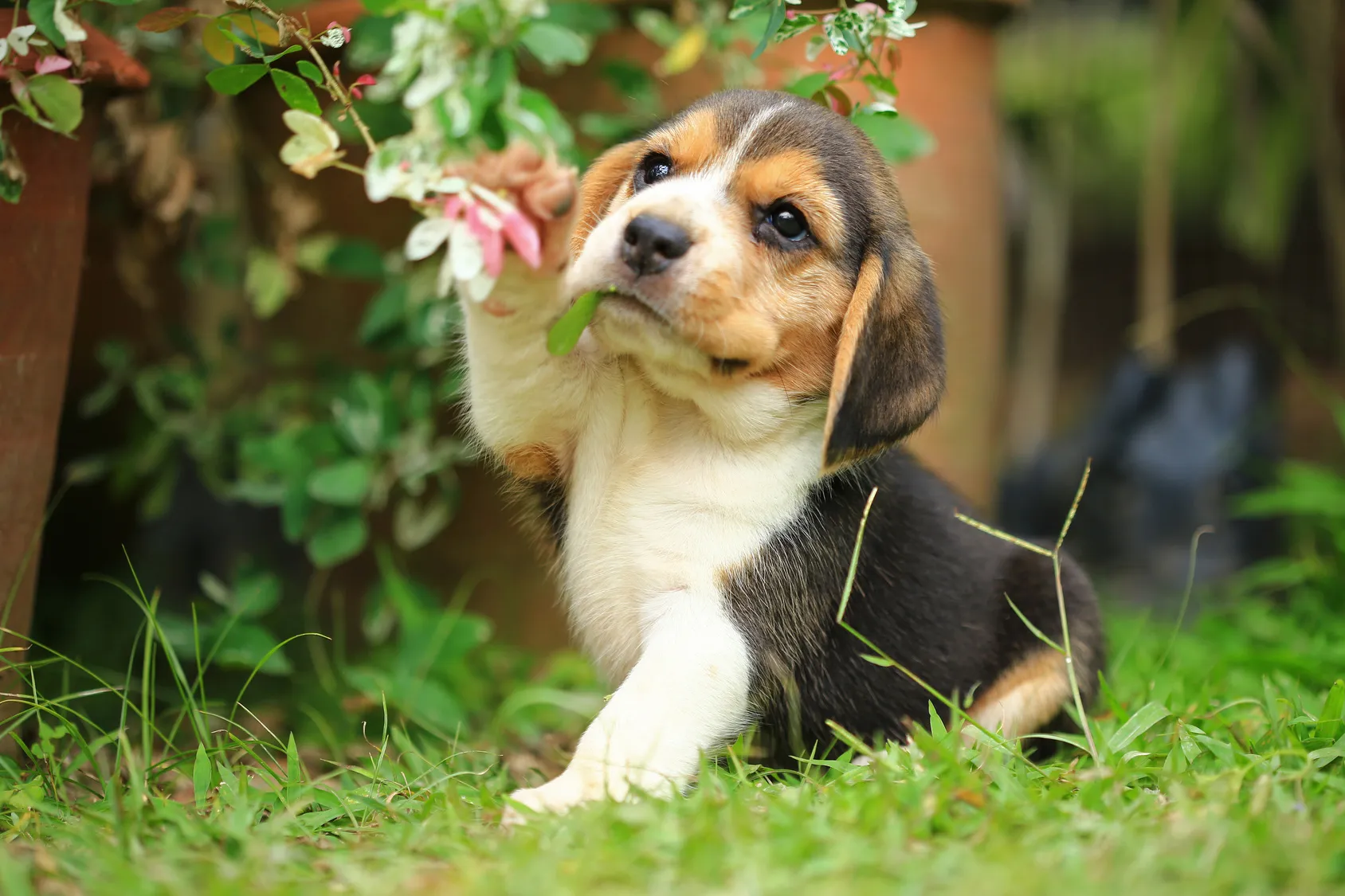
10. Beagle — Red-White Two Color Scent Hound
 Save
SaveActive families · Scent games · Secure yards
| Weight | Under 20–30 lbs |
| Height | Under 13–15 inches |
| Lifespan | 10–15 years |
| Energy Level | Moderate to high |
| Grooming Need | Weekly brushing |
| Shedding | Moderate |
The Beagle is a sturdy scent hound available in red-white and lemon-white coats. Adults stay under 15 inches tall. Beagles are social, curious, and strongly driven by smell. They suit active families willing to use secure fences, leashes, and food-based training.
Long ears frame a warm hound face. Red-white or lemon-white coats create a softer bicolor look.
Beagles love company, yet scent can override recall. One interesting smell may suddenly become the whole world.
“Imagine a dropped cracker becoming the most important scent trail in the house.”
— Illustrative owner scenario
- Compact but sturdy body
- Short coat needs little care
- Enjoys social family life
- May bay loudly
- Follows scents with focus
- Needs secure outdoor control
→ Compare Beagles with the best tri color dog breeds
How Do These Two Color Dog Breeds Compare Side by Side?
The 10 breeds differ most in energy, grooming, and size. Border Collies and Huskies demand the most daily work. Dalmatians and Springers also need active homes. Boston Terriers, Japanese Chins, and Shih Tzus fit smaller spaces more easily. Papillons offer small size with a surprisingly busy brain.
Beagles sit between companion dogs and hard-working athletes. French Bulldogs need less hard exercise, but heat changes outdoor plans. No coat pattern makes one breed easier than another. When I compare a shortlist, I check the hardest daily need first. That might be exercise, coat care, noise, or training. You might think size gives the clearest answer. Yet a small active dog can demand more time than a larger calm dog. Use this table to find the breed whose toughest trait still feels manageable.
| Breed | Common Two Color Look | Energy | Grooming | Best Fit |
|---|---|---|---|---|
| Border Collie | Black-white | Very high | Medium | Training homes |
| Boston Terrier | Black-white | Moderate | Low | Apartments |
| Siberian Husky | Black-white | High | High | Athletes |
| Dalmatian | White-black spots | High | Low | Runners |
| English Springer | Liver-white | High | Medium-high | Outdoor families |
| French Bulldog | Pied | Low-medium | Low | Small homes |
| Papillon | White with patches | Medium-high | Medium | Trick training |
| Japanese Chin | Black-white | Low-medium | Medium | Quiet homes |
| Shih Tzu | Gold-white | Low-medium | High | Indoor homes |
| Beagle | Red-white | Medium-high | Low | Active families |
Remove breeds above your true daily energy level first.
Which Two Color Dog Breed Is Right for You?
Your best two color dog depends on the life you already live. Choose Border Collies for serious training. Huskies suit endurance-focused owners. Springers work well for outdoor family life. Boston Terriers fit compact homes. Japanese Chins suit quieter adults. Shih Tzus work for owners who prefer grooming over long workouts.
Papillons are strong choices when you want small size and active learning. Beagles reward families that enjoy scent walks. Dalmatians need owners ready for athletic daily routines. French Bulldogs fit lower-impact homes, but climate matters. When I narrow a breed list, I never choose a dog requiring a new lifestyle. That rule prevents many poor matches. You might think you’ll become more active after adoption. Some owners do. Yet your current routine gives the safer forecast.
Is This Right for Me?
- If you love daily training → choose Border Collie.
- If you live small → choose Boston Terrier or Chin.
- If you run often → consider Husky or Dalmatian.
- If grooming doesn’t bother you → consider Shih Tzu.
This article covers purebred two color choices and normal home fit. Complex health concerns need your veterinarian or breed club.
What Care Do Two Color Dog Breeds Need?
Two color dogs don’t need special care because of their colors. Coat type controls grooming. Energy controls exercise. Size affects food, handling, and space. Long-coated Shih Tzus need much more brushing than short-coated Dalmatians. Huskies need far more coat work during seasonal shedding than Boston Terriers.
Most dogs also need regular nail care, dental care, training, exercise, and vet checks. The ASPCA general dog care guide recommends routine brushing based on coat needs. White areas may show stains and dirt sooner. Dark sections may make some debris harder to spot. When I check a coat, I focus on skin condition first. Color comes second. You might think white fur needs constant bathing. Frequent washing isn’t always the answer. Regular brushing often removes loose dirt first.
- Brush double coats more during seasonal shedding.
- Check long feathering for mats and burrs.
- Keep facial folds clean when needed.
- Check ears on spaniels and Beagles.
- Match exercise to breed, age, and weather.
For the opposite coat style, see our best solid color dog breeds.
What Most People Get Wrong About Two Color Dog Breeds
The biggest mistake is treating coat color like a personality test. A black-white Border Collie doesn’t behave like a black-white Boston Terrier. One comes from intense herding work. The other was developed as a compact companion. Their shared colors say almost nothing about their daily needs, trainability, size, or exercise load.
Coat color comes from genetics and pigment distribution. The VCA guide to canine coat color genetics explains how genes control pigment production and placement. Rare-looking colors also don’t prove better breeding. Health tests, temperament, structure, and breeder practices matter more. When color becomes the main sales pitch, I look harder at everything else. You might think paying more guarantees a rare and better dog. It doesn’t. A beautiful coat can’t replace sound health or good temperament.
Never choose a breeder from coat color alone.
If color variety interests you, our tri color dog breed guide explains 3-color patterns.
Final Thoughts on the Best Two Color Dog Breeds
The best two color dog is the one that fits your real routine. Coat beauty should narrow choices, not control them.
Start with energy, size, grooming, and training needs. Then pick the color pattern you love.
My one action for you is simple. Write down your daily dog-care time right now.
I’m Thomas Cutter, and that 2-minute check can prevent years of mismatch.
Frequently Asked Questions
What is a two color dog called?
A two color dog is often called bicolor, but breed terms can differ. Some standards use pied, parti-color, patched, or specific color names. The dog may show black-white, red-white, liver-white, or another pair. Always check the breed’s official color terms.
What is the best black and white dog breed?
The Border Collie is one of the best black and white breeds for active trainers. Boston Terriers fit smaller and calmer homes better. Siberian Huskies suit athletic owners who can manage shedding and exercise. Your lifestyle should decide which black-white breed ranks first.
Are two color dogs rare?
No, many two color dogs are not rare. Black-white, red-white, and liver-white coats appear in several well-known breeds. Rarity depends on the breed and exact pattern. A breeder calling a color rare doesn’t automatically make the dog healthier or more valuable.
Do two color dogs need special grooming?
No, two color dogs don’t need special grooming because of color alone. Coat length, texture, and density decide brushing needs. A short-coated Boston Terrier needs less coat work than a Shih Tzu. Match grooming to the breed instead of the color pattern.
Which two color dog breed is best for an apartment?
Boston Terriers and Japanese Chins are strong apartment choices from this list. Both have compact bodies and manageable exercise needs. Shih Tzus also adapt well indoors when grooming fits your schedule. Avoid choosing only by size, since small dogs can still have high energy.

Thomas Cutter is a lifelong dog owner and the founder of FindOutAboutDogs.com. With over 10 years of hands-on experience owning multiple breeds, Thomas created this site to provide honest, research-based dog advice that real owners can actually trust.
