10 Best Multi Color Dog Breeds With Stunning Coats
Quick Answer
The best multi color dog breed depends on your space, energy, and grooming time. Australian Shepherds lead for merle beauty. Bernese Mountain Dogs stand out for classic tricolor coats. Beagles suit smaller active homes. Cavaliers work well in apartments. Border Collies reward owners who want intense training and sport.
| Need | Top Pick |
|---|---|
| Most striking merle | Australian Shepherd |
| Calm giant tricolor | Bernese Mountain Dog |
| Smaller family fit | Beagle |
Choose your colorful dog this way:
- Choose an Aussie for daily training and sport.
- Choose a Berner for calm family life.
- Choose a Beagle for compact, playful energy.
A blue-merle coat can stop you mid-scroll. A crisp tricolor face can do the same.
I’m Thomas Cutter, a lifelong dog owner and founder of FindOutAboutDogs.com. For 2026, I’m ranking colorful breeds by more than looks.
Coat pattern matters, but daily fit matters more. The best dog must match your real routine.
- Merle, tricolor, roan, ticking, and parti-color create multi color coats.
- Color never predicts temperament, trainability, or family fit.
- High-drive herding breeds need far more work than Cavaliers or Beagles.
- Double-merle breeding can raise serious hearing and vision risks.
- Choose lifestyle fit first, then choose your favorite coat.


What Makes a Dog Breed “Multi Color”?
A multi color dog has two or more visible coat colors or patterns. Common patterns include tricolor, merle, roan, ticking, and parti-color. These patterns come from pigment genes, white spotting genes, and how color spreads across the coat.
They do not create a shared temperament. A blue-merle herder can act nothing like a tricolor hound. Most breed experts treat coat color as an appearance trait, not a behavior score. So if you love a certain pattern, use it only after checking exercise, size, grooming, and health.
The American Kennel Club breed guide lists accepted colors for each breed. The key lesson is simple. Pick the dog first and the paint job second. That rule keeps a beautiful coat from pulling you toward the wrong lifestyle match.
When I compare breed profiles, color is the fastest feature to notice. Daily energy is the feature that changes your life.
You might be thinking color is harmless to prioritize. It is, after the breed already fits you.
Now let’s look at the 10 breeds that combine standout coats with clear lifestyle differences.
What Are the 10 Best Multi Color Dog Breeds?
The 10 best multi color dog breeds are the Australian Shepherd, Bernese Mountain Dog, Beagle, Cavalier King Charles Spaniel, Border Collie, Collie, English Springer Spaniel, Cocker Spaniel, German Shorthaired Pointer, and Brittany. Each breed brings a distinct coat pattern and a distinct daily workload.
Aussies and Border Collies suit people who want demanding training. Berners bring classic tricolor beauty with calmer indoor energy. Beagles offer compact tricolor charm with a powerful nose. Cavaliers fit smaller homes. Springers, Cockers, GSPs, and Brittanys add sporting energy with patches, ticking, roan, or parti-color coats.
I ranked these breeds for visual variety, breed recognition, and practical ownership differences. This list covers purebred examples. If your dog is a mixed breed, coat genes can create even more combinations. The best choice still depends on the dog’s needs, not the number of colors.
When I build a list like this, I compare real care needs beside coat appeal. That stops looks from taking over the decision.
Start with the breed whose energy level feels normal for your week.
1. Australian Shepherd — The Merle Athlete
 Save
Save| Weight | 40–65 pounds |
| Height | 18–23 inches |
| Lifespan | 12–15 years |
| Energy Level | Very high |
| Grooming Need | Brush 2–3 times weekly |
| Shedding | Heavy seasonal shedding |
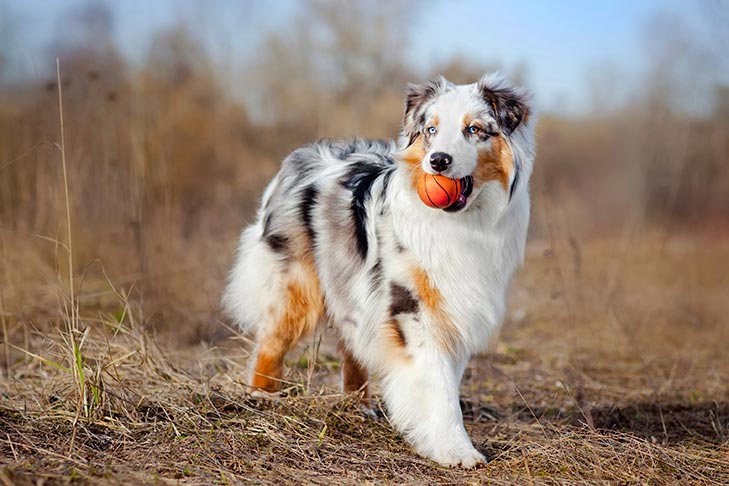
The Australian Shepherd is a striking multi color dog breed with blue-merle or red-merle coats. Adults weigh about 40 to 65 pounds. Aussies are smart, intense, and eager to work. They fit active homes that enjoy training, hiking, agility, or long outdoor days.
Blue merle can blend gray, black, white, and copper. Red merle adds warm rust tones instead.
Aussies learn fast and often invent jobs when bored. Give them work before they choose one.
“Scout runs agility courses with me on weekends. On school nights she does trick training.”
— Maya L., Australian Shepherd owner for 3 years
- Learns complex skills very fast
- Excels at dog sports
- Merle coats look highly distinct
- Needs heavy daily exercise
- Can herd children or pets
- Sheds hard during coat changes
→ dog breeds for active teenagers
2. Bernese Mountain Dog — The Classic Tricolor Giant
| Weight | 70–115 pounds |
| Height | 23–27.5 inches |
| Lifespan | 7–10 years |
| Energy Level | Moderate |
| Grooming Need | Brush 2–3 times weekly |
| Shedding | Heavy year-round shedding |
The Bernese Mountain Dog is a large tricolor breed with black, white, and rust markings. Adults weigh about 70 to 115 pounds. Berners are calm, people-focused, and steady indoors. They suit families with space, cooler weather, and time for heavy coat care.
Jet black covers most of the body. White blazes and rich rust points frame the face.
Berners look powerful, yet many move gently around family members. Their calm mood surprises new owners.
“He’s 110 lbs and our 2-year-old uses him as a pillow. He just lays there, breathing slowly.”
— Diane F., Bernese Mountain Dog owner for 4 years
- Naturally striking tricolor coat
- Usually calm inside the home
- Strong family-focused temperament
- Shorter lifespan than most picks
- Heavy coat sheds a lot
- Heat can be hard on them
→ best family dog breeds for kids
3. Beagle — The Tricolor Nose on Legs
| Weight | 20–30 pounds |
| Height | 13–15 inches |
| Lifespan | 10–15 years |
| Energy Level | Moderate to high |
| Grooming Need | Weekly brushing |
| Shedding | Moderate year-round shedding |
The Beagle is a compact multi color hound often seen in black, tan, and white. Adults usually weigh 20 to 30 pounds. Beagles are social, curious, and driven by scent. They fit active families that can use leashes, secure fences, and food-based training.
Long ears frame a warm face with bold color patches. A white tail tip stays easy to spot.
Beagles love company, but scent can beat recall training. Their nose can take control fast.
“He’s tracked a dropped goldfish cracker across three rooms. My kids think it’s a magic trick.”
— Priya N., Beagle owner for 4 years
- Compact but sturdy body
- Short coat needs little care
- Social with people and dogs
- Can bay very loudly
- Follows scents with tunnel vision
- Needs secure outdoor control
→ dog breeds for 9 to 12 year olds
4. Cavalier King Charles Spaniel — The Storybook Tricolor Companion
| Weight | 13–18 pounds |
| Height | 12–13 inches |
| Lifespan | 12–15 years |
| Energy Level | Moderate |
| Grooming Need | Brush 2–3 times weekly |
| Shedding | Moderate shedding |
The Cavalier King Charles Spaniel offers several rich coat patterns, including tricolor and Blenheim. Adults weigh only 13 to 18 pounds. Cavaliers are soft, social, and people-focused. They fit smaller homes where someone wants a close companion without extreme exercise needs.
Tricolor Cavaliers mix black, white, and tan in clean patches. Feathered ears add soft movement.
They look like lap dogs and love laps. Yet many also enjoy brisk walks and fetch.
“She’s 14 lbs and she’s somehow the most popular one in the house.”
— Lorraine C., Cavalier King Charles Spaniel owner for 9 years
- Easy size for small homes
- Gentle people-focused nature
- Several classic color patterns
- Needs regular ear care
- Can dislike long alone periods
- Health screening matters greatly
→ best dog breeds for first-time owners
5. Border Collie — The Patterned Work Genius
| Weight | 30–55 pounds |
| Height | 18–22 inches |
| Lifespan | 12–15 years |
| Energy Level | Very high |
| Grooming Need | Brush 2–3 times weekly |
| Shedding | Moderate seasonal shedding |
The Border Collie is a highly varied multi color dog breed with bicolor, tricolor, and merle coats. Adults weigh about 30 to 55 pounds. Border Collies are intense, quick learners with strong work drive. They fit skilled owners who can provide daily exercise and mental tasks.
Coats range from black-white classics to red, blue merle, and tricolor patterns. No two merles look alike.
Border Collies track motion with a famous herding stare. Without work, that focus can turn obsessive.
“My daughter taught our Border Collie 20 tricks in one summer. He learns faster than she does.”
— Rachel S., Border Collie owner for 6 years
- Huge range of coat patterns
- Learns new tasks quickly
- Excellent sport and work partner
- Needs intense daily mental work
- May herd moving children
- Poor fit for quiet homes
6. Collie — The Flowing Blue-Merle Classic
| Weight | 50–75 pounds |
| Height | 22–26 inches |
| Lifespan | 12–14 years |
| Energy Level | Moderate to high |
| Grooming Need | Weekly brushing; more for rough coats |
| Shedding | Moderate to heavy shedding |
The Collie is a graceful multi color breed found in sable-white, tricolor, blue merle, and white. Adults weigh about 50 to 75 pounds. Collies are watchful, trainable, and sensitive to family routines. They fit homes that want a gentler herding breed and can manage coat care.
Rough Collies carry a full mane and long outer coat. Blue merle adds gray, black, and tan.
Collies notice movement and family patterns quickly. Clear training can channel herding into calm watchfulness.
“Our Collie wanted to herd the cat at first. Training turned that into calm watching.”
— Hannah P., Collie owner for 6 years
- Elegant multi color coat choices
- Often responds well to training
- Moderate energy suits many homes
- Rough coats need steady brushing
- Can bark at new activity
- May herd running pets
7. English Springer Spaniel — The Feathered Parti-Color Worker
| Weight | 40–50 pounds |
| Height | 19–20 inches |
| Lifespan | 12–14 years |
| Energy Level | High |
| Grooming Need | Brush about 3 times weekly |
| Shedding | Moderate shedding |
The English Springer Spaniel is a lively sporting breed with black-white or liver-white coats. Some dogs also show tan markings or ticking. Adults weigh about 40 to 50 pounds. Springers are eager, busy, and people-focused. They fit active homes that enjoy games, walks, and training.
Their coat combines broad colored patches with white areas. Ticking can add small flecks across the legs.
Springers often start games by bringing toys to people. Field-bred dogs may need much more work.
“Our Springer finds every hidden tennis ball.”
— Colin S., English Springer Spaniel owner for 7 years
- Bright parti-color patterns
- Strong people-focused work style
- Great for fetch and scent games
- Feathering catches mud and burrs
- Needs daily active play
- Ears need regular checks
→ best hunting dog breeds for families
8. Cocker Spaniel — The Silky Parti-Color Charmer
| Weight | 20–30 pounds |
| Height | 13.5–15.5 inches |
| Lifespan | 10–14 years |
| Energy Level | Moderate |
| Grooming Need | Brush 3–4 times weekly |
| Shedding | Moderate shedding |
The Cocker Spaniel is a compact sporting breed with many coat choices, including parti-color patterns. Adults weigh about 20 to 30 pounds. Cockers are playful, soft, and close to their people. They fit gentle homes that can handle routine brushing, trims, and ear care.
Parti-color Cockers can blend white with black, red, brown, or tan. Long ears frame large dark eyes.
Cockers often stay close during quiet family time. Their sporting roots still show during scent games.
“Our Cocker waits beside my daughter during homework. She moves only when pencils drop.”
— Jamie L., Cocker Spaniel owner for 5 years
- Many rich color combinations
- Good size for smaller homes
- Enjoys close family contact
- Silky coat mats without care
- Ears need frequent cleaning
- Harsh handling can stress them
9. German Shorthaired Pointer — The Ticked Outdoor Powerhouse
| Weight | 45–70 pounds |
| Height | 21–25 inches |
| Lifespan | 10–12 years |
| Energy Level | Very high |
| Grooming Need | Weekly brushing |
| Shedding | Moderate shedding |
The German Shorthaired Pointer is an athletic multi color dog with liver-white, patched, or ticked coats. Adults weigh about 45 to 70 pounds. GSPs are bold, fast, and highly driven outdoors. They fit experienced active homes that can provide hard exercise and steady training.
Liver patches can sit over dense white ticking. Some coats look almost roan from a short distance.
GSPs love speed, scent, and human contact. A bored dog can become restless inside very fast.
“Our GSP runs with me first. After that, she plays softly with the kids.”
— Aaron T., German Shorthaired Pointer owner for 5 years
- Distinct patched and ticked coat
- Excellent running and hiking partner
- Short coat is easy to brush
- Needs vigorous daily exercise
- Can overwhelm quiet households
- Strong prey drive needs control
10. Brittany — The Orange-and-White Trail Spark
 Save
Save| Weight | 30–40 pounds |
| Height | 17.5–20.5 inches |
| Lifespan | 12–14 years |
| Energy Level | Very high |
| Grooming Need | Weekly brushing |
| Shedding | Moderate shedding |
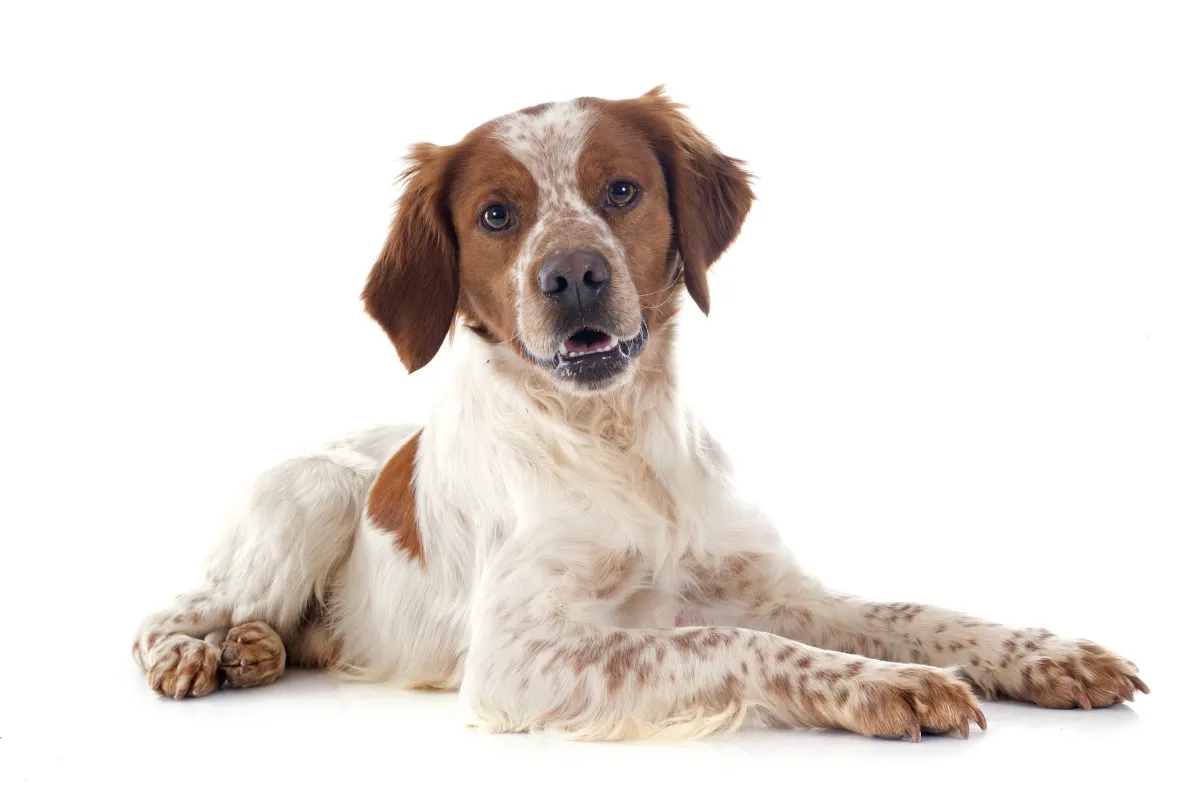
The Brittany is a bright sporting breed with orange-white, liver-white, or roan color patterns. Adults weigh about 30 to 40 pounds. Brittanys are quick, eager, and happiest with regular outdoor work. They fit active homes that enjoy hiking, running, training, and long play sessions.
Orange-white coats look bright and clean outdoors. Roan adds fine colored hairs through the white areas.
Brittanys work close to people and learn quickly. They settle best after real exercise, not short strolls.
“Our Brittany made the kids walkers. Everyone now takes a turn after school.”
— Kevin D., Brittany owner for 4 years
- Bright orange-white coat options
- Lighter build than many gundogs
- Fast learner with active owners
- Too busy for couch homes
- Needs hard daily exercise
- Can chase birds outdoors
How Do These Multi Color Dog Breeds Compare Side by Side?
| Breed | Coat Pattern | Energy | Grooming | Best Fit |
|---|---|---|---|---|
| Australian Shepherd | Merle, tricolor | Very high | Medium-high | Dog sports |
| Bernese Mountain Dog | Tricolor | Moderate | High | Calm families |
| Beagle | Tricolor, bicolor | Medium-high | Low | Active families |
| Cavalier | Tricolor, Blenheim | Moderate | Medium | Apartments |
| Border Collie | Bicolor, tricolor, merle | Very high | Medium | Skilled owners |
| Collie | Sable-white, tricolor, merle | Medium-high | Medium-high | Families |
| English Springer | Parti-color, ticking | High | Medium-high | Outdoor families |
| Cocker Spaniel | Parti-color | Moderate | High | Gentle homes |
| GSP | Patched, ticked | Very high | Low | Runners |
| Brittany | Bicolor, roan | Very high | Medium | Trail families |
When a shortlist feels too big, remove every breed above your true energy level. That step works fast.
Which Multi Color Dog Breed Is Right for You?
Your best match depends on four things: daily exercise, living space, grooming tolerance, and training interest. If you want a lower-demand small dog, start with the Cavalier. If you want a compact family hound, choose the Beagle and plan for scent control. If you want a calm giant, the Bernese Mountain Dog stands out.
If training is your hobby, an Australian Shepherd or Border Collie can be deeply rewarding. Outdoor athletes may prefer the GSP or Brittany. Families wanting a balanced sporting dog can look at Springers or Cockers. Collies sit between intense herders and softer family companions.
I use this rule when narrowing breeds: never choose a dog that requires a new personality from you. Choose one whose normal needs already fit your week. That is more reliable than falling for a coat photo.
If you want calm size → Bernese Mountain Dog. If you want compact charm → Beagle or Cavalier. If you want serious sport → Aussie, Border Collie, GSP, or Brittany.
When people choose by lifestyle first, the coat becomes a bonus. That is the order I recommend.
What Most People Get Wrong About Multi Color Dog Breeds
The biggest mistake is assuming a rare coat color makes a dog better, healthier, or more valuable. Color is only one trait. A beautiful merle dog still needs sound breeding, health screening, stable temperament, and proper care.
Merle also deserves special caution. The pattern comes from the M locus, and breeding two merle dogs can produce double-merle puppies. Those puppies face a higher risk of hearing and vision problems.
The AKC guide to merle genetics explains the pattern and breeding risk. The VCA coat color genetics guide also explains how coat genes work. So if color drives your breeder search, ask about health tests before shade, spots, or eye color.
Never pay extra for rare color without checking health tests and pedigree records. Ask how both parents were screened before discussing coat shade or eye color.
When color becomes the main sales pitch, I look harder at the breeder’s health practices.
How Do You Care for a Multi Color Dog’s Coat?
Multi color coats do not need special products just because they contain several colors. Coat type controls care. Short-coated Beagles and GSPs usually need simple weekly brushing. Medium double coats on Aussies and Border Collies need more work during seasonal shedding.
Long rough Collies and Bernese Mountain Dogs need deeper brushing to prevent mats. Spaniels need special attention around feathering and ears. Bathing should focus on skin health, not making white patches look brighter. Harsh whitening products can irritate skin.
Use a dog-safe shampoo and rinse it fully. Most experts agree that regular brushing does more for coat health than frequent bathing. So if you want a colorful dog that stays neat, choose the coat length you can maintain all year. Color itself is the easy part. Texture, undercoat, and feathering create the real workload.
Brush to the skin. Surface brushing can leave hidden mats underneath.
When grooming feels like a chore before adoption, choose a shorter coat now.
What Mistakes Should You Avoid With Colorful Dog Breeds?
Do not choose a dog only because its coat looks rare, dramatic, or social-media friendly. That mistake often hides the bigger questions. Can you meet the dog’s exercise needs? Can you afford grooming?
Do you understand prey drive, herding, scent drive, or separation needs? Another common error is assuming white or merle areas need special daily cleaning. Healthy skin needs gentle care, not constant scrubbing. Owners also underestimate shedding because patterned coats can hide loose hair well. The fur still lands on floors and furniture. Finally, never assume two dogs of the same color will act alike.
Temperament comes from genetics, breeding, socialization, and individual experience. When I compare potential matches, I put coat color at the end of the checklist. That one change keeps the decision practical and helps prevent regret.
- Do not buy for color before health.
- Do not ignore energy level.
- Do not underestimate coat care.
- Do not treat merle as a personality type.
The next step is simple. Shortlist two breeds, then meet real dogs in person.
Conclusion
The best multi color dog breed is the one that fits your normal week.
Aussies win for merle drama. Berners bring classic tricolor beauty. Beagles offer compact color and fun.
Right now, write your daily exercise time and grooming limit. Then remove every breed above those limits.
I’m Thomas Cutter, and that two-minute filter is where I’d start.
Frequently Asked Questions
What dog breed has the most color variations?
Border Collies have an unusually wide range of accepted colors and patterns. You can see black-white, red-white, tricolor, merle, sable, and more. Australian Shepherds also offer striking merle and tricolor combinations. Always check the breed standard before treating a rare shade as normal.
What is a tricolor dog?
A tricolor dog shows three visible coat colors. Black, white, and tan is a common mix. Bernese Mountain Dogs have a classic fixed tricolor look. Beagles, Collies, and Cavaliers can also appear in tricolor patterns, though exact markings vary from dog to dog.
Is merle the same as tricolor?
No. Merle creates mottled or marbled patches within pigmented areas. Tricolor simply means three visible colors appear on the coat. A dog can be merle and also show white or tan markings. The two terms describe different parts of coat appearance.
Are multi color dogs harder to groom?
No. Coat type matters more than color count. A short-haired tricolor Beagle needs less grooming than a solid long-haired dog. Double coats, feathering, and long hair create extra work. Choose grooming needs by texture and length, not by pattern.
Are rare coat colors less healthy?
Not always. Some color genes have health links, while many do not. Merle breeding needs special care because double-merle puppies face higher hearing and vision risks. Ask breeders about genetic tests, health screens, and parent pairings before paying extra for a rare-looking coat.

Thomas Cutter is a lifelong dog owner and the founder of FindOutAboutDogs.com. With over 10 years of hands-on experience owning multiple breeds, Thomas created this site to provide honest, research-based dog advice that real owners can actually trust.
