10 Best Bi Color Dog Breeds: Stunning Two-Tone Picks for Real Homes
Quick Answer
The 10 best bi color dog breeds include Border Collies, Boston Terriers, Siberian Huskies, English Springer Spaniels, Brittanys, Beagles, Japanese Chins, Newfoundlands, Basenjis, and French Bulldogs. Your best match depends on energy, size, grooming needs, training skill, and climate. Coat color should come after lifestyle fit.
| Need | Strong Pick |
|---|---|
| Active training home | Border Collie |
| Small city home | Boston Terrier |
| Quiet toy companion | Japanese Chin |
Choose your bi color dog this way:
- Choose by energy before coat pattern.
- Match adult size to your real space.
- Check health tests before choosing color.
A crisp black-and-white face can stop you mid-scroll. Two-tone coats often look sharp and memorable.
But a beautiful coat tells you little about daily life. I’m Thomas Cutter, and I focus on practical breed choices for real homes.
The smartest choice starts with temperament, exercise, size, and care. Then you can enjoy the color.
- Bi color means two visible coat colors or color areas.
- Coat color does not predict a dog’s temperament.
- Border Collies and Huskies need demanding daily activity.
- Boston Terriers and Japanese Chins suit smaller spaces better.
- Health, temperament, and breeder practices matter more than color.


What Makes a Dog Breed Bi Color?
A bi color dog displays two clear coat colors or color areas. Common examples include black and white, red and white, liver and white, or fawn and white. Some breeds offer several two-color combinations. Others have one famous bi color pattern. The term describes appearance, not personality, health, or working ability.
Genes control pigment and where that pigment appears. White spotting can create sharp collars, blazes, socks, chests, or large body patches.
The VCA guide to canine coat color genetics explains how several genes interact. A dog’s final coat may look simple while its genetics remain complex.
Bi color also differs from tricolor. A black, white, and tan Beagle has three visible colors.
A red-and-white Beagle has two. You can compare that difference in our guide to the best tri color dog breeds.
This article covers purebred breeds with recognized or common two-tone coats. Mixed dogs can show countless other patterns.
What Are the 10 Best Bi Color Dog Breeds?
The strongest bi color breed choices cover many lifestyles. Border Collies suit serious trainers. Boston Terriers fit smaller homes. Huskies reward highly active owners. Springers and Brittanys suit outdoor families. Japanese Chins offer a smaller companion. Newfoundlands bring giant size. Basenjis offer a clean short coat, while French Bulldogs suit owners wanting compact companionship.
I ranked these dogs for coat appeal and practical variety. No breed ranks higher because its coat is rarer.
Daily fit comes first. A stunning Siberian Husky can become overwhelming in a low-energy home.
A Boston Terrier may fit that household far better. Start with your normal week, not your favorite photo.
1. Border Collie — Bi Color Dog Breed for Serious Training
 Save
Save| Weight | 30–55 pounds |
| Height | 18–22 inches |
| Lifespan | 12–15 years |
| Energy Level | Very high |
| Grooming Need | Brush 2–3 times weekly |
| Shedding | Moderate seasonal shedding |
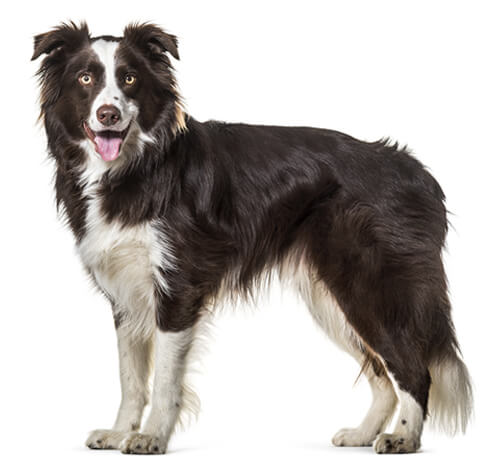
The Border Collie is a medium bi color dog famous for black-and-white coats. Adults usually weigh 30–55 pounds. They learn quickly and seek mental work. They fit skilled owners who enjoy training, running, herding, agility, or structured dog sports every week.
The classic coat places dark patches against bright white markings. Rough and smooth coats both occur.
Border Collies watch movement with intense focus. That famous stare comes from their herding background.
Composite owner perspective: Training can feel less like teaching and more like keeping up.
- Learns complex tasks fast
- Iconic black-white coat
- Outstanding sport partner
- Needs intense mental work
- May herd moving children
- Poor low-activity fit
Some Border Collies also carry sable coats. See our sable color dog breed guide for that variation.
2. Boston Terrier — The Famous Tuxedo Companion
| Weight | 12–25 pounds |
| Height | About 15–17 inches |
| Lifespan | 11–13 years |
| Energy Level | Moderate |
| Grooming Need | Low |
| Shedding | Low to moderate |
The Boston Terrier is a compact bi color dog with famous tuxedo markings. Adults weigh about 12–25 pounds. The short coat needs little brushing. Bostons enjoy play and human contact without herding-dog workloads, making them useful choices for city homes and smaller households.
White usually covers the chest, muzzle, and facial blaze. Dark coat areas create the formal look.
Bostons often turn normal routines into games. Their short muzzle also reduces heat tolerance.
Composite owner perspective: Expect a compact dog with a surprising talent for comedy.
- Low coat-care burden
- Compact sturdy size
- Moderate exercise needs
- Heat needs careful management
- Some snore loudly
- Eye protection matters
3. Siberian Husky — The Cold-Weather Two-Tone Athlete
| Weight | 35–60 pounds |
| Height | 20–23.5 inches |
| Lifespan | 12–14 years |
| Energy Level | Very high |
| Grooming Need | Moderate |
| Shedding | Heavy seasonal shedding |
The Siberian Husky is an athletic bi color breed with dramatic white markings. Black-and-white, gray-and-white, and red-and-white coats are familiar choices. Huskies need substantial daily movement. They fit experienced owners who enjoy running, hiking, training, and secure outdoor management.
The thick double coat creates a sharp face mask. Many dogs also have bright facial contrast.
Huskies combine social behavior with independent decisions. A weak fence can become a serious problem.
Composite owner perspective: Exercise the Husky before asking the Husky to relax.
- Striking two-tone masks
- Built for active owners
- Social pack-oriented nature
- Sheds huge seasonal amounts
- Needs secure containment
- Poor hot-weather athlete
4. English Springer Spaniel — The Feathered Black-and-White Worker
| Weight | 40–50 pounds |
| Height | 19–20 inches |
| Lifespan | 12–14 years |
| Energy Level | High |
| Grooming Need | Moderate to high |
| Shedding | Moderate |
The English Springer Spaniel is a medium sporting breed with black-and-white or liver-and-white coats. Adults weigh about 40–50 pounds. Springers combine lively outdoor drive with close human contact. They suit families that enjoy walks, retrieving games, training, and regular coat care.
Colored patches sit against white areas and feathered legs. Ticking can add small colored specks.
Springers often carry toys directly to people. Field lines can show especially strong working drive.
- Classic parti-color coat
- Enjoys active family games
- Responds well to training
- Feathering collects outdoor debris
- Ears need regular checks
- Needs daily exercise
5. Brittany — The Orange-and-White Trail Partner
 Save
Save| Weight | 30–40 pounds |
| Height | 17.5–20.5 inches |
| Lifespan | 12–14 years |
| Energy Level | Very high |
| Grooming Need | Moderate |
| Shedding | Moderate |
The Brittany is a lean bi color sporting breed known for orange-and-white and liver-and-white coats. Adults weigh only 30–40 pounds. Brittanys run, hunt, train, and play with huge enthusiasm. They suit outdoor owners who want a lighter athletic dog with strong human focus.
Orange patches create bright contrast against white. Some coats also show roan or ticking.
Brittanys tend to work near their people. Short walks rarely satisfy their full activity needs.
- Bright orange-white coat
- Light athletic build
- Fast enthusiastic learner
- Needs hard daily activity
- Can chase birds
- May become restless indoors
6. Beagle — The Compact Red-and-White Scent Hound
| Weight | Under 20–30 pounds |
| Height | Up to 15 inches |
| Lifespan | 10–15 years |
| Energy Level | Moderate to high |
| Grooming Need | Low |
| Shedding | Moderate |
The Beagle is a compact hound that can appear in handsome two-color coats. Red-and-white and lemon-and-white dogs provide clear bi color examples. Beagles bring strong scent drive, sturdy size, and low coat care. They suit active homes prepared for leashes, fences, and nose-led adventures.
Long ears frame a broad hound face. White tail tips stay easy to spot outdoors.
A Beagle may hear your recall command clearly. An exciting scent can still win.
- Easy short-coat care
- Compact sturdy body
- Enjoys scent games
- Can bay loudly
- Scent may override recall
- Needs secure boundaries
7. Japanese Chin — The Silky Black-and-White Lapdog
| Weight | 7–11 pounds |
| Height | 8–11 inches |
| Lifespan | 10–12 years |
| Energy Level | Low to moderate |
| Grooming Need | Moderate |
| Shedding | Moderate |
The Japanese Chin is a tiny bi color companion with a silky black-and-white coat. Red-and-white coats also occur. Adults weigh only 7–11 pounds. Chins are graceful, generally quiet, and less exercise-driven than sporting breeds. They suit careful homes wanting a small indoor companion.
The feathered coat frames a broad face and plumed tail. Dark patches can create striking facial balance.
Many Chins act almost catlike. Some enjoy climbing onto furniture backs and high resting spots.
- Tiny apartment-friendly size
- Elegant two-tone coat
- Lower exercise demand
- Heat needs close care
- Small body needs protection
- Silky coat needs brushing
8. Newfoundland — The Giant White-and-Black Gentle Worker
| Weight | 100–150 pounds |
| Height | About 26–28 inches |
| Lifespan | 9–10 years |
| Energy Level | Moderate |
| Grooming Need | High |
| Shedding | Heavy |
The Newfoundland is a giant working breed that includes a dramatic white-and-black coat. Adults can weigh 100–150 pounds. Newfoundlands need space, coat care, and careful heat management. They suit owners prepared for giant-dog costs, drool, shedding, training, and slower physical maturity.
White-and-black dogs carry large dark patches across a heavy coat. Their sheer scale makes the pattern dramatic.
Newfoundlands often move more gently than their size suggests. Their mass still demands early manners.
- Dramatic giant appearance
- Strong water-working heritage
- Usually steady family presence
- Heavy grooming workload
- Giant ownership costs
- Heat can be difficult
9. Basenji — The Clean Red-and-White Independent Hound
| Weight | 22–24 pounds |
| Height | 16–17 inches |
| Lifespan | 13–14 years |
| Energy Level | High |
| Grooming Need | Low |
| Shedding | Low |
The Basenji is a compact hound with crisp red-and-white or black-and-white coat options. Adults weigh about 22–24 pounds. The short coat needs little care. Basenjis combine athletic movement with independent thinking, so they suit experienced owners who value training, management, and secure exercise.
White feet, chest, and tail accents contrast against rich body color. The curled tail completes the look.
Basenjis don’t bark like most dogs. They can still produce several unusual sounds.
- Low grooming needs
- Clean compact body
- Distinct red-white pattern
- Independent training style
- Strong chase instinct
- Secure fencing matters
10. French Bulldog — The Compact Pied City Companion
 Save
Save| Weight | Under 28 pounds |
| Height | 11–13 inches |
| Lifespan | 10–12 years |
| Energy Level | Low to moderate |
| Grooming Need | Low |
| Shedding | Moderate |
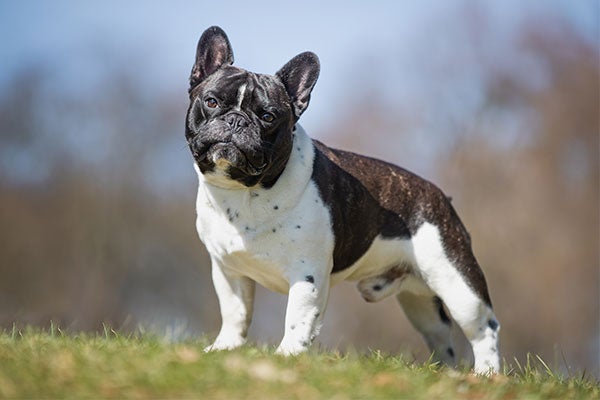
The French Bulldog is a compact companion that can show clear pied or two-color coats. Fawn-and-white combinations are familiar examples. Adults stay under 28 pounds. Frenchies need less hard exercise than sporting breeds, but their short muzzle makes careful heat and breathing management essential.
Large upright ears sit above a broad, short face. Pied markings can create bold body patches.
Frenchies enjoy play but lack endurance for hard heat. Summer exercise needs extra care.
- Compact city-friendly size
- Low grooming burden
- Moderate exercise demand
- Heat risk needs management
- Breathing health needs attention
- Vet costs can rise
How Do These Bi Color Dog Breeds Compare Side by Side?
The breeds differ far more in lifestyle needs than coat appearance. Border Collies, Huskies, Springers, and Brittanys demand active routines. Boston Terriers, Japanese Chins, and French Bulldogs suit smaller spaces more easily. Newfoundlands need giant-breed budgets and room. Basenjis need experienced management, while Beagles need strong scent control.
| Breed | Common Bi Color | Energy | Grooming | Best Fit |
|---|---|---|---|---|
| Border Collie | Black-white | Very high | Medium | Dog sports |
| Boston Terrier | Black-white | Moderate | Low | City homes |
| Siberian Husky | Black-white | Very high | Medium | Active owners |
| Springer Spaniel | Liver-white | High | Medium-high | Outdoor families |
| Brittany | Orange-white | Very high | Medium | Hikers |
| Beagle | Red-white | Medium-high | Low | Active families |
| Japanese Chin | Black-white | Low-medium | Medium | Apartments |
| Newfoundland | White-black | Moderate | High | Large homes |
| Basenji | Red-white | High | Low | Skilled owners |
| French Bulldog | Fawn-white | Low-medium | Low | Small homes |
Color is only one way to group dogs. You can also compare these picks with our best multi color dog breeds.
Which Bi Color Dog Breed Is Right for You?
Your best breed is the dog whose normal needs already fit your life. Choose a Border Collie only when training feels like a hobby. Choose a Boston Terrier or Japanese Chin for easier small-space management. Pick a Springer or Brittany for outdoor routines. Consider a Newfoundland only when giant-dog care fits your budget and home.
Is This Right for Me?
- If you love intense training → Border Collie.
- If you want city-friendly size → Boston Terrier.
- If you run and hike often → Brittany or Husky.
- If you want a quiet toy dog → Japanese Chin.
Don’t choose a high-energy dog because you plan to become more active. Choose for the life you already live.
When I compare breeds, that rule removes many bad matches fast. Coat preference can break the final tie.
What Most People Get Wrong About Bi Color Dog Breeds
The biggest mistake is linking coat color with behavior or quality. Black-and-white dogs aren’t smarter because of their markings. Rare colors aren’t automatically better. Coat genes mainly affect appearance, although certain specific genetic patterns can carry health concerns. Temperament, exercise needs, structure, breeding practices, and health screening deserve far more attention.
Another mistake involves confusing bi color with merle. Merle creates irregular diluted and darker patches.
The pattern needs special breeding care. The AKC explanation of merle genetics warns against merle-to-merle breeding.
Never pay more for color before checking health tests and breeder practices.
Solid coats can be just as attractive and healthy. See our solid color dog breed guide for comparison.
How Should You Care for a Bi Color Dog’s Coat?
Care for the coat type, not the number of colors. A short-coated Boston Terrier needs far less brushing than a Newfoundland. Huskies need extra work during seasonal coat blows. Springers need attention around feathering and ears. Japanese Chins need gentle brushing to prevent tangles. White areas may show dirt faster, but they don’t need harsh cleaning.
Use a brush suited to the coat. Check skin while brushing and watch for redness or irritation.
Bathing too often can dry healthy skin. Use a dog-safe shampoo when the coat truly needs washing.
Photograph your dog’s normal skin and coat. Changes become easier to spot.
Diet, parasite control, and health also affect coat quality. Dull fur can have causes beyond grooming.
What Mistakes Should New Bi Color Dog Owners Avoid?
New owners often choose by appearance, underestimate adult energy, or ignore breed-specific health needs. Another common error involves buying a puppy from a seller who markets unusual color before health. A responsible choice starts with lifestyle fit, parent health tests, stable temperament, and realistic care costs. Color comes near the end.
- Don’t choose a Husky for its eyes alone.
- Don’t underestimate a Border Collie’s mental needs.
- Don’t treat Frenchies as heat-tolerant athletes.
- Don’t ignore Newfoundland grooming and size costs.
- Don’t assume a Beagle will stay beside you outdoors.
The American Kennel Club breed directory can help you check standard breed traits before deciding.
When a breeder leads with color and avoids health questions, keep looking. A beautiful puppy still needs sound breeding.
Final Thoughts on the Best Bi Color Dog Breeds
The best bi color dog breed is the one that fits your real routine.
Start with energy, size, grooming, health, and temperament. Treat the two-tone coat as a bonus.
Your one action today is simple. Cross out every breed whose activity level exceeds yours.
I’m Thomas Cutter, and that single step is where I’d start any breed shortlist.
Frequently Asked Questions
What Does Bi Color Mean in Dogs?
Bi color means a dog’s visible coat has two main colors or color areas. Black and white is common, but red-white, liver-white, and fawn-white also occur. Breed standards describe accepted colors differently, so the exact pattern depends on the breed.
Are Black-and-White Dogs Always Considered Bi Color?
Many black-and-white dogs are bi color when those are their only visible coat colors. However, small tan points can make a dog tricolor. Merle and ticking may also make simple labels less clear. Check the breed’s accepted color terms when exact classification matters.
Does a Bi Color Coat Affect a Dog’s Temperament?
No. A two-color coat does not make a dog calmer, smarter, friendlier, or easier to train. Breed traits, genetics, socialization, training, health, and individual personality matter far more. Choose the breed for behavior and care needs before choosing a favorite color.
Which Bi Color Dog Breed Is Best for Apartments?
Boston Terriers and Japanese Chins are among the easier apartment choices on this list. Their smaller bodies make indoor management simpler. French Bulldogs also fit smaller homes, but owners must understand their heat and breathing risks. Daily exercise and training still matter in every apartment.
Which Bi Color Dog Breed Is Best for Active Owners?
Border Collies, Siberian Huskies, Brittanys, and English Springer Spaniels suit highly active owners best. Their needs differ, though. Border Collies demand intense mental work, Huskies need endurance exercise, and sporting breeds thrive on outdoor games. Pick the activity style that matches your week.

Thomas Cutter is a lifelong dog owner and the founder of FindOutAboutDogs.com. With over 10 years of hands-on experience owning multiple breeds, Thomas created this site to provide honest, research-based dog advice that real owners can actually trust.
