10 Best Dog Brushes in 2026: Choose by Coat Type
The best dog brush for everyday medium-coat care is the Hertzko Self-Cleaning Slicker Brush, with retractable pins for easier cleanup. We evaluated 10 dog brushes using published features, coat suitability, cleaning ease, and handling characteristics rather than hands-on testing. Brushes that look similar can work very differently on short, curly, and double coats. Whether you need gentler grooming, shedding control, or detangling, this guide helps match the tool to your dog.


Quick Comparison: All 10 Dog Brushes Ranked
Rankings reflect how convincingly each tool fits its intended coat and grooming task. The ratings are transparent editorial estimates based on published features, not laboratory scores or consumer review averages.
| # | Product | Best For | Editorial Score | Badge | |
|---|---|---|---|---|---|
| 1 | Hertzko Self-Cleaning Slicker Brush for Dogs and Cats | routine brushing of medium and moderately long coats | 4.7/5 | Best Overall | View → |
| 2 | KONG ZoomGroom Dog Brush | short, smooth coats and bath-time massage | 4.6/5 | Best Short Hair | View → |
| 3 | Chris Christensen Big G Slicker Brush | long, thick, curly, and doodle coats | 4.4/5 | Best Curly Coats | View → |
| 4 | Safari by Coastal Dog Self-Cleaning Slicker Brush | owners who want a retractable slicker in several sizes | 4.6/5 | Best Easy Cleanup | View → |
| 5 | FURminator Undercoat deShedding Tool for Medium Dogs, Short Hair | medium-sized short-haired dogs with an undercoat | 4.6/5 | Best Heavy Shedding | View → |
| 6 | Hartz Groomer’s Best Combo Brush for Dogs | owners who want pin and bristle grooming together | 4.5/5 | Best Two-in-One | View → |
| 7 | Tangle Teezer Pet Teezer Detangling Dog Grooming Brush | fine, tangle-prone hair and gentle wet-or-dry grooming | 4.6/5 | Best Gentle Detangling | View → |
| 8 | JW Pet GripSoft Double-Row Undercoat Rake | loosening dead undercoat in dense double coats | 4.4/5 | Best Double Coat | View → |
| 9 | SleekEZ Original Medium Grooming Tool | lifting shedding hair from suitable medium-to-large dogs | 4.6/5 | Best Loose Hair Lift | View → |
| 10 | Safari by Coastal Dog Soft Slicker Brush | milder everyday grooming with coated wire tips | 4.3/5 | Best Soft Slicker | View → |
How We Chose These Dog Brushes
We reviewed ten named products against published manufacturer features, coat guidance from the American Kennel Club and brush-selection advice from VCA Animal Hospitals. We did not physically test the brushes or interview an expert.
Products examined
10 commercially named grooming tools; all have a brand or retailer page describing their design.
Three scoring criteria
Coat fit, cleaning ease, and handling/control. Each is an editorial estimate out of five.
Evidence limits
No independent wear tests, dog trials, expert interviews, or verified measurement series were performed.
What we avoided
Unverifiable pain-free promises, invented testing statistics, and a single brush recommendation for every coat.
What to Look for When Buying a Dog Brush
Start with your dog’s coat structure and how it sheds. Selecting a brush by appearance alone can leave tangles behind or make grooming uncomfortable.
1. Coat length and texture
Short, flat coats generally suit rubber curries or soft bristles; long and curly coats often need slickers or pin brushes. Dense double coats may benefit from a suitable undercoat rake in addition to a finishing brush.
A brush that works for a Labrador may not suit a poodle.
2. Pin depth and tip comfort
Match the pin length and stiffness to the coat rather than simply choosing the firmest tool. A long slicker can reach beneath curls, while a soft coated-tip brush may be easier to control on delicate areas.
Use minimal pressure and stop at the first sign of irritation.
3. Shedding versus detangling
A deShedding edge, rubber curry, and slicker perform different jobs. The FURminator-style edge targets loose undercoat, while a slicker tackles light tangles; a metal comb helps check that longer fur is actually separated.
For tightly matted fur, ask a groomer rather than pulling.
4. Cleaning and grip
One-button pin retraction is convenient when a brush repeatedly fills with hair, but it does not make a tool more effective on every coat. A secure grip and appropriately sized head make reaching the chest, flanks, and legs easier.
Check whether the brush head can be cleaned and dried completely.

Hertzko Self-Cleaning Slicker Brush for Dogs and Cats
When weekly brushing turns into a battle with loose fur stuck in the tool, an easy-release slicker is a practical starting point. The Hertzko design uses fine, bent wire pins to pick up shed hair and minor tangles, then retracts those pins with a button so collected fur can be lifted away. Its contoured grip is useful when brushing the sides and back of a medium-coated dog. Choose it for routine maintenance, not for cutting out established mats. Very thin coats, sensitive skin, and tightly packed curls may call for a softer or longer-pinned tool instead.
- Retractable pins simplify fur removal
- Fine angled wires lift loose coat
- Easy-grip handle supports steady strokes
- Not a substitute for professional dematting
- Wire pins need very light pressure
4.7/5
4.9/5
4.4/5
Product details checked against published product information.

KONG ZoomGroom Dog Brush
Short-coated dogs often need loose fur lifted without fine metal pins scraping through a nearly flat coat. KONG ZoomGroom takes a different approach: flexible rubber fingers massage while collecting shed hairs, and the same tool can be used with shampoo during bathing. The manufacturer lists three-quarter-inch rubber fingers and offers smaller and regular versions. It is easy to explain to a nervous dog because the motion feels more like a massage than combing. However, it cannot separate knots in long fur or reach dense undercoat as efficiently as a specialized rake. Choose it for smooth-coated daily care.
- Flexible fingers suit smooth coats
- Works during baths or dry brushing
- No sharp metal pins against skin
- Cannot untangle long, knotted fur
- Collected hair may need wiping away
4.8/5
4.5/5
4.5/5
Product details checked against published product information.

Chris Christensen Big G Slicker Brush
Dense curls can look brushed on top while small knots remain close to the skin. The Chris Christensen Big G is designed for deeper work on long and cottony coats, using 27 mm stainless-steel pins set into a flexible cushion. Its curved back and elongated handle allow controlled movement around the body, and the range includes different head sizes for detailed areas. This is a strong choice for doodles and poodles whose coats require frequent attention. It is less suitable for short-haired dogs, and the pinned surface must be cleaned by hand rather than using an ejector button.
- 27 mm pins reach through deep coats
- Flexible cushion allows controlled strokes
- Several heads suit different body areas
- Needs manual hair removal
- Too specialized for very short coats
4.9/5
3.5/5
4.8/5
Product details checked against published product information.

Safari by Coastal Dog Self-Cleaning Slicker Brush
A brush with a head too big for your dog can make awkward grooming areas harder to reach. Safari offers its self-cleaning slicker in small, medium, and large versions, with retractable stainless-steel pins and a nonslip handle. That gives owners a practical way to match the brush to a dog’s body size while keeping fur removal simple. It can help with routine tangles and loose hair across many coats when handled gently. The limitation is the same as with other wire slickers: hard pressure can irritate skin, and deep, tight mats require a different approach.
- Three sizes fit different dogs
- Stainless pins retract for cleaning
- Non-slip handle aids control
- Pins may feel firm on delicate skin
- Not intended for severe mat removal
4.5/5
4.9/5
4.4/5
Product details checked against published product information.
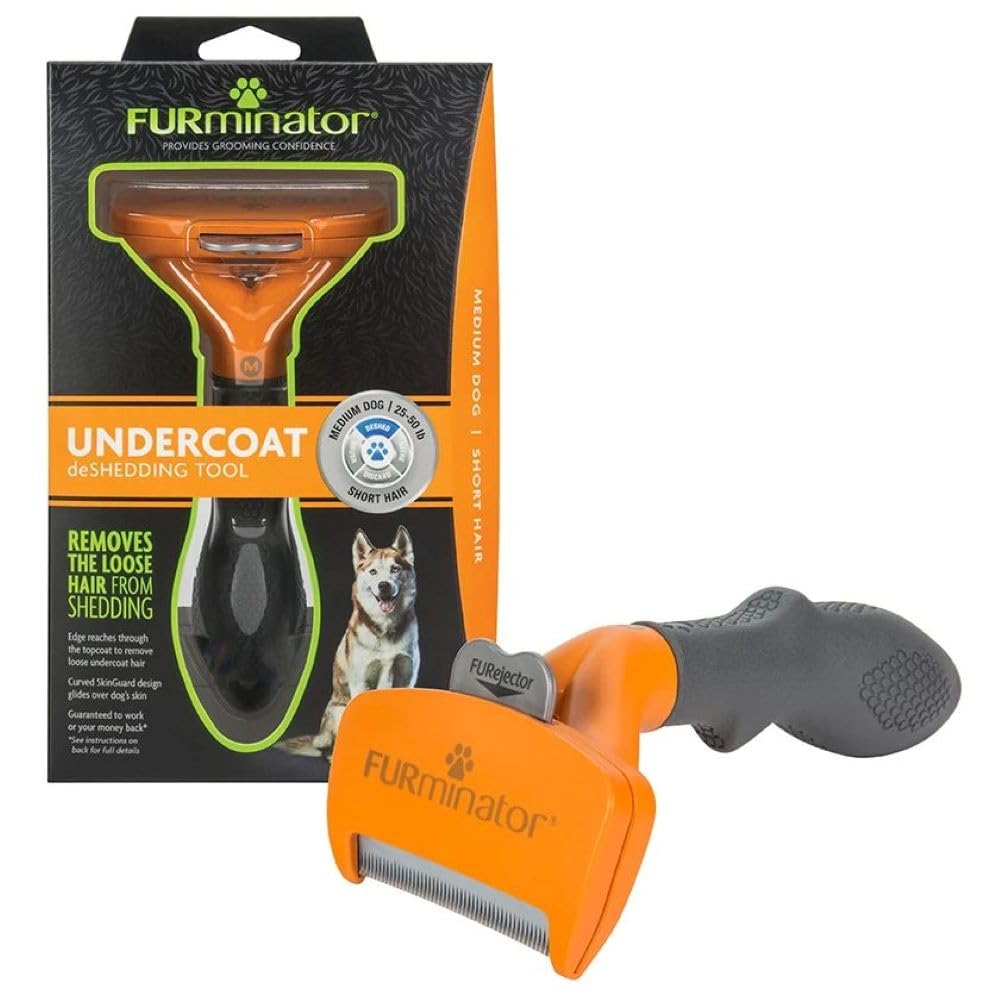
FURminator Undercoat deShedding Tool for Medium Dogs, Short Hair
Seasonal shedding can overwhelm a general slicker when a double-coated dog is releasing large amounts of undercoat. This FURminator model uses a stainless-steel deShedding edge, curved skin guard, and fur-ejector button rather than a conventional bed of brush pins. The manufacturer sizes this short-hair version for dogs weighing 25 to 50 pounds and provides specific instructions for dry-coat use. It is a useful specialist tool for the right dog, but not a general-purpose brush for every breed. Avoid it on unsuitable coats, and do not confuse undercoat removal with cutting out tight mats.
- Designed for a shedding undercoat
- Hair-release button eases cleaning
- Curved edge follows body shape
- Unsuitable for dogs without a suitable undercoat
- Overuse or pressure can irritate skin
4.8/5
4.8/5
4.2/5
Product details checked against published product information.

Hartz Groomer’s Best Combo Brush for Dogs
Some dogs need gentle detangling first and a smoothing pass afterward, but buying a separate brush for each task may feel unnecessary. The Hartz Groomer’s Best Combo Brush puts protective-coated stainless pins on one side and dense nylon bristles on the other. You can loosen everyday tangles, flip the handle, and tidy the outer coat. This layout works especially well for an owner building a simple grooming kit. It does not replace a deep-reaching slicker or dedicated undercoat tool for thick, difficult coats, and fur still needs to be removed from both sides manually.
- Two brushing surfaces in one handle
- Coated pins aid light detangling
- Nylon bristles smooth the coat
- Neither side reaches very deep undercoat
- Manual cleaning on both faces
4.5/5
4.4/5
4.6/5
Product details checked against published product information.

Tangle Teezer Pet Teezer Detangling Dog Grooming Brush
Fine-coated dogs can dislike the pulling sensation of a stiff slicker, particularly around the ears and furnishings. The Pet Teezer detangling brush uses flexible, two-tier teeth: longer teeth work through knots while shorter teeth smooth the surface. Its palm-style body offers a different grip from a long handle, and the brand says it works on wet or dry fur. This makes it worth considering for Shih Tzus, Maltese, and other dogs with delicate, easily tangled hair. However, it is intended for manageable knots, not tight mats that need a groomer’s attention, and hair removal is manual.
- Two-tier teeth separate fine tangles
- Can be used on damp coats
- Palm shape is easy to steer
- Not a cutting tool for severe mats
- No hair-ejection mechanism
4.6/5
4.5/5
4.7/5
Product details checked against published product information.

JW Pet GripSoft Double-Row Undercoat Rake
A thick double coat needs more than surface smoothing when the soft underlayer starts shedding. The JW GripSoft rake uses two rows of rounded teeth to loosen light tangles and draw out dead undercoat hair. Its nonslip handle helps keep the tool steady while working small sections, a useful detail on broad-coated breeds. The design makes sense as a companion to a finishing brush, not as the only tool in the kit. It is poorly matched to smooth single coats, and dragging a rake through knotted patches can pull uncomfortably. Work in sections and stop if it catches.
- Two rows help lift loose undercoat
- Rounded tips offer controlled contact
- Nonslip handle supports firm grip
- Not effective for flat, short single coats
- Requires slow, gentle sectioning
4.8/5
4.0/5
4.5/5
Product details checked against published product information.
SleekEZ Original Medium Grooming Tool
Loose fur can cling to a dog’s back and then transfer to furniture just after grooming. SleekEZ uses a shallow patterned metal tooth edge instead of flexible pins; the company says shed hair gathers in rows and drops away as you stroke. Its medium version is intended for a broad range of shedding animals, and it can also help lift pet hair from some fabrics. Choose it if the main chore is removing loose, expired hair. The manufacturer explicitly says it does not detangle or remove mats, so you still need a separate comb or slicker for knots.
- Hair falls away without retracting pins
- Can also remove fur from fabrics
- Patented tooth pattern grips loose hair
- Will not detangle or remove mats
- Requires care on delicate skin
4.5/5
4.8/5
4.5/5
Product details checked against published product information.

Safari by Coastal Dog Soft Slicker Brush
Some dogs need a slicker for loose hair but react poorly when stiff wire pins press against their skin. Safari’s Soft Slicker uses coated-tip stainless-steel pins and a nonslip handle for gentler routine brushing. It offers a practical middle ground between a fine wire slicker and a soft bristle brush for lightly tangled coats. The covered tips do not make forceful brushing safe, so pressure still matters. This is not the best answer for deep doodle curls or compacted undercoat, where pin reach and a different tool may be more important than softness alone.
- Coated tips soften contact
- Suitable for everyday loose fur
- Grip helps steady brushing strokes
- Less reach in thick curly coats
- No self-cleaning release button
4.5/5
3.9/5
4.5/5
Product details checked against published product information.
Top 3 Head-to-Head: Hertzko vs KONG ZoomGroom vs Big G
These three choices illustrate the largest buyer decision: a general slicker, a rubber brush for smooth coats, or a long-pin slicker for dense curls. Their strengths are not interchangeable.
| Feature | #1 Hertzko | #2 KONG | #3 Big G |
|---|---|---|---|
| Coat match | Medium to long | Short and smooth | Long and curly |
| Main action | Wire slicking | Rubber currying | Deep long-pin slicking |
| Hair removal | Button retraction | Hand wipe | Manual clearing |
| Wet use | Use on dry coat | Dry or during bath | Best on prepared coat |
| Choose if… | You need everyday maintenance | You groom a smooth coat | Your dog has dense curls |
Who These Dog Brushes Are NOT For
No at-home brush should be treated as a solution for painful, tightly matted fur or inflamed skin.
Dogs that panic during brushing may need a shorter, reward-based grooming routine before any tool can work well. For breed-specific coats, consult a groomer about the correct combination of brush and comb.
Common Dog Brushing Mistakes to Avoid
Most grooming problems are caused by mismatching the tool, brushing too forcefully, or missing the areas where tangles start.
Frequently Asked Questions About Dog Brushes
What type of brush is best for my dog?
The best brush depends on your dog’s coat, not the tool’s popularity. Smooth short coats often respond well to rubber curry or bristle brushes, while curly and longer coats usually need a slicker or pin brush. Double-coated dogs may also need a rake for loose undercoat. Check your dog’s coat and skin sensitivity before choosing; your groomer can help with breed-specific advice.
Is a slicker brush good for all dogs?
No. Slicker brushes are useful for many medium, long, wire, and curly coats because fine angled pins collect loose hair and light tangles. However, they can be unnecessarily harsh on some smooth, very short coats if used with pressure. A rubber curry or soft bristle tool may be the more comfortable match for those dogs. Always use gentle strokes and inspect the skin afterward.
How often should I brush my dog?
Brushing frequency depends on coat length, shedding, and how quickly tangles form. Many smooth-coated dogs need only a few sessions each week, while long or curly coats may require daily attention to prevent knots. During seasonal shedding, a suitable tool may be useful more often. Keep sessions short and comfortable, and follow your veterinarian’s advice if the dog has a skin condition.
Should I brush a dog before or after a bath?
Brush and check for tangles before bathing, especially on long coats, because wetting existing knots can make them more difficult to handle. Once the coat is clean and properly dried, a gentle finishing brush can help smooth it. Rubber curry brushes such as ZoomGroom can also be used during shampooing when the manufacturer permits it. Never scrub irritated skin or force through a tight mat.
What is the difference between a slicker brush and an undercoat rake?
A slicker has many fine bent pins that help separate light tangles and gather loose hair in the coat. An undercoat rake uses longer, spaced teeth to reach and lift shedding fur from beneath the outer layer of double-coated dogs. They are different tools for different tasks, and some dogs benefit from both. Neither should be dragged through painful knots with force.
Can a dog brush remove mats safely?
A suitable slicker or comb may work through very small, loose tangles when used carefully, but tight mats should not be pulled out at home. Mats can trap moisture, hide skin problems, and make brushing painful. If the hair is compacted close to the skin, consult a professional groomer or veterinarian. Cutting mats with household scissors is especially risky because skin can be caught in the blades.
How do I clean and maintain a dog grooming brush?
Remove trapped hair after every session, using the release mechanism where the brush has one. Clean remaining debris according to the manufacturer’s care instructions, then let the brush dry before storage. Check metal pins for bends or damaged tips and rubber teeth for cracks. A dirty or damaged tool may snag the coat or irritate skin, so replace it when its contact surfaces deteriorate.
Our Final Verdict
A useful dog brush is one that matches your dog’s coat and makes regular grooming manageable. Hertzko is our starting recommendation for medium coats, while KONG serves smooth coats and Big G is more appropriate for deep curls. Always prioritize gentle pressure and the right tool over headline rankings.

Thomas Cutter is a lifelong dog owner and the founder of FindOutAboutDogs.com. With over 10 years of hands-on experience owning multiple breeds, Thomas created this site to provide honest, research-based dog advice that real owners can actually trust.
