Dog Brushing Schedule by Coat Type: How Often to Brush Every Coat
Quick Answer
A good dog brushing schedule depends mainly on coat type. Smooth coats often need brushing once or twice weekly, while long, curly, and mat-prone coats may need brushing every day or every other day. Double-coated dogs usually need several sessions weekly and more during seasonal shedding. The right dog brush for each coat type also matters.
Quick brushing schedule by coat
- Smooth short coat: Brush about 1–2 times per week with a rubber curry or bristle brush.
- Short double coat: Brush 2–3 times weekly and increase during heavy shedding.
- Long silky coat: Brush at least 3–4 times weekly, often daily around friction areas.
- Curly or wool coat: Brush and comb every day or every other day to catch hidden tangles.
- Wire coat: Brush about 1–2 times weekly, with extra coat maintenance depending on the breed.
- Heavy seasonal shedder: Temporarily increase brushing to daily when loose undercoat builds quickly.
Adjust the schedule when needed
- Brush more often when you find tangles, loose undercoat, outdoor debris, or noticeably heavier shedding.
There isn’t one perfect brushing schedule for every dog. Coat length matters, but density, texture, shedding, activity, and haircut length can change the routine just as much.
I prefer starting with the coat type, then adjusting from what the brush and comb reveal. That approach is easier than following a breed chart that ignores the individual dog.
A dog brushing schedule by coat type is a grooming routine that sets brushing frequency and tools according to the dog’s hair length, texture, undercoat, shedding pattern, and tendency to tangle.


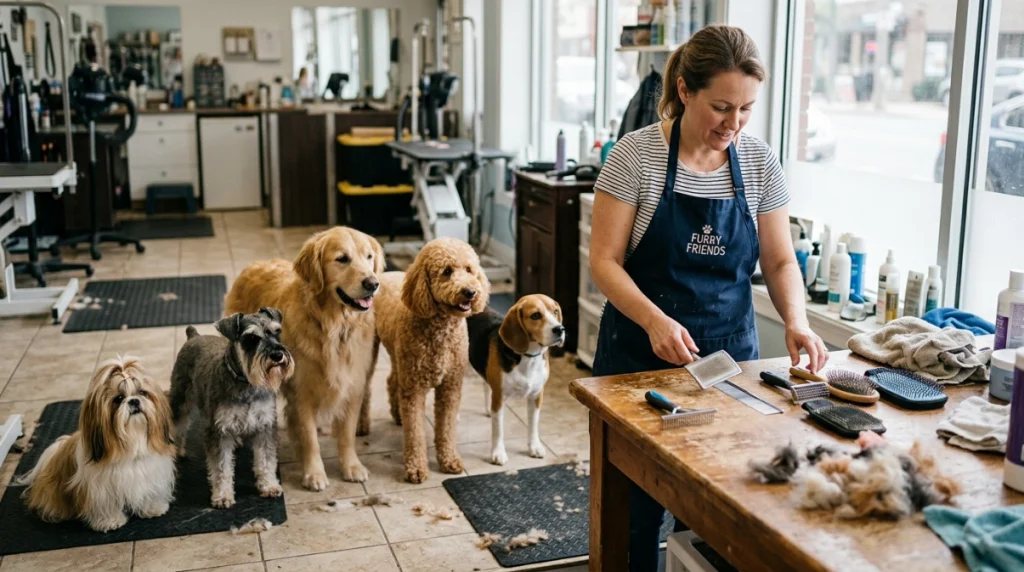
How Often Should You Brush a Dog Based on Coat Type?
 Save
SaveMost dogs benefit from consistent brushing, but the interval can range from weekly to daily. Dogs with coats that trap loose hair or form tangles usually need the most frequent attention.
Use this 2026 schedule as a practical starting point rather than a rigid rule.
| Coat Type | Typical Examples | Starting Schedule | Main Tools | When to Increase |
|---|---|---|---|---|
| Smooth short | Boxer, Beagle, Greyhound | 1–2 times weekly | Rubber curry, grooming mitt, bristle brush | Visible loose hair or seasonal shedding |
| Double coat | Labrador, Golden Retriever, Husky | 2–3+ times weekly | Slicker, undercoat rake, comb | Spring/fall coat blow |
| Long silky | Shih Tzu, Maltese, Yorkshire Terrier | 3–7 times weekly | Pin brush, slicker, metal comb | Tangles behind ears, legs, or collar |
| Curly or wool | Poodle, Bichon Frise | Daily to every other day | Slicker plus metal comb | Longer haircut or fast matting |
| Wire | Schnauzer, Airedale Terrier | 1–2 times weekly | Slicker, comb, appropriate stripping tools | Long furnishings or tangled beard/legs |
The schedule should become more frequent if your dog swims, hikes through brush, wears a harness often, or develops knots between sessions. Your veterinarian or professional groomer can also adjust the routine for skin problems or unusual coat conditions.
How Often Should You Brush a Short-Haired Dog?
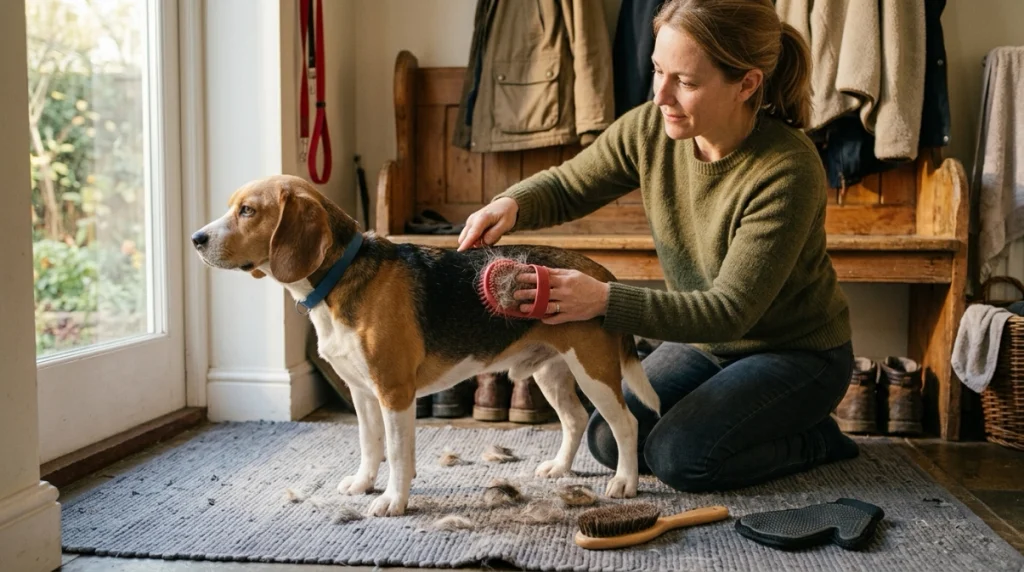
A smooth, short-haired dog can often start with brushing once or twice a week. Frequent shedders may benefit from every-other-day sessions when loose hair increases.
Short fur rarely forms dramatic mats, but that doesn’t mean these dogs don’t shed. Pugs, Beagles, Labradors, and other short-coated dogs can release surprising amounts of loose hair.
- Use a rubber curry: It helps lift loose hair while massaging a close-fitting coat.
- Try a grooming mitt: This works well for dogs that dislike traditional brushes.
- Finish with bristles: A soft bristle brush can smooth the coat and collect surface hair.
- Keep sessions short: Five to ten focused minutes may be enough for many smooth coats.
The VCA coat-care guidance also recommends matching the grooming tool to the dog’s hair type and using a gentle technique.
How do you know a short-coated dog needs more brushing?
Look at the amount of hair coming off during petting and resting. If your hand fills with loose fur, temporarily shorten the interval between sessions.
Skin flakes, redness, bald areas, sores, or a sudden change in shedding deserve more attention than another brushing session. Ask your veterinarian about unexplained coat or skin changes.
How Often Should You Brush a Double-Coated Dog?
Double-coated dogs usually need brushing several times per week because loose hair can remain trapped beneath the outer coat. During a heavy seasonal shed, daily brushing may become more practical.
A double coat includes protective outer hairs plus a softer insulating undercoat. The goal is to remove loose undercoat without scraping the skin or damaging healthy hair.
- Start with sections: Work on one small area instead of skimming across the entire back.
- Loosen surface hair: Use an appropriate slicker or coat brush gently.
- Work through the undercoat: Use a suitable rake or deshedding tool without repeatedly digging into one spot.
- Check with a comb: Finish by making sure you can reach through the coat without catching hidden tangles.
The AKC notes that seasonal shedders often lose more coat in spring and fall. Its dog shedding guidance recommends increasing grooming during those heavier periods.
If you’re comparing breeds with thick coats, the site’s guide to easy-going dog breeds includes examples such as Golden Retrievers and Newfoundlands with substantial grooming needs.
Should you shave a double-coated dog to reduce brushing?
Routine shaving isn’t a substitute for brushing a double coat. Ask a professional groomer or veterinarian before removing substantial coat, especially when the dog relies on that coat for normal protection.
How Often Should You Brush a Long-Haired Dog?
 Save
SaveLong-haired dogs usually need brushing at least several times each week. Dogs kept in a full, flowing coat may need daily attention.
The biggest problem is not always the visible outer hair. Fine tangles can develop close to the skin while the top of the coat still looks neat.
- Behind the ears: Fine hair here tangles easily.
- Under the collar: Friction encourages knots.
- Armpits: Leg movement repeatedly rubs the coat together.
- Chest and belly: Longer furnishings can collect debris and moisture.
- Tail and rear legs: Feathering needs careful combing from base to tip.
PetMD’s guidance on preventing matted pet hair emphasizes consistent brushing and checking beneath the outer layer rather than brushing only the surface.
Shih Tzus and Cavaliers show how coat maintenance can vary even among small companion dogs. You can compare their grooming requirements in this guide to dog breeds for apartments.
My comb test for long coats
After brushing, I like to use a plain metal comb as the final check. If it cannot pass gently from near the skin toward the ends, the brushing session probably missed a tangle.
Don’t force the comb through resistance. Work in smaller sections or let a professional handle a tight mat.
How Often Should You Brush a Curly or Low-Shedding Dog?
Curly and continuously growing coats commonly need brushing every day or every other day when kept at moderate or long length. A shorter professional trim can reduce the workload, but it doesn’t remove the need for regular combing.
Poodles, Bichon Frises, and many curly-coated mixes may shed less visible hair around the home. Loose hairs can remain caught inside the coat instead.
- Brush in layers: Separate a small line of coat so the brush reaches through the full depth.
- Follow with a comb: A slicker can make the surface look finished while a deeper knot remains.
- Watch high-friction spots: Check the ears, collar area, legs, chest, and tail frequently.
- Brush before serious tangles form: Prevention is more comfortable than repeated dematting.
A longer haircut means more hair that can twist together. If your schedule can’t support near-daily maintenance, discuss an easier coat length with your groomer.
What Brushing Schedule Works for Wire-Coated Dogs?
A basic wire coat can often start with brushing and combing once or twice weekly. Breed-specific coat maintenance may also involve trimming or hand stripping.
Wire coats have a coarse outer texture that shouldn’t be treated exactly like soft long hair. Ask a groomer familiar with the breed before using aggressive deshedding methods.
Schnauzers and Soft Coated Wheaten Terriers illustrate how grooming needs differ among medium dogs. This roundup of medium dog breeds for families provides useful examples when grooming workload affects breed choice.
- Comb facial furnishings: Beards can collect food, moisture, and small tangles.
- Check leg hair: Longer furnishings may knot faster than the body coat.
- Learn the breed’s coat method: Show coats and clipped pet coats can require different maintenance.
Should You Brush Your Dog Every Day?
Daily brushing is useful for some dogs, but it isn’t automatically better for every coat. The right frequency removes loose hair and tangles without repeatedly irritating the skin.
A gentle daily session makes sense for long, curly, dense, or actively shedding coats. A smooth-coated dog with little loose hair may need much less.
- Brush daily when: Tangles appear within a day or two, shedding is intense, or the coat is long and dense.
- Brush less often when: The coat stays smooth and clean between weekly sessions.
- Change your technique when: Your dog flinches, scratches afterward, or develops visible irritation.
- Get help when: Mats are tight, widespread, or pulling directly on the skin.
The AKC’s home dog grooming guidance recommends brushing according to coat texture and length while checking for mats, debris, cuts, and skin problems.
How Should You Brush a Dog Without Hurting the Skin?
 Save
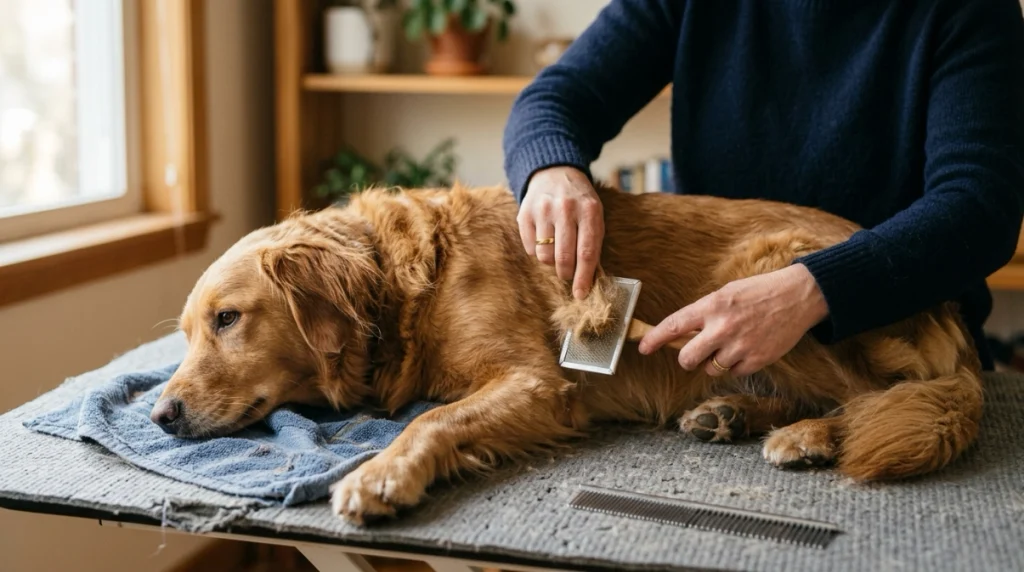
SaveUse light pressure and work in small sections. Brushing harder doesn’t make a grooming tool work better.
Wire pins, slickers, comb teeth, and deshedding blades can irritate skin when pressed too firmly. Let the tool work through the hair rather than dragging it repeatedly across the same area.
- Start where your dog is comfortable: The shoulder or back is easier than sensitive feet or ears.
- Separate the coat: Work through small sections so you’re not pulling an entire knot at once.
- Hold hair above a tangle: This can reduce pulling on the skin while you work carefully.
- Check your pressure: Stop if your dog repeatedly flinches, turns toward the brush, or tries to leave.
- Finish with a comb: Use it as a check, not as a tool for ripping through stubborn knots.
Never cut a tight mat with ordinary scissors close to the skin. Dog skin can be pulled into a mat, making accidental cuts easier than they appear.
When Should You Change Your Dog’s Brushing Schedule?
Your baseline schedule should change when the coat changes. Seasonal shedding, coat length, weather, outdoor activity, and health can all affect how quickly loose hair or tangles appear.
- Seasonal shedding: Increase brushing while the undercoat releases heavily.
- Longer haircut: Add sessions before small tangles become mats.
- Swimming: Check the coat after it dries, especially on long or dense dogs.
- Outdoor adventures: Remove burrs, seeds, leaves, and debris promptly.
- Harness or sweater use: Inspect areas where fabric rubs the coat.
- Senior dogs: Keep sessions gentle and adapt positioning for comfort.
Sudden bald patches, severe dandruff, open sores, odor, redness, or dramatic coat changes aren’t ordinary grooming problems. Those signs warrant veterinary advice.
Which Dog Brushes Are Worth Having at Home?
You don’t need a drawer full of grooming tools. The best setup is usually one primary brush that matches the coat plus a comb or finishing tool when the coat needs it.
If you’re ready to choose a brush, these are three practical options I’d consider for different coat jobs:
🏆 Best for Curly & Long Coats
Chris Christensen Big G Slicker Brush
★★★★★
A long-pin slicker designed for dense and curly coats. I like this style when the goal is reaching through a deeper coat in controlled sections rather than brushing only the surface.
🐕 Best for Smooth Coats
KONG ZoomGroom Dog Brush
★★★★☆
This flexible rubber-style brush is made for loosening hair from short coats. It is also a useful choice for dogs that tolerate soft rubber better than metal pins.
🍂 Best for Loose Undercoat
FURminator Undercoat deShedding Tool
★★★★☆
This deshedding tool targets loose undercoat on suitable shedding coats. I would use it as an occasional undercoat tool rather than repeatedly scraping the same area during every grooming session.
Frequently Asked Questions
Can you brush a dog too much?
Yes. Brushing too aggressively or using a harsh tool too often can irritate the skin or damage hair. Frequency should match the coat, and pressure should remain gentle. If the coat is already free of loose hair and tangles, another intense brushing session usually isn’t necessary.
Should I brush my dog before or after a bath?
Brush and remove obvious tangles before bathing whenever possible. Water can tighten existing knots in some coats. After the dog is completely dry, a gentle finishing brush or comb can help separate the coat and reveal any tangles that still need attention.
Why does my dog still shed after I brush?
Brushing removes loose hair that’s ready to come out, but it doesn’t stop the normal hair-growth cycle. Double-coated and seasonal shedders can continue releasing hair for days or weeks. Increase brushing temporarily instead of expecting one long grooming session to remove everything.
What is the best brush for a dog that mats easily?
A slicker brush paired with a metal comb is a useful starting combination for many long, curly, and mat-prone coats. The slicker separates and lifts hair, while the comb helps locate hidden tangles. Tool size and pin length should still match your dog’s coat.
How do I know when a mat needs a professional groomer?
Get professional help when mats are tight against the skin, widespread, painful, wet underneath, or difficult to separate gently. Trying to cut severe mats with scissors can injure skin hidden inside the coat. A groomer or veterinarian can choose a safer removal method.
Final Takeaway: Build the Schedule Around the Coat
The best dog brushing schedule is the one that keeps your dog’s coat comfortable before tangles and heavy buildup appear. Smooth coats may need weekly attention, while long, curly, dense, and shedding coats often need several sessions each week.
Start with the schedule in the table, then use your hands, brush, and metal comb to judge the result. If you consistently find knots or trapped undercoat between sessions, shorten the interval instead of making each grooming session harder.
Pick one regular brushing day today and check the coat from skin to ends. That simple habit makes it much easier to adjust the routine before small grooming problems become painful ones.

Thomas Cutter is a lifelong dog owner and the founder of FindOutAboutDogs.com. With over 10 years of hands-on experience owning multiple breeds, Thomas created this site to provide honest, research-based dog advice that real owners can actually trust.
