How to Brush a German Shepherd: Step-by-Step Grooming Guide
Quick Answer
To brush a German Shepherd, start with a dry, tangle-free coat and work in the direction the hair grows. Brush the outer coat first, then gently reach the loose undercoat without scraping the skin. Regular brushing is an important part of German Shepherd ownership and daily care, especially during heavy seasonal shedding.
Brush your German Shepherd in 6 steps
- Check the coat: Feel for tangles, mats, sores, bumps, or irritated skin before brushing.
- Start gently: Use a slicker or pin brush to loosen surface hair without digging into the skin.
- Work in sections: Brush the neck, shoulders, back, sides, chest, rear legs, and tail separately.
- Reach the undercoat: Use an appropriate undercoat rake with short, controlled strokes.
- Follow hair growth: Avoid repeatedly dragging a tool backward through the coat.
- Finish and inspect: Run your hands through the coat and stop if you find redness, pain, or damaged skin.
One rule matters most
- Use light pressure: A good grooming session removes loose coat without leaving the skin red or making your dog uncomfortable.
German Shepherd hair can seem endless. You brush one side, turn the dog around, and somehow there’s another dog’s worth of fur waiting underneath.
The trick isn’t brushing harder. It’s understanding the double coat and using each grooming tool for the job it does best.


Why Is Brushing a German Shepherd Different?
A German Shepherd has a double coat, meaning two distinct layers of fur grow together. The coarser outer hairs protect the dog, while a softer, denser undercoat provides insulation.
That structure explains why brushing only the visible surface isn’t enough.
Definition: A double coat combines protective outer guard hairs with a softer insulating undercoat. German Shepherds shed from both layers, with particularly noticeable undercoat loss during seasonal shedding periods.
The American Kennel Club’s double-coat guide explains that the topcoat and undercoat perform different protective jobs.
That’s why my rule is simple: remove loose fur, but protect the coat that’s still attached.
German Shepherds are also large dogs. If you’re deciding whether their overall maintenance suits your household, our guide to large dog breeds for families puts grooming alongside exercise, size, and daily care.
How Do You Brush a German Shepherd Step by Step?
 Save
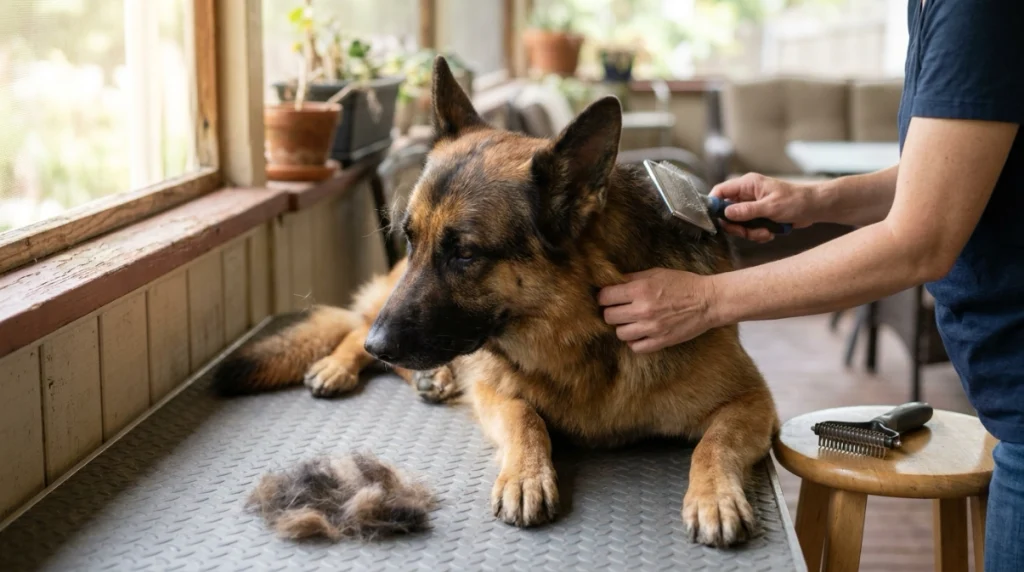
SaveBrush your German Shepherd in sections rather than randomly moving around the body. A repeatable pattern helps you reach the undercoat without overworking the same areas.
1. Let your dog settle first
Choose a calm location with good light. A non-slip floor, patio, grooming mat, or quiet patch of yard works well.
Let your dog see and sniff the tools before you begin.
2. Inspect the skin and coat
Run your hands from the neck toward the tail. Check behind the ears, under the collar, around the legs, and near the tail.
- Tangles: Separate small tangles before using an undercoat tool.
- Redness: Avoid brushing directly over irritated skin.
- Lumps or sores: Don’t repeatedly brush across an unexplained skin problem.
- Parasites: Watch for ticks, fleas, or unusual debris.
Brushing doubles as a useful hands-on body check. That makes consistency more valuable than aggressive grooming.
3. Brush the surface coat first
Begin at the neck or shoulder and follow the natural direction of hair growth. Use smooth strokes rather than fast scratching motions.
Start with the back, shoulders, sides, and upper rear legs.
4. Work through the undercoat
Once the surface hair moves freely, use an undercoat rake where the coat is thickest. Keep each stroke short and controlled.
You shouldn’t need much pressure. If the tool repeatedly catches, stop and inspect the area instead of pulling harder.
5. Use extra care on sensitive areas
The chest, belly, legs, rear end, and tail often need a lighter hand. These areas can be more sensitive and may have thinner skin coverage.
- Use shorter strokes near the legs.
- Support loose skin when needed.
- Don’t rake aggressively across joints.
- Keep metal tools away from eyes and genital areas.
6. Finish with a light full-coat pass
Use your regular brush to smooth the coat after undercoat work. Then run your fingers through several areas to check your progress.
A finished coat should feel loose and comfortable, not stripped thin.
What Brush Should You Use for a German Shepherd?
The best setup usually uses more than one grooming tool. A slicker or pin brush handles routine coat maintenance, while an undercoat tool reaches deeper loose fur.
The AKC’s guide to choosing dog brushes also recommends matching the tool to the dog’s coat instead of treating every brush as interchangeable.
| Tool | Best Job | Practical Starting Cadence | Typical Session Role | Main Caution |
|---|---|---|---|---|
| Pin brush | Routine loose hair and surface coat | Several times weekly to daily | Full-coat brushing | May not reach dense undercoat alone |
| Slicker brush | Loose surface fur and light tangles | Several times weekly | Opening and finishing coat | Pins can irritate skin with heavy pressure |
| Undercoat rake | Dense loose undercoat | As needed; more during coat blow | About 5–10 minutes can cover substantial areas | Never force teeth through a tight mat |
| De-shedding edge | Heavy loose undercoat | Occasional controlled sessions | Targeted coat-blow removal | Repeated passes can overwork coat and skin |
You don’t need every tool at every session. Choose the least aggressive tool that removes the loose coat efficiently.
How Often Should You Brush a German Shepherd?
Most German Shepherds benefit from brushing several times each week. During heavy shedding, many dogs need attention every day or every other day.
There isn’t one perfect schedule for every Shepherd.
The AKC’s German Shepherd grooming guidance describes routines ranging from weekly de-shedding to every-other-day brushing, with more frequent grooming during heavy shedding.
PetMD’s German Shepherd care guide recommends frequent brushing because the breed sheds heavily.
- Normal weeks: Aim for several short brushing sessions.
- Heavy shedding: Check the coat daily and remove loose undercoat as needed.
- Longer-coated Shepherds: Inspect friction areas more frequently for tangles.
- Young puppies: Keep sessions shorter and focus on calm handling.
Five calm minutes done regularly is often better than a stressful marathon once every few weeks.
How Should You Brush a German Shepherd During Shedding Season?
 Save
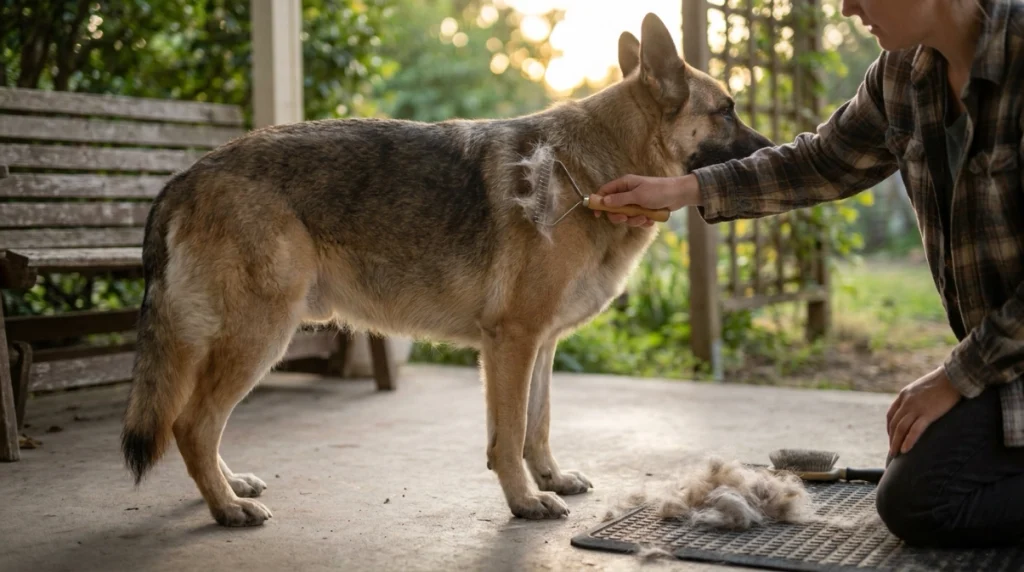
SaveDuring a seasonal coat blow, the soft undercoat can loosen in visible tufts. This is when controlled undercoat grooming becomes especially useful.
Don’t try to remove everything in one sitting.
- Brush the surface coat to remove obvious loose hair.
- Separate the coat in sections so you can see what you’ve covered.
- Use the undercoat rake lightly on the neck, shoulders, sides, and rear quarters.
- Clear the tool frequently so the teeth move freely.
- Stop when the skin becomes sensitive or your dog starts showing discomfort.
I prefer stopping while the dog is still comfortable rather than chasing the last handful of fur. You can always continue the next day.
What German Shepherd Brushing Mistakes Should You Avoid?
The biggest grooming mistake is assuming more pressure removes more hair. On a double coat, excessive pressure can turn routine brushing into skin irritation.
- Brushing one spot repeatedly: Move around instead of scraping until no fur comes out.
- Pulling through mats: Work tangles apart carefully or ask a groomer for help.
- Using only a surface brush: Loose undercoat may remain trapped underneath.
- Raking sensitive skin: Use gentler tools on the belly, legs, and thinly coated areas.
- Ignoring your dog’s reaction: Flinching, turning, sitting, or trying to leave can signal discomfort.
- Shaving to stop shedding: Removing the double coat isn’t a routine shedding solution.
The AKC explains why shaving double-coated dogs can interfere with the coat’s protective function.
Shedding is normal. Your goal is to manage loose fur without damaging healthy coat.
How Do You Brush a German Shepherd Puppy or Nervous Dog?
For a puppy or nervous adult, the first goal isn’t maximum hair removal. The goal is teaching the dog that grooming predicts calm handling and good things.
- Show the brush before touching the coat.
- Start with two or three gentle strokes.
- Reward calm behavior.
- Touch paws, tail, shoulders, and chest gradually.
- End the session before frustration starts.
Build duration over several sessions. A puppy that accepts a brush calmly is easier to groom when that adult double coat arrives.
If you’re still learning everyday dog handling, our first-time dog owner breed guide explains how grooming, training, size, and activity needs fit together.
When Should You Stop Brushing and Get Professional Help?
Normal loose fur should come out without obvious pain. Stop if brushing exposes a problem rather than fixing one.
- Tight mats: Especially when they sit close to the skin.
- Red or bleeding skin: Don’t keep brushing an irritated area.
- Bald patches: Unexpected hair loss needs a closer look.
- Strong odor or discharge: These can accompany skin problems.
- Sudden pain: A new reaction to touching one area deserves attention.
- Constant scratching: Grooming alone may not solve the cause.
A professional groomer can handle difficult coat problems. A veterinarian is the better choice when you see pain, infection, unexplained hair loss, or persistent skin irritation.
German Shepherd Brush Recommendations
 Save
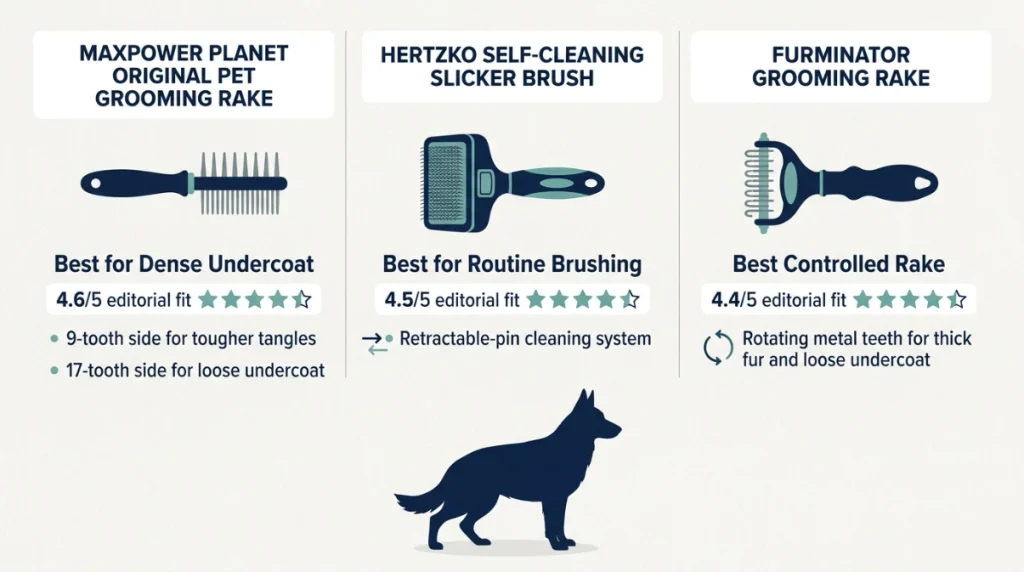
SaveIf you’re ready to build a practical grooming kit, these are the tool types I’d consider first. Each one solves a different part of the German Shepherd brushing routine.
🏆 Best for Dense Undercoat
Maxpower Planet Original Pet Grooming Rake
★★★★☆ 4.6/5 editorial fit
Its dual-sided design uses a 9-tooth side for tougher tangles and a 17-tooth side for loose undercoat. I like this format for coat-blow sessions because you can change sides instead of forcing one tool to do everything.
🐕 Best for Routine Brushing
Hertzko Self-Cleaning Slicker Brush
★★★★☆ 4.5/5 editorial fit
The retractable-pin cleaning system makes routine loose-fur cleanup easier. I’d use a slicker like this for surface coat maintenance and finishing rather than expecting it to replace a proper undercoat rake.
🪮 Best Controlled Rake
FURminator Grooming Rake
★★★★☆ 4.4/5 editorial fit
Rotating metal teeth are designed to move through thick fur and collect loose undercoat while reducing tugging. This is the style I’d choose when I want controlled undercoat work without repeatedly scraping one area.
Frequently Asked Questions
Should you brush a German Shepherd every day?
You can brush a German Shepherd daily during heavy shedding if you use gentle pressure and an appropriate brush. During normal periods, several brushing sessions per week may be enough. Daily use of aggressive de-shedding tools isn’t necessary for every dog.
Do you brush a German Shepherd with or against the hair?
For routine grooming, brush primarily in the direction the coat grows. This reduces pulling and makes the session more comfortable. You can separate or lift sections to reach the undercoat, but repeated backward scraping isn’t needed to remove loose fur.
What is the best type of brush for a German Shepherd?
A German Shepherd usually benefits from both a routine brush and an undercoat tool. A pin or slicker brush handles surface hair, while an undercoat rake reaches loose insulating fur. The best combination depends on coat length, density, and sensitivity.
Should you brush a German Shepherd before or after a bath?
Brushing before bathing helps remove loose hair and small tangles before water tightens them. After bathing, let the coat dry appropriately before doing intensive brushing unless your grooming tool is specifically designed and instructed for wet-coat use.
Why is so much hair coming out when I brush my German Shepherd?
German Shepherds naturally shed their dense double coat, and the amount can increase sharply during seasonal shedding. Large quantities of loose fur aren’t automatically a problem. However, bald patches, redness, sores, itching, or sudden unusual hair loss deserve veterinary attention.
Final Takeaway: Brush the Coat, Don’t Fight It
Learning how to brush a German Shepherd is mostly about consistency. Work with the direction of the coat, use light pressure, and give the undercoat its own attention.
You don’t need to remove every loose hair in one session.
Build a routine your dog can tolerate several times each week. During shedding season, shorten the interval rather than making each grooming session more aggressive.
Once you find the right brush combination and repeat the same calm sequence, managing that famous German Shepherd shedding becomes much easier.

Thomas Cutter is a lifelong dog owner and the founder of FindOutAboutDogs.com. With over 10 years of hands-on experience owning multiple breeds, Thomas created this site to provide honest, research-based dog advice that real owners can actually trust.
