Best 10 Dog Breeds for First-Time Owners — Vet-Approved & Beginner-Friendly
Quick Answer
The best dog breeds for first-time owners are gentle, easy to train, and forgiving of rookie mistakes. Top picks include the Golden Retriever, Labrador Retriever, Cavalier King Charles Spaniel, Bichon Frise, and Poodle. These breeds are widely recommended by vets and the AKC for their friendly nature, adaptability, and eagerness to please.
Best dog breeds for beginners at a glance:
- Golden Retriever — gentle, smart, great with families
- Labrador Retriever — loyal, trainable, endlessly friendly
- Cavalier King Charles Spaniel — calm, affectionate, low-drama
- Bichon Frise — hypoallergenic, cheerful, apartment-friendly
- Poodle — highly intelligent, low-shedding, versatile
- Shih Tzu — laid-back, loving, minimal exercise needs
- Boxer — playful, loyal, great for active households
- Papillon — alert, portable, surprisingly easy to train
- Greyhound — calm, low-energy indoors, gentle giant
- Whippet — quiet, affectionate, low-maintenance coat
Choose by your lifestyle:
- Small apartment → Bichon Frise, Shih Tzu, or Papillon
- Active family → Golden Retriever, Lab, or Boxer
- Allergy concerns → Poodle or Bichon Frise
- Low energy home → Greyhound, Whippet, or Cavalier
You’ve decided to get a dog. Now your head is spinning. There are hundreds of breeds, thousands of opinions, and zero certainty about what’s right for you.
That feeling is normal. But it doesn’t have to last long.
I’ve spent years researching dog breeds and talking to owners, vets, and trainers. And here’s what I know: the right first dog changes everything. The wrong one — even a beautiful one — can leave you stressed, overwhelmed, and second-guessing yourself every day.
This guide covers the 10 best dog breeds for first-time owners in 2026. Each breed is chosen based on trainability, temperament, health, and real owner experience. By the end, you’ll know exactly which breed fits your life.
- The best beginner breeds are eager to please and forgiving of rookie mistakes.
- Trainability matters more than size when you’re new to dogs.
- Most experts recommend matching your breed to your activity level first.
- Low-shedding and hypoallergenic breeds exist in every size category.
- The AKC, vets, and experienced trainers consistently agree on these top 10 picks.


What Makes a Dog Breed Good for First-Time Owners?
A good beginner dog is one that forgives mistakes. You will make them. Every new owner does. The question is: will your dog bounce back, or hold a grudge?
Most experts agree on four key traits that define a great first dog. Trainability comes first — you need a dog that responds to basic commands without weeks of frustration. Second is temperament: a stable, friendly dog adapts to new routines without anxiety or aggression. Third is energy level — matching the dog’s needs to yours prevents burnout on both sides. Fourth is health and grooming: complex health needs and high grooming demands add stress to an already steep learning curve.
This article covers dog breeds that score well in all four areas. If your situation involves a specific need — like a dog for allergy sufferers or a breed for families with toddlers — I’ve linked those guides below where relevant so you can go deeper.
Before choosing a breed, ask yourself one question: how much daily exercise can I realistically commit to? A 30-minute walker should not own a Border Collie. A 2-hour hiker shouldn’t own a Shih Tzu. Honest self-assessment here saves years of frustration.
The 10 Best Dog Breeds for First-Time Owners — Ranked and Reviewed
These breeds are consistently recommended by the American Kennel Club (AKC), veterinarians, and experienced trainers as the most beginner-friendly choices available. Each entry includes real stats, honest pros and cons, and a clear “best for” summary so you can match the breed to your life.
1. Golden Retriever — “The Dog That Makes First-Time Ownership Feel Easy”
 Save
Save| Weight | 55–75 lbs |
| Height | 21.5–24 inches |
| Lifespan | 10–12 years |
| Energy Level | High — needs 60+ min of daily exercise |
| Grooming Need | Moderate — brush 2–3 times weekly |
| Shedding | Heavy — especially in spring and fall |
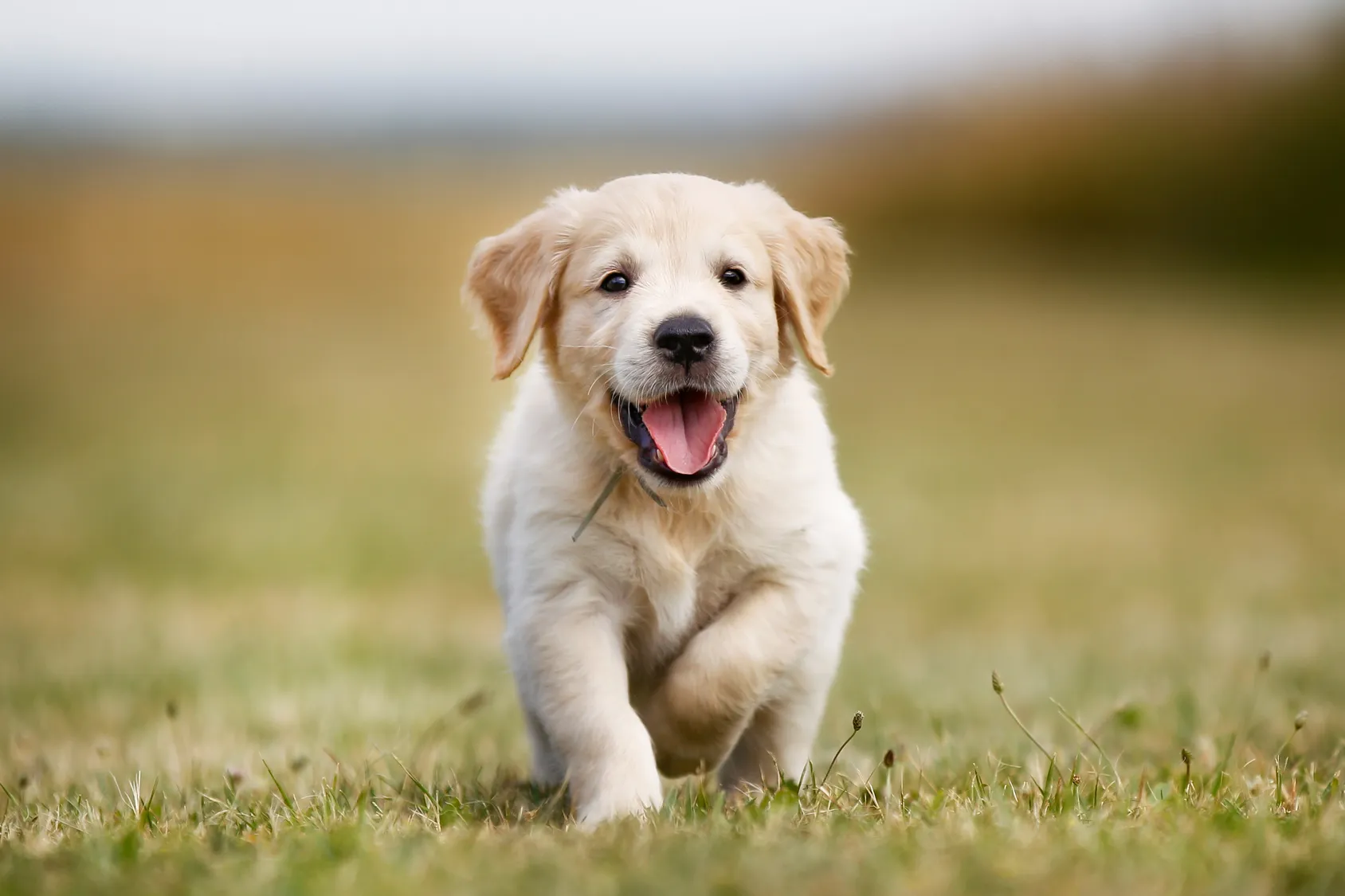
The Golden Retriever is the most consistently recommended dog breed for first-time owners, known for its patience, intelligence, and genuine eagerness to please. Weighing 55 to 75 lbs, it suits active homes with outdoor space. Goldens respond to basic commands faster than almost any other breed, making training feel rewarding rather than exhausting — even for total beginners.
Golden Retrievers have a dense, water-repellent double coat that ranges from pale cream to rich amber gold. Their soft, expressive eyes and permanent “smiling” expression make them one of the most recognizable dogs in the world.
Most people expect Goldens to be friendly — and they are. What surprises new owners is how intuitively they read human emotion. When you’re frustrated during training, your Golden will soften its approach. When you’re joyful, it matches your energy instantly. This emotional intelligence makes the learning curve feel genuinely cooperative.
“I taught my Golden to sit, stay, and come within two weeks — no professional training needed. She just wanted to get it right. I’ve never felt more like a competent dog owner in my life.”
— Maria L., Golden Retriever owner for 4 years
Best for: Active families · First-time owners with a yard · Homes with kids
→ Best family dog breeds for kids — full guide
2. Labrador Retriever — “America’s Most Trusted Beginner Dog”
| Weight | 55–80 lbs |
| Height | 21.5–24.5 inches |
| Lifespan | 10–12 years |
| Energy Level | High — needs 60–90 min daily activity |
| Grooming Need | Low — weekly brush, occasional bath |
| Shedding | Moderate to heavy year-round |
The Labrador Retriever is one of the easiest dog breeds for first-time owners, known for its gentle nature, high trainability, and rock-solid temperament. Weighing 55 to 80 lbs, Labs come in black, yellow, and chocolate. They rarely show aggression and adapt well to family routines, apartments with outdoor access, and active or moderate lifestyles alike.
The Lab’s coat is short, dense, and weather-resistant. It comes in three colors — black, yellow, and chocolate — each just as capable and equally lovable. Their broad heads and thick, otter-like tails are built for water. Many Labs will happily leap into any puddle they find.
Labs are known for being friendly. What new owners don’t expect is the depth of that friendliness — they genuinely want to be part of every activity. The surprising insight? A bored Lab is a destructive Lab. Give them a job, a fetch session, or a long walk, and they’re the calmest dog in the room.
“My Lab learned ‘sit’, ‘stay’, ‘leave it’, and ‘heel’ in three weeks. She chewed through one shoe while I was learning — then never again once training clicked.”
— James R., Labrador owner for 7 years
- Easiest large breed to train consistently
- Virtually never snaps or shows fear-aggression
- Short coat needs only weekly grooming
- Chews destructively if under-exercised
- Prone to obesity — watch food portions closely
- Sheds consistently throughout the year
Best for: Active singles · Families with kids · First-time owners with outdoor access
→ Best large dog breeds for families — full guide
3. Cavalier King Charles Spaniel — “The Lap Dog That Fits Any Lifestyle”
| Weight | 12–18 lbs |
| Height | 12–13 inches |
| Lifespan | 12–15 years |
| Energy Level | Low to moderate — 30 min daily is enough |
| Grooming Need | Moderate — brush 3x weekly, ear checks monthly |
| Shedding | Moderate — manageable with regular brushing |
The Cavalier King Charles Spaniel is one of the most adaptable dog breeds for first-time owners, equally content on a sofa or a hiking trail. Weighing just 12 to 18 lbs, Cavaliers are gentle, quiet, and people-focused. Vets consistently recommend this breed for beginners who want a loving companion without the high exercise demands of larger breeds.
Cavaliers carry silky, medium-length coats in four color patterns: ruby (chestnut), black and tan, tricolor, and Blenheim (chestnut and white). Their large, round eyes give them a permanently warm expression. They’re small enough to fit in a bag but substantial enough to feel like a real dog.
Most people assume Cavaliers are passive — just lapdog sitters. That’s partly true. But here’s what surprises new owners: Cavaliers actively track your location in the house. They’ll follow you from room to room and press against your leg while you work. That closeness isn’t clinginess — it’s devotion. It also makes them very responsive to your mood during training.
“She has never once barked at a stranger, growled at another dog, or refused a cuddle. She’s the most agreeable creature I’ve ever owned — and I’d had cats for 20 years before her.”
— Fiona M., Cavalier owner for 5 years
- Adapts to apartments, houses, and any schedule
- Never aggressive — safe around children and seniors
- Only needs 30 minutes of daily exercise
- Heart disease risk increases after age 5
- Ear canals trap debris — needs weekly checks
- Dislikes being left alone for long periods
Best for: Seniors · Apartment dwellers · Families with toddlers · Low-activity households
4. Bichon Frise — “The Allergy-Friendly Apartment Champion”
| Weight | 12–18 lbs |
| Height | 9.5–11.5 inches |
| Lifespan | 14–15 years |
| Energy Level | Moderate — 30 min of play daily |
| Grooming Need | High — professional groom every 4–6 weeks |
| Shedding | Very low — coat traps loose hair |
The Bichon Frise is a top dog breed for first-time owners who live in apartments or have mild dog allergies. Weighing 12 to 18 lbs, this fluffy white companion rarely sheds and produces less dander than most breeds. Bichons are cheerful, social, and adaptable — the AKC describes them as “happy-go-lucky” dogs that thrive in nearly any living situation.
The Bichon’s coat is a dense, soft double layer of pure white curls. It doesn’t shed onto furniture or clothes — instead, loose hair stays trapped in the curls until brushed out. Up close, the coat has a powder-puff texture that’s genuinely satisfying to touch.
Bichons are friendly — that’s expected. What surprises new owners is how resilient they are emotionally. Most small dogs become anxious or snappy under stress. Bichons bounce back. A loud noise, a stranger at the door, a new environment — they process it, wag their tail, and move on. This emotional steadiness makes them a genuinely low-stress first dog.
“I’m allergic to most dogs. My Bichon is the first dog I’ve owned without antihistamines on my nightstand. Eight years in and I’ve never once regretted it.”
— Priya N., Bichon Frise owner for 8 years
Best for: Allergy sufferers · Apartment dwellers · Seniors · First-time small dog owners
→ Best dog breeds for families with allergies — full guide
5. Poodle (Standard, Miniature, or Toy) — “The Smartest Beginner Dog on This List”
:max_bytes(150000):strip_icc()/poodle-miniature-vs-standard-vs-toy-hero-tout-11b9da361c5b4189960cbc40035c4761.png) Save
Save| Weight | 4–70 lbs (varies by size) |
| Height | 10 inches (toy) to 15+ inches (standard) |
| Lifespan | 10–18 years (smaller sizes live longer) |
| Energy Level | Moderate to high — 45–60 min daily |
| Grooming Need | High — groom every 6–8 weeks professionally |
| Shedding | Minimal — considered hypoallergenic |
The Poodle is the most intelligent dog breed recommended for first-time owners, available in three sizes — toy, miniature, and standard. All three share the same quick-learning mind and low-shedding coat. Poodles pick up new commands after just 5 repetitions — a rate that makes training feel effortless. They’re also widely accepted as one of the best hypoallergenic breeds for families.
Poodles have a single-layer, tightly curled coat that doesn’t shed in the traditional sense. Instead, loose hair stays in the curls and must be brushed and trimmed regularly. Their athletic, square build often surprises people — beneath all that fluff is a lean, agile dog built for water retrieval.
Most people think of Poodles as decorative show dogs. That’s wrong. Poodles were originally hunting dogs bred to retrieve waterfowl. That heritage shows: they’re sharp, problem-solving, and will find ways to entertain themselves if you don’t. The surprise is how fast boredom sets in — a Poodle without mental stimulation becomes mischievous very quickly.
“I taught mine to open the fridge. Accidentally. He figured it out while I was teaching him to close it. First dog I’ve ever owned and he’s smarter than me.”
— Daniel K., Standard Poodle owner for 3 years
Best for: Allergy-prone owners · Owners who enjoy training · Any size home
6. Shih Tzu — “The Low-Energy Dog That Lives to Cuddle”
| Weight | 9–16 lbs |
| Height | 9–10.5 inches |
| Lifespan | 10–18 years |
| Energy Level | Low — 20–30 min of daily walking |
| Grooming Need | High — daily brushing or a regular short cut |
| Shedding | Low — hair falls less than most breeds |
The Shih Tzu is one of the best dog breeds for first-time owners in small homes or apartments. Bred for centuries as a companion dog for Chinese royalty, the Shih Tzu lives to be near people. Weighing 9 to 16 lbs, it needs only 20 to 30 minutes of daily walking. Its gentle, laid-back temperament makes it ideal for seniors, beginners, and quieter households.
Shih Tzus carry a flowing double coat in nearly every color combination imaginable. Most owners opt for a short “puppy cut” to reduce grooming time. Their flat, open faces and wide-set eyes give them a permanently curious look — as if they’re always slightly surprised to find you there.
People expect Shih Tzus to be submissive. They’re not. They have a confident, stubborn streak that can make early training a test of patience. The surprise? That same stubbornness makes them remarkably stress-resistant. Loud environments, busy streets, chaotic homes — they process it all and get back to their main job: sitting beside you.
“She will refuse to sit in the rain. She will refuse to walk on cold tiles. She has opinions about everything — and somehow that makes her even more charming.”
— Sophie T., Shih Tzu owner for 6 years
Best for: Seniors · Apartment dwellers · Owners wanting a low-exercise dog
→ Best small dog breeds for families — full guide
7. Boxer — “The Playful, Loyal Dog for Active First-Timers”
| Weight | 50–80 lbs |
| Height | 21.5–25 inches |
| Lifespan | 10–12 years |
| Energy Level | High — needs 60–90 min of vigorous daily activity |
| Grooming Need | Very low — wipe down weekly, minimal brushing |
| Shedding | Low to moderate — short coat, easy to manage |
The Boxer is a top dog breed for active first-time owners who want a loyal, playful companion. Weighing 50 to 80 lbs, Boxers are naturally protective, deeply bonded to their family, and surprisingly gentle with children. Their short, easy-care coat makes grooming simple. They need exercise — but reward active owners with unmatched loyalty and humor.
Boxers are muscular and square-built, with a wide, blunt muzzle and a distinctively wrinkled brow. Their fawn or brindle coat lies flat and tight against their body. When alert, every muscle in their frame tenses visibly — they look formidable. When relaxed, they flop on the couch like a throw pillow.
People expect Boxers to be intense guard dogs. That’s half true. Yes, they’re protective. But here’s the part most people don’t know: Boxers retain a puppy-like playfulness well into old age. A 7-year-old Boxer will still chase a ball with the same enthusiasm as a 7-month-old puppy. That eternal goofiness is part of why they bond so deeply with families.
- Extremely low grooming needs — wipe and go
- Deeply loyal and protective of family
- Playful into old age — never gets dull
- Needs 60+ min of vigorous exercise daily
- Can be boisterous and knock over small children
- Sensitive to heat — avoid intense midday exercise
Best for: Active singles · Sporty families · Owners who jog or hike regularly
8. Papillon — “The Tiny Dog That Trains Like a Champion”
| Weight | 5–10 lbs |
| Height | 8–11 inches |
| Lifespan | 14–16 years |
| Energy Level | Moderate — 30–40 min of varied daily activity |
| Grooming Need | Low — brush weekly, no professional cuts needed |
| Shedding | Moderate — weekly brushing controls it well |
The Papillon is one of the most underrated dog breeds for first-time owners. Weighing just 5 to 10 lbs, this butterfly-eared toy breed is ranked among the top 10 most intelligent dog breeds worldwide. Papillons learn complex tricks quickly, compete at the highest level in agility, and rarely display the fearfulness or aggression seen in other toy breeds.
The Papillon’s most striking feature is its large, wing-like ears that fan out from the head like a butterfly in flight — “papillon” is the French word for butterfly. Their silky coat lies flat with a flowing frill at the chest. They’re delicate in appearance but surprisingly robust for their size.
Most people think tiny dogs are hard to train. The Papillon disproves that completely. They’re quick-thinking, alert, and motivated by praise and play. The surprising part? Their stamina. A 7 lb Papillon can outlast a 40 lb Labrador on an agility course. Their mental and physical energy in such a small package consistently shocks new owners.
- Top 10 most intelligent breeds globally
- No professional grooming costs required
- Small, travel-friendly, and adaptable
- Fragile — not suitable for very young children
- Prone to patellar luxation — watch for limping
- Can be vocal if under-stimulated mentally
Best for: Single adults · Older children’s households · Owners who enjoy trick training
9. Greyhound — “The Couch-Loving Sprinter That Surprises Every Owner”
| Weight | 60–70 lbs |
| Height | 27–30 inches |
| Lifespan | 10–14 years |
| Energy Level | Low indoors — needs 30–45 min of sprint-run time |
| Grooming Need | Very low — wipe down with damp cloth weekly |
| Shedding | Very low — one of the lowest-shedding large breeds |
The Greyhound is one of the most surprisingly relaxed dog breeds for first-time owners who want a large but low-maintenance companion. Despite being the fastest dog breed in the world, Greyhounds are calm, quiet, and gentle indoors. They spend up to 18 hours a day resting and need just 30 to 45 minutes of vigorous outdoor exercise. Many are adopted from racetracks and arrive already house-trained.
Greyhounds have a lean, aerodynamic build unlike any other breed. Their coat is ultra-short, smooth, and comes in nearly 30 recognized colors and patterns. Without their fur, their muscular form looks almost architectural — all curves and angles built for speed.
Everyone assumes Greyhounds need intense daily running. Here’s the truth that shocks new owners: a Greyhound is more like a cat. They sprint when outdoors, then return home to nap for hours. They don’t pace. They don’t bark. They don’t chew furniture. They pick a soft surface and sleep. For people who want a large, gentle, no-fuss dog — Greyhounds are the best-kept secret on this list.
- Calm and quiet indoors — rarely barks
- Ultra-low grooming — wipe down weekly
- Many rescues arrive already house-trained
- Must be kept on leash — chase instinct is strong
- Thin coat means cold weather requires a coat
- Not suitable for homes with small pets
Best for: Low-activity households · Apartment dwellers wanting a large dog · Adopters open to retired racing dogs
10. Whippet — “The Quiet, Gentle Dog That Fits Almost Any Home”
 Save
Save| Weight | 25–40 lbs |
| Height | 18–22 inches |
| Lifespan | 12–15 years |
| Energy Level | Moderate — 40–60 min of daily exercise |
| Grooming Need | Very low — occasional wipe-down is enough |
| Shedding | Minimal — short coat sheds very little |
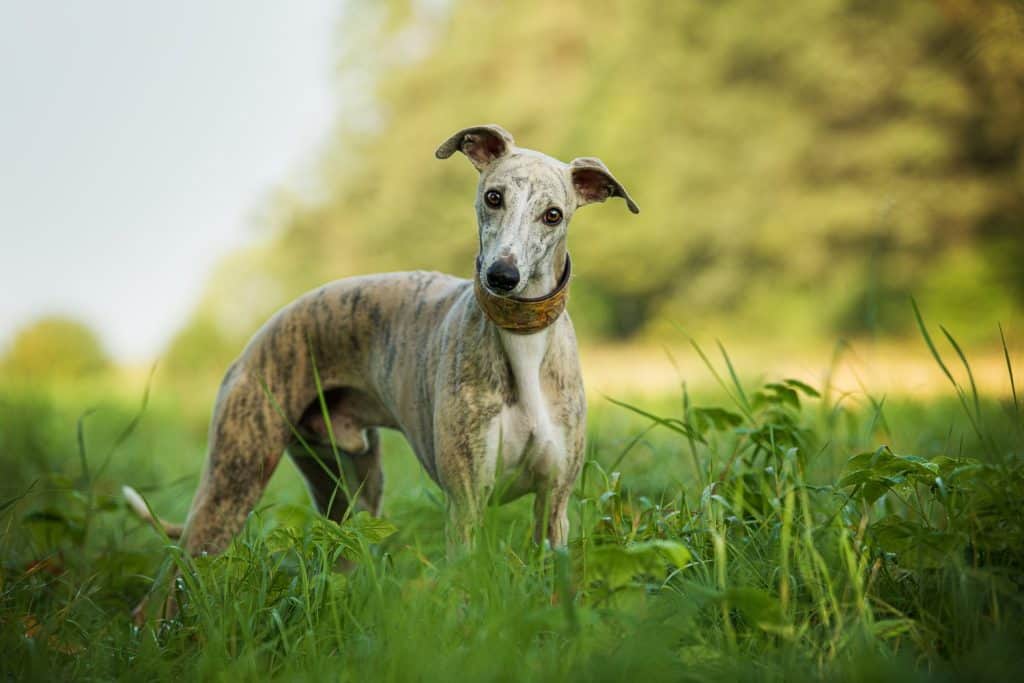
The Whippet is one of the most beginner-friendly medium breeds available, combining the calm indoor temperament of a Greyhound with a slightly more manageable size. Weighing 25 to 40 lbs, Whippets are gentle, quiet, and rarely aggressive. They adapt well to apartments and suburban homes. Research consistently shows sighthounds like the Whippet among the least reactive breeds to strangers and other dogs.
Whippets are sleek and elegant, with a fine, short coat that lies flat against their curved frame. They come in a wide range of colors — from solid blue or fawn to spotted brindle patterns. Their long, narrow head and deep chest give them the look of a small racing dog, which is exactly what they are.
People assume Whippets are high-strung because of their racing background. That’s wrong. Indoors, they’re almost startlingly calm. They’ll curl into a ball on the sofa and stay there for hours. The wow factor: Whippets rarely bark. Even at strangers. Even at other dogs. This makes them unusually easy neighbors — and one of the most underrated city dogs in the world.
- Rarely barks — ideal for apartments
- Extremely low grooming needs
- Gentle and non-aggressive with people
- Strong chase drive — always use a leash
- Thin coat needs a jacket in cold climates
- Can be sensitive to harsh training methods
Best for: Apartment dwellers · Quiet households · Owners wanting a medium dog without high grooming costs
→ Best dog breeds for busy families — find your match
Side-by-Side Comparison of All 10 Breeds
Here’s a quick comparison so you can scan across all 10 breeds at once. Use this table to narrow down your shortlist.
| Breed | Size | Energy | Grooming | Shedding | Best For |
|---|---|---|---|---|---|
| Golden Retriever | Large | High | Moderate | Heavy | Active families |
| Labrador Retriever | Large | High | Low | Moderate | Any beginner family |
| Cavalier KCS | Small | Low | Moderate | Moderate | Seniors, apartments |
| Bichon Frise | Small | Moderate | High | Very Low | Allergy sufferers |
| Poodle | All sizes | Mod–High | High | Minimal | Trainers, allergy owners |
| Shih Tzu | Small | Low | High | Low | Seniors, low-activity owners |
| Boxer | Large | High | Very Low | Low | Active singles or families |
| Papillon | Tiny | Moderate | Low | Moderate | Training enthusiasts |
| Greyhound | Large | Low indoors | Very Low | Very Low | Quiet, low-drama homes |
| Whippet | Medium | Moderate | Very Low | Minimal | Apartments, busy lifestyles |
Which Dog Breed Is Right for You as a First-Time Owner?
Here’s the thing. Every breed on this list is beginner-friendly. But “beginner-friendly” doesn’t mean “right for you.” Your lifestyle is the deciding factor — not the breed’s reputation.
Use this decision guide to match your real situation to the right breed.
- If you live in a small apartment with no yard → Bichon Frise, Cavalier King Charles Spaniel, Shih Tzu, or Whippet are your best options.
- If you have an active lifestyle and enjoy daily walks or hikes → Golden Retriever, Labrador, or Boxer will match your pace and reward you for it.
- If you or a family member has dog allergies → Poodle or Bichon Frise. Both are widely accepted as the most allergy-friendly breeds on this list.
- If you want a dog that trains easily from day one → Golden Retriever, Labrador Retriever, or Poodle. All three are in the top five most trainable breeds worldwide.
- If you’re a senior or have low energy levels → Cavalier King Charles Spaniel, Shih Tzu, or Greyhound need minimal daily exercise.
- If you want a large, calm dog with almost no grooming → Greyhound or Boxer. Both need very little coat maintenance.
- If you live in a shared building and need a quiet dog → Whippet or Greyhound. Both are among the quietest dog breeds available.
Do not choose a breed based on looks alone. A Golden Retriever puppy looks adorable in every photo — but it also needs 60+ minutes of exercise every single day. A Greyhound looks athletic and intimidating — but it’s one of the most low-key dogs you’ll ever own. Looks mislead. Lifestyle fit is everything.
What Most First-Time Owners Get Wrong About Choosing a Dog
Most people pick a breed based on three things: appearance, popularity, or a dog they met at someone’s house. None of those are reliable guides.
Here’s what research consistently shows: the biggest predictor of a successful first dog experience is energy-level match. When your activity level matches your dog’s needs, training is easier, bonding is faster, and problem behaviors are far less common.
You might be thinking: “But I’ll make time for exercise if I get an active breed.” That’s the most common promise new owners make — and the most commonly broken one. Real life doesn’t expand to meet a dog’s needs. Choose the breed that fits the life you actually live, not the one you plan to start living.
This article covers the 10 most beginner-friendly purebred dog breeds. If your situation involves a specific need — like a dog for a family with a baby, or a breed for a home with cats — those topics have their own in-depth guides on this site.
Essential Care Tips Every First-Time Dog Owner Needs to Know
Choosing the right breed gets you 50% of the way there. The other 50% is what you do in the first 6 months.
Most experts agree: the first 16 weeks of a puppy’s life are the most critical for socialization. Expose your dog to different people, sounds, environments, and other animals during this window. Dogs socialized early are consistently calmer, more confident, and easier to train for the rest of their lives.
Start training on day one. Not week two. Not after the puppy “settles in.” Day one. The AKC recommends beginning with five basic commands: sit, stay, come, down, and leave it. Keep sessions short — 5 to 10 minutes — and end on a success every time.
Find a vet before you bring your dog home, not after. Set up a first appointment within 72 hours of arrival. A full health check, parasite screening, and vaccination review in that first week sets the foundation for a long, healthy life together.
Veterinary resources from the American Veterinary Medical Association confirm that early veterinary care is one of the strongest predictors of long-term pet health outcomes. Don’t delay that first visit.
Frequently Asked Questions
What is the easiest dog breed to own for the first time?
The Golden Retriever and Labrador Retriever are widely considered the easiest breeds for first-time owners. Both are gentle, highly trainable, and rarely show aggression. Vets and the AKC consistently recommend them for beginners. If you want a smaller option, the Cavalier King Charles Spaniel is equally forgiving and requires less daily exercise.
Is a small or large dog better for a first-time owner?
Neither size is universally better — temperament and energy level matter more than size. Large breeds like Labs are often easier to train than many small breeds. But small dogs like the Bichon Frise and Cavalier King Charles Spaniel suit apartment living better. Match the dog to your lifestyle, not your assumptions about size.
What dog breeds are best for first-time owners with allergies?
The Poodle and Bichon Frise are the top choices for first-time owners with dog allergies. Both produce less dander and shed minimally. The Poodle comes in three sizes to suit any living space. No dog is 100% hypoallergenic, but these breeds are consistently recommended by allergists for sensitive households.
How much time should a first-time dog owner spend training daily?
Most trainers recommend 5 to 15 minutes of structured training per session, two to three times daily. Short, frequent sessions produce faster results than long, infrequent ones. For beginner breeds like the Golden Retriever or Poodle, basic commands — sit, stay, come — can be learned within the first two to three weeks of consistent training.
Can first-time dog owners get a rescue dog instead of a puppy?
Yes — and many rescue dogs make excellent first pets. Adult rescue dogs are often already house-trained and past the most destructive puppy phase. Greyhound rescues in particular are widely recommended for first-time owners. The key is to ask about the dog’s history, temperament, and any known behavioral needs before adopting.
Picking your first dog is one of the best decisions you can make. It’s also one that deserves more than five minutes of research. Take the time to match the breed to your real life — your energy level, your living space, your family — and you’ll have a companion that makes every day a little better.
One thing to do right now: take 5 minutes to write down your honest daily exercise routine, your home size, and whether anyone in your household has allergies. Then look back at the comparison table above. The right breed will be obvious.

Thomas Cutter is a lifelong dog owner and the founder of FindOutAboutDogs.com. With over 10 years of hands-on experience owning multiple breeds, Thomas created this site to provide honest, research-based dog advice that real owners can actually trust.
