What Is a Double Coat in Dogs? A Complete Grooming Guide for 2026
Quick Answer
A double coat in dogs is two distinct layers of fur — a harsh, weather-resistant topcoat and a soft, dense undercoat. Together they regulate body temperature, repel moisture, and protect the skin. Double-coated breeds like Huskies, Golden Retrievers, and German Shepherds need an undercoat rake and slicker brush, not a shave.
What You Need to Know About Double Coats
- Two layers, two jobs: The topcoat (guard hairs) repels water and dirt; the undercoat insulates against heat and cold.
- Seasonal shedding: Most double-coated dogs “blow” their undercoat in spring and fall — expect heavy shedding twice a year.
- Never shave: Shaving destroys the insulation system and can cause sunburn, coat damage, and overheating.
- Right tools matter: An undercoat rake reaches the dead undercoat; a slicker brush handles surface tangles and loose hair.
- Common breeds: Siberian Husky, Golden Retriever, German Shepherd, Labrador Retriever, Pomeranian, and many more.
Quick Tip
- Brush 2–3 times per week for maintenance, and daily during shedding season to prevent mats and reduce loose fur in your home.
If you’ve ever watched your “short-haired” Labrador shed enough fur to stuff a pillow, you’ve already met a double coat. I learned this the hard way with my first foster, a senior Golden Retriever named Biscuit. I brushed him with a basic bristle brush for a week, wondering why the couch still looked like a winter storm hit it. Then a groomer showed me the undercoat rake, and the truth came out — two full grocery bags of dead fur in one sitting.
Double coats are one of the most misunderstood parts of dog ownership. People shave them in summer, thinking they’re doing their dog a favor. They buy the wrong brush and blame the dog for “shedding too much.” Neither is fair, and both are fixable with a little knowledge. Here’s what I’ve learned about how double coats actually work, which tools handle them best, and the mistakes I see owners make over and over.


What Exactly Is a Double Coat?
 Save
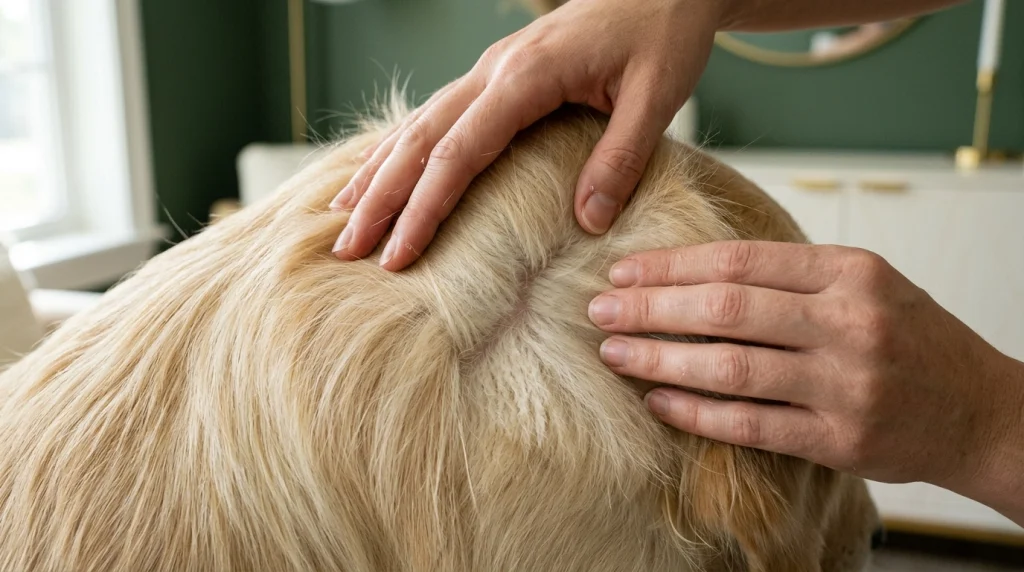
SaveA double coat is a dog’s fur made of two separate layers with two different structures. The outer layer, called the topcoat or guard hairs, is made of longer, coarser hairs. The inner layer, the undercoat, is soft, dense, and woolly.
These layers grow independently. The undercoat grows faster and sheds more often than the topcoat, which is why you’ll see tufts of soft fluff coming loose while the outer hairs stay put.
The AKC describes double coats as a system that “works together to regulate temperature and protect the skin.” That’s the key point most owners miss. A double coat isn’t just insulation for winter. The undercoat traps air to keep the dog warm in cold weather, and it also provides a buffer against heat in summer. The topcoat repels water, dirt, and UV rays.
The Two Layers Explained
- Topcoat (guard hairs): Long, coarse, and often water-resistant. These hairs give the coat its color and texture. They don’t shed as frequently as undercoat hairs.
- Undercoat: Short, soft, and dense. It grows close to the skin and sheds in large quantities during seasonal changes. This is the layer that causes “dog glitter” all over your house.
Dogs with single coats only have guard hairs. Breeds like Poodles, Boxers, and most terriers fall into that category. They shed less overall, but they still need grooming — just with different tools.
Which Dog Breeds Have Double Coats?
More breeds than most people realize. The AKC lists everything from short double coats on Labradors to thick Arctic coats on Samoyeds. If your dog has a fluffy undercoat that comes out in tufts during spring and fall, it’s a double coat.
Common Double-Coated Breeds
- Short double coats: Labrador Retriever, Beagle, Pembroke Welsh Corgi, Cardigan Welsh Corgi, Greater Swiss Mountain Dog
- Medium double coats: Golden Retriever, Border Collie, Australian Shepherd, German Shepherd
- Long double coats: Collie, Newfoundland, Bernese Mountain Dog, Great Pyrenees, Saint Bernard
- Arctic double coats: Siberian Husky, Alaskan Malamute, Pomeranian, Samoyed, Akita
I’ve personally groomed everything from a Corgi to a Malamute, and the difference in coat density is dramatic. A Corgi’s undercoat is surprisingly thick for such a short-legged dog. A Malamute’s undercoat feels like wool from a sheep that lifts weights.
If you’re not sure whether your dog has a double coat, look at the fur around the neck and along the back. If you can part the outer hairs and see a dense, fuzzy layer underneath, you’ve got a double coat.
Why Double Coats Shed So Much (and When)
Double-coated dogs shed year-round at a low level. But twice a year — usually spring and fall — they “blow coat.” That’s when the undercoat releases in large waves, sometimes in clumps you can pull out by hand.
Spring shedding is the heaviest for most breeds. The dog is dumping the winter undercoat to prepare for warmer weather. Fall shedding is lighter — the dog is making room for a thicker winter coat.
Indoor dogs sometimes shed on a slightly different schedule because artificial light and stable temperatures confuse their internal calendar. My current foster, a Husky mix, started blowing coat in February this year because we had a warm spell. Two weeks later, it snowed again. Her coat didn’t know what to do.
The table below compares shedding patterns across common double-coated breeds. The “Shedding Intensity” column reflects how much loose fur you’ll manage during peak season.
| Breed | Coat Length | Shedding Intensity | Peak Shedding | Best Primary Tool |
|---|---|---|---|---|
| Siberian Husky | Arctic | Extreme | Spring & Fall | Undercoat rake |
| Golden Retriever | Medium | High | Spring & Fall | Slicker brush + rake |
| German Shepherd | Medium | Extreme | Spring & Fall | Undercoat rake |
| Labrador Retriever | Short | High | Year-round + peaks | Rubber curry + slicker |
| Pomeranian | Arctic | Moderate | Spring & Fall | Pin brush + comb |
| Bernese Mountain Dog | Long | High | Spring & Fall | Undercoat rake + slicker |
Undercoat Rake vs Slicker Brush: Which Tool Does What?
 Save
SaveThis is the question I hear most from double-coat owners. The short answer: you need both, but they do different jobs.
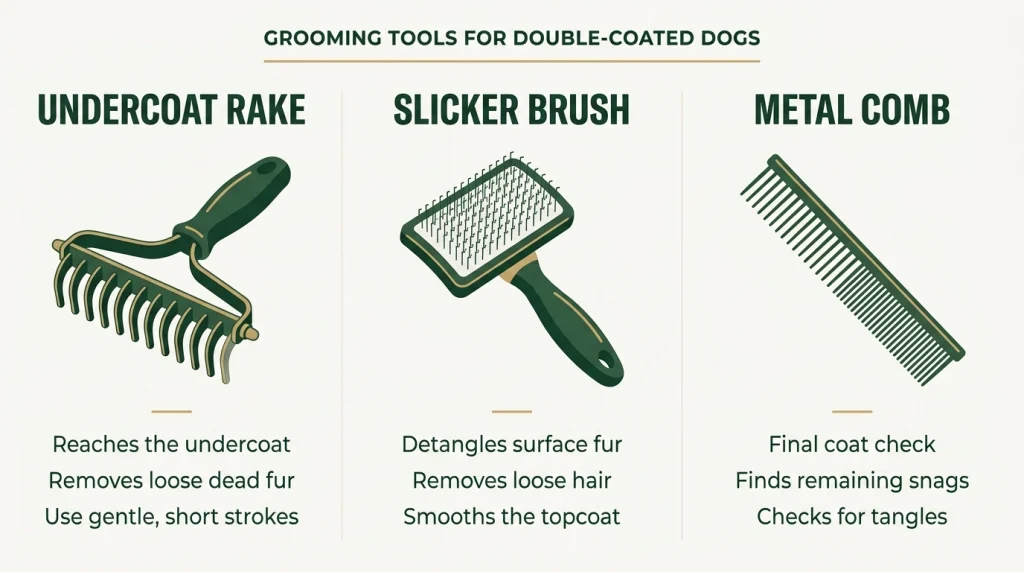
An undercoat rake has long, spaced teeth that reach through the topcoat and pull out loose, dead undercoat hair. A slicker brush has fine, densely packed bent pins that lift surface hair, detangle, and remove smaller debris.
Think of it this way: the rake goes deep, the slicker goes wide. Using only a slicker on a double-coated dog is like vacuuming a carpet without ever moving the furniture. You get the surface clean, but the mess underneath stays put.
Here’s the comparison that made it click for me:
- Undercoat rake: Best for removing the bulk of dead undercoat during shedding season. Use gentle, short strokes. Don’t press hard.
- Slicker brush: Best for daily maintenance, detangling, and catching loose hair between deep deshedding sessions. Great for finishing touches.
- Metal comb: The final check tool. After raking and slickering, run a metal comb through the coat. If it glides through without snagging, you’re done.
The AKC recommends an undercoat rake for double-coated dogs specifically because it “removes loose hair from the undercoat without damaging the topcoat.” That’s the whole game. You want to pull the dead fluff, not cut or strip the guard hairs.
The One Thing You Should Never Do to a Double Coat
Don’t shave it. Not in summer, not ever, unless a veterinarian tells you to for a medical reason.
Shaving a double-coated dog removes the topcoat and exposes the undercoat to sunburn, insects, and temperature swings. It also disrupts the coat’s natural growth cycle. Many shaved double coats grow back patchy, coarser, or with a different texture. Some never fully recover.
Owners often shave because they think it will keep the dog cool. It does the opposite. The double coat actually insulates against heat. Removing it takes away the dog’s built-in cooling system.
I’ve seen shaved Huskies at the dog park in July, and they look miserable. Their skin is pink, they’re panting harder than the unshaved dogs, and their coat is coming back in weird patches months later. It’s a hard lesson to watch.
How to Groom a Double-Coated Dog: Step-by-Step
 Save
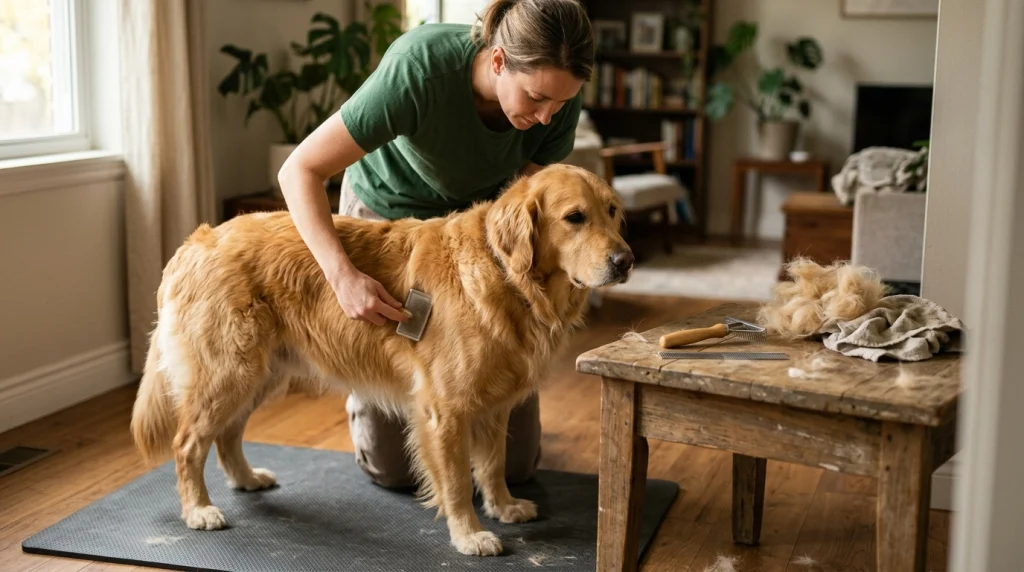
SaveGrooming a double coat is less about fancy technique and more about consistency. Here’s the routine I follow with my fosters, which I’ve refined after a lot of trial and error.
- Start with a rake. Work in sections along the back, sides, and hindquarters. Use short, gentle strokes. You’ll be amazed how much fur comes out.
- Follow with a slicker. Go over the same areas to catch loose surface hair and smooth the topcoat.
- Check with a metal comb. Run it through the coat, especially behind the ears, under the legs, and around the tail. Any snags mean you’re not done.
- Pay attention to trouble zones. Armpits, behind the ears, and the belly are where mats form first. Hit these areas every session.
- Bathe only when needed. Double coats don’t need frequent baths. Every 6–8 weeks is plenty for most dogs. Use a deshedding shampoo during shedding season.
Frequency matters more than intensity. Brushing for 10 minutes three times a week beats an hour-long session once a month. Daily brushing during peak shedding season keeps the fur under control and prevents mats from forming.
If your dog hates grooming, start with short sessions and treats. My current foster used to hide when she saw the rake. Now she leans into it because she knows cheese is coming afterward.
Product Recommendation Cards
If you’re ready to pick up the right tools, here’s what I’d actually recommend based on years of hands-on grooming with double-coated fosters:
🏆 BEST OVERALL
FURminator Undercoat deShedding Tool
★★★★★
A stainless steel deshedding edge with a skin guard that reaches through the topcoat to remove loose undercoat without cutting the guard hairs. I’ve tested this on Huskies, Shepherds, and Goldens — it pulls out more dead fur in one session than any other tool I own. The ergonomic handle makes a big difference during long grooming sessions.
💰 BEST BUDGET
Safari Dog Undercoat Rake (Single Row)
★★★★☆
Precision-tapered pins in a single row that penetrate deep into the undercoat without scratching the skin. This is the rake I hand to first-time double-coat owners because it’s forgiving, affordable, and effective. The rotating pins pull through tangles gently, which matters if your dog is sensitive about grooming.
🚛 BEST FOR DAILY MAINTENANCE
Hertzko Self-Cleaning Slicker Brush
★★★★☆
Fine bent bristles that lift loose hair and detangle surface fur without being too aggressive. The self-cleaning retractable bristles are a small feature that makes a big difference — no more picking fur out of the brush by hand every few minutes. I use this between deep raking sessions to keep the topcoat smooth and check for developing tangles.
Frequently Asked Questions About Double Coats
Can I shave my double-coated dog in summer?
No. Shaving removes the topcoat’s protection and disrupts the coat’s natural insulation. It can lead to sunburn, overheating, and permanent coat damage. The AKC advises against shaving double-coated breeds because the coat helps regulate body temperature in both hot and cold weather.
How often should I brush my double-coated dog?
Brush 2–3 times per week for routine maintenance. During spring and fall shedding seasons, brush daily to manage the extra undercoat release. Consistent short sessions work better than occasional marathon brushing.
What is the difference between a double coat and a single coat?
A double coat has two layers: a coarse topcoat of guard hairs and a soft undercoat. A single coat only has guard hairs. Single-coated breeds like Poodles and Boxers shed less but still need regular grooming with appropriate tools.
Why does my double-coated dog shed so much?
Double-coated dogs shed their undercoat heavily twice a year — typically in spring and fall — to adapt to seasonal temperature changes. This is called “blowing coat.” Year-round light shedding is also normal for many breeds.
What is the best brush for a double-coated dog?
An undercoat rake is the most important tool for removing dead undercoat hair. Pair it with a slicker brush for surface detangling and a metal comb for final checks. The FURminator is the most effective deshedding tool I’ve used for heavy shedders.
Final Thoughts
A double coat is not a grooming problem — it’s a feature. It keeps your dog warm in winter, cool in summer, and protected from sun, rain, and dirt. The shedding is the trade-off, and it’s manageable with the right tools and a consistent routine.
If you take one thing from this guide, make it this: put down the clippers and pick up an undercoat rake. Your dog will be cooler, more comfortable, and you’ll spend less time vacuuming. That’s a win for everyone.
Ready to get started? Grab a rake, a slicker, and a metal comb. Spend 10 minutes with your dog tonight. You’ll be surprised how much fur comes out — and how much better the coat looks afterward.

Thomas Cutter is a lifelong dog owner and the founder of FindOutAboutDogs.com. With over 10 years of hands-on experience owning multiple breeds, Thomas created this site to provide honest, research-based dog advice that real owners can actually trust.
