How to Brush a Wavy Coat on a Dog: Step-by-Step Guide
Quick Answer
To brush a wavy dog coat, start with a gentle slicker or pin brush, work through small sections in the direction of hair growth, and finish with a steel comb. Use light pressure and pay extra attention to areas where tangles form. For a closer comparison of the two main tools, see my slicker versus comb guide.
Six Steps for Brushing Wavy Dog Hair
- Step 1 — Inspect: Check the coat for knots, dirt, and sensitive skin.
- Step 2 — Prepare: Lightly mist dry hair with a dog-safe grooming spray if needed.
- Step 3 — Section: Lift the hair to expose one small layer at a time.
- Step 4 — Brush: Make short, gentle strokes in the direction of hair growth.
- Step 5 — Detangle: Loosen small knots with your fingers instead of pulling.
- Step 6 — Check: Run a steel comb through each section to find hidden tangles.
The Most Important Rule
- Keep it comfortable: Stop if your dog shows pain, skin redness, or strong resistance.
- Check the roots: A smooth surface does not always mean the deeper hair is free of knots.
Wavy dog hair can look soft and easy to manage. Yet those pretty waves can hide knots that become uncomfortable over time.
I prefer a simple brushing routine that focuses on coat comfort, not perfect styling. Here’s how to choose the right tools, brush each area, and protect those natural waves.


What Is a Wavy Dog Coat?
A wavy dog coat has hair that forms loose bends or flowing waves rather than straight strands or tight curls. Its grooming needs depend on hair length, density, and whether the dog has an undercoat.
You’ll see different wavy textures in some Goldendoodles, Cockapoos, Spaniels, and other mixed or purebred dogs. Two dogs from the same breed can still need different brushing routines.
Coat definition: A wavy coat describes the hair’s shape, not its shedding pattern. Wavy hair may be silky, dense, lightly shedding, or prone to holding loose strands.
Why Does Wavy Hair Need Special Care?
Waves can trap loose hair where strands bend around each other. Friction from collars, harnesses, and movement can make those tangles worse.
- Loose waves: May collect debris and develop small knots in longer areas.
- Dense fleece-like waves: Can hide tangles near the roots.
- Silky feathering: May knot behind the ears, legs, and tail.
- Wavy double coats: May need extra attention during seasonal shedding.
The goal isn’t to brush until the hair looks completely straight. It’s to remove loose strands and tangles while keeping the dog comfortable.
What Brush Is Best for a Wavy Dog Coat?
A gentle slicker brush is a useful starting point for longer, denser waves. A pin brush may suit looser, silkier hair, while a steel comb helps find remaining tangles.
The American Kennel Club’s brush guide explains why different coat types need different grooming tools.
Essential Grooming Tools
- Slicker brush: Separates dense hair and collects loose strands.
- Pin brush: Smooths longer, flowing waves with gentle strokes.
- Steel comb: Finds knots that the main brush may miss.
- Dog-safe detangling spray: Adds slip when the coat feels dry or catches.
- Undercoat rake: An optional tool for dogs with a true shedding undercoat.
I wouldn’t buy every grooming tool at once. Start with the brush that suits your dog’s coat, then add a comb for checking your work.
My dog grooming tool combinations guide explains how different tools can work together without unnecessary brushing.
Slicker Brush vs. Pin Brush vs. Comb
| Tool | Best Use | Main Caution |
|---|---|---|
| Slicker brush | Dense, medium-to-long wavy hair | Too much pressure can irritate skin. |
| Pin brush | Loose, silky waves and finishing | May miss deeper knots. |
| Steel comb | Checking hair from ends toward roots | Never pull through resistance. |
| Undercoat rake | Loose undercoat in double-coated dogs | Not needed for every wavy coat. |
How Do You Brush a Wavy Dog Coat Step by Step?
 Save
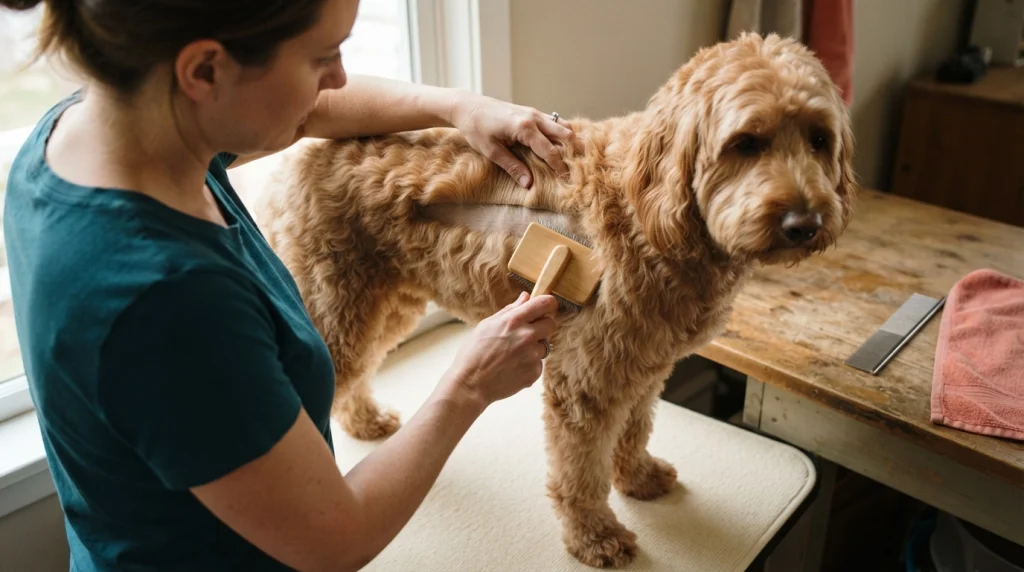
SaveThe easiest method is to divide the coat into small sections and brush each one gently. This helps prevent surface-only grooming and makes hidden tangles easier to find.
Step 1: Check Your Dog’s Coat First
Before picking up a brush, feel through the coat with your fingers. Look for small knots, damp spots, debris, or areas that seem tender.
- Feel behind both ears.
- Check the armpits and chest.
- Inspect under the collar or harness.
- Look at the legs, tail, and belly.
If you notice painful mats or skin irritation, don’t try to brush straight through them. Those areas may need professional attention.
Step 2: Prepare the Hair
If the hair feels dry or static-prone, a light mist of dog-safe grooming spray may help. Follow the product label and avoid the eyes, nose, and mouth.
You don’t need to soak the fur. A small amount of moisture or conditioning slip is enough for routine brushing.
Step 3: Divide the Coat Into Small Sections
I recommend starting on an easy area, such as the shoulder or side. Lift the upper hair with one hand to expose a narrow layer underneath.
This is part of a method called line brushing. It helps you work through the coat instead of brushing only the outer surface.
Step 4: Brush With Short, Gentle Strokes
Place the brush lightly against the exposed hair and follow its natural growth direction. Use short strokes that move through the coat without scraping the skin.
- Hold the upper hair away from the section you’re brushing.
- Start with an area that has no obvious knots.
- Move the brush gently through that small layer.
- Stop if the brush catches or pulls strongly.
- Shift the hair part slightly and repeat.
Don’t push harder to reach the roots. Choose suitable pin length and smaller sections instead.
Step 5: Work Around Sensitive Areas
Areas behind the ears and beneath the legs need extra care. The skin can be sensitive, and a large brush may be difficult to control.
- Behind the ears: Use your fingers and a small comb for loose tangles.
- Under the legs: Lift the limb gently without forcing its position.
- Chest and belly: Use light pressure and take frequent breaks.
- Tail: Support the hair while brushing from the ends upward.
- Face: Use a suitable small grooming tool away from the eyes.
I would rather finish one difficult area slowly than rush the entire coat. Your dog’s comfort matters more than the time spent brushing.
Step 6: Check Each Section With a Steel Comb
Once you’ve brushed a section, move a steel comb through the hair. Start near the ends and carefully work closer to the roots.
The comb should move without strong pulling. If it catches, stop and inspect that spot rather than forcing the teeth through.
Step 7: Finish Without Overbrushing
After removing tangles, smooth the hair gently in its natural direction. A pin brush may help arrange loose, flowing waves.
You don’t need repeated slicker strokes just to create more volume. Stop once the coat is comfortable and the comb check is complete.
How Often Should You Brush a Wavy-Coated Dog?
Many wavy-coated dogs benefit from brushing several times per week. Long, dense, or easily tangled coats may need daily checks and brushing.
I prefer setting a routine based on how quickly knots return. A short coat with loose waves usually needs less work than long, fleece-like hair.
| Coat Condition | Suggested Starting Routine |
|---|---|
| Short, loose waves | Two or three times weekly, adjusted as needed |
| Medium-length waves | Several times weekly with regular comb checks |
| Long, dense waves | Daily checking and frequent thorough brushing |
| After swimming or outdoor play | Inspect, dry properly, and remove new tangles |
These are practical starting points, not fixed rules for every breed. Your groomer can help you choose a schedule based on coat length and condition.
The ASPCA grooming recommendations also explain that brushing frequency depends on coat type.
Why Does a Wavy Coat Still Have Knots After Brushing?
A wavy coat can look smooth while hiding tangles near the roots. This often happens when a brush reaches only the upper layer.
The first thing I would check is whether the comb catches in one place. That can reveal a problem the brush didn’t reach.
Common Reasons Hidden Knots Remain
- Surface brushing: The brush moves over the visible hair but misses deeper strands.
- Short brush pins: The tool cannot reach through a longer coat.
- Friction: A harness or collar causes hair to twist together.
- Trapped shedding: Loose strands remain within dense waves.
- Missed areas: The belly, ears, and legs receive less attention.
My preferred fix is to return to one small section and brush it carefully. More force isn’t the answer.
Should You Brush Wavy Dog Hair Wet or Dry?
 Save
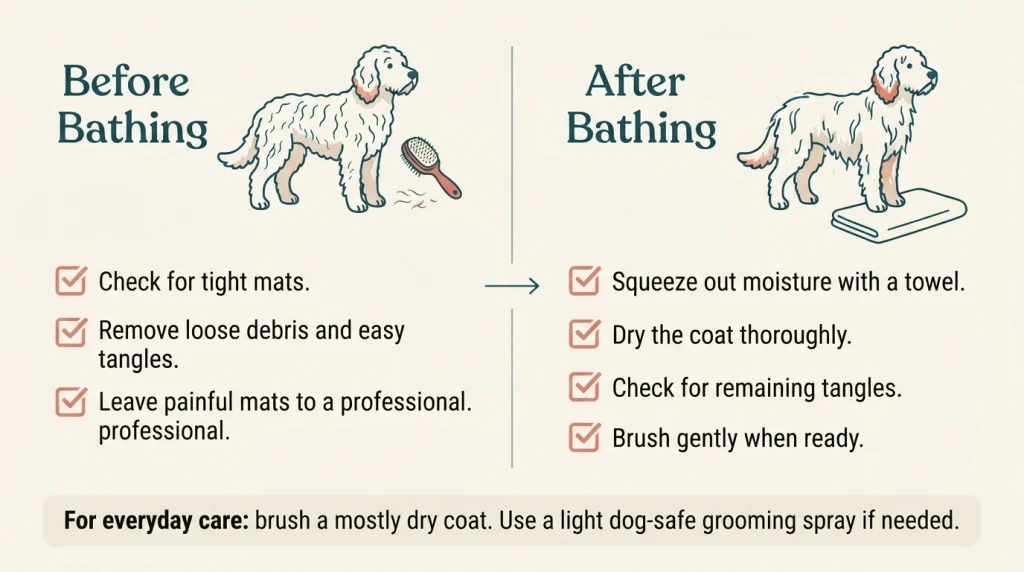
SaveFor everyday maintenance, I prefer brushing a mostly dry coat with a little grooming spray when needed. This gives more control and makes it easier to inspect the hair.
Some coats benefit from careful combing during conditioning, but soaking-wet tangled hair can be difficult to manage. Follow your groomer’s advice for the specific coat.
Before Bathing
- Check for tight mats before getting the dog wet.
- Remove loose debris and easy tangles.
- Leave painful or extensive matting to a professional.
After Bathing
- Use a towel to squeeze out moisture instead of rubbing vigorously.
- Dry the coat thoroughly using a comfortable, dog-safe method.
- Check problem areas for remaining tangles.
- Brush gently once the coat is ready for grooming.
I avoid leaving dense hair damp beneath the outer waves. Hidden moisture can make coat care harder and may contribute to skin problems.
How Do You Remove Small Knots From Wavy Dog Hair?
Small, loose knots may be manageable with your fingers, a suitable spray, and gentle brushing. Tight mats close to the skin are different and may need professional removal.
For a more detailed technique, my gentle Doodle detangling guide covers ways to work on loose knots without painful pulling.
My Preferred Method for Loose Tangles
- Locate the knot and check whether the skin beneath it looks normal.
- Hold the hair near its base to reduce pulling.
- Apply a little dog-safe detangler if appropriate.
- Separate the outer edges using your fingers.
- Work from the hair ends toward the base with gentle strokes.
- Stop if the knot feels tight or the dog becomes uncomfortable.
Never cut a tight mat with household scissors. Skin can be pulled into the tangled hair, making accidental cuts a serious risk.
The veterinary guidance from VCA Animal Hospitals recommends professional help for severe tangles and mats.
Does Brushing Change a Dog’s Natural Waves?
Brushing can temporarily make waves look straighter or fluffier because the strands separate. The coat’s natural texture usually becomes more visible again as the hair settles.
I wouldn’t avoid brushing simply to preserve a particular wave pattern. Keeping the coat free from painful tangles is more important.
How to Keep Waves Looking Natural
- Use only the amount of brushing needed to remove tangles.
- Choose a gentle brush suited to the hair’s density.
- Avoid excessive heat during drying.
- Use dog-safe conditioning products when appropriate.
- Finish by arranging the hair lightly with your hands.
Some long coats naturally look fuller after line brushing. That’s normal and doesn’t mean you’ve damaged the waves.
How Should You Brush Different Types of Wavy Coats?
The right routine changes with the hair’s texture and density. I wouldn’t use one brush in exactly the same way on every wavy-coated dog.
Wavy Goldendoodle or Cockapoo Coat
Many Doodles have coats that range from loose waves to dense curls. Longer fleece-like hair often benefits from a suitable slicker brush followed by a steel comb.
Pay attention to the ears, armpits, and harness areas. For breed-specific techniques, see my Doodle coat brushing guide.
Silky Wavy Spaniel Coat
Silkier waves may respond well to a pin brush and steel comb. Longer feathering around the legs, chest, and ears usually needs careful attention.
Use gentle strokes and avoid dragging the brush through knots. A small comb can make detailed areas easier to manage.
Dense Wavy Double Coat
Some dogs have a protective outer coat over a shedding undercoat. These dogs may need a suitable undercoat rake during heavier shedding periods.
Don’t assume every wavy dog has this coat structure. Ask a groomer if you’re unsure whether an undercoat tool is appropriate.
What Brushing Mistakes Should You Avoid?
The biggest mistake is brushing harder when the tool gets stuck. That can cause discomfort without solving the underlying tangle.
Six Common Mistakes
- Brushing only the surface: Use small sections and finish with a comb check.
- Applying too much pressure: Gentle strokes reduce unnecessary skin friction.
- Ignoring sensitive areas: Check the ears, chest, belly, and armpits.
- Pulling through knots: Stop and inspect any resistance.
- Using the wrong tool: Match brush design to the dog’s actual coat.
- Waiting until mats form: Keep a consistent home brushing routine.
My rule is simple: if grooming repeatedly causes pulling, something needs to change. That may mean adjusting the technique, tool, or coat length.
For more prevention ideas, see my guide on how to prevent recurring coat mats.
What If Your Dog Hates Being Brushed?
Start with short, positive sessions instead of trying to finish the whole coat at once. Let your dog become comfortable with the brush before increasing the amount of grooming.
A Gentle Training Routine
- Show the brush and reward calm behavior.
- Let your dog sniff it without forcing contact.
- Make one gentle stroke on an easy area.
- Offer praise or a small treat.
- Stop before your dog becomes stressed.
- Gradually increase the session as comfort improves.
A non-slip floor mat can help your dog feel steady. I also prefer brushing when the dog is relaxed rather than excited after play.
If your dog becomes defensive or consistently reacts to touch, stop and investigate the cause. Pain, mats, and skin problems can make brushing unpleasant.
When Should You Ask a Professional Groomer for Help?
Professional grooming is the safer option when mats are tightly attached to the skin or gentle detangling fails. A veterinarian should assess painful, swollen, wounded, or infected-looking skin.
Warning Signs That Need Attention
- Mats that feel hard and tight against the skin
- Redness, swelling, sores, or unusual discharge
- Repeated yelping, snapping, or pain during brushing
- Extensive tangles around sensitive body areas
- Unexpected bald patches or persistent itching
The PetMD matting guidance explains how dense mats may hide skin problems and cause discomfort.
Best Grooming Tools for Wavy Dog Coats
 Save
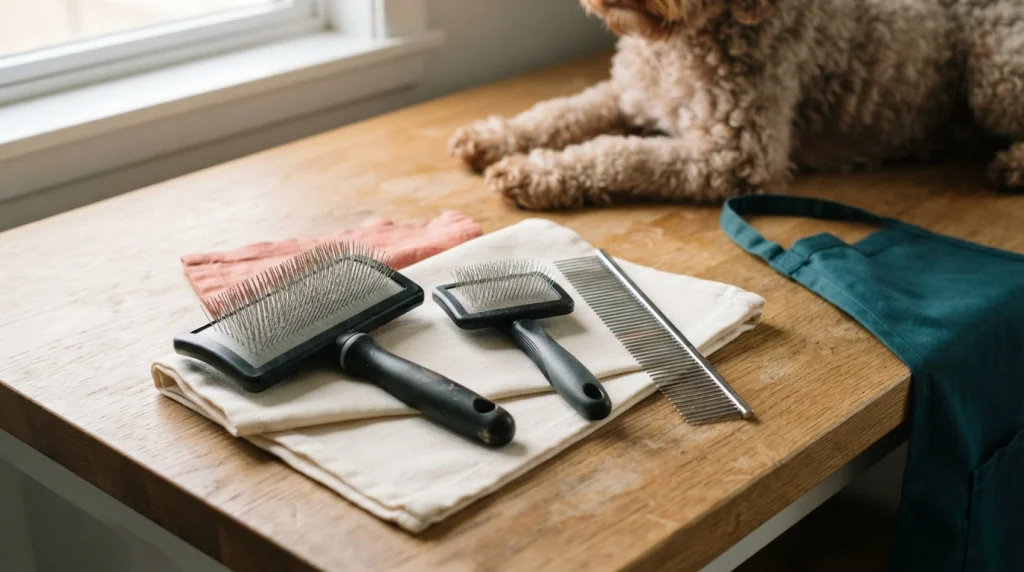
SaveIf you’re building a home grooming kit, I’d focus on a suitable brush and one reliable comb. These three real products serve different coat-care needs.
The ratings below are my editorial suitability scores, not verified customer review averages or claims of personal product testing.
🏆 Best for Dense Wavy Coats
Chris Christensen Big G Slicker Brush
★★★★½ 4.5/5 Editorial Fit
The Big G uses 27 mm stainless-steel pins and a flexible cushion pad. I’d consider it for longer, dense waves when an ordinary short-pin brush struggles to reach through the coat. It’s a premium option and may be unnecessary for shorter hair.
💰 Best Budget Gentle Slicker
Andis Soft-Tooth Slicker Brush
★★★★☆ 4/5 Editorial Fit
This brush uses flexible teeth for loose hair and light tangles. I’d consider it for routine maintenance on manageable waves or sensitive areas. Dense, long coats may still need a brush with greater pin reach.
✨ Best Finishing and Tangle Check
Andis 7-1/2-Inch Steel Comb
★★★★½ 4.5/5 Editorial Fit
This 7.5-inch steel comb has coarse and fine tooth spacing for grooming and finishing. I’d use it after brushing to check for hidden knots. It helps verify the result but isn’t a substitute for gentle brushing.
Frequently Asked Questions
Can I use a regular human hairbrush on my wavy-haired dog?
A human hairbrush may smooth the outer hair, but it often isn’t designed for a dog’s coat density or grooming needs. A suitable dog brush gives better control, while a steel comb can help reveal hidden knots. Always choose tools that feel comfortable against your dog’s skin.
Should I brush my wavy-haired dog every day?
Daily brushing can help dogs with long, dense waves that tangle quickly. Shorter, looser waves may need only several sessions weekly. Check areas behind the ears and under the harness regularly, then adjust your schedule based on how quickly knots develop.
Can brushing make my dog’s wavy coat straight?
Brushing may temporarily separate waves and make the coat look straighter or fluffier. It doesn’t normally change the natural structure of the hair. Use gentle tools and avoid unnecessary repeated brushing if you want a softer, more natural finish.
What should I do if the comb keeps getting stuck?
Stop pulling and inspect the area where the comb catches. The brush may have missed a deeper tangle, or the knot may be too tight for comfortable home removal. Try gentle finger separation for loose knots, and seek professional help for painful mats.
Is a slicker brush better than a pin brush for wavy dogs?
A slicker brush is often more effective for dense, tangle-prone waves because its fine pins help separate the coat. A pin brush may work better for loose, silky waves and finishing. The right choice depends on coat thickness, length, and your dog’s comfort.
Final Takeaway: Keep Wavy Coat Brushing Simple
Learning how to brush a wavy coat doesn’t require complicated equipment. A suitable brush, a steel comb, and a gentle routine can handle most everyday maintenance.
Work in small sections, check beneath the visible waves, and never force a tool through a knot. Consistent, comfortable grooming is the best goal.
Start with a short brushing session today. Once you understand how your dog’s coat behaves, building a practical routine becomes much easier.
Thomas Cutter is a lifelong dog owner and the founder of FindOutAboutDogs.com. With over 10 years of hands-on experience owning multiple breeds, Thomas created this site to provide honest, research-based dog advice that real owners can actually trust.
