Best 10 Dog Breeds for Military Personnel
Quick Answer
The best dog breeds for military personnel are Labrador Retrievers, Golden Retrievers, Beagles, Boxers, French Bulldogs, Australian Shepherds, Border Collies, Standard Poodles, Cavalier King Charles Spaniels, and Pembroke Welsh Corgis. Each one is adaptable to PCS moves, safe from most base housing bans, and easy to place with a sitter during deployment.
What to check before you pick a breed:
- Your installation’s breed restriction list
- Your dog’s weight limit for cabin travel
- How well the breed handles being left with a sitter
Your first move:
- Call your gaining installation’s housing office before you adopt
- Register your dog’s breed on official vet paperwork now
- Build a deployment care plan before you need one
You get orders. You have 30 days to figure out housing, schools, and whether your dog is even allowed to come with you. It’s a gut-punch feeling — loving an animal you might have to rehome because of a breed policy nobody warned you about.
I’m a longtime dog breed writer who has spent years digging through base housing rules, PCS pet policies, and deployment care plans for military families. What I keep finding is the same thing: the dogs that thrive in this lifestyle share a specific set of traits, not just a friendly face.
This guide covers the 10 breeds that hold up best under PCS moves, deployment separations, and base housing rules. You’ll get real stats, honest pros and cons, and a decision guide so you know exactly which breed fits your situation.
- Most branches ban Pit Bulls, Rottweilers, Dobermans, Chow Chows, Akitas, Cane Corsos, and wolf hybrids from base housing.
- Adaptable, medium-energy breeds handle PCS stress far better than high-strung guard breeds.
- Size matters for flights — dogs over 20 lbs usually fly cargo, not cabin.
- A breed that tolerates alone time makes deployment planning much easier on everyone.
- Always confirm your specific installation’s pet policy before you adopt, not after.


What Makes a Dog Breed a Good Fit for Military Life?
A dog breed fits military life when it adapts fast to new homes, isn’t on a base housing ban list, and doesn’t fall apart when its person deploys. That’s the whole test. It’s not about toughness or trainability alone — it’s about resilience to change.
Military life throws three things at a dog that most pet owners never deal with: frequent moves, long separations, and housing rules that can override your choice entirely. So what does that mean for you? It means temperament and paperwork both matter as much as looks.
You might be thinking, “isn’t any dog adaptable if it’s raised right?” Here’s why that’s only half true: genetics still set the baseline for how a dog handles stress, new environments, and separation anxiety, even with great training.
What Most People Get Wrong About Choosing a Military Dog
Most people assume any friendly, medium-sized dog will do fine with a military family. That’s the part that gets families in trouble. A friendly dog can still be a restricted breed on paper, and a calm dog can still panic during a 12-hour flight to Okinawa.
Here’s what actually trips families up: they fall in love with a puppy before calling the housing office at their gaining installation. Housing policy research shows that breed verification often comes down to what’s written on your vet records, not what the dog actually looks like. A mixed-breed dog labeled “Pit Bull mix” on paperwork can get flagged even if it’s mostly Lab.
Every major U.S. military branch has enforced restricted breed policies since 2012, and pit bulls, Rottweilers, and wolf-dog hybrids are the breeds named most often. Most experts agree the safest move is picking a breed that’s never on any base’s list — that’s exactly what this guide does.
The 10 Best Dog Breeds for Military Personnel — Ranked and Reviewed
Here’s the thing — this list isn’t ranked by cuteness. It’s ranked by how well each breed handles the three military-life stress points: moving, alone time, and housing restrictions. Every breed below is rarely, if ever, on a base ban list.
1. Labrador Retriever — “The Duty-Ready Companion”
 Save
Save| Weight | 55 to 80 lbs |
| Height | 21.5 to 24.5 inches |
| Lifespan | 10 to 12 years |
| Energy Level | High |
| Grooming Need | Low |
| Shedding | Heavy, seasonal |
The Labrador Retriever is a large sporting breed known for its steady, easygoing temperament. Weighing 55 to 80 lbs, it needs daily exercise but adjusts fast to new houses. Labs bond with the whole family, not just one handler — making deployment transitions far less traumatic for the dog.
Their short double coat sheds heavily, but it needs almost no trimming or professional grooming. A Lab’s broad head and thick “otter” tail are unmistakable at any dog park.
Everyone knows Labs are friendly. What most owners don’t expect is how quickly a Lab adjusts to a new spouse-led household during a deployment. That’s the real payoff — this breed forms secure attachments to multiple people, not just one.
“He didn’t miss a beat when my husband deployed. Slept by my side instead of the crate door for two weeks, then went right back to normal.”
— Megan R., Labrador owner for 5 years
- Rarely appears on any base ban list
- Bonds well with new caregivers fast
- Easy to find pet-sitters familiar with the breed
- Too big for in-cabin flights
- Sheds year-round, worse in spring
- Needs 60+ minutes of exercise daily
Best for: Families with a yard · First-time military dog owners · Multi-person households
→ Full breed picks for military families living on and off base
2. Golden Retriever — “The Homecoming Specialist”
| Weight | 55 to 75 lbs |
| Height | 21.5 to 24 inches |
| Lifespan | 10 to 12 years |
| Energy Level | High |
| Grooming Need | Moderate |
| Shedding | Heavy, seasonal |
The Golden Retriever is a large, feather-coated sporting breed famous for its patience and warmth. Weighing 55 to 75 lbs, it thrives on companionship over independence. Goldens handle emotional stress in the household well, often calming kids during a parent’s deployment.
Their wavy golden coat and gentle, expressive eyes make them instantly recognizable. Feathering on the legs and tail needs regular brushing to stay mat-free.
Everyone expects a Golden to be sweet. Few expect just how sensitive they are to household stress — a Golden often shadows the most anxious family member during a hard week. That’s the surprise: this breed reads emotional shifts almost like a service dog would.
“During my spouse’s last deployment, our Golden slept outside our daughter’s door every single night without being asked.”
— Danielle P., Golden Retriever owner for 8 years
- Great with kids during solo parenting
- Almost never breed-restricted anywhere
- Adjusts to new schools and sitters fast
- Needs regular brushing, especially in spring
- Prone to separation anxiety if left too long
- Too large for standard cabin travel
Best for: Single-parent households during deployment · Families with young kids · Homes with a yard
3. Beagle — “The Barracks-Friendly Nose”
| Weight | 18 to 30 lbs |
| Height | 13 to 15 inches |
| Lifespan | 12 to 15 years |
| Energy Level | Moderate to high |
| Grooming Need | Low |
| Shedding | Moderate |
The Beagle is a compact scent hound known for its curiosity and steady nerve. Weighing 18 to 30 lbs, it’s small enough to fly in-cabin on most airlines. Beagles are pack-oriented dogs that do well in group housing, like barracks-adjacent duplexes.
Their short, dense coat comes in classic tri-color or lemon patterns. Long droopy ears and a compact, muscular body make them built for stamina, not speed.
Everyone knows Beagles love to sniff. What surprises new owners is how vocal they get when bored — a bored Beagle will bay loudly enough to test any thin-walled duplex. That’s the trade-off for their portable size.
“She’s flown in-cabin with me through four duty stations now. Cheapest, easiest travel dog I’ve ever owned.”
— Chris T., Beagle owner for 6 years
- Small enough for in-cabin flights
- Never on breed ban lists
- Sturdy health with a long lifespan
- Loud baying, bad for thin walls
- Will roam if it catches a scent
- Prone to weight gain if under-walked
Best for: Off-base duplexes · Frequent flyers with pets · Single service members
→ Best dog breeds for small apartments and tight base housing
4. Boxer — “The Loyal Watch Dog That Isn’t Banned”
| Weight | 50 to 80 lbs |
| Height | 21.5 to 25 inches |
| Lifespan | 10 to 12 years |
| Energy Level | High |
| Grooming Need | Very low |
| Shedding | Low to moderate |
The Boxer is a muscular guardian breed known for its playful nature and strong bond with its family. Weighing 50 to 80 lbs, it’s alert without being aggressive toward strangers. Boxers have a long service history and are almost never named on housing ban lists, unlike similar-looking guard breeds.
Their short, glossy coat comes in fawn or brindle with a distinctive squared-off muzzle. A Boxer’s expressive face and springy gait give it a comedic, almost clownish presence.
Everyone assumes a muscular dog like this must be restricted. Here’s why that’s not true: military housing breed lists consistently target Pit Bulls, Rottweilers, and Dobermans, not Boxers. That’s the surprising part — this breed’s tough look doesn’t match its paper trail.
“People see him and cross the street. Then he tries to climb in their lap. Best alarm system and worst guard dog I’ve ever owned.”
— Jordan M., Boxer owner for 4 years
- Rarely restricted despite tough looks
- Minimal grooming, short coat
- Alert without excess aggression
- Sensitive to extreme heat
- Needs firm, consistent training early
- High energy through age 3 or 4
Best for: Single service members wanting a watchdog · Active households · Homes without extreme heat
5. French Bulldog — “The Small-Quarters Deployment Buddy”
| Weight | 16 to 28 lbs |
| Height | 11 to 13 inches |
| Lifespan | 10 to 12 years |
| Energy Level | Low to moderate |
| Grooming Need | Low |
| Shedding | Low |
The French Bulldog is a small, muscular companion breed known for its bat-like ears and calm indoor manners. Weighing 16 to 28 lbs, it needs very little daily exercise. Frenchies thrive in small apartments and dorm-style base housing where space and time are both limited.
Their smooth, wrinkled coat and stocky build give them a comic, expressive look. They don’t have a tail to speak of, just a short stub that wags their whole rear end.
Everyone loves how quiet Frenchies are indoors. What new owners don’t always plan for is their sensitivity to heat and air travel. So what does that mean for you? You might be thinking a small dog is always easy to fly — flat-faced breeds face real restrictions on many carriers, including some military charters.
Confirm brachycephalic breed rules with your airline and Patriot Express contact before booking any PCS flight with a Frenchie.
“He’s perfectly happy in a one-bedroom on-base apartment. Two short walks and he’s out cold on the couch.”
— Alicia N., French Bulldog owner for 3 years
- Low exercise needs for busy schedules
- Fits small on-base units easily
- Quiet, calm indoor temperament
- Flight restrictions due to flat face
- Cannot handle heat or long walks
- Higher vet costs for breathing issues
Best for: Small on-base apartments · Single or dual-income households · Mild climate duty stations
6. Australian Shepherd — “The Off-Duty Athlete”
| Weight | 40 to 65 lbs |
| Height | 18 to 23 inches |
| Lifespan | 12 to 15 years |
| Energy Level | Very high |
| Grooming Need | Moderate |
| Shedding | Heavy, seasonal |
The Australian Shepherd is a mid-size herding breed known for sharp intelligence and boundless drive. Weighing 40 to 65 lbs, it needs a serious job to stay balanced. Aussies fit active-duty households well, especially families who run, hike, or ruck regularly.
Their merle or tri-color coat and striking blue or amber eyes make them one of the most photogenic working breeds. A naturally bobbed or docked tail is a breed hallmark.
Everyone knows herding breeds are smart. What surprises new owners is how much that intelligence backfires without a job — an under-worked Aussie will herd kids, chase cars, or destroy furniture out of sheer boredom. That’s the catch behind the beauty.
“She runs three miles with me every morning before PT. Without that, she’d tear the house apart by noon.”
— Ryan B., Australian Shepherd owner for 6 years
- Matches active-duty fitness routines
- Highly trainable, learns fast
- Not restricted by any base policy
- Needs 90+ minutes of activity daily
- Poor fit for deployment-heavy households
- Can develop herding-related nipping habits
Best for: Runners and ruckers · Dual-military households · Homes with fenced yards
7. Border Collie — “The Brains Behind the PT Test”
| Weight | 30 to 55 lbs |
| Height | 18 to 22 inches |
| Lifespan | 12 to 15 years |
| Energy Level | Very high |
| Grooming Need | Moderate |
| Shedding | Moderate to heavy |
The Border Collie is a mid-size herding breed widely considered the most trainable dog in the world. Weighing 30 to 55 lbs, it needs both physical exercise and mental work daily. Border Collies excel with structured, routine-driven owners — a trait most military households already have built in.
Their medium-length coat comes in black-and-white or red-and-white with a distinctive intense, focused stare. Their compact, athletic build is made for quick direction changes.
Everyone knows Border Collies are smart. What most people underestimate is how much structure they crave — a Border Collie without a routine gets more anxious, not more relaxed. That’s the surprising insight: military schedules, chaotic as they feel, actually suit this breed’s need for predictable structure.
“He thrives on our schedule. Same wake time, same walk time, every day. Chaos is the only thing that stresses him out.”
— Sam O., Border Collie owner for 7 years
- Thrives on strict daily routines
- Learns commands in a handful of reps
- Never appears on housing ban lists
- Struggles hard with schedule disruption
- Needs a real job, not just walks
- Not ideal for frequent, chaotic PCS timelines
Best for: Stable, longer-duration assignments · Owners who love dog sports · Highly routine households
8. Standard Poodle — “The Allergy-Friendly All-Rounder”
| Weight | 45 to 70 lbs |
| Height | Over 15 inches |
| Lifespan | 12 to 15 years |
| Energy Level | Moderate to high |
| Grooming Need | High |
| Shedding | Very low |
The Standard Poodle is a large, curly-coated breed known for sharp intelligence and a low-shed coat. Weighing 45 to 70 lbs, it’s a strong pick for family members with allergies. Poodles are eager to please and handle new commands, new homes, and new sitters with unusual ease.
Their dense, curly coat comes in solid colors and needs regular clipping to avoid matting. Underneath the fancy grooming stereotype is an athletic, water-loving retriever build.
Everyone pictures a Poodle at a dog show. Few picture how tough and biddable the breed actually is underneath the haircut — Poodles were originally bred as water retrievers, not lap dogs. That’s the gap between reputation and reality.
“My son’s allergies were the whole reason we went Poodle. Turns out we got the smartest dog I’ve ever owned as a bonus.”
— Priya S., Standard Poodle owner for 4 years
- Low-shed coat, good for allergy sufferers
- Extremely fast learner
- Adapts well to new environments
- Grooming costs add up fast
- Needs professional clipping every 6 weeks
- Can be sensitive to being left alone
Best for: Families with allergies · Owners who want a trainable dog · Households near reliable groomers
→ More hypoallergenic breed options for tight base housing
9. Cavalier King Charles Spaniel — “The Small-Space Sweetheart”
| Weight | 13 to 18 lbs |
| Height | 12 to 13 inches |
| Lifespan | 12 to 15 years |
| Energy Level | Moderate |
| Grooming Need | Moderate |
| Shedding | Moderate |
The Cavalier King Charles Spaniel is a small toy-sporting breed known for its gentle, affectionate nature. Weighing 13 to 18 lbs, it usually qualifies for in-cabin travel. Cavaliers adapt to nearly any living space, from a barracks room to a family house overseas.
Their silky, feathered coat comes in classic Blenheim, tricolor, or ruby patterns. Large, soft brown eyes give the breed its famously sweet expression.
Everyone assumes small dogs are yappy and high-strung. This breed breaks that pattern — a well-socialized Cavalier is calm around strangers and travels quietly through airports and terminals. That’s the quiet advantage most owners don’t expect.
“She’s slept through three overseas flights in her carrier under the seat. Not one bark the whole time.”
— Kate H., Cavalier owner for 5 years
- Qualifies for in-cabin travel
- Calm temperament, good for barracks
- Adapts to overseas duty stations well
- Prone to heart issues later in life
- Craves company, dislikes long alone time
- Not built for rough outdoor duty
Best for: Overseas assignments · Barracks-adjacent living · Owners wanting a lap companion
→ Easygoing breed picks for first-time dog owners
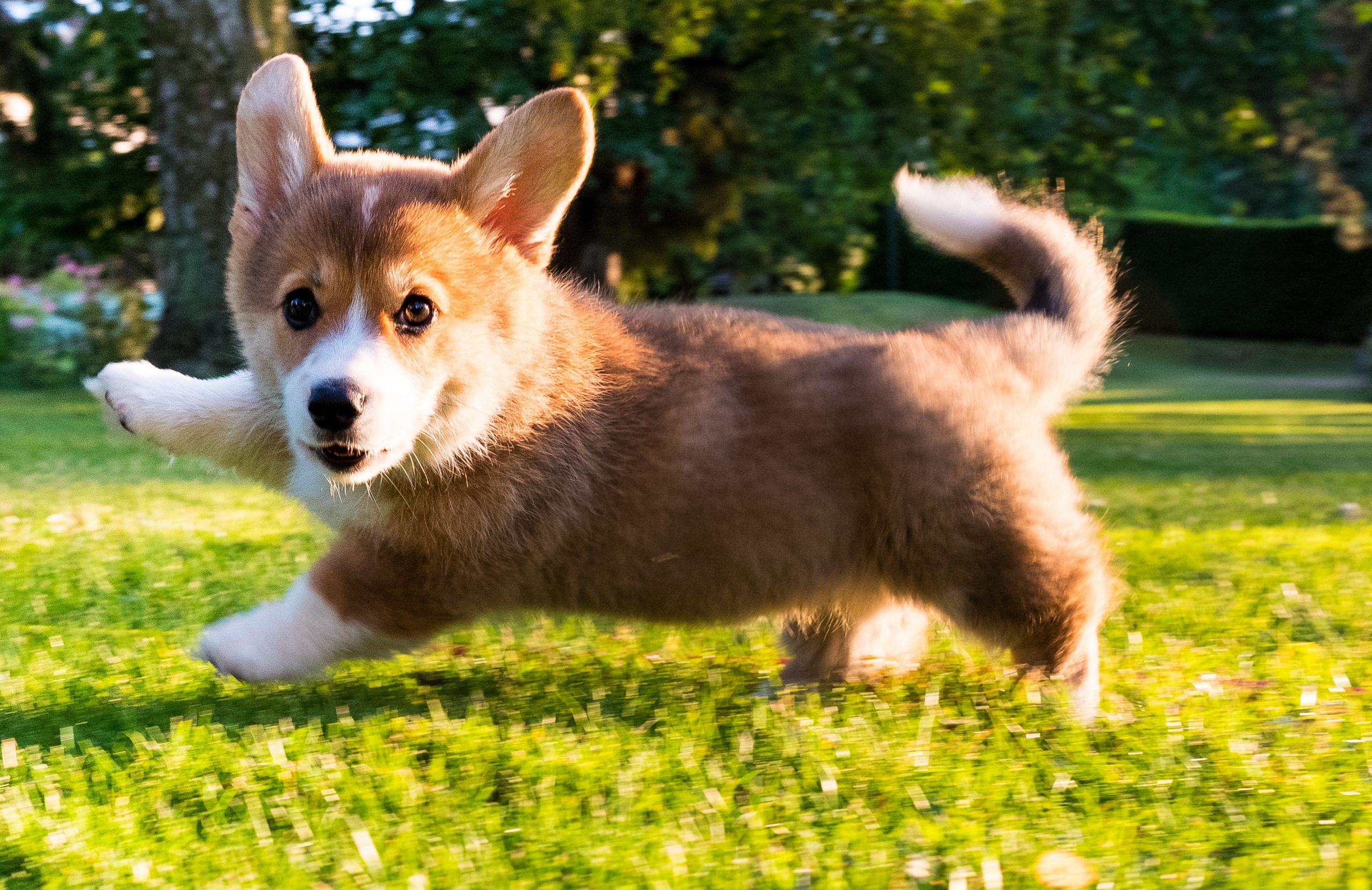
10. Pembroke Welsh Corgi — “The Big Personality in a Small Frame”
 Save
Save| Weight | 24 to 30 lbs |
| Height | 10 to 12 inches |
| Lifespan | 12 to 13 years |
| Energy Level | Moderate to high |
| Grooming Need | Moderate |
| Shedding | Heavy, year-round |
The Pembroke Welsh Corgi is a small herding breed known for its short legs and huge personality. Weighing 24 to 30 lbs, it fits most in-cabin size limits with a soft-sided carrier. Corgis are alert watchdogs in a body small enough for even the tightest base apartment.
Their fox-like face and low, stocky build make them one of the most recognizable small breeds. A plush double coat sheds constantly, but never needs professional trimming.
Everyone loves how funny Corgis look. What new owners often miss is how much herding instinct sits behind that grin — a bored Corgi will nip at heels, kids included, without training. That’s the working-dog brain hiding inside a small-dog body.
“He barks at the mail truck like it’s an incoming threat, then rolls over for belly rubs two seconds later.”
— Marcus D., Corgi owner for 5 years
- Small enough for tight base housing
- Alert, makes a strong doorbell dog
- Highly trainable and food-motivated
- Sheds heavily all year
- Prone to back problems if overweight
- Can nip at heels without training
Best for: Tight base apartments · Owners wanting a vocal watchdog · Households that can manage a herding instinct
Quick Comparison: All 10 Military-Friendly Breeds Side by Side
Here’s the full lineup in one place. Use this table to compare size, energy, and shedding before you commit to a breed.
| Breed | Weight | Energy | Cabin Flight Fit |
|---|---|---|---|
| Labrador Retriever | 55–80 lbs | High | No |
| Golden Retriever | 55–75 lbs | High | No |
| Beagle | 18–30 lbs | Mod-High | Often yes |
| Boxer | 50–80 lbs | High | No |
| French Bulldog | 16–28 lbs | Low-Mod | Restricted* |
| Australian Shepherd | 40–65 lbs | Very High | No |
| Border Collie | 30–55 lbs | Very High | Rarely |
| Standard Poodle | 45–70 lbs | Mod-High | No |
| Cavalier King Charles Spaniel | 13–18 lbs | Moderate | Yes |
| Pembroke Welsh Corgi | 24–30 lbs | Mod-High | Sometimes |
*French Bulldogs face brachycephalic (flat-face) restrictions on many airlines and some military charters.
Which Military-Friendly Dog Breed Is Right for You?
The right breed depends on your living situation, your deployment tempo, and how much space you have — not just which dog looks the toughest. Use this decision guide to narrow things down fast.
- If you’re stationed on base with limited square footage → the French Bulldog, Cavalier King Charles Spaniel, or Corgi will fit best.
- If you PCS often and need a dog that flies in-cabin → the Beagle or Cavalier King Charles Spaniel are your safest bets.
- If you’re a single service member who wants a watchdog that isn’t restricted → consider the Boxer.
- If your household includes kids and a spouse who solo-parents during deployment → the Labrador or Golden Retriever will bond fastest with everyone.
- If you’re an active-duty runner or ruck-training regular → the Australian Shepherd or Border Collie can keep pace, as long as someone’s home enough to give them a job.
Military Dog Care Essentials You Need to Know
Owning a dog through PCS moves and deployments takes more planning than typical pet ownership. Three things matter most: your paperwork, your deployment plan, and your travel budget.
First, get your dog’s breed correctly documented on official vet records the moment you adopt. Housing offices verify breed by paperwork, not appearance, so a vague or incorrect label can cause problems you didn’t create.
Housing offices typically verify breed using either the name on your pet’s vet records or a DNA test result, and the exact process varies from base to base. Some installations, like MCB Quantico, won’t accept vague terms like “mixed” at all.
Second, build a deployment care plan before orders drop. Nonprofit groups like Dogs on Deployment connect service members with volunteer fosters so pets don’t end up surrendered during a short-notice deployment.
Third, budget for pet travel early. As of January 1, 2024, the DoD reimburses eligible families up to $550 for CONUS pet moves and up to $2,000 for OCONUS moves, or $4,000 when relocating from a high-rabies country. That’s a real help, but it rarely covers the full cost for a large-breed dog flying overseas.
Call your gaining installation’s housing office directly. Branch-wide policies don’t always match what your specific base or housing company enforces.
Mistakes Military Dog Owners Make (And How to Avoid Them)
The most common mistake is adopting before confirming the housing policy at your next duty station, not your current one. Orders come with a report date, and by the time you find out a breed is restricted, you’ve already fallen in love.
The second mistake is underestimating a high-energy breed’s needs during a deployment. A Border Collie or Australian Shepherd left with a less-active caretaker can become destructive fast, and that’s not the dog’s fault.
The third mistake is skipping a written deployment care plan. Even a simple document naming a backup caretaker and vet contact prevents a crisis if orders change with little warning.
This article covers picking and living with a dog breed as active-duty or reserve military personnel. If your situation involves a certified service or emotional support dog, you’ll need to research ADA and Fair Housing Act protections separately, since base policy on those animals differs from standard pet rules.
Frequently Asked Questions
What dog breeds are banned from military housing?
Most branches restrict Pit Bull-type breeds, Rottweilers, Doberman Pinschers, Chow Chows, Akitas, and wolf hybrids from privatized base housing. Some installations add Cane Corsos, Bull Mastiffs, and Rhodesian Ridgebacks. Always confirm with your specific housing office, since policies vary by base and branch.
Can I bring my dog with me when I PCS?
Yes, most military families move their dogs during a PCS, including overseas. You’ll need updated vaccine records, possible rabies titer testing for some countries, and confirmation that your breed is allowed at your new duty station’s housing.
Does the military pay to move my dog?
Since January 2024, the DoD reimburses eligible service members up to $550 for CONUS pet moves and up to $2,000 for OCONUS moves, with $4,000 available from high-rabies countries. Reimbursement requires PCS orders dated 2024 or later and proper documentation.
What’s the best dog breed for a deployed single service member?
Adaptable, independent breeds like the Beagle or Boxer tend to do well, especially when paired with a reliable foster plan through a group like Dogs on Deployment. The best choice always depends on who will care for the dog during deployment.
Are small dogs easier for military families than large dogs?
Often, yes. Small breeds under 20 lbs typically qualify for in-cabin flights, cost less to move, and fit into tighter base housing. Large breeds bring other benefits, like steadier temperaments, but usually require cargo travel and more space.
Choosing a dog breed as military personnel comes down to matching temperament and size to your actual lifestyle, not just your preference. The breeds on this list hold up through moves, deployments, and housing checks better than almost any others.
Your one move today: call the housing office at your current or gaining installation and get their exact pet policy in writing before you adopt or PCS with your dog.

Thomas Cutter is a lifelong dog owner and the founder of FindOutAboutDogs.com. With over 10 years of hands-on experience owning multiple breeds, Thomas created this site to provide honest, research-based dog advice that real owners can actually trust.
