10 Best Big Dog Breeds for First-Time Owners: Gentle, Loyal & Easy to Train
Quick Answer
The best big dog breeds for first-time owners are gentle, eager to please, and easy to train. Labrador Retrievers, Golden Retrievers, and Bernese Mountain Dogs top most experts’ lists for their patience and people-focused nature. Great Danes and Newfoundlands suit calm, low-key households, while Vizslas fit active beginners who want a true workout partner.
Top Big Dog Picks by Lifestyle
| Easiest for true beginners | Labrador Retriever |
| Calmest gentle giant | Newfoundland |
| Best for active owners | Vizsla |
Quick Picks for Your Situation
- Want a classic, easy-going family dog? Pick the Labrador Retriever.
- Living with allergies but still want a big dog? Pick the Standard Poodle.
- Want a couch-loving giant in a small home? Pick the Great Dane.
- Active and want a running partner? Pick the Vizsla.
Your hand is on the leash. A 70-pound puppy is pulling toward a squirrel, and your arm already aches. That’s the moment most first-time big-dog owners picture – and it’s also the moment that scares people away from large breeds entirely.
I’m Thomas Cutter, and I’ve spent years matching new owners with dogs that actually fit their homes, not just their Instagram feed. Big dogs get a bad reputation. The truth is gentler. Many large breeds were bred to work closely with people, which makes them easier to train than you’d expect.
This guide covers 10 big dog breeds that suit first-time owners in 2026, with real stats, honest pros and cons, and a simple way to match a breed to your life. By the end, you’ll know exactly which one – if any – belongs in your home.
- Temperament matters more than size when picking a first big dog.
- Labrador Retrievers and Golden Retrievers remain the safest beginner choices.
- Giant breeds like Newfoundlands and Great Danes are surprisingly low-energy indoors.
- Grooming needs vary widely – a Standard Poodle and a Boxer are not the same job.
- Every big dog needs daily structure, not just daily exercise.


What Makes a Dog Breed “Big” – And Right for a First-Time Owner?
A “big” dog breed usually weighs 50 pounds or more as an adult, with giant breeds topping 100 pounds. Size alone doesn’t predict difficulty – temperament does. Most experts agree that trainability, energy level, and people-focus matter far more than weight when judging if a breed suits a beginner. A 150-pound Newfoundland can be easier to live with than a 25-pound terrier with a stubborn streak.
Here’s the thing. Big dogs were often bred for jobs that required close teamwork with humans – retrieving, herding, guarding livestock, or pulling carts. That history shaped dogs who watch their owner’s face for cues. So if you’ve heard that large breeds are automatically harder, that’s only half true.
You might be thinking a giant dog means a giant headache. Here’s why that’s not always the case: breeds like the Newfoundland and Great Dane are famous for calm, couch-loving personalities once they’re past the puppy stage.
Meet a breed in person before deciding. Photos hide size, drool, and shedding.
The 10 Best Big Dog Breeds for First-Time Owners – Ranked and Reviewed
Each breed below earned its spot for one reason: real beginners can manage it. We looked at trainability, temperament, exercise needs, and how forgiving each breed is of a learning-curve owner. So what does that mean for you? A breed that’s patient with mistakes, because you will make some.
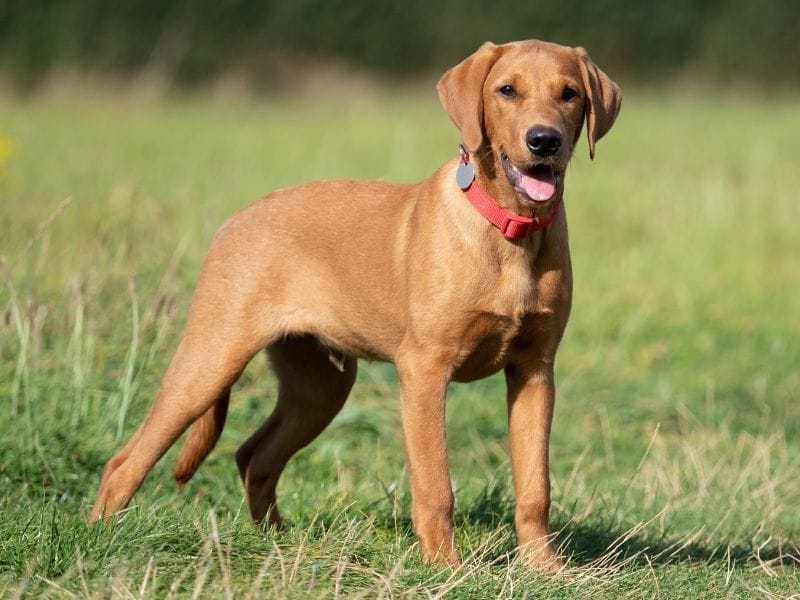
Labrador Retriever – America’s Friendliest Big Dog for Beginners
 Save
Save| Weight | 55-80 lbs |
| Height | 21.5-24.5 in |
| Lifespan | 10-12 years |
| Energy Level | High |
| Grooming Need | Low – weekly brushing |
| Shedding | High, with heavy seasonal blowouts |
The Labrador Retriever is a large, athletic sporting breed known for its eagerness to please. Adults reach 55 to 80 pounds with a short, weatherproof coat. Labs are playful, food-motivated, and quick to learn basic commands. They’re an ideal first dog for active singles, couples, and families with kids.
Their short double coat hugs a sturdy, barrel-chested frame built for swimming. That “otter tail” thumps constantly when they’re happy.
Labs greet strangers like long-lost friends. You might expect a calm adult dog. What you may not know: Labs often stay puppyish in spirit until age 3 or 4. The genuinely surprising part? Their food drive makes training treats almost too effective.
“He learned ‘sit’ in one afternoon because I had string cheese. Three years later, he still checks my pockets first thing every morning.”
– Jenna R., Labrador Retriever owner for 6 years
- Learns commands in days, not weeks
- Loves kids, strangers, and other dogs
- Easy short coat needs no professional grooming
- Sheds heavily twice a year
- Prone to overeating and joint strain
- Needs 60+ minutes of exercise daily
Best for: active families · first-time owners with a yard · people who want a classic, dependable companion
Golden Retriever – The Big Dog That Greets Everyone Like Family
| Weight | 55-75 lbs |
| Height | 21.5-24 in |
| Lifespan | 10-12 years |
| Energy Level | High |
| Grooming Need | Moderate – brush 2-3x weekly |
| Shedding | High year-round |
The Golden Retriever is a large sporting breed prized for its gentle, sociable nature. Adults weigh 55 to 75 pounds with a feathered golden coat. Goldens bond closely with every family member and rarely show aggression. They suit beginners who want a patient, biddable dog for an active household.
Their flowing coat catches light in a way that makes them look almost staged for photos.
Most people expect a friendly dog. Fewer expect a Golden to “talk back” with soft grumbles when excited. The real surprise? Many carry toys around the house all day, just to have something in their mouth.
“She greets the mail carrier with a stuffed duck in her mouth every single day. Nine years running.”
– Mark T., Golden Retriever owner for 9 years
- Extremely patient with children
- Eager to please during training
- Rarely shows guarding or aggression
- Coat needs brushing several times a week
- Higher rate of joint and skin issues
- Too friendly to guard your home
Best for: families with young kids · first-time owners wanting a velcro dog · households who don’t mind dog hair
Boxer – The Goofy Big Dog With a Soft Heart
| Weight | 50-80 lbs |
| Height | 21.5-25 in |
| Lifespan | 10-12 years |
| Energy Level | High |
| Grooming Need | Low – weekly wipe-down |
| Shedding | Moderate, short coat |
The Boxer is a muscular, mid-large working breed known for its playful, almost clownish energy. Adults reach 50 to 80 pounds with a short, smooth coat. Boxers are intensely loyal and especially patient with children. They suit beginners who want a goofy, protective companion and enjoy daily play sessions.
Their square jaw and wrinkled brow give them an expressive, almost human face.
Most people picture a tough-looking guard dog. What surprises new owners is the “kidney bean dance” – a full-body wiggle of pure joy. Few breeds show happiness this physically.
“He spins in a full circle before every hello. My neighbors call him ‘the helicopter.'”
– Priya S., Boxer owner for 4 years
- Short coat dries fast after rain
- Naturally protective without being aggressive
- Bonds fast with kids and other pets
- Struggles in extreme heat or cold
- Stays puppyish for up to 3 years
- Prone to certain heart conditions
Best for: families with older kids · owners who want a playful watchdog · people in moderate climates
Standard Poodle – The Smartest Big Dog for Allergy-Prone Homes
| Weight | 40-70 lbs |
| Height | Over 15 in (usually 22-27 in) |
| Lifespan | 12-15 years |
| Energy Level | High |
| Grooming Need | Very high – pro grooming every 4-6 weeks |
| Shedding | Low, curly single coat |
The Standard Poodle is a large, highly intelligent breed standing over 15 inches tall. Its curly, low-shedding coat suits allergy-sensitive homes. Poodles rank among the most trainable breeds and thrive on mental challenges. They suit first-time owners who want a low-shedding dog and enjoy regular grooming routines.
Under the trendy haircuts is a lean, athletic body built for swimming and retrieving.
People assume Poodles are fussy show dogs. Few realize they were bred as serious water retrievers. The real shock? Many Poodles outsmart their owners during hide-and-seek games with treats.
“He figured out how to open the treat drawer with his nose. I had to switch to a latch.”
– Dana K., Standard Poodle owner for 5 years
- Low shedding suits allergy sufferers
- Among the easiest breeds to train
- Long lifespan compared to most large dogs
- Professional grooming gets expensive
- Needs daily mental stimulation, not just walks
- Coat mats quickly without upkeep
Best for: allergy-prone households · owners who enjoy training games · people willing to budget for grooming
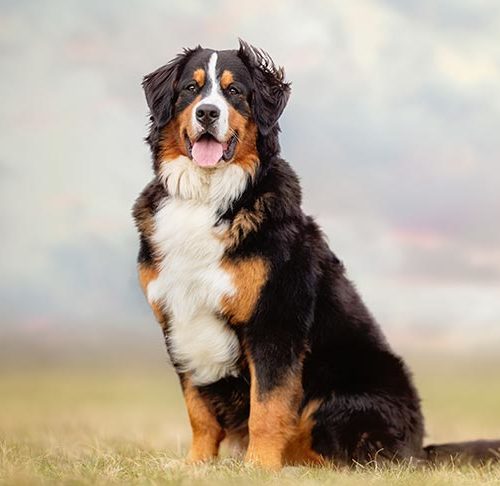
Bernese Mountain Dog – The Gentle Giant Who Naps on Your Feet
 Save
Save| Weight | 70-115 lbs |
| Height | 23-27.5 in |
| Lifespan | 7-10 years |
| Energy Level | Moderate |
| Grooming Need | Moderate-high – brush 2-3x weekly |
| Shedding | High year-round |
The Bernese Mountain Dog is a giant Swiss working breed built for farm life. Adults weigh 70 to 115 pounds with a thick tricolor coat. Berners are calm, deeply affectionate, and emotionally sensitive to their owner’s mood. They suit beginners who want a steady, home-loving giant rather than a high-drive athlete.
Their tricolor coat – black, white, and rust – looks almost painted on.
People expect a working dog to be all business. Berners flip that script by leaning their full body weight against you for comfort. The real surprise? They often “talk” with low groans during cuddles.
“She leans on my legs during every thunderstorm. Ninety pounds of dog, fully convinced she’s a lap dog.”
– Carlos M., Bernese Mountain Dog owner for 3 years
- Calm temperament suits quiet homes
- Deeply gentle with kids and seniors
- Low prey drive around small pets
- Shorter lifespan than most large breeds
- Overheats easily in summer
- Thick coat means constant vacuuming
Best for: calm households · cooler climates · owners who want a devoted home companion – check this guide to large dog breeds for families for more giant-breed options
Newfoundland – The Lifeguard-Sized Cuddle Bear
| Weight | 100-150 lbs |
| Height | 26-28 in |
| Lifespan | 9-10 years |
| Energy Level | Low to moderate |
| Grooming Need | High – brush 2-3x weekly, heavy drool |
| Shedding | High year-round |
The Newfoundland is a giant working breed originally bred for water rescue. Adults reach 100 to 150 pounds with a thick, water-resistant coat. Newfies are famously sweet, patient, and gentle with children. They suit calm beginners who want a low-energy giant and don’t mind drool and heavy shedding.
Their massive webbed paws and oily double coat were built for cold-water rescue work.
You’d expect a 150-pound dog to be intimidating. Newfies disprove that within minutes of meeting them. The real surprise? Many will rest their entire head on your lap, unaware of their own size.
“She once let my toddler use her like a pillow during nap time. Never moved an inch.”
– Liz H., Newfoundland owner for 7 years
- Famously patient with babies and toddlers
- Low energy once past puppyhood
- Rarely barks or shows aggression
- Drools heavily after eating or drinking
- Food and vet costs run high
- Needs cool spaces in warm weather
Best for: families with babies · owners who want a calm giant · homes with space and air conditioning – see this guide to giant dog breeds for families for more options like this one
Great Dane – The Couch Potato in a Horse’s Body
| Weight | 110-175 lbs |
| Height | 28-32 in |
| Lifespan | 8-10 years |
| Energy Level | Moderate |
| Grooming Need | Low – weekly wipe-down |
| Shedding | Moderate, short coat |
The Great Dane is a giant breed often called the “Apollo of dogs” for its towering, elegant build. Adults stand 28 to 32 inches tall and weigh up to 175 pounds. Despite their size, Danes are gentle, affectionate, and surprisingly low-energy indoors. They suit beginners who want a calm giant for a stable household.
Their short coat and arched neck give them a statuesque, almost regal silhouette.
Most people brace for a wild giant dog. Danes flip the script by becoming furniture-sized couch potatoes. The real surprise? Many genuinely believe they’re lap dogs and try to climb on anyway.
“He tries to sit in my lap like he’s still 12 pounds. He is not 12 pounds.”
– Ben O., Great Dane owner for 2 years
- Low exercise needs for their size
- Short coat is easy to maintain
- Calm, affectionate house presence
- Short lifespan for the years invested
- Food and medication costs are steep
- Takes up real space on furniture
Best for: apartment dwellers with sturdy furniture · calm households · owners who want low-energy companionship
Vizsla – The Athletic Big Dog for Active Beginners
| Weight | 45-65 lbs |
| Height | 21-24 in |
| Lifespan | 12-14 years |
| Energy Level | Very high |
| Grooming Need | Low – weekly wipe-down |
| Shedding | Low to moderate |
The Vizsla is a medium-large sporting breed built for stamina and close human partnership. Adults weigh 45 to 65 pounds with a sleek, rust-colored coat. Vizslas are intensely affectionate and need daily vigorous exercise. They suit beginners who run, hike, or bike regularly and want a true workout partner.
Their rust-gold coat is short, sleek, and famously low-maintenance to touch.
People expect an athletic dog to be aloof. Vizslas are the opposite – earning the nickname “velcro dog.” The real surprise? Many follow their owner from room to room, including the bathroom.
“She runs 6 miles with me, then squeezes onto the couch like she weighs 10 pounds.”
– Andrea P., Vizsla owner for 5 years
- Low-shedding, low-maintenance coat
- Deeply bonded, affectionate companion
- Excellent stamina for running and hiking
- Destructive without enough exercise
- Develops separation anxiety easily
- Not suited to sedentary households
Best for: runners and hikers · owners who work from home · people who want constant companionship
Leonberger – The Lion-Maned Old Soul
| Weight | 90-170 lbs |
| Height | 25.5-31.5 in |
| Lifespan | 8-9 years |
| Energy Level | Moderate |
| Grooming Need | High – brush several times weekly |
| Shedding | High, with a thick double coat |
The Leonberger is a giant companion-guardian breed with a lion-like mane and calm confidence. Adults weigh 90 to 170 pounds with a thick, water-resistant coat. Leonbergers handle new situations with curiosity rather than fear. They suit patient beginners who want a calm, family-oriented giant and don’t mind heavy grooming.
Their golden-brown double coat forms a thick mane around the neck and chest.
People assume a lion-sized dog must be intense. Leonbergers are famously laid-back instead. The real surprise? Many will calmly let toddlers climb on them without flinching.
“Strangers stop their car to take photos. He just stands there like he’s used to the attention.”
– Tom W., Leonberger owner for 4 years
- Calm, confident around new people
- Gentle, patient with young children
- Eager to please despite massive size
- Heavy coat needs constant brushing
- Large food and vet bills
- Puppies can be stubbornly playful
Best for: families with space to spare · cooler climates · owners ready for serious grooming time
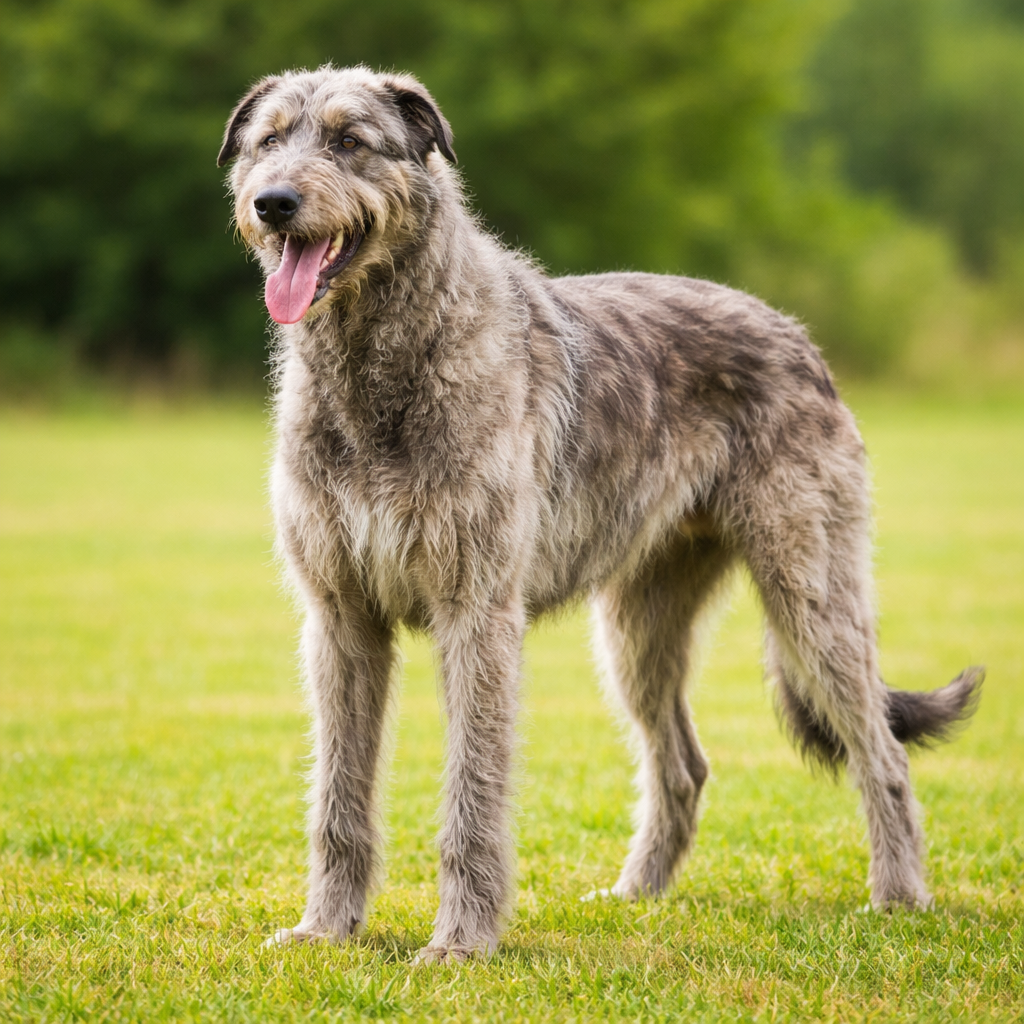
Irish Wolfhound – The Gentle Giant Who’d Rather Nap Than Run
 Save
Save| Weight | 105-180 lbs |
| Height | Min 30-32 in |
| Lifespan | 6-8 years |
| Energy Level | Low to moderate |
| Grooming Need | Moderate – weekly brushing |
| Shedding | Low to moderate, wiry coat |
The Irish Wolfhound is the world’s tallest dog breed, standing at least 30 inches at the shoulder. Despite the size, Wolfhounds are calm, gentle, and largely indifferent to barking. They suit beginners who want a quiet, placid giant and have enough indoor space for a very long dog.
Their wiry, rough coat gives them a scruffy, almost ancient look.
People expect a giant hunting breed to be intense. Wolfhounds are shockingly mellow instead. The real surprise? Most would rather nap on the sofa than chase anything at all.
“He’s taller than my kitchen counter standing on all fours. He’s also asleep right now, like always.”
– Susan F., Irish Wolfhound owner for 6 years
- Rarely barks, even at visitors
- Gentle, patient temperament throughout life
- Low exercise needs once mature
- Shortest lifespan on this list
- Needs a large home, not an apartment
- Food costs are among the highest
Best for: homes with open floor space · quiet households · owners prepared for higher food costs
Big Dog Breed Comparison Chart
Comparing all 10 breeds side by side makes one thing clear: bigger doesn’t always mean more demanding. Energy level and grooming needs vary far more than size does. Use this table to shortlist two or three breeds before researching further.
| Breed | Weight | Energy | Grooming | Lifespan |
|---|---|---|---|---|
| Labrador Retriever | 55-80 lbs | High | Low | 10-12 yrs |
| Golden Retriever | 55-75 lbs | High | Moderate | 10-12 yrs |
| Boxer | 50-80 lbs | High | Low | 10-12 yrs |
| Standard Poodle | 40-70 lbs | High | Very High | 12-15 yrs |
| Bernese Mountain Dog | 70-115 lbs | Moderate | Moderate-High | 7-10 yrs |
| Newfoundland | 100-150 lbs | Low-Moderate | High | 9-10 yrs |
| Great Dane | 110-175 lbs | Moderate | Low | 8-10 yrs |
| Vizsla | 45-65 lbs | Very High | Low | 12-14 yrs |
| Leonberger | 90-170 lbs | Moderate | High | 8-9 yrs |
| Irish Wolfhound | 105-180 lbs | Low-Moderate | Moderate | 6-8 yrs |
Which Big Dog Breed Is Right for You?
The right big dog depends on your energy level, living space, and tolerance for grooming and drool – not just how cute a breed looks in photos. Match your daily routine to a breed’s needs first. A mismatch in energy level is the single biggest reason big-dog adoptions fail in the first year.
So what does that mean in practice? Picture your average Tuesday, not your best day. That’s the life your dog will actually live.
- If you run or hike daily → a Vizsla or Labrador Retriever fits your pace.
- If you want a calm, home-loving giant → a Newfoundland or Great Dane suits you.
- If you have allergies but want a big dog → the Standard Poodle is your best bet.
- If your schedule is packed and unpredictable → consider a lower-maintenance option from this guide to dog breeds for busy families before committing to a high-energy giant.
This article covers big dog breeds specifically suited to first-time owners. If your household includes very young children, multiple pets, or you’d prefer something between small and giant, you may want a different size class entirely – this guide to medium dog breeds for families covers gentler-on-space alternatives.
Big Dog Care Essentials Every New Owner Must Know
Big dogs need more than a bigger food bowl. Joint health, portion control, and structured exercise matter far more for large breeds than for small ones. Most experts agree that controlled growth during puppyhood prevents many of the joint problems large breeds are prone to later in life.
Here’s why that matters. Large-breed puppies grow fast, and growing too fast strains developing joints. Feed a large-breed puppy formula, not adult food scaled down.
Exercise also needs structure, not just volume. Short, frequent walks beat one long exhausting hike for a growing puppy.
- Choose a large-breed puppy food formula from day one.
- Schedule a vet visit within the first week home.
- Start basic obedience training immediately, not at six months.
- Limit jumping and stair use until joints fully develop.
- Build a consistent daily routine for food, walks, and rest.
The American Veterinary Medical Association notes that prospective owners should think honestly about whether they have the time, space, and budget a particular breed needs before bringing it home. That advice applies even more to giant breeds, where mistakes cost more in food, medication, and vet bills.
What Most People Get Wrong About Big Dogs
The biggest misconception is that size predicts difficulty. In reality, energy level and trainability matter far more. Many new owners also assume giant breeds need marathon exercise, when several – like the Great Dane and Newfoundland – actually need less daily activity than a typical Labrador.
You might be thinking bigger always means more work. Here’s why that’s wrong: a calm 150-pound Newfoundland can be easier to manage than an anxious 20-pound terrier.
Another myth: big dogs are automatically aggressive or scary. Research consistently shows temperament comes from breeding and socialization, not size.
Mistakes New Big-Dog Owners Make (And How to Avoid Them)
Skipping puppy joint care often leads to costly hip or elbow problems later.
The most common mistakes are overfeeding, skipping early training, and underestimating ongoing costs. New owners also tend to overexercise puppies, which strains growing joints. Most of these mistakes are easy to avoid once you know the cause behind each one.
- Overfeeding – measure portions instead of free-feeding.
- Skipping puppy classes – start socialization by 12 weeks.
- Ignoring grooming until matting starts – brush weekly from day one.
- Underbudgeting for food and vet care – large breeds cost more across the board.
Frequently Asked Questions
Are big dogs harder to train than small dogs?
No. Most experts agree trainability depends on breed history and temperament, not size. Breeds like Labradors and Golden Retrievers are easier to train than many small terrier breeds, thanks to their people-focused instincts.
How much exercise does a big dog need each day?
It varies by breed. High-energy breeds like the Vizsla need 60 to 90 minutes daily, while calmer giants like the Great Dane or Newfoundland often need just 30 to 45 minutes of walking.
Are big dogs good with small children?
Many are, especially gentle giants like the Newfoundland and Bernese Mountain Dog. Always supervise young kids around any dog, regardless of size, and teach children how to approach dogs calmly.
How much does it cost to own a big dog each year?
Expect higher costs than a small dog – more food, larger doses of medication, and bigger boarding fees. Giant breeds like the Irish Wolfhound or Leonberger often cost 30 to 50 percent more annually than a medium-sized dog.
Do big dogs shed more than small dogs?
Not necessarily more, but it’s more visible. A Standard Poodle sheds very little despite its size, while a Labrador or Golden Retriever sheds heavily regardless of being large or small in comparison.
Picking a big dog as a first-time owner isn’t about bravery – it’s about matching temperament to your real, everyday life. The calmest giants often make the gentlest beginner dogs, while the classic retrievers remain reliable for a reason. Start by ranking your top three breeds from the comparison chart above, then go meet them in person.
One thing to do right now: pick your top pick from this list and search for a responsible breeder or rescue group near you – that single step turns research into a real plan. I’m Thomas Cutter, and I hope your first big dog turns out to be everything you’re hoping for.
Frequently Asked Questions
Thomas Cutter is a lifelong dog owner and the founder of FindOutAboutDogs.com. With over 10 years of hands-on experience owning multiple breeds, Thomas created this site to provide honest, research-based dog advice that real owners can actually trust.
