10 Best Dog Breeds for Autistic Children (Vet-Backed Picks for 2026)
Quick Answer
The best dog breeds for autistic children are Golden Retrievers, Labrador Retrievers, Labradoodles, Bernese Mountain Dogs, Standard Poodles, Newfoundlands, Cavalier King Charles Spaniels, Great Pyrenees, Saint Bernards, and Collies. The right pick depends on your child’s sensory needs, your home’s space, and how much grooming or exercise your family can manage.
What to weigh before you choose
- Calm, predictable temperament matters more than breed fame
- Size affects how much “deep pressure” comfort the dog can give
- Shedding and grooming load can become a sensory issue too
Choose if
- You want a calming “leaner” dog → Newfoundland or Saint Bernard
- You need an allergy-friendly coat → Labradoodle or Standard Poodle
- You live in a small space → Cavalier King Charles Spaniel
Your child melts down at the grocery store, and you wish you had something steady to hold onto. I’m Thomas Cutter, and I’ve spent years researching how dogs support kids on the spectrum, from picking the right dog for younger kids to matching temperament with sensory needs. A calm, well-matched dog can become that steady thing. Here’s how to find the one that fits your family.
- Calm, gentle, predictable breeds beat “trendy” breeds every time
- Bigger dogs can offer deep-pressure comfort during meltdowns
- Hypoallergenic coats matter if sensory or allergy issues overlap
- A well-matched companion dog still needs real training, just like a service dog does
- No single breed works for every child — match the dog to your kid


What Makes a Dog Breed Good for a Child With Autism?
A good breed for an autistic child is calm, predictable, and not easily startled. It reads human emotion well, tolerates loud noises or sudden movement, and bonds closely with one main person. Size matters too — a sturdy dog can offer deep-pressure comfort during stress, while a small dog suits tight living spaces. So what does that mean in real life? It means you’re not shopping for the “smartest” or “cutest” breed. You’re shopping for nervous-system fit.
Most trusted sources, including Autism Speaks and autism therapy clinics, point to the same handful of traits again and again: a steady temperament, high trainability, and a strong drive to bond with their person. Autism Speaks notes that golden retrievers, Labs, and labradoodles tend to combine calm temperaments with high intelligence, which is exactly why they top nearly every list on this topic.
You might be thinking a hyper, playful puppy could still calm down with training. Here’s why that’s risky: training shapes behavior, but it can’t fully override a breed’s built-in energy level or noise sensitivity. Pick a breed whose baseline temperament is already close to what your child needs.
Before you commit to a breed, spend 20 to 30 minutes with an adult dog of that breed. Watch how your child reacts to its size, energy, and noise level.
The 10 Best Dog Breeds for Autistic Children, Ranked
The ten breeds below are ranked by how often autism specialists and parent communities recommend them, weighing calmness, trainability, and emotional sensitivity above all else. Each one shows up across multiple independent expert sources, not just one blog’s opinion. That’s the kind of consensus you want before bringing a new dog into a home that depends on routine.
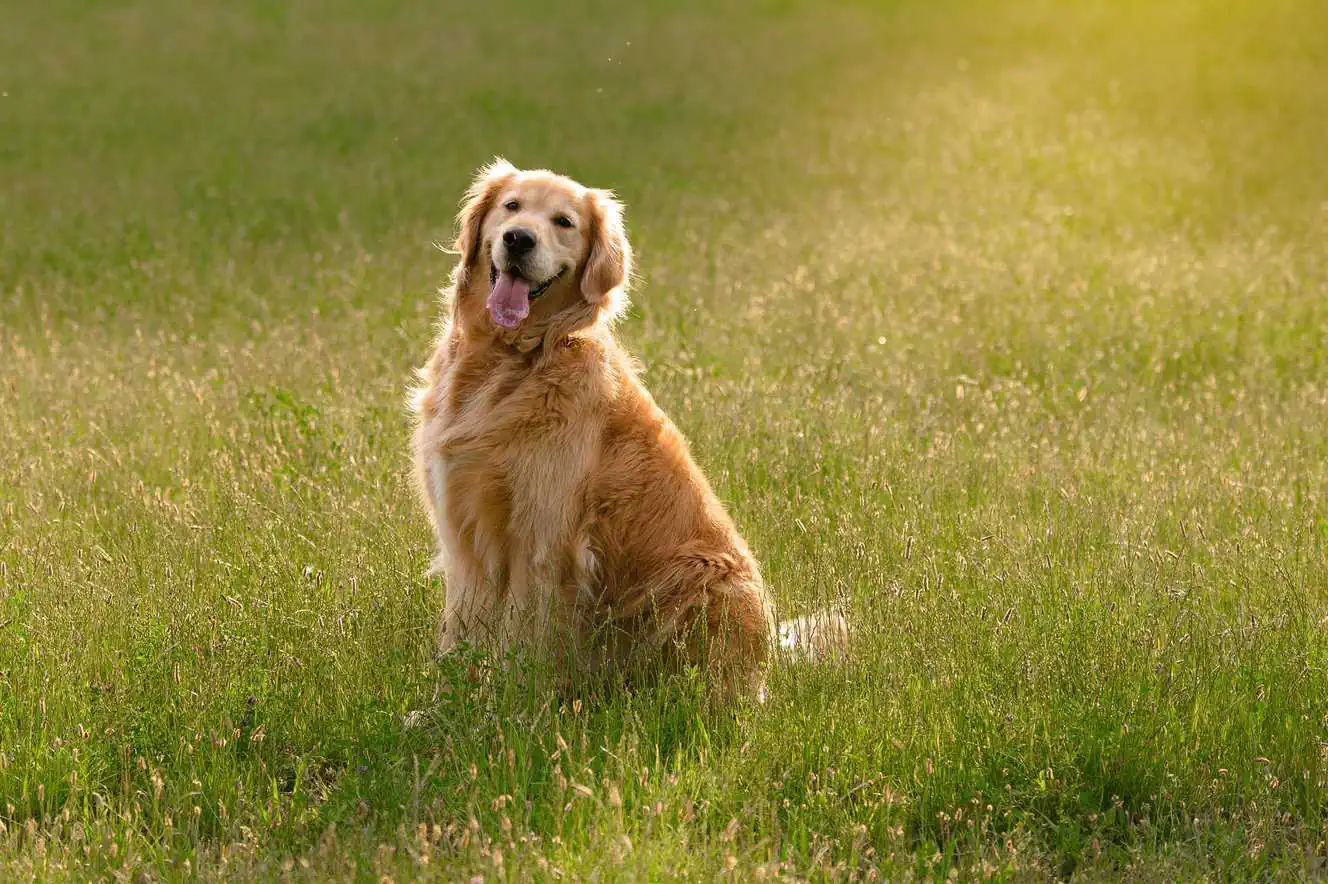
1. Golden Retriever — “The Patient Reader of Rooms”
 Save
Save| Weight | 55–75 lbs |
| Height | 21–24 in |
| Lifespan | 10–12 years |
| Energy Level | Moderate to high |
| Grooming Need | Weekly brushing |
| Shedding | Heavy, seasonal |
The Golden Retriever is a large, gentle dog known for reading emotion better than almost any other breed. It stands about 22 inches tall and weighs up to 75 pounds. Goldens stay cheerful, patient, and eager to please. They suit families who want a steady, affectionate dog that bonds fast with kids.
Their thick golden coat sheds in tufts, not single hairs, so you’ll notice clumps on furniture. That double coat also keeps them warm enough to nap in cool hallways.
Goldens greet strangers warmly, which most people expect. What surprises new owners is how closely they track a child’s mood, often resting a head on a lap minutes before a meltdown starts. The real wow: many goldens learn to apply gentle body pressure on their own, without formal training.
- Reads emotional cues unusually well
- Easy to train for tasks or commands
- Patient with sudden noise or movement
- Heavy seasonal shedding twice a year
- Needs daily exercise, not just walks
- Prone to hip and joint issues later in life
Best for: active families · first-time dog owners · kids who like physical affection
2. Labrador Retriever — “The Cheerful Constant”
| Weight | 55–80 lbs |
| Height | 21–24 in |
| Lifespan | 10–12 years |
| Energy Level | High |
| Grooming Need | Weekly brushing |
| Shedding | Heavy, year-round |
The Labrador Retriever is America’s most popular breed and the most common service dog in the country. Labs weigh up to 80 pounds and stand about 22 inches tall. They stay cheerful, focused, and eager to please almost any handler. Labs work well for kids who need calm consistency every single day.
Their short coat looks plain, but it’s dense enough to repel water and dirt. That practical coat means fewer tangles than longer-haired breeds.
Most people know Labs as friendly family dogs. Fewer people know how task-focused they get once trained, holding a “stay” through chaos that would distract other breeds. The genuine surprise: many Labs self-regulate their own excitement around a child they’ve bonded with, almost like they sense the stakes.
- Extremely trainable for specific tasks
- Stays focused even in busy settings
- Tolerant of rough or repetitive handling
- Needs 60+ minutes of exercise daily
- Prone to overeating and weight gain
- Sheds year-round, not just seasonally
Best for: families considering a service dog · active households · kids who thrive on routine
3. Labradoodle — “The Low-Shed Shadow”
| Weight | 30–65 lbs |
| Height | 14–24 in |
| Lifespan | 12–14 years |
| Energy Level | Moderate |
| Grooming Need | Every 4–6 weeks, professional |
| Shedding | Low |
The Labradoodle is a Labrador-Poodle cross prized for its low-shedding curly coat. Sizes vary widely, from 30 to 65 pounds depending on the parent Poodle’s size. Labradoodles stay playful, smart, and gentle. They suit families who want Lab-like warmth without constant fur cleanup.
That curly coat hides their eyes a bit, giving them a soft, teddy-bear look kids often find comforting to touch.
People expect a friendly mixed breed. What they don’t expect is how quickly Labradoodles pick up structured routines, often syncing to a child’s school schedule within weeks. The real surprise: their coat texture varies a lot litter to litter, so two “Labradoodles” can shed completely differently.
You might be thinking all doodles are hypoallergenic. Here’s why that’s not quite true: no dog is fully allergen-free, but a tighter, curlier coat traps more dander than it releases.
- Much less loose fur around the house
- Friendly, playful, and easy to train
- Comes in a size for almost any home
- Coat mats fast without regular brushing
- Professional grooming gets pricey over time
- Temperament varies more than a purebred
Best for: families with allergies · apartment living · kids sensitive to loose fur
4. Bernese Mountain Dog — “The Unshakeable Giant”
| Weight | 70–115 lbs |
| Height | 23–27.5 in |
| Lifespan | 7–9 years |
| Energy Level | Low to moderate |
| Grooming Need | 2–3 times weekly |
| Shedding | Heavy |
The Bernese Mountain Dog is a calm, sturdy giant bred to work alongside farm families. It can weigh well over 100 pounds and stand near 27 inches tall. Berners stay composed even in chaos, rarely reacting to tantrums or sudden noise. They suit kids who need a heavy, grounding presence nearby.
Their tricolor coat is thick and plush, almost like leaning against a warm rug. Many kids find the texture soothing to pet for long stretches.
People expect a giant breed to be clumsy around kids. What surprises owners is how carefully Berners move around small children, slowing their whole body down on purpose. The real wow: their calm holds even during fireworks or vacuum noise, traits that take other breeds years of training to reach.
- Stays calm during loud or chaotic moments
- Gentle and careful around small kids
- Great size for deep-pressure comfort
- Shorter lifespan than most large breeds
- Drools and sheds more than expected
- Needs space, not ideal for small apartments
Best for: kids who seek deep pressure · families with yard space · calm, low-key households
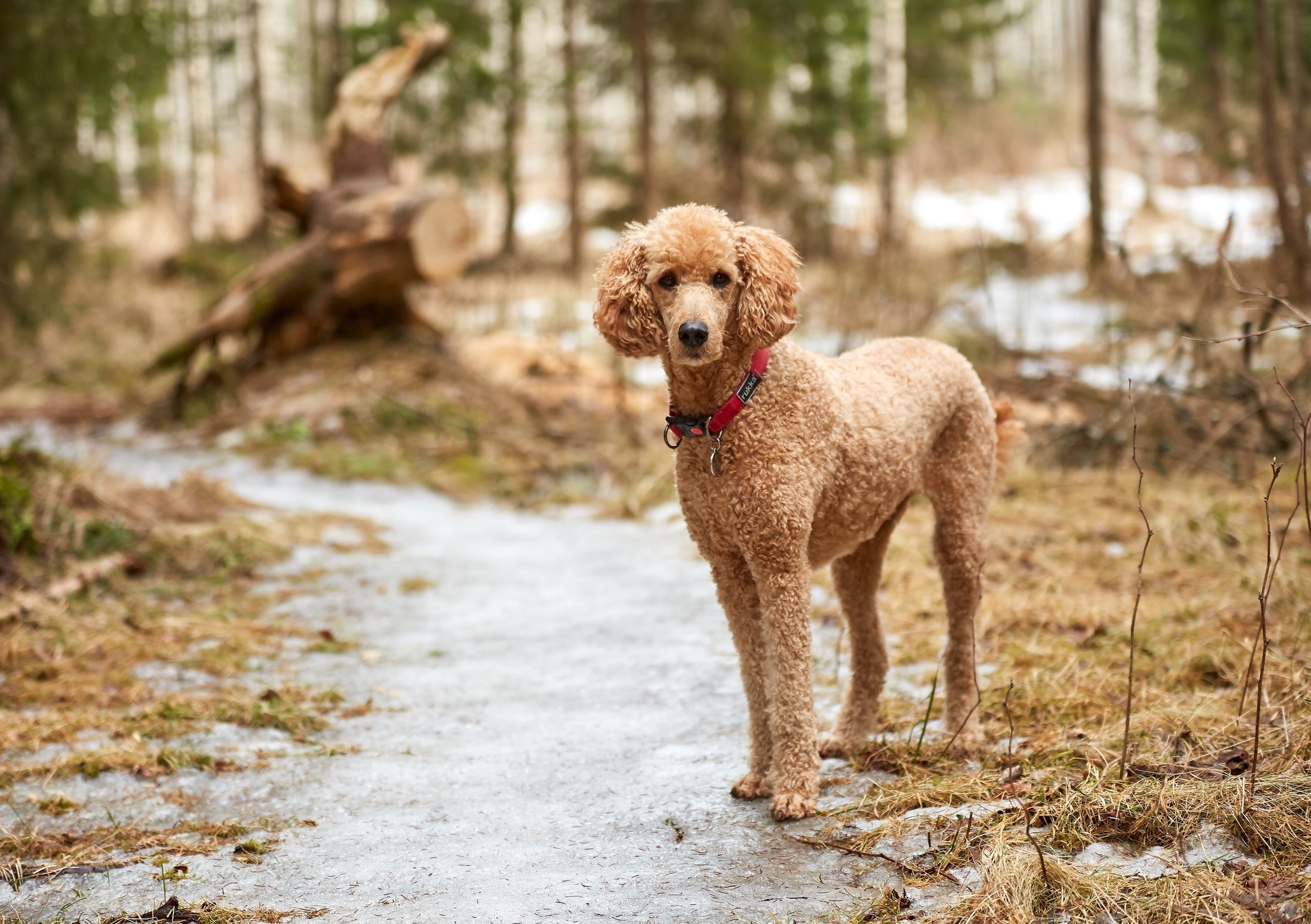
5. Standard Poodle — “The Sharp, Gentle Mind”
 Save
Save| Weight | 45–70 lbs |
| Height | Over 15 in |
| Lifespan | 12–15 years |
| Energy Level | Moderate to high |
| Grooming Need | Every 4–6 weeks, professional |
| Shedding | Very low |
The Standard Poodle is one of the smartest dog breeds, ranking near the top of nearly every canine intelligence study. It stands over 15 inches tall and carries a tight, low-shedding curl. Poodles learn tasks fast and bond closely with their main handler. They suit kids who need a calm, allergy-friendly companion.
Under that famous curly coat is a lean, athletic body built for swimming. Most pet Poodles wear a simple short clip, not a show cut.
People often picture Poodles as fussy show dogs. What surprises new owners is how working-dog smart they actually are, originally bred for retrieving in cold water. The genuine wow: Standard Poodles often learn a new hand signal in under 10 repetitions, faster than most service-dog breeds.
- Among the most trainable breeds that exist
- Low-shedding coat, good for allergies
- Long lifespan compared to other large breeds
- Needs regular mental stimulation, not just walks
- Grooming cost adds up monthly
- Can get anxious if left alone too long
Best for: allergy-prone households · kids who like training games · families wanting a long-lived dog
6. Newfoundland — “The Nanny With a Heartbeat”
| Weight | 100–150 lbs |
| Height | 26–28 in |
| Lifespan | 9–10 years |
| Energy Level | Low |
| Grooming Need | 2–3 times weekly |
| Shedding | Heavy |
The Newfoundland is a giant, water-loving breed nicknamed the “nanny dog” for its gentle patience with children. It can weigh up to 150 pounds and stand near 28 inches tall. Newfoundlands move slowly and rarely startle. They suit kids who want a calm, low-energy giant to lean on indoors.
Their thick double coat sheds in soft tufts, almost like wool, and feels warm under a tired child’s hand.
Most people expect a giant dog to be clumsy or loud. What surprises owners is how quiet and slow-moving Newfoundlands are, almost like furniture that breathes. The real wow: many naturally lean their full body weight against a stressed child, without ever being trained to do it.
- Naturally low energy and slow-moving
- Provides strong deep-pressure comfort
- Rarely barks or startles at noise
- Drools heavily, especially after drinking
- Needs serious space and a strong budget
- Shorter lifespan due to its giant size
Best for: families wanting a giant, calm breed · kids who prefer indoor play · homes with yard space
7. Cavalier King Charles Spaniel — “The Pocket-Sized Comfort”
| Weight | 13–18 lbs |
| Height | 12–13 in |
| Lifespan | 12–15 years |
| Energy Level | Moderate |
| Grooming Need | 2–3 times weekly |
| Shedding | Moderate |
The Cavalier King Charles Spaniel is a small toy breed built purely for companionship. It weighs under 18 pounds and stands about 12 inches tall. Cavaliers stay affectionate, gentle, and rarely aggressive. They suit small homes and kids who feel overwhelmed by big, heavy dogs.
Their silky ears and soft, feathered coat make them look almost like a stuffed animal come to life.
People expect small dogs to be yappy or anxious. What surprises owners is how easygoing Cavaliers stay, even around loud siblings or sudden visitors. The real wow: many will sit pressed against a child for hours without ever asking to play or move.
- Small and easy to manage indoors
- Calm, affectionate, rarely aggressive
- Good first dog for nervous kids
- Prone to heart and joint health issues
- Too small for deep-pressure comfort needs
- Can get hurt by rough handling
Best for: small living spaces · kids overwhelmed by large dogs · first-time small-dog owners
8. Great Pyrenees — “The Watchful Mountain Guard”
| Weight | 85–100 lbs |
| Height | 25–32 in |
| Lifespan | 10–12 years |
| Energy Level | Low |
| Grooming Need | 2–3 times weekly |
| Shedding | Heavy |
The Great Pyrenees is a giant guardian breed once used to protect mountain flocks from wolves. It can weigh up to 100 pounds and stand over 30 inches tall. Pyrenees stay calm, loyal, and deeply bonded to their family. They suit kids who feel safer with a large, protective dog nearby.
Their thick white coat sheds heavily but stays naturally clean, almost self-resisting dirt and odor.
People expect guard breeds to be edgy or reactive. What surprises owners is how patient Pyrenees stay around children, treating them like a flock to protect rather than control. The real wow: they often position their body between a child and a loud stranger, entirely on instinct.
- Calm, sturdy, and naturally protective
- Low energy despite its large size
- Rarely shows aggression toward family
- Barks at night to guard the property
- Needs a fenced yard, not an apartment
- Stubborn streak makes training slower
Best for: kids who feel safer with a guard dog · homes with fenced yards · low-energy households
9. Saint Bernard — “The Gentle Giant Who Never Rushes”
| Weight | 120–180 lbs |
| Height | 26–30 in |
| Lifespan | 8–10 years |
| Energy Level | Low |
| Grooming Need | 2 times weekly |
| Shedding | Heavy |
The Saint Bernard is a massive, slow-moving breed famous for mountain rescue work. It can weigh up to 180 pounds and stand near 30 inches tall. Saint Bernards stay patient, gentle, and rarely react to chaos. They suit kids who want a calm giant they can lean their whole body against.
Their thick coat and broad chest give them a bear-like presence that some kids find instantly calming.
Most people picture Saint Bernards from old rescue stories. What surprises owners is how careful these giants move around toddlers, slowing every step on purpose. The real wow: they tolerate being hugged, climbed on, or leaned against far longer than almost any other breed.
- Extremely tolerant of physical handling
- Stays patient and gentle by nature
- Loyal and simple to manage day to day
- Shortest lifespan on this entire list
- Drools constantly, especially after eating
- Too large to safely act as a tether dog
Best for: kids who need a huge, patient presence · families with strong outdoor space · calm, slow-paced homes
10. Collie — “The Quiet Watcher”
| Weight | 40–75 lbs |
| Height | 22–26 in |
| Lifespan | 12–14 years |
| Energy Level | Moderate |
| Grooming Need | 2–3 times weekly |
| Shedding | Moderate to heavy |
The Collie is a herding breed known for its sharp instincts and gentle nature with children. It weighs up to 75 pounds and stands about 24 inches tall. Collies read body language closely and rarely act unpredictably. They suit kids who respond well to a watchful, devoted companion.
Their long, flowing coat and fox-like face give them a striking, alert look that still feels approachable.
People know Collies mostly from old TV shows about loyal farm dogs. What surprises owners is how closely real Collies track a child’s location in a room, almost herding them gently. The real wow: many learn to nudge a child away from danger before a parent even notices it.
- Highly attentive to a child’s movement
- Gentle, rarely snaps or growls
- Smart and quick to learn routines
- Herding instinct can mean gentle nipping
- Needs daily mental and physical activity
- Long coat needs frequent brushing
Best for: kids who like being “watched over” · active families · homes with some yard space
Comparison Table: All 10 Breeds Side by Side
This table lines up every breed on this list by size, energy, shedding, and grooming, so you can scan for the best fit in seconds instead of rereading ten full entries.
| Breed | Size | Energy | Shedding | Best Trait |
|---|---|---|---|---|
| Golden Retriever | Large | Mod–High | Heavy | Reads emotion |
| Labrador Retriever | Large | High | Heavy | Task focus |
| Labradoodle | Med–Large | Moderate | Low | Allergy-friendly |
| Bernese Mountain Dog | Giant | Low–Mod | Heavy | Unshakeable calm |
| Standard Poodle | Large | Mod–High | Very Low | Trainability |
| Newfoundland | Giant | Low | Heavy | Deep-pressure comfort |
| Cavalier King Charles Spaniel | Small | Moderate | Moderate | Small-space comfort |
| Great Pyrenees | Giant | Low | Heavy | Protective instinct |
| Saint Bernard | Giant | Low | Heavy | Tolerates handling |
| Collie | Large | Moderate | Mod–Heavy | Watchful devotion |
Which Dog Breed Is Right for Your Autistic Child?
The right breed depends on your child’s sensory needs, your living space, and how much grooming or exercise your household can keep up with. There’s no single “best” dog. There’s only the best match for your specific child and home. Use the scenarios below to skip the guesswork.
- If your child seeks deep pressure during meltdowns → a Bernese Mountain Dog, Newfoundland, or Saint Bernard fits best.
- If your child has allergies or sensory issues with loose fur → a Labradoodle or Standard Poodle fits best.
- If you live in a small apartment or condo → a Cavalier King Charles Spaniel fits best.
- If your child is sound-sensitive and startles at sudden noise → a Newfoundland or Saint Bernard, both naturally quiet and slow-moving, fit best.
This article focuses on companion and family-pet breeds. If your child needs a dog trained to interrupt self-harming behavior or prevent wandering, you need a certified autism service dog program, not a pet-store puppy. The American Kennel Club and groups like Assistance Dogs International can point you toward accredited trainers for that level of support.
Care Essentials Every New Owner Should Know
Every breed on this list needs daily routine, regular grooming, and consistent training to stay calm and predictable. Skipping any of these three areas makes even the calmest breed harder to live with. Routine is what turns a “good breed” into a genuinely good fit.
Feed your dog on a fixed schedule, ideally the same times your child already eats. Predictable feeding times help dogs settle into the household’s rhythm faster.
Brush a heavy-shedding breed at least twice a week. Skipping grooming doesn’t just mean more fur. It also means more dander floating around a sensory-sensitive home.
- Let the dog approach your child first, not the other way around
- Keep first meetings under 15 minutes
- Pair the dog with one calm, familiar routine right away
- Watch your child’s body language, not just the dog’s
What Most People Get Wrong About Choosing a Dog for an Autistic Child
Most parents assume a “calm breed” will automatically be calm in their specific home. In reality, temperament is a starting point, not a guarantee. Training, routine, and the dog’s individual personality still shape how it behaves day to day.
Many families also assume any puppy of a “good” breed will work. So what does that mean for you? It means you should meet the actual puppy or adult dog before committing, not just trust the breed name.
A puppy is not a finished product. Even calm breeds need months of consistent training before they’re ready for unpredictable behavior at home.
Conclusion: Your Next Step
You don’t need the “perfect” breed. You need a calm, well-matched dog and a realistic plan for training and routine. Most experts agree that golden retrievers, Labs, and their mixes remain the safest starting point for most families.
One thing to do right now: pick two breeds from this list and find a local breeder, rescue, or shelter dog of each one to meet in person this week. I’m Thomas Cutter, and that single in-person visit will tell you more than any article, including this one, ever could.
Frequently Asked Questions
What is the single best dog breed for an autistic child?
There’s no single best breed for every child. Golden Retrievers and Labrador Retrievers top most expert lists because they combine calmness, trainability, and emotional sensitivity. The right choice still depends on your child’s specific sensory needs and your home setup.
Do autistic children need a trained service dog, or is a pet enough?
A well-matched pet dog can offer real comfort, routine, and companionship for many autistic children. Service dogs are only necessary for specific tasks, like interrupting self-harm or preventing wandering, and require certified training programs to do that safely.
Are small dogs or big dogs better for autistic kids?
Big, sturdy breeds often give better deep-pressure comfort during meltdowns. Small breeds suit kids who feel overwhelmed by large dogs or families with limited living space. Match the size to your child’s comfort level, not general popularity.
Which dog breeds shed the least for sensory-sensitive kids?
Standard Poodles and Labradoodles shed the least among breeds on this list. Their curlier coats trap loose hair instead of dropping it around the house, which also helps reduce airborne dander in sensory-sensitive homes.
How long does it take a new dog to bond with an autistic child?
Most dogs start forming a real bond within 2 to 4 weeks of consistent, calm routine. Full trust often takes 2 to 3 months. Patience and predictable daily contact matter more than the breed itself during this stage.

Thomas Cutter is a lifelong dog owner and the founder of FindOutAboutDogs.com. With over 10 years of hands-on experience owning multiple breeds, Thomas created this site to provide honest, research-based dog advice that real owners can actually trust.
