Best 10 Dog Breeds for 5–8 Year Olds — Picked by a Lifelong Dog Owner
Your 6 year old just asked for a dog. Again. She’s standing in the kitchen with her hands clasped, and you’re picturing two things at once: a wagging tail at the door, and a trip to the emergency room.
That second thought isn’t paranoid. I’m Thomas Cutter, and I’ve spent the past 12 years matching families with the right dog breed for their kids’ ages. Children between 5 and 9 get bitten by dogs more than any other age group, according to the CDC. So this isn’t a small decision.
The good news? Some breeds are built for exactly this stage of childhood. They forgive clumsy hugs. They don’t snap when a toy gets grabbed mid-fetch. Let’s find the right one for your house.
- Kids aged 5 to 9 have the highest dog bite rate of any age group, so temperament matters more than looks
- Size doesn’t equal safety — a calm large dog can be safer than a jumpy small one
- Golden Retrievers and Labradors top most expert lists, but several other breeds fit specific homes better
- Training the dog matters, but training your child to read a dog matters just as much


What Makes a Dog Breed Good for 5 to 8 Year Olds?
A dog breed is good for this age group when it’s patient, sturdy, and predictable under pressure. Kids this age hug hard, move fast, and don’t always read warning signs. The right breed shrugs off rough play instead of reacting to it.
Most experts agree on three traits that matter most: low reactivity, a soft mouth, and a track record of bonding with kids rather than just tolerating them. The American Kennel Club rates breeds on a “good with young children” score, and every breed on this list earns a 5 out of 5.
Here’s the thing most lists skip: size isn’t the deciding factor. A 70-pound dog with a calm, steady temperament is often a safer match than a 6-pound dog that startles easily and nips out of fear. Your child’s energy and your home’s space matter more than weight class.
You might be thinking smaller dogs are automatically gentler. Here’s why that’s not quite right: small dogs can be more fragile around rough handling and more prone to fear-based snapping when startled or grabbed. Fragility cuts both ways at this age.
What Most People Get Wrong About Kid-Friendly Dog Breeds
Most parents assume breed alone decides safety. It doesn’t. Within any breed, individual temperament still varies, and supervision matters as much as the dog you pick. The AKC and most veterinary behaviorists are consistent on this point.
Another common mistake: assuming “family dog” breeds are safe for unsupervised toddlers and young kids on day one. Even the gentlest Golden Retriever needs an introduction period, basic training, and adult supervision during early interactions. Skipping that step is where most bite incidents start.
So what does that mean for you? It means picking the right breed is step one, not the whole plan. You still need training, supervision, and a child who’s been taught how to approach a dog calmly.
Most dog bites to kids come from a familiar family pet, not a stranger’s dog. Never leave young children alone with any dog, regardless of breed.
The 10 Best Dog Breeds for 5–8 Year Olds — Ranked and Reviewed
This list covers temperament, size, energy, and grooming for each breed, so you can match the dog to your actual home — not just a cute photo. Every breed below carries a strong record with kids in this exact age range.
Want a quick comparison before you read full breed notes? Each entry below tells you what the dog is like day to day, what owners say about it, and who it’s really best for.
Golden Retriever — “The Patient Playmate”
 Save
Save| Weight | 55–75 lbs |
| Height | 21.5–24 inches |
| Lifespan | 10–12 years |
| Energy Level | High |
| Grooming Need | 2–3 hours/week |
| Shedding | Heavy, seasonal |
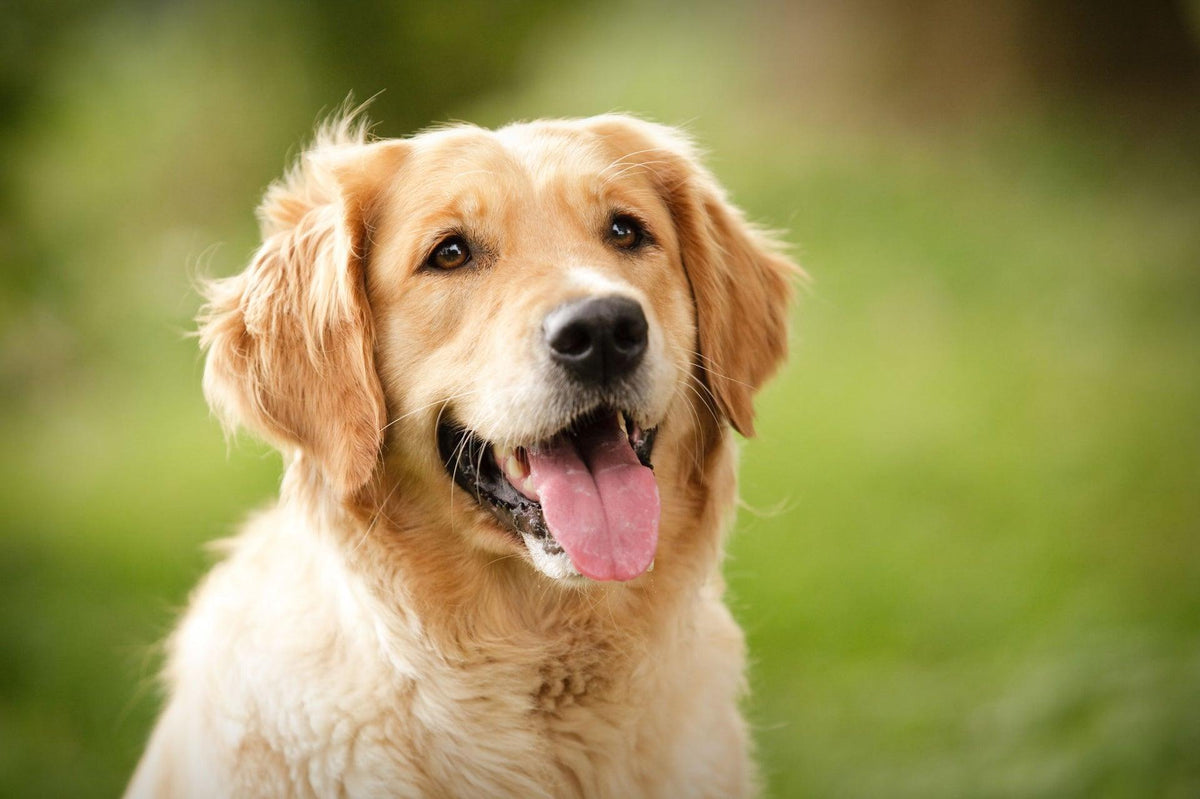
The Golden Retriever is a large, gentle sporting breed known for its tolerance of rough handling. Weighing 55 to 75 lbs, it’s sturdy enough for hugs and tail pulls. Goldens are eager to please and bond closely with kids, making them ideal for active, hands-on 5 to 8 year olds.
Their coat falls in soft, feathered waves around the legs and chest. Most Goldens carry a warm, golden-blonde shade that ranges from pale cream to deep amber.
You already know Goldens are friendly. What you might not know: they were originally bred to retrieve waterfowl without damaging the bird, which gave them an unusually soft mouth. The wow factor? That soft-mouth trait is part of why their bite-tolerance score is so high with kids.
“My son used her as a pillow during a thunderstorm last year. She just sighed and let him stay there for an hour.”
— Maria T., Golden Retriever owner for 5 years
- Extremely patient with rough play
- Easy to train alongside kids
- Loves group play and fetch
- Sheds heavily twice a year
- Needs 1+ hour of exercise daily
- Too large for very small apartments
Best for: Active families · Homes with a yard · Kids who love fetch
Full guide to the best family dog breeds for kids
Labrador Retriever — “America’s Steady Best Friend”
| Weight | 55–80 lbs |
| Height | 21.5–24.5 inches |
| Lifespan | 10–12 years |
| Energy Level | High |
| Grooming Need | 1–2 hours/week |
| Shedding | Heavy, year-round |
The Labrador Retriever is America’s most popular breed, known for its forgiving nature under rough handling. Weighing 55 to 80 lbs, it brushes off accidental bumps and tail grabs. Labs are playful, food-driven, and quick to bond, making them a top match for energetic 5 to 8 year olds.
Labs have a short, dense coat in black, yellow, or chocolate. Their broad “otter tail” works like a rudder when they swim.
You probably know Labs are friendly. Here’s what’s less known: their paws are webbed, built for water work. The surprising part? A 2024 clinical bite-risk review found Labs carry the lowest bite-risk score of any breed over 50 lbs.
“My daughter feeds him broccoli off her plate and he just waits there, drooling, like the most patient waiter alive.”
— Daniel R., Labrador owner for 7 years
- Lowest bite-risk score of large breeds
- Loves swimming and fetch with kids
- Highly trainable and food-motivated
- Prone to overeating if not watched
- Sheds year-round, not just seasonally
- Strong puppy energy needs early training
Best for: First-time dog owners · Active kids · Families near water
More family-friendly breed picks for kids
Beagle — “The Pocket-Sized Adventurer”
| Weight | 20–30 lbs |
| Height | 13–15 inches |
| Lifespan | 10–15 years |
| Energy Level | High |
| Grooming Need | Under 1 hour/week |
| Shedding | Moderate, year-round |
The Beagle is a small, sturdy scent hound known for being merry and easygoing with kids. Weighing 20 to 30 lbs, it’s compact but tough enough for active play. Beagles are curious, food-driven, and patient with rambunctious 5 to 8 year olds who want a playmate close to their size.
Beagles have short, weatherproof coats in tan, black, and white patches. Their long, floppy ears sweep the ground as they sniff.
You probably know Beagles are friendly hunters. Here’s the surprising part: they carry about 220 million scent receptors, compared to roughly 5 million in humans. That nose drives nearly everything they do, including a tendency to howl when bored.
“He’s tracked a dropped goldfish cracker across three rooms. My kids think it’s a magic trick.”
— Priya N., Beagle owner for 4 years
- Sturdy size matches kids well
- Low-maintenance, easy-care coat
- Tolerant of rambunctious play
- Barks and howls often
- Will follow its nose and bolt
- Prone to weight gain if overfed
Best for: Families wanting a smaller dog · Active kids · Fenced yards
Best dog breeds for families with toddlers too
Cavalier King Charles Spaniel — “The Built-In Cuddle Buddy”
| Weight | 13–18 lbs |
| Height | 12–13 inches |
| Lifespan | 12–15 years |
| Energy Level | Moderate |
| Grooming Need | 2 hours/week |
| Shedding | Moderate |
The Cavalier King Charles Spaniel is a small companion breed bred for affection, not work. Weighing just 13 to 18 lbs, it’s gentle and rarely reactive. Cavaliers are often called “comforter spaniels” and adapt well to quieter 5 to 8 year olds who want a calm, snuggly companion.
Their silky coat falls in long waves, often in rich chestnut-and-white or solid ruby tones. Their large, dark eyes give them a soft, expressive look.
You already know spaniels are sweet. Here’s the part most people miss: Cavaliers were specifically bred over centuries to sit on laps and soothe their owners, not to guard or hunt. That history shapes a temperament built almost entirely around connection.
“She waits by the door every afternoon at exactly 3:15, right when the school bus drops my daughter off.”
— Heather L., Cavalier owner for 3 years
- Gentle, low-reactivity temperament
- Great fit for apartments
- Bonds deeply with quieter kids
- More fragile than large breeds
- Prone to heart and ear issues
- Doesn’t love being left alone
Best for: Apartment living · Calmer kids · Families wanting a lap dog
Best small dog breeds for families with kids
Standard Poodle — “The Brainy Hypoallergenic Pick”
 Save
Save| Weight | 45–70 lbs |
| Height | Over 15 inches |
| Lifespan | 12–15 years |
| Energy Level | Moderate to high |
| Grooming Need | 3+ hours/week |
| Shedding | Minimal |
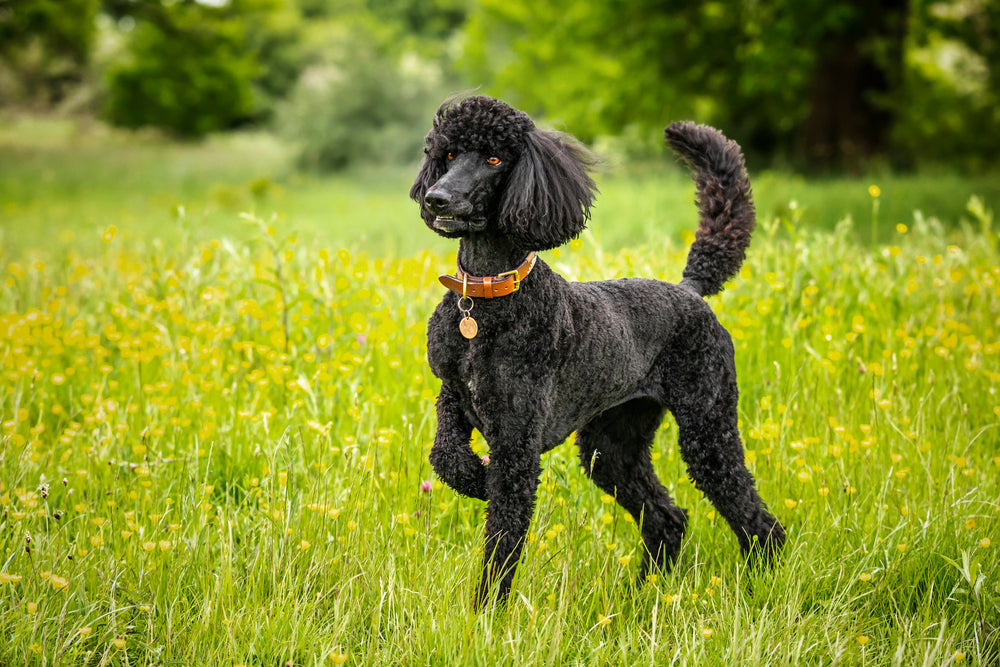
The Standard Poodle is a large, highly intelligent breed known for its low-shed coat and gentle nature. Weighing 45 to 70 lbs, it’s sturdy enough for active play. Poodles are quick learners and patient with kids, making them a strong pick for families managing allergies.
Beneath the show-ring image, most pet Poodles wear a simple, low clip. Their dense, curly coat comes in black, white, apricot, and several other solid shades.
You probably know Poodles are smart. What surprises most people: they were originally bred as water retrievers in Germany, not as show dogs in France. Their famous “lion clip” once protected joints and organs from cold water while swimming.
“He learned to close cabinet doors after watching my son do it twice. We didn’t even train that one.”
— James O., Standard Poodle owner for 6 years
- Low-shed coat helps with allergies
- Highly trainable, eager to please
- Patient and gentle with kids
- Coat needs frequent professional grooming
- Bores easily without mental work
- Grooming costs add up over time
Best for: Allergy-prone families · Kids who like training tricks · Active homes
Best dog breeds for families with allergies
Bichon Frise — “The Bouncy Little Clown”
| Weight | 12–18 lbs |
| Height | 9.5–11.5 inches |
| Lifespan | 14–15 years |
| Energy Level | Moderate |
| Grooming Need | 2–3 hours/week |
| Shedding | Minimal |
The Bichon Frise is a small, fluffy companion breed known for its cheerful, clownish personality. Weighing 12 to 18 lbs, it loves to entertain. Bichons rarely show aggression and adapt easily to apartment life, making them a solid choice for kids who want a playful, low-shed buddy.
Their dense, curly white coat puffs out like a powder-puff ball. Underneath the fluff sits a compact, sturdy little frame.
You probably know Bichons look like cotton balls. Here’s the lesser-known fact: they descend from the same root stock as the Poodle and Maltese, and sailors once used them as trade currency in Mediterranean ports.
“She does a full spin every time the cheese drawer opens. My kids call it her ‘snack dance.'”
— Carla M., Bichon Frise owner for 4 years
- Cheerful, rarely aggressive temperament
- Minimal shedding, allergy-friendly
- Great fit for small living spaces
- Needs frequent brushing to avoid mats
- White coat shows dirt easily
- Can bark at sudden noises
Best for: Apartments · Allergy-prone homes · Kids who love playful dogs
Best dog breeds for families that also have cats
Boxer — “The Goofy Bodyguard”
| Weight | 50–80 lbs |
| Height | 21.5–25 inches |
| Lifespan | 10–12 years |
| Energy Level | High |
| Grooming Need | Under 1 hour/week |
| Shedding | Low to moderate |
The Boxer is a muscular, playful breed known for being patient and protective with kids. Weighing 50 to 80 lbs, it’s strong enough for rowdy games. Boxers stay puppyish well into adulthood, bonding closely with active 5 to 8 year olds who love wrestling-style play.
Boxers wear a short, shiny coat in fawn or brindle, often with white markings on the chest and paws. Their square jaw gives them a distinct, alert expression.
You probably know Boxers as energetic. Here’s what stands out more: many owners describe a behavior called the “Boxer kidney bean,” where the dog twists its whole body sideways with excitement. It’s almost entirely unique to the breed.
“He stands between my kids and the front door whenever a delivery truck pulls up. Never growls, just blocks.”
— Marcus B., Boxer owner for 5 years
- Playful, energetic match for active kids
- Naturally watchful and protective
- Short coat needs little grooming
- Can knock over small kids when excited
- Needs daily, structured exercise
- Prone to certain heart conditions
Best for: Active families · Older kids in this range · Homes with a yard
Best dog breeds for big, active families
Collie — “The Watchful Guardian”
| Weight | 50–75 lbs |
| Height | 22–26 inches |
| Lifespan | 12–14 years |
| Energy Level | Moderate |
| Grooming Need | 2–3 hours/week |
| Shedding | Heavy, seasonal |
The Collie is a medium-large herding breed known for its gentle watchfulness over kids. Weighing 50 to 75 lbs, it’s sturdy without being rowdy. Collies are calm, loyal, and naturally inclined to keep an eye on younger family members, fitting well with quieter 5 to 8 year olds.
Their long, flowing double coat comes in sable, tri-color, or blue merle. A noble, wedge-shaped head and alert ears give them a classic, dignified look.
You probably know Collies from Lassie. Here’s what’s true beyond the show: their herding instinct often shows up as gentle “shepherding” of kids away from streets or pools, not as nipping or chasing.
“She nudges my twins back from the curb every single time, before I even notice they’ve drifted close.”
— Linda S., Collie owner for 6 years
- Naturally watchful around kids
- Calm, even temperament
- Loyal and easy to train
- Heavy coat sheds twice yearly
- May herd kids when overstimulated
- Needs regular brushing sessions
Best for: Families with multiple kids · Rural or suburban homes · Calm households
Best medium-sized dog breeds for families
Irish Setter — “The Social Butterfly”
| Weight | 60–70 lbs |
| Height | 25–27 inches |
| Lifespan | 12–15 years |
| Energy Level | High |
| Grooming Need | 2 hours/week |
| Shedding | Moderate |
The Irish Setter is a tall, athletic sporting breed known for its outgoing, friendly nature. Weighing 60 to 70 lbs, it loves company of all kinds. Irish Setters make friends easily and rarely show aggression, fitting well with social 5 to 8 year olds who enjoy having friends over.
Their silky, mahogany-red coat flows along the ears, chest, and legs. A long, narrow head gives them an elegant, sweeping profile.
You probably know Setters as elegant show dogs. Here’s the part that surprises new owners: they don’t do well left alone for long stretches and tend to bond with the whole household equally, not just one favorite person.
“Every kid at my son’s birthday party got the same full-body wag. She doesn’t play favorites.”
— Tom W., Irish Setter owner for 4 years
- Friendly with kids and their friends
- Rarely shows aggression or guarding
- Bonds with the whole household
- Needs a lot of daily exercise
- Struggles with long alone time
- Slower to mature than other breeds
Best for: Social families · Homes with lots of visitors · Active lifestyles
Best dog breeds for busy, social families
Newfoundland — “Nature’s Babysitter”
 Save
Save| Weight | 100–150 lbs |
| Height | 26–28 inches |
| Lifespan | 9–10 years |
| Energy Level | Low to moderate |
| Grooming Need | 3+ hours/week |
| Shedding | Heavy |
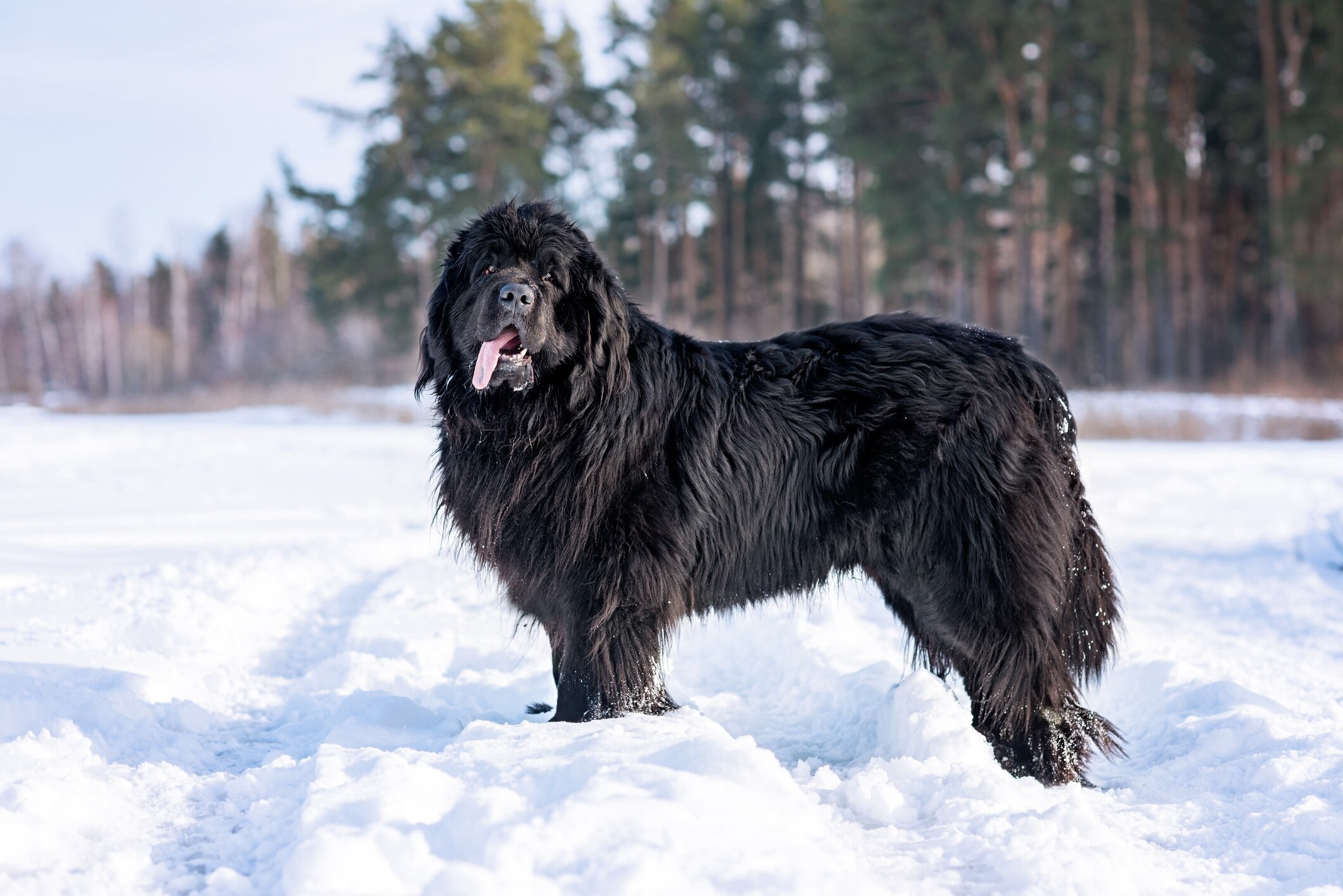
The Newfoundland is a giant, calm working breed nicknamed “nature’s babysitter.” Weighing 100 to 150 lbs, it moves slowly and gently around kids. Newfoundlands rarely overreact to noise or grabbing, making them a strong match for gentle, nurturing 5 to 8 year olds who love to cuddle.
Their thick, water-resistant double coat usually comes in solid black, brown, or gray. Large webbed feet and a broad chest hint at their water-rescue roots.
You probably know Newfoundlands are huge and gentle. Here’s the lesser-known fact: they were bred for water rescue and have an instinct to pull struggling swimmers to shore, including kids playing in a pool.
“My daughter naps on his back like a pillow. He just lets out a long sigh and stays still.”
— Robert F., Newfoundland owner for 5 years
- Extremely gentle, low-reactivity nature
- Naturally watchful near water
- Patient with cuddling and handling
- Massive size needs lots of space
- Heavy shedding and drooling
- Shorter lifespan than smaller breeds
Best for: Homes with space · Gentle, cuddly kids · Families near water
Best giant dog breeds for families with room to spare
How Do These 10 Breeds Compare Side by Side?
Here’s a quick side-by-side of all 10 breeds, so you can scan for size, energy, and grooming at a glance. Use this table to shortlist two or three breeds before reading deeper into your favorites.
| Breed | Weight | Energy | Grooming |
|---|---|---|---|
| Golden Retriever | 55–75 lbs | High | 2–3 hrs/week |
| Labrador Retriever | 55–80 lbs | High | 1–2 hrs/week |
| Beagle | 20–30 lbs | High | Under 1 hr/week |
| Cavalier King Charles Spaniel | 13–18 lbs | Moderate | 2 hrs/week |
| Standard Poodle | 45–70 lbs | Moderate-High | 3+ hrs/week |
| Bichon Frise | 12–18 lbs | Moderate | 2–3 hrs/week |
| Boxer | 50–80 lbs | High | Under 1 hr/week |
| Collie | 50–75 lbs | Moderate | 2–3 hrs/week |
| Irish Setter | 60–70 lbs | High | 2 hrs/week |
| Newfoundland | 100–150 lbs | Low-Moderate | 3+ hrs/week |
Which of These Breeds Is Right for Your Family?
The right breed depends on your space, your child’s energy, and how much grooming you’re willing to do. There’s no single “best” answer — only the best fit for your actual home and routine.
This article covers breed temperament and fit for the 5 to 8 age range specifically. If your situation involves toddlers under 4, infants, or a child with a disability that affects mobility or sensory processing, you may need more specialized breed guidance and a longer supervised introduction period.
- If you live in an apartment with limited space → the Cavalier King Charles Spaniel or Bichon Frise fits best.
- If your child is high-energy and you have a yard → the Golden Retriever, Labrador, or Boxer will keep up.
- If allergies are a concern in your home → the Standard Poodle or Bichon Frise sheds the least.
- If you want a calmer, watchful presence around multiple kids → the Collie or Newfoundland fits that role well.
Dog Breed Care Essentials Every New Owner Must Know
Every breed on this list still needs the same basics: regular vet checkups, age-appropriate exercise, and a consistent feeding routine. Skipping any of these raises stress for the dog, which raises risk for your kids.
According to the American Kennel Club, matching a breed to your lifestyle matters more than picking the “cutest” option. Most experts agree that a tired, well-exercised dog is a calmer dog around kids.
Teach your child the “ask first, hand still, let the dog sniff” routine before any new dog meets them.
So if you bring home any breed on this list, plan for daily structured time together — walks, training games, or fetch. That so what matters: a bored dog is far more likely to react badly to rough handling than a tired, satisfied one.
Mistakes New Owners Make When Picking a Kid-Friendly Breed
The biggest mistake is choosing a breed based on looks alone, without checking energy level against your family’s actual daily routine. A high-energy Boxer in a no-yard apartment with a quiet 6 year old is a mismatch, no matter how friendly the breed is on paper.
The second mistake is skipping training because “this breed is naturally good with kids.” Genetics set the starting point, but training and socialization decide the outcome. Even Labradors and Goldens need basic obedience work.
Never assume a “kid-friendly breed” label means a puppy doesn’t need training. Untrained puppies of any breed can still nip and jump.
The third mistake is rushing the introduction. Most behaviorists recommend short, supervised sessions over the first few weeks rather than one long, unsupervised meeting. Slow and steady builds trust faster than it feels like it should.
Frequently Asked Questions
What is the single best dog breed for a 6 year old?
The Golden Retriever is widely considered the single best overall choice for a 6 year old. It combines a sturdy size, a soft mouth, and a patient temperament that handles hugs and rough play well. Labradors are a close second.
Are small dogs ever a safe choice for kids this age?
Yes, several small breeds work well, including the Cavalier King Charles Spaniel and Bichon Frise. The key is a calm, low-reactivity temperament, not just small size. Avoid breeds known for fear-based snapping under rough handling.
What age should a child be before getting their own dog?
Most experts recommend age 6 or older before giving a child primary responsibility for a dog. Younger kids can help with simple tasks, but an adult should remain the main caregiver until the child shows consistent gentle handling.
Do hypoallergenic dog breeds exist for kids with allergies?
No breed is fully allergen-free, but low-shedding breeds like the Standard Poodle and Bichon Frise produce less dander in the home. Families with allergy-prone kids often do best with these lower-shed options.
How do I introduce a new dog to my 5 to 8 year old safely?
Keep the first meetings short, calm, and supervised by an adult. Let the dog approach at its own pace, and teach your child to stay still and let the dog sniff first. Repeat over several days before unsupervised time.
Pick one breed from this list that matches your space and your child’s energy, then spend this week researching local breeders or shelters with that breed available. That’s the one thing to do right now. I’m Thomas Cutter, and I’d rather you walk away with a calm, well-matched dog than a fast decision you regret.

Thomas Cutter is a lifelong dog owner and the founder of FindOutAboutDogs.com. With over 10 years of hands-on experience owning multiple breeds, Thomas created this site to provide honest, research-based dog advice that real owners can actually trust.
