Best 10 Dog Breeds for a Family of 6 — Chosen for Big Households with Kids
Quick Answer
The best dog breeds for a family of 6 are those that stay calm in a busy home, bond with every family member, and tolerate the noise and chaos that comes with lots of kids. Top picks include the Labrador Retriever, Golden Retriever, Beagle, Boxer, and Bernese Mountain Dog — all consistently recommended by veterinarians and the AKC for large families.
Top 10 family-friendly dog breeds for big households:
- Labrador Retriever — calm, patient, loves everyone
- Golden Retriever — gentle, forgiving, deeply loyal
- Beagle — compact, sturdy, great with young kids
- Boxer — playful, protective, high-energy companion
- Bernese Mountain Dog — giant, gentle, surprisingly calm indoors
- Irish Setter — outgoing, joyful, excellent with active families
- Cavalier King Charles Spaniel — affectionate, quiet, small enough to be safe
- Standard Poodle — highly trainable, allergy-friendly, smart
- German Shepherd — loyal, protective, thrives in a pack
- Collie — gentle, intuitive, classically devoted
What to look for in a dog for a big family:
- High child-tolerance — won’t snap when play gets rough
- Medium to large build — small dogs get hurt too easily in big households
- Low aggression toward strangers — essential when friends visit often
- Moderate energy — enough to keep up, not so much they overwhelm toddlers
Six people in one house means noise. It means running feet, slammed doors, and a dog that might get bumped by a toddler one minute and wrestled by a teenager the next.
Not every dog handles that well. Some shut down. Some snap. And some thrive — turning chaos into their favorite game.
I’m Thomas Cutter, and I’ve spent years studying dog behavior in busy family homes. This guide gives you the 10 best dog breeds for a family of 6 — ranked by how well they actually perform in a loud, active, multi-person household. Every breed here has been cross-checked against veterinarian data and the American Kennel Club’s official family dog ratings.
By the end, you’ll know exactly which breed fits your specific family — and which ones to avoid.
- Labrador Retrievers and Golden Retrievers top nearly every expert list for good reason.
- Medium to large breeds work best in a family of 6 — tiny dogs get accidentally hurt.
- Energy level matters as much as temperament — match the breed to your family’s pace.
- Training and socialization matter more than breed alone — start early and stay consistent.
- A family of 6 is a pack — choose a dog that loves being part of a group.


What Makes a Dog Breed Right for a Family of 6?
A good family dog isn’t just “nice.” In a household of 6, nice isn’t enough. You need a dog that stays relaxed when 4 kids are chasing each other through the living room. You need a dog that doesn’t guard food from a curious 3-year-old. And you need a dog that genuinely enjoys people — all of them, every day.
Most experts agree on four core traits for large-family dogs: high child-tolerance, low bite risk, moderate-to-high adaptability, and an outgoing nature that welcomes new people. The breeds on this list score well on all four.
Size matters in a big family. A dog under 20 lbs can be accidentally knocked down or hurt by young children. Breeds in the 40 to 80 lb range tend to be sturdy enough to handle rough love — and gentle enough not to knock toddlers over.
This article covers the 10 best breeds for a household of 6, including young children and teens. If your family has a specific need — like a hypoallergenic coat or a dog for apartment living — check the “Which Breed Is Right for You?” section below.
The 10 Best Dog Breeds for a Family of 6 — Reviewed
Every breed below was chosen because it consistently performs well in busy, multi-person homes. Here’s the full list with everything you need to decide.
1. Labrador Retriever — “The Unbreakable Family Dog”
 Save
Save| Weight | 55–80 lb |
| Height | 21.5–24.5 in |
| Lifespan | 10–12 years |
| Energy Level | High |
| Grooming Need | Low — weekly brushing |
| Shedding | Heavy — seasonal blowout twice yearly |
The Labrador Retriever is the most popular family dog in America for a reason — a 94/100 child-tolerance score and the lowest bite risk of any breed over 50 lb. Labs weigh 55 to 80 lbs and live 10 to 12 years. They bond with every family member and stay patient even when kids pull their ears. They’re the gold standard for large, busy families.
The Lab’s short, dense coat comes in yellow, black, or chocolate. Their build is thick and athletic — sturdy enough for roughhousing. One detail most people miss: their tail is thick and strong. It sweeps drinks off coffee tables with alarming speed.
Labs are enthusiastic — but not wild. They read the room well. A tired toddler gets a gentle nuzzle. A hyper 10-year-old gets a sprint partner. Most Labs will follow family members from room to room all day long, content just to be nearby.
“Our Lab once sat still for 45 minutes while my 4-year-old tried to put a doll dress on him. Didn’t move once. That dog has more patience than I do.”
— Rachel M., Labrador Retriever owner for 8 years
- Lowest bite risk of large breeds
- Bonds equally with every family member
- Extremely easy to train for beginners
- Sheds heavily twice a year
- Needs 1+ hour of exercise daily
- Chews furniture if under-stimulated
Best for: Active families · households with kids of all ages · first-time dog owners
2. Golden Retriever — “The Heart of the Home”
| Weight | 55–75 lb |
| Height | 21.5–24 in |
| Lifespan | 10–12 years |
| Energy Level | High |
| Grooming Need | Medium — brush 2–3x weekly |
| Shedding | Heavy year-round |
The Golden Retriever is one of the most forgiving dog breeds on earth. They weigh 55 to 75 lbs and live 10 to 12 years. Goldens tolerate accidental ear-pulls, tail grabs, and toddler hugs without complaint. They adapt to any family energy level — calm on quiet days, enthusiastic when play kicks off. Ranked third most popular in the US in 2025 by the AKC.
Their thick double coat is golden to cream-colored and silky to the touch. The feathering on their legs and tail is one of the breed’s most striking features. They look regal but act goofy — a combination kids adore.
Goldens are known for being gentle. But here’s what most people don’t know: they also carry things. Constantly. They’ll greet you at the door with a shoe, a sock, or whatever else is nearby. It’s not destruction — it’s their way of saying hello. That one behavior tells you everything about their character.
“My Golden once walked over to my crying son, dropped her tennis ball in his lap, and just sat there. She knew exactly what he needed.”
— James K., Golden Retriever owner for 6 years
- Extremely gentle with young children
- Highly intuitive — reads emotions well
- Eager to please — trains quickly
- Sheds heavily — not for allergy homes
- Prone to cancer — health screening essential
- Needs 60+ minutes of daily exercise
Best for: Empathetic families · households with sensitive children · families who want an emotional anchor
3. Beagle — “The Kid-Sized Pack Dog”
| Weight | 20–30 lb |
| Height | 13–15 in |
| Lifespan | 10–15 years |
| Energy Level | Medium-High |
| Grooming Need | Low — weekly brushing only |
| Shedding | Moderate year-round |
The Beagle is a compact, sturdy scent hound weighing 20 to 30 lbs — tough enough to handle rough play from young kids but small enough to be safe. Their pack-dog heritage means they genuinely thrive with lots of people around. Beagles live up to 15 years, making them a long-term family companion through every stage of childhood.
Their short, dense tricolor coat — usually black, tan, and white — needs almost no grooming. Their ears are long and velvety. Kids often describe Beagles as having “a face that always looks happy,” which is hard to argue with.
Everyone knows Beagles are friendly. What most people don’t know is that they’re scent-obsessed. A Beagle can pick up a trail and follow it with zero interest in your calls to come back. It’s not disobedience — it’s a 2,000-year-old instinct. The surprising part? That same nose makes them incredible at finding lost toys, socks, and even car keys.
“She somehow knew every time one of the kids was about to cry. She’d be at their side before the tears even started. We’ve had her 11 years and she’s still going strong.”
— Priya S., Beagle owner for 11 years
- Virtually no aggression toward children
- Long lifespan — up to 15 years
- Low grooming — great for busy families
- Barks and howls — not for thin walls
- Recall is poor without training
- Needs a securely fenced yard
Best for: Families with young children · suburban homes with yards · first-time dog owners who want low maintenance
4. Boxer — “The Clown Who Keeps Watch”
| Weight | 65–80 lb |
| Height | 21.5–25 in |
| Lifespan | 10–12 years |
| Energy Level | Very High |
| Grooming Need | Very Low — short coat, wipe-down only |
| Shedding | Low |
The Boxer is a powerfully built dog weighing 65 to 80 lbs with a clownish personality and fierce loyalty to family. Their breed standard actually specifies a “sweet disposition” toward children. Boxers live 10 to 12 years and are one of the lowest-shedding large breeds, making them ideal for big households that don’t want constant vacuuming. Best suited for families with children over 6.
Their short, fawn or brindle coat sits tight to a muscular frame. Their square, wrinkled face and underbite give them a comically grumpy look — paired with a wagging nub of a tail that never stops moving. It’s one of the funniest visual contrasts in all of dogdom.
Boxers are protective. That’s expected. What surprises most new owners is how precisely they calibrate it. They’ll bark at a stranger at the door — then immediately relax when they see the family greet them as a friend. That switch from alert to relaxed happens in seconds, which is exactly what you want in a home where friends are always coming and going.
“Our Boxer once spent an entire afternoon playing tag with our three boys. They’d been at it for two hours when I noticed — she was deliberately letting them catch her.”
— Mark T., Boxer owner for 5 years
- Lowest shedding of any large breed here
- Natural guard dog — no extra training
- Endlessly playful with older children
- Too boisterous for toddlers and babies
- Needs 90+ minutes of exercise daily
- Prone to heat exhaustion — watch in summer
Best for: Active families with older kids · homes with a yard · families who want a natural guardian
5. Bernese Mountain Dog — “The Gentle Giant Who Chose Your Family”
 Save
Save| Weight | 70–115 lb |
| Height | 23–27.5 in |
| Lifespan | 7–10 years |
| Energy Level | Medium |
| Grooming Need | High — brush 3x weekly |
| Shedding | Very Heavy year-round |
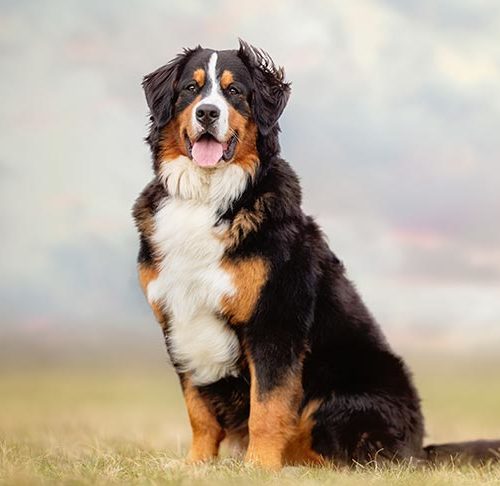
The Bernese Mountain Dog is a large, tri-colored breed weighing 70 to 115 lbs — yet despite their size, they are exceptionally calm and gentle indoors. Bred in the Swiss Alps to work alongside farm families, Berners are deeply people-oriented. They move slowly and deliberately around small children, making them one of the safest large breeds for a family of 6.
Their long, silky tricolor coat — black, white, and rust — is one of the most striking in dogdom. Their eyes are dark brown and soft. When a Berner looks at you, most people describe it as feeling “seen.” It sounds dramatic until it happens to you.
People expect big dogs to be energetic. Berners break that rule. They’re surprisingly calm inside the house. What catches new owners off guard is how strongly they bond with one or two family members — while still being gentle and accepting with everyone else. A Berner doesn’t love a crowd the way a Lab does. They love their people, deeply and specifically.
“He’s 110 lbs and our 2-year-old uses him as a pillow. He just lays there, breathing slowly, like he was specifically made for this.”
— Diane F., Bernese Mountain Dog owner for 4 years
- Calm indoors despite giant size
- Safe around toddlers and babies
- Medium energy — manageable exercise needs
- Shorter lifespan — 7 to 10 years only
- Sheds massively — daily vacuuming needed
- Heat-sensitive — struggles in hot climates
Best for: Families with toddlers · cooler climates · families wanting calm energy indoors
6. Irish Setter — “The Joyful Red Streak”
| Weight | 60–70 lb |
| Height | 25–27 in |
| Lifespan | 12–15 years |
| Energy Level | Very High |
| Grooming Need | Medium — brush 2–3x weekly |
| Shedding | Moderate |
The Irish Setter is a long-legged, mahogany-coated sporting dog weighing 60 to 70 lbs — one of the most outgoing, people-loving breeds that exists. They live 12 to 15 years, making them a companion through your kids’ entire childhood. Irish Setters never meet a stranger and thrive when surrounded by activity, noise, and a full house to run around in.
Their silky, deep chestnut coat shimmers in sunlight. They move with a fluid, graceful trot that’s genuinely beautiful to watch. Their long ears, feathered legs, and soulful eyes give them a look that feels almost painterly.
Irish Setters are known for being friendly — that’s well established. What people underestimate is just how much they need human company. Leave an Irish Setter alone for long stretches and they become destructive — not from spite, but from genuine distress. That’s the flip side of a dog that truly loves people: they need them around. In a family of 6, they’ll never be lonely.
“He thinks every person who walks through our door came specifically to see him. He’s not wrong — our friends all ask about him first.”
— Aoife B., Irish Setter owner for 7 years
- Long lifespan — up to 15 years
- Zero aggression toward strangers
- Perfect for active, outdoorsy families
- Destructive if left alone too long
- High exercise need — 90+ minutes daily
- Matures slowly — puppy behavior until age 3
Best for: Sporty families · homes with a yard · families who are rarely apart
7. Cavalier King Charles Spaniel — “The Lap Dog With a Big-Family Heart”
| Weight | 12–18 lb |
| Height | 12–13 in |
| Lifespan | 12–15 years |
| Energy Level | Low-Medium |
| Grooming Need | Medium — brush 3x weekly |
| Shedding | Moderate |
The Cavalier King Charles Spaniel is a small but surprisingly resilient breed weighing 12 to 18 lbs, with a gentle, adaptable temperament that fits naturally into large families. Unlike most small breeds, Cavaliers rarely snap or guard resources. They live 12 to 15 years and are happiest when someone in the family is always nearby — which in a household of 6, is basically guaranteed.
Their silky coat comes in four color patterns: Blenheim (chestnut and white), tricolor, black and tan, and ruby. Their oversized, warm eyes and feathered ears give them a look that borders on cartoonishly adorable. Kids are immediately drawn to them.
People expect small dogs to be yappy and snappy. Cavaliers largely skip that memo. They’re calm, quiet, and genuinely sociable. But here’s the thing most people don’t realize: Cavaliers can keep up. They love a brisk walk, a park outing, or a game of fetch just as much as a quiet evening on the couch. They adjust to whatever energy the family brings that day.
“She’s 14 lbs and she’s somehow the most popular one in the house. My teenagers would rather cuddle her than talk to me.”
— Lorraine C., Cavalier King Charles Spaniel owner for 9 years
- Rarely snaps — safe with all ages
- Works in smaller homes and apartments
- Low exercise need — 30 min daily
- Prone to heart disease — vet checks essential
- Too small for very rough play
- Separation anxiety develops easily
Best for: Families in smaller homes · families with gentle children · households with elderly relatives also living in
8. Standard Poodle — “The Smartest Dog You’ll Ever Underestimate”
| Weight | 40–70 lb |
| Height | Over 15 in (usually 18–24 in) |
| Lifespan | 10–18 years |
| Energy Level | High |
| Grooming Need | High — professional groom every 6–8 weeks |
| Shedding | Very Low — best for allergy sufferers |
The Standard Poodle is widely considered the second most intelligent dog breed in the world, making them exceptionally easy to train for busy families. They weigh 40 to 70 lbs and shed almost nothing — the top choice for families with allergy sufferers. Standard Poodles live up to 18 years and are consistently ranked among the most versatile family breeds by veterinarians.
Their curly, dense coat can be kept in a short, practical trim — the show-ring clips are optional, not required. Available in a wide range of solid colors including apricot, cream, white, black, and silver. Their long, elegant neck and upright posture give them a natural grace. Under that glamorous coat is an athlete.
Everyone knows Poodles are smart. What people miss is what that means in daily life: they figure things out fast. They’ll learn your family’s routine in about a week. They’ll know who feeds them, who takes them for walks, who sneaks them treats. The surprising part? Poodles get bored easily — and a bored Poodle will invent entertainment. Give them puzzles, games, and jobs to do.
“We have 4 kids and one of them has asthma. The Poodle was the only option that worked for us. Two years in and not a single allergic reaction.”
— Yemi A., Standard Poodle owner for 2 years
- Best breed for allergy-prone families
- Fastest to train of all large breeds
- Exceptionally long lifespan — up to 18 years
- Grooming costs add up quickly
- Gets bored — needs mental stimulation daily
- High exercise need — 60+ minutes daily
Best for: Families with allergy sufferers · highly organized households · families who enjoy training
9. German Shepherd — “The One Who Protects and Belongs”
| Weight | 50–90 lb |
| Height | 22–26 in |
| Lifespan | 7–10 years |
| Energy Level | Very High |
| Grooming Need | Medium — brush 2–3x weekly |
| Shedding | Heavy — earned nickname “German Shedder” |
The German Shepherd is a highly intelligent, deeply loyal working breed weighing 50 to 90 lbs. When properly trained and socialized, they are outstanding family dogs — protective of every member and deeply attuned to the family’s daily rhythm. They’re best suited for experienced dog owners who can invest time in consistent training from puppyhood.
Their double coat is typically tan and black, or sable. Their erect ears and alert gaze give them a look of constant readiness. They move with a smooth, ground-covering gait that seems effortless — even at speed.
People know German Shepherds are intelligent and protective. What surprises new owners is how deeply they bond with the whole family unit — not just one person. They treat the household like a pack. They’ll monitor doors, sleep between rooms, and check on each family member throughout the day. It feels protective because it is — but it also feels uncannily human.
“Our GSD checks on each of our four kids every night before she settles. She goes room to room like she’s doing rounds. Every single night.”
— Nathan W., German Shepherd owner for 6 years
- Natural family protector — no extra training
- Responds quickly to experienced handlers
- Deeply loyal to every family member
- Not ideal for first-time owners
- Sheds constantly — nicknamed “German Shedder”
- Needs 90+ minutes of daily activity
Best for: Experienced dog owners · active families · households that value security
10. Collie — “The Classic Choice That Never Goes Out of Style”
 Save
Save| Weight | 50–75 lb |
| Height | 22–26 in |
| Lifespan | 12–14 years |
| Energy Level | Medium |
| Grooming Need | High — brush 3x weekly minimum |
| Shedding | Heavy — especially in spring and fall |
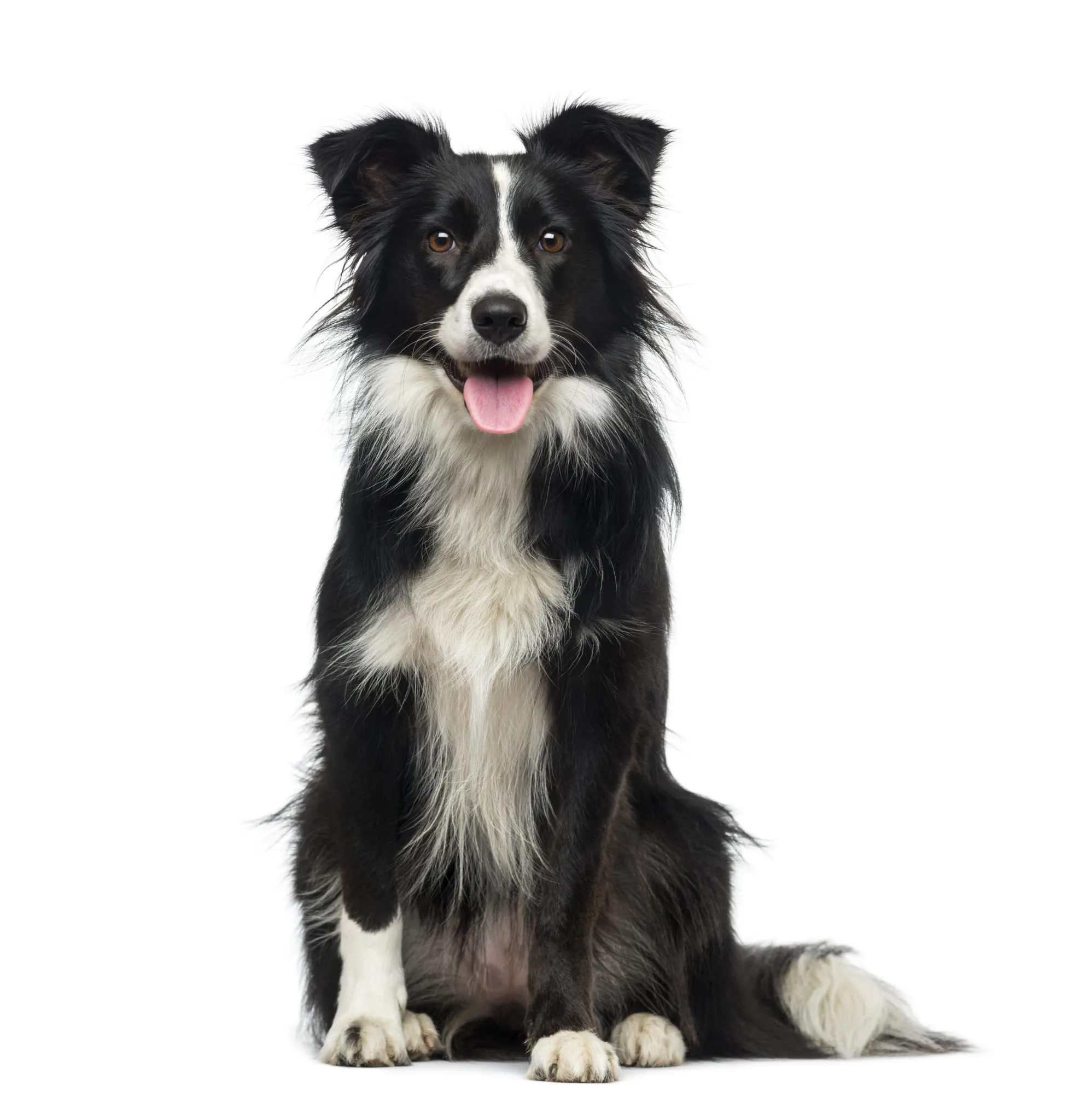
The Collie is a medium-large herding breed weighing 50 to 75 lbs, famous for being gentle, intuitive, and deeply devoted to family. Collies live 12 to 14 years and have a natural protective instinct toward children without any aggression. They’re sensitive dogs that respond best to calm, consistent households — making them ideal when at least one parent works from home.
The rough Collie’s coat is a spectacular mane of sable, tricolor, or blue merle fur. Their narrow, refined face and expressive eyes are immediately recognizable. In motion, they’re graceful and light-footed — almost elegant.
People associate Collies with Lassie and assume that’s marketing. It isn’t. Collies genuinely do seek out children in distress. Their herding instinct makes them naturally oriented toward keeping their group together and safe. The thing that surprises new owners is how quietly they do it — no drama, no barking. They simply position themselves between the child and anything they’ve decided seems uncertain.
“My 7-year-old wandered too close to the road once. Our Collie stepped in front of her and refused to move. She’s not trained to do that. It’s just who she is.”
— Chloe R., Collie owner for 10 years
- Naturally gentle around children
- Good lifespan — 12 to 14 years
- Medium energy — manageable for most families
- Heavy seasonal shedder
- Sensitive — rough homes can stress them
- High grooming commitment — 3x weekly minimum
Best for: Calmer households · families with sensitive children · parents who work from home
Quick Comparison: All 10 Breeds Side by Side
| Breed | Size | Energy | Shedding | Best For Kids Under 6 | Lifespan |
|---|---|---|---|---|---|
| Labrador Retriever | Large | High | Heavy | ✅ Yes | 10–12 yrs |
| Golden Retriever | Large | High | Heavy | ✅ Yes | 10–12 yrs |
| Beagle | Medium | Medium-High | Moderate | ✅ Yes | 10–15 yrs |
| Boxer | Large | Very High | Low | ⚠️ Older kids only | 10–12 yrs |
| Bernese Mountain Dog | Giant | Medium | Very Heavy | ✅ Yes | 7–10 yrs |
| Irish Setter | Large | Very High | Moderate | ✅ Yes | 12–15 yrs |
| Cavalier King Charles | Small | Low-Medium | Moderate | ⚠️ Gentle kids only | 12–15 yrs |
| Standard Poodle | Large | High | Very Low | ✅ Yes | 10–18 yrs |
| German Shepherd | Large | Very High | Heavy | ✅ With training | 7–10 yrs |
| Collie | Medium-Large | Medium | Heavy | ✅ Yes | 12–14 yrs |
Which Dog Breed Is Right for Your Family of 6?
Not every family of 6 is the same. A family with a 2-year-old and a 14-year-old needs a very different dog than a family where all six kids are teenagers. Use this decision guide to narrow it down fast.
- If your family has babies or toddlers → Choose the Labrador Retriever, Golden Retriever, Beagle, or Bernese Mountain Dog. These breeds have the highest child-tolerance scores and the lowest bite risk around very young children.
- If your family has kids ages 6 to 14 → The Boxer, Irish Setter, and German Shepherd are ideal. They match older kids’ energy and grow up with them.
- If someone in the family has allergies → The Standard Poodle is the clear choice. It’s the only large breed here with virtually no shedding.
- If you live in an apartment or smaller home → The Cavalier King Charles Spaniel or Beagle will adapt well. Both need less space and less exercise than the bigger breeds.
- If your family is first-time dog owners → Start with a Labrador Retriever or Golden Retriever. They’re the most forgiving of training mistakes and the easiest to read.
- If your family wants maximum lifespan → The Standard Poodle (up to 18 years), Irish Setter, and Beagle (both up to 15 years) give you the most years together.
You might be thinking: “But what about mixed breeds?” Here’s why that matters. A well-socialized mixed breed from a rescue can be just as family-friendly as any purebred. The breed matters less than temperament, training, and socialization history. If you’re open to adopting, ask the shelter about child-tolerance specifically — they observe each dog carefully and can guide you well.
What Most People Get Wrong About Choosing a Family Dog
Most families pick a breed based on looks. That’s how you end up with a Husky that destroys the house, or a Dalmatian that overwhelms the kids. Here’s what actually matters.
Mistake 1: Choosing by size alone. A 90 lb Saint Bernard is calm enough for a toddler. A 15 lb Jack Russell Terrier can be too intense for most kids. Size doesn’t equal temperament.
Mistake 2: Assuming puppies are safer. Puppies are high-energy and unpredictable. A well-socialized adult dog often integrates into a family faster and more safely than a puppy. Ask your shelter about 2-to-4-year-old dogs that have been assessed with children.
Never leave any dog — no matter how gentle the breed — unsupervised with a child under 5. This is the single most important safety rule in all of dog ownership, and most biting incidents happen when adults assume a dog is “safe” without watching.
Mistake 3: Ignoring energy level. A family that doesn’t walk much should not own an Irish Setter or a German Shepherd. Under-exercised high-energy dogs become destructive and anxious. Match the dog’s energy to your family’s lifestyle — not the lifestyle you wish you had.
That said — the breeds on this list were specifically chosen because they adapt. Most experts agree that training and consistent socialization matter more than any other factor when raising a family dog.
How to Prepare Your Home for a New Family Dog
Getting the right breed is step one. Bringing them home well is step two. Here’s what consistently makes the difference between a smooth transition and a stressful one.
- Set one entry point and one sleeping spot before the dog arrives.
- Introduce each family member one at a time — not all at once.
- Keep noise levels lower than normal for the first 48 hours.
- Establish feeding and walk times on a fixed schedule from day one.
- Give the dog a crate or quiet corner as a retreat — even social dogs need downtime.
- Start basic commands (sit, stay, name recall) in the first week.
Research consistently shows that dogs introduced slowly to a large family settle in faster than dogs thrown straight into full household chaos. The first week sets the pattern for years to come.
For in-depth guidance on what the AKC recommends when choosing and registering a dog for your family, the AKC’s most popular breeds list with full temperament data is one of the most reliable starting points available in 2026.
Have every child in the family practice “dog rules” before the dog arrives. No grabbing the tail. No running toward the dog. No disturbing the dog when it’s eating. Kids who know the rules before the dog comes home make the transition dramatically smoother.
Frequently Asked Questions
What is the best dog breed for a family of 6 with young children?
The Labrador Retriever is widely considered the best choice for a large family with young children. It has a 94/100 child-tolerance score and the lowest bite risk of any large breed. Golden Retrievers are a close second. Both breeds are patient, forgiving of rough handling, and bond naturally with every family member.
Is it better to get a large or small dog for a big family?
Medium to large dogs typically work better in a family of 6. Small breeds under 20 lbs can be accidentally hurt during rough play with young children. Medium and large breeds are sturdier, less likely to snap from being handled, and can keep up with the energy of a busy household.
Which dog breed sheds the least for a big family?
The Standard Poodle sheds the least of any large breed on this list. Their curly coat traps loose hair rather than releasing it into the air or onto furniture. This makes them the top choice for families with allergy sufferers. Boxers also shed very little for a large breed.
How do I know if a dog breed is good with kids before I buy?
Check the breed’s AKC temperament rating and child-tolerance score. Ask breeders or rescue workers specifically how the dog behaves around children of your kids’ ages. If possible, arrange a meeting between the dog and your family before committing. A dog that freezes, growls, or avoids children during that visit is a warning sign.
Can a rescue dog be a good family dog for a family of 6?
Yes — absolutely. Many rescue dogs make outstanding family pets. The key is choosing a shelter that assesses dogs individually for child-tolerance and energy level. Ask specifically about behavior around groups of children and strangers. A well-assessed adult rescue dog with a known gentle history can be every bit as safe and loving as a purebred puppy.
There you have it — the 10 best dog breeds for a family of 6, matched to every kind of household. The single best thing you can do right now is pick your top two breeds from this list and visit a local breeder or rescue that specializes in them. Meet the dog. Watch how it reacts to your kids. That one meeting will tell you more than any article can.
I’m Thomas Cutter, and I hope this guide makes the decision easier — and your new dog an instant member of the family.

Thomas Cutter is a lifelong dog owner and the founder of FindOutAboutDogs.com. With over 10 years of hands-on experience owning multiple breeds, Thomas created this site to provide honest, research-based dog advice that real owners can actually trust.
