10 Best Dog Breeds for Ranches (Chosen for Work, Not Just Looks)
Quick Answer
The best ranch dogs are bred for herding, guarding, or both. Top picks in 2026 include the Australian Cattle Dog, Border Collie, Australian Shepherd, Great Pyrenees, and Anatolian Shepherd. Your best fit depends on livestock type, land size, and whether you need herding, guarding, or both.
What ranch work usually needs:
- A herding breed for moving cattle, sheep, or goats
- A livestock guardian breed for predator protection
- A breed suited to your climate and terrain
Choose based on your main need:
- Herding cattle: Australian Cattle Dog
- Guarding flocks from predators: Great Pyrenees or Anatolian Shepherd
- Herding and guarding in one dog: Anatolian Shepherd Kangal cross
You’ve got livestock to move, fences to check, and coyotes that don’t care what time it is. A ranch runs on more than fuel and fencing — it runs on a good working dog. I’ve spent years around working ranches, and one thing is always true: the right breed makes the job easier, and the wrong one makes it harder.
This guide covers the 10 breeds that actually earn their keep on a ranch. No lapdogs. No guesswork.
- Herding dogs move livestock. Guardian dogs protect it. Pick the right job first.
- Livestock guardian breeds like the Great Pyrenees live with the herd, not in the house.
- Herding breeds like the Border Collie need real work — not just a big yard.
- Climate matters. A heavy-coated guardian breed struggles in extreme heat without shade and water.
- Most ranches do best with one herder and one guardian, not one dog doing both jobs.


What Makes a Dog a Good Ranch Breed?
A good ranch dog does one of two jobs well: herding or guarding. Herding breeds like the Border Collie and Australian Cattle Dog move livestock using instinct, eye contact, and controlled nipping. Guardian breeds like the Great Pyrenees live among the herd and drive off predators through size and presence, not chasing. The best fit depends on what you raise, how much land you have, and how much daily work you can give the dog. A herding breed left bored in a yard will find its own — usually destructive — job.
Most working ranches keep a herding breed for daily stock movement and a separate guardian breed to watch the herd overnight. That’s not a coincidence — it reflects two very different instincts bred over centuries for two very different tasks.
The 10 Best Dog Breeds for Ranches — Ranked and Reviewed
1. Australian Cattle Dog — “The Tireless Cattle Boss”
 Save
SaveThe Australian Cattle Dog, also called the Blue Heeler, is a compact herding breed built for moving cattle across open ground. It weighs 35 to 50 lbs and stands close to the ground for quick, low turns. The breed nips at heels to redirect stock and rarely backs down from a stubborn cow. It suits ranchers who need one dog doing serious cattle work daily.
Its coat is short but tough, built to shed mud and burrs fast. The blue or red mottled pattern isn’t just striking — it comes from a working lineage bred purely for function.
This breed is famous for outworking its handler. It will herd cattle for hours, then herd the kids, then herd the chickens if nothing else is moving. That drive is a gift on a working ranch and a real problem in a small yard with nothing to do.
Best for: Cattle ranches · Active handlers · Experienced dog owners
2. Border Collie — “The Thinking Herder”
| Weight | 30–45 lbs |
| Height | 18–22 inches |
| Lifespan | 12–15 years |
| Energy Level | Extremely high |
| Grooming Need | Moderate |
| Shedding | Moderate to high |
The Border Collie is a herding breed known for using eye contact and body position to control sheep and other livestock without touching them. It weighs 30 to 45 lbs and reads a flock’s movement almost instantly. Widely considered the most trainable dog breed, it excels at precision herding over open pasture. It suits ranchers who run sheep or need fine-tuned stock control.
Its stalking “eye” — a low crouch and locked stare — moves sheep with almost no physical contact at all.
This breed needs a job every single day. Without one, that famous intelligence turns toward chewing fences, obsessive chasing, or other habits you won’t enjoy.
Best for: Sheep and goat ranches · Owners who want to train stock dogs · Trial and competition handlers
3. Australian Shepherd — “The Versatile All-Rounder”
| Weight | 40–65 lbs |
| Height | 18–23 inches |
| Lifespan | 12–15 years |
| Energy Level | High |
| Grooming Need | Moderate |
| Shedding | Moderate to high |
The Australian Shepherd is a medium-sized herding breed valued for handling cattle, sheep, and even poultry on mixed operations. It weighs 40 to 65 lbs and works with a firmer, more forceful style than the Border Collie. Despite the name, it was developed in the American West. It suits ranchers running more than one type of livestock who want one adaptable dog.
Its coat comes in striking merle patterns, and many carry naturally bobbed tails from working lines.
This breed bonds hard with one family and one property. That loyalty makes it an excellent all-around ranch dog, but a poor fit for a household that’s away most of the day.
Best for: Mixed livestock operations · Families wanting one working, family dog · Farms with poultry and larger stock
4. Great Pyrenees — “The Nighttime Guardian”
| Weight | 85–115 lbs |
| Height | 25–32 inches |
| Lifespan | 10–12 years |
| Energy Level | Low to moderate |
| Grooming Need | High |
| Shedding | Heavy, year-round |
The Great Pyrenees is a livestock guardian breed that lives among sheep or goats and defends them from predators like coyotes and wolves. It weighs 85 to 115 lbs and works mostly at night, when predator activity peaks. It does not herd — it guards, staying with the flock instead of moving it. It suits ranchers needing predator protection more than stock movement.
Its thick white coat isn’t just for looks — it lets the dog blend into a flock of sheep at a glance.
This breed barks. A lot. That’s not a flaw — it’s the job. A Pyrenees warns off predators with noise and presence long before a fight ever happens.
Best for: Sheep and goat ranches · Predator-heavy regions · Ranchers who want a livestock guardian, not a herder
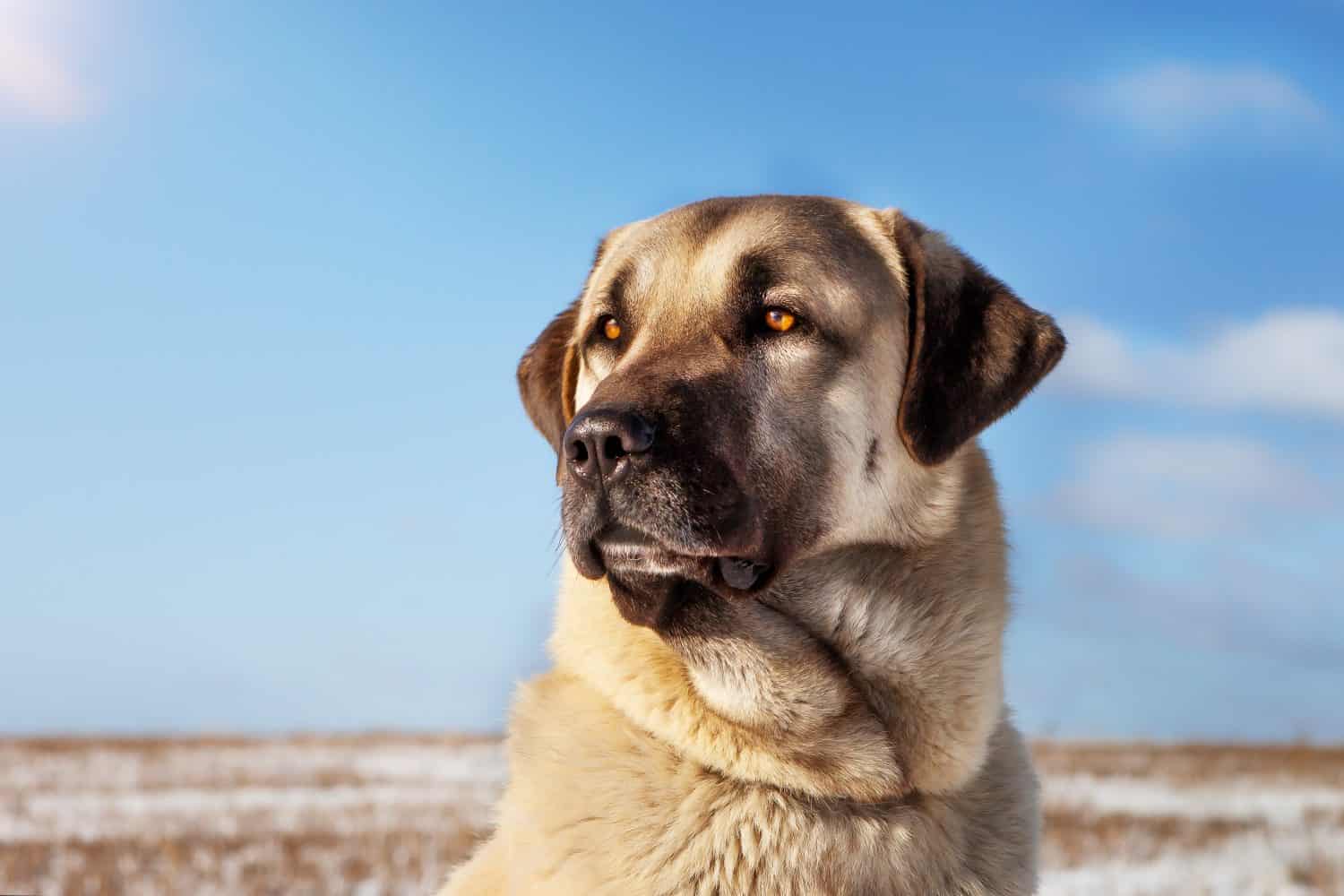
5. Anatolian Shepherd — “The Independent Protector”
 Save
Save| Weight | 80–150 lbs |
| Height | 27–29 inches |
| Lifespan | 11–13 years |
| Energy Level | Moderate |
| Grooming Need | Low |
| Shedding | Moderate, seasonal |
The Anatolian Shepherd is a large livestock guardian breed developed in Turkey to protect flocks across huge, open territory. It weighs 80 to 150 lbs and patrols independently, often without close supervision. It thinks for itself far more than it takes commands. It suits ranchers with large acreage and heavy predator pressure, including wolves and big cats.
Its lean, athletic build lets it cover rough, hilly ground faster than heavier guardian breeds.
This breed decides on its own when a threat is real. That independence is exactly why it survives coyote packs — and exactly why it’s a poor fit for a first-time dog owner.
Best for: Large acreage ranches · Heavy predator pressure · Experienced livestock owners
6. Catahoula Leopard Dog — “The All-Terrain Cattle Dog”
| Weight | 50–95 lbs |
| Height | 20–26 inches |
| Lifespan | 10–14 years |
| Energy Level | High |
| Grooming Need | Low |
| Shedding | Low |
The Catahoula Leopard Dog is Louisiana’s state dog, bred to herd semi-wild cattle and hogs through swamp and brush country. It weighs 50 to 95 lbs and works with a bold, gripping style suited to stubborn stock. It handles heat, mud, and rough terrain better than most herding breeds. It suits ranchers in hot, humid, or brushy regions running tough cattle.
Its speckled “leopard” coat and pale, often mismatched eyes make it one of the most visually distinct working breeds.
This breed will grip a hog’s ear to hold it in place. That grit is priceless with dangerous stock, but it needs firm, experienced handling to stay controlled.
Best for: Hot-climate ranches · Cattle and hog operations · Handlers who want a tough, low-maintenance coat
7. German Shepherd — “The Steady Multi-Tasker”
| Weight | 50–90 lbs |
| Height | 22–26 inches |
| Lifespan | 9–13 years |
| Energy Level | High |
| Grooming Need | Moderate |
| Shedding | High, year-round |
The German Shepherd is a versatile working breed that adapts to herding, guarding, and general farm patrol duties. It weighs 50 to 90 lbs and combines trainability with a strong protective instinct. It won’t out-herd a Border Collie, but it covers more roles at once. It suits ranchers who want one dog to herd lightly, guard the property, and watch the family.
Its double coat and upright ears give it the alert, ready look the breed is known for worldwide.
This breed thrives on structure and daily training. Without it, that intelligence can turn into anxious or overly guarded behavior around visitors.
Best for: General farm security · Ranchers wanting one dog for multiple roles · Families with kids on the property
8. Kangal — “The Heavyweight Predator Deterrent”
| Weight | 90–145 lbs |
| Height | 28–32 inches |
| Lifespan | 12–15 years |
| Energy Level | Moderate |
| Grooming Need | Low |
| Shedding | Moderate, seasonal |
The Kangal is a giant Turkish livestock guardian breed known for its speed, bite force, and calm confidence around stock. It weighs 90 to 145 lbs and rarely bolts from a fight it can’t win by size alone. It uses its speed to intercept predators before they reach the flock. It suits ranchers facing serious predator threats like wolves or large cats.
Its black mask and short, dense coat come from centuries of breeding purely for guarding, not appearance.
This breed is famously calm with livestock and children, then fully committed the moment a real predator shows up. That switch is exactly what livestock guardian work demands.
Best for: High predator-risk ranches · Ranchers needing a fast, powerful guardian · Large open-range operations
9. Rat Terrier — “The Small Farm Utility Dog”
| Weight | 10–25 lbs |
| Height | 10–18 inches |
| Lifespan | 15–18 years |
| Energy Level | High |
| Grooming Need | Very low |
| Shedding | Low |
The Rat Terrier is a small, tenacious breed originally kept on farms to control rodents around grain and feed stores. It weighs 10 to 25 lbs and clears barns of vermin far more reliably than any trap. It’s not a herder or guardian, but it protects feed and prevents disease spread from rodents. It suits ranchers who need pest control alongside their bigger working dogs.
Its small, wiry frame lets it slip into grain bins and tight barn corners larger dogs can’t reach.
This breed was bred to work, not to decorate a porch. Most Rat Terriers happily log more barn hours than lap time.
Best for: Barns with rodent problems · Ranches wanting a companion breed with a real job · Smaller properties
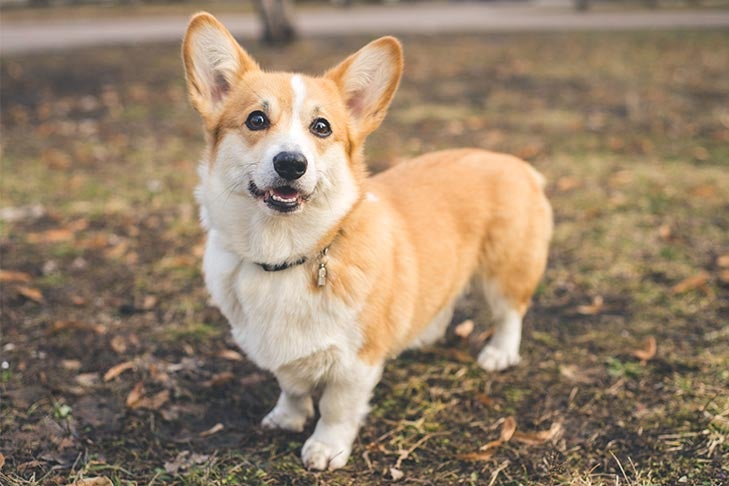
10. Pembroke Welsh Corgi — “The Low-Rider Cattle Herder”
 Save
Save| Weight | 24–30 lbs |
| Height | 10–12 inches |
| Lifespan | 12–13 years |
| Energy Level | Moderate to high |
| Grooming Need | Moderate |
| Shedding | High |
The Pembroke Welsh Corgi is a short-legged herding breed once used to drive cattle across Welsh pastures by nipping at their heels. It weighs 24 to 30 lbs and ducks under kicking hooves thanks to its low build. It’s not built for large-scale ranch work today, but it still herds poultry and small stock well. It suits smaller ranches or hobby farms wanting a herding breed with a lower physical demand.
Its long body and short legs are a genetic trait, bred deliberately to dodge a cow’s kick.
This breed still carries full herding drive despite its size. Many owners are surprised how seriously a Corgi takes moving chickens or geese.
Best for: Hobby farms · Poultry and small-stock herding · Owners wanting a herding breed with lower exercise needs
Ranch Dog Breed Comparison at a Glance
| Breed | Primary Job | Best Livestock | Energy |
|---|---|---|---|
| Australian Cattle Dog | Herding | Cattle | Very high |
| Border Collie | Herding | Sheep | Extremely high |
| Australian Shepherd | Herding | Mixed livestock | High |
| Great Pyrenees | Guarding | Sheep, goats | Low-moderate |
| Anatolian Shepherd | Guarding | All livestock | Moderate |
| Catahoula Leopard Dog | Herding | Cattle, hogs | High |
| German Shepherd | Guarding/herding | Mixed livestock | High |
| Kangal | Guarding | All livestock | Moderate |
| Rat Terrier | Pest control | N/A | High |
| Pembroke Welsh Corgi | Herding | Poultry, small stock | Moderate-high |
Which Ranch Dog Breed Is Right for You?
Your best breed depends on what you raise and what problem you’re solving. Here’s a simple way to decide:
- If you run cattle and need daily herding help → the Australian Cattle Dog or Catahoula Leopard Dog fits best.
- If you run sheep or goats and lose stock to predators → the Great Pyrenees or Anatolian Shepherd fits best.
- If you want one dog for herding, guarding, and family protection → the German Shepherd or Australian Shepherd fits best.
- If your property is small or your stock is mostly poultry → the Pembroke Welsh Corgi fits best.
Never expect a herding breed to guard livestock overnight without training, and never expect a livestock guardian breed to herd. The instincts are different, and forcing the wrong job usually ends badly for the stock.
What Most People Get Wrong About Ranch Dogs
Many new ranchers assume any big, tough-looking dog will protect livestock. That’s not how it works. Livestock guardian breeds like the Great Pyrenees are raised with the herd from puppyhood, often bonding with sheep or goats before they ever bond closely with people. Drop an adult dog from a shelter into a pasture and expect guarding instinct, and you’ll likely be disappointed — or worse, put your stock at risk.
The same mistake happens with herding breeds. A Border Collie left in a five-acre yard with nothing to herd isn’t relaxing — it’s stressed. That energy needs an outlet, or it comes out as fence-jumping, chasing cars, or nipping kids.
Raise a livestock guardian pup directly with your flock from 8 weeks old for the strongest bond and best results.
Ranch Dog Care Essentials
Ranch dogs work outdoors in heat, cold, mud, and dust, so their care needs differ from a typical house dog. Provide fresh water at multiple points across the property, not just one bowl by the house. Feed a higher-calorie working diet — a dog covering miles of pasture daily burns far more energy than one that naps on a couch.
Check paws and coats weekly for burrs, cuts, and ticks, since working dogs pick these up fast in brush and tall grass. Schedule vet visits at least once a year, and don’t skip vaccines — a dog working near wildlife faces higher exposure to rabies and other diseases than a house pet ever will.
Common Mistakes New Ranch Owners Make
- Buying a herding breed for guarding work, or the reverse.
- Skipping early training because “the dog will figure it out.”
- Underestimating exercise needs for high-drive breeds like the Border Collie.
- Choosing a heavy-coated guardian breed for a hot climate without planning for shade and cooling.
- Expecting results in weeks — most working dogs mature into the job over 1 to 2 years.
This article covers breed selection for herding and guarding work on a ranch. If your situation involves service or therapy dog training, or strictly companion breeds for a small hobby farm with no livestock, you may need breed guidance built around a different set of priorities.
Frequently Asked Questions
What is the best all-around dog breed for a ranch?
The Australian Shepherd is often the best all-around choice. It herds cattle, sheep, and poultry, bonds closely with families, and adapts to mixed livestock operations better than more specialized breeds.
Do livestock guardian dogs need training?
Yes. Livestock guardian breeds need early exposure to the flock, ideally from 8 weeks old, to bond properly. Without this early bonding period, guarding instinct doesn’t develop reliably.
Can one dog both herd and guard livestock?
Not well. Herding and guarding come from different, often conflicting instincts. Most working ranches keep separate breeds for each job rather than expecting one dog to do both.
What is the easiest ranch dog breed for a beginner?
The German Shepherd is generally easier for beginners than specialized herding or guardian breeds. It’s highly trainable, versatile, and doesn’t demand the extreme daily work a Border Collie needs.
How much land does a ranch dog need?
Herding breeds do best with several acres and daily stock work. Livestock guardian breeds need enough open pasture to patrol alongside the herd, often 5 acres or more for real working conditions.
Picking the right ranch dog comes down to one question: herding or guarding? Match the breed to that job first, then to your climate and land size. Start by listing your main livestock and predator risks, then compare that list against the breeds above to narrow your choice fast.
Thomas Cutter is a lifelong dog owner and the founder of FindOutAboutDogs.com. With over 10 years of hands-on experience owning multiple breeds, Thomas created this site to provide honest, research-based dog advice that real owners can actually trust.
