10 Best Dog Breeds for Tropical Climate — Picked by Coat Type, Not Just Looks
Quick Answer
The best dog breeds for tropical climates have short, single-layer coats, erect ears, and lean bodies. Your pick
depends on your space and energy level. The Basenji, Chihuahua, and Xoloitzcuintli suit small homes. The Vizsla,
Dalmatian, and Doberman suit active owners with yard space. Avoid flat-faced and thick double-coated breeds.
Choose based on your setup:
- Small apartment, low exercise time → Chihuahua or Chinese Crested
- House with a yard, active lifestyle → Vizsla, Dalmatian, or Doberman
- Quiet home, minimal grooming → Basenji or Xoloitzcuintli
Your dog is panting before you’ve even finished the walk. Their tongue hangs sideways, their coat is soaked
through, and you’re both heading straight back inside. I’ve watched this happen to a friend’s Husky in Bangkok
within her first summer there — the breed was gorgeous, but it was built for snow, not steam. I’m a dog care writer
who has spent years researching breed-climate fit, and the mismatch between a dog’s coat and its climate is one of
the most common — and most avoidable — mistakes new owners make.
If you live somewhere hot and humid, the right breed can mean the difference between a dog who thrives outdoors
and one who dreads every walk. Let’s look at the ten breeds built for exactly that kind of weather.
- Short, single-layer coats and erect ears beat thick double coats in heat and humidity.
- Flat-faced breeds like Bulldogs and Pugs struggle most — their airways can’t cool them fast enough.
- Size matters less than coat type. Small hot-weather breeds and large ones both make this list.
- Every breed here still needs shade, fresh water, and cooler exercise times — heat tolerance isn’t heatproof.


What Makes a Dog Breed Good for Hot, Humid Weather?
A heat-tolerant breed has a short or single-layer coat, a long muzzle, and erect ears — three features that let
heat escape fast. Dogs cool down mainly by panting, so the shape of their airway matters as much as their
fur. A short coat lets air move against the skin, and erect ears improve blood circulation near the surface,
carrying heat away faster than a flat-faced, thick-coated dog ever could. That’s why sighthounds, African
breeds, and short-haired working dogs dominate this list — they evolved in warm regions.
You might be thinking a shaved thick-coated dog would handle heat just as well. Here’s why that’s not true: a
double coat insulates against both heat and cold, and shaving it off removes sun protection without actually
cooling the dog down.
So if you’re picking a puppy for a home in Florida, Dhaka, or the Philippines, coat type should top your checklist
— above color, size, or even temperament. Calm, easy-going breeds can still make great tropical companions once you’ve filtered for coat type first.
The 10 Best Dog Breeds for Tropical Climate — Ranked and Reviewed
Basenji — “The Barkless Desert Dog Built for Humidity”
 Save
Save| Weight | 22–24 lbs |
| Height | 16–17 in |
| Lifespan | 13–14 years |
| Energy Level | High |
| Grooming Need | Low |
| Shedding | Low |
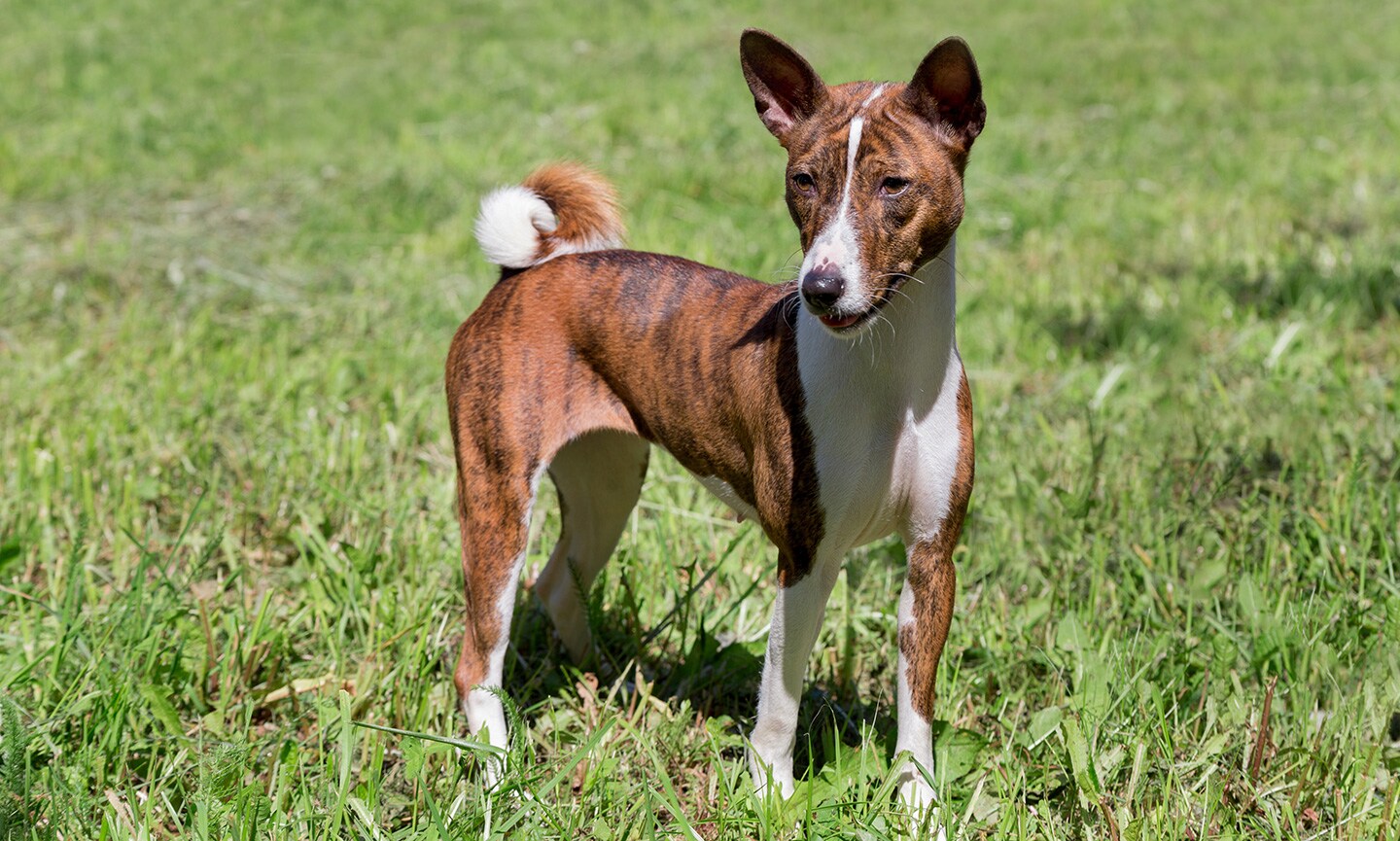
The Basenji is a small African hound known for staying silent instead of barking. It weighs 22 to 24 lbs
and carries a short, fine coat built for Central Africa’s heat. Independent and alert, it grooms itself like a cat.
This makes it ideal for quiet apartment living in hot, humid regions.
Their short coat lies flat and tight, giving them a sleek, almost feline outline. A tightly curled tail sits high
over their back.
Most people expect a quiet dog to be lazy. Basenjis aren’t — they’re fast, curious, and known to escape fenced
yards. That’s the part new owners rarely see coming.
“Mine has never barked once in three years, but she yodels at the mailman like clockwork every single day.”
— Priya M., Basenji owner for 3 years
- Never barks, ideal for thin walls
- Self-grooming, minimal shedding
- Handles heat better than most breeds
- Skilled escape artist, needs tall fencing
- Stubborn, resists repetitive training
- High prey drive around small pets
Best for: Apartment dwellers · Owners wanting a quiet dog · Experienced first-time owners
See more apartment-friendly dog breeds for hot climates
Chihuahua — “The Tiny Sunbather”
| Weight | 3–6 lbs |
| Height | 5–8 in |
| Lifespan | 14–16 years |
| Energy Level | Moderate |
| Grooming Need | Low |
| Shedding | Low to moderate |
The Chihuahua is the world’s smallest dog breed, weighing just 3 to 6 lbs with a short, single coat.
Native to Mexico, it handles heat with ease and needs only short walks. Bold and alert despite its size, it suits
apartment life, seniors, and owners without much outdoor space in tropical regions.
Their apple-shaped head and huge, erect ears give them a wide-eyed, alert expression. Coats come in nearly every
color, from cream to black and tan.
Everyone expects a tiny dog to be timid. Chihuahuas aren’t — they’ll stand their ground against dogs ten times
their size. The surprise is how much confidence fits into 5 lbs of dog.
“He once tried to stare down a delivery dog three times his size. Didn’t move an inch.”
— Marcus T., Chihuahua owner for 5 years
- Tiny size fits any home layout
- Short walks meet exercise needs
- Low grooming, quick to bathe
- Fragile around toddlers and big dogs
- Prone to shivering in strong AC
- Can bark often if under-socialized
Best for: First-time owners · Small apartments · Seniors living alone
Explore more beginner-friendly dog breeds
Vizsla — “The Sleek Hungarian Sunseeker”
| Weight | 45–65 lbs |
| Height | 21–24 in |
| Lifespan | 12–14 years |
| Energy Level | Very high |
| Grooming Need | Low |
| Shedding | Low |
The Vizsla is a Hungarian hunting dog with a sleek, rust-colored coat built for warm weather. Weighing 45
to 65 lbs, it needs a large yard and daily exercise. Deeply affectionate, it bonds tightly with its family. This
breed suits active households in hot climates with room to run.
Their coat lies close to the body in a solid golden-rust shade, with no undercoat to trap heat. Lean muscle shows
clearly along their frame.
People expect hunting dogs to be aloof outdoor animals. Vizslas are the opposite — they’re called “velcro dogs”
because they follow their owner room to room, all day.
“She follows me into the bathroom every single time. I’ve stopped closing doors at this point.”
— Renata S., Vizsla owner for 4 years
- Coat sheds heat fast, low grooming
- Deeply loyal and affectionate
- Great with active, outdoorsy families
- Needs 60+ minutes of exercise daily
- Severe separation anxiety if left alone
- Not suited to small apartments
Best for: Active owners · Houses with yards · Families who work from home
Dalmatian — “The Spotted Endurance Runner”
| Weight | 45–70 lbs |
| Height | 19–24 in |
| Lifespan | 11–13 years |
| Energy Level | Very high |
| Grooming Need | Low |
| Shedding | High |
The Dalmatian is a spotted carriage dog bred for long-distance running beside horses. Its short, dense
coat sheds heat well despite year-round shedding. Weighing 45 to 70 lbs, it needs serious daily exercise. This breed
fits active owners in hot climates who can commit to at least an hour of activity a day.
Their signature black or liver spots sit over a pure white base coat, each dog’s pattern completely unique.
Most people picture Dalmatians as calm movie dogs. Real ones are anything but — they were bred to run 20+ miles
alongside carriages and still carry that stamina today.
“We run 5k every morning and he still has energy left when we get home. It’s humbling.”
— Diego R., Dalmatian owner for 2 years
- Built for long, hot-weather endurance
- Coat needs no trims or clipping
- Playful and great with active kids
- Sheds heavily all year round
- Needs an hour or more of exercise
- Can be destructive when bored
Best for: Runners and cyclists · Active families · Homes with fenced yards
Doberman Pinscher — “The Sleek Sentinel”
| Weight | 60–100 lbs |
| Height | 24–28 in |
| Lifespan | 10–13 years |
| Energy Level | High |
| Grooming Need | Low |
| Shedding | Low to moderate |
The Doberman Pinscher is a muscular guard dog with a short, sleek coat that handles heat well. Weighing
60 to 100 lbs, it needs weekly brushing at most. Loyal and protective, it bonds closely with its family. This breed
suits active, experienced owners in warm climates who want a watchful companion.
Their coat lies smooth and glossy against a lean, muscular frame, usually in black, red, blue, or fawn with rust
markings.
People expect Dobermans to be aggressive guard dogs. In reality, most are gentle with their own family — the
sharp reputation comes from how alert, not hostile, they are toward strangers.
“He’s a giant lap dog at home. The mailman would never believe it.”
— Farhan A., Doberman owner for 6 years
- Weekly brushing keeps coat in shape
- Protective without excess barking
- Handles humidity better than furry breeds
- Needs firm, consistent training early
- Too large for small apartments
- Prone to separation anxiety alone
Best for: Experienced owners · Homes needing a watchdog · Active singles or couples
Rhodesian Ridgeback — “The African Lion Hunter”
| Weight | 70–85 lbs |
| Height | 24–27 in |
| Lifespan | 10–12 years |
| Energy Level | High |
| Grooming Need | Low |
| Shedding | Low |
The Rhodesian Ridgeback is a large African hound bred to track lions in southern Africa’s heat. Its
short, dense coat sheds warmth efficiently. Weighing 70 to 85 lbs, it needs a strong owner and firm training. This
breed suits confident families in hot climates with space to roam.
A distinctive ridge of backward-growing hair runs down their spine — the breed’s namesake feature and its most
recognizable trait.
People assume a lion-hunting breed will be aggressive. Ridgebacks are usually calm and reserved indoors, saving
their intensity for the yard or the hunt.
“She sleeps 18 hours a day indoors, then turns into a completely different dog in the yard.”
— Aisha N., Ridgeback owner for 5 years
- Bred for African heat, low shedding
- Calm indoors, low barking tendency
- Loyal, gentle with familiar children
- Strong-willed, needs firm handling
- Large size unsuitable for small flats
- High prey drive around cats
Best for: Confident owners · Large homes with yards · Families with older kids
Whippet — “The Quiet Sunbeam Chaser”
 Save
Save| Weight | 25–40 lbs |
| Height | 18–22 in |
| Lifespan | 12–15 years |
| Energy Level | Moderate |
| Grooming Need | Very low |
| Shedding | Low |
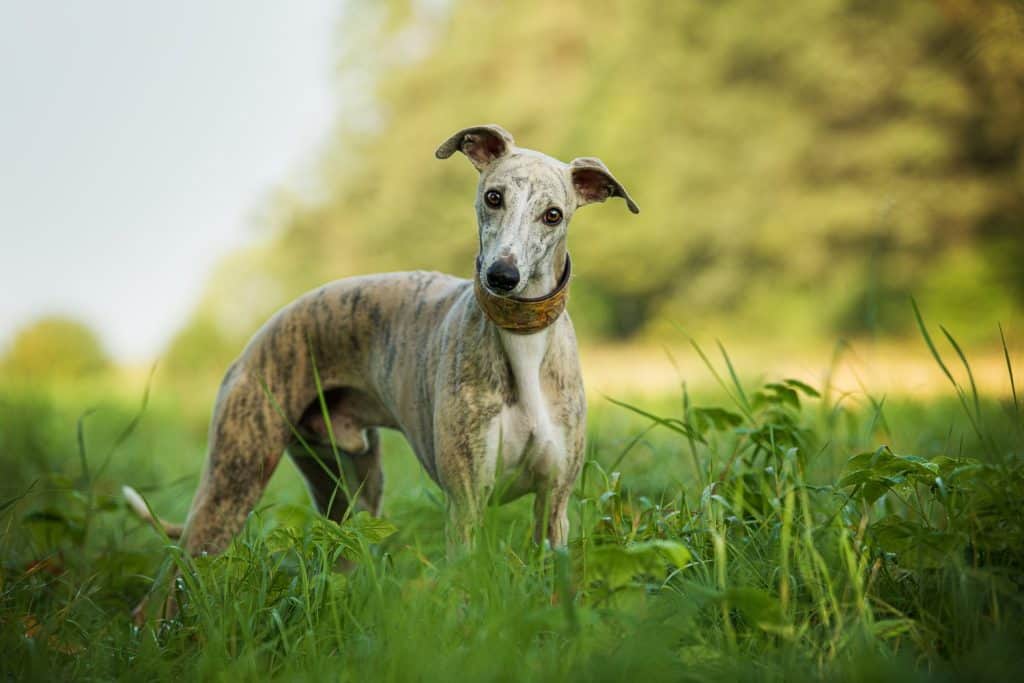
The Whippet is a small sighthound with a fine, short coat and a lean, muscular frame. Weighing 25 to 40
lbs, it sprints in short bursts, then rests for hours. Calm indoors and quick outdoors, it suits owners who want an
athletic dog without constant exercise demands in hot climates.
Their coat is so fine it looks almost painted on, showing every curve of a deeply tucked waist and arched back.
People assume a sighthound needs hours of daily exercise. Whippets don’t — 20 minutes of sprinting can tire them
out for the rest of the day.
“She sprints for ten minutes flat out, then naps under a blanket for the rest of the afternoon.”
— Tomas V., Whippet owner for 3 years
- Low exercise needs despite speed
- Near-zero grooming or odor
- Calm, quiet temperament indoors
- Chases small animals on instinct
- Thin skin, prone to scrapes
- Sensitive to overly strong sun
Best for: Low-shedding home seekers · Calm indoor companions · Owners with secure yards
Thai Ridgeback — “Built for Tropical Heat by Nature”
| Weight | 35–75 lbs |
| Height | 20–24 in |
| Lifespan | 12–13 years |
| Energy Level | High |
| Grooming Need | Low |
| Shedding | Low |
The Thai Ridgeback is a native Thai hunting breed shaped directly by tropical weather. Its short, sleek
coat and ridge of reversed hair keep it cool in high humidity. Weighing 35 to 75 lbs, it’s independent and
territorial. This breed suits confident owners already living in genuinely tropical regions.
A visible ridge runs along their spine in patterns like an arrow or saddle, set against solid blue, black, red, or
fawn coats.
Most buyers expect a rare breed to be delicate. Thai Ridgebacks are the opposite — this is one of the few breeds
literally shaped by centuries in a hot, humid climate, not adapted to it after the fact.
“He’s never once slowed down in our wet season. Meanwhile I’m melting just watching him run.”
— Somchai P., Thai Ridgeback owner for 7 years
- Native to tropical, humid climates
- Low grooming, self-cleaning coat
- Athletic and rarely gets sick from heat
- Wary of strangers without training
- Hard to find outside Southeast Asia
- Not ideal for first-time owners
Best for: Experienced owners · Tropical-climate homes · Owners wanting a watchdog
Xoloitzcuintli — “The Ancient Mexican Hairless Dog”
| Weight | 10–55 lbs (3 sizes) |
| Height | 10–23 in |
| Lifespan | 13–18 years |
| Energy Level | Moderate |
| Grooming Need | Low (skin care instead) |
| Shedding | None to very low |
The Xoloitzcuintli, or Xolo, is a hairless breed from ancient Mexico built for warm climates. It comes in
three sizes, from 10 to 55 lbs, and needs skin care instead of coat brushing. Calm and loyal, it suits owners who
want a heat-proof dog without shedding worries.
Their bare skin ranges from dark gray to bronze, often warm to the touch, with a smooth, almost leathery
texture.
People assume a hairless dog must be fragile. Xolos are actually one of the hardiest ancient breeds alive,
surviving over 3,000 years with barely any human intervention in their development.
“People always ask if she’s cold. In our climate, she’s the comfiest dog on the block.”
— Elena G., Xolo owner for 4 years
- No shedding, ideal for allergy sufferers
- Three sizes fit different homes
- Naturally built for warm climates
- Sunburns without sunscreen protection
- Needs regular skin moisturizing
- Rare, harder to find breeders
Best for: Allergy sufferers · Owners wanting zero shedding · Warm-climate households
Browse more minimal-shedding dog breeds for warm homes
Chinese Crested — “The Punk-Rock Toy Dog”
 Save
Save| Weight | 8–12 lbs |
| Height | 11–13 in |
| Lifespan | 13–15 years |
| Energy Level | Moderate |
| Grooming Need | Moderate (skin care) |
| Shedding | None to very low |
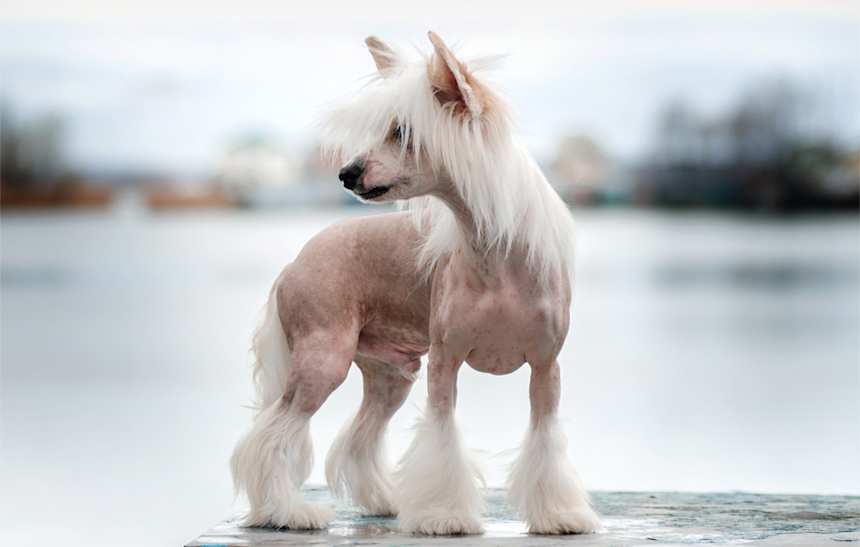
The Chinese Crested is a small hairless toy breed with tufts of hair on its head, feet, and tail. Weighing
8 to 12 lbs, it tolerates heat well but sunburns easily. Loving and playful, it suits owners in warm apartments who
want a lap dog that barely sheds.
Bare skin covers most of their body, with a soft “powderpuff” crest of hair on the head that looks almost styled
on purpose.
People expect hairless dogs to look intimidating. Cresteds do the opposite — most owners describe them as
oddly, undeniably charming once you get past the first glance.
“Strangers stop us on walks constantly. She’s basically famous in our building now.”
— Nadia H., Chinese Crested owner for 3 years
- Near-zero shedding, good for allergies
- Small size fits tight apartments
- Affectionate, thrives on lap time
- Sunburns fast without protection
- Skin needs regular moisturizing
- Prone to separation anxiety
Best for: Apartment dwellers · Allergy-prone households · Owners wanting a lap dog
Check out more hypoallergenic apartment dog breeds
Comparison Table — Tropical-Ready Dog Breeds Side by Side
These ten breeds range from a 3 lb Chihuahua to an 85 lb Ridgeback, but they all share short, single-layer
coats built to release heat. Use this table to compare size, energy, and grooming at a glance before deciding which
one matches your home and daily schedule.
| Breed | Weight | Energy | Grooming | Best Home |
|---|---|---|---|---|
| Basenji | 22–24 lbs | High | Low | Apartment |
| Chihuahua | 3–6 lbs | Moderate | Low | Any home |
| Vizsla | 45–65 lbs | Very high | Low | House + yard |
| Dalmatian | 45–70 lbs | Very high | Low | House + yard |
| Doberman Pinscher | 60–100 lbs | High | Low | House + yard |
| Rhodesian Ridgeback | 70–85 lbs | High | Low | Large home |
| Whippet | 25–40 lbs | Moderate | Very low | Apartment or house |
| Thai Ridgeback | 35–75 lbs | High | Low | House + yard |
| Xoloitzcuintli | 10–55 lbs | Moderate | Low (skin care) | Any home |
| Chinese Crested | 8–12 lbs | Moderate | Moderate (skin care) | Apartment |
Which Tropical-Climate Dog Breed Is Right for You?
Your best match depends on your living space and your daily time for exercise, not just which breed
looks appealing. A small apartment calls for a low-energy breed. A house with a yard can support a high-energy
runner. Skin care needs also matter if you’re drawn to a hairless breed.
Here’s how to match yourself to a breed on this list:
- If you live in a small apartment with limited outdoor access → the Chihuahua or Chinese Crested fits best.
- If you’re active and have a fenced yard → the Vizsla or Dalmatian will thrive with you.
- If you want a quiet, low-maintenance dog → the Basenji or Whippet suits your pace.
- If you already live in a genuinely humid, tropical region → the Thai Ridgeback or Xoloitzcuintli was practically
built for it.
This article covers breed traits that suit hot, humid climates in general. If your city has extreme, sustained
heat above 100°F, you may also need to talk to a vet about cooling gear and indoor time limits — that’s beyond
coat type alone.
Care Essentials Every Tropical-Climate Dog Owner Should Know
Even a heat-tolerant breed needs support in extreme conditions. Fresh water, shaded rest areas, and
cooler exercise windows matter for every dog on this list. Most experts agree that early morning or evening walks
prevent the majority of heat-related emergencies in warm climates.
Walk your dog before 8 a.m. or after 6 p.m. Pavement can burn paws even
when the air feels tolerable to you.
So what does that mean day to day? Fill multiple water bowls around the house, not just one. As a result, your
dog always has access even if one bowl tips over or runs dry.
Fans and tiled floors help hairless and short-coated breeds cool down between walks. In other words, you don’t
need central air conditioning — just airflow and shade.
What Most People Get Wrong About Heat-Tolerant Dog Breeds
Many owners assume a short-coated dog can handle any amount of heat without help. That’s not accurate.
Heat tolerance means a breed copes better than others — not that it’s immune to heatstroke. Every dog still needs
water, shade, and rest during peak heat hours, no matter how well-suited its coat is.
Another common mix-up: assuming hairless breeds don’t need sun protection. In other words, less fur means more
exposed skin — sunscreen matters more for them, not less.
Heavy panting, drooling, and stumbling are early heatstroke signs in any
breed. Move your dog to shade and call a vet immediately if you see them.
Mistakes New Owners Make in Hot, Humid Climates (And How to Avoid Them)
The most common mistake is picking a breed by looks or popularity instead of coat type. Close behind
that is exercising dogs during peak afternoon heat, when pavement and air temperatures both spike. Both mistakes
are easy to avoid once you know what to check before and after bringing your dog home.
- Choosing a thick double-coated breed because it looked cute online.
- Shaving a double coat to “help” with heat — this removes sun protection instead.
- Skipping shade breaks during long midday walks.
- Forgetting sunscreen on hairless or light-skinned breeds.
- Leaving dogs in parked cars, even briefly, in warm weather.
Frequently Asked Questions
What is the best dog breed for a tropical, humid climate?
The Basenji and Thai Ridgeback rank among the best, since both breeds developed naturally in hot, humid regions.
Their short coats and lean bodies release heat efficiently, and they need minimal grooming in humid conditions.
Can large dogs live comfortably in tropical climates?
Yes, if the coat type is right. Large breeds like the Rhodesian Ridgeback and Doberman Pinscher have short, single
coats built for heat. Large dogs with thick double coats, like Huskies, struggle far more in the same weather.
Are hairless dog breeds good for hot weather?
Hairless breeds like the Xoloitzcuintli and Chinese Crested handle heat very well, since they have no coat to
trap warmth. They do need sunscreen and shade, since bare skin sunburns faster than fur-covered skin.
Which dog breeds should I avoid in a tropical climate?
Avoid flat-faced breeds like Bulldogs, Pugs, and Boston Terriers, along with thick double-coated breeds like
Huskies and Chow Chows. Both struggle to cool down efficiently and face higher heatstroke risk in humidity.
Do short-coated dogs still need grooming in hot climates?
Yes, but far less than long-coated breeds. Weekly brushing removes loose hair and distributes natural oils.
Hairless breeds need skin care instead, including regular moisturizer and sunscreen during outdoor time.
Final Thoughts
The right tropical-climate breed comes down to coat type first, energy level second. A Basenji and a Vizsla can
both handle the same heat, but they need very different homes to thrive in it. Match the breed to your space and
your schedule, not just your favorite look.
One thing to do right now: before you commit to any breed on this list, check your local
climate’s average summer humidity — it changes how much shade and water your future dog will need day to day.

Thomas Cutter is a lifelong dog owner and the founder of FindOutAboutDogs.com. With over 10 years of hands-on experience owning multiple breeds, Thomas created this site to provide honest, research-based dog advice that real owners can actually trust.
