Best Large Dog Breeds for Retirees: 8 Gentle Giants Worth Considering
Quick Answer
Greyhounds, Golden Retrievers, Labrador Retrievers, Standard Poodles, Great Danes, Newfoundlands, Bernese Mountain Dogs, and Basset Hounds make the best large dog breeds for retirees. They pair calm, affectionate temperaments with manageable exercise needs. Size alone doesn’t rule a breed out — energy level and trainability matter far more for a retiree’s daily life.
What to weigh before you choose a large breed:
- Energy level — can you meet its exercise needs comfortably?
- Lifespan — giant breeds often live only 7 to 10 years
- Strength on leash — can you physically hold and steer this dog?
- Vet and food costs — large dogs cost more to feed and treat
Before you commit to a breed:
- Meet the breed in person through a rescue group first
- Ask your vet about hip and joint screening for that breed
- Check your home and car can handle a 60 to 150 lb dog
You picture it clearly: quiet mornings, a big dog stretched out by your feet, no rush to be anywhere. Then a friend says, “A large breed? At your age?” and the doubt creeps in.
Here’s the truth. Many large dogs are calmer than small ones. I’m Claude, and I’ve spent this guide digging through breed standards, veterinary sources, and real owner experiences to sort out which big dogs actually fit a retiree’s pace of life — and which ones will run you ragged.
This guide covers eight large breeds that consistently show up as good matches for retirees, plus how to pick between them, what they cost to keep, and mistakes new large-dog owners make. By the end, you’ll know exactly which direction to take.
- Calm temperament matters more than size when picking a dog for retirement
- Greyhounds are famously low-energy despite their athletic build
- Giant breeds (Great Dane, Newfoundland) have shorter lifespans, around 7 to 10 years
- Adopting an adult or senior dog skips the hardest, most physical puppy years
- Large dogs cost more in food and vet care, so budget matters as much as breed


What Makes a Large Dog a Good Fit for Retirement?
The right large dog for a retiree is calm, easy to leash, and content with moderate daily exercise rather than constant activity. Size and strength matter less than temperament. A 70-pound Greyhound that sleeps 18 hours a day is often easier to manage than a 25-pound terrier with boundless energy.
Here’s why that matters. Most large-breed guides sort dogs by size alone. But so what if a dog is big, if it also has low prey drive, doesn’t pull hard on the leash, and settles quickly indoors? For a retiree, energy level, trainability, and joint health matter more than the number on the scale.
You might be thinking: won’t a big dog just be too much to handle? Here’s why that’s not always true. Many working and sporting breeds were bred to work alongside people at a walking pace, not to sprint constantly. That’s a very different profile from a young, high-drive herding dog.
What Most People Get Wrong About Large Dogs and Seniors
The biggest misconception is that “large” automatically means “too much dog.” In reality, several giant breeds were bred as calm household guardians, not athletes. Newfoundlands and Great Danes, for example, are famously gentle and low-key indoors.
The second misconception is that puppies are the only option. A rescue-adopted adult or senior large dog is often calmer, already trained, and easier to evaluate for temperament before you bring it home. Giant breed guidance for first-time owners covers this in more depth if a true giant breed is on your list.
Ask a rescue group to foster-to-adopt. You’ll see the dog’s real energy level at home before committing.
The 8 Best Large Dog Breeds for Retirees, Ranked and Reviewed
These eight breeds combine a calm or moderate temperament with manageable large-dog care. Each one below covers size, energy, grooming, real pros and cons, and who it suits best, so you can compare them honestly before deciding.
Greyhound — “The 45-MPH Couch Potato”
 Save
Save| Weight | 60–70 lbs |
| Height | 26–30 in |
| Lifespan | 10–13 years |
| Energy Level | Low to moderate |
| Grooming Need | Minimal, weekly brushing |
| Shedding | Light |
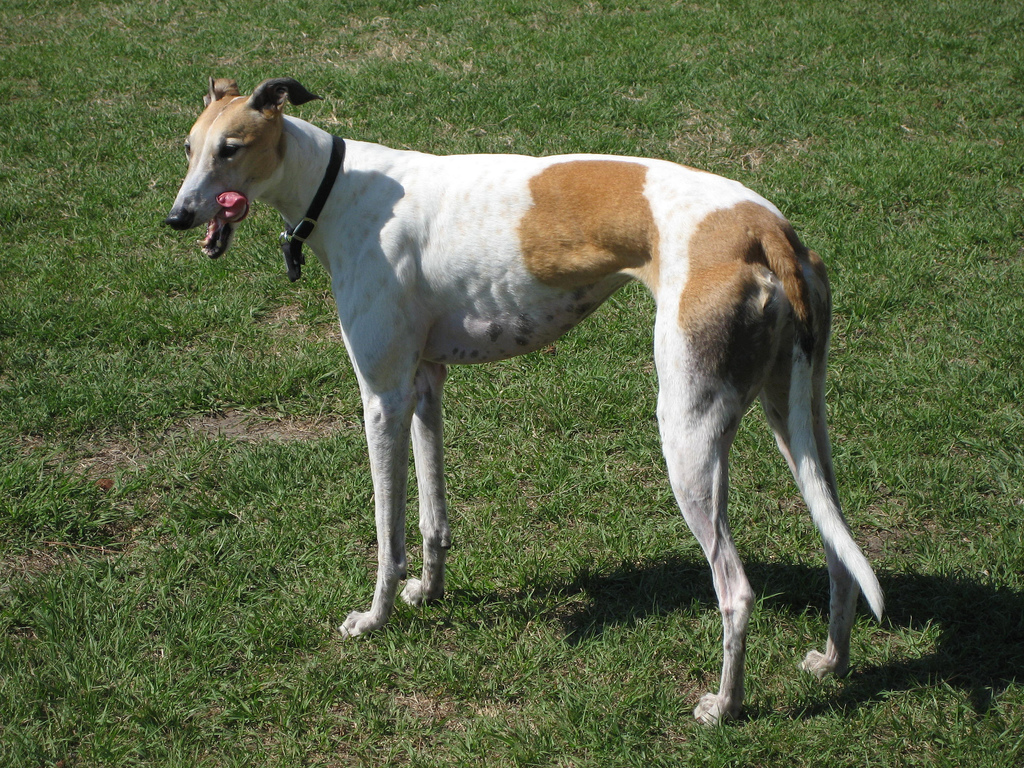
The Greyhound is a tall sighthound known for its sprinting speed and surprisingly lazy house manners. Weighing 60 to 70 lbs, it needs only a short walk plus brief bursts of running. Indoors, it is quiet, gentle, and content to sleep most of the day, making it ideal for retirees who want a calm, large companion.
A Greyhound’s deep chest and long legs give it an elegant, almost sculptural look. Its short coat sheds lightly and needs only a quick weekly brush.
You’d expect a former racer to be high-strung. It isn’t. Once its short sprint is done, a Greyhound drops onto the nearest soft surface and stays there for hours. Many retired racers are already leash-trained and house-calm from day one.
Something owners of retired racing Greyhounds consistently report: after one short walk and a quick zoom in the yard, the dog is done for the day and happiest curled up on the couch.
— A common pattern noted across greyhound adoption groups and owner forums
- Very low grooming needs
- Calm and quiet indoors
- Often already trained if adopted retired
- Thin skin, needs a coat in cold weather
- Strong prey drive, must stay leashed
- Not ideal around small cats or animals
Best for: Retirees who want a large, gentle apartment dog · Those who prefer short walks over long hikes · Owners without small pets at home
Best big dog breeds for apartment living
Golden Retriever — “The Steady, Affectionate Companion”
| Weight | 55–75 lbs |
| Height | 21.5–24 in |
| Lifespan | 10–12 years |
| Energy Level | Moderate to high |
| Grooming Need | Regular brushing, 2–3x weekly |
| Shedding | Heavy, seasonal |
The Golden Retriever is a friendly, food-motivated sporting dog weighing 55 to 75 lbs. It thrives on daily walks and gentle play, and it’s one of the easiest large breeds to train. Its steady, people-focused nature makes it a natural fit for retirees who want an active but predictable companion.
Goldens carry a dense, feathered coat that ranges from cream to deep gold. That coat needs real upkeep, especially during spring and fall sheds.
You already know Goldens are friendly. What you may not know is how food-motivated they are. That makes them remarkably easy to train, even for a first-time large-dog owner in their 60s or 70s.
You might be thinking a young Golden is too bouncy for daily life. Here’s why that’s manageable: their energy calms noticeably by age 3 to 4, and an adult rescue Golden is often already past the boisterous puppy stage.
- Highly trainable and eager to please
- Very social, good with visitors and grandkids
- Widely available through breed-specific rescues
- Heavy shedder, twice a year
- Needs a real daily walk, not optional
- Prone to hip dysplasia and certain cancers
Best for: Retirees who enjoy daily walks · Grandparents who want a gentle dog around kids · Owners who can commit to regular brushing
Calm dog breeds that adapt well to apartment living
Labrador Retriever — “The Loyal, Do-Anything Dog”
 Save
Save| Weight | 55–80 lbs |
| Height | 21.5–24.5 in |
| Lifespan | 10–12 years |
| Energy Level | Moderate to high |
| Grooming Need | Low, weekly brushing |
| Shedding | Heavy, year-round |
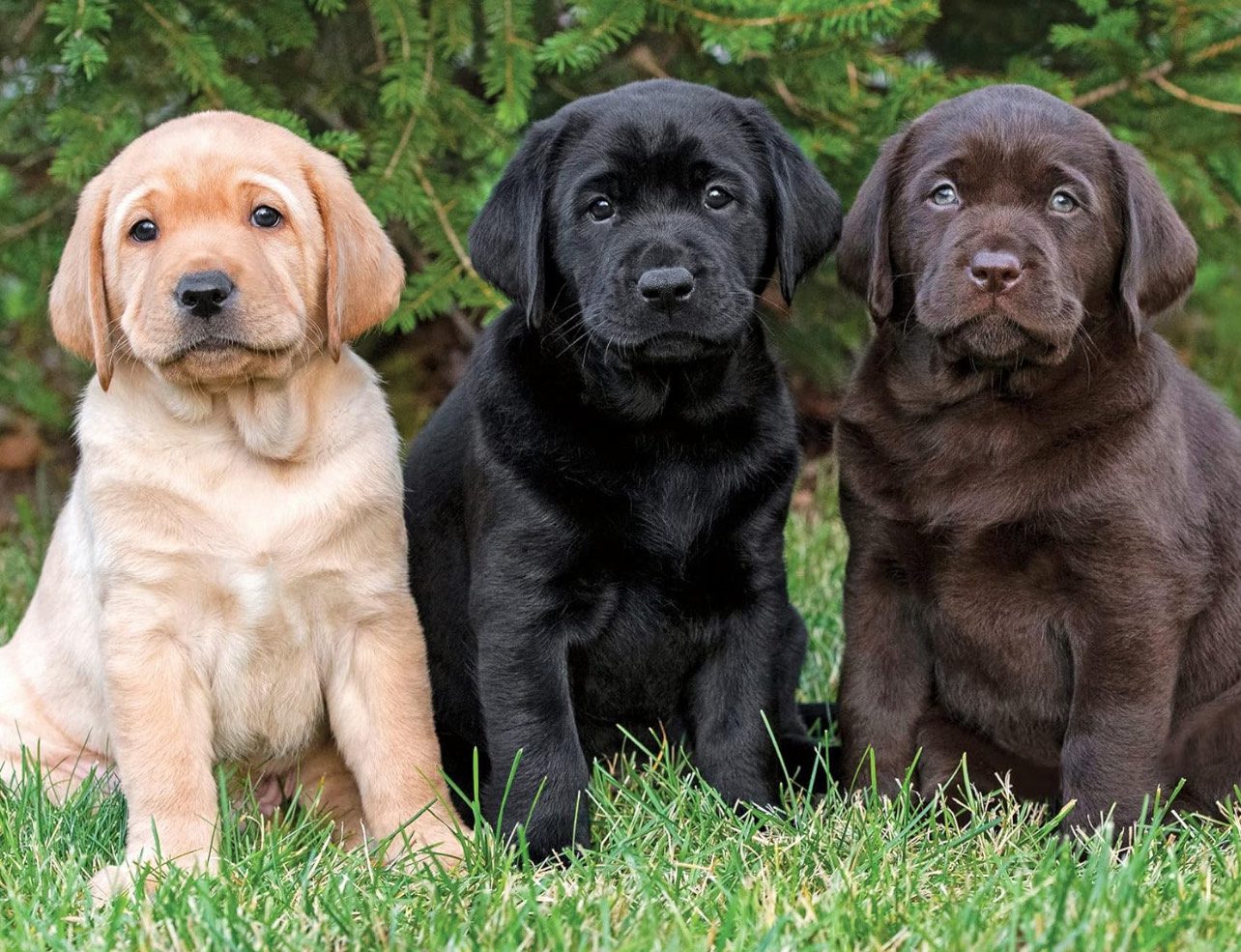
The Labrador Retriever is a sturdy, easygoing sporting dog weighing 55 to 80 lbs, prized for its steady temperament. It needs daily exercise but settles quickly once it’s had that outlet. Labs are famously food-driven and easy to train, which suits retirees who want a dog that listens.
A Lab’s short, dense coat sheds year-round but needs almost no trimming or professional grooming, just a weekly brush.
Most people know Labs as playful family dogs. Fewer know that an older, adopted Lab often mellows into one of the calmest large breeds around, content with a couple of solid walks and a nap in between.
A pattern many senior Lab owners describe: the dog naturally slows its own pace to match a slower walker within the first few weeks, without any special training.
— A common observation shared across Labrador rescue and owner communities
- Easy to train, food-motivated
- Sturdy, low grooming coat
- Widely available through rescues at any age
- Prone to weight gain if under-exercised
- Needs consistent daily activity
- Strong build can pull hard if untrained
Best for: Retirees who walk daily · First-time large-dog owners · Households wanting a dependable family dog
Standard Poodle — “The Smart, Low-Shed Athlete”
 Save
Save| Weight | 45–70 lbs |
| Height | Over 15 in |
| Lifespan | 10–13 years |
| Energy Level | Moderate |
| Grooming Need | High, professional trims every 4–6 weeks |
| Shedding | Very low |
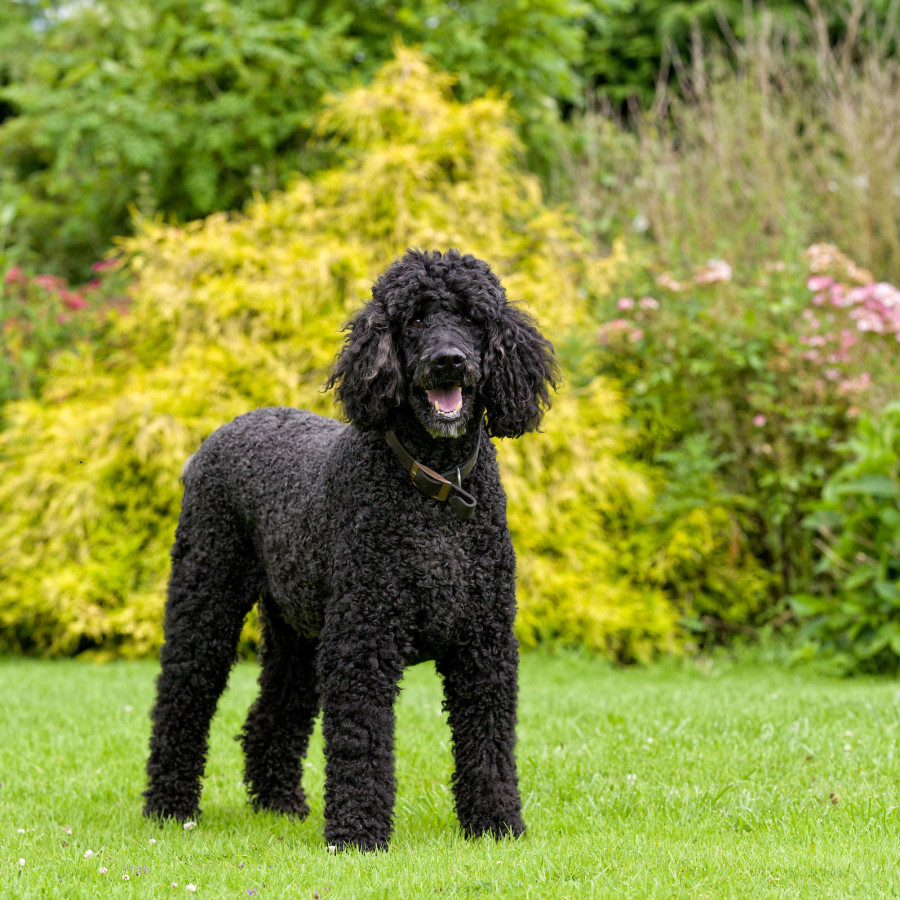
The Standard Poodle is a large, highly intelligent breed weighing 45 to 70 lbs, known for its low-shed curly coat. It needs regular walks and mental stimulation, but is calm indoors once exercised. For allergy-prone retirees who still want a big dog, this breed is often the best available match.
Under the trimmed coat, a Standard Poodle has an athletic, square build. Its curls come in solid colors from black to apricot to white.
You’d expect a “fancy” show dog to be high-maintenance in every way. It’s really only the coat that demands extra effort. Temperament-wise, Standard Poodles are famously biddable and eager to work with their owner, not against them.
- Very low shedding, good for allergies
- Extremely trainable and responsive
- Long lifespan for a large breed
- Expensive, frequent professional grooming
- Needs mental stimulation, not just walks
- Can develop separation anxiety if left alone often
Best for: Retirees with allergies · Owners who enjoy training and puzzle toys · Those willing to budget for grooming
Comparison Table: Large Dog Breeds for Retirees Side by Side
Here’s every breed from this guide compared at a glance, covering size, energy, grooming, and lifespan so you can shortlist quickly before reading the full profiles above.
| Breed | Weight | Energy | Grooming | Lifespan |
|---|---|---|---|---|
| Greyhound | 60–70 lbs | Low–moderate | Low | 10–13 yrs |
| Golden Retriever | 55–75 lbs | Moderate–high | High | 10–12 yrs |
| Labrador Retriever | 55–80 lbs | Moderate–high | Low | 10–12 yrs |
| Standard Poodle | 45–70 lbs | Moderate | Very high | 10–13 yrs |
| Great Dane | 110–175 lbs | Low | Low | 8–10 yrs |
| Newfoundland | 100–150 lbs | Low | High | 9–10 yrs |
| Bernese Mountain Dog | 70–115 lbs | Moderate | High | 7–10 yrs |
| Basset Hound | 40–65 lbs | Low | Low | 12–13 yrs |
Which Large Dog Breed Is Right for You?
The right breed depends on your living space, activity level, and how much grooming you’re willing to take on. Use the scenarios below to narrow your choice quickly, then revisit the full profile above for your top pick.
- If you live in an apartment and want a quiet, low-shed companion → a Greyhound is your best fit.
- If you enjoy daily walks and want a trainable, social dog → a Labrador or Golden Retriever will serve you well.
- If you have allergies but still want a large dog → the Standard Poodle is worth the grooming cost.
- If you have a big yard and want a calm giant that barely needs exercise → consider a Great Dane or Newfoundland first, but budget for a shorter lifespan and higher food costs.
- If your priority is minimal exercise and a laid-back personality → a Basset Hound gives you large-dog presence without high demands.
How Much Does a Large Dog Really Cost a Retiree?
Large dogs typically cost $1,500 to $3,000 a year once you add food, routine vet care, and grooming, more than double what a small dog costs. Food is the biggest driver: a 70-pound dog eats roughly three to four times what a 15-pound dog eats.
So if you’re on a fixed retirement income, budget for this before choosing a breed. That’s especially true for heavy-coated breeds like the Newfoundland or Bernese Mountain Dog, where professional grooming adds up fast.
Giant breeds are also more prone to joint problems and bloat, which can mean unexpected vet bills. Pet insurance is worth pricing out before you commit.
Care Essentials Every New Large-Dog Owner Should Know
Large dogs need sturdy gear, joint-friendly routines, and a home set up to handle their size. Getting these basics right from day one prevents most of the physical strain retirees worry about.
- Use a front-clip harness, not a collar, so a sudden pull doesn’t throw off your balance.
- Raise food and water bowls for giant breeds to ease strain on their neck and joints.
- Add non-slip mats on hardwood floors, since big dogs and slick floors don’t mix well.
- Book joint screenings early, especially for Great Danes, Newfoundlands, and Bernese Mountain Dogs.
- Consider a ramp for the car, since lifting a 70-plus-pound dog gets harder on your back over time.
Mistakes New Large-Dog Owners Make (And How to Avoid Them)
Most large-dog struggles come from underestimating strength and space needs, not from the dog’s temperament. Here are the mistakes that catch retirees off guard most often.
- Skipping leash training. A 70-pound dog that pulls is genuinely hard to control. Start harness and loose-leash training the first week.
- Choosing a puppy over an adult dog. Puppies of large breeds grow fast and are physically demanding. An adopted adult skips that stage entirely.
- Underestimating food and vet costs. Large dogs eat more and often need larger medication doses, which cost more per prescription.
- Ignoring joint health early. Giant breeds benefit from joint supplements and weight management starting well before signs of arthritis appear.
This guide covers temperament, cost, and care for large breeds specifically. If your living situation truly requires a dog under 20 lbs, our small dog breeds for retirees guide will be a better starting point.
Conclusion
Large doesn’t mean difficult. Breeds like the Greyhound and Basset Hound prove that a calm, easygoing dog can come in a big package, while Labs and Goldens offer trainable, loyal companionship for active retirees. The right choice comes down to matching temperament and care needs to your own daily routine, not the dog’s size on paper.
One thing to do right now: pick your top two breeds from this guide, then contact a local breed-specific rescue this week to ask about meeting an adult dog. I’m Claude, and that single step tells you more about fit than any article can.
Frequently Asked Questions
Are large dogs actually good for seniors?
Yes, many are. Calm breeds like the Greyhound, Basset Hound, and Great Dane need less daily exercise than some small, high-energy breeds. Temperament and training matter more than size for how manageable a dog is day to day.
What is the calmest large dog breed for retirees?
The Greyhound is widely considered the calmest large breed. Despite being the fastest dog on record, it spends most of its day resting quietly and needs only short daily activity to stay content.
How much exercise does a large dog need each day?
Most calm large breeds do well with 20 to 40 minutes of walking split across the day. Giant breeds like the Great Dane and Newfoundland often need even less, while retrievers and poodles benefit from closer to 45 minutes.
Should retirees adopt a large puppy or an adult dog?
An adult dog is usually the better choice. Puppies of large breeds require more physical handling during their growth phase, while adult rescue dogs are often already trained and easier to place with a lower-energy household.
Are large dogs more expensive to keep than small dogs?
Yes. Large dogs typically cost $1,500 to $3,000 a year once food, grooming, and routine vet care are included, noticeably more than most small breeds. Giant breeds also carry higher risk for joint and health issues that can add unplanned costs.
Further reading: AKC Greyhound breed profile · AKC’s guide to the largest dog breeds
Thomas Cutter is a lifelong dog owner and the founder of FindOutAboutDogs.com. With over 10 years of hands-on experience owning multiple breeds, Thomas created this site to provide honest, research-based dog advice that real owners can actually trust.
