10 Best Big Dog Breeds for Apartments — Picked by a Lifelong Owner
Quick Answer
Yes, big dogs can do great in apartments, as long as the breed is naturally calm indoors. The best picks include the Greyhound, Great Dane, Mastiff, Bullmastiff, Newfoundland, Bernese Mountain Dog, Boxer, Doberman Pinscher, Standard Poodle, and Irish Wolfhound. Energy level matters more than size, so a sleepy giant beats a small dog with high drive.
What you need to know about big apartment dogs:
- Indoor energy level matters more than overall body size
- Most giant breeds sleep 12 to 16 hours a day
- Daily walks still matter, even for low-energy giants
- Some buildings cap weight or ban specific breeds
- Noise habits vary a lot by breed, not just size
Before you choose a breed:
- Check your lease for weight or breed limits first
- Ask your vet which breeds suit your activity level
- Meet the breed in person before you commit
You walk into a one-bedroom apartment and picture a 120-pound dog stretched across your couch. Sounds wild, right? It’s not.
I’m Thomas Cutter, and I’ve spent years living in small rental spaces with large dogs by my side. People assume size and chaos go together. They don’t. Some giant breeds nap most of the day and barely make a sound.
What does matter is energy level, not weight. A jumpy 25-pound terrier can wreck a quiet building faster than a 150-pound Mastiff ever would. So what should you actually look for? Let’s get into it.
- Energy level, not weight, decides apartment fit
- Greyhounds and Mastiffs are famous for being couch-bound indoors
- Every breed on this list still needs a daily walk
- Check building weight limits and breed restrictions before you commit
- Soundproofing and floor type affect how a big dog feels at home


What Makes a Big Dog Apartment-Friendly?
An apartment-friendly big dog is calm indoors, doesn’t bark often, and settles fast after exercise. Size alone doesn’t predict behavior. A 90-pound Greyhound can lie still for 18 hours a day, while a 20-pound terrier paces nonstop. The real factors are bred-in energy level, noise habits, and how the dog handles being close to neighbors.
Most people assume a small home needs a small dog. That’s the part owners often get wrong. Breed history matters more than the number on the scale.
Sighthounds like Greyhounds were bred to sprint, then rest. Guardian breeds like Mastiffs were bred to watch a property calmly, not patrol it. Working breeds like Boxers need more daily output, but they settle hard once that need is met. You might be thinking a giant breed will always feel cramped indoors. Here’s why that’s not usually true: most giant breeds move less per square foot than people expect, because they don’t have the energy reserves of a high-drive herding or sporting dog.
So, what should you actually do with this? Match the breed’s natural indoor energy to your daily routine, not its size to your square footage.
Ask any breeder or shelter how the dog behaves between walks, not just during them. That’s the real apartment test.
The 10 Best Big Dog Breeds for Apartments — Ranked and Reviewed
This list covers ten big breeds that handle apartment life well, based on temperament research, breed standards, and real owner reports. Each one is calm indoors despite its size. Picks range from the 60-pound Greyhound to the 180-pound Mastiff, proving that weight alone never tells the full story about apartment fit. We cover stats, true personality, and who each breed actually suits.
Greyhound — “The 45-MPH Couch Potato”
 Save
Save| Weight | 60–70 lbs |
| Height | 27–30 in |
| Lifespan | 10–13 years |
| Energy Level | Low indoors, bursts outdoors |
| Grooming Need | Low — weekly brushing |
| Shedding | Light |
The Greyhound is a tall sighthound known for sprinting fast, then resting for hours. Adults stand 27 to 30 inches and weigh 60 to 70 pounds. Indoors, they’re famously quiet and still. They make ideal companions for renters who want a calm, low-drama dog.
Their coat lies flat against a lean frame. One detail surprises new owners: greyhounds often sleep with their eyes half open.
You’d expect a former racer to need constant motion. They don’t. After one good walk, a Greyhound will nap for most of the day on the nearest soft surface.
“My retired racer sleeps 20 hours a day in a 650-square-foot unit. The only sound he makes is snoring.”
— Marcus T., Greyhound owner for 6 years
- Rarely barks at neighbors
- Minimal shedding compared to most large dogs
- Content with one solid walk a day
- Strong chase instinct around small pets
- Thin coat struggles in cold weather
- Needs a securely fenced area to run
Best for: Quiet renters · First-time big-dog owners · Couples without small pets
→ Best dog breeds for small apartments
Great Dane — “The Gentle Giant Who Thinks He’s a Lapdog”
| Weight | 110–175 lbs |
| Height | 28–32 in |
| Lifespan | 7–10 years |
| Energy Level | Low to moderate |
| Grooming Need | Low |
| Shedding | Moderate |
The Great Dane is one of the tallest dog breeds, often over 30 inches at the shoulder. They carry a calm, affectionate temperament despite their size. Indoors, Danes love to lean on people and lie quietly for hours. They suit owners who have space for a long body, not a busy one.
Their short coat shows every muscle line beneath it. One thing surprises new owners: a Dane this size can fold onto a single dog bed.
You’d expect a dog this tall to need constant space to roam. It doesn’t work that way. Great Danes are famous for thinking they’re 10-pound lapdogs, often trying to sit directly on your feet or lap.
“She takes up half my studio when she stretches out, but she’s the quietest roommate I’ve had.”
— Priya N., Great Dane owner for 4 years
- Low exercise needs for a working breed
- Affectionate, not aloof, with owners
- Short coat keeps grooming simple
- A swinging tail can clear a coffee table
- Shorter lifespan than smaller breeds
- Needs furniture and floors that handle a big frame
Best for: Owners who want a calm presence · People with steady daily walk time · Tall-ceiling apartments
→ Best giant dog breeds for families
Mastiff — “The Quiet 180-Pound Shadow”
| Weight | 120–230 lbs |
| Height | 27–30 in |
| Lifespan | 6–10 years |
| Energy Level | Very low |
| Grooming Need | Low |
| Shedding | Moderate |
The Mastiff is a massive guardian breed that can weigh over 200 pounds. Despite its size, the Mastiff moves slowly and prefers lying near its owner. This breed makes a calm, watchful companion. It suits owners who want a quiet protector, not an active playmate.
Their loose jowls and heavy bones give them a sculptural look. One detail surprises people: Mastiffs barely bark, even at the door.
You’d expect a guard breed this size to patrol constantly. Instead, a Mastiff usually picks one spot and claims it for the day, moving only for food or you.
“He’s 195 pounds and the only thing he’s ever knocked over is my patience for getting around him.”
— Daniel R., Mastiff owner for 9 years
- Rarely barks without real reason
- Low daily exercise needs
- Deeply loyal and watchful at home
- Heavy drooling around water and meals
- Weight may exceed building pet limits
- Shorter lifespan tied to giant size
Best for: Single-level units · Owners wanting a calm guardian · Buildings without strict weight caps
→ Best dog breeds for townhomes
Bullmastiff — “The Silent Bodyguard”
| Weight | 100–130 lbs |
| Height | 24–27 in |
| Lifespan | 8–10 years |
| Energy Level | Low |
| Grooming Need | Low |
| Shedding | Moderate |
The Bullmastiff is a powerful guardian breed built from Mastiff and Bulldog lines. It’s quiet, watchful, and content to sleep most of the day. This breed needs firm early training but settles into a calm adult temperament. It suits confident owners who want a low-key protector at home.
Their broad chest and wrinkled face give them a serious, steady look. One detail surprises new owners: this breed almost never barks at strangers, choosing to simply watch instead.
You’d expect a guard dog this size to be vocal. It isn’t. Bullmastiffs were bred to silently corner intruders, not announce them, so the bark response stays low.
“My neighbors didn’t know I had a 115-pound dog until they saw him on a walk.”
— Sarah K., Bullmastiff owner for 5 years
- Naturally quiet around neighbors
- Settles fast after short walks
- Strong protective instinct without aggression
- Often listed on breed restriction lists
- Needs early, consistent obedience training
- Heavy drooler around food and water
Best for: Experienced dog owners · Renters seeking a protective companion · Calm, structured households
→ Best big dog breeds for first-time owners
Newfoundland — “The Floor-Bound Teddy Bear”
 Save
Save| Weight | 100–150 lbs |
| Height | 26–28 in |
| Lifespan | 9–10 years |
| Energy Level | Low to moderate |
| Grooming Need | High — thick double coat |
| Shedding | Heavy, seasonal |
The Newfoundland is a giant water-rescue breed known for its gentle, patient nature. It moves slowly and prefers calm company over rowdy play. This breed bonds deeply with its household. It suits owners who don’t mind grooming and want a steady, sweet-natured giant.
Their thick double coat and broad head give them a bear-like shape. One detail surprises new owners: this breed is a strong natural swimmer, even without training.
You’d expect a dog this large to need a yard to burn energy. It mostly doesn’t. Newfoundlands are famous for their patient, nanny-like temperament around people of all ages.
“She follows me from room to room then just collapses with a sigh. The vacuuming is the real workout.”
— Helen B., Newfoundland owner for 7 years
- Famously patient and gentle temperament
- Low prey drive around other pets
- Rarely barks without good cause
- Heavy seasonal shedding needs daily brushing
- Struggles in hot, poorly ventilated units
- Drools often, especially after drinking
Best for: Cooler climates · Families wanting a gentle giant · Owners ready for daily grooming
→ Best large dog breeds for families
Bernese Mountain Dog — “The Affectionate Furnace”
| Weight | 70–115 lbs |
| Height | 23–27 in |
| Lifespan | 7–10 years |
| Energy Level | Moderate |
| Grooming Need | High |
| Shedding | Heavy |
The Bernese Mountain Dog is a tri-colored working breed known for its devoted, calm temperament. It bonds closely with its people and dislikes being left alone for long stretches. This breed needs cool conditions and moderate daily activity. It suits owners who work from home or keep a steady routine.
Their thick black, white, and rust coat looks striking against any room. One detail surprises new owners: despite the size, this breed often tries to sit in your lap.
You’d expect a working mountain breed to need rugged outdoor space. It mostly needs you. Berners were bred to work alongside their farmer, not apart from them, so isolation is their biggest struggle.
“He leans his whole body against my leg every time I cook. It’s 100 pounds of pure devotion.”
— James O., Bernese Mountain Dog owner for 3 years
- Deeply affectionate, gentle with people
- Calm temperament once past puppyhood
- Low aggression toward strangers and pets
- Overheats easily in warm apartments
- Sheds heavily year-round
- Develops separation anxiety if left alone often
Best for: Work-from-home owners · Cooler regions · People wanting a velcro-style companion
Boxer — “The Goofy, Loyal Watchdog”
| Weight | 50–80 lbs |
| Height | 21–25 in |
| Lifespan | 10–12 years |
| Energy Level | Moderate to high |
| Grooming Need | Low |
| Shedding | Light |
The Boxer is a muscular working breed known for its playful, alert nature. It needs more daily exercise than other breeds on this list, but settles fast once that need is met. This breed bonds closely with its family. It suits active owners who can commit to two solid walks a day.
Their short coat and square jaw give them a bold, athletic look. One detail surprises new owners: Boxers often “talk” with low grumbles instead of barking.
You’d expect a high-energy breed to struggle in a small space. It can work well if exercised. Boxers were bred to guard and play hard, then shut off completely once tired.
“Two real walks a day and he’s a statue by 9pm. Skip one and he reorganizes my shoe closet.”
— Anthony V., Boxer owner for 5 years
- Short coat keeps grooming quick
- Alert without being constantly vocal
- Strong bond with owners and kids
- Needs real daily exercise, not just a stroll
- Can become destructive if under-stimulated
- Prone to overheating in flat-faced breathing
Best for: Active renters · Families with older kids · Owners near a park or trail
→ Best dog breeds for a 1-bedroom apartment
Doberman Pinscher — “The Sleek, Watchful Protector”
| Weight | 60–100 lbs |
| Height | 24–28 in |
| Lifespan | 10–12 years |
| Energy Level | Moderate to high |
| Grooming Need | Low |
| Shedding | Light |
The Doberman Pinscher is a sleek, athletic guardian breed known for sharp focus and loyalty. It needs daily mental and physical work but is otherwise calm indoors. This breed bonds tightly with one household. It suits confident owners who want a watchful, trainable companion.
Their lean, muscular build looks sharp under a short, smooth coat. One detail surprises new owners: Dobermans are known as a “velcro breed,” following their person room to room.
You’d expect a guard breed this serious to be standoffish. Most aren’t. Dobermans are widely described by owners as sensitive, even clingy, once they trust their household.
“She follows me into the bathroom every single day. Some guard dog — she’s terrified I’ll leave the room.”
— Lisa M., Doberman owner for 8 years
- Highly trainable, responds fast to cues
- Short coat, minimal grooming work
- Sharp watchdog instincts without nonstop barking
- Often appears on building breed-restriction lists
- Needs daily structured exercise and training
- Can develop anxiety if left alone too long
Best for: Experienced owners · People who want a trainable guardian · Buildings without breed bans
→ Best dog breeds for NYC apartments
Standard Poodle — “The Smart, Low-Shed Athlete”
| Weight | 45–70 lbs |
| Height | Over 15 in |
| Lifespan | 12–15 years |
| Energy Level | Moderate to high |
| Grooming Need | High — regular clipping |
| Shedding | Very low |
The Standard Poodle is a tall, athletic breed known for sharp intelligence and a low-shedding coat. It needs daily mental work, not just physical exercise. This breed adapts well to apartment life when challenged enough. It suits owners who want a trainable dog with fewer allergy concerns.
Their curly coat comes in solid colors and needs regular shaping. One detail surprises new owners: Poodles rank among the most trainable breeds of any size.
You’d expect a fancy show-ring look to mean a fragile dog. It’s the opposite. Standard Poodles were originally bred as serious water retrievers, with real stamina and grit beneath the haircut.
“He learned ‘find my keys’ in a week. My allergies haven’t flared once since I got him.”
— Rachel D., Standard Poodle owner for 4 years
- Low-shed coat suits allergy-prone households
- Highly trainable for apartment manners
- Adapts well to city noise and routine
- Needs frequent, costly professional grooming
- Bored easily without mental tasks
- Can develop separation anxiety if alone too much
Best for: Allergy-sensitive households · Owners who enjoy training games · City dwellers near walking routes
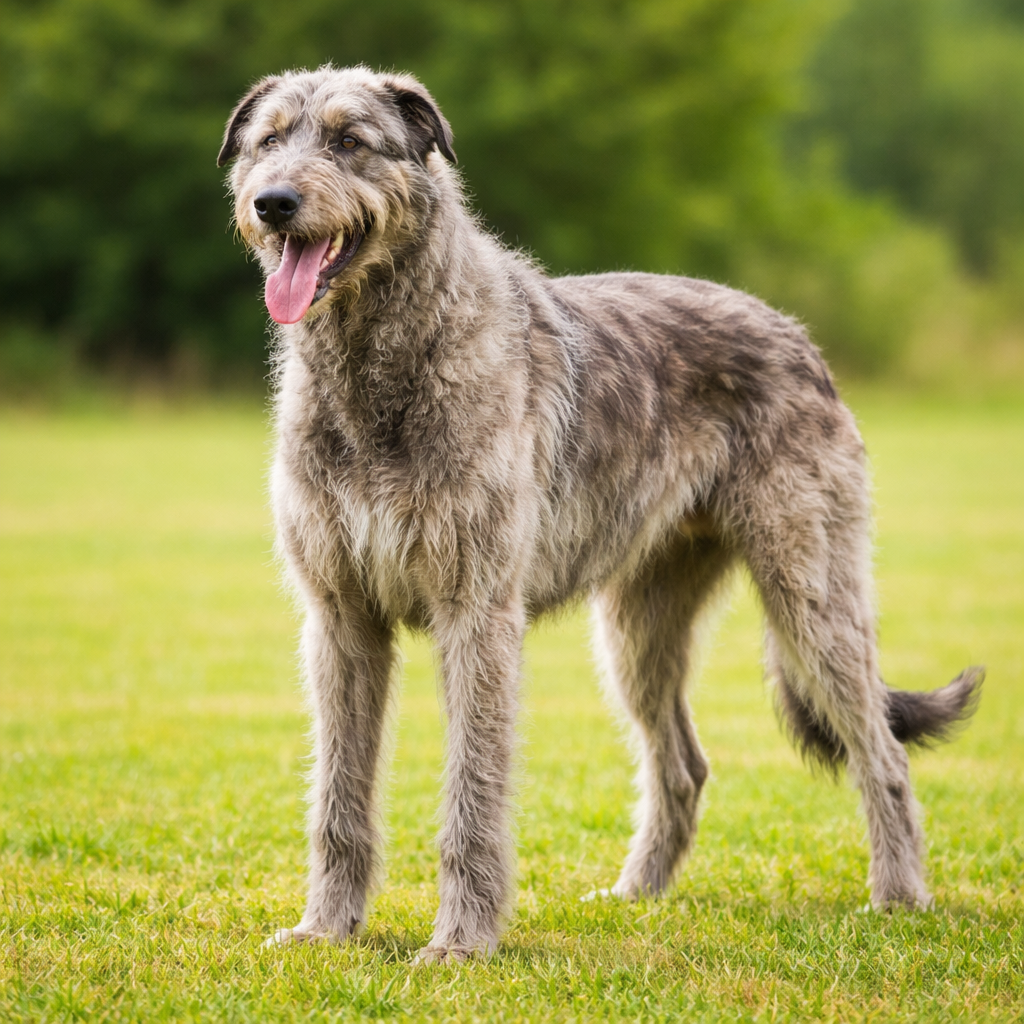
Irish Wolfhound — “The Tallest, Calmest Dog You’ll Ever Meet”
 Save
Save| Weight | 105–180 lbs |
| Height | 30–34 in |
| Lifespan | 6–8 years |
| Energy Level | Low indoors |
| Grooming Need | Moderate |
| Shedding | Low to moderate |
The Irish Wolfhound is the tallest dog breed, often standing over 32 inches at the shoulder. Despite its size, it carries a gentle, easygoing temperament. This breed sleeps for most of the day once grown. It suits owners with ceiling height and patience for a short lifespan.
Their wiry, gray coat gives them a rugged, noble look. One detail surprises new owners: a fully grown Wolfhound can rest its head on a kitchen counter while standing.
You’d expect a dog bred to hunt wolves to be intense. It isn’t. Irish Wolfhounds are widely known as gentle giants, often more relaxed than dogs a third their size.
“He’s taller than my coffee table standing up, but lying down he takes up less space than my old Lab.”
— Connor F., Irish Wolfhound owner for 4 years
- Famously gentle, patient temperament
- Low energy once past the puppy stage
- Rarely barks or shows aggression
- Short lifespan compared to most breeds
- Needs tall ceilings and wide doorways
- Furniture and counters need careful clearing
Best for: Tall apartments and lofts · Calm households · Owners prepared for giant-breed health needs
Big Apartment Dog Breeds Compared Side by Side
This table compares all ten breeds on the factors that matter most for apartment life. The Greyhound and Standard Poodle need the least floor space relative to energy, while the Mastiff and Irish Wolfhound need the least daily exercise overall. Use it to scan for the right fit at a glance before reading the full entries above.
| Breed | Weight | Indoor Energy | Barking | Grooming |
|---|---|---|---|---|
| Greyhound | 60–70 lbs | Very low | Rare | Low |
| Great Dane | 110–175 lbs | Low | Occasional | Low |
| Mastiff | 120–230 lbs | Very low | Rare | Low |
| Bullmastiff | 100–130 lbs | Low | Rare | Low |
| Newfoundland | 100–150 lbs | Low | Rare | High |
| Bernese Mountain Dog | 70–115 lbs | Moderate | Occasional | High |
| Boxer | 50–80 lbs | Moderate-high | Occasional | Low |
| Doberman Pinscher | 60–100 lbs | Moderate-high | Occasional | Low |
| Standard Poodle | 45–70 lbs | Moderate-high | Occasional | High |
| Irish Wolfhound | 105–180 lbs | Very low | Rare | Moderate |
Which Big Dog Breed Is Right for You?
The right breed depends on your daily routine, your climate, and how much grooming time you can give. A sedentary household near a cool climate suits a Mastiff or Newfoundland, while an active renter near trails fits a Boxer or Standard Poodle better. Matching lifestyle to breed prevents the most common reason big-dog adoptions fail in apartments: mismatched energy.
Here’s how to think about it without overanalyzing every option.
- If you work from home and want a calm, low-effort companion → the Greyhound or Mastiff fits best.
- If you’re active and near parks or trails daily → the Boxer or Doberman Pinscher will thrive with you.
- If you have allergies in the household → the Standard Poodle is the strongest match.
- If you live somewhere cool with high ceilings → the Newfoundland or Irish Wolfhound makes sense.
This article covers big dog breeds suited to apartment-style living in general. If your situation involves a strict building weight cap under 50 pounds, you’ll need to look at mid-sized breeds instead, since most picks here exceed that range.
What Most People Get Wrong About Big Dogs in Apartments
Most people assume square footage decides whether a big dog can live happily indoors. It doesn’t. A dog’s bred-in energy level and noise habits matter far more than the number of square feet in your unit. This single misunderstanding stops a lot of good matches before they start.
You might have read elsewhere that big dogs always need a yard. That’s outdated advice. Many giant breeds were bred to guard a single spot, not patrol acres of land.
So what does that mean for you? Focus on the breed’s indoor temperament first, then check your lease for weight limits second.
Some breeds on this list, including the Mastiff, Bullmastiff, and Doberman Pinscher, appear on breed-restriction lists at certain buildings and insurance policies. Always confirm with your landlord first.
Care Essentials Every Big Dog Owner Needs in an Apartment
Big dogs in apartments need consistent walks, joint support, and floor traction to stay healthy long-term. Most experts agree that daily movement matters more for joint health in large breeds than total distance covered. Short, frequent walks beat one long weekend hike. Building these habits early prevents most common large-breed health issues.
Hardwood and tile floors are hard on big joints. A few well-placed rugs make a real difference for traction.
Giant breeds are prone to joint and heart issues as they age, according to veterinary research widely cited across the field. So if you own a Mastiff or Great Dane, regular vet checkups become even more important after age five.
Keep floors non-slip, schedule short frequent walks over long ones, and start vet checkups for joint and heart health by age five for giant breeds.
Mistakes New Big Dog Owners Make in Apartments
The most common mistake is skipping daily exercise because the dog seems calm indoors. Even low-energy giants like the Mastiff need a walk every day, since skipped exercise leads to weight gain that strains their joints fast. A second common mistake is ignoring building weight limits before falling for a specific breed.
New owners also underestimate drool and shedding. That said, a few towels by the door solve most of it.
Finally, many owners skip crate or space training early on. As a result, a giant breed without a designated spot will claim your bed, your couch, and your favorite chair by default.
Frequently Asked Questions
Can a Great Dane really live in a small apartment?
Yes, a Great Dane can live well in a small apartment if it gets daily walks. The breed is naturally low-energy indoors and prefers lying near its owner over active play.
Are big dogs harder to manage in apartments than small dogs?
Not necessarily. Many large breeds, like Greyhounds and Mastiffs, are calmer indoors than small high-energy breeds. Behavior and training matter more than size for apartment success.
How much exercise do big apartment dogs need each day?
Most large breeds need 30 to 60 minutes of daily exercise, split into two walks. Lower-energy giants like Mastiffs need less, while Boxers and Dobermans need more.
Do landlords often restrict big dog breeds?
Yes, some landlords set weight limits or ban specific breeds, often including Mastiffs, Bullmastiffs, and Dobermans. Always check your lease and renter’s insurance policy before adopting.
Which big dog breed sheds the least in an apartment?
The Greyhound and Standard Poodle shed the least among big breeds. Greyhounds have a short, fine coat, while Poodles have a curly, low-shed coat that needs regular trims.
Big dogs and small spaces aren’t opposites. The right breed match comes down to energy, not inches.
If you remember one thing from this guide, let it be this: visit the breed in person before you sign any adoption paperwork. I’m Thomas Cutter, and that one step has saved every apartment-dwelling owner I’ve ever advised from a mismatch they’d regret.

Thomas Cutter is a lifelong dog owner and the founder of FindOutAboutDogs.com. With over 10 years of hands-on experience owning multiple breeds, Thomas created this site to provide honest, research-based dog advice that real owners can actually trust.
