10 Best Marble Color Dog Breeds With Stunning Merle Coats
Quick Answer
The 10 best marble color dog breeds include Australian Shepherds, Miniature American Shepherds, Cardigan Welsh Corgis, Border Collies, Shelties, Collies, Dachshunds, Great Danes, Catahoula Leopard Dogs, and Mudis. Most “marble” coats are called merle or dapple. Your best match depends on size, exercise, grooming, and training needs.
| Need | Top Pick |
|---|---|
| Classic marble look | Australian Shepherd |
| Smaller home | Cardigan Welsh Corgi |
| Giant companion | Great Dane |
Which marble dog should you choose?
- Choose an Aussie if daily training sounds fun.
- Choose a Cardigan when you want compact size.
- Choose a Great Dane only with enough space.
A silver coat breaks into black patches like paint across stone. One blue eye catches the light.
That striking look often sends people searching for marble color dog breeds. The formal term is usually merle. Dachshund owners often call the same type of pattern dapple.
I’m Thomas Cutter, a lifelong dog owner and founder of FindOutAboutDogs.com. I compare breeds by daily fit before coat color.
A beautiful coat should start your search, not finish it. You still need the right size, drive, and care load.
- “Marble color” usually means a merle or dapple coat.
- Merle affects coat pigment, not personality or trainability.
- Australian Shepherds offer the best-known classic merle look.
- Double-merle breeding can raise hearing and vision risks.
- Choose lifestyle fit before choosing your favorite pattern.


What Makes a Dog Breed “Marble Color”?
A marble color dog has irregular dark and light patches that create a swirled, mottled look. Breed standards usually call this pattern merle. Dachshund standards commonly use the word dapple. Blue merle often combines gray with black patches. Red merle uses warmer red or liver tones. White and tan markings may also appear. Eye color can vary too. Some merle dogs have blue eyes or 2 different eye colors. The pattern comes from genetics, not staining or coat damage. Color alone does not tell you how a dog will behave. Exercise, size, breed purpose, and training matter much more. So if you love the marble look, first find breeds that suit your real routine. Then choose the coat pattern you like within that breed.
The term “marble” works well as a visual description. However, it is not the main breed-standard term.
The AKC guide to merle coat genetics lists many breeds that can carry merle. UC Davis also describes merle as irregular patches of diluted and full pigment.
You can see how merle fits into the wider world of multi color dog breeds with patterned coats.
When I compare color breeds, I separate appearance from daily care. That keeps a rare coat from hiding a poor lifestyle match.
This guide covers established merle or dapple breeds. A mixed dog may show similar patterns from different ancestry.
What Are the 10 Best Marble Color Dog Breeds?
The best marble color dog breeds offer more than a striking coat. Australian Shepherds lead for the classic blue-merle look and serious work drive. Miniature American Shepherds give you similar beauty in a smaller frame. Cardigan Welsh Corgis combine blue merle with compact size. Border Collies suit advanced training homes. Shelties and Collies offer longer, flowing coats. Dachshunds provide a small dapple option. Great Danes bring the pattern to giant-dog scale. Catahoulas have bold leopard-like coats and strong working instincts. Mudis give experienced owners a rare, agile herder. None wins for every home. I ranked these dogs by recognized coat pattern, lifestyle range, practical care, and how clearly their marble look stands out.
You might be thinking the prettiest coat should rank first. Here’s why that can fail.
The dog’s hardest daily need matters more than the coat. Start with that need first.
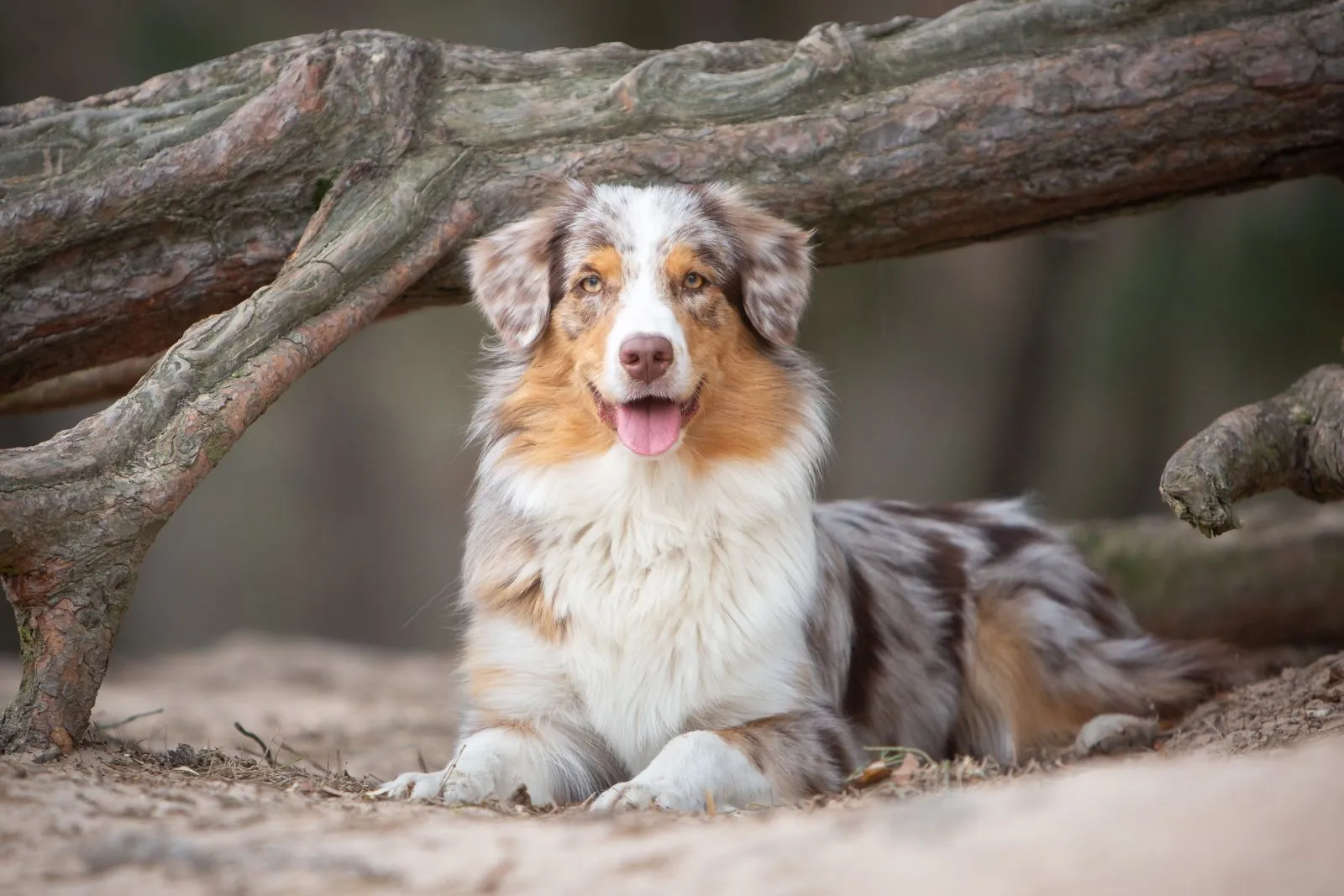
1. Australian Shepherd — Marble Color Dog With the Classic Merle Look
 Save
SaveDog sports · Active homes · Training-focused owners
| Weight | 40–65 lbs |
| Height | 18–23 inches |
| Lifespan | 12–15 years |
| Energy Level | Very high |
| Grooming Need | Brush 2–3 times weekly |
| Shedding | Moderate to heavy |
The Australian Shepherd is a medium marble color dog famous for blue and red merle coats. Adults weigh about 40 to 65 pounds. Aussies learn fast and crave purposeful work. They suit active owners who enjoy hiking, agility, obedience, fetch, or daily skill training.
Blue merle mixes dark patches across a silver-gray base. Copper and white can add even more contrast.
Aussies notice movement fast and often try controlling it. Without work, that sharp mind may invent unwanted jobs.
“An Aussie can finish training and still bring you another toy.”
— Illustrative owner scenario based on common breed traits
- Iconic blue and red merle coats
- Learns advanced skills quickly
- Excellent dog sport partner
- Needs hard daily exercise
- May herd children or pets
- Sheds heavily during coat changes
2. Miniature American Shepherd — Compact Marble-Coat Athlete
Smaller active homes · Agility fans · Experienced owners
| Weight | 20–40 lbs |
| Height | 13–18 inches |
| Lifespan | 12–13 years |
| Energy Level | High |
| Grooming Need | Weekly brushing |
| Shedding | Moderate, heavier seasonally |
The Miniature American Shepherd brings an Aussie-like marble coat into a smaller working-dog frame. Adults weigh 20 to 40 pounds. Blue merle and red merle are established colors. Minis stay lively, smart, and eager for tasks, making them ideal for active homes wanting less size.
The medium coat can show bold patches, copper points, and white trim. Each merle pattern looks slightly different.
Minis may be smaller than Aussies, but their work drive stays strong. Mental games matter as much as walks.
“The small body saves space, but the busy brain never feels miniature.”
— Illustrative owner scenario based on common breed traits
- Compact merle herding breed
- Excels in training games
- Easier size for travel
- Needs daily mental work
- Can bark at strangers
- Seasonal shedding needs extra brushing
3. Cardigan Welsh Corgi — Blue-Merle Marble Dog in a Short Frame
Smaller homes · Corgi fans · Active families
| Weight | 25–38 lbs |
| Height | 10.5–12.5 inches |
| Lifespan | 12–15 years |
| Energy Level | Moderate to high |
| Grooming Need | Weekly brushing |
| Shedding | Regular, heavier seasonally |
The Cardigan Welsh Corgi is a sturdy small herder with a recognized blue-merle pattern. Adults stand only 10.5 to 12.5 inches tall. Their long body hides surprising strength. Cardigans suit people wanting a compact marble-colored dog that still enjoys walks, games, and structured training.
Blue merle creates black patches across a cool gray coat. White and tan markings often sharpen the contrast.
Cardigans look cute, but they were built to move cattle. Their bold working side surprises many first owners.
“Those short legs never stop the dog from trying to run the household.”
— Illustrative owner scenario based on common breed traits
- Striking blue-merle coat
- Compact but sturdy build
- Smart and trainable
- Sheds more than expected
- May nip while herding
- Can become quite vocal
4. Border Collie — Marble-Coat Genius for Serious Training
Dog sports · Rural homes · Advanced training
| Weight | 30–55 lbs |
| Height | 18–22 inches |
| Lifespan | 12–15 years |
| Energy Level | Very high |
| Grooming Need | Brush 1–3 times weekly |
| Shedding | Moderate |
The Border Collie is a medium herding breed that can wear blue or red merle. Adults weigh 30 to 55 pounds. These dogs learn patterns, commands, and routines extremely fast. They suit owners who see training as a daily hobby, not an occasional chore.
Merle adds broken gray, black, red, or white areas. Rough and smooth coats can both show rich patterns.
The famous Border Collie stare shows intense focus. That same focus becomes hard to manage without enough work.
“Teach one trick today, and tomorrow the dog expects the next lesson.”
— Illustrative owner scenario based on common breed traits
- Beautiful merle options
- Exceptional learning speed
- Outstanding sport partner
- Needs intense mental work
- May herd moving people
- Poor fit for inactive homes
5. Shetland Sheepdog — Flowing Blue-Merle Marble Companion
 Save
SaveTraining lovers · Smaller yards · Grooming-ready homes
| Weight | 15–25 lbs |
| Height | 13–16 inches |
| Lifespan | 12–14 years |
| Energy Level | High |
| Grooming Need | Brush several times weekly |
| Shedding | Heavy seasonally |
The Shetland Sheepdog is a small, bright herder with an accepted blue-merle coat. Adults weigh 15 to 25 pounds. The long double coat creates a softer marble effect than short-haired breeds. Shelties suit owners who enjoy training and accept regular brushing and barking.
The full neck mane makes blue merle look especially dramatic. Black patches sit against pale silver and white.
Shelties watch movement and sound closely. Their alert nature makes them clever companions and keen barkers.
Compare sable color dog breeds if you prefer warmer Sheltie and Collie shades.
“A Sheltie often hears the delivery truck long before anyone else does.”
— Illustrative owner scenario based on common breed traits
- Rich flowing blue-merle coat
- Fast, eager learner
- Smaller than many herders
- Can bark frequently
- Coat needs steady brushing
- Needs daily brain work
6. Collie — Elegant Marble Color Dog With Blue Merle
Families · Moderate activity · Classic breed fans
| Weight | 50–75 lbs |
| Height | 22–26 inches |
| Lifespan | 12–14 years |
| Energy Level | Moderate to high |
| Grooming Need | Weekly; more for rough coats |
| Shedding | Moderate to heavy |
The Collie is a graceful herding breed with a recognized blue-merle coat. Adults weigh roughly 50 to 75 pounds. Rough Collies create a dramatic flowing marble look. Smooth Collies offer similar color with easier coat care. Both suit owners wanting a gentler working breed.
Blue merle can blend silver, black, white, and tan. Rough coats make those shades flow through long fur.
Collies tend to notice family routines quickly. They often want involvement without Border Collie-level intensity.
“A Collie often watches the family before deciding where to settle.”
— Illustrative owner scenario based on common breed traits
- Classic blue-merle beauty
- Rough and smooth varieties
- More moderate than intense herders
- Rough coats need brushing
- Can bark at activity
- May show herding habits
7. Dachshund — Small Dapple Dog With a Marble Pattern
Small homes · Hound lovers · Lower exercise needs
| Weight | 16–32 lbs standard |
| Height | 8–9 inches standard |
| Lifespan | 12–16 years |
| Energy Level | Moderate |
| Grooming Need | Low to moderate |
| Shedding | Low to moderate |
The Dachshund offers one of the smallest established marble-style coats. In this breed, the pattern is usually called dapple. Standard adults weigh 16 to 32 pounds. Dachshunds suit smaller homes, but owners still need patient training and careful back-friendly handling.
Dapple patches can appear across smooth, long, or wire coats. The pattern can look subtle or sharply broken.
Dachshunds were bred to hunt underground. Their small body comes with a bold, independent hound mind.
“The legs are short, but the opinions can fill the whole house.”
— Illustrative owner scenario based on common breed traits
- Small dapple option
- Three coat types available
- Fits many smaller homes
- Back care needs attention
- Can resist repetitive training
- Often barks at triggers
8. Great Dane — Giant Marble Color Dog With Dramatic Merle
Large homes · Giant-dog fans · Experienced owners
| Weight | 110–175 lbs |
| Height | 28–32 inches |
| Lifespan | 7–10 years |
| Energy Level | Moderate |
| Grooming Need | Weekly brushing |
| Shedding | Moderate |
The Great Dane brings merle coloring to one of the world’s tallest dog breeds. Adults can weigh well above 100 pounds. Their short coat makes marble patches easy to see. Danes suit owners prepared for giant food bills, giant equipment, early training, and shorter average lifespans.
Merle Danes show dark patches over gray coats. The smooth fur gives the pattern a sharp, stone-like look.
Size changes every part of ownership. Even a calm Dane needs good leash manners before adulthood.
If gray shades appeal to you, compare other grey color dog breeds for different lifestyles.
“A calm Dane still takes up most of the sofa.”
— Illustrative owner scenario based on common breed traits
- Dramatic large-scale merle pattern
- Short coat is simple
- Moderate adult exercise needs
- Huge food and care costs
- Shorter average lifespan
- Needs early leash training
9. Catahoula Leopard Dog — Bold Marble Pattern for Working Homes
Rural life · Working homes · Skilled handlers
| Weight | 50–95 lbs |
| Height | 22–24 inches |
| Lifespan | 10–14 years |
| Energy Level | High |
| Grooming Need | Low |
| Shedding | Low to moderate |
The Catahoula Leopard Dog is a muscular working breed known for striking leopard and merle-like coats. Adults weigh 50 to 95 pounds. Catahoulas are serious workers with stamina and independence. They suit experienced owners who can offer training, secure space, and meaningful daily activity.
The short coat can show blue, gray, black, red, or patchy tones. Pale eyes can make the pattern look stronger.
Catahoulas often approach work with focus and confidence. They need more structure than their flashy coat suggests.
“A Catahoula usually wants a purpose, not just another lap around the block.”
— Illustrative owner scenario based on common breed traits
- Highly distinctive patterned coat
- Short coat needs little care
- Strong working ability
- Needs skilled handling
- High daily exercise demand
- Independent nature challenges beginners
10. Mudi — Rare Marble Color Herder With Curly Fur
 Save
SaveExperienced owners · Agility · Active rural homes
| Weight | 18–29 lbs |
| Height | 15–18.5 inches |
| Lifespan | 12–14 years |
| Energy Level | High |
| Grooming Need | Weekly brushing |
| Shedding | Moderate |
The Mudi is a compact Hungarian herder with a recognized merle coat option. Adults weigh only 18 to 29 pounds. The wavy or curly coat gives merle a textured look. Mudis suit active, experienced owners who enjoy training, sports, and highly alert working dogs.
The coat creates waves and curls across the body. Merle makes those textured areas look even more varied.
Mudis are agile and quick to react. Their smaller size never turns them into low-energy lap dogs.
“The Mudi feels like a full working dog packed into a travel-size body.”
— Illustrative owner scenario based on common breed traits
- Rare textured merle coat
- Compact athletic size
- Excels at active training
- Difficult breed to find
- Needs substantial daily activity
- Alert nature can mean barking
How Do These Marble Color Dog Breeds Compare?
Marble color dog breeds differ far more in lifestyle than appearance. The Dachshund and Cardigan Welsh Corgi give you smaller options. Miniature American Shepherds and Mudis remain compact but need serious activity. Aussies, Border Collies, Shelties, and Collies come from herding backgrounds and need regular mental work. Catahoulas need firm structure and room for purposeful activity. Great Danes need less intense exercise than many herders, but their giant size raises food, equipment, transport, and medical costs. Grooming also changes sharply. Great Danes and Catahoulas have simple short coats. Shelties and rough Collies demand much more brushing. So don’t compare these dogs only by merle beauty. Compare the hardest part of living with each breed. The best choice is the one whose hardest need already fits your normal week.
| Breed | Size | Energy | Coat Care | Best Fit |
|---|---|---|---|---|
| Australian Shepherd | Medium | Very high | Medium | Dog sports |
| Mini American Shepherd | Small-medium | High | Medium | Active small homes |
| Cardigan Welsh Corgi | Small | Medium-high | Medium | Families |
| Border Collie | Medium | Very high | Medium | Advanced training |
| Shetland Sheepdog | Small | High | High | Training fans |
| Collie | Medium-large | Medium-high | Medium-high | Families |
| Dachshund | Small | Moderate | Low-medium | Smaller homes |
| Great Dane | Giant | Moderate | Low | Large homes |
| Catahoula | Medium-large | High | Low | Working homes |
| Mudi | Small-medium | High | Medium | Dog sports |
When a shortlist feels too long, remove every breed above your true energy level. That one step can save years of frustration.
Which Marble Color Dog Breed Is Right for You?
Your best marble color dog depends on the life you already live. Choose a Dachshund when you want smaller size and moderate activity. Choose a Cardigan when you want compact size with more working-dog spark. Choose an Aussie, Border Collie, Mudi, or Mini American when training is a real hobby. A Sheltie suits people who enjoy smart dogs but need less physical size. A Collie works for many families wanting a softer herding style. Catahoulas belong with owners ready for strength, drive, and structure. Great Danes suit people who can afford giant-dog ownership. Coat beauty should only break a tie between breeds that already fit. Never pick a dog whose normal needs require you to become a completely different person.
- If you want compact size → choose Dachshund or Cardigan.
- If training is your hobby → choose Aussie or Border Collie.
- If grooming doesn’t bother you → consider Sheltie or Collie.
- If you want a giant dog → consider Great Dane first.
If you like patterned coats but want more options, compare these tri color dog breeds for real homes.
Write your real daily exercise time before choosing a breed.
What Care Do Marble Color Dog Breeds Need?
Marble color dogs need care based on breed and coat type, not the marble pattern itself. Short-haired Great Danes and Catahoulas need simple brushing. Dachshund care changes with smooth, wire, or long hair. Aussies, Mini Americans, Cardigans, and Border Collies need regular brushing during coat changes. Shelties and rough Collies need the most coat work here. Exercise matters even more. Herding breeds need both movement and mental tasks. Catahoulas need structured work and training. Giant Danes need controlled exercise and careful growth management. The merle pattern does add one breeding concern. Responsible breeding matters because pairing certain merle dogs can increase hearing and vision risks. So when choosing a puppy, ask about genetics and health screening before discussing eye color or rare markings.
The UC Davis Veterinary Genetics Laboratory merle guide explains the genetic pattern in more detail.
Don’t choose a breeder because blue eyes or rare markings cost more.
When I compare breeders, health testing matters before color. A rare coat never cancels poor breeding choices.
What Do Most People Get Wrong About Marble Color Dogs?
The biggest mistake is treating marble color as a breed trait instead of a coat trait. Merle does not make a dog smarter, calmer, more valuable, or easier to train. An Aussie and Great Dane can both show merle while living completely different lives. Another mistake is assuming every patchy dog is merle. Harlequin, ticking, roan, piebald, brindle, and other patterns can create mixed-color coats without being the same pattern. Buyers also sometimes assume blue eyes prove a dog is merle. Eye color alone does not prove coat genetics. The last mistake is paying a large premium for “rare marble” without checking health records. Coat terms are easy to market. Sound health, good temperament, and responsible breeding matter much more.
You might be thinking a rare-looking puppy must be harder to find. Sometimes it is.
But rarity does not prove better quality. A responsible breeder should discuss health before color price.
Choose the breed first. Check energy, size, grooming, health, and training needs. Then choose your favorite merle or dapple coat within that breed.
Final Thoughts on the Best Marble Color Dog Breeds
The Australian Shepherd offers the most classic marble-style merle look. Yet the best breed is the one that fits your real day.
Check size, energy, grooming, and training before coat color. Then narrow your list to 2 breeds.
Your one action right now is simple. Write your daily dog-care time on paper.
I’m Thomas Cutter, and that’s the first filter I’d use before choosing any dog.
Frequently Asked Questions
What is a marble color dog called?
A marble color dog is usually called a merle dog. The coat shows irregular areas of lighter and darker pigment. Some breeds use a different term. Dachshunds commonly use “dapple” for their merle-style pattern. Always check the official breed term before buying or breeding a dog.
What is the best marble color dog breed?
The Australian Shepherd is the strongest all-around pick for the classic marble look. Blue and red merle are well-known breed colors. However, Aussies need heavy daily activity and training. If you want a smaller dog, consider a Cardigan Welsh Corgi or Dachshund instead.
Are marble color dogs rare?
Some marble or merle dogs are less common than solid-colored dogs. Rarity varies by breed and bloodline. Merle is well established in several breeds, including Aussies, Collies, and Cardigan Welsh Corgis. Don’t assume a higher price proves better breeding or better health.
Are merle dogs unhealthy?
A merle coat alone does not mean a dog is unhealthy. The main concern involves breeding certain merle dogs together. Double-merle offspring can face higher risks involving hearing and vision. Ask breeders about genetic testing, parent colors, health screening, and planned pairings before choosing a puppy.
Do marble color dogs need special grooming?
No. The marble pattern itself does not require special grooming. Coat type controls grooming needs. A Great Dane needs much less brushing than a rough Collie or Sheltie. Match your grooming routine to coat length, density, shedding, mats, skin health, nails, ears, and normal breed care.

Thomas Cutter is a lifelong dog owner and the founder of FindOutAboutDogs.com. With over 10 years of hands-on experience owning multiple breeds, Thomas created this site to provide honest, research-based dog advice that real owners can actually trust.
