10 Best Grey Color Dog Breeds for Every Lifestyle
Quick Answer
The best grey color dog breeds include the Weimaraner, Greyhound, Italian Greyhound, Great Dane, Cane Corso, Neapolitan Mastiff, Norwegian Elkhound, Siberian Husky, Kerry Blue Terrier, and Bedlington Terrier. Your best match depends on size, energy, grooming needs, training experience, and home space.
| Your Need | Grey Dog Match |
|---|---|
| Athletic companion | Weimaraner |
| Calmer large dog | Greyhound |
| Small grey dog | Italian Greyhound |
| Cold-weather companion | Norwegian Elkhound |
Choose your grey dog this way:
- Choose a Weimaraner if you enjoy daily outdoor exercise.
- Choose a Greyhound if you prefer calmer home manners.
- Choose an Italian Greyhound if space is limited.
- Choose an Elkhound if shedding does not bother you.
A silver-grey dog catches the light in a way few coats can. The shade can look icy, smoky, blue, or almost metallic.
I’m Thomas Cutter, and I research dog breeds with owner fit in mind. Color may catch your eye, but lifestyle fit should make your choice.
If this will be your first dog, compare these options with my guide to the best dog breeds for beginners. A beautiful coat cannot make the wrong breed easy to live with.
- Grey coats may also be called blue, silver, or gray.
- Grey dogs range from 7-pound companions to giant mastiffs.
- Coat color does not predict temperament or care needs.
- Energy and training needs should guide your final choice.
- Check health testing before buying any purebred puppy.


What Makes a Dog Breed Grey?
A grey dog has a coat that looks silver, charcoal, steel, blue-grey, or mixed grey. Breed standards may use different names for similar-looking shades. Some dogs have solid grey coats. Others combine grey with black, white, or lighter silver hairs.
The shade alone tells you little about behavior. A grey Greyhound acts nothing like a grey Siberian Husky. The same rule applies to grooming and exercise. Some grey dogs shed heavily. Others lose little loose hair but need frequent clipping. When I compare grey breeds, I start with lifestyle traits first.
That approach prevents color from hiding a poor match. You might be thinking all blue dogs share one coat gene. They do not. Different breeds can produce grey-looking coats through different genetic patterns. So choose the breed first, then choose your preferred coat within that breed.
The American Kennel Club lists recognized breeds and their accepted traits. You can check its dog breed profiles before choosing.
Here’s why that matters. Words such as blue and silver often describe coats that look grey.
Never choose a puppy only because its grey shade looks rare.
Which Are the 10 Best Grey Color Dog Breeds?
The strongest grey dog choices cover almost every home and activity level. Weimaraners suit active owners who want a sleek sporting dog. Greyhounds offer surprising indoor calm despite their racing build. Italian Greyhounds bring that shape into a tiny companion.
Blue Great Danes add giant size and softer home energy. Grey Cane Corsos and Neapolitan Mastiffs suit skilled owners who value guardian traits. Norwegian Elkhounds and Siberian Huskies offer thick grey coats for active homes. Kerry Blue Terriers and Bedlington Terriers give you curly grey-looking coats with less loose shedding.
When I compare these dogs, size creates the first major split. Energy, training, prey drive, grooming, and protection instincts narrow the list next. You might love several breeds visually. Their daily needs separate them fast. Start with your schedule, space, and experience before judging coat shade.
1. Weimaraner — Grey Dog Breed With a Silver Athlete’s Coat
| Weight | 55–90 pounds |
| Height | 23–27 inches |
| Lifespan | 10–13 years |
| Energy Level | High |
| Grooming Need | Low |
| Shedding | Low to moderate |
The Weimaraner is a large sporting breed famous for its sleek silver-grey coat. Adults reach 55 to 90 pounds. They bond closely with people and need substantial daily activity. This grey breed works best for owners who enjoy training, running, hiking, and active outdoor time.
The short coat lies tight against a lean, muscular frame. Pale eyes can make the silver coat look even brighter.
Weimaraners often follow their owners from room to room. Without enough work, that close bond can become restless behavior.
Common owner observation: A tired Weimaraner can settle beautifully. An underworked one often invents its own entertainment.
- Striking natural silver-grey coat
- Strong partner for outdoor exercise
- Short coat needs little grooming
- Needs substantial daily exercise
- Can struggle when left alone
- Strong prey drive needs management
2. Greyhound — Grey Dog Breed With a Quiet Sprinter’s Soul
| Weight | 60–70 pounds |
| Height | 27–30 inches |
| Lifespan | 10–13 years |
| Energy Level | Moderate |
| Grooming Need | Low |
| Shedding | Low to moderate |
Greyhounds are tall sighthounds that can appear in beautiful blue-grey coats. Males stand up to 30 inches tall. They are famous sprinters but often relax well between exercise sessions. Greyhounds suit people wanting a large, elegant dog without nonstop activity inside the home.
A deep chest, narrow waist, and long legs create their unmistakable outline. Their thin coat gives grey shades a smooth, satin-like look.
Greyhounds often enjoy soft beds and long rests after exercise. Their chase instinct still needs secure leashes and fenced spaces.
Common owner observation: Their speed surprises people outdoors. Their ability to occupy a sofa surprises them even more.
- Calmer indoors than many expect
- Simple short-coat grooming
- Elegant range of grey shades
- Chase instinct needs careful control
- Thin coat dislikes cold weather
- Needs safe space for exercise
3. Italian Greyhound — Small Grey Dog With Fine-Boned Elegance
| Weight | 7–14 pounds |
| Height | 13–15 inches |
| Lifespan | 14–15 years |
| Energy Level | Moderate |
| Grooming Need | Low |
| Shedding | Low |
The Italian Greyhound is a tiny sighthound with graceful lines and smooth grey coats. Adults weigh only 7 to 14 pounds. They enjoy short bursts of speed but seek warmth and close contact indoors. They suit gentle owners wanting a small, affectionate dog with minimal coat care.
The body looks like a miniature racing hound with finer bones. Blue-grey coats can look almost polished in bright daylight.
Italian Greyhounds often burrow under blankets and seek warm laps. Their delicate legs require sensible handling and safe play.
Common owner observation: They may sprint across a room, then spend hours seeking the warmest blanket.
- Fits easily into small homes
- Needs little coat grooming
- Long typical lifespan
- Fine legs can be injured
- Dislikes cold and wet weather
- House training may take patience
Compare more dog breeds for first-time owners before deciding on a small companion.
4. Great Dane — Blue-Grey Giant With a Gentle Presence
| Weight | 110–175 pounds |
| Height | 28–32 inches |
| Lifespan | 7–10 years |
| Energy Level | Moderate |
| Grooming Need | Low |
| Shedding | Moderate |
A blue Great Dane combines a smooth steel-grey coat with enormous height. Adults can weigh from 110 to 175 pounds. Their home energy is often more manageable than their size suggests. They suit owners prepared for giant-dog food, training, veterinary costs, and physical space.
The tall square frame makes even a plain blue coat look dramatic. Their short hair keeps daily grooming simple.
Great Danes often want to stay near family despite their enormous size. Early manners matter because an excited adult can overpower people easily.
Common owner observation: Many seem unaware of their size and still try leaning against their people.
- Blue coat looks striking
- Often relaxed inside the home
- Short coat is easy
- Giant size raises expenses
- Shorter typical lifespan
- Early training is essential
Compare giant dog breeds for newer owners if size appeals to you.
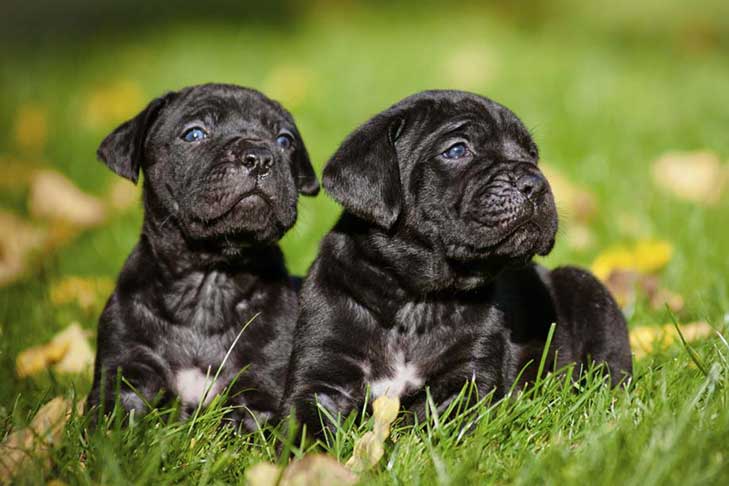
5. Cane Corso — Grey Guardian With Serious Working Power
 Save
Save| Weight | Proportionate to height |
| Height | 23.5–27.5 inches |
| Lifespan | 9–12 years |
| Energy Level | Moderate to high |
| Grooming Need | Low |
| Shedding | Moderate, seasonal |
The Cane Corso is a powerful guardian breed available in handsome grey shades. Adults stand up to 27.5 inches tall. They are smart, alert, strong, and naturally watchful around their property. They suit confident owners who understand early training, social exposure, boundaries, and large guardian breeds.
A broad head and muscular body give the Corso a serious outline. Grey coats range from pale tones to deep slate.
Corsos tend to watch changes around their home closely. Good training channels that awareness without encouraging needless suspicion.
Common owner observation: Clear house rules work far better than inconsistent handling with this strong breed.
- Smart and highly trainable
- Natural home guardian
- Simple coat maintenance
- Not ideal for casual owners
- Needs early social exposure
- Physical strength requires control
6. Neapolitan Mastiff — Grey Giant With Ancient Wrinkles
| Weight | 110–150 pounds |
| Height | 24–31 inches |
| Lifespan | 7–9 years |
| Energy Level | Low to moderate |
| Grooming Need | Moderate wrinkle care |
| Shedding | Moderate |
The Neapolitan Mastiff is an enormous guardian known for loose skin and deep wrinkles. Grey is one of its most dramatic coat shades. Adults commonly weigh 110 to 150 pounds. This breed suits experienced mastiff owners who can manage size, guarding instincts, drool, skin care, and training.
Heavy folds surround the broad head and massive body. A grey coat makes those folds look even more sculpted.
Neapolitan Mastiffs often remain calm while carefully watching strangers. Their sheer strength makes sound handling essential from puppyhood.
Common owner observation: Their pace may seem slow, but their awareness of the home stays sharp.
- Distinctive grey mastiff appearance
- Usually calm inside
- Strong natural guarding presence
- Heavy drooling is common
- Wrinkles need regular care
- Giant size raises costs
7. Norwegian Elkhound — Silver-Grey Dog Built for Northern Work
| Weight | 48–55 pounds |
| Height | 19.5–20.5 inches |
| Lifespan | 12–15 years |
| Energy Level | High |
| Grooming Need | Weekly brushing |
| Shedding | Heavy, seasonal |
The Norwegian Elkhound is a medium spitz breed with a classic silver-grey coat. Adults weigh about 48 to 55 pounds. They are sturdy, alert, active, and built for demanding outdoor work. They fit active owners who enjoy training and can accept heavy seasonal shedding.
The thick double coat mixes pale silver with dark-tipped hairs. Pointed ears and a curled tail complete its northern look.
Elkhounds often announce activity with their voices and stay aware outdoors. Their independent streak makes steady reward-based training useful.
Common owner observation: Brushing seems manageable until seasonal coat blow turns loose hair into a daily event.
- Classic silver-grey double coat
- Strong outdoor stamina
- Solid medium-size build
- Sheds large amounts seasonally
- Can be quite vocal
- Independent training style
8. Siberian Husky — Grey-and-White Dog With Endless Drive
| Weight | 35–60 pounds |
| Height | 20–23.5 inches |
| Lifespan | 12–14 years |
| Energy Level | High |
| Grooming Need | Weekly brushing |
| Shedding | Heavy |
The Siberian Husky is a medium working dog often seen in grey-and-white coats. Adults weigh 35 to 60 pounds. They combine endurance, social behavior, independence, and strong running instincts. Huskies suit active households prepared for exercise, secure fencing, shedding, training, and careful management outdoors.
Grey markings frame the face and run across a dense double coat. Bright eyes often make their mask patterns look even sharper.
Huskies were built to move, and many still seek opportunities to run. Bored dogs can dig, climb, or test weak fencing.
Common owner observation: Secure doors and fences become habits, not optional precautions, in many Husky homes.
- Iconic grey-and-white appearance
- Excellent endurance companion
- Often socially outgoing
- Heavy coat shedding
- Strong urge to roam
- Needs considerable exercise
9. Kerry Blue Terrier — Curly Grey Dog With Terrier Spark
| Weight | About 33–40 pounds |
| Height | 17.5–19.5 inches |
| Lifespan | 12–15 years |
| Energy Level | High |
| Grooming Need | High |
| Shedding | Low |
The Kerry Blue Terrier is a medium terrier famous for its soft blue-grey coat. Adults reach roughly 33 to 40 pounds. They are lively, alert, clever, and full of classic terrier confidence. They suit active owners willing to provide training, exercise, and regular professional-style coat maintenance.
The coat forms soft waves rather than lying flat. Its mature blue-grey shade can range from pale silver to deeper slate.
Kerries often approach life with bold terrier energy and quick reactions. Mental work matters almost as much as physical exercise.
Common owner observation: Less loose hair does not mean less work because coat trimming stays essential.
- Beautiful mature blue-grey coat
- Low loose-hair shedding
- Smart and active
- Coat needs frequent grooming
- Terrier drive needs structure
- Can challenge other dogs
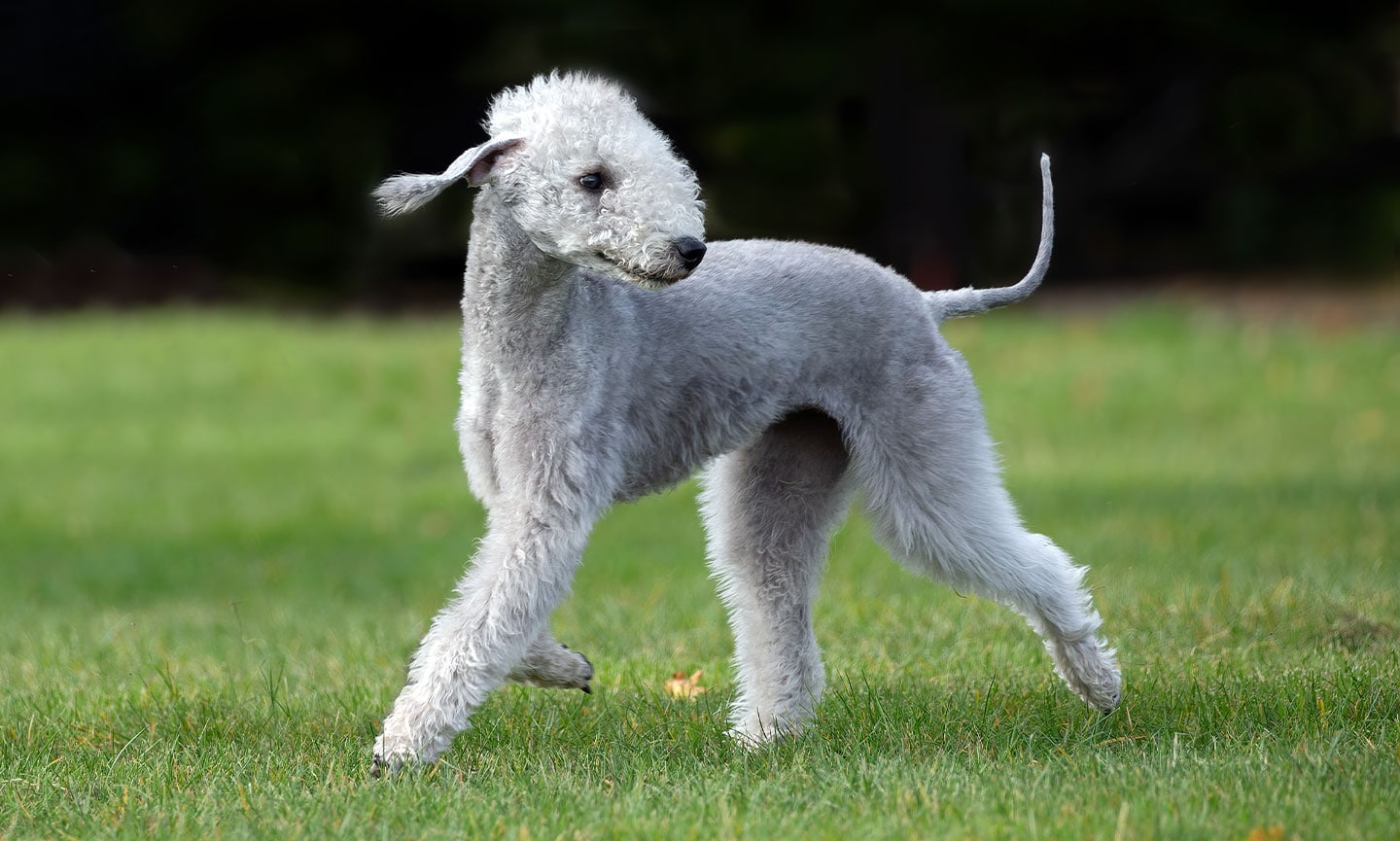
10. Bedlington Terrier — Pale Grey Dog With a Lamb-Like Coat
 Save
Save| Weight | 17–23 pounds |
| Height | 15–17.5 inches |
| Lifespan | 11–16 years |
| Energy Level | Moderate to high |
| Grooming Need | High |
| Shedding | Low |
The Bedlington Terrier is a small-to-medium terrier with a distinctive blue-grey curly coat. Adults weigh only 17 to 23 pounds. Their lamb-like appearance hides an athletic terrier with speed and confidence. They suit owners seeking compact size, lower loose shedding, exercise, and regular grooming.
The arched back and pear-shaped head give the Bedlington its unusual outline. Pale blue coats may look almost silver after grooming.
Bedlingtons can look delicate while moving with surprising speed and drive. Their terrier roots become obvious when something starts running.
Common owner observation: The soft lamb-like look can make newcomers underestimate this breed’s athletic side.
- Distinctive pale grey coat
- Low loose-hair shedding
- Compact yet athletic
- Needs regular coat trimming
- Terrier prey drive remains
- Responsible breeding matters greatly
How Do These Grey Dog Breeds Compare?
The 10 breeds differ much more in lifestyle than coat color suggests. Italian Greyhounds and Bedlington Terriers suit people needing compact dogs. Weimaraners, Huskies, and Elkhounds demand more daily activity. Greyhounds often offer an easier indoor energy level despite their large size.
Great Danes and Neapolitan Mastiffs require enough space and a giant-dog budget. Cane Corsos add stronger guarding instincts and need skilled handling. Kerry Blue Terriers trade low loose shedding for much higher grooming work. Elkhounds and Huskies make the opposite trade. Their coats need less shaping but release large amounts of hair. When I compare grey dogs for a real household, these differences matter more than shade.
You might be thinking a smaller breed must be easier. Size helps with space and food costs, but temperament and grooming can still create more work. Compare your hardest daily constraint first.
| Breed | Size | Energy | Grooming | Best Match |
|---|---|---|---|---|
| Weimaraner | Large | High | Low | Outdoor owners |
| Greyhound | Large | Moderate | Low | Quieter homes |
| Italian Greyhound | Small | Moderate | Low | Small homes |
| Great Dane | Giant | Moderate | Low | Giant-dog fans |
| Cane Corso | Large | Moderate-high | Low | Skilled handlers |
| Neapolitan Mastiff | Giant | Low-moderate | Moderate | Mastiff experts |
| Norwegian Elkhound | Medium | High | Moderate | Active families |
| Siberian Husky | Medium | High | Moderate | Runners |
| Kerry Blue Terrier | Medium | High | High | Terrier fans |
| Bedlington Terrier | Small-medium | Moderate-high | High | Compact homes |
Which Grey Dog Breed Is Right for You?
Your best grey dog is the breed whose daily needs fit your normal week. Do not match a dog to your ideal future routine. Match it to the routine you already maintain. Choose a Weimaraner or Husky when regular exercise is already part of your life. Consider a Greyhound when you want a larger dog with calmer indoor habits.
Italian Greyhounds work better where physical space is limited. Choose a Kerry Blue or Bedlington when low loose shedding matters more than grooming cost. Giant-dog lovers can consider Great Danes or Neapolitan Mastiffs after budgeting for food and care. Cane Corsos belong with owners prepared for serious training and management.
When I compare breeds, I remove poor lifestyle matches before choosing favorites. That process saves far more trouble than choosing by appearance. You might love grey fur today. You still need to enjoy the dog’s routine years from now.
The AVMA also advises matching a dog’s temperament and needs to your household. Review its guidance for selecting a pet dog.
Is this right for me?
- If you exercise daily → consider Weimaraner, Husky, or Elkhound.
- If you prefer calmer indoors → consider a Greyhound.
- If you need compact size → consider an Italian Greyhound.
- If you want a guardian → research Cane Corsos carefully.
Families should also compare these choices with friendly dog breeds for family homes.
What Most People Get Wrong About Grey Dog Breeds
The biggest mistake is treating grey dogs as one behavioral group. Coat color describes appearance, not personality. A silver Weimaraner remains an intense sporting dog. A blue Cane Corso remains a powerful guardian. A grey Husky still carries working endurance and running instincts.
Another mistake involves the word blue. In dog breed language, blue often describes a diluted dark pigment that appears grey. It does not mean bright blue fur. Owners also confuse low shedding with low grooming. Kerry Blue and Bedlington Terriers release little loose hair, yet their coats need regular clipping.
Short-coated Greyhounds and Weimaraners need less shaping but can still shed. When I sort breed choices, I separate appearance from care first. That taught me a useful rule. Never let one visible trait stand in for the whole dog. The dog’s history and function usually tell you far more.
Here’s another misconception. A rare-looking grey puppy is not automatically more valuable or healthier.
This article covers grey-looking purebred dogs and lifestyle fit. Mixed dogs need individual assessment instead.
What Care Do Grey Dog Breeds Need?
Grey dogs do not share one special care plan because their coat types differ greatly. Short-coated Weimaraners, Greyhounds, Great Danes, and Corsos need basic brushing and normal skin checks. Huskies and Elkhounds carry dense double coats and shed far more.
Kerry Blue and Bedlington Terriers need regular clipping to prevent unruly coat growth. Exercise also varies sharply. A Husky or Weimaraner needs far more activity than many Neapolitan Mastiffs. Giant breeds bring larger food bills and different joint concerns. Italian Greyhounds need extra care around cold temperatures and physical impact.
When I review a breed, I split care into coat, exercise, training, health, and cost. That makes hidden workload easier to see. You might be thinking coat color requires special shampoo. Normal healthy grey fur usually needs care based on coat type, not its shade.
Health screening also matters before you choose a breeder. The OFA provides breed-specific health screening information.
Ask for health-test results before discussing puppy coat color.
What Mistakes Should New Grey Dog Owners Avoid?
The most costly mistake is choosing a grey dog for looks before checking lifestyle fit. High-energy dogs become difficult when their exercise disappears after the first excited weeks. Guardian breeds become harder when early training stays inconsistent. Giant dogs become financially stressful when owners underestimate food and veterinary costs.
Curly-coated terriers become matted when low shedding gets mistaken for low maintenance. Thick northern coats overwhelm homes when owners are unprepared for seasonal shedding. Another mistake involves off-leash freedom. Sighthounds and northern breeds can pursue moving targets or simply keep running. When I compare breeds, I ask what could become difficult on a bad week.
That question exposes poor matches quickly. You might think love will solve every mismatch. Love matters, but routine, training, money, and safe management still shape daily life. Choose for ordinary days, not perfect ones.
Never pay extra only because a seller calls grey coloring rare.
- Don’t choose by color alone.
- Don’t underestimate exercise needs.
- Don’t skip early training.
- Don’t ignore grooming costs.
- Don’t buy without health records.
- Don’t assume every individual fits its stereotype.
Which Grey Dog Should You Choose?
Choose the breed whose needs fit your real home and schedule. Grey color should be the bonus, not your main filter.
Start by crossing off breeds that exceed your exercise, grooming, or training limits. Then compare the remaining dogs in person whenever possible.
Your one action right now is simple. Write down your daily exercise limit before looking at puppies.
I’m Thomas Cutter, and that one filter can make your shortlist far more realistic.
Frequently Asked Questions
What dog breed is naturally grey?
The Weimaraner is one of the breeds most strongly linked with natural silver-grey coloring. Norwegian Elkhounds also have a classic grey coat. Other breeds, including Great Danes, Greyhounds, Cane Corsos, and Italian Greyhounds, can come in blue or grey shades alongside other accepted colors.
What is the best small grey dog breed?
The Italian Greyhound is a strong choice when you want a small, smooth-coated grey dog. It weighs about 7 to 14 pounds and needs little coat grooming. Bedlington Terriers are another option if you prefer a curly pale-grey appearance and can handle regular trimming.
What is the best large grey dog breed?
The Weimaraner is an excellent large grey breed for highly active owners. Greyhounds can suit people wanting calmer indoor habits. A blue Great Dane offers giant size with a striking coat, while Cane Corsos fit experienced owners seeking a more protective working breed.
Are grey dogs more expensive?
Grey color alone should not determine a dog’s fair price. Cost varies with breed, health testing, breeder practices, location, and demand. Be cautious when a seller uses words like rare or exclusive to justify a large premium without showing responsible breeding and health records.
Do grey dogs need special grooming?
Grey dogs need grooming based on coat type, not color alone. Weimaraners and Greyhounds need simple short-coat care. Huskies and Elkhounds require more brushing during shedding. Kerry Blue and Bedlington Terriers shed less loose hair but need frequent trimming to maintain healthy coats.

Thomas Cutter is a lifelong dog owner and the founder of FindOutAboutDogs.com. With over 10 years of hands-on experience owning multiple breeds, Thomas created this site to provide honest, research-based dog advice that real owners can actually trust.
