Which Is Better for Dogs: Brush or Comb?
Quick Answer
A brush is usually better for routine dog grooming because it covers more coat and removes loose hair efficiently. A comb is better for finding small tangles, checking whether you brushed completely, and working carefully around detailed areas. For many medium, long, curly, or double-coated dogs, I prefer using both tools rather than choosing only one. If you have a thick double-coated breed, this Husky brush guide shows why coat type matters.
Brush vs. Comb at a Glance
- Routine grooming: A brush usually removes loose surface hair faster.
- Tangle checking: A comb exposes small snags a brush can glide over.
- Short coats: Rubber or bristle brushes are often more useful than combs.
- Long coats: Brush first, then use a metal comb as a final check.
- Curly coats: Both tools can be important for preventing hidden tangles.
- Double coats: Specialized brushes or rakes usually do the heavy work, with a comb useful for checking sections.
My Simple Rule
- Use the brush to do most of the grooming, then let the comb tell you whether you actually finished the job.
I don’t see brushes and combs as competing tools. They feel different in the hand because they solve different grooming problems.
A brush usually gives me speed and coverage. A comb gives me precision and a much clearer picture of what’s happening closer to the skin.


What Is the Difference Between a Dog Brush and a Dog Comb?
A dog brush is a grooming tool designed to move through a wider section of coat at once. Different designs use bristles, pins, wires, rubber teeth, or specialized undercoat teeth.
A dog comb has one or more rows of rigid teeth. It usually covers less area, but the narrow gaps between those teeth make it useful for detecting tangles and separating hair.
- Slicker brush: Uses closely spaced angled wire pins and works well for loose hair and many tangles.
- Pin brush: Uses longer, more widely spaced pins and often suits longer coats.
- Bristle brush: Works mainly over the surface and is useful on many short coats.
- Rubber brush: Uses flexible rubber teeth to loosen surface hair on short coats.
- Undercoat rake: Reaches into dense double coats to collect loose undercoat.
- Metal comb: Uses rigid teeth to separate hair and reveal remaining tangles.
The American Kennel Club’s dog brush guidance also recommends choosing the tool according to coat type rather than relying on one universal brush.
Which Is Better for Dogs: Brush or Comb?
 Save
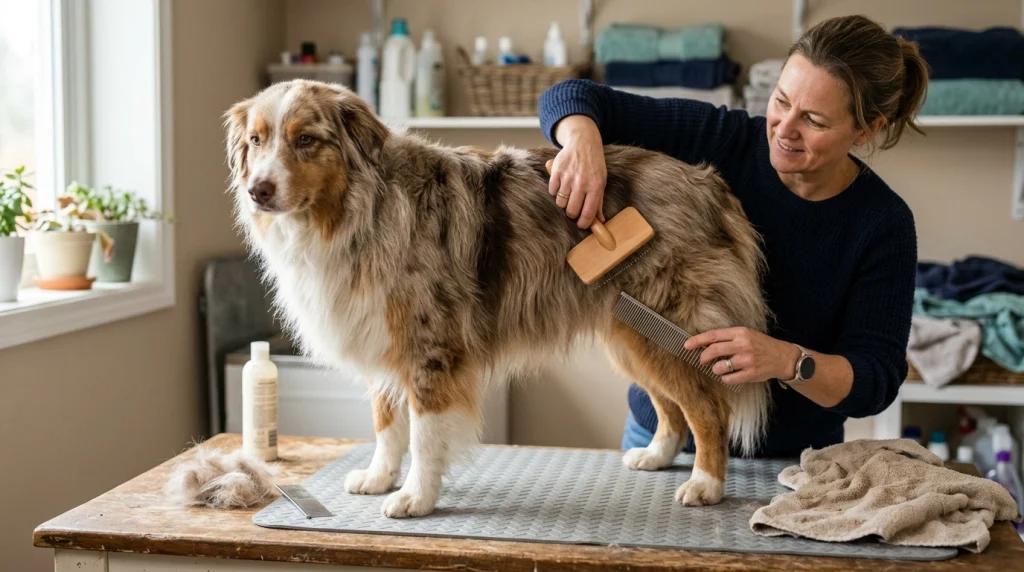
SaveFor general maintenance, I would choose a brush first. It works faster over the body and is better suited to removing loose hair from many common coat types.
For detecting tangles and checking your finished work, I would choose a comb. On longer coats, the comb often catches what a quick brush-through misses.
| Feature | Dog Brush | Dog Comb |
|---|---|---|
| Main job | Routine brushing and loose-hair removal | Detail work and tangle checking |
| Coverage | Wide | Narrow |
| Speed | Usually faster | Usually slower |
| Detecting small tangles | Moderate | Excellent |
| Short smooth coats | Often the better choice | Usually limited benefit |
| Long or curly coats | Useful for the main grooming pass | Useful for finishing and checking |
| Dense undercoat | Specialized rake or slicker can reach deeper | Useful as a final check |
That distinction matters more than it first appears. A coat can look smooth on top while still hiding tangles underneath.
When Is a Brush Better Than a Comb for a Dog?
A brush is usually better when your main goal is routine coat maintenance. It covers more hair per stroke and can collect loose fur before it reaches your clothes and furniture.
The exact brush still needs to match the coat. A short-coated Boxer and a heavily coated Husky should not be groomed with the same tool.
Short, Smooth Coats
For short coats, I usually reach for a rubber grooming brush or soft bristle brush. These tools can loosen dead surface hair without requiring long teeth.
The ASPCA’s dog grooming guidance recommends rubber and bristle brushes for smooth, short coats.
Medium and Long Coats
Pin brushes and slicker brushes become more useful as coat length increases. The extra reach helps separate hair rather than only polishing the surface.
I still keep a comb nearby. A brush can make a long coat look tidy before every small snag has been removed.
Double Coats
Dense double coats often need a rake, suitable slicker, or another tool that reaches loose undercoat. A basic finishing comb alone would make that job painfully slow.
For a practical example, see how I approach managing shedding in a Siberian Husky.
When Is a Comb Better Than a Brush for a Dog?
A comb is better when precision matters more than speed. I use it to find resistance in areas that already look brushed.
That makes a comb especially useful around ears, furnishings, tails, feathering, legs, and other places where longer hair can hide small tangles.
- Checking your work: Run the comb gently through a brushed section to locate remaining snags.
- Separating longer hair: Metal teeth can help reveal individual tangles more clearly.
- Working small areas: A comb offers more control around tighter spaces.
- Finding hidden knots: The teeth tend to stop where a superficial brush pass may glide over.
- Finishing curly coats: A comb can help confirm that the coat is separated down toward the base.
Never use that resistance as permission to pull harder. If the comb stops, I stop too.
I separate the hair with my fingers and inspect the snag first. Yanking a metal comb through a knot can pull the skin and make future grooming harder.
Should You Brush or Comb a Dog First?
For most long, curly, or heavily coated dogs, I brush first and comb second. The brush handles the bulk work, while the comb becomes my quality-control tool.
This two-step method is simple and easy to repeat.
- Inspect the coat. Look for redness, debris, obvious mats, sores, or sensitive areas.
- Brush in small sections. Follow the direction of hair growth and use light pressure.
- Work from easier areas first. Don’t begin by fighting the worst tangle.
- Use the comb gently. Test the section you just brushed.
- Stop at resistance. Don’t drag the comb through a snag.
- Rework that section. Use your fingers and the appropriate brush before checking again.
My favorite practical test is simple. If a suitable metal comb can pass comfortably through a long coat without catching, I know I’ve done more than smooth the surface.
Does Coat Type Change Whether a Brush or Comb Is Better?
Yes. Coat type is the main reason there is no universal winner between a brush and comb.
As of 2026, professional grooming standards still emphasize selecting grooming tools according to their purpose and the dog’s coat type. The AKC professional grooming standards specifically include tool selection plus brushing and combing technique.
| Coat Type | Good Starting Tool | Role of a Comb |
|---|---|---|
| Smooth, short | Rubber or bristle brush | Usually minor |
| Short, dense | Slicker or suitable shedding brush | Occasional checking |
| Long, straight | Pin or slicker brush | Important finishing tool |
| Curly | Slicker brush | Important for checking separation |
| Double coat | Rake, slicker, or coat-specific tool | Helpful finishing check |
Can a Dog Comb Remove Mats?
 Save
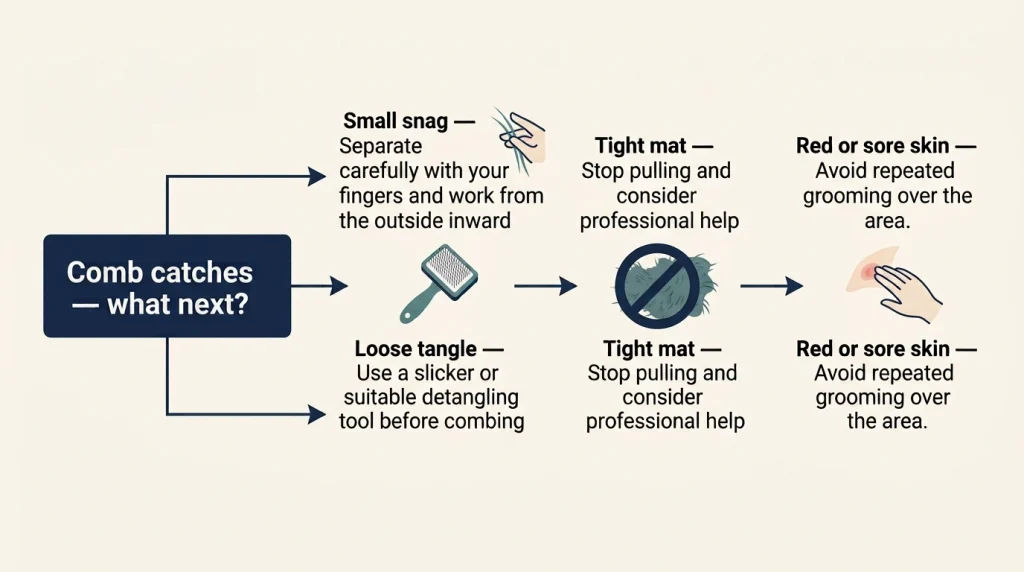
SaveA comb can help with small loose tangles, but I would not use it to force through a tight mat. The tighter the mat sits against the skin, the more careful you need to be.
Severe matting can pull painfully on the skin. Tight mats also make it difficult to see exactly where the skin begins.
- Small snag: Separate it carefully with your fingers and work from the outside inward.
- Loose tangle: A slicker or suitable detangling tool may help before combing.
- Tight mat: Stop pulling and consider professional help.
- Red or sore skin: Avoid repeated grooming over the area.
- Sudden coat problems: Ask your veterinarian when skin or hair changes look unusual.
A grooming session should make the dog more comfortable. Removing every knot in one sitting isn’t worth creating pain or fear.
How Often Should You Brush and Comb Your Dog?
There is no single schedule that fits every dog. Coat length, density, shedding, activity, and tendency to mat all change the answer.
The AKC’s home dog grooming guidance notes that many dogs benefit from several brushing sessions per week, while long-coated dogs can need more frequent attention.
- Short smooth coat: A weekly grooming session may be enough for many dogs.
- Medium coat: Check the coat several times weekly and adjust for shedding.
- Long coat: More frequent brushing and comb checking may be necessary.
- Curly coat: Check regularly because tangles can form close to the skin.
- Heavy seasonal shedding: Increase brushing while loose undercoat is releasing.
I prefer shorter, calm sessions over waiting until the coat becomes difficult. Ten comfortable minutes can be more useful than an occasional grooming battle.
Common Brush and Comb Mistakes to Avoid
The tool matters, but technique matters just as much. Even a good brush can irritate skin when it’s used aggressively.
- Brushing only the surface: Long hair can look smooth while tangles remain near the base.
- Pressing too hard: Wire pins should move through hair, not scrape repeatedly across skin.
- Pulling the comb: Resistance is a signal to stop and inspect the section.
- Using one tool for every coat: A brush designed for short coats may never reach dense undercoat.
- Ignoring sensitive zones: Ears, armpits, legs, tail areas, and friction points often deserve extra care.
- Trying to finish everything: A stressed dog benefits more from several short sessions.
One lesson I keep coming back to is that more removed hair doesn’t automatically mean better grooming. Comfortable skin and an evenly separated coat matter more than producing the biggest pile of fur.
What Should You Look for When Choosing a Brush or Comb?
 Save
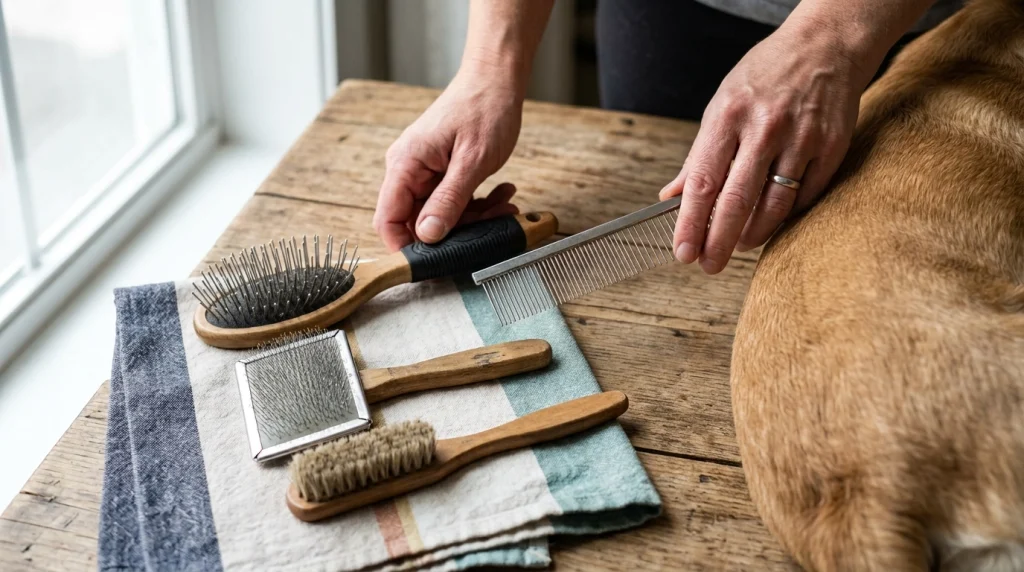
SaveChoose the tool for your dog’s coat rather than the words printed on the package. Labels such as “all breeds” tell me far less than pin length, tooth spacing, and the job the tool is designed to perform.
- Correct reach: Pins or teeth should suit the coat’s actual length and density.
- Smooth finish: Rough metal edges can snag hair and irritate skin.
- Comfortable grip: Better control usually means gentler grooming.
- Useful tooth spacing: Wider teeth help with thicker hair, while finer teeth provide a closer check.
- Appropriate head size: Large tools cover the body quickly, while smaller heads help in tight areas.
For a dog with several coat textures, one tool may still not be enough. A simple brush-and-comb combination often makes more sense than searching for a single miracle tool.
Dog Brushes and Combs I Would Consider
If you’re ready to build a practical grooming kit, I would choose tools that perform different jobs rather than buying three versions of the same brush.
🏆 Best Routine Brush
Hertzko Self-Cleaning Slicker Brush
★★★★½
This slicker-style brush uses fine bent wires and a push-button cleaning mechanism. I like this type of brush for routine loose-hair removal on suitable medium and longer coats because cleanup is quick between sections.
🔍 Best Finishing Check
Andis Steel Pet Comb
★★★★½
A steel comb gives you rigid teeth and clear feedback when a section still contains a snag. I prefer this type of tool after brushing longer hair because it makes an excellent final check without pretending to replace the main brush.
🐕 Best for Loose Undercoat
FURminator Undercoat deShedding Tool
★★★★☆
This specialized tool is designed to reach loose undercoat beneath the outer coat. I would choose the correct size and coat-length version and use controlled passes rather than repeatedly working one patch of skin.
Frequently Asked Questions
Can I use only a comb on my dog?
You can use only a comb on some dogs, but it is often slower than brushing the whole coat first. A comb is most useful for detail work, longer hair, and checking for tangles. Short-coated dogs usually get more benefit from an appropriate brush.
Is brushing or combing better for shedding?
Brushing is usually better for general shedding because a suitable brush covers more coat and collects loose hair efficiently. For thick double coats, a rake or specialized shedding tool may work better. A comb is useful afterward for checking whether dense sections are fully groomed.
Should I comb my dog after brushing?
Yes, especially if your dog has long, curly, feathered, or tangle-prone hair. I use the comb as a final check. If it moves comfortably through a section, that gives me more confidence that I brushed beyond the visible surface.
Can a slicker brush replace a comb?
Not completely. A slicker brush can remove loose hair and many tangles, but a metal comb provides more precise feedback. On longer coats, a slicker may leave small knots behind even when the surface looks smooth, which is why I like using both.
Does a short-haired dog need a comb?
Usually not for routine grooming. Most short, smooth coats respond better to rubber or bristle brushes that loosen dead hair and cover the body quickly. A comb becomes more useful as coat length, feathering, curl, or tangle risk increases.
Final Takeaway: Most Dogs Need the Right Tool, Not a Universal Winner
If I had to choose just one tool for routine grooming, I would pick the coat-appropriate brush. It is faster, covers more area, and handles the main loose-hair work for most dogs.
But I would still want a comb for many long, curly, or dense coats. The brush does the work, while the comb tells me whether that work is finished.
Start with your dog’s coat type, use light pressure, and stop when a tool catches. A calm grooming routine with two simple tools can work much better than forcing one brush or comb to do every job.

Thomas Cutter is a lifelong dog owner and the founder of FindOutAboutDogs.com. With over 10 years of hands-on experience owning multiple breeds, Thomas created this site to provide honest, research-based dog advice that real owners can actually trust.
