How to Manage Shedding in a Siberian Husky: 2026 Guide
Quick Answer
To manage shedding in a Siberian Husky, brush the double coat regularly, increase grooming during seasonal coat blows, and remove loose undercoat without stripping healthy guard hairs. A good starting point is to follow a gentle Husky brushing routine using an undercoat rake, slicker brush, and metal comb.
Quick steps to control Husky shedding
- Brush weekly: Give the coat a thorough brushing during normal shedding periods.
- Increase frequency: Use shorter, more frequent sessions when large amounts of undercoat begin loosening.
- Reach the undercoat: Use a rounded-pin rake or suitable de-shedding tool instead of brushing only the surface.
- Finish gently: Follow with a slicker brush or comb to collect loosened fur and check your work.
- Protect the coat: Do not routinely shave a healthy Siberian Husky simply to reduce shedding.
- Check the skin: Contact your veterinarian if shedding comes with bald spots, sores, redness, or persistent itching.
The goal
- Remove loose dead undercoat comfortably rather than trying to make your Husky completely shed-free.
If you share your home with a Siberian Husky, loose fur is part of the deal. The good news is that you can keep it far more manageable with a consistent routine.
I focus on collecting fur before it reaches the sofa rather than trying to stop a natural coat cycle. That approach is easier on the dog and much more realistic.


Why Does a Siberian Husky Shed So Much?
A Siberian Husky sheds heavily because the breed has a dense double coat. Loose undercoat can come away in large amounts during seasonal coat changes.
The Siberian Husky Club of America coat standard describes a soft, dense undercoat beneath straighter protective guard hairs. It also notes that losing much of the undercoat during shedding season is normal.
Definition: A coat blow is a period when a double-coated dog releases a large amount of loose undercoat over a relatively short time.
- Undercoat: Soft, dense hair beneath the visible outer coat.
- Guard hairs: Straighter outer hairs that help protect the skin and undercoat.
- Seasonal shedding: A heavier release of undercoat as the coat changes.
- Year-round shedding: Smaller amounts of loose hair can still appear between major coat changes.
The American Kennel Club notes that Siberian Huskies commonly experience heavier shedding periods and benefit from regular brushing. Indoor lifestyle, climate, coat density, and the individual dog can affect exactly when you notice the biggest change.
How Often Should You Brush a Siberian Husky?
For normal maintenance, weekly brushing is a practical baseline for many Huskies. During a heavy coat blow, shorter sessions every day or two may be easier to manage.
I would rather do ten calm minutes several times than force one exhausting marathon session. Stop before your dog becomes uncomfortable or the skin becomes irritated.
| Coat situation | Practical schedule | Main tool |
|---|---|---|
| Normal shedding | About once weekly | Slicker or pin brush |
| Heavy seasonal coat blow | Short sessions daily or every other day as needed | Undercoat rake plus slicker |
| After outdoor debris | Check the coat immediately | Metal comb or pin brush |
| Sensitive skin | Brief sessions based on tolerance | Gentle rounded-pin tool |
As of 2026, consistency is still more useful than aggressive de-shedding. The ASPCA’s dog grooming guidance also recommends regular brushing to reduce loose hair around the home.
What Is the Best Way to Manage Husky Shedding?
 Save
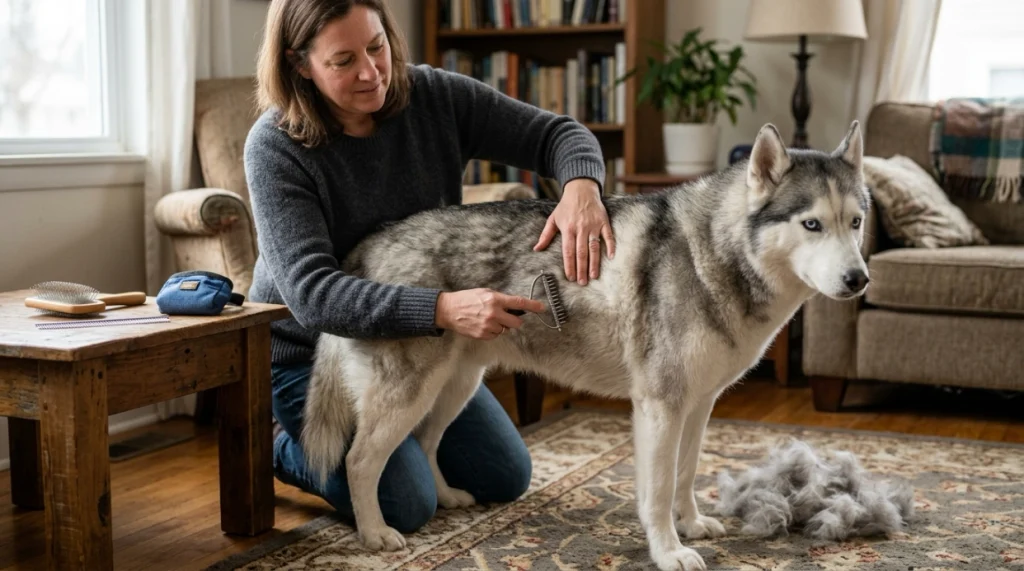
SaveThe best routine removes loose undercoat in layers while protecting the skin and healthy topcoat. Work section by section instead of repeatedly dragging a tool across the whole back.
- Inspect the coat first. Look for sores, redness, burrs, tangles, or painful areas.
- Separate a small section. Lift the outer coat so you can see what is happening underneath.
- Loosen dead undercoat. Use a suitable undercoat rake with short strokes in the direction of hair growth.
- Empty the rake often. Packed teeth cannot move through the coat effectively.
- Follow with a slicker. Collect loosened fur and smooth the outer coat.
- Check with a metal comb. Stop at resistance instead of forcing the comb through.
- Finish on a good note. Reward your Husky before patience runs out.
My preferred stopping rule is simple: the coat should feel freer and the comb should pass comfortably. I do not keep brushing one spot just because a few hairs still appear.
For a deeper breakdown of tool choice, see the guide to the best brushes for a Husky.
Which Brush Works Best for Siberian Husky Shedding?
An undercoat rake is usually the most useful tool during a major coat blow. A long-pin slicker brush works well as a second step for collecting loose fur and separating the coat.
No single brush handles every job perfectly. I prefer a small kit because each tool solves a different problem.
| Tool | Best use | Undercoat reach | Main caution |
|---|---|---|---|
| Rounded-pin undercoat rake | Loose seasonal undercoat | High | Avoid digging into the skin |
| Long-pin slicker | Finishing and surface loose hair | Medium to high | Repeated pressure can irritate skin |
| Metal comb | Checking completed sections | Medium | Never yank through resistance |
| Rubber grooming brush | Surface hair and massage | Low | Usually insufficient as the main Husky tool |
The AKC’s double-coat grooming guidance also recommends tools such as grooming rakes, steel combs, and slicker brushes for removing loose undercoat.
Does Bathing Help Reduce Husky Shedding?
 Save
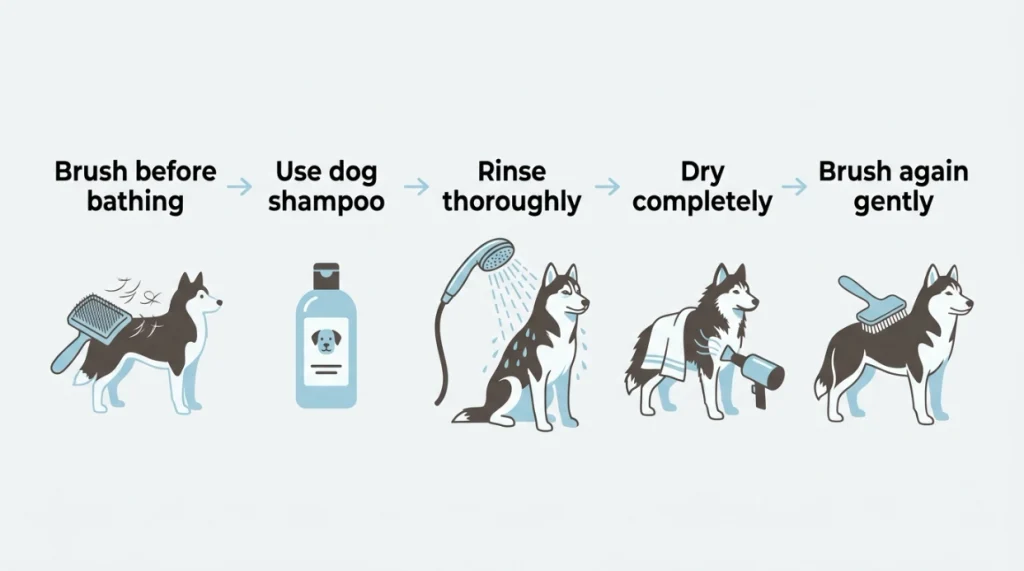
SaveBathing can loosen hair that is already ready to shed, but it does not stop the natural coat cycle. A bath is most useful when your Husky needs cleaning or when it fits into a planned grooming session.
- Brush before bathing: Remove obvious loose hair and tangles first.
- Use dog shampoo: Human shampoos are not formulated for canine skin.
- Rinse thoroughly: Dense undercoat can hold shampoo residue.
- Dry completely: A dry-looking surface can still hide moisture underneath.
- Brush again gently: Finish by removing hair loosened during washing and drying.
The veterinary guidance from VCA Animal Hospitals explains that Siberian Huskies have a dense outer coat and soft undercoat that commonly undergo seasonal shedding.
Should You Shave a Siberian Husky to Stop Shedding?
No. Routine shaving is not a good solution for normal Siberian Husky shedding.
The goal is to remove loose dead hair while leaving the functional coat intact. The breed standard specifically recognizes both the dense undercoat and protective outer guard hairs as normal coat features.
- Do not shave for convenience: Shortening the coat does not eliminate the natural hair-growth cycle.
- Do not aggressively strip the coat: Healthy attached hair should remain in place.
- Do not cut tight mats blindly: Dog skin can sit close to a mat and may be injured by scissors.
- Get professional help: Severe matting, medical clipping, or skin disease needs a different approach.
I would choose patient grooming over drastic coat removal whenever the skin and coat are otherwise healthy. A professional groomer can help if the undercoat has become badly compacted.
Can Food or Supplements Stop a Husky From Shedding?
No food or supplement can completely stop normal shedding. Good nutrition supports healthy skin and hair, but a Siberian Husky will still replace old coat.
Be cautious with products promising to eliminate shedding. A sudden diet change is not a substitute for checking the skin, coat, parasites, grooming routine, and overall health.
- Feed a complete diet appropriate for your dog’s life stage.
- Keep fresh drinking water available.
- Follow veterinarian-recommended parasite prevention.
- Discuss supplements with your veterinarian before adding them.
When Is Husky Shedding a Reason to Call the Vet?
Normal shedding should leave an evenly covered coat and comfortable skin. Bald spots, inflamed areas, sores, or severe itching deserve veterinary attention.
- Patchy hair loss: Clear bare areas or uneven thinning.
- Persistent itching: Frequent scratching, licking, biting, or rubbing.
- Skin changes: Redness, scabs, bumps, odor, moisture, or open sores.
- Coat changes: Hair becomes unusually brittle, dull, or easy to pull out.
- General illness: Appetite, energy, thirst, or behavior changes accompany coat loss.
The ASPCA notes that unusually heavy hair loss can occur alongside parasites, allergies, infections, hormonal disease, and other health problems. Grooming harder will not fix an underlying medical issue.
How Can You Keep Husky Fur Under Control Around the House?
 Save
SaveManaging the dog and managing the house are two parts of the same job. Catching loose hair during grooming reduces what eventually reaches flooring, bedding, and furniture.
- Use washable throws: Cover your Husky’s favorite resting spots.
- Vacuum high-traffic areas: Concentrate on beds, furniture edges, and corners.
- Remove fur before washing bedding: Loose clumps can collect inside the washer.
- Clean grooming tools: A rake packed with hair stops working efficiently.
- Maintain vacuum filters: Follow the manufacturer’s cleaning and replacement schedule.
If you own other heavy double-coated breeds, the same basic strategy appears in our guide to managing German Shepherd shedding. Coat length and tool choice still need to match the individual dog.
Common Husky Shedding Mistakes to Avoid
Most grooming problems come from using too much force or expecting immediate results. A dense double coat rewards consistency more than aggressive brushing.
- Brushing only the surface: The visible coat can look tidy while loose undercoat remains underneath.
- Scraping one area repeatedly: Metal pins and de-shedding edges can irritate skin.
- Pulling through resistance: Stop and investigate a snag instead of forcing the tool.
- Chasing an empty brush: Some loose hair may continue appearing even after a successful session.
- Ignoring body language: Flinching, turning, sitting down, or walking away may signal discomfort.
- Waiting for a huge coat blow: Routine maintenance makes seasonal shedding easier to handle.
A short comfortable session is productive even if you do not finish the whole dog. You can work another section tomorrow.
Husky Grooming Tools I Would Consider
If you’re ready to build a simple shedding kit, I would start with tools that perform different jobs. You do not need three versions of the same brush.
💰 Best Budget Undercoat Tool
Safari Double Row Undercoat Rake
★★★★½
The double-row design uses pins made for reaching dense undercoat and removing loose hair. I like this style as a straightforward first tool when a Husky starts releasing soft seasonal fluff.
🐾 Best for Controlled De-Shedding
FURminator Undercoat deShedding Tool
★★★★☆
Its stainless-steel de-shedding edge is designed to reach loose undercoat beneath the topcoat. I would use fewer gentle passes and choose the correct size and coat-length version rather than repeatedly working one patch.
✨ Best Premium Finishing Brush
Chris Christensen Big K Slicker Brush
★★★★½
The Big K uses 27 mm pins and is designed for longer, dense, difficult coats. I would choose it as a finishing and line-brushing tool when deeper reach matters more than keeping the grooming kit inexpensive.
Frequently Asked Questions About Siberian Husky Shedding
Do Siberian Huskies shed all year?
Yes. Siberian Huskies can release some hair throughout the year, with heavier periods when the undercoat changes seasonally. Indoor temperature, daylight exposure, climate, and the individual coat can affect how obvious each shedding period becomes.
How long does a Husky coat blow last?
There is no exact duration that applies to every Husky. You may notice a concentrated period of loose undercoat followed by gradually lighter shedding, so adjust brushing frequency according to what the coat is releasing rather than following a rigid number of days.
Can I brush my Husky every day?
Short, gentle daily brushing can be useful during heavy shedding if your Husky’s skin remains comfortable. Aggressive daily use of a sharp de-shedding edge is different, so follow the manufacturer’s directions and stop if you notice redness, pulling, or irritation.
Why does my Husky still shed after I brush him?
Brushing removes hair that is loose during that session, but more undercoat can release afterward. Continued shedding does not mean you should keep brushing indefinitely, because repeated passes over the same skin can create irritation.
Is a slicker brush enough for a Siberian Husky?
A slicker brush is useful for finishing and collecting loosened surface hair, but it may not handle a major coat blow by itself. A rounded-pin undercoat rake plus a slicker and metal comb gives you more control over the different layers.
Make Husky Shedding a Routine, Not an Emergency
You cannot make a healthy Siberian Husky stop shedding, but you can control where much of that loose coat ends up. Regular brushing, gentle undercoat removal, thoughtful bathing, and consistent household cleanup make the biggest difference.
Start with one comfortable grooming session today. Once the routine becomes normal for both of you, the next seasonal coat blow will feel much less overwhelming.

Thomas Cutter is a lifelong dog owner and the founder of FindOutAboutDogs.com. With over 10 years of hands-on experience owning multiple breeds, Thomas created this site to provide honest, research-based dog advice that real owners can actually trust.
