Dense Pins vs Wide Spaced Pins: Which Dog Brush Is Better?
Quick Answer
Dense pins are generally better for separating loose hair and working through suitable coats with small tangles, while widely spaced pins are useful for gliding through long, flowing hair with less snagging. The best choice depends on coat length, density, and grooming goals. For a broader overview, see this guide to choosing the right dog brush.
How the pin spacing affects grooming
- Dense pins: Help separate coat strands and collect loose hair, especially in suitable medium, long, curly, or dense coats.
- Wide spaced pins: Move through long, silky, or feathered coats with less contact between individual strands.
- Pin length: Determines how deeply the brush can reach into the coat.
- Pin tips: Rounded, smooth tips can improve comfort, but pressure and technique still matter.
- Coat type: Dense double coats and curly coats often need different tools from short, smooth coats.
- Final check: A suitable comb can reveal tangles that a surface brush leaves behind.
A simple buying rule
- Choose a dense-pin slicker for appropriate coats that need separation and light detangling.
- Choose a widely spaced pin brush for maintaining longer coats and smoothing the outer hair.
- Never press harder to compensate for the wrong brush or force either tool through a tight mat.
Choosing between dense pins and wide spaced pins can make a noticeable difference in your dog’s grooming routine. I recommend looking beyond the brush head’s appearance and considering what the pins need to do inside your dog’s coat.
In this guide, I’ll explain how spacing affects loose-hair removal, detangling, comfort, and coat coverage, with practical examples to help you choose the right dog brush in 2026.


What Is the Difference Between Dense Pins and Wide Spaced Pins?
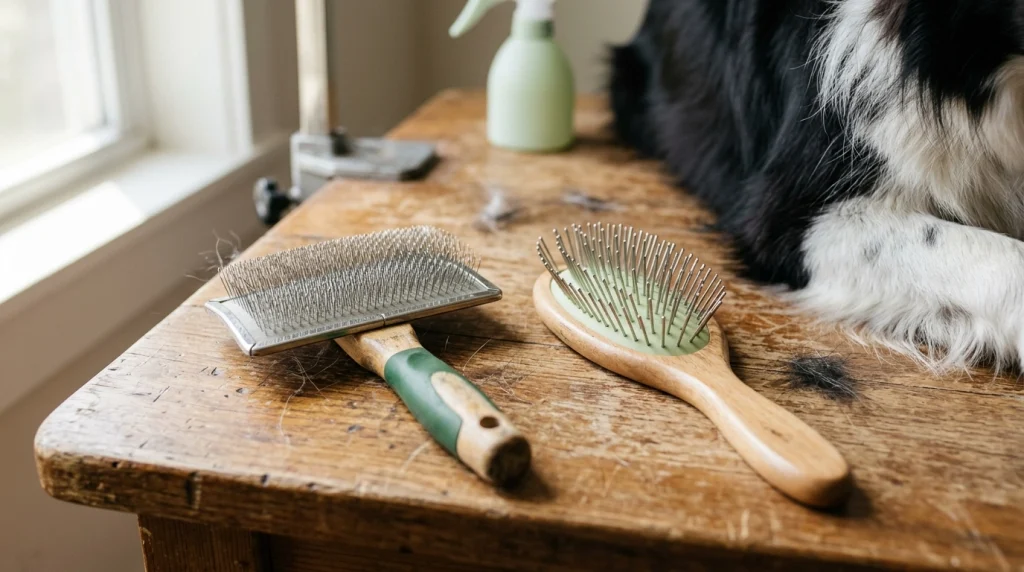
Dense pins are arranged close together across the brush head, while wide spaced pins leave more room between individual pins. This difference affects how the brush contacts the hair, collects loose fur, and moves through tangles.
Pin spacing is the distance between neighboring pins, not the length of the pins themselves. A brush can have long, dense pins or short, widely spaced pins, so both measurements matter.
- Dense-pin brushes: Commonly found on slicker brushes with numerous fine, angled wire pins.
- Wide-pin brushes: Commonly found on pin brushes with longer, straight pins on a cushioned base.
- Mixed designs: Some grooming tools use different pin lengths or arrangements to serve specific coat types.
One important distinction: a slicker brush and a pin brush usually differ in more than spacing. Pin thickness, angle, length, tip shape, and cushion flexibility all affect how each tool performs.
Are Dense Pins Better for Removing Loose Dog Hair?
Dense pins can collect loose hair effectively when their length and design match the dog’s coat. However, dense spacing alone does not guarantee better shedding control.
A slicker brush uses many fine pins to separate the coat and pick up loose hair. This can be helpful for medium-length, curly, or dense coats that trap shed hair.
For example, a dog with a fluffy coat may benefit from a suitable slicker because its pins can separate the hair more thoroughly than a basic surface brush. A short-haired dog may need a rubber grooming brush or bristle brush instead.
Remember that removing loose hair from the coat is not the same as reaching the undercoat. A brush with pins that are too short may collect plenty of surface fur while leaving loose material underneath.
When dense pins make sense
- Curly coats: Suitable slicker brushes help separate curls and identify developing tangles.
- Medium and long coats: Fine pins can help lift loose hair and loosen minor knots when used gently.
- Dense coats: A slicker with appropriate pin length can help separate layers of hair.
- Finishing work: Dense pins can lift and arrange hair when the brush suits the coat and grooming technique.
Dense pins are not automatically the best option for every shedding dog. For many double-coated breeds, an appropriate undercoat rake may be more useful for removing loose undercoat, with a slicker or comb used for other grooming tasks.
When Are Wide Spaced Pins the Better Choice?
Wide spaced pins often work well for long, silky, or feathered coats that need gentle separation and smoothing. Their greater spacing allows the pins to move through the hair without catching as many neighboring strands at once.
A pin brush can be useful on an Irish Setter’s feathering or a similar flowing coat, particularly after larger tangles have been removed. It helps maintain the outer hair without serving as the main tool for tight mats.
Wide spacing has a limitation, though. The pins may pass around small tangles instead of separating them, especially when the coat is dense or tightly curled.
When wide spaced pins make sense
- Long, flowing coats: Help separate and smooth hair that is already reasonably detangled.
- Feathered areas: Can be useful around the legs, tail, and ears when the brush size suits the area.
- Routine maintenance: Help maintain a tidy coat between more thorough grooming sessions.
- Finishing: Can help arrange the outer coat after tangles and trapped loose hair have been addressed.
Do not assume that a widely spaced pin brush is always gentler. Long or stiff pins can still scratch skin when used with excessive pressure, and damaged tips can snag hair.
Dense Pins vs Wide Spaced Pins: Side-by-Side Comparison
 Save
The main difference is how closely the pins interact with the coat. Dense pins provide more contact across the brush head, while widely spaced pins allow more room for individual strands to move.
| Feature | Dense Pins | Wide Spaced Pins |
|---|---|---|
| Pin arrangement | Closely packed | More space between pins |
| Common brush type | Slicker brush | Pin brush |
| Loose-hair removal | Often effective on suitable coats | Useful for loose hair on longer coats, depending on design |
| Minor tangles | Often better at separating them | May glide past small knots |
| Long, silky hair | Can snag if the coat is not prepared | Often suitable for smoothing and maintenance |
| Dense undercoat | May help if pins reach the required depth | May skip over compact undercoat |
| Skin comfort | Requires light pressure and careful technique | Still requires gentle handling and smooth pin tips |
| Best general role | Coat separation and light detangling | Maintaining and finishing longer coats |
These are typical differences, not universal performance guarantees. The brush’s complete design and your dog’s coat determine the actual result.
Practical tip
Check the coat in small sections rather than judging the brush by the hair collected on its head. If the surface looks smooth but a comb catches tangles underneath, the brush may not be reaching the full coat depth.
Which Pin Spacing Is Best for Different Dog Coat Types?
 Save
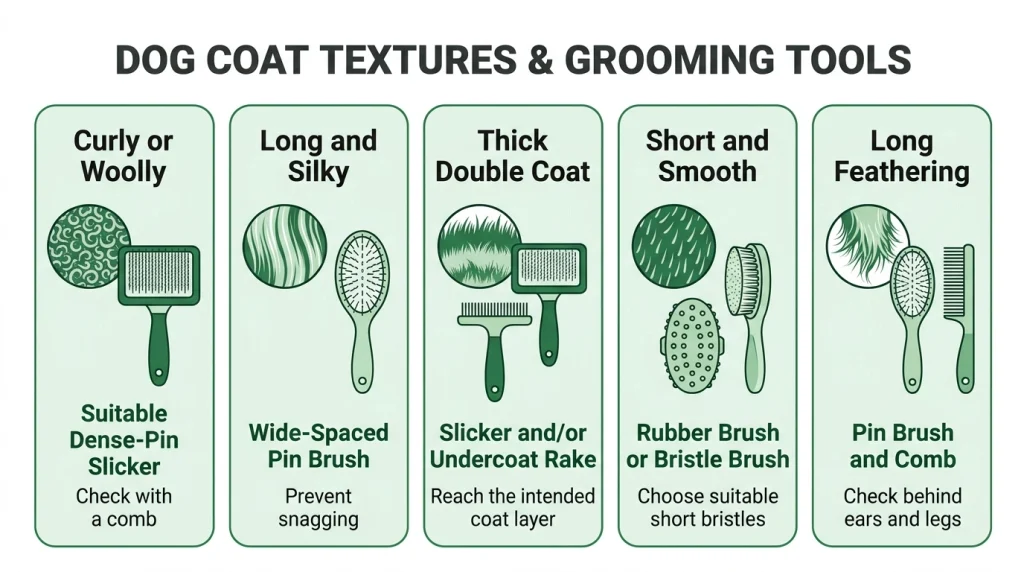
Start with your dog’s coat structure, then choose the spacing and length that suit it. A breed name can provide a useful starting point, but individual coat texture and grooming needs still matter.
| Coat type | Useful starting tool | Why |
|---|---|---|
| Short and smooth | Rubber curry brush or bristle brush | Removes surface hair without unnecessary deep brushing |
| Long and silky | Wide-pin brush and metal comb | Maintains flowing hair and checks for hidden knots |
| Curly or woolly | Suitable slicker and metal comb | Separates curls and helps reveal tangles |
| Dense double coat | Coat-appropriate slicker, undercoat rake, or comb | Addresses different layers and loose undercoat |
| Long feathering | Pin brush with suitable length | Helps separate and smooth the longer hair |
| Wire coat | Suitable slicker, pin brush, and comb | Supports routine maintenance; some coats need specialist care |
For a dog with a thick undercoat, pin spacing is only part of the decision. See my guide to brushing a dog with a thick undercoat for a closer look at the tools that can help.
What about Border Collies, Golden Retrievers, and similar double-coated dogs?
These dogs often benefit from a combination of grooming tools rather than a single brush. A suitable slicker can separate the coat, while an appropriate undercoat rake helps remove loose undercoat during shedding.
For long feathering around the tail, legs, or ears, a pin brush may help with finishing. A comb can then check for tangles that remain close to the skin.
Keep the coat’s condition in mind. If the hair is already free of tangles, repeated brushing with dense wire pins can irritate the skin without providing much extra benefit.
Does Pin Length Matter More Than Pin Spacing?
Pin length is often the first measurement to check when your dog’s coat is thick or long. Spacing affects how the pins interact with the hair, but length determines how far they can reach.
Imagine brushing a thick double coat with very short pins. The brush might collect loose hair from the top while leaving tangles and packed fur closer to the skin.
Now consider a long pin brush with wide spacing on the same coat. The pins may reach farther, but the gaps could allow loose undercoat and small tangles to pass between them.
Neither design solves every problem. The best combination depends on the coat’s depth, texture, and condition.
- Short pins: Often suit shorter coats or surface grooming when the brush design is appropriate.
- Medium-length pins: Can suit many medium coats, depending on their density and texture.
- Long pins: May reach deeper into thick or long coats but require careful pressure control.
- Flexible brush heads: Can adapt to the body’s contours, but flexibility does not make aggressive brushing safe.
Manufacturers use different measurements and pin designs, so avoid choosing solely by labels such as “long pin” or “extra dense.” Look for a clear description of the coat types the manufacturer intends the brush to handle.
Can Dense Pins or Wide Spaced Pins Hurt a Dog’s Skin?
Yes, either design can cause discomfort when used incorrectly. Closely packed wire pins can scrape the skin under repeated pressure, while stiff, damaged, or poorly finished pins can scratch or snag hair.
A slicker brush is especially important to handle gently because its fine wires can irritate skin if you press down or repeatedly brush the same spot. Professional grooming education also emphasizes choosing suitable brush tension and adapting the tool to sensitive areas.
- Use light strokes: Let the pins separate the coat instead of forcing them through it.
- Work in small sections: Smaller sections help you notice tangles before pulling becomes uncomfortable.
- Check the skin: Watch for redness, scratches, or unusual sensitivity during and after grooming.
- Inspect the brush: Replace or stop using brushes with bent, broken, sharp, or damaged pins.
- Stop when your dog reacts: Repeated flinching, turning toward the brush, or trying to leave can signal discomfort.
If your dog has a rash, open wound, persistent itching, or painful mats, avoid brushing directly over the affected area. Ask a veterinarian or qualified groomer for guidance rather than trying a different pin spacing on irritated skin.
How Can You Tell Whether Your Dog Needs a Denser or Wider Pin Brush?
Start with the coat’s current condition rather than buying a brush based on shedding alone. A simple grooming check can help you decide whether you need a detangling tool, a finishing brush, or something designed for loose undercoat.
- Part the coat gently. Check whether the hair is smooth near the surface or contains tangles farther down.
- Look at the coat texture. Long, silky hair often suits a pin brush, while curly or tangle-prone hair may need a suitable slicker.
- Match the pin length. Choose a design that reaches the coat depth without forcing the pins against the skin.
- Try a small area. Use a few gentle strokes and watch how the hair moves through the brush.
- Check the result. Use an appropriate comb to identify any remaining tangles without forcing it through knots.
I find this approach more useful than judging a brush by how much hair it collects in a single pass. A brush can gather plenty of loose fur while still leaving the deeper coat tangled.
For dogs that dislike grooming, start with a comfortable area and brief sessions. My guide to helping a dog become comfortable with brushing explains how to build a calmer routine.
What Should You Look for When Buying a Dog Brush?
Once you’ve decided between dense pins and wide spaced pins, compare the details that affect comfort, coat coverage, and everyday use. A well-matched brush is more useful than one with the highest pin count or the most impressive marketing claims.
- Pin length: Make sure the pins can reach the part of the coat you need to groom.
- Pin finish: Look for smooth, intact tips that won’t snag hair or scratch the skin.
- Head size: Choose a head that covers larger body areas efficiently while allowing control around the legs and ears.
- Handle comfort: A secure, comfortable grip helps you maintain light pressure.
- Cleaning method: A self-cleaning mechanism can make removing collected hair easier, but it doesn’t guarantee better grooming.
- Coat compatibility: Read the manufacturer’s guidance and consider your dog’s coat length, density, and sensitivity.
For additional guidance on brush designs, the American Kennel Club’s dog brush guide explains how common grooming tools differ and which coats they typically suit.
It’s also worth reviewing the AKC’s grooming tools and supplies advice before assembling a complete grooming kit.
Which Dog Brushes Are Worth Considering?
If you’re ready to buy, I’d choose based on the grooming job rather than pin density alone. These three established brush options cover different needs, but check the exact model’s design and suitability for your dog’s coat before ordering.
BEST FOR DENSE OR CURLY COATS
Chris Christensen Big G Slicker Brush
A professional-style slicker designed for coat separation and fluffing. Consider its pin length and firmness carefully, particularly if your dog has sensitive skin or a fine coat.
BEST FOR LONG-COAT MAINTENANCE
Andis Premium Pet Pin Brush
A pin-brush option to consider for routine grooming and smoothing longer coats. Verify the pin length, tip design, and head size of the specific model before purchasing.
BEST FOR DOUBLE-COAT SHEDDING
FURminator Undercoat Deshedding Tool
An alternative to ordinary pin brushes for removing loose undercoat from suitable shedding breeds. Select the correct size and coat version, and follow the manufacturer’s instructions to avoid excessive hair removal.
These are options to investigate, not hands-on test rankings. Product specifications, available sizes, and brush versions can change, so confirm the details on the listing before choosing.
Frequently Asked Questions
Are dense pins better than wide spaced pins for shedding?
Dense pins can collect loose hair effectively when their length and design suit the coat. However, widely spaced pins may work well for longer coats, while a dedicated undercoat rake can be more effective for removing loose undercoat from suitable double-coated dogs.
Do wide spaced pins prevent tangles?
Wide spaced pins can help maintain a long coat and separate hair that is already reasonably detangled. They may miss smaller knots, though, particularly in dense or curly coats. Use a suitable detangling brush and a comb to check for remaining tangles.
Can I use a dense-pin slicker brush every day?
You can use a suitable slicker regularly when your dog’s coat needs it, but frequency and pressure matter. Work in small sections with gentle strokes, and stop if you notice redness or discomfort. Short, smooth coats often need a different brush and less frequent grooming.
Are long pins always better for thick-coated dogs?
Not necessarily. Longer pins can reach deeper into a thick coat, but their spacing, firmness, and tip shape also affect performance. Choose a brush designed for the specific coat type, and consider an appropriate undercoat rake when loose undercoat is the main concern.
Should I use a pin brush or a slicker brush first?
For a long, flowing coat with minor tangles, a suitable slicker may help separate knots before a pin brush smooths the hair. For a coat that’s already detangled, a pin brush may be enough for maintenance. The right order depends on the coat and grooming goal.
Final Takeaway: Dense Pins vs Wide Spaced Pins
Dense pins are generally the better starting point when you need to separate suitable coats, collect loose hair, or work through minor tangles. Wide spaced pins are often more useful for maintaining and smoothing long, flowing hair.
Don’t choose by spacing alone. Match pin length, tip design, brush firmness, and technique to your dog’s coat, then check the finished result with a suitable comb when necessary.
My recommendation is simple: choose the brush that reaches the right part of the coat without pulling or scraping the skin. If you’re unsure about your dog’s coat structure or dealing with persistent matting, ask a professional groomer or veterinarian for advice.

Thomas Cutter is a lifelong dog owner and the founder of FindOutAboutDogs.com. With over 10 years of hands-on experience owning multiple breeds, Thomas created this site to provide honest, research-based dog advice that real owners can actually trust.
