How to Desensitize a Dog to Brushing: 7 Gentle Steps
Quick Answer
To desensitize a dog to brushing, introduce the brush in tiny steps while pairing each calm response with something your dog loves. Start before the brush touches the coat, keep sessions short, and move forward only while your dog stays relaxed, following the same basic desensitization and counterconditioning approach used for handling.
Quick brushing desensitization steps
- Set up calmly: Choose a quiet room, non-slip surface, treats, and a comfortable brush.
- Show the brush: Let your dog notice it, then immediately give a high-value treat.
- Move it closer: Bring the brush near the body without making contact, then reward.
- Add gentle touch: Briefly touch an easy body area with the back or side of the brush.
- Try one stroke: Make one light brush stroke, reward, and stop before your dog gets worried.
- Build slowly: Increase strokes, pressure, and body areas across separate successful sessions.
The most important rule
- Watch your dog: If they freeze, pull away, stop taking food, growl, or try to escape, make the next repetition easier.
If your dog disappears when the brush comes out, the problem usually isn’t stubbornness. The brush, handling, pulling, or grooming position has become uncomfortable or frightening.
I use one simple rule when planning this kind of training: finish while the dog still wants another repetition. A calm ten-second session is more useful than forcing your way through a complete grooming session.


What Does It Mean to Desensitize a Dog to Brushing?
 Save
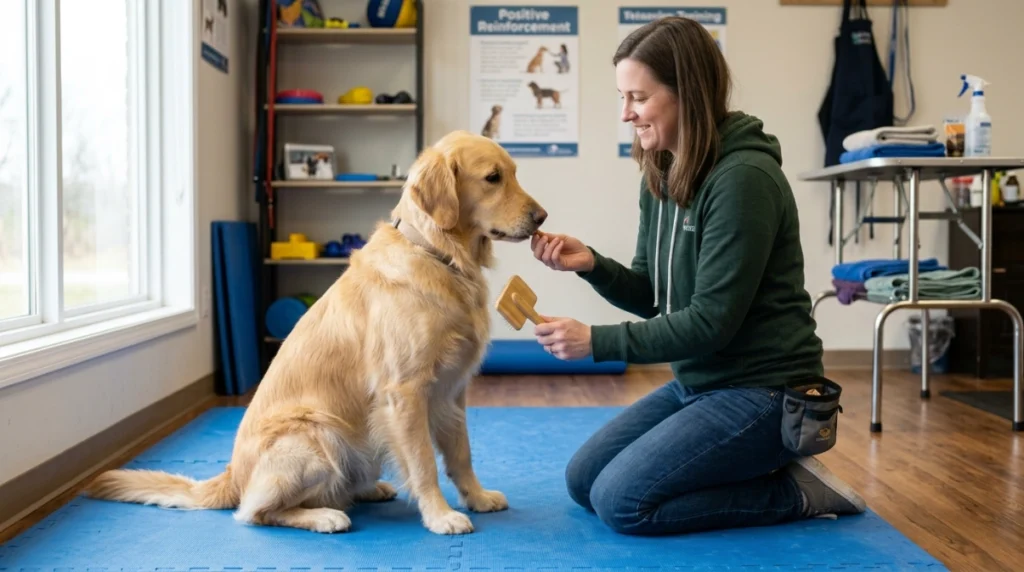
SaveDesensitizing a dog to brushing means exposing them to each part of grooming at a level that doesn’t trigger a strong fear response. You then increase the difficulty gradually as the dog becomes comfortable.
Counterconditioning usually happens alongside desensitization. The brush predicts food, praise, play, or another reward instead of restraint and discomfort.
As of 2026, reward-based behavior modification remains the safer starting point recommended by veterinary behavior specialists. You can review the current AVSAB humane dog training guidance if you want the behavioral principles behind this approach.
Why Is My Dog Afraid of Being Brushed?
 Save
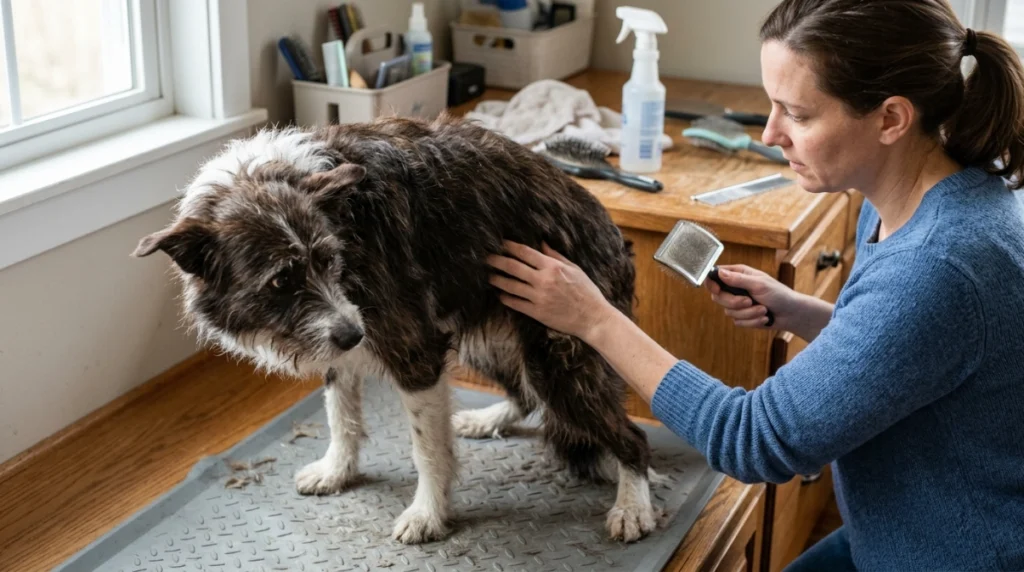
SaveA dog can dislike brushing for several reasons, and finding the cause makes training much easier. Don’t assume every dog is simply being difficult.
- Previous pulling: A slicker brush or comb may have caught a knot and hurt.
- Skin discomfort: Irritation, hot spots, wounds, parasites, or allergies can make normal brushing painful.
- Mats and tangles: Tight mats pull the skin when a brush passes through them.
- Handling sensitivity: Some dogs dislike having their legs, tail, belly, ears, or rear end touched.
- Unstable footing: Sliding on tile or a grooming table can make restraint feel more frightening.
- Too much too soon: A puppy or newly adopted dog may never have learned that brushing is safe.
- Tool sensitivity: Stiff pins, noisy grooming tools, or excessive pressure may feel unpleasant.
Coat type also changes how much grooming a dog needs. Some low-shedding breeds with high grooming needs require frequent brushing even though little loose hair appears around the home.
If a dog suddenly begins resisting brushing after previously enjoying it, I would pause training and look for discomfort first. A veterinary exam is sensible when you see sore skin, swelling, persistent scratching, flinching, or unexplained pain.
How Do I Desensitize My Dog to Brushing Step by Step?
The easiest way is to split brushing into separate skills instead of treating grooming as one task. Your dog doesn’t need to accept a full brushing session on day one.
Step 1: Create a Low-Stress Grooming Area
Choose a quiet place with good lighting and secure footing. A bath mat, yoga mat, or other non-slip surface can help your dog feel more stable.
Have small high-value treats ready before you bring out the brush. You want rewards available immediately, not after your dog is already worried.
Step 2: Make the Brush Predict Something Good
Place the brush far enough away that your dog notices it without backing off. The moment they look at it calmly, give a treat.
Repeat several easy exposures and then put the brush away. At this stage, the brush doesn’t need to touch your dog.
Step 3: Move the Brush Toward the Dog
Hold the brush in your hand and move it slightly toward your dog’s shoulder. Reward before your dog shows concern, then move it away again.
This movement matters because some dogs tolerate a stationary brush but become nervous when it approaches their body. Train that piece separately.
Step 4: Introduce Brief Contact Without Brushing
Touch an easy area, such as the shoulder or upper back, with the smooth side or back of the brush. Make the contact brief, reward, and remove the brush.
Avoid starting with paws, ears, belly, tail, or tangled areas. Those locations often require more preparation.
Step 5: Add One Gentle Brush Stroke
Once contact is easy, make one short stroke in the direction the coat naturally lies. Give your dog a treat immediately afterward.
Then stop. One relaxed stroke is enough for the first successful brushing session.
Step 6: Increase Strokes Before Increasing Difficulty
Build from one stroke to two, then three or four. Stay on a comfortable body area before adding sensitive locations.
Change only one variable at a time. Don’t increase pressure, session length, body sensitivity, and brush type during the same repetition.
Step 7: Add Cooperative Care
You can teach your dog a station, chin rest, or other voluntary position that means, “I’m ready.” Cooperative care gives the dog a predictable way to participate instead of relying on restraint.
The Fear Free training and grooming resources include examples of cooperative handling that can be adapted for grooming.
How Long Should Brushing Desensitization Sessions Last?
Early sessions can last only a few seconds. Once your dog understands the routine, you can gradually build toward several minutes.
The following progression is a practical starting framework, not a deadline. Some dogs move through it quickly, while dogs with a strong grooming fear may need days or weeks at one stage.
| Training Stage | Brush Strokes | Practical Session Target | Advance When |
|---|---|---|---|
| Brush visible | 0 | 15–30 seconds | Dog looks relaxed and takes food normally |
| Brush approaches | 0 | 30–60 seconds | Dog stays in place voluntarily |
| Brief brush contact | 0 | 30–60 seconds | No flinch, freeze, or avoidance |
| First brushing | 1–3 | 30–90 seconds | Dog willingly returns for another repetition |
| Short grooming area | 3–10 | 1–3 minutes | Loose body and normal treat-taking continue |
| Maintenance grooming | As needed | Up to 3–5 minutes before a break | Dog remains comfortable throughout |
You don’t need to increase the difficulty every day. Repeating an easy stage can strengthen confidence and keep the brush predictable.
How Can I Tell When My Dog Is Too Stressed to Continue?
Watch for the earliest changes in body language, not just barking or biting. A dog often communicates discomfort long before reaching that point.
- Turning away: The head or entire body moves away from the brush.
- Freezing: The body suddenly becomes stiff or unusually still.
- Leaving: Your dog walks off the mat or tries to create distance.
- Food refusal: A normally food-motivated dog stops taking treats.
- Tucked posture: Ears move back, the body lowers, or the tail tucks.
- Rapid panting: Panting appears even though the room and activity don’t explain it.
- Vocal warning: Whining, barking, growling, or snapping appears.
If you see these signs, stop increasing the challenge. Return to the last step where your dog could remain relaxed.
That retreat isn’t a failed session. It gives you useful information about the current training threshold.
What Should I Do If My Dog Growls or Snaps During Brushing?
Stop the grooming attempt and create space. Don’t punish a growl, because the growl is useful warning information about your dog’s discomfort.
Consider pain before treating the problem as training alone. Mats, skin inflammation, ear problems, orthopedic pain, and tender areas can all change how a dog responds to touch.
Children shouldn’t handle a dog who is already worried about grooming. If you’d like kids to participate later, this guide to dogs and age-appropriate care tasks for children can help you think about safer responsibilities.
Which Type of Dog Brush Is Best for a Nervous Dog?
The best starting brush is the one that matches the coat while creating the least pulling. A gentle tool can’t replace training, but it can make your first sessions easier.
| Brush Type | Best Use | Sensitivity Consideration |
|---|---|---|
| Rubber curry brush | Short coats and loose hair | Soft rubber contact can be a gentle starting point |
| Soft bristle brush | Short or smooth coats | Usually creates little snagging on an unmatted coat |
| Pin brush | Longer flowing coats | Use light pressure and rounded pins where appropriate |
| Slicker brush | Curly, thick, or tangle-prone coats | Effective but easier to overuse on sensitive skin |
| Undercoat rake | Dense double coats | Introduce after basic handling and brushing are comfortable |
Never try to rip through a tight mat to finish quickly. Severe matting may require a groomer or veterinarian because repeatedly pulling the skin can make future brushing fear worse.
First-time owners should also factor coat maintenance into breed choice. Our guide to small dog breeds for first-time owners compares several breeds with very different brushing requirements.
What Brushing Mistakes Make Desensitization Harder?
Most setbacks happen because the difficulty increases faster than the dog’s comfort. Slowing down usually works better than adding stronger restraint.
- Holding the dog down: Forced restraint may make the brush predict loss of control.
- Waiting for a growl: Respond to subtle avoidance before stress escalates.
- Brushing through mats: Painful pulling can undo otherwise good training.
- Making sessions too long: End after a small win instead of waiting for your dog to struggle.
- Changing tools too fast: Introduce a new slicker, rake, comb, or grooming table as its own training step.
- Using punishment: Scolding doesn’t teach the dog that brushing is safe.
- Ignoring medical causes: Sudden touch sensitivity deserves closer attention.
Consistency also matters. Families often get better results when everyone uses the same gentle handling rules, which is part of building a predictable routine with family-friendly dogs.
How Do I Know Brushing Desensitization Is Working?
Progress means your dog becomes more relaxed and predictable around grooming. It doesn’t necessarily mean they love every brush stroke.
- Your dog stays nearby when the brush appears.
- They approach the grooming mat voluntarily.
- They continue eating normally during easy repetitions.
- Their muscles remain loose instead of freezing.
- They recover quickly after a sensitive area is touched.
- You can brush more strokes without increasing restraint.
- Taking a short break makes it easy to resume.
I care more about voluntary participation than the number of strokes completed. A dog that can calmly walk away and return is often making better progress than one that stays only because someone is holding them.
Dog Brushes I Would Consider for Gentle At-Home Grooming
If you’re ready to pick a brush, these are three useful styles to consider. Match the brush to your dog’s coat rather than choosing only by popularity.
🏆 Gentle Starting Pick
KONG ZoomGroom Dog Brush
My fit rating: ★★★★☆
Its flexible rubber-style grooming surface makes it a useful option for many short-coated dogs. I like this style when the goal is introducing brushing contact without starting with stiff metal pins.
✨ Convenient Slicker
Hertzko Self-Cleaning Slicker Brush
My fit rating: ★★★★☆
A slicker can help work through loose coat on dogs that need more than a rubber brush. I would introduce this type only after the dog is comfortable with basic brushing and always use controlled pressure.
🐕 Thick-Coat Pick
Chris Christensen Big G Slicker Brush
My fit rating: ★★★★★
This is a more specialized slicker option for substantial coats and regular grooming routines. I would choose it for an appropriate coat only after the dog has learned to accept brushing without fear.
Frequently Asked Questions
How long does it take to desensitize a dog to brushing?
Some dogs improve after several short sessions, while a dog with a strong fear history may need weeks or longer. Move forward based on relaxed body language rather than a calendar, and make the training easier whenever your dog begins avoiding the brush.
Should I give my dog treats while brushing?
Yes. Small, high-value treats can help your dog form a more positive association with the brush and handling. Give rewards during easy repetitions, not only after a long grooming session, so your dog clearly connects calm brushing experiences with something enjoyable.
What if my dog won’t let me brush one specific area?
Don’t keep pushing into the sensitive area. Train that location separately using lighter touch and shorter contact, and check for tangles, skin irritation, or pain. If the sensitivity appears suddenly or remains intense, ask your veterinarian to examine the area.
Can I desensitize an older dog to brushing?
Yes. Adult and senior dogs can learn new grooming associations, although long-standing fear may require slower progress. Older dogs may also have arthritis or other discomfort that changes their tolerance for standing, handling, and certain positions, so comfort should come first.
Should I restrain my dog so I can finish brushing?
Routine force is usually a poor foundation for desensitization because it removes the dog’s ability to create distance. Work in smaller voluntary steps instead. If essential grooming cannot be done safely because of matting, pain, or bite risk, contact a veterinarian or qualified groomer.
Final Takeaway: Make the Brush Predict Safety
The fastest-looking approach isn’t always the fastest way to solve brushing fear. Repeated calm sessions teach more than one stressful session where the entire coat gets finished.
Start with the brush at a distance, reward comfort, add contact gradually, and stop before your dog reaches their limit. If you remember only one thing, make it this: progress should be measured by relaxation, not by how much hair you remove.

Thomas Cutter is a lifelong dog owner and the founder of FindOutAboutDogs.com. With over 10 years of hands-on experience owning multiple breeds, Thomas created this site to provide honest, research-based dog advice that real owners can actually trust.
