Grooming Glove vs Brush for Dog Shedding: Which Works Better?
Quick Answer
A grooming glove is usually better for short-haired dogs, light shedding, sensitive dogs, and quick maintenance. A traditional dog brush is usually better for heavy shedding, long coats, tangles, and double coats because the right brush can reach deeper into the fur. For dense double-coated dogs, I would follow a proper shedding-management routine rather than relying on a glove alone.
Main differences
- Short coats: Rubber grooming gloves can collect loose surface hair while feeling similar to normal petting.
- Heavy shedding: Slicker brushes, undercoat rakes, and similar coat-specific tools usually remove deeper loose hair more effectively.
- Sensitive dogs: A flexible glove may be easier for dogs that dislike a conventional brush.
- Long coats: A proper brush provides better reach and control around tangles and dense hair.
- Bath time: Rubber gloves and curry-style tools can work well on wet coats for massaging shampoo through the hair.
- Best overall setup: Many shedding dogs benefit from a glove for quick maintenance and a coat-specific brush for deeper grooming.
Simple rule
- Choose the tool based on your dog’s coat depth and shedding pattern, not just which tool removes the biggest-looking pile of hair.
If you’re comparing a grooming glove vs brush for dog shedding, the answer depends heavily on what is underneath your hand. A smooth-coated Beagle and a thick-coated Husky do not need the same grooming tool.
I look first at coat length, density, tangles, and how comfortable the dog is with handling. That usually tells me more than the product label.


What Is a Grooming Glove for Dogs?
A dog grooming glove is a wearable grooming tool with rubber, silicone, or similar flexible grooming tips across the palm and fingers. You remove loose hair by stroking or massaging the coat with your hand.
The main advantage is familiarity. To many dogs, a grooming glove feels closer to being petted than brushed.
- Flexible contact: The glove follows the curves of the body, legs, chest, and shoulders.
- Surface hair removal: Rubber tips catch loose hairs sitting near the outside of the coat.
- Bathing use: Many rubber gloves can massage shampoo through a wet coat.
- Easy handling: Your hand controls the pressure directly.
- Gentle introduction: Some nervous dogs accept a glove more readily than a metal grooming tool.
The American Kennel Club specifically notes that grooming mitts or gloves can work well for short-coated dogs. Its shedding guidance recommends massaging the coat to loosen dead hair, then smoothing in the direction of growth.
You can read the broader guidance at American Kennel Club.
What Is a Dog Brush for Shedding?
A dog shedding brush is a broad category rather than one single tool. Slickers, bristle brushes, pin brushes, rubber brushes, and undercoat rakes all perform different jobs.
That variety is why a conventional brush often wins for complicated coats. You can match the tool to the dog’s actual hair structure.
- Slicker brush: Fine angled pins help collect loose hair and work through some tangles.
- Bristle brush: Useful for smoothing many short and medium coats.
- Pin brush: Often suited to longer coats that need separation without aggressive hair removal.
- Undercoat rake: Designed to reach loose undercoat beneath the outer coat.
- Rubber curry brush: Useful for short coats and loose surface hair.
The AKC also recommends choosing brushes according to coat type rather than treating one brush as suitable for every dog.
For an example of how coat structure changes tool choice, see my guide explaining what brush works best for a Husky.
Grooming Glove vs Brush for Dog Shedding: What Is the Difference?
 Save
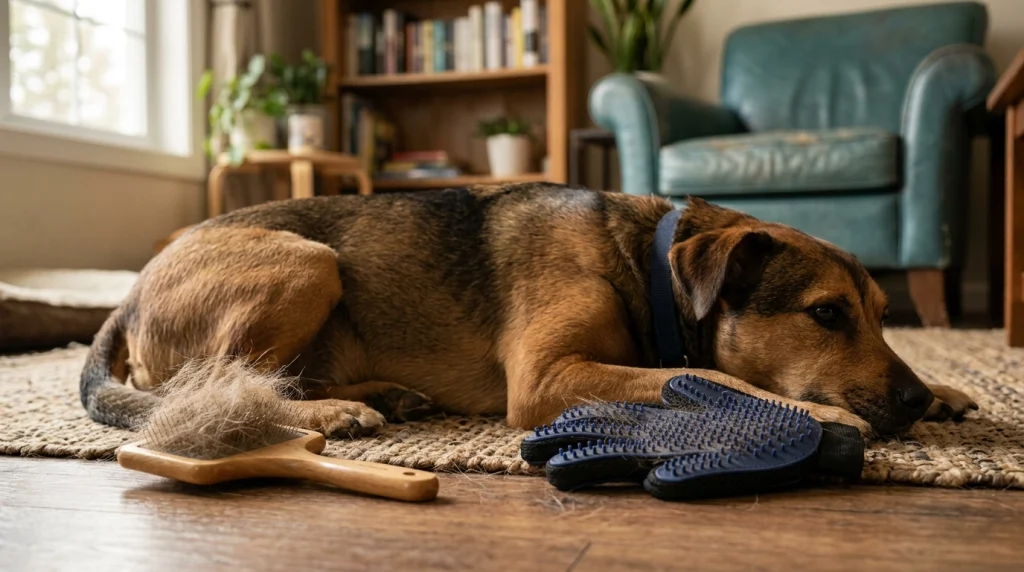
SaveA grooming glove prioritizes gentle contact and easy surface-hair collection. A conventional brush can provide deeper penetration, more precise detangling, and better undercoat access when you choose the correct design.
Here is the difference I would use when deciding between them in 2026.
| Feature | Grooming Glove | Traditional Brush |
|---|---|---|
| Best coat type | Short and smooth coats | Short, medium, long, or double coats when matched correctly |
| Surface shedding | Good | Good to excellent |
| Undercoat reach | Usually low | Medium to high with the right tool |
| Tangle control | Limited | Better with slicker, pin brush, or comb |
| Sensitive dogs | Often easier to introduce | Depends on brush and technique |
| Bath use | Often excellent | Only certain rubber tools suit wet use |
| Heavy seasonal shedding | Helpful as a secondary tool | Usually the stronger choice |
Is a Grooming Glove Good for Shedding Dogs?
Yes, especially when the dog’s loose hair sits close to the coat surface. Short-haired breeds can respond particularly well to rubber grooming tools.
I also like the glove format for quick maintenance because you can feel the dog’s body while grooming. That makes it easy to reduce pressure immediately if the dog becomes uncomfortable.
When a grooming glove makes the most sense
- Short-haired dogs: Think Beagles, Pugs, Boxers, and similar smooth-coated breeds.
- Light daily shedding: A few minutes can collect hair before it reaches furniture.
- Nervous dogs: Hand-shaped grooming may feel less unfamiliar than a handled brush.
- Bathing: Flexible rubber tips can help move shampoo through the coat.
- Sensitive areas: Gloves can conform around legs and body contours.
One example is the HandsOn grooming glove design. The manufacturer describes rubber grooming nodules across the fingers and palms for wet or dry grooming and loose-hair removal.
When Is a Brush Better Than a Grooming Glove?
A brush is better when your main problem exists deeper than the outer coat. Dense undercoat, feathering, tangles, and long hair usually need more reach.
This becomes obvious during seasonal shedding in double-coated breeds. A glove may collect visible fur while leaving large amounts of loose undercoat beneath it.
- Double coats: Use a suitable rake or long-pin brush that can reach beneath guard hairs.
- Long coats: Pin brushes and slickers provide better separation.
- Tangles: A glove generally cannot work through tangles with the control of a proper brush and comb.
- Heavy coat blows: Undercoat tools remove loose deeper hair much more efficiently.
- Section grooming: A brush lets you work through small areas systematically.
The ASPCA also recommends selecting a brush or comb according to the dog’s hair type. Regular brushing can reduce the amount of normally shed hair that ends up around the home.
For general dog grooming guidance, visit the ASPCA dog care section.
Which Tool Is Better for Double-Coated Dogs?
 Save
SaveFor most heavily shedding double-coated dogs, I would choose a coat-appropriate brush or undercoat rake before a grooming glove. A glove can still be useful afterward for surface hair.
The important distinction is undercoat reach. A tool that only skims the outer guard hairs cannot remove deep loose undercoat effectively.
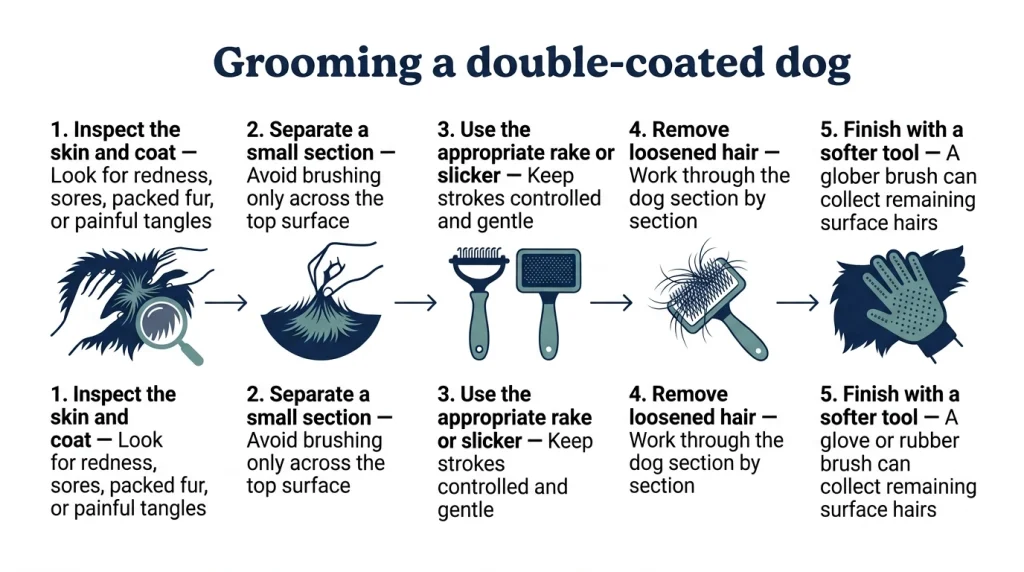
A simple double-coat routine
- Inspect the skin and coat. Look for redness, sores, packed fur, or painful tangles.
- Separate a small section. Avoid brushing only across the top surface.
- Use the appropriate rake or slicker. Keep strokes controlled and gentle.
- Remove loosened hair. Work through the dog section by section.
- Finish with a softer tool. A glove or rubber brush can collect remaining surface hairs.
I prefer this layered approach over repeatedly scraping the same spot. Once the coat moves freely and loose clumps stop releasing easily, I move on.
If you have a particularly dense Northern breed, my Siberian Husky shedding guide explains the same principle in more detail.
Does a Grooming Glove Remove the Undercoat?
A grooming glove may remove some loose undercoat if that hair has already migrated toward the surface. It usually does not penetrate a dense coat as efficiently as a dedicated undercoat tool.
This is one of the most important expectations to set. A glove can look highly effective because the collected hair is visible across your palm, yet deeper loose coat may remain.
- Thin coat: A glove may reach enough hair to handle most routine shedding.
- Dense coat: Expect limited penetration.
- Heavy coat blow: Use a dedicated undercoat tool first.
- Finishing: Use the glove afterward to gather surface fluff.
Are Grooming Gloves Better for Dogs That Hate Brushing?
They can be. The motion resembles normal stroking, which may make grooming easier for a dog that dislikes a rigid brush.
However, a glove does not automatically make grooming comfortable. Pressure, session length, handling history, skin condition, and coat tangles still matter.
Make grooming easier for a hesitant dog
- Start briefly: Try a few gentle strokes rather than a full grooming session.
- Use light pressure: More pressure does not guarantee more hair removal.
- Reward calm behavior: Pair handling with something your dog enjoys.
- Avoid painful tangles: Do not drag a glove or brush through resistance.
- Stop at skin irritation: Redness or soreness means the session should end.
As of 2026, I still consider comfort one of the best indicators of a suitable grooming setup. Removing more fur is not useful if the dog learns to fear grooming.
Can You Use a Grooming Glove and Brush Together?
Yes. For many shedding dogs, using both tools gives you more flexibility than forcing one tool to handle every job.
A brush handles deeper coat work, while a glove handles quick finishing and maintenance. The two tools do not have to compete.
| Situation | Start With | Finish With |
|---|---|---|
| Short smooth coat | Grooming glove | Soft bristle brush if needed |
| Dense double coat | Undercoat rake | Slicker or grooming glove |
| Long coat | Pin or slicker brush | Metal comb |
| Bath time | Rubber glove or curry tool | Appropriate brush after drying |
How Often Should You Brush a Shedding Dog?
The correct schedule depends on coat type and how heavily the individual dog is shedding. There is no single frequency that fits every breed.
The American Kennel Club notes that heavy shedders may need brushing several times a week or even daily during peak shedding. Lighter-shedding dogs can often manage with less frequent sessions.
- Short coat: Start around once or twice weekly and adjust to the amount of loose hair.
- Moderate shedding: Several short sessions per week can be easier than one long session.
- Seasonal coat blow: Increase frequency while loose undercoat is releasing.
- Long or mat-prone coat: Groom frequently enough to stop tangles from becoming mats.
Consistency matters more than chasing a rigid calendar. Your dog’s coat usually tells you when the schedule needs to increase.
When Is Shedding More Than a Grooming Problem?
Normal shedding should not create obvious bald patches, open sores, severe redness, or intense persistent itching. Those signs deserve veterinary attention rather than more aggressive brushing.
The ASPCA lists parasites, infections, allergies, hormonal disease, and other medical issues among possible causes of abnormal hair loss.
- Bald areas: Distinct patches of missing hair are different from ordinary shedding.
- Red or inflamed skin: Stop grooming irritated areas.
- Persistent scratching: Frequent scratching or chewing may indicate an underlying problem.
- Scabs or sores: Avoid brushing damaged skin.
- Sudden coat change: A major unexplained change deserves professional evaluation.
For medical concerns, the VCA Animal Hospitals website is another useful general veterinary resource.
Which Should You Choose: Grooming Glove or Brush?
Choose a grooming glove when you want gentle surface-hair removal from a short coat or an easy way to introduce grooming. Choose a brush when the coat requires deeper penetration, detangling, or undercoat removal.
If I could summarize the decision in one line, it would be this: the thicker and more complicated the coat, the more important brush type becomes.
- Choose a glove: Short coat, light shedding, bath use, nervous dog, quick maintenance.
- Choose a slicker: Loose hair, mild tangles, medium or longer coats.
- Choose an undercoat rake: Dense double coat and heavy seasonal shedding.
- Choose both: Deep grooming plus fast maintenance between sessions.
That is why I do not see grooming gloves and brushes as true substitutes in every situation. They overlap, but each does certain jobs better.
Dog Grooming Tools I Would Consider
 Save
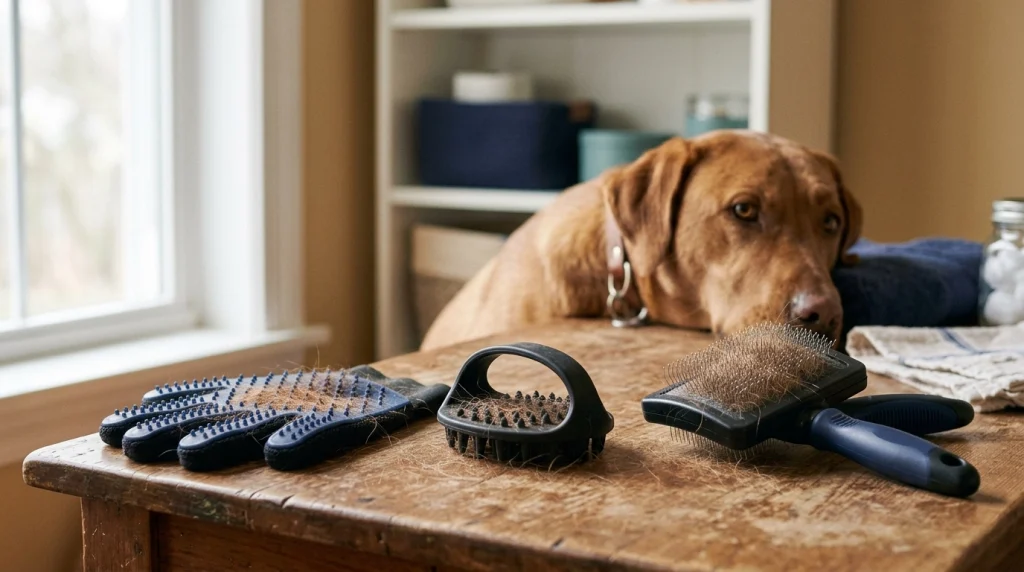
SaveIf you’re ready to pick a tool, I would match the product to the coat rather than automatically choosing the most aggressive shedder.
🏆 Best Grooming Glove
HandsOn Grooming Gloves
★★★★½
These gloves use flexible rubber grooming nodules across the fingers and palms and are designed for wet or dry grooming. I like this format for short-coated dogs, bathing, and owners who want direct control over pressure.
💰 Best Rubber Brush
KONG ZoomGroom
★★★★☆
KONG specifies flexible 3/4-inch rubber fingers for dry grooming and shampooing. I would pick it for smooth coats when I want a simple rubber tool without wearing a full glove.
✨ Best for Deeper Brushing
Hertzko Self-Cleaning Slicker Brush
★★★★☆
This slicker uses retractable bristles so collected hair can be released with a button. I would choose a slicker-style tool over a glove when I need more reach through medium or longer hair.
Frequently Asked Questions
Do grooming gloves actually remove dog hair?
Yes. Rubber or silicone grooming tips can grip loose hair as you stroke the coat, especially on short-haired dogs. Their main limitation is depth, because most gloves do not reach dense undercoat as effectively as a rake or longer-pin brush.
Is a grooming glove better than a slicker brush?
Neither is universally better. A grooming glove is usually more comfortable for quick surface grooming and short coats, while a slicker brush offers better reach for loose hair, coat separation, and some tangles in medium or longer coats.
Can I use a grooming glove every day?
Gentle daily glove grooming may be reasonable for many dogs if the skin stays comfortable and the dog enjoys it. Stop or reduce the frequency if you notice redness, soreness, avoidance, or excessive rubbing over the same area.
What brush removes the most dog undercoat?
A properly chosen undercoat rake or other coat-specific de-shedding tool generally reaches loose undercoat more effectively than a grooming glove. The safest choice depends on coat length, density, skin sensitivity, and the manufacturer’s instructions.
Should I brush my dog before or after bathing?
For many coats, brushing before bathing helps remove loose hair and obvious tangles. After the coat is completely dry, a second gentle grooming session can collect hairs loosened during washing and drying.
Final Takeaway: Match the Tool to the Coat
For the grooming glove vs brush debate, coat type matters more than the name of the tool. Gloves shine on short coats, surface shedding, bathing, and dogs that prefer hand-like grooming.
Brushes become more important as coat length, density, tangling, and undercoat increase. If your dog sheds heavily, I would build a small coat-specific grooming routine instead of expecting one tool to do everything.
Start gently, check the skin as you work, and stop chasing loose hair once the coat is moving comfortably. A good grooming session should leave both the coat and the dog in better shape.
Thomas Cutter is a lifelong dog owner and the founder of FindOutAboutDogs.com. With over 10 years of hands-on experience owning multiple breeds, Thomas created this site to provide honest, research-based dog advice that real owners can actually trust.
