How Does a Bristle Brush Work on Dogs?
Quick Answer
A bristle brush works by using many closely packed natural or synthetic bristles to lift loose hair, dander, dust, and surface debris from a dog’s coat. The strokes also help spread natural skin oils along the hairs, which can leave a short or smooth coat looking cleaner and shinier. The American Kennel Club’s dog brush guide recommends bristle brushes especially for short-coated dogs.
What happens when you brush?
- Loose hair lifts: The bristles catch hairs that have already loosened from the coat.
- Dirt moves out: Repeated strokes loosen small pieces of dust and dried debris near the coat surface.
- Oils spread: Brushing moves natural skin oils farther along the hair shafts.
- The coat smooths: Bristles help lay the hairs in the same direction for a polished finish.
- Skin gets checked: Regular grooming gives you a chance to spot irritation, bumps, parasites, or sore areas.
Best use
- Use gentle strokes in the direction of hair growth, especially on short and smooth coats.
If you’ve ever run a bristle brush over a short-coated dog, the change can look surprisingly quick. Loose hairs disappear, the coat lies flatter, and the surface often looks brighter after only a few passes.
I’ve found that the key is understanding what this brush can and can’t do. It’s an excellent finishing and maintenance tool, but it isn’t designed to dig through heavy mats or a thick undercoat.


What Is a Bristle Brush for Dogs?
A bristle brush is a grooming brush covered with groups of short, flexible bristles made from natural or synthetic material. Those bristles work mainly on the outer portion of a dog’s coat rather than reaching deeply into dense fur.
Natural versions often use boar bristles. Synthetic brushes commonly use nylon or similar fibers.
- Soft bristles: Best for gentle finishing, sensitive dogs, and smooth coats.
- Firm bristles: Give more resistance and can move loose hair and debris more effectively.
- Closely packed bristles: Smooth and polish the coat while collecting fine loose hairs.
- Longer bristles: May work better on somewhat thicker or medium-length coats.
As of 2026, you’ll also see double-sided brushes that pair bristles with metal pins. That design gives you one side for detangling and another for finishing.
How Does a Bristle Brush Work on a Dog’s Coat?
 Save
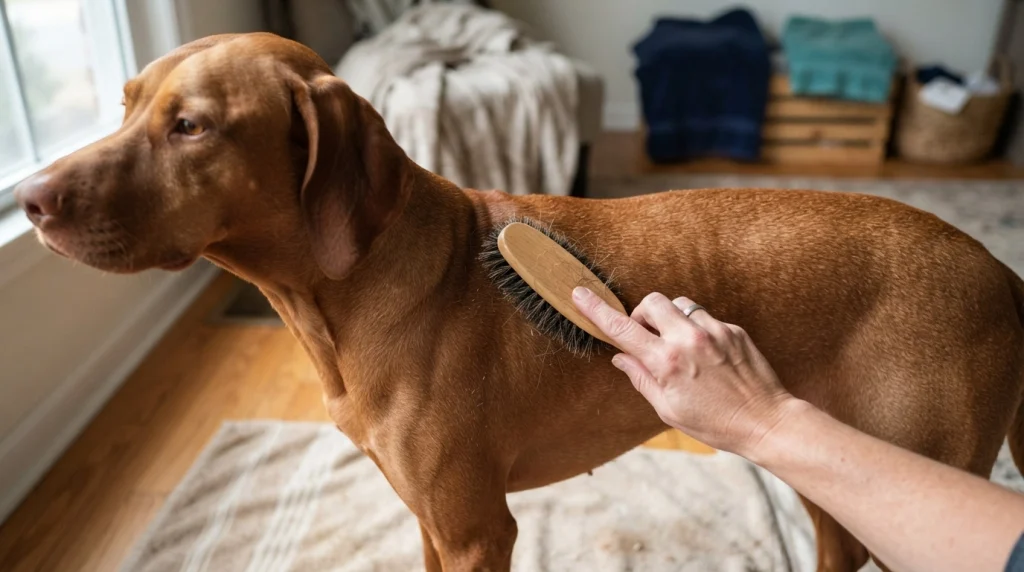
SaveA bristle brush works through friction and repeated surface contact. As the flexible bristles pass through the outer coat, they loosen and collect material that isn’t firmly attached.
The process is simple, but several things happen at the same time.
1. The Bristles Catch Loose Hair
Dogs naturally lose hairs as part of their normal coat cycle. Many of those hairs stay trapped against the body until movement or grooming pulls them free.
A bristle brush catches a portion of those loose hairs before they land on your floor, furniture, or clothes.
2. The Brush Loosens Dander and Surface Dirt
Small flakes of dead skin, dry dirt, and outdoor debris can sit between hairs. Flexible bristles disturb this material and bring some of it toward the surface.
This is one reason I like bristle brushes for quick maintenance between baths. They can freshen the coat without getting the dog wet.
3. Brushing Helps Spread Natural Oils
A dog’s skin produces natural oils that help condition the coat. Brushing can distribute these oils farther along the hair shafts instead of leaving them concentrated near the skin.
The ASPCA also notes that regular brushing helps spread natural oils throughout a dog’s coat.
4. The Coat Becomes Smoother
When you finish by brushing with the direction of hair growth, the hairs tend to settle into a more uniform position. That can create the polished appearance people often notice after grooming.
It works particularly well on smooth-coated dogs.
Which Dogs Benefit Most From a Bristle Brush?
Bristle brushes are especially useful for dogs with short, smooth coats, although firmer versions can also work on some medium coats. Coat density matters more than simply looking at hair length.
For example, a Boxer and a heavily coated German Shepherd need different tools even though neither has flowing, floor-length hair.
| Coat Type | Bristle Brush Use | Better Alternative When Needed |
|---|---|---|
| Short, smooth coat | Excellent for loose hair, dirt, and finishing | Rubber grooming brush for heavier shedding |
| Short, dense coat | Useful as a finishing brush | Slicker or suitable shedding tool |
| Medium coat | Firm bristles can remove surface hair | Comb or slicker for deeper work |
| Long coat | Mostly useful for smoothing and finishing | Pin brush and metal comb |
| Thick double coat | Limited undercoat penetration | Undercoat rake or appropriate slicker |
Dogs such as Boxers, Beagles, Pugs, and similar smooth-coated breeds are common candidates for short-bristle grooming tools. The exact choice still depends on the individual dog’s coat and skin sensitivity.
Does a Bristle Brush Remove Shedding Hair?
Yes, a bristle brush can remove loose shedding hair, but it usually works best on hair close to the coat’s surface. It isn’t a deep deshedding tool.
That distinction matters with double-coated dogs because much of their seasonal shedding comes from the softer undercoat.
- Light shedding: A bristle brush may be enough for routine cleanup.
- Short smooth coats: It can collect loose surface hairs effectively.
- Heavy seasonal shedding: You’ll usually need a tool that reaches deeper.
- Dense undercoat: An undercoat rake or coat-specific grooming tool is normally more effective.
I often think of a bristle brush as the last step rather than the strongest shedding step. After another tool loosens deeper fur, the bristles can collect leftovers and smooth everything down.
How Should You Use a Bristle Brush Correctly?
 Save
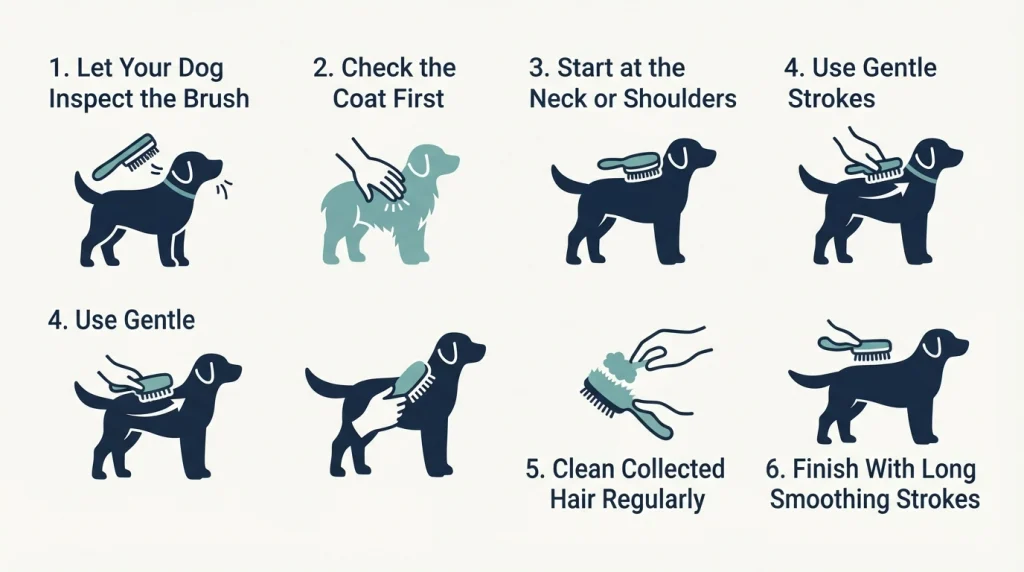
SaveUse a bristle brush with light, controlled strokes and avoid pressing hard against the skin. The goal is to move through the coat comfortably, not scrape the dog.
- Let your dog inspect the brush. Give nervous dogs a moment to smell it before grooming starts.
- Check the coat first. Look for sores, tender spots, burrs, ticks, or obvious tangles.
- Start at the neck or shoulders. Work toward the back and hindquarters in small sections.
- Use gentle strokes. Follow the direction of hair growth for routine brushing.
- Clean collected hair regularly. A loaded brush becomes less effective.
- Finish with long smoothing strokes. These help leave the coat flat and polished.
For some short-coated dogs, a rubber grooming tool can be used first to loosen hair. A bristle brush can then remove loose material and finish the coat.
The ASPCA’s dog grooming guidance describes a similar approach for smooth, short coats, using a rubber brush followed by bristles.
Can a Bristle Brush Hurt a Dog?
A suitable bristle brush shouldn’t hurt when used gently, but excessive pressure or overly stiff bristles can irritate sensitive skin. Stop if your dog repeatedly flinches, moves away, or shows discomfort.
Pay extra attention around thinly covered areas such as the belly, inner legs, and certain parts of the face.
- Don’t force the brush through a mat.
- Don’t scrub back and forth aggressively.
- Don’t keep brushing irritated or broken skin.
- Don’t assume the stiffest brush removes the most hair safely.
- Don’t use human comfort as your pressure guide; watch your dog’s reaction.
If you find persistent redness, scabs, sores, unusual hair loss, or painful areas, grooming alone isn’t the answer. A veterinarian can help determine what’s causing the skin or coat problem.
Bristle Brush vs. Slicker Brush: What’s the Difference?
A bristle brush mainly cleans, smooths, and finishes the coat, while a slicker brush uses fine wire pins to work deeper and handle loose hair or tangles. They’re designed for different jobs.
| Feature | Bristle Brush | Slicker Brush |
|---|---|---|
| Working surface | Natural or synthetic bristles | Closely spaced wire pins |
| Main job | Cleaning and finishing | Removing loose hair and tangles |
| Best depth | Surface to shallow coat | Deeper coat penetration |
| Common fit | Short and smooth coats | Medium, long, curly, or dense coats |
The VCA dog coat-care guide also recommends different grooming tools according to coat type rather than treating one brush as suitable for every dog.
Natural Bristles vs. Synthetic Bristles
Both types can work, but natural and synthetic bristles often feel different against the coat. The best choice depends on firmness, coat density, and your dog’s comfort.
- Natural bristles: Often selected for gentle finishing and distributing coat oils.
- Synthetic bristles: Can provide consistent firmness and are available in many stiffness levels.
- Soft bristles: Better suited to sensitive dogs and light polishing.
- Firm bristles: Can provide more useful resistance on thicker short coats.
When I’m choosing between them, I focus less on the marketing label and more on how the bristles behave. They should move through the coat without scratching the skin.
How Often Should You Use a Bristle Brush?
Many short-coated dogs can benefit from brushing about once a week, although shedding level and coat condition can change that schedule. Dogs shedding heavily may need more frequent grooming.
You don’t need to keep brushing after the coat is already clean and smooth. Short, comfortable sessions are often more productive than unnecessarily long ones.
- Brush more often during periods of heavier shedding.
- Reduce pressure if the skin looks irritated.
- Clean the brush after grooming.
- Adjust frequency to your individual dog’s coat.
Regular brushing also gives you a useful chance to inspect the skin. I treat that visual check as part of grooming, not a separate chore.
When Is a Bristle Brush Not Enough?
 Save
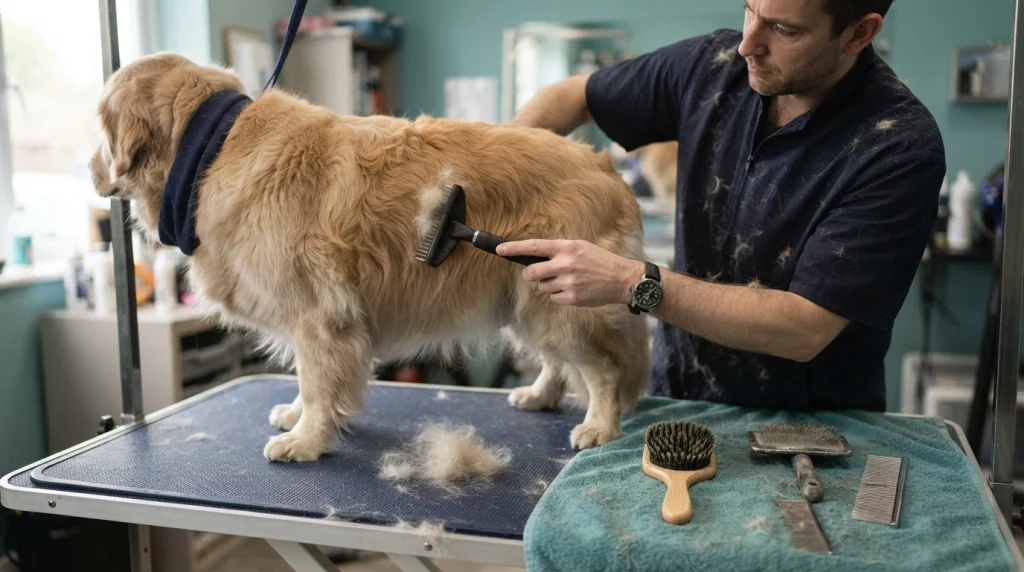
SaveA bristle brush isn’t enough when the grooming problem is below the surface of the coat. Thick undercoat, tight tangles, and mats usually require another appropriately selected tool.
Trying to solve those problems by pressing harder with bristles usually makes the grooming session less comfortable without fixing the cause.
- For mats: Use an appropriate comb, slicker, or professional grooming help.
- For thick undercoat: Choose an undercoat tool suited to the coat length.
- For curly coats: A slicker brush and comb are commonly more useful.
- For heavy shedding: Loosen deeper fur before using bristles as a finishing tool.
If you’re ready to choose a bristle brush, these are two options I’d look at for different grooming needs.
🏆 Best for Short Coats
Bass Brushes Shine & Condition Dog Brush
★★★★½ 4.5/5
This brush uses natural bristles and is designed to clean and condition short coats while distributing natural oils. I’d choose it when the goal is routine surface grooming and a smooth finished coat rather than aggressive deshedding.
🐶 Best Soft-Bristle Pick
Bass Brushes Shine & Condition Soft Bristle Pet Brush
★★★★½ 4.6/5
This version uses softer natural bristles and is intended for gentle cleaning and coat conditioning. I’d consider it for a dog that dislikes stiffer grooming tools but still benefits from regular surface brushing.
Frequently Asked Questions
Do bristle brushes remove dog hair?
Yes. Bristle brushes can catch and remove loose hair, especially from short and smooth coats. They work mainly near the coat surface, so dogs with thick undercoats may need a rake, slicker brush, or another coat-specific tool for deeper shedding.
Do bristle brushes spread a dog’s natural oils?
Regular brushing can help move natural skin oils along the hair shafts. This helps explain why a short coat can look smoother and shinier after brushing, although the result also depends on the dog’s skin health and coat condition.
Is a bristle brush good for long-haired dogs?
A bristle brush can be useful as a finishing tool on some long coats, but it usually won’t remove deeper tangles or undercoat effectively. Long-haired dogs often need a pin brush, slicker brush, comb, or a combination of tools first.
Can I use a bristle brush every day?
Some dogs tolerate gentle daily brushing, particularly during shedding periods, but daily use isn’t necessary for every coat. Watch the skin for irritation and adjust frequency according to coat type, shedding level, and your dog’s comfort.
Should I brush with or against the hair growth?
For routine finishing, brush in the direction the coat naturally grows. Some short-coat grooming methods briefly work against the hair to loosen shedding fur before finishing in the natural direction, but use light pressure and stop if your dog seems uncomfortable.
Final Takeaway
A bristle brush works best as a simple surface-grooming and finishing tool. Its flexible bristles lift loose hair and debris while helping spread natural oils and smooth the outer coat.
Choose the bristle firmness for your dog’s coat rather than buying the stiffest option available. When deeper tangles, dense undercoat, or heavy shedding are the problem, pair the bristle brush with a grooming tool designed for that job.
Once you’ve matched the brush to the coat, keep your strokes gentle and consistent. Your dog will usually tell you quickly whether you’ve made the right choice.

Thomas Cutter is a lifelong dog owner and the founder of FindOutAboutDogs.com. With over 10 years of hands-on experience owning multiple breeds, Thomas created this site to provide honest, research-based dog advice that real owners can actually trust.
