What Is a Pin Brush Used For? Dog Grooming Guide
Quick Answer
A pin brush is used to gently detangle, separate, and smooth medium or long dog coats while removing loose surface hair and small bits of debris. It works especially well on flowing, silky, wavy, and longer coats, although the right brush still depends on coat type. The American Kennel Club’s dog brush guide explains why different coat types need different grooming tools.
What a pin brush does
- Separates long hair: Long pins move between strands and help prevent the coat from bunching together.
- Loosens light tangles: Gentle brushing can work through small tangles before they tighten into mats.
- Removes loose fur: Pins collect some dead and shedding hair, especially near the outer coat.
- Lifts small debris: Regular brushing helps remove dust, grass, and other material caught in longer fur.
- Smooths the coat: A final gentle pass can leave long hair lying neatly without flattening it.
One important limitation
- A pin brush is not my first choice for removing tight mats or a large amount of packed undercoat.
If you’ve ever looked at a wall of dog brushes and wondered why anyone needs so many shapes, you’re not alone. A pin brush looks simple, but it has a specific job.
I think of it as a maintenance and finishing brush rather than an aggressive de-matting tool. Below, I’ll show you where it works well, where it doesn’t, and how to use one without pulling your dog’s coat.


What Is a Pin Brush?
A pin brush is a dog grooming brush with relatively long, widely spaced pins mounted in a cushioned brush head. Many versions use metal pins with smooth or rounded ends.
The cushion gives the pins a little movement as you brush. That flexibility helps the brush travel through longer hair without behaving like a rigid comb.
- Pin length: Longer pins can reach farther through medium and long coats.
- Pin spacing: Wider spacing lets longer hair pass between the pins more easily.
- Cushioned base: The flexible pad helps the brush follow the shape of the dog’s body.
- Oval or oblong head: These shapes provide good coverage while remaining easy to control.
As of 2026, you’ll find pin brushes with several pin lengths. For example, Chris Christensen sells oval models with 20 mm, 27 mm, and 35 mm pins for different coat lengths.
The longest option isn’t automatically best. I would match the pins to the depth and length of the coat instead of simply buying the biggest brush.
What Is a Pin Brush Used For on Dogs?
A pin brush is mainly used for routine grooming of longer coats. Its job is to separate hair, remove light tangles and loose surface fur, and leave the coat smooth.
It can handle several everyday grooming jobs without being excessively aggressive.
- Daily or weekly coat maintenance: Keeps longer hair separated between deeper grooming sessions.
- Light detangling: Helps release small knots before they become tight mats.
- Removing loose hair: Picks up some dead hair as the pins move through the coat.
- Removing outdoor debris: Useful after walks when seeds, grass, or small particles cling to feathering.
- Fluffing and finishing: Separates hair and restores a neat, natural-looking finish.
- Checking the coat: Slow brushing gives you a chance to notice lumps, sore areas, burrs, or hidden tangles.
The American Kennel Club lists pin brushes among common grooming tools for longhaired dogs. Its grooming guidance also recommends checking the skin and coat while brushing.
That second job matters. Grooming is easier when you’re not waiting until a knot has already become painful.
Which Dogs Benefit Most From a Pin Brush?
Pin brushes are especially useful for dogs with medium, long, flowing, or silky hair. Dogs with feathering around the legs, chest, ears, or tail can also benefit.
Coat texture matters more than simply looking at breed size.
| Coat Type | Pin Brush Fit | Main Job | Possible Extra Tool |
|---|---|---|---|
| Long, silky coat | Excellent | Separating and smoothing hair | Metal comb |
| Medium-length coat | Very good | Routine grooming and light tangles | Slicker brush |
| Long double coat | Useful | Outer coat and finishing | Undercoat rake |
| Short smooth coat | Limited | Little benefit | Rubber curry brush |
| Tightly matted coat | Poor choice alone | Gentle surface separation only | Professional help or appropriate de-matting tools |
A pin brush can still play a role with some double-coated dogs. However, it may not remove enough loose undercoat during a heavy shedding period.
For a practical example, see my guide on choosing the best brush for a Husky. That dense coat usually calls for more than one tool.
Pin Brush vs Slicker Brush: What’s the Difference?
 Save
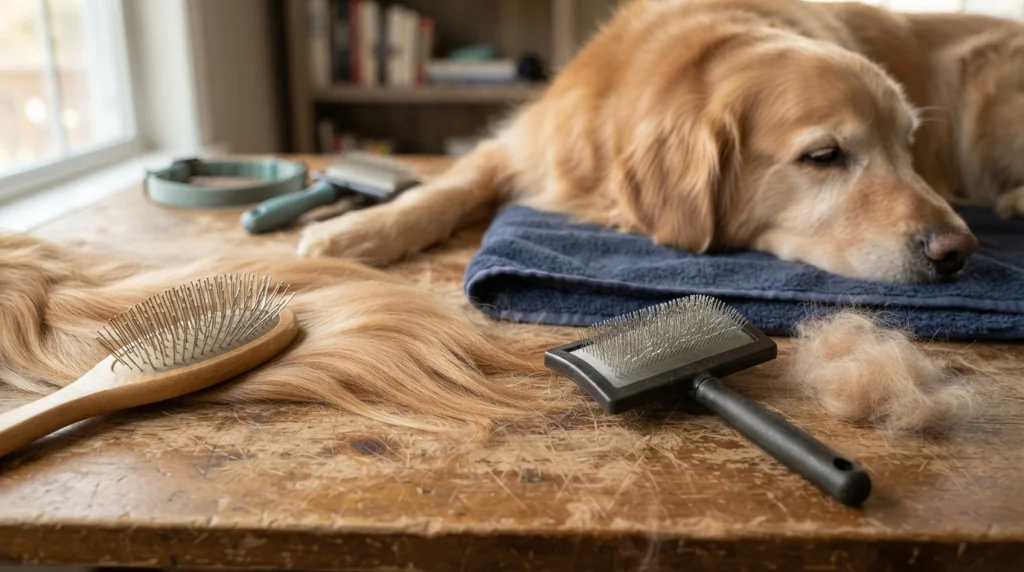
SaveA pin brush is gentler and more open, while a slicker brush uses many closely spaced wire pins. Slickers usually provide more grip for loose hair, tangles, and certain mats.
I wouldn’t treat them as interchangeable. They often work better as complementary tools.
| Feature | Pin Brush | Slicker Brush |
|---|---|---|
| Pin spacing | Wide | Close |
| Typical feel | Gentle and flexible | More gripping action |
| Best use | Long-coat maintenance and finishing | Loose fur, tangles, and mat prevention |
| Main caution | May not remove deep undercoat | Too much pressure can irritate skin |
The AKC’s home grooming guidance describes slickers as useful for mats and dead hair, while pin brushes are commonly used for many longhaired dogs.
My practical rule is simple. If I’m trying to gently separate and finish longer hair, I reach for a pin brush first.
Can a Pin Brush Remove Mats?
A pin brush can loosen small tangles, but it shouldn’t be your main tool for tight or painful mats. Forcing long pins through compacted hair can pull the skin.
A small snag and a dense mat are different problems. Treat them differently.
- Small loose tangle: Separate it with your fingers and brush gently from the ends inward.
- Several developing knots: Work in small sections and check with a comb afterward.
- Dense mat against the skin: Avoid repeatedly pulling at it with a pin brush.
- Painful or widespread matting: A professional groomer may be the safer option.
PetMD also recommends working through the coat in small sections rather than aggressively pulling through resistance. Its guidance on matted dog hair stresses gentle handling.
Never assume a mat is sitting safely away from the skin. Dog skin can be pulled tightly into the base of tangled hair.
How Do You Use a Pin Brush Correctly?
 Save
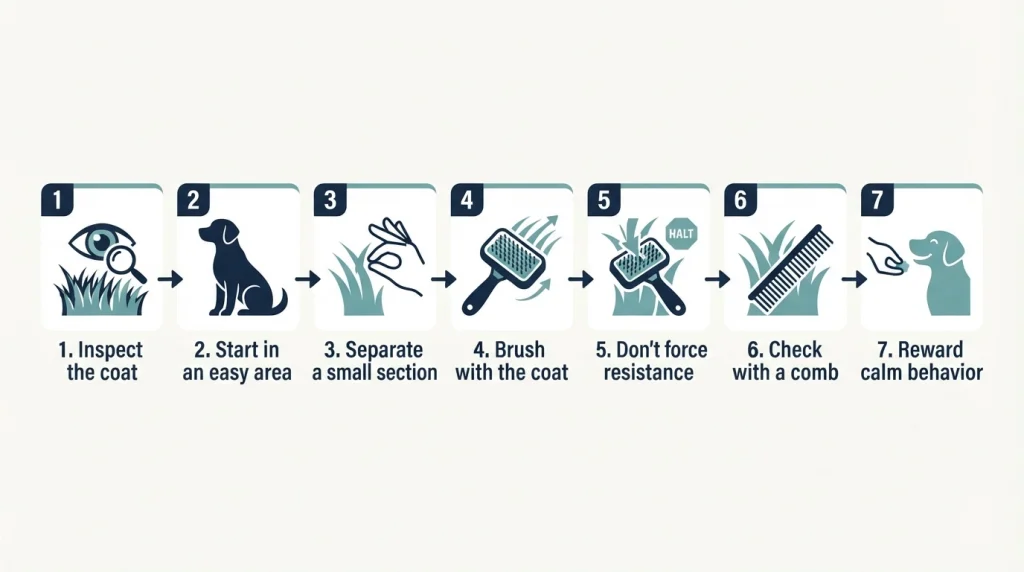
SaveBrush in the direction the coat grows using light, controlled strokes. Work section by section so the pins move through the coat instead of skimming only the top.
I prefer shorter sessions done carefully. Ten calm minutes can accomplish more than a rushed grooming marathon.
- Inspect the coat. Check for mats, sores, redness, burrs, or tender spots before brushing.
- Start in an easy area. Begin where your dog already enjoys being touched.
- Separate a small section. Lift longer hair so you can see how deeply the pins are reaching.
- Brush with the coat. Use smooth strokes in the direction of hair growth.
- Don’t force resistance. Stop and investigate any section where the brush suddenly catches.
- Check with a comb. A metal comb can reveal small tangles the brush missed.
- Reward calm behavior. End before your dog becomes frustrated with the session.
For dogs with dense seasonal shedding, technique alone may not be enough. My guide to managing Siberian Husky shedding shows how a pin or slicker brush can fit beside an undercoat tool.
Should a Pin Brush Touch Your Dog’s Skin?
The pins can reach through the coat toward the skin, but you shouldn’t scrape the skin with heavy pressure. The goal is to move through hair comfortably.
Use your own forearm as a quick pressure check. If a brushing motion feels sharp or scratchy there, reduce the pressure before using it on your dog.
- Watch for flinching: Sudden movement may signal discomfort.
- Check for redness: Repeated passes shouldn’t leave irritated lines.
- Stop at sore areas: Don’t brush directly over broken or inflamed skin.
- Use smooth pins: Rough, bent, or damaged pins should be replaced.
Grooming also gives you regular opportunities to notice changes. Contact your veterinarian if you find persistent redness, sores, unexplained bald areas, or intense itching.
How Often Should You Use a Pin Brush?
How often you need a pin brush depends on coat length, texture, lifestyle, and how quickly tangles form. Longer coats often need more attention than short smooth coats.
The AKC notes that some longhaired or frequently dirty dogs may need brushing several times per week or even daily. Short-coated dogs often require much less brushing.
- Long silky coats: Check and brush frequently before tangles build.
- Feathered coats: Pay extra attention behind the ears, legs, chest, and tail.
- Outdoor dogs: Check the coat after walks through grass or brush.
- Heavy shedding periods: Add an undercoat tool if the pin brush isn’t reaching loose undercoat.
Frequency isn’t a contest. I would rather brush gently when the coat needs it than keep brushing clean, comfortable skin just to follow a rigid schedule.
What Should You Look for When Buying a Pin Brush?
 Save
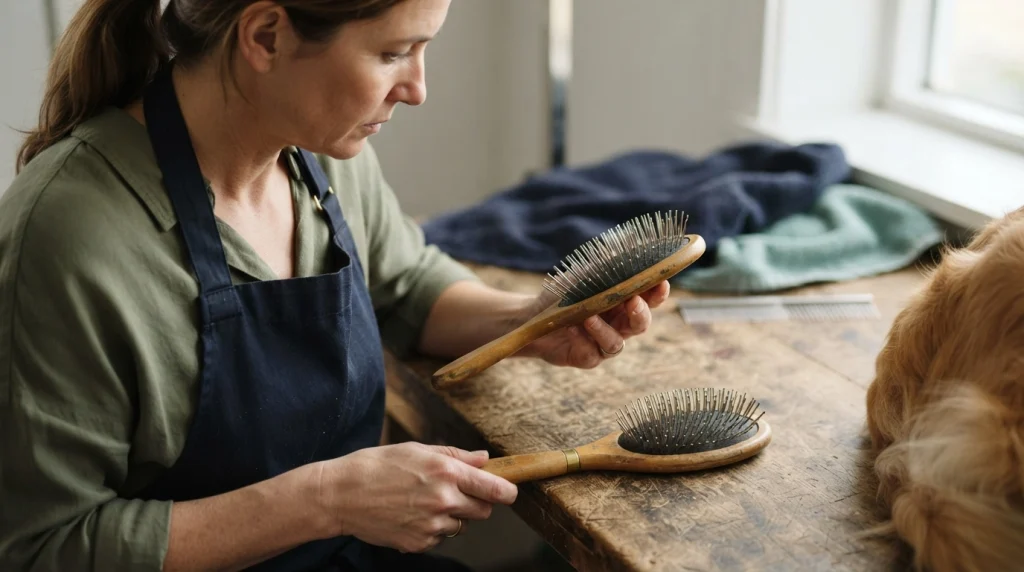
SaveChoose a pin brush with smooth pins, useful pin length, a flexible cushion, and a handle you can control comfortably. Coat depth should guide the pin length.
A cheap brush can work well if the pins are properly finished. An expensive brush still needs to suit your dog’s coat.
- Smooth pin tips: Avoid rough edges that may catch hair.
- Correct pin length: Longer coats generally need more reach.
- Flexible cushion: Helps the pins move rather than stay completely rigid.
- Comfortable grip: Important if you’re brushing a large or heavily coated dog.
- Suitable head size: Large heads cover the body quickly, while smaller heads provide control around tight areas.
Chris Christensen’s current pin-brush range, for example, uses different pin lengths for short, medium, and long coats. That is the kind of specification I look for before worrying about cosmetic features.
Pin Brushes I’d Consider for Routine Dog Grooming
If you’re ready to choose one, I’d focus on pin quality, coat depth, and comfort rather than buying whichever brush promises to remove the largest pile of fur.
🏆 Best Overall
Chris Christensen Original Series Oval Pin Brush
★★★★½
It comes in multiple pin lengths and uses polished stainless-steel pins in a cushioned head. I like the ability to choose pin length according to the coat instead of forcing one brush to suit every dog.
💰 Best Simple Pick
JW Pet GripSoft Pin Brush
★★★★☆
This straightforward pin brush uses an oval head and a rubberized GripSoft-style handle. I’d consider it for owners who want an uncomplicated brush for routine medium- or long-coat maintenance.
✨ Best Premium Option
Chris Christensen Fusion Oval Pin Brush
★★★★½
The Fusion version uses polished brass pins and a lightweight wood body, with versions designed for longer coats. I’d consider it when frequent grooming and smooth coat separation matter more than keeping the price low.
Frequently Asked Questions
Is a pin brush good for shedding dogs?
A pin brush can remove some loose hair, especially from medium and long outer coats. However, it may not reach enough dead undercoat on dense double-coated dogs during heavy shedding, so an undercoat rake or suitable slicker may also be needed.
Is a pin brush good for short-haired dogs?
A pin brush usually isn’t the most efficient choice for a very short, smooth coat. Rubber grooming brushes or short bristle brushes often collect surface hair more effectively because their working surface stays closer to the coat.
Can I use a pin brush every day?
Gentle daily brushing can suit dogs whose long coats tangle quickly, provided the skin stays comfortable. You don’t need to repeatedly brush the same clean area, and you should stop if you notice redness, pulling, or avoidance.
Does a pin brush hurt dogs?
A suitable pin brush used with light pressure shouldn’t hurt a dog. Discomfort is more likely when pins are rough or damaged, the owner presses too hard, or the brush is pulled through tight tangles instead of stopping at resistance.
Do I need a comb if I already have a pin brush?
A metal comb is useful even when you own a pin brush. The brush separates and smooths the coat, while a comb can help you check whether small tangles remain underneath, especially behind the ears and around feathered areas.
Final Takeaway: What Is a Pin Brush Used For?
A pin brush is best for gentle detangling, coat separation, loose surface hair removal, and finishing medium or long dog coats. It is especially useful when you want to maintain flowing hair without aggressively stripping the coat.
Use light pressure, match the pin length to the coat, and don’t force the brush through mats. Start with one small section today, and you’ll quickly learn whether a pin brush belongs in your dog’s regular grooming routine.

Thomas Cutter is a lifelong dog owner and the founder of FindOutAboutDogs.com. With over 10 years of hands-on experience owning multiple breeds, Thomas created this site to provide honest, research-based dog advice that real owners can actually trust.
