How Dog Breed Affects Grooming Frequency: A Dog Brush Guide
Quick Answer
Dog breed affects grooming frequency mainly because breeds have different coat lengths, textures, densities, and shedding patterns. Short smooth coats may need brushing about once weekly, while long, curly, silky, or mat-prone coats often need brushing several times weekly or daily. The American Kennel Club’s dog grooming guidance also recommends choosing grooming frequency and tools according to coat type.
A practical brushing schedule by coat type
- Short, smooth coats: Start with roughly one brushing each week to collect loose hair and surface debris.
- Medium coats: Brush about two or three times weekly, increasing frequency when shedding rises.
- Long or silky coats: Brush several times weekly or daily when tangles form easily.
- Curly coats: Frequent brushing helps stop loose hairs from becoming trapped and forming mats.
- Double coats: Brush regularly and increase sessions during heavy seasonal undercoat shedding.
- Wire coats: Weekly home maintenance may be combined with breed-specific hand stripping or professional grooming.
Adjust the schedule when needed
- Brush more often during shedding season, after outdoor adventures, or whenever tangles begin forming.
If you’re wondering how dog breed affects grooming frequency, start by looking beneath the breed name. The coat itself usually tells you more about the work ahead.
I use breed as the starting clue, then I check coat density, length, shedding, and how easily it tangles. That approach gives owners a much more useful schedule.


Why Does Dog Breed Affect Grooming Frequency?
 Save
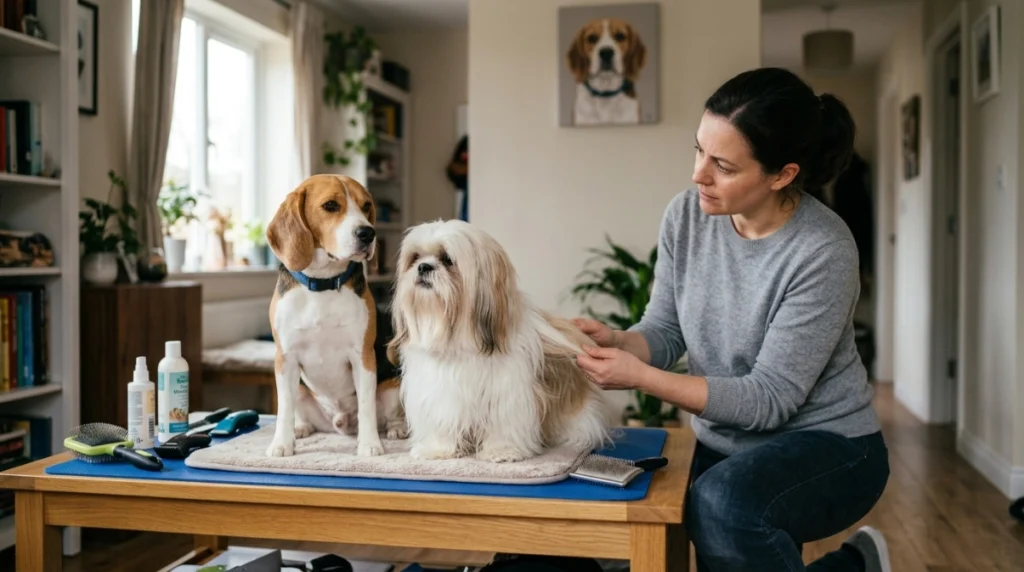
SaveDog breed affects grooming frequency because selective breeding created coats with very different structures and growth patterns. Some stay short and shed freely, while others grow continuously or trap loose hair.
That difference changes how quickly dirt, dead coat, knots, and mats build up. It also changes which dog brush works best.
- Coat length affects how easily hairs twist and tangle.
- Undercoat density affects how much loose hair becomes trapped.
- Hair growth pattern affects whether trimming is part of routine care.
- Shedding cycle determines when extra brushing becomes useful.
- Coat texture affects which brush can reach through the coat safely.
For example, a Beagle and Shih Tzu may live in the same house but need completely different routines. One has a short coat, while the other can develop tangles quickly.
If you’re comparing breeds before choosing a dog, my guide to easy-going dog breeds also shows how grooming demands vary between popular breeds.
What Does Grooming Frequency Actually Mean?
Grooming frequency is how often a dog needs routine coat care to remain clean, comfortable, and free from avoidable tangles. It does not mean every grooming session must include a bath or haircut.
A normal weekly routine can include brushing, coat inspection, ear checks, and looking for skin changes. Bathing and professional trimming follow separate schedules.
- Brushing: Removes loose coat, dirt, debris, and minor tangles.
- Combing: Checks whether longer coats are tangle-free down to the skin.
- Bathing: Removes dirt and odor when needed.
- Trimming: Controls continuously growing coats when appropriate.
- Professional grooming: Handles difficult coats, styling, clipping, and specialized techniques.
The correct interval changes from dog to dog. Even two dogs of the same breed can need slightly different schedules.
How Often Should You Brush Different Dog Coat Types?
 Save
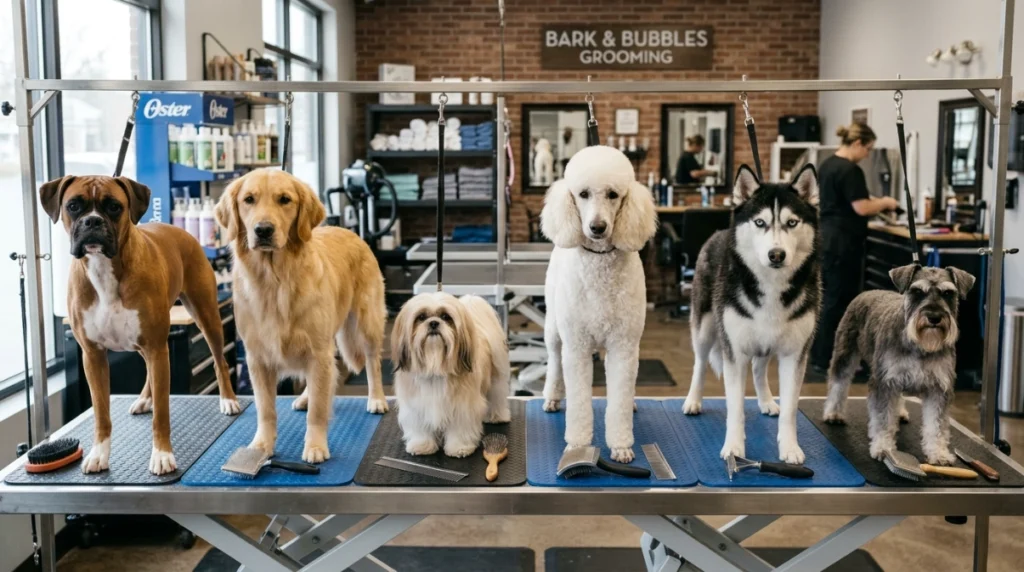
SaveShort smooth coats usually need the least brushing, while long, silky, curly, and dense coats require more attention. Double-coated dogs can shift from moderate maintenance to frequent brushing during seasonal shedding.
Use this table as a starting point rather than a rigid rule.
| Coat Type | Common Breed Examples | Starting Brushing Frequency | Useful Brush Type | Main Concern |
|---|---|---|---|---|
| Short and smooth | Boxer, Whippet, Pointer | About once weekly | Rubber curry or grooming mitt | Loose surface hair |
| Medium shedding | Retriever-type coats | 2–3 times weekly | Bristle brush and comb | Loose coat and tangles |
| Long and silky | Shih Tzu, Yorkshire Terrier | Several times weekly to daily | Pin brush, slicker, metal comb | Knots and mats |
| Curly | Poodle, Bichon Frise | Frequent to daily | Slicker brush plus comb | Trapped loose hair and matting |
| Dense double coat | Husky, Newfoundland, Keeshond | 2–3 times weekly; more during shedding | Undercoat rake and suitable brush | Packed undercoat |
| Wire | Wirehaired Dachshund, Schnauzer | Weekly home maintenance | Pin brush, comb, slicker | Dead coat and texture maintenance |
The schedule matters, but technique matters too. Gentle strokes are safer than repeatedly scraping the same patch of skin.
Veterinary guidance from VCA Animal Hospitals also recommends matching brush style to coat type.
Do Short-Haired Dog Breeds Need Much Grooming?
 Save
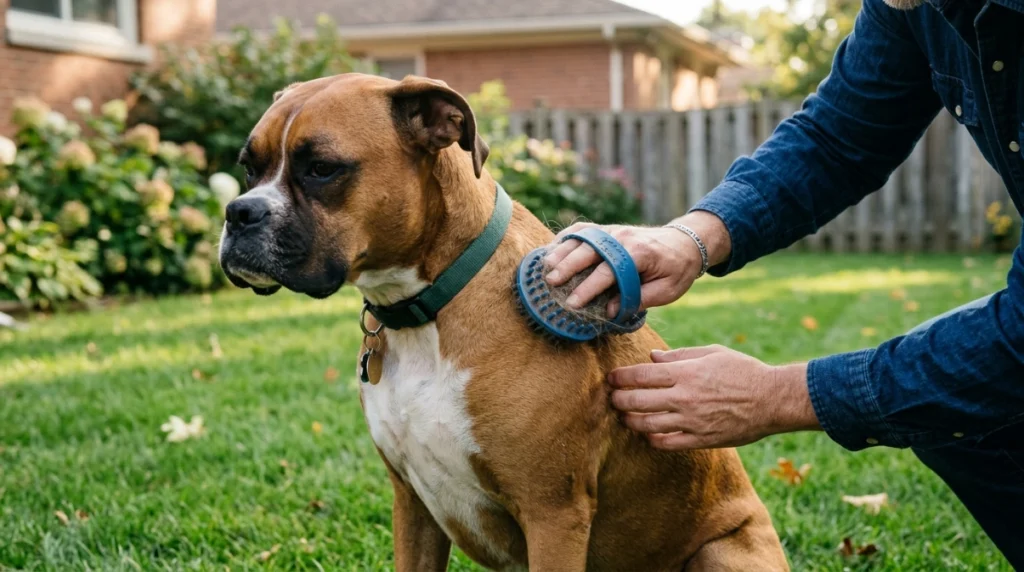
SaveShort-haired dogs usually need less coat maintenance, but they still benefit from regular brushing. A short coat can shed more than its appearance suggests.
Boxers, Whippets, and similar smooth-coated dogs often do well with a flexible grooming tool or rubber curry brush. These tools collect loose surface hair without digging deeply.
- Start with a short weekly brushing session.
- Increase brushing when loose hair becomes noticeable.
- Check the skin while brushing for bumps, sores, or irritation.
- Brush after dusty or muddy outdoor activity when needed.
The biggest mistake I see is assuming short hair means no grooming. A few minutes each week can make coat checks much easier.
Why Do Long-Haired and Curly Breeds Need More Brushing?
Long and curly coats can hold loose hairs instead of dropping them onto the floor. Those trapped hairs can combine with friction and moisture to create tangles.
Problem areas often include behind the ears, under the front legs, around collars, and behind the rear legs. These places deserve extra attention.
- Long silky coats: Separate the coat gently and work in manageable sections.
- Curly coats: Use a slicker appropriately, then check your work with a comb.
- Feathered coats: Pay attention to ears, legs, tail, and underside furnishings.
- Continuously growing coats: Plan for regular trimming as well as brushing.
Don’t force a brush through a stubborn mat. Painful pulling can make a dog dislike future grooming sessions.
If a mat is tight against the skin, professional help is safer. The AKC dog brush guide explains how brush choice changes with coat structure.
How Do Double-Coated Breeds Change the Grooming Schedule?
Double-coated breeds have an outer coat plus a softer undercoat. The undercoat can release heavily during seasonal coat changes.
This is why a fixed year-round brushing schedule often fails. A routine that works in January may feel inadequate during a major shed.
- Brush consistently during normal weeks.
- Increase sessions when undercoat starts releasing heavily.
- Work gently through the coat instead of repeatedly scraping one area.
- Use an undercoat rake only when it suits the dog’s actual coat.
- Check dense areas for hidden tangles after outdoor activity.
A Newfoundland or Keeshond can demand far more brushing than a smooth-coated Whippet. You can see similar grooming differences in my comparison of medium dog breeds for families.
Does shedding season mean daily brushing?
Sometimes it does. Heavy shedders may benefit from temporarily moving from a few sessions weekly to shorter daily sessions.
Watch the dog’s coat rather than the calendar alone. When loose undercoat falls easily, increase maintenance until the shed slows.
Do Wire-Haired Breeds Need a Different Grooming Routine?
Yes. Wire coats often need brushing and combing at home plus specialized coat maintenance.
Some wire-coated breeds are traditionally hand stripped. That process removes mature hairs and helps maintain the characteristic coat texture.
- Brush the coat gently with an appropriate brush.
- Follow with a comb to find small tangles.
- Check furnishings, beard, and leg hair for trapped debris.
- Ask an experienced groomer whether hand stripping suits your dog’s coat.
If you are unsure, don’t experiment aggressively with stripping tools. Breed-specific technique matters more than following a generic schedule.
What Else Changes a Dog’s Grooming Frequency Besides Breed?
Breed gives you a useful baseline, but lifestyle can change that baseline quickly. An outdoor dog often needs more coat checks than an indoor dog of the same breed.
- Outdoor activity: Woods, fields, and trails can introduce burrs, seeds, mud, and debris.
- Season: Some double coats release much more undercoat during seasonal changes.
- Coat length: A long show-style coat needs more maintenance than a short pet trim.
- Swimming: Wet dense coats need careful drying and checking afterward.
- Age: Older dogs may need shorter, gentler grooming sessions.
- Health: Skin irritation, parasites, allergies, or unusual hair loss can change normal grooming needs.
I treat the breed schedule as the minimum starting point. Then I adjust it to what comes out of the brush each week.
For outdoor dogs with dense coats, also watch for moist or irritated skin. Cornell’s canine hot spot guidance notes the importance of checking and drying long or double coats after wet activity.
How Can You Tell Your Dog Needs More Frequent Brushing?
Your dog needs more grooming when the coat starts changing faster than your current routine can manage. You shouldn’t wait for severe matting.
- Loose hair comes away in noticeable clumps.
- A comb repeatedly catches in the same areas.
- Small tangles return within days.
- The coat holds leaves, burrs, or debris after walks.
- Friction areas begin forming knots.
- Your dog’s seasonal shedding suddenly increases.
These signs tell me to shorten the interval between sessions. Frequent short sessions are often easier than one exhausting weekly battle.
Can You Brush a Dog Too Often?
Yes, particularly when using the wrong tool or too much pressure. More brushing is not automatically better brushing.
Repeated hard strokes over one spot can irritate sensitive skin. De-shedding tools also shouldn’t replace an ordinary grooming brush.
- Use gentle pressure.
- Brush in the direction appropriate for the coat.
- Avoid repeatedly working one small patch.
- Stop if the skin becomes red or sore.
- Inspect the skin before working through a difficult area.
If you notice sores, excessive dandruff, bald patches, or unusual shedding, speak with your veterinarian. Grooming can’t correct every skin or coat problem.
How Do You Choose the Right Dog Brush for the Breed?
Choose the brush according to coat structure rather than the dog’s size alone. A large short-haired dog and a large curly dog need different tools.
- Rubber curry or grooming mitt: Useful for many short, smooth coats.
- Bristle brush: Helpful for shorter or medium coats and surface finishing.
- Slicker brush: Useful for many curly, long, and tangle-prone coats.
- Pin brush: Common for longer coats and feathering.
- Metal comb: Useful for checking whether longer coats are fully detangled.
- Undercoat rake: Designed for suitable dense or double coats.
One brush rarely does everything. Long-coated dogs often need a brush for detangling and a comb for checking the finished coat.
A Simple Breed-Based Grooming Routine for 2026
As of 2026, I still recommend keeping the routine simple instead of buying a drawer full of tools. Start with the coat, choose the right brush, then adjust the frequency.
- Identify the coat type. Decide whether it is smooth, medium, long, curly, double, or wire.
- Choose one primary brush. Match the tool to the coat rather than marketing claims.
- Set a starting schedule. Use the comparison table above as your baseline.
- Check friction areas. Inspect ears, armpits, collar areas, legs, and tail furnishings.
- Adjust for shedding. Increase brushing when loose coat starts releasing faster.
- Finish with a coat check. Make sure no new tangles or irritated areas remain.
I’ve found that consistency matters more than marathon grooming sessions. Ten calm minutes repeated regularly often beats waiting until the coat becomes difficult.
Breed choice can also change the time you spend on grooming each week. My guide to calm dog breeds for families includes several examples with very different coat-care demands.
Dog Brushes I Would Match to Different Coat Types
If you’re ready to choose a brush, I would match the tool to the dog’s coat instead of looking for one universal winner. These three options cover distinctly different grooming jobs.
🏆 Best for Long & Curly Coats
Chris Christensen Big G Slicker Brush
★★★★★ Coat-fit rating
Long 27 mm pins are designed for longer, dense, curly, and cottony coats. I would choose this when reaching through coat depth and separating tangles matters more than budget.
🐕 Best for Dense Double Coats
FURminator Grooming Rake
★★★★☆ Coat-fit rating
Its rotating metal teeth are intended to remove loose undercoat and work through dense fur. I like this style for appropriate double coats during periods when released undercoat starts accumulating.
💰 Best for Short Smooth Coats
KONG ZoomGroom
★★★★☆ Coat-fit rating
Flexible rubber fingers collect loose hair and can also be used during bathing. I would choose it for smooth-coated dogs when gentle surface grooming is the main job.
Frequently Asked Questions
How often should most dogs be brushed?
Many dogs can start with brushing once or several times each week, depending on coat type. Long, curly, silky, or heavy-shedding coats may need much more frequent brushing, sometimes daily.
Which dog breeds need daily brushing?
Dogs with long, silky, curly, or easily matted coats are the most likely to benefit from daily brushing. Examples can include Shih Tzus, Poodles, Bichons, and other dogs kept in longer coat styles.
Do short-haired dogs need brushing?
Yes. Short-haired dogs still shed and collect dirt and dead skin. A brief weekly session with a rubber curry, grooming mitt, or suitable short-bristle brush can help manage loose coat.
How often should a double-coated dog be brushed?
A practical starting point is several times each week, with more frequent sessions during heavy shedding. The exact frequency depends on coat density, season, lifestyle, and how quickly loose undercoat accumulates.
Does a low-shedding dog need less grooming?
Not necessarily. Some low-shedding coats require more brushing because loose hairs remain trapped instead of falling onto the floor. Curly and continuously growing coats may also need regular professional trimming.
Final Takeaway
Dog breed affects grooming frequency because breed influences coat structure, growth, shedding, and matting risk. The most useful routine starts with your dog’s actual coat rather than a generic breed schedule.
Start with the frequency in the table, watch what happens between sessions, and adjust from there. Your dog’s coat will tell you when the schedule is working.

Thomas Cutter is a lifelong dog owner and the founder of FindOutAboutDogs.com. With over 10 years of hands-on experience owning multiple breeds, Thomas created this site to provide honest, research-based dog advice that real owners can actually trust.
