How to Brush a Double Coated Dog: The Complete Guide
Quick Answer
To brush a double coated dog properly, use a slicker brush to work through the topcoat, then follow with an undercoat rake to remove loose hair from the dense layer underneath. Always brush down to the skin using the line-brushing technique — surface brushing alone won’t reach the undercoat and can lead to painful mats.
Your Quick Steps
- Start with a slicker brush: Loosens surface tangles and lifts dead hair from the topcoat.
- Follow with an undercoat rake: Reaches the dense undercoat where shedding hair gets trapped.
- Use line brushing: Part the fur, brush the exposed section from skin outward, then move up.
- Finish with a metal comb: Verifies you haven’t missed any hidden tangles near the skin.
- Brush 3–4 times weekly: Daily during spring and fall shedding seasons.
One Rule You Can’t Break
- Never shave a double coated dog. Shaving damages the coat’s ability to regulate temperature and can cause permanent regrowth problems.
I still remember the first time I brushed my neighbor’s Siberian Husky, Koda. I figured a few minutes with a standard bristle brush would do the trick.
Twenty minutes later, I had enough fur to build a second dog, and Koda’s coat looked exactly the same as when I started. That’s when I learned the hard truth about double coats: they don’t respond to regular brushing.
Double coated dogs have two distinct layers of fur, and each layer needs a different tool and technique. Over the past several years, I’ve tested dozens of brushes and rakes on everything from Corgis to Newfoundlands. Here’s what actually works, and what wastes your time.


What Makes a Double Coat Different?
A double coat is made up of two layers: a soft, dense undercoat and a coarser topcoat called guard hairs.
The undercoat acts as insulation, keeping your dog warm in winter and cool in summer. The topcoat repels moisture, dirt, and UV rays. Together, they form a built-in climate control system.
This is why you should never shave a double coated dog. Removing that coat strips away their natural temperature regulation and can permanently damage hair follicles. According to the American Kennel Club, shaved double coats often grow back rough, patchy, or not at all.
Breeds with double coats include Labrador Retrievers, Golden Retrievers, German Shepherds, Siberian Huskies, Corgis, Border Collies, Pomeranians, and Bernese Mountain Dogs.
Coat Types You’ll Encounter
Not all double coats are the same. The length and density of the coat changes your brushing approach.
| Coat Type | Breed Examples | Primary Tools | Brushing Frequency |
|---|---|---|---|
| Short double coat | Labrador, Beagle, Pug | Rubber brush + short-bristle slicker | 1–2 times weekly |
| Medium double coat | Golden Retriever, Border Collie | Slicker brush + undercoat rake + metal comb | 3–4 times weekly |
| Long double coat | Collie, Newfoundland | Long-bristle slicker + greyhound comb + undercoat rake | Daily during shedding season |
| Arctic double coat | Husky, Samoyed, Pomeranian | Undercoat rake + deshedding tool + slicker | Daily during blowouts |
What Tools Do You Actually Need?
You don’t need a grooming arsenal. Three tools will handle almost every double coat situation.
The key is using them in the right order. Each tool has a specific job, and skipping one leaves work undone for the next.
Slicker Brush
A slicker brush has fine wire pins packed tightly on a flat or curved head. It removes loose surface hair, detangles the topcoat, and catches debris before it works its way down.
For double coats, choose a slicker with medium to long pins. Short-pin slickers barely scratch the surface on thick coats. The AKC recommends using a light touch — pressing hard can irritate the skin.
Undercoat Rake
This is the workhorse for double coats. An undercoat rake has long, spaced metal teeth that reach through the topcoat and grab the loose undercoat underneath.
Without a rake, you’re only brushing the top layer while dead undercoat stays trapped against the skin. That trapped hair forms mats and can cause skin irritation.
Look for a rake with rounded teeth. Sharp-edged rakes can scratch the skin if you press too hard. Dual-sided rakes with different tooth spacing give you more control.
Metal Comb
A metal comb (sometimes called a greyhound comb) is your quality check. After brushing with the slicker and rake, run the comb through the coat.
If the comb glides through without snagging, you’ve done a thorough job. If it catches, there’s still a tangle or trapped undercoat you missed.
Optional: Deshedding Tool
Tools like the FURminator have a stainless steel edge that reaches deep into the undercoat. They’re effective during heavy shedding periods but shouldn’t replace regular brushing.
Use a deshedding tool once a week during blowout season. Overuse can thin the coat or irritate the skin.
How to Brush a Double Coated Dog: Step-by-Step
 Save
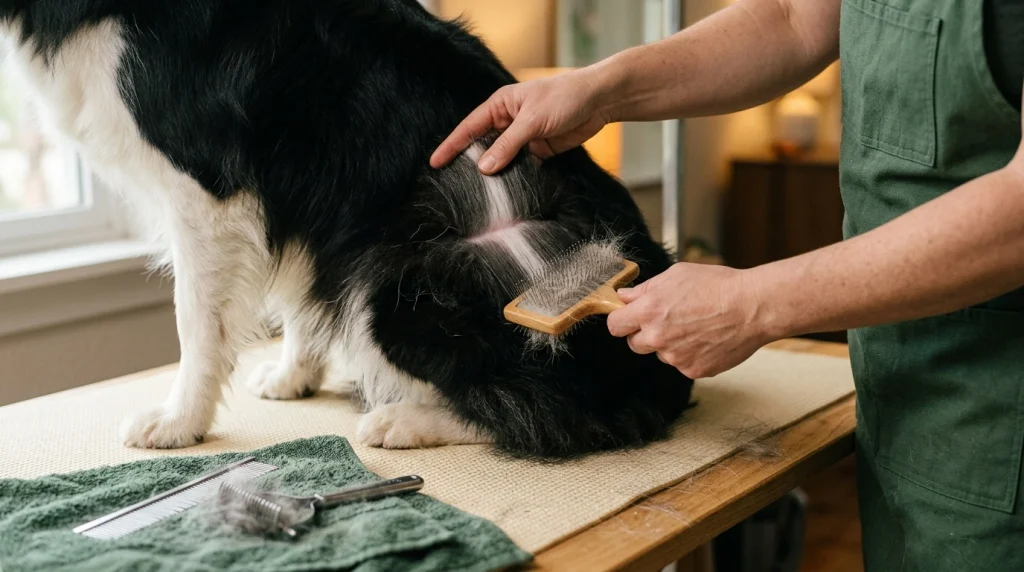
SaveThe technique matters as much as the tool. Surface brushing — running a brush over the top of the coat — does almost nothing for a double coated dog.
You need to get down to the skin. Here’s the method professional groomers use.
Step 1: Start at the Bottom
Begin at the bottom of a rear leg. Work upward, one section at a time, then switch to the other side.
Starting low and working up prevents you from missing the dense areas around the haunches and belly. Professional groomer Robyn Michaels told Kinship that matting starts in a dog’s moving parts — around the tail, behind the ears, in the armpits, and on the ankles.
Step 2: Use Line Brushing
Line brushing is the technique that separates a thorough groom from a waste of time. Here’s how it works:
- Part the fur with your free hand, exposing a thin line of skin.
- Hold the topcoat up and away from the exposed section.
- Brush the exposed hair from the skin outward with your slicker brush.
- Run the undercoat rake through the same section to lift trapped undercoat.
- Move the part up an inch or two and repeat.
Work through the entire dog this way. It takes longer than surface brushing, but it’s the only way to reach the undercoat where mats actually form.
Step 3: Check with a Comb
After line brushing each section, run your metal comb through it. The comb confirms whether you’ve removed all the loose hair and tangles.
If the comb snags, go back over that section with the rake. Don’t move on until it glides cleanly.
Step 4: Pay Attention to Problem Areas
Some spots need extra time. Focus on the ruff around the neck, the haunches, behind the ears, under the collar area, and around the tail.
These areas trap heat and moisture, making them prime spots for mat formation. Check them every session, even if you’re short on time.
Step 5: Don’t Forget the Belly and Legs
Many people brush the back and sides, then call it done. The belly, chest, and legs also have double coats that need attention.
Use a softer touch on the belly — the skin there is thinner and more sensitive. A small slicker brush or soft pin brush works well for these areas.
How Often Should You Brush a Double Coated Dog?
Brush your double coated dog 3–4 times per week during normal periods. During spring and fall shedding seasons, increase to daily.
Double coated dogs “blow” their undercoat twice a year, typically in spring and fall. During a blowout, the undercoat releases in large clumps, and daily brushing is the only way to keep up.
If your dog lives in a warmer climate, they may shed year-round instead of seasonally. Adjust your brushing frequency based on how much loose hair you’re seeing.
Whole Dog Journal recommends brushing 3–4 times weekly to prevent undercoat buildup, and notes that dogs in warmer climates may shed four times a year or continuously.
Common Mistakes to Avoid
Even experienced owners make these mistakes. Each one can damage your dog’s coat or cause discomfort.
Brushing Only the Topcoat
This is the most common mistake. Running a brush over the surface of the coat feels productive, but it doesn’t remove the dead undercoat.
Trapped undercoat compacts against the skin, forms mats, and can cause hot spots or skin infections. Always brush down to the skin.
Pressing Too Hard
Slicker brushes and rakes have metal pins and teeth. Pressing hard doesn’t clean the coat better — it scratches the skin and makes your dog hate grooming.
Use light, gentle strokes. Let the tool do the work. If you’re pressing hard enough to feel resistance, you’re pushing too hard.
Shaving the Coat
Shaving a double coated dog does not keep them cooler. It removes their natural insulation and exposes skin to sunburn, bug bites, and hot spots.
Worse, shaved double coats often grow back patchy, rough, or not at all. The damage can be permanent.
Brushing a Matted Coat
If your dog already has mats, brushing over them with a slicker brush makes things worse. The brush pulls on the mat, causing pain and tightening the tangle.
Work through mats gently with your fingers first, then use a dematting tool or comb designed for the job. For severe mats, see a professional groomer.
Skipping the Comb Check
The comb is your quality control. Without it, you won’t know if you’ve actually reached the undercoat or just smoothed the surface.
Run the comb through every section after brushing. It takes 30 extra seconds and catches problems before they become mats.
Double Coated Dogs and Shedding Season
 Save
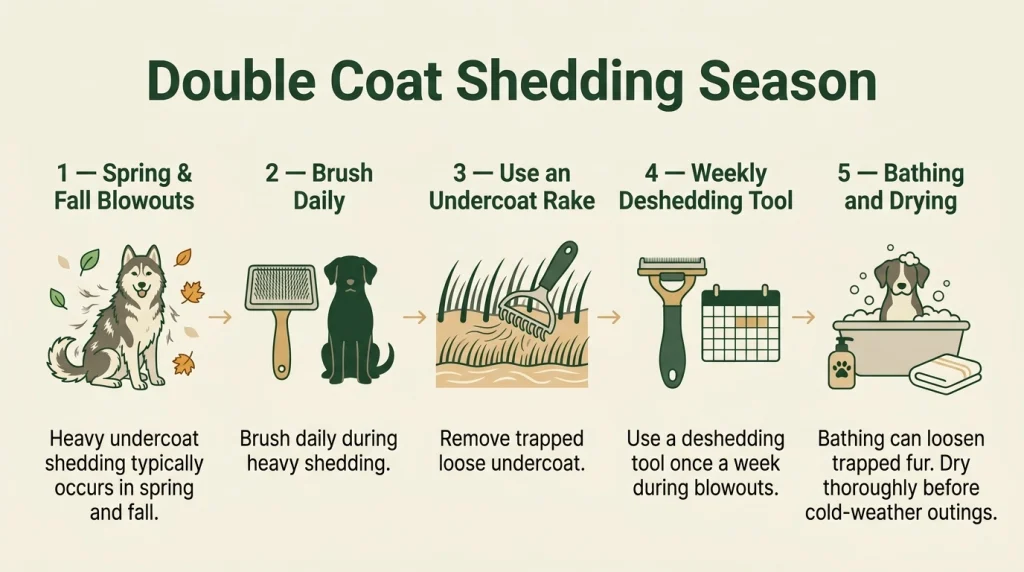
SaveSpring and fall are blowout seasons for double coated dogs. The undercoat releases in large amounts, and your regular brushing routine won’t keep up.
During a blowout, brush daily. Use your undercoat rake more aggressively than usual, and consider adding a deshedding tool once a week.
Bathing during shedding season also helps. A deshedding shampoo loosens the undercoat, and the warm water helps release trapped hair. Follow with a thorough brushing session while the coat is still damp — the water helps the rake glide through.
Just make sure your dog is completely dry before they go outside in cold weather. A wet double coat loses its insulating properties and can make your dog dangerously cold.
Product Recommendations
 Save
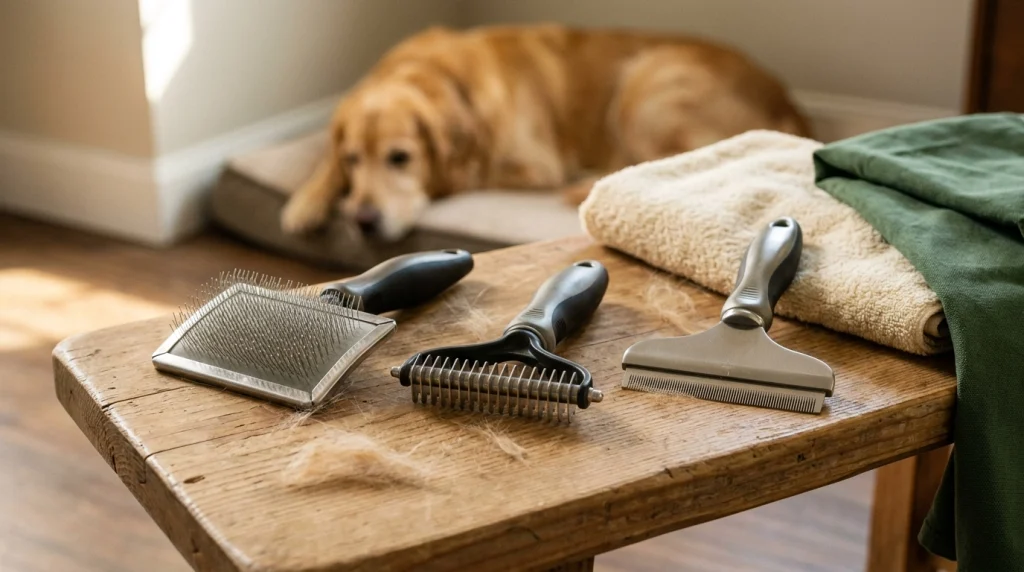
SaveIf you’re ready to pick up the right tools, here’s what I’d actually recommend based on my testing:
🏆 BEST OVERALL
JW Pet Gripsoft Soft Slicker Brush
★★★★★
Flexible, angled stainless steel bristles that lift loose hair without scratching the skin. The Gripsoft handle is comfortable for long sessions, and the pins are spaced to work through medium and long double coats. This is the slicker brush I reach for first on every dog I groom.
💰 BEST BUDGET
Coastal Pet Safari Undercoat Rake
★★★★☆
Double-row stainless steel teeth that reach deep into the undercoat without scratching. Costs about what a bag of treats does, and it performs as well as rakes that cost three times more. If you’re just starting out with a double coated dog, this is the rake to buy.
🚛 BEST FOR HEAVY SHEDDERS
FURminator Undercoat deShedding Tool
★★★★★
The stainless steel edge reaches the undercoat and removes loose hair that rakes miss. I use this once a week during shedding season on thick-coated breeds like Huskies and German Shepherds. It’s not a replacement for regular brushing, but it’s the best tool for blowout season.
Frequently Asked Questions
Can I use a regular brush on a double coated dog?
Regular bristle brushes only reach the topcoat. They smooth the surface but leave the undercoat untouched. For double coats, you need a slicker brush for the topcoat and an undercoat rake for the dense layer underneath. Using only a regular brush lets dead undercoat build up and form mats.
How do I know if my dog has a double coat?
Part the fur and look at the skin. A double coated dog has two distinct layers: a soft, dense undercoat close to the skin and a coarser topcoat of longer guard hairs. You can also check for seasonal shedding — double coated breeds blow their coat in spring and fall.
What happens if I don’t brush a double coated dog?
Trapped undercoat compacts against the skin, forming painful mats that pull on the skin and restrict airflow. This can lead to hot spots, skin infections, and severe discomfort. Mats also tighten over time and may require professional removal.
Should I brush my double coated dog before or after a bath?
Brush before bathing to remove loose hair and prevent mats from tightening when wet. After the bath, brush again once the coat is completely dry. Water causes open hair cuticles to lock together, so brushing a wet double coat can create mats.
How long does it take to brush a double coated dog?
A thorough line-brushing session takes 20–30 minutes for most double coated dogs. During heavy shedding season, it can take longer. Rushing through it or skipping sections leaves undercoat trapped, which defeats the purpose. Short, regular sessions work better than one long, rushed one.
The Bottom Line
Brushing a double coated dog isn’t complicated, but it does require the right tools and a technique that reaches the undercoat.
Use a slicker brush, an undercoat rake, and a metal comb. Brush down to the skin using line brushing. Increase frequency during shedding season. And never shave the coat.
Your dog will be more comfortable, your home will have less fur, and you’ll avoid the painful mats that happen when undercoat gets ignored.
Start with a slicker brush and an undercoat rake. Those two tools will handle 90% of the work. Add a deshedding tool during blowout season, and you’re set.

Thomas Cutter is a lifelong dog owner and the founder of FindOutAboutDogs.com. With over 10 years of hands-on experience owning multiple breeds, Thomas created this site to provide honest, research-based dog advice that real owners can actually trust.
