Slicker Brush vs Comb for Curly Coats: Which Works Best?
Quick Answer
For curly-coated dogs, a slicker brush is best for separating curls, lifting loose hair, and preventing tangles. A steel comb is best for finding hidden knots and checking that the coat is free of tangles from near the skin outward. I recommend using both: slicker first, comb second. The AKC dog brush guide also identifies slickers as useful for curly coats.
Which Tool Does What?
- Slicker brush: Separates curls and lifts loose hair before it becomes tangled.
- Steel comb: Finds remaining knots that brushing may miss.
- Best routine: Gently line-brush small sections, then check each section with a comb.
- Dense curls: Choose suitable longer pins and teeth that can reach through the coat.
- Safety rule: Stop when either tool pulls painfully or catches against a tight mat.
My Simple Rule
- Brush to separate, comb to check. Never force either tool through resistance.
Curly dog coats can look perfectly fluffy while hiding knots underneath. That makes choosing the right grooming tool more important than it first appears.
I prefer a simple two-tool routine rather than relying on one brush for everything. Here’s how to choose the tools, use them safely, and prevent painful mats.


What Is the Difference Between a Slicker Brush and a Comb?
A slicker brush separates and loosens hair with many closely spaced metal pins. A grooming comb has longer, widely spaced teeth that help check individual sections for tangles.
Both tools can detangle hair, but they work differently. Understanding that difference makes grooming easier.
What Does a Slicker Brush Do?
A slicker brush has a flat or curved head covered with thin wire pins. These pins reach into the coat and help separate packed curls.
It is particularly useful before small tangles develop into larger knots.
- Separates hair: Helps loosen curls that have begun sticking together.
- Removes loose strands: Collects hair trapped within the coat.
- Creates volume: Lifts the coat for a fuller, fluffier finish.
- Supports maintenance: Helps prevent tangles when used consistently.
I would choose a slicker as my main brushing tool for a longer Poodle-style coat. Pin length and gentle handling matter more than an impressive product label.
What Does a Dog Grooming Comb Do?
A steel grooming comb has solid teeth that move through small sections of hair. Many models include both coarse and fine tooth spacing.
The comb helps reveal tangles that a slicker may leave behind. This makes it an excellent finishing tool.
- Coarse teeth: Check thicker sections and help loosen small tangles.
- Fine teeth: Reveal smaller snags after the first pass.
- Long teeth: Reach farther into longer coats.
- Metal construction: Provides a sturdy, easy-to-clean grooming tool.
A comb passing smoothly through a section is useful feedback. It tells me that section is less likely to hide a knot.
Slicker Brush vs Comb for Curly Coats: Side-by-Side Comparison
The biggest difference is the job each tool performs. A slicker handles broad brushing, while a comb provides a more detailed check.
| Feature | Slicker Brush | Steel Comb |
|---|---|---|
| Main purpose | Separate curls and remove loose hair | Find and check remaining tangles |
| Working surface | Many fine wire pins | One row of firm teeth |
| Best stage | Initial brushing | Final inspection |
| Dense coats | Longer pins can help | Longer teeth can help |
| Main risk | Skin irritation from pressure | Pain from pulling through knots |
| My preferred use | Routine coat maintenance | Checking completed sections |
Neither tool replaces the other in every situation. I find the combination more useful than asking one tool to do both jobs.
Do Curly-Coated Dogs Really Need Both a Slicker Brush and a Comb?
Most dogs with longer, mat-prone curls benefit from both tools. Brushing the visible surface does not guarantee the hair underneath is free of tangles.
Curly hair often holds onto loose strands instead of dropping them onto the floor. Those trapped strands can gradually twist into nearby hair.
- Surface grooming: A slicker helps separate and lift the visible coat.
- Deeper checking: A comb finds resistance beneath the fluffy surface.
- Early detection: Small snags become easier to notice before they tighten.
- Coat comfort: Gentle grooming helps avoid the pulling associated with established mats.
The AKC’s Standard Poodle grooming guidance recommends regular brushing to prevent matting. It also warns against scraping the skin with a slicker.
My approach is to finish one small area completely before moving on. That prevents a tidy-looking surface from hiding unfinished work.
How Do You Use a Slicker Brush and Comb on Curly Dog Hair?
 Save
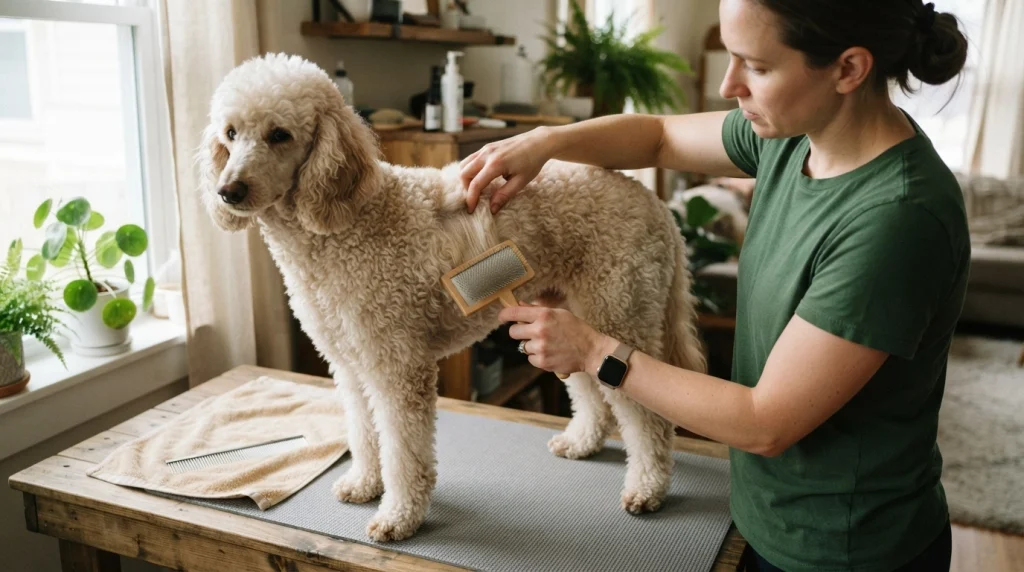
SaveUse the slicker first and follow it with the comb. Work gently through small sections instead of brushing the entire coat in long strokes.
This method is commonly called line brushing. It helps you reach through the coat without repeatedly scraping the skin.
My Step-by-Step Grooming Method
- Inspect the coat. Look for redness, tight knots, moisture, or sensitive areas before beginning.
- Choose a small section. Start on an accessible part of the body, such as the side or shoulder.
- Part the hair. Lift the surrounding coat with your free hand to expose a narrow line of hair.
- Brush gently. Use short, light slicker strokes through the exposed section without pressing into the skin.
- Move gradually. Shift the part slightly and repeat until the area is brushed.
- Check with a steel comb. Begin with wider teeth and gently work toward the hair roots.
- Investigate any snag. Stop, separate the hair with your fingers, and brush the small area again if comfortable.
- Reward and finish. Take breaks and stop before your dog becomes stressed.
The important part is not brushing quickly. It is reaching through the coat while keeping your dog comfortable.
PetMD’s guide to preventing hair mats also describes gentle line brushing. It recommends lifting the coat and working through small sections.
How Do You Know When a Section Is Finished?
Start the comb at the outer ends of the hair and move carefully toward the roots. Never push through a knot that resists.
When the section is free of snags, the comb should travel through without strong pulling.
- The coat separates without sharp resistance.
- No hidden knot stops the comb.
- The skin remains comfortable and free of new redness.
- Your dog tolerates the process calmly.
I use the comb as a checkpoint rather than a tool for forcing stubborn knots apart. That small distinction can prevent unnecessary discomfort.
Why Does the Comb Still Get Stuck After Using a Slicker Brush?
A comb can catch after brushing because the slicker has only worked through the surface. Thick curls sometimes hide tangles closer to the skin.
It may also mean the brush pins were too short for that coat.
Common Reasons the Comb Catches
- Surface-only brushing: The top looks fluffy, but deeper hair remains tangled.
- Short brush pins: The slicker cannot reach through the full coat length.
- Compact curls: Loose hair has collected within a dense section.
- Friction areas: A collar or harness has helped hair twist together.
- Old tangles: Small knots were missed during earlier sessions.
I would never solve this by pulling harder on the comb. More force can hurt your dog without removing the underlying problem.
Instead, inspect the spot and return to gentle brushing if the knot is loose. Tight or painful mats need professional help.
How Often Should You Brush and Comb a Curly-Coated Dog?
Many longer curly coats need daily checks or frequent brushing. The right schedule depends on coat length, density, activity, and how quickly tangles form.
I prefer short, consistent sessions over waiting until the coat becomes difficult to manage.
| Coat Situation | Suggested Starting Routine |
|---|---|
| Long, dense curls | Check daily; brush and comb frequently, often daily |
| Short, maintained curls | Check regularly and brush several times weekly as needed |
| After swimming or rain | Dry thoroughly and inspect for developing tangles |
| Coat prone to repeated mats | Ask a groomer about daily care and a shorter trim |
These are starting points, not rigid breed rules. Your groomer can adjust the routine to match your dog’s actual coat.
As of 2026, consistent home grooming remains essential even for dogs described as low-shedding. Less visible shedding does not mean fewer tangles.
Which Tool Is Better for Poodles, Doodles, Bichons, and Cavapoos?
For longer curly coats, I would usually keep both a slicker brush and a steel comb. The ideal brush size and pin length change with the dog’s coat and body size.
Tool Choices by Coat Type
- Poodles: A suitable slicker supports regular coat separation, while a steel comb checks for hidden knots.
- Goldendoodles: Longer, curlier coats often need thorough line brushing followed by comb checks.
- Bichon Frises: A smaller slicker and a suitable comb help maintain dense, fluffy hair.
- Cavapoos: Curlier coats often suit a slicker, while straighter coats may also respond well to a pin brush.
- Whoodles: Curly coats may need daily attention and regular professional trims to manage matting.
PetMD’s Whoodle coat-care guidance notes that these curly coats need frequent brushing and combing. The guidance also emphasizes professional grooming.
If you are comparing breeds, my small dog breed guide explains why small size does not always mean easy grooming.
What About Double-Coated Dogs?
A typical double coat is different from a continuously growing curly coat. Dogs such as Huskies often need extra attention to loose undercoat instead of curl separation.
That is why I recommend a different tool selection in my guide to Husky brushing tools.
Choose grooming tools according to coat texture, not just breed name. Mixed-breed dogs can inherit very different coat types.
Can a Slicker Brush or Comb Remove Matted Curly Hair?
 Save
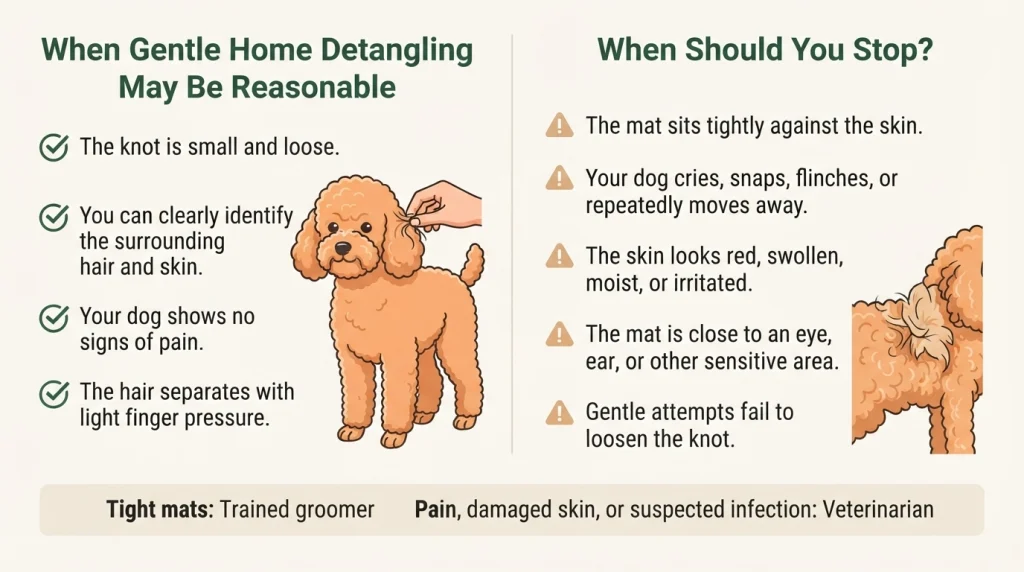
SaveBoth tools may help with small, loose tangles. Neither is appropriate for forcing apart a tight mat that pulls painfully against the skin.
Established mats can hide irritation and trap moisture. Trying to remove them aggressively may make the problem worse.
When Gentle Home Detangling May Be Reasonable
- The knot is small and loose.
- You can clearly identify the surrounding hair and skin.
- Your dog shows no signs of pain.
- The hair separates with light finger pressure.
Start from the outer edge of a loose tangle. A dog-safe detangling spray may help, provided its directions suit your dog’s coat.
When Should You Stop?
- The mat sits tightly against the skin.
- Your dog cries, snaps, flinches, or repeatedly moves away.
- The skin looks red, swollen, moist, or irritated.
- The mat is close to an eye, ear, or other sensitive area.
- Gentle attempts fail to loosen the knot.
The veterinary advice in PetMD’s matting guide warns against cutting mats with household scissors. Skin can sit extremely close to tangled hair.
I would leave tight mat removal to a trained groomer. A veterinarian is the better choice when there is pain, damaged skin, or suspected infection.
What Are the Most Common Curly-Coat Brushing Mistakes?
The biggest mistake is confusing a fluffy appearance with a fully groomed coat. Gentle technique and a final comb check help prevent that problem.
Five Mistakes I Would Avoid
- Brushing only the top: Divide the coat into sections so you can reach deeper hair.
- Using too much pressure: Let the slicker pins move through hair without scraping skin.
- Dragging a comb through knots: Stop at resistance and inspect before proceeding.
- Ignoring friction spots: Check behind the ears, under harnesses, and around the legs.
- Waiting too long: Maintain the coat before small tangles become uncomfortable mats.
I also avoid assuming that every coat needs the firmest brush available. Sensitive skin and short curls may need a softer option.
For comparison, my article about managing Husky shedding explains why different coats call for different grooming methods.
What Should You Look for When Buying a Slicker Brush or Comb?
 Save
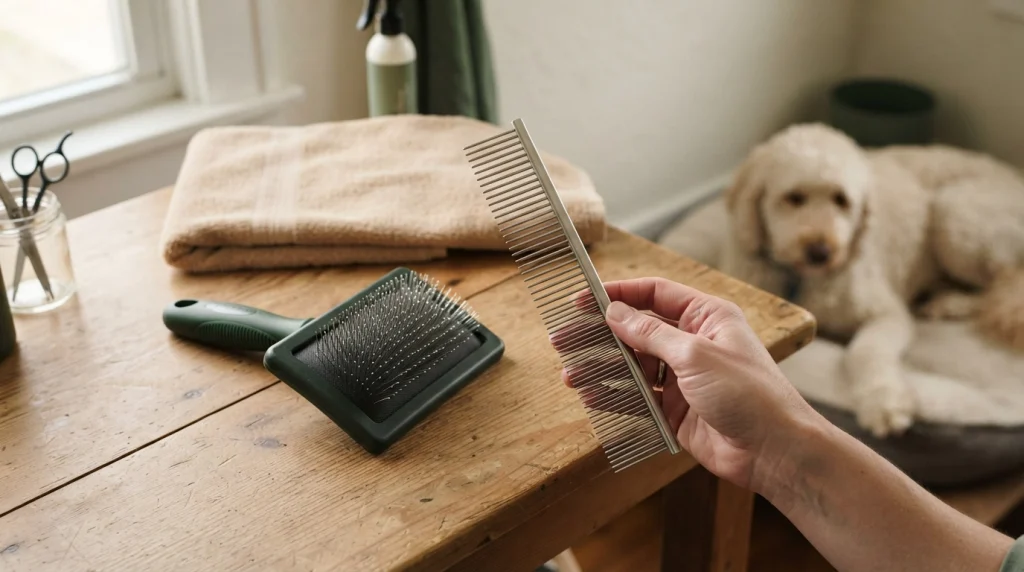
SaveChoose tools that match the coat and feel comfortable in your hand. An expensive brush is not automatically the best fit.
Slicker Brush Buying Checklist
- Pin length: Select enough reach for the coat without digging into the skin.
- Pin firmness: Choose a level suited to the dog’s coat and tolerance.
- Head size: Smaller heads improve control around legs and narrow areas.
- Cushioning: A flexible pad may make gentle brushing easier.
- Handle: A comfortable grip supports controlled strokes.
Steel Comb Buying Checklist
- Tooth spacing: Coarse and fine sections offer more flexibility.
- Tooth length: Longer teeth help with longer coats.
- Smooth finish: Teeth should not have rough edges or burrs.
- Solid construction: A durable metal comb is easy to clean.
My first purchase would be a properly sized slicker plus one sturdy steel comb. I would add specialty tools only if the coat requires them.
How Can You Make Grooming More Comfortable for Your Dog?
Comfort matters more than finishing quickly. Dogs that dislike grooming may become harder to handle when each session involves pulling.
I favor brief sessions with regular rewards. A relaxed dog makes careful brushing much easier.
- Choose a quiet room and a non-slip surface.
- Let your dog sniff the grooming tools before starting.
- Begin with an easy, untangled section.
- Use short strokes and check body language often.
- Offer treats and breaks throughout the session.
- Stop if discomfort or stress increases.
If grooming has become a struggle, ask a professional groomer for a hands-on demonstration. A gentle method is often easier to learn when you can watch it.
Best Slicker Brushes and Combs for Curly Dog Coats
If you are building a grooming kit, I would start with tools that serve different purposes. These three established products cover premium brushing, lower-cost brushing, and finishing.
Affiliate disclosure: I may earn a commission from qualifying purchases. The star scores below are editorial suitability assessments, not verified customer-review averages.
🏆 Best Premium Slicker
Chris Christensen Big G Slicker Brush
★★★★½
The Big G features 27 mm stainless-steel pins, a curved head, and an ergonomic handle. I would consider it for long, dense curls where a shorter brush struggles to reach through the coat. Its premium cost makes it less appealing for short coats.
💰 Best Budget Slicker
Andis Medium Firm Slicker Brush
★★★★☆
This medium-firm slicker is designed to remove loose hair and moderate tangles. I like its straightforward design for routine maintenance, although I would check its reach and firmness before choosing it for very long curls or sensitive skin.
✨ Best Finishing Comb
Andis 7-1/2 Inch Steel Comb
★★★★½
This 7.5-inch steel comb has both coarse and fine tooth spacing. I would pair it with a slicker to check for hidden tangles, refine the coat, and inspect smaller sections without forcing the teeth through knots.
Frequently Asked Questions
Is a slicker brush better than a comb for curly dogs?
A slicker brush is usually better for routine brushing because it separates hair across a broader area. A steel comb is better for checking hidden tangles. For longer curly coats, I recommend using both instead of choosing only one.
Can I use only a comb on my Poodle?
You can use a suitable comb for grooming, but it may be slower when working through a long, dense coat. A slicker brush helps separate larger sections before the comb checks for remaining knots. Always keep the pressure gentle.
Should I brush my curly-haired dog every day?
Long, dense, mat-prone curls may need daily grooming, while shorter maintained coats may need less. Check friction areas frequently and adjust based on how quickly tangles develop. Your professional groomer can help set a routine suited to your dog.
Why is my dog’s hair still tangled after brushing?
The brush may have missed hair closer to the skin, or the pins may be too short for the coat. Check with a steel comb and work through manageable sections. Stop if you find tight or painful mats rather than pulling harder.
Does a slicker brush damage curly dog hair?
A slicker brush can cause discomfort, skin irritation, or hair damage when used with excessive pressure or repeated scraping. Choose suitable pins and brush gently through sections. Stop when your dog shows signs of discomfort, and ask a groomer to demonstrate the technique if needed.
Final Takeaway: Use a Slicker Brush First, Then a Comb
For most longer curly dog coats, I recommend a slicker brush for regular maintenance and a steel comb for checking the result. Together, they help uncover tangles that surface brushing can miss.
Start with one small section today. Brush gently, follow with the comb, and make comfort your priority.

Thomas Cutter is a lifelong dog owner and the founder of FindOutAboutDogs.com. With over 10 years of hands-on experience owning multiple breeds, Thomas created this site to provide honest, research-based dog advice that real owners can actually trust.
