How to Manage Shedding in a Goldendoodle
Quick Answer
To manage shedding in a Goldendoodle, brush down to the skin several times each week, remove tangles before they become mats, bathe and dry the coat properly, and adjust the routine to your dog’s coat type. Goldendoodles can inherit different shedding patterns, so the goal is controlling loose hair rather than expecting a completely shed-free dog. The AKC guide to managing dog shedding also explains why coat type changes how much hair ends up around your home.
Quick shedding-control routine
- Check the coat: Identify whether your Goldendoodle has a curly, wavy, or straighter shedding coat.
- Brush in sections: Work from the skin outward instead of brushing only the fluffy surface.
- Comb afterward: A stainless-steel comb should move through the coat without catching.
- Bathe when needed: Use dog shampoo, rinse completely, and dry the coat before finishing with a brush.
- Clean the environment: Vacuum soft surfaces and wash bedding before loose hair accumulates.
- Watch for changes: Bald spots, redness, strong itching, or sudden heavy hair loss need veterinary attention.
The important part
- Consistency wins: Ten careful minutes of routine grooming is more useful than aggressive de-shedding after the coat is already tangled.
Goldendoodles have a reputation for barely shedding, but real coats are more complicated. A Goldendoodle may inherit tight Poodle-like curls, a loose wavy coat, or more Golden Retriever-style shedding.
My rule is simple: manage the coat in front of you, not the coat a breeder photo promised. This guide shows you how to reduce loose hair while preventing the matting that can hide underneath a fluffy doodle coat.


Why Is My Goldendoodle Shedding So Much?
A Goldendoodle can shed because shedding level depends heavily on the coat traits inherited from its Golden Retriever and Poodle ancestry. Two Goldendoodles that look similar can still release very different amounts of hair.
Goldendoodle shedding is the natural release of old or damaged hair from the coat. Loose hair may fall directly onto your floor, or it may become trapped inside surrounding curls and waves until brushing removes it.
That second situation fools many owners. The house may look relatively hair-free while the coat quietly collects dead hair near the skin.
This is one reason a low-shedding Goldendoodle can still need more grooming than a short-haired dog. Trapped hair mixes with live coat and friction until tangles become dense mats.
Coat genetics matter more than the generation label
Labels such as F1, F1B, or multigenerational can describe ancestry, but they do not let you predict every individual coat perfectly. Furnishings, curl, hair-growth traits, and undercoat characteristics all influence what you see.
As of 2026, I would not treat any Goldendoodle as guaranteed to be non-shedding. Even heavily furnished dogs still lose some hair and require mechanical removal through grooming.
- Curly coats: Usually hold loose hair inside the coat, so visible shedding may look lower while matting risk rises.
- Wavy or fleece coats: Often fall between curly and straight coats for both loose hair and maintenance.
- Straighter coats: May release more hair into the home, especially when stronger Golden Retriever coat traits are present.
- Dense coats: Need careful line brushing because surface brushing can leave packed hair underneath.
If you are comparing coat traits across family dogs, our guide to friendly dog breeds for families includes both Golden Retrievers and Poodles.
What Is the Best Way to Brush a Goldendoodle for Shedding?
 Save
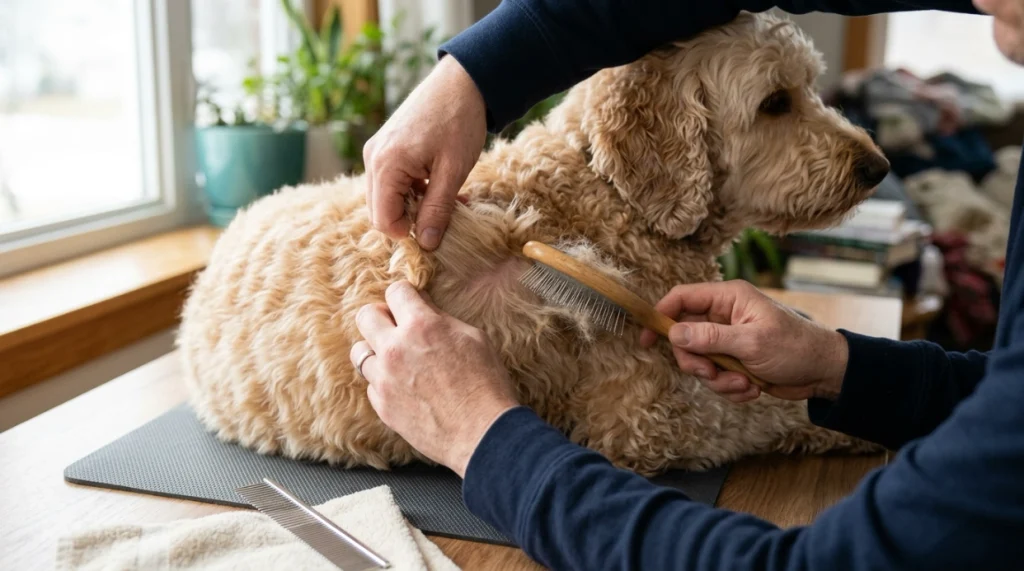
SaveThe best method is line brushing: separate the coat into small sections, brush from near the skin toward the ends, then check the same area with a metal comb. This removes trapped loose hair instead of polishing only the top layer.
I use the comb as the final truth test. If it stops halfway through the coat, the section is not finished yet.
A simple line-brushing routine
- Start with a dry or lightly conditioned coat. Never attack a tight mat with hard, repeated strokes.
- Choose one small section. Lift the surrounding hair so you can see where the coat meets the skin.
- Use gentle slicker strokes. Work outward without scraping the same patch of skin repeatedly.
- Move upward in lines. Finish one section before dropping another thin layer of coat over it.
- Follow with a metal comb. Check from the roots to the tips.
- Rework any snag. Hold the hair near the skin so you do not pull directly against your dog.
Curly coats often benefit from frequent brushing because tangles build quickly around friction points. The VCA grooming and coat-care guide also notes that long, silky, and curly coats may need daily attention to prevent tangles.
The AKC’s Poodle grooming guidance specifically recommends a slicker brush for reaching through a curly coat while stressing gentle technique around the skin.
Which brush works for each Goldendoodle coat?
| Tool | Best use | Where it helps most | Main caution |
|---|---|---|---|
| Long-pin slicker | Removing loose coat and opening curls | Curly or dense coats | Too much pressure can irritate skin |
| Pin brush | Gentle maintenance and longer waves | Wavy, longer coats | May miss dense tangles near the skin |
| Stainless-steel comb | Checking whether brushing is complete | Ears, legs, tail, chest, body | Do not force it through a mat |
| Undercoat rake | Removing loose undercoat when present | Straighter, heavier-shedding coats | Not automatically right for every doodle coat |
How Often Should I Brush a Goldendoodle That Sheds?
Most Goldendoodles need brushing several times per week, while long, curly, or mat-prone coats may need daily attention. Your comb should determine the schedule more than a calendar does.
Check the highest-friction areas first. Those locations usually tell you whether your current routine is frequent enough.
- Behind the ears: Fine hair and scratching create tangles quickly.
- Under the collar or harness: Constant rubbing packs the coat together.
- Armpits: Movement creates friction with every step.
- Chest and belly: Longer coat can twist and collect debris.
- Legs and paws: Moisture, mud, and movement encourage knots.
- Base of the tail: Dense hair can hide loose undercoat.
My 60-second check is to run a metal comb through the ears, armpits, chest, and rear legs. If those four areas are clear, the rest of the grooming session usually goes much faster.
Dogs kept in longer styles naturally need more home maintenance. A shorter practical trim can make shedding control and combing easier without turning grooming into a daily battle.
Does Bathing Reduce Goldendoodle Shedding?
 Save
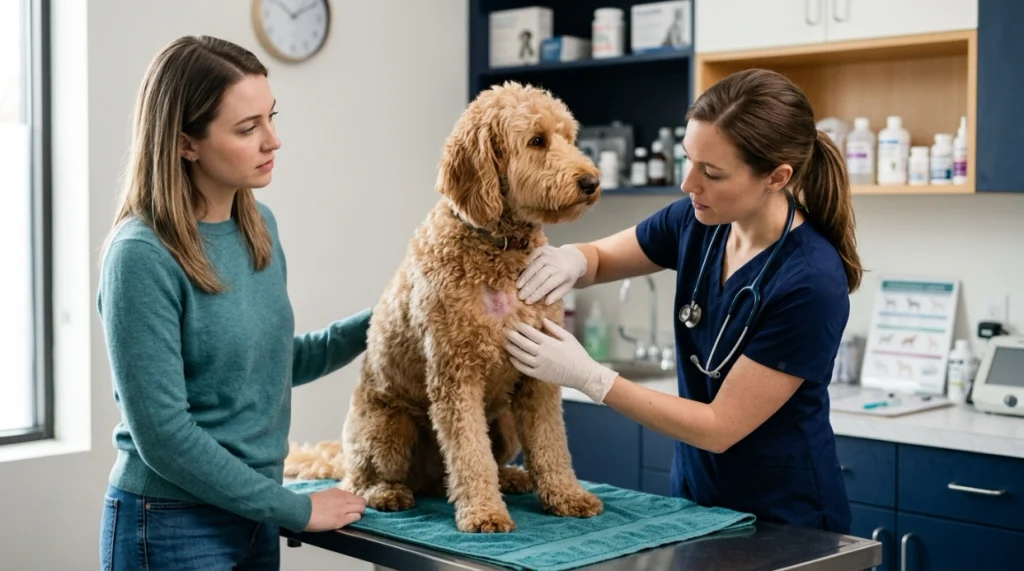
SaveBathing can help loosen old hair, dirt, and dander, but brushing and drying are what remove much of that loosened material from the coat. A bath alone is not a complete shedding-control routine.
Brush out obvious tangles before bathing. Water can tighten existing mats and make them harder to separate afterward.
Use this bath-and-dry order
- Brush first. Remove loose hair and small tangles before the coat becomes wet.
- Wet to the skin. Dense doodle coats can remain dry underneath unless you work the water through carefully.
- Use dog shampoo. Follow the label and avoid aggressive scrubbing that knots the coat.
- Rinse thoroughly. Work through the coat until shampoo residue is gone.
- Towel blot. Avoid rubbing the coat in circles.
- Dry completely. Separate and brush sections as appropriate while drying.
- Comb-check afterward. The comb should move from near the skin to the ends.
Golden Retrievers can carry a substantial double coat, and the AKC Golden Retriever grooming guide recommends regular brushing before and after bathing to remove old hair.
Can Food or Supplements Stop Goldendoodle Shedding?
No food can switch off normal genetically driven shedding. Good nutrition supports healthy skin and hair, but it does not turn a shedding coat into a non-shedding one.
Feed a complete diet appropriate for your dog’s age and health unless your veterinarian recommends something different. Avoid stacking coat supplements simply because a product promises less hair on the furniture.
- Protein matters: Hair itself is largely protein, so poor overall nutrition can affect coat quality.
- Essential fats matter: Appropriate dietary fatty acids support normal skin and coat condition.
- Hydration matters: Fresh water should always be available.
- Supplements are not automatic: Ask your veterinarian before adding concentrated oils or nutrients.
Food extras are not a replacement for brushing. If eggs are already part of your dog’s diet, our guide explains how dogs can eat eggs safely.
How Can I Control Goldendoodle Hair Around the House?
Catch loose hair on the brush before it reaches your sofa, bedding, and carpet. A short cleaning routine works better than waiting for visible hair to build up.
Homes with low-shedding dogs still collect dander, dust, and coat debris. The difference is often where the material ends up rather than whether it exists.
- Wash dog bedding weekly: Use the care instructions on the bedding and dry it completely.
- Vacuum soft surfaces: Focus on sleeping areas, rugs, stairs, and upholstery.
- Use washable throws: Cover the dog’s favorite sofa or chair location.
- Groom in one easy-clean area: Loose hair is easier to collect from a hard floor.
- Keep brushes accessible: A tool you can reach quickly gets used more often.
If indoor coat maintenance is a major priority for your household, our comparison of indoor dog breeds for families also shows how grooming needs differ across common breeds.
When Is Goldendoodle Shedding a Reason to Call the Vet?
 Save
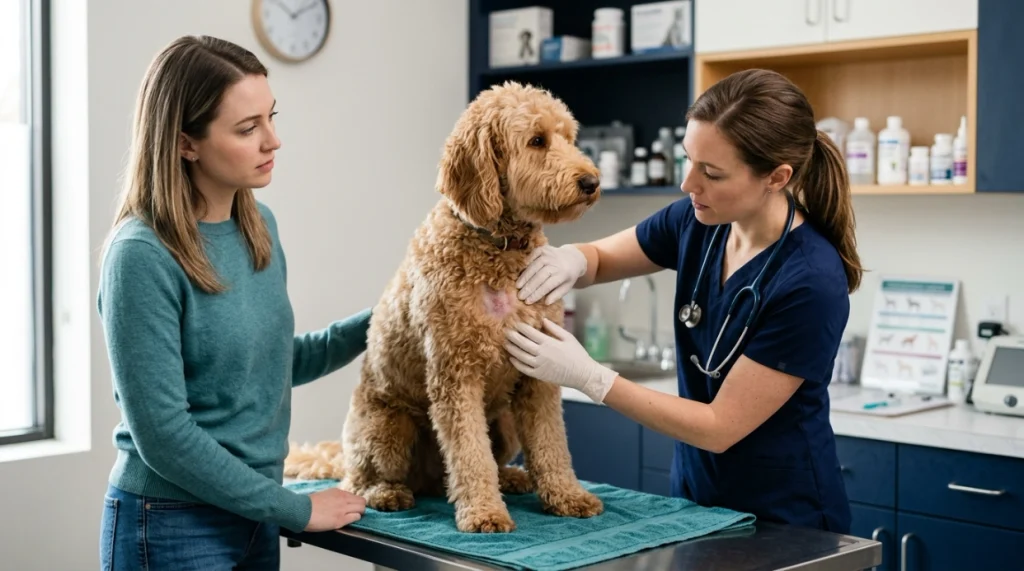
SaveNormal shedding should not leave unexplained bald areas or obviously diseased skin. Sudden hair loss combined with itching, redness, odor, sores, scaling, or behavior changes deserves veterinary attention.
The Merck Veterinary Manual’s guide to canine alopecia explains that abnormal hair loss has many possible causes and needs the underlying cause identified.
- Bald patches: Visible skin where hair previously grew is different from ordinary loose hair.
- Heavy itching: Persistent scratching, chewing, or rubbing can point to skin irritation, parasites, or allergies.
- Red or inflamed skin: Do not keep brushing aggressively over irritated areas.
- Strong odor or discharge: These signs can occur with skin or ear problems.
- Sudden coat change: A major shift from your dog’s normal shedding pattern is worth discussing with your veterinarian.
- Other symptoms: Weight change, low energy, recurrent infections, or poor hair regrowth can add important clues.
Do not try to solve abnormal hair loss by brushing harder. Grooming manages normal loose coat; it does not treat medical causes of alopecia.
If you’re ready to choose grooming tools, these are the three types I would start with rather than filling a drawer with gadgets:
🏆 Best for dense coats
Chris Christensen Big G Slicker Brush
★★★★★ 4.8/5 fit
The Big G uses long 27 mm stainless-steel pins designed for longer, dense coats. I like this style for working through a full curly Goldendoodle coat in sections, provided you keep the pressure gentle.
💰 Best everyday value
Safari by Coastal Self-Cleaning Slicker Dog Brush
★★★★☆ 4.5/5 fit
This brush uses retractable stainless-steel pins, so clearing collected hair is quick. I would choose it for routine maintenance when easy cleanup makes you more likely to brush consistently.
🔎 Best finishing check
Safari by Coastal Dog Grooming Comb
★★★★☆ 4.6/5 fit
A grooming comb is less glamorous than a specialty de-shedding tool, but it tells you whether hidden tangles remain. I consider the comb check essential around ears, legs, chest, and other mat-prone areas.
Frequently Asked Questions
Do Goldendoodles shed a lot?
Some Goldendoodles shed very little, while others shed noticeably. Coat genetics, curl, furnishings, undercoat, health, and season all influence the amount, so individual dogs can differ even within the same litter.
Can brushing stop my Goldendoodle from shedding?
Brushing cannot stop the natural hair-growth cycle, but it can collect loose hair before it spreads through your home. It also prevents shed hair from becoming trapped inside curls and contributing to mats.
Should I use a de-shedding tool on a Goldendoodle?
Only if the tool suits your dog’s actual coat. A straighter Goldendoodle with a substantial undercoat may benefit from an appropriate rake, while a curly coat may respond better to a slicker brush and comb. Ask a professional groomer if you are uncertain.
Why is my Goldendoodle suddenly shedding more than normal?
Season, coat maturation, environment, and grooming changes can affect normal shedding. Sudden heavy hair loss with bald areas, redness, scaling, itching, odor, poor hair regrowth, or other health changes should be checked by a veterinarian.
How do I know if my Goldendoodle is fully brushed?
Run a metal grooming comb from near the skin through the coat in several directions. If it catches, separate that small area and gently work through it again rather than forcing the comb through the tangle.
The Takeaway
You do not need to eliminate every loose hair to manage Goldendoodle shedding well. You need a routine that removes dead coat before it tangles, keeps the skin comfortable, and makes unusual hair loss easy to notice.
Start with a slicker brush, a good metal comb, and ten focused minutes. Once you learn how your own dog’s coat behaves, keeping the fluff under control becomes much more predictable.

Thomas Cutter is a lifelong dog owner and the founder of FindOutAboutDogs.com. With over 10 years of hands-on experience owning multiple breeds, Thomas created this site to provide honest, research-based dog advice that real owners can actually trust.
